Just before you’re escorted into the kitchen at Benu in San Francisco, you’ll spot a formidable column decorated with autographs from a who’s who in the culinary world: David Kinch, Michelin three-starred chef of now-shuttered Manresa in Los Gato; Chef Sang Yoon of Father’s Office and Helms Bakery, both in Los Angeles; Fuchsia Dunlop, James Beard Award-winning food writer and Chinese cuisine expert; the late-Charles Phan, founder of the Slanted Door restaurant in Napa and San Ramon; the late-Chuck Williams, founder of Williams Sonoma; and so many more.
Because since its opening in 2010, this fine-dining, tasting-menu restaurant has attracted everyone who’s anyone to its minimalist dining room for its elegant fare that blends East and West with incredible finesse.
It was the first San Francisco restaurant to receive three Michelin stars in 2014. It has maintained them ever since, too.
Opened by Chef Corey Lee, former chef de cuisine of Michelin three-starred The French Laundry in Yountville, Benu is also the first restaurant that Thomas Keller ever invested in that wasn’t his own.
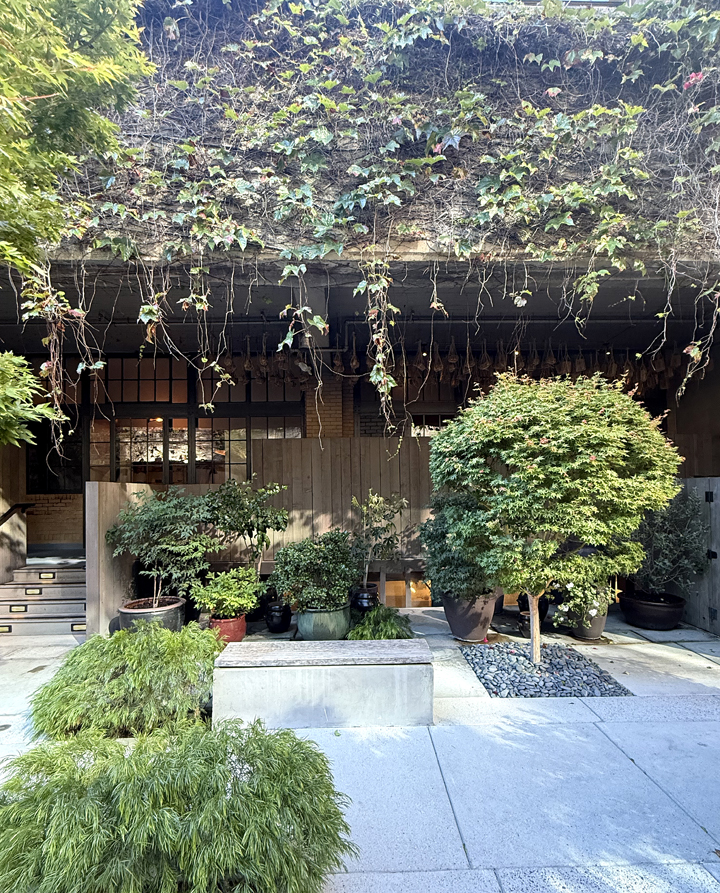
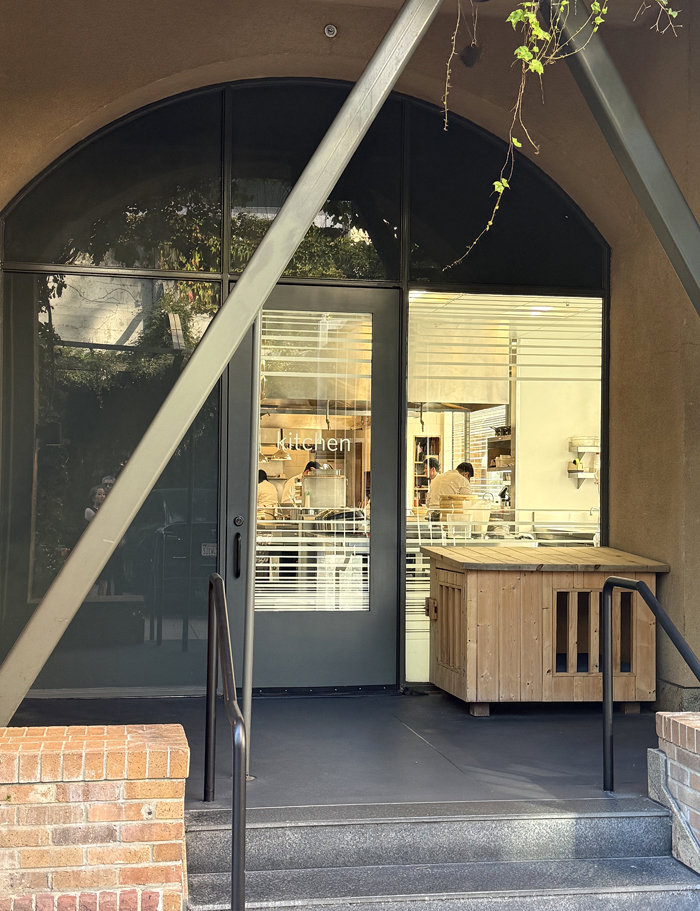
While I’ve dined several times at Lee’s casual Korean restaurant, San Ho Won in San Francisco, which has a Michelin star, it’s been many years since I’d last been to Benu. And since my cousins, who are huge fans of San Ho Won, had never been to Benu, I figured it was high time we all went together.
You won’t find the bold, pungent, and fiery flavors of San Ho Won here. Instead, there’s a much more delicate touch that pays homage to tradition but reinvents it with greater refinement.
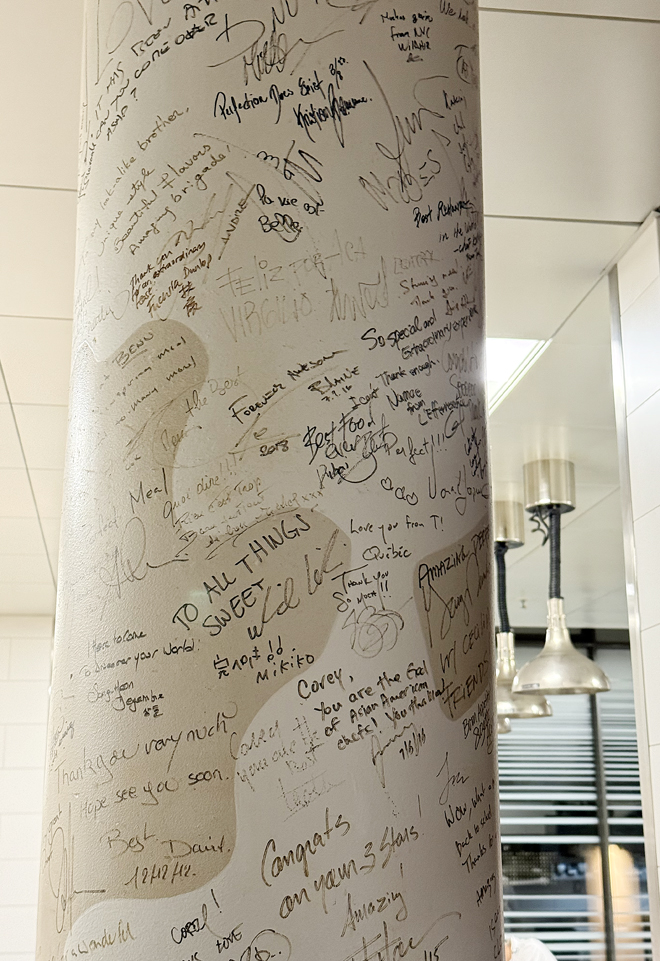
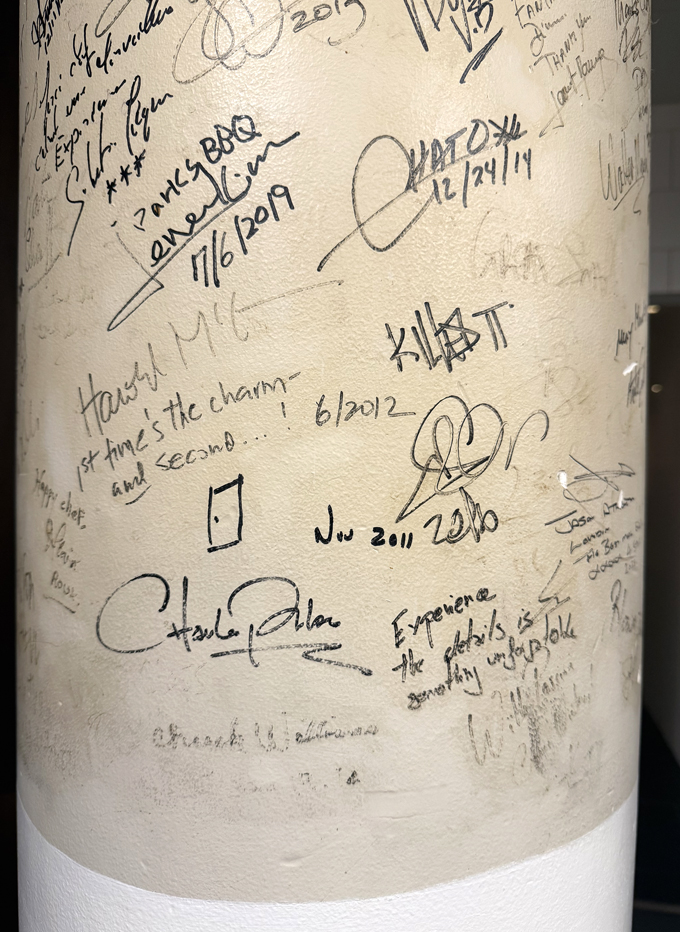
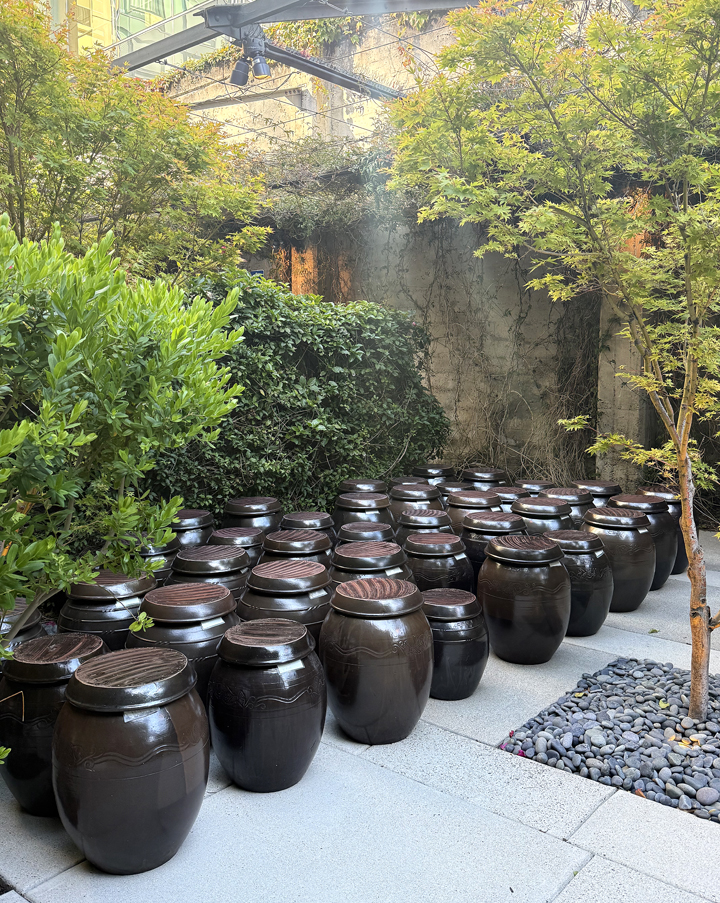
Stepping foot inside the courtyard gives the first clue to how much care is taken here. Amid the flowers and greenery, you’ll spot more than two dozen earthenware crocks that hold soy sauce. Yes, Benu actually makes its own.

Dinner is a multi-course affair that is $390 per person, which includes a 22 percent service charge. It must be prepaid in advance at the time you make the reservation. If you need to cancel, it is refundable, but only if you notify the restaurant at least 72 hours in advance.

Your first bite is a Benu signature — a Chinese thousand-year-old egg. Only, unlike the chicken and duck ones that I grew up with purchased from Asian markets, this is a quail egg that has been preserved in black tea and salt for six weeks, turning its white a translucent amber color with the texture of gelatin and its yolk creamy with a gray-green hue. It doesn’t hit you over the head with the usual powerful sulfur taste, but is milder, and served on a puddle of onion-bacon cream and cabbage juice.
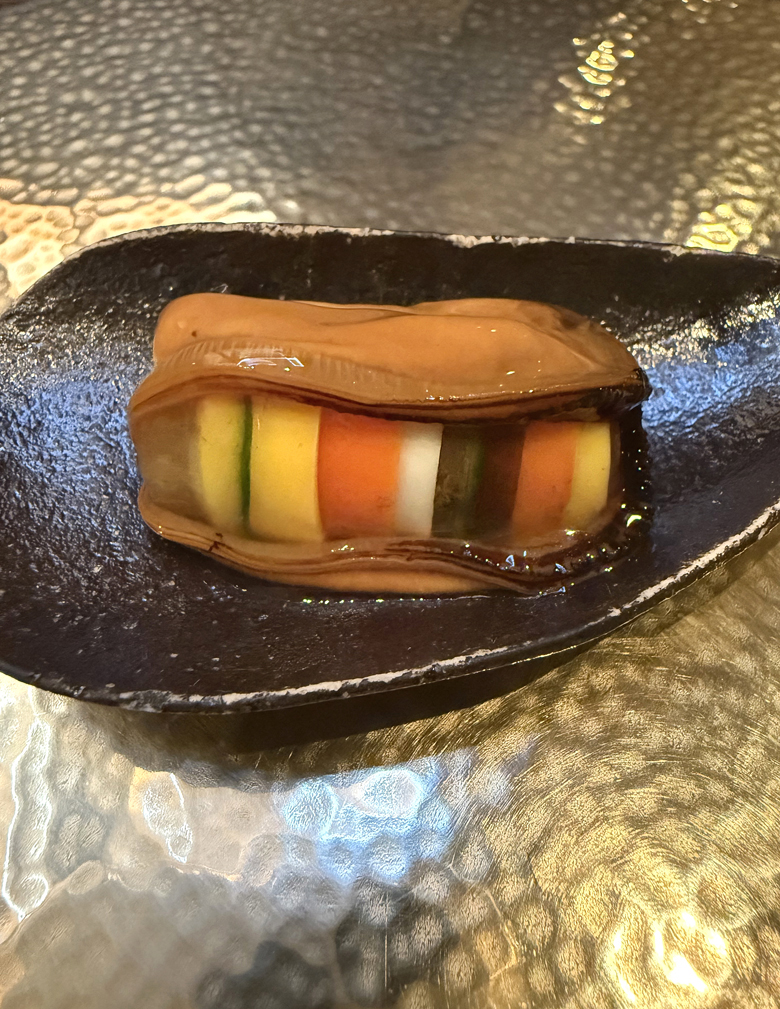
The second bite is nearly as well known: a chilled mussel stuffed with glass noodles that have been wound up inside thin ribbons of vegetables to create a dramatic rainbow effect. It looks like it should be in a glass case in a museum.
Owing to my mussel allergy, the kitchen sent me out a king trumpet mushroom instead with a vegetable filling that was an umami bomb.


None of us had ever had goose barnacle before, so it was thoughtful to have the server explain that you pick up the shell with your fingers to bite into its stalk that had been steamed, then chilled. There was chili-seaweed sauce, if you wanted to dunk in for a touch of heat. The barnacle, itself, was tender yet chewy, along the lines of abalone, with a sweet almost clam-like taste.
That was followed by shiny, lightly cured anchovies arranged just so on tiny ingots of fried levain with a smear of Korean soybean paste. It was crunch plus silkiness — in two bites that I only wished were four or six because it was so satisfying.


Big fin squid was rolled around blood sausage that accentuated the sweet minerality of the mollusk.
Squash blossom was stuffed with shrimp and preserved garlic, then fried, and served with some of that house soy sauce plus fresh pressed sesame oil. Think the taste of Chinese shrimp toast but with more intention.

Next, one of my favorites of the night, only because summer tomatoes are one of my all-time pleasures. This was a tomato all right, but peeled, gently poached, and stuffed with house-made soft tofu infused with pine nuts, then served in a pool of tomato water. It was like eating the most perfectly ripe heirloom tomato whose flavor had been concentrated four-fold.
After that parade of opening bites, the official start of the tasting menu began. Yes, all of that was a mere prelude to the main act, which began with a duo of xiao long bao, with thin skins and plenty of broth inside, that was served with 8-year-aged soy sauce.


With my allergy to scallops (curses!), I was instead served a steamed bun filled with spinach and black truffles, with a small bowl of kimchi. However, I did not feel neglected in the least because the fluffy, warm bun with the intoxicating earthy taste and aroma of the truffles immediately put me in my happy place.
As part of the wine pairing, a Rare Barrel sour beer made especially for Benu by this Berkeley brewery was served. On its own, it was joltingly tart with an undercurrent of fruitiness. But with the food, its acidity was tamed and the umami of the soy sauce heightened.


Benu makes its own sourdough boules, and they get quite the presentation with ginseng-infused honey poured over a honeycomb-shaped butter at the table. The bread has a thin yet crisp crust, and a crumb that’s soft and chewy. The butter is so good that you’re apt to spread on way more than you might otherwise.

The fanciest rice noodle I’ve ever had followed, adorned with flowers and leaves. Inside the chewy wrapper was tender lobster and tendon, making for a rice noodle that played on my memories but took them to a whole new realm.


A large, glistening, honey and soy-marinated Wolfe Ranch quail is presented whole to the table, before it’s whisked back into the kitchen, and you’re served slabs of succulent breast meat with black trumpet mushroom, a sweet, creamy white corn gravy, and quail jus.
It was paired with a velvet-bodied 2021 Littorai Pinot Noir from Anderson Valley, rich with earthiness and minerality, as well as raspberry and strawberry notes.

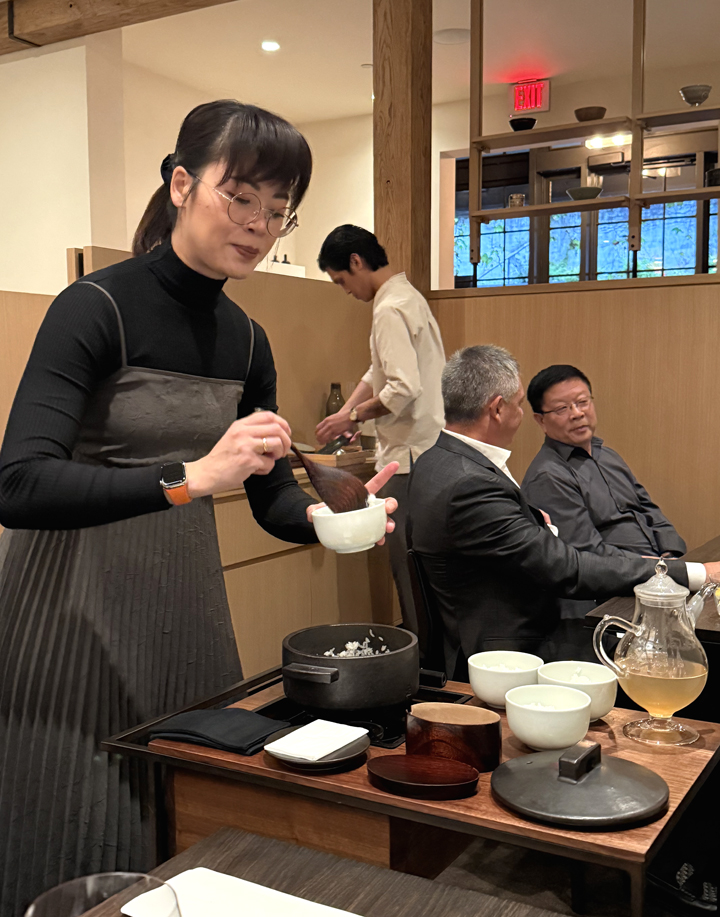

For the final savory course, there is sake, a 2019 Sawahime Junmai Gold that has the surprisingly color of a reddish caramel, and the thoroughly unexpected taste of soy sauce, mushrooms, nuts and smoke. It was also served warm, which made it taste uncannily like a broth.
It was a soothing sip to go with a comforting dish: warm, and ever so sticky rice, a mix of Californian and Japanese grains. It was served with its own spread: tender abalone, poached, then roasted in butter, seaweed and its own liver; along with pieces of marinated beef rib with egg yolk; cucumber kimchi; and sheets of roasted Korean seaweed. You could enjoy separate bites or use the seaweed to fold up ingredients, ssam-style.
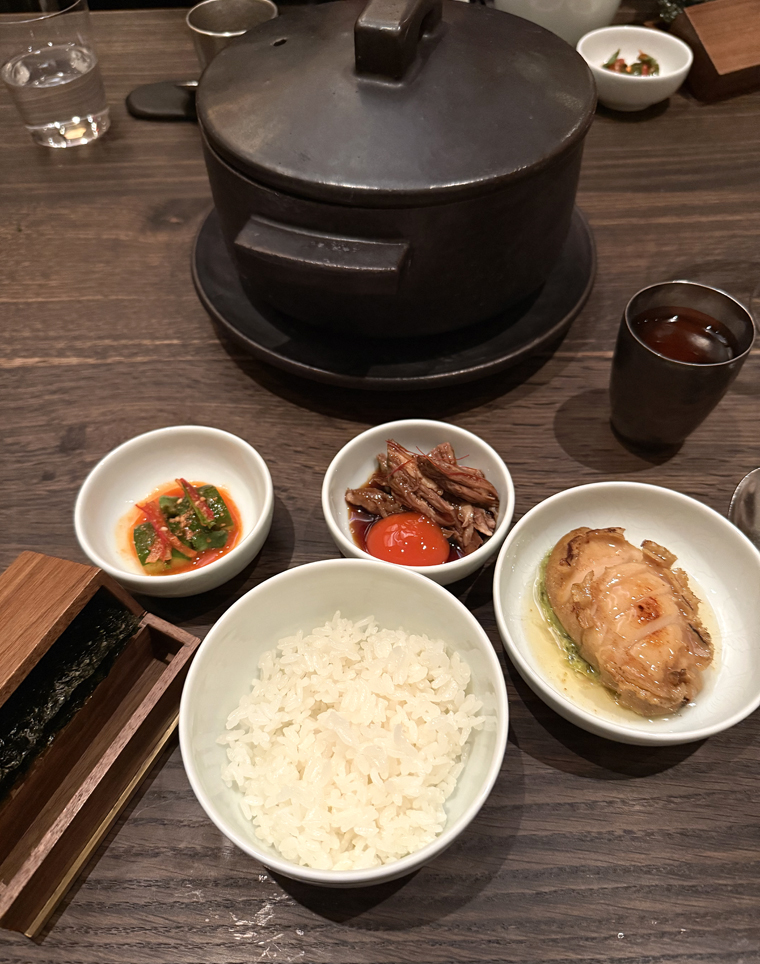
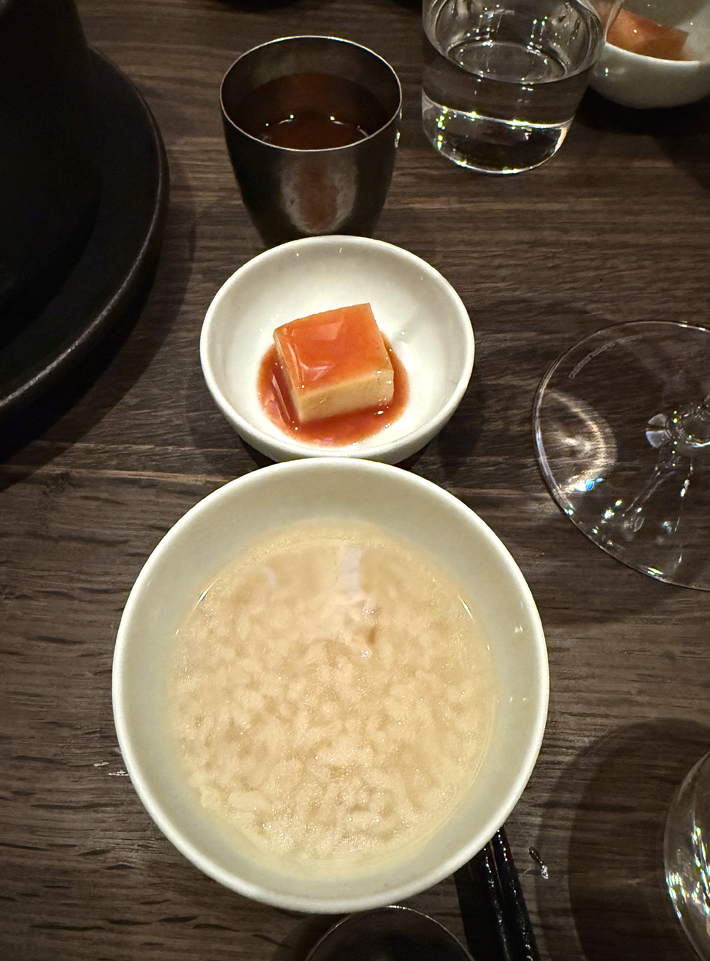
As we tucked into this, the rice pot was set atop a flame to crisp up its bottom layer of grains. Finally, an abalone-beef broth was poured over to create a rice soup that was served with kohlrabi kimchi. It was very much like a hug in a bowl.


Paving the way for dessert, there was a perfect ball of sorbet, made with watermelon, cantaloupe, and Korean melon, and served in a lemon verbena-juice. From the first spoonful to the last, it was sweet, floral, and refreshing.
Dessert was a juicy, poached June Lady peach half, vividly orange with a rich sweetness balanced by bitter almond cream dotted with a sprinkle of dehydrated peach skin. Dig all the way to the bottom to enjoy a layer of candied almonds. It was paired with a late-harvest 2006 Schloss Schonborn Marcobrunn Riesling that tasted of peaches, apricots and honey.


The last sip is chilled pine needle and pine nut tea, a luminous green that’s sweet and syrupy.
Alongside is a long wrapper presented on a wooden board. You open it up to find a undulating wave of crisp, incredibly thin meringue that’s as minty strong as an Altoid.

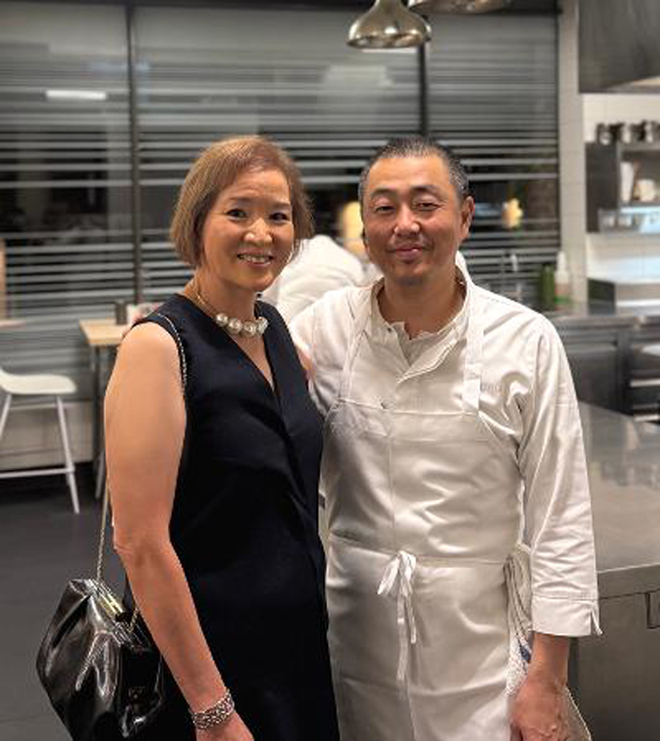
When you depart, the staff escorts you out into the courtyard in one last gracious and thoughtful gesture in an evening filled with many.

More: Dining at San Ho Won