When Vittal Shetty and Reshmi Nair — formerly corporate executive chef and operations manager, respectively, of the Bay Area’s Amber India restaurants — decided to venture out on their own, the plan was to always open their own restaurant together.
Little did they know, they joked, that it would take 11 years.
That’s because they didn’t count on the catering company that they immediately started to try to raise money for that restaurant venture turning into an immediate juggernaut.
Indeed, their Jalsa Catering & Events has grown into one of the largest and most sought-after Indian catering companies in the Bay Area. It was one of the first Indian catering companies to go beyond standard steam tables to present food with more fine-dining finesse. Shetty’s intent was to take the skills he used at Amber India and transfer them to the catering industry.
Jalsa, which means “social gathering,” caters upwards of 400 events annually, many of them weddings with as many as 500 guests, as far north as the Napa Valley and Lake Tahoe, and as far south as Carmel. It’s even been hired to do events in Arizona and Mexico.

“People would attend the weddings we did and ask ‘Where is your restaurant?’ because they enjoyed the food so much, ” Nair says. “We would have to tell them there wasn’t one.”
Not anymore. When the catering company relocated three years ago from Milpitas to Santa Clara (the former Justin’s Restaurant and Wilson’s Bakery site), it gained a lot more space. Enough for Jashn, which means “celebration,” to open there earlier this month.
Nair and Shetty managed to open the restaurant without any investors, too, thanks to the success and profitability of Jalsa which beget Jashn.
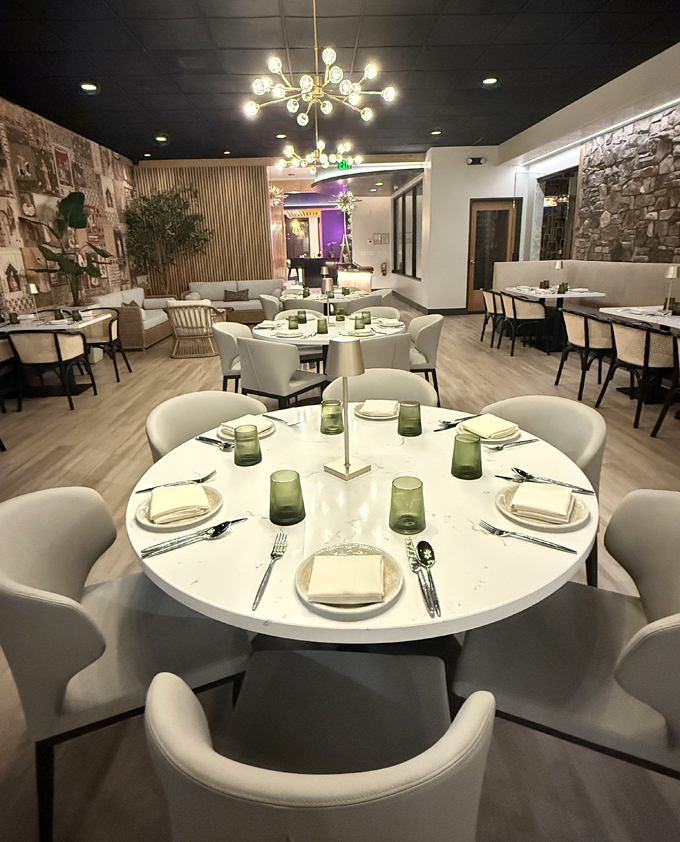
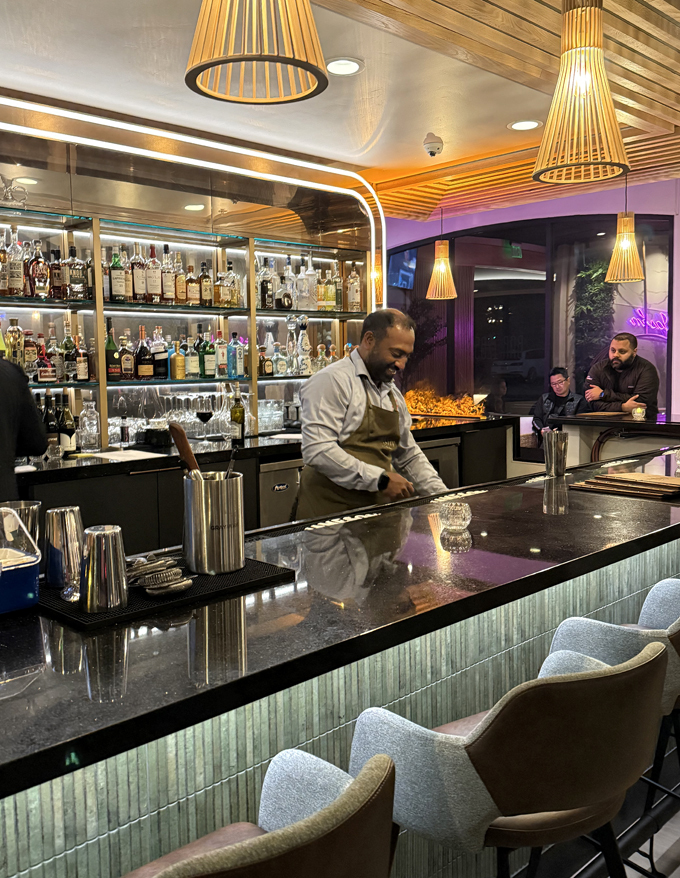
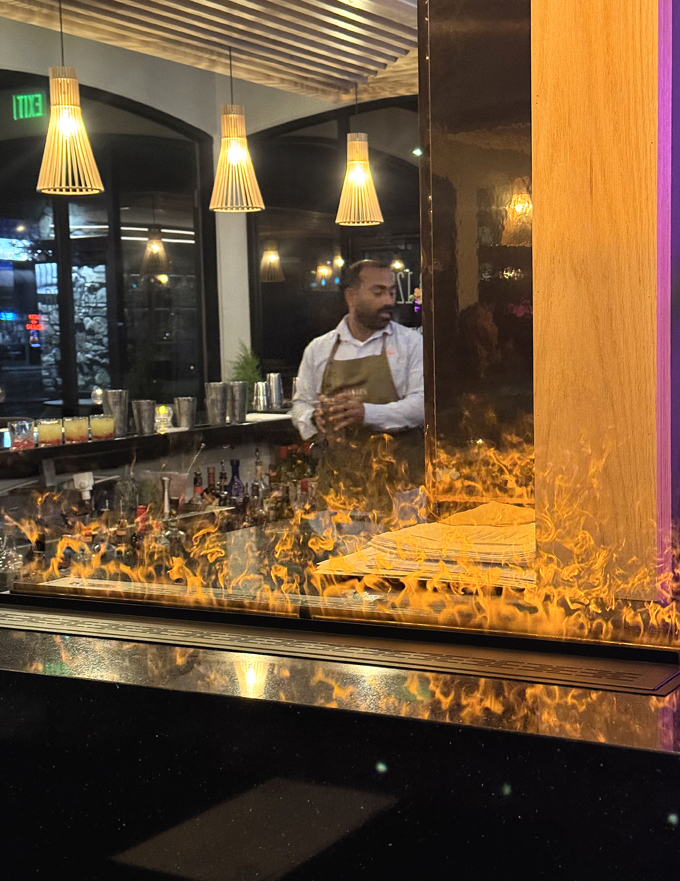
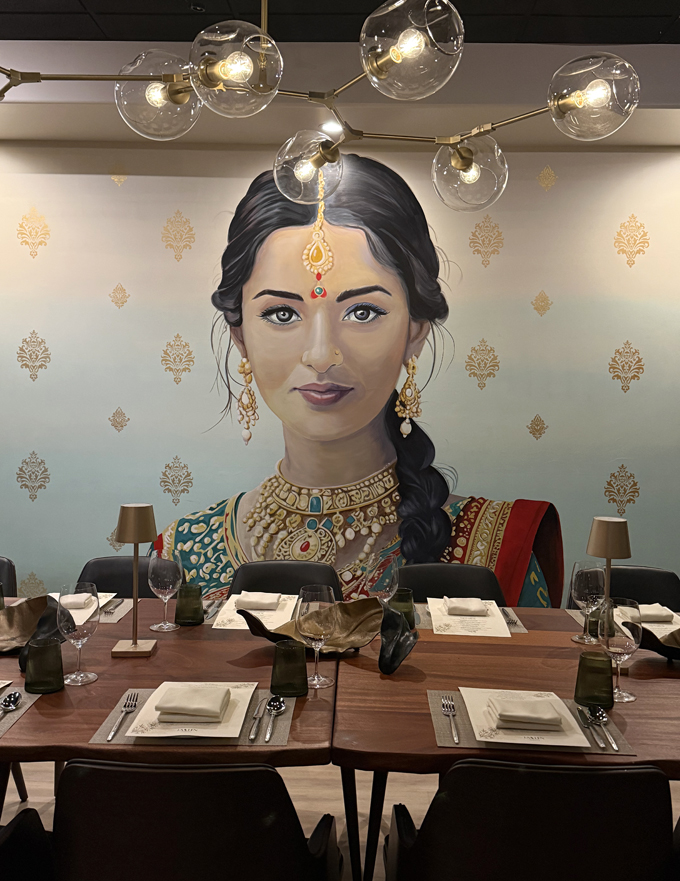
They redid the space nearly entirely for the 116-seat restaurant that’s open Tuesday through Sunday for lunch and dinner. Modern and artsy, it boasts a tiled bar with a small faux wall of flames, a dining room with banquettes and curved chairs, as well as two private rooms, including one with a striking mural by a local artist. Diners can order off the regular Indian menu at the bar or from a separate non-Indian menu with familiar items such as sliders and fried calamari.
“It would have been easy to just create a banquet hall here,” Shetty says. “But we saw that there was more potential here.”
The restaurant food is not a replica of what the catering company does. Instead, Jashn has its own staff and even its own chef, Siddhesh Parab, formerly of the now-shuttered SpiceKlub in Cupertino. His food spans the regions of India, and he’s not above adding molecular techniques to dishes, as I found out when I was invited in as a guest of the restaurant last week.
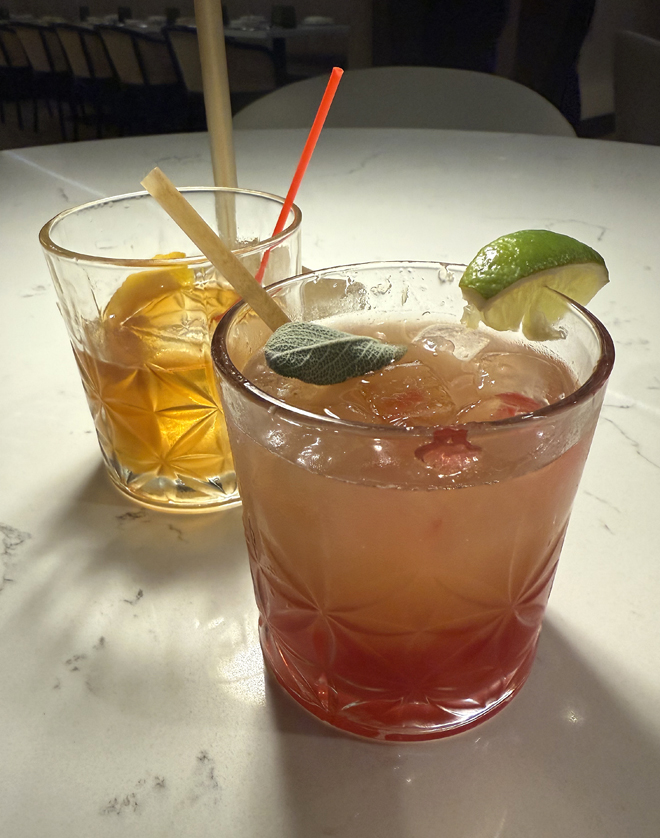
Start with Sands of Time ($17), if you want a strong whiskey cocktail with date syrup and cherry vanilla bitters playing up its toasty, caramel notes. Or go for the lighter Vrindavan Bloom ($17), fruity and herbaceous with gin, kiwi, basil, mint, sage, and lime, sporting pops of color from hibiscus jelly drops.
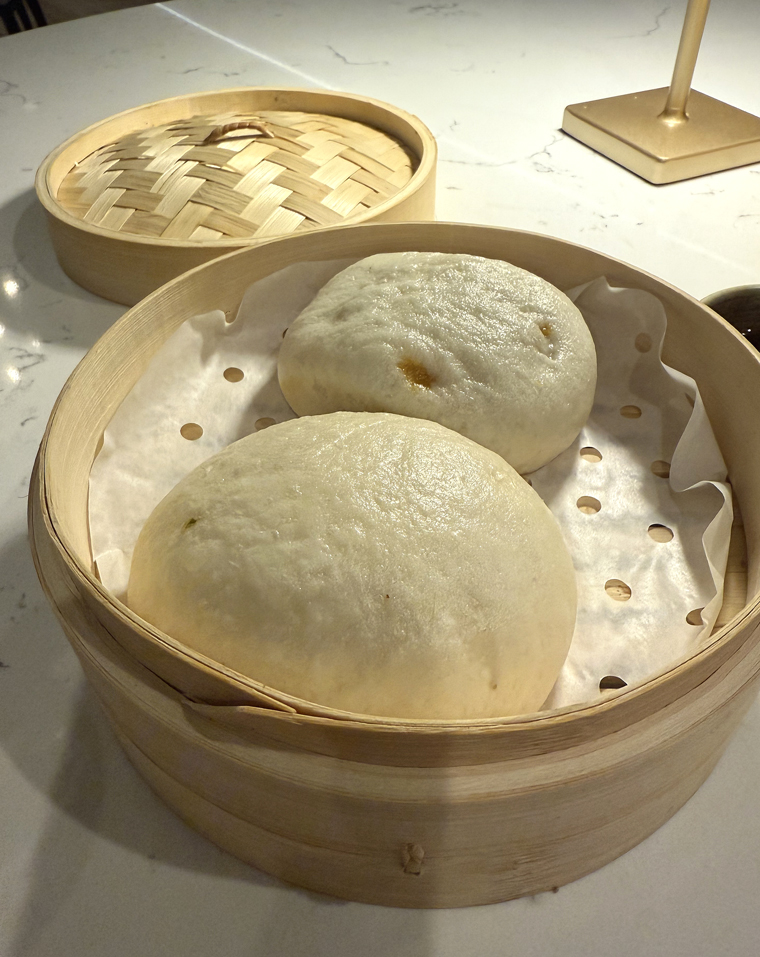
I was surprised to see baos and dumplings, of all things, on the menu. But Shetty explained that both those Chinese specialties, along with broccoli, are very popular in India now. Who knew?
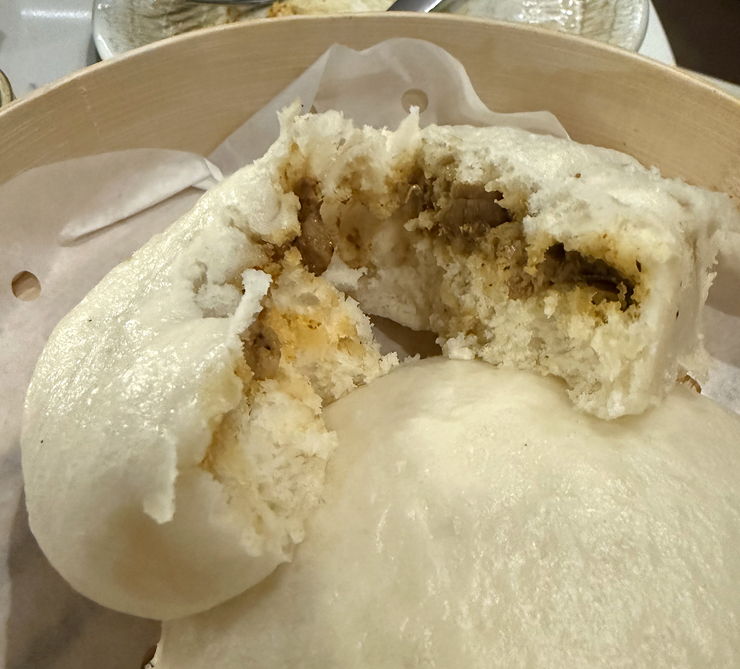
Two hand-sized Chettinad chicken baos ($19) arrive in a steamer basket, almost too hot to handle. The bao is as tender and fluffy as any you’d find at a good Chinese restaurant. Tear into it and you’ll find a filling of savory spiced chicken with the unmistakable warm taste of star anise.
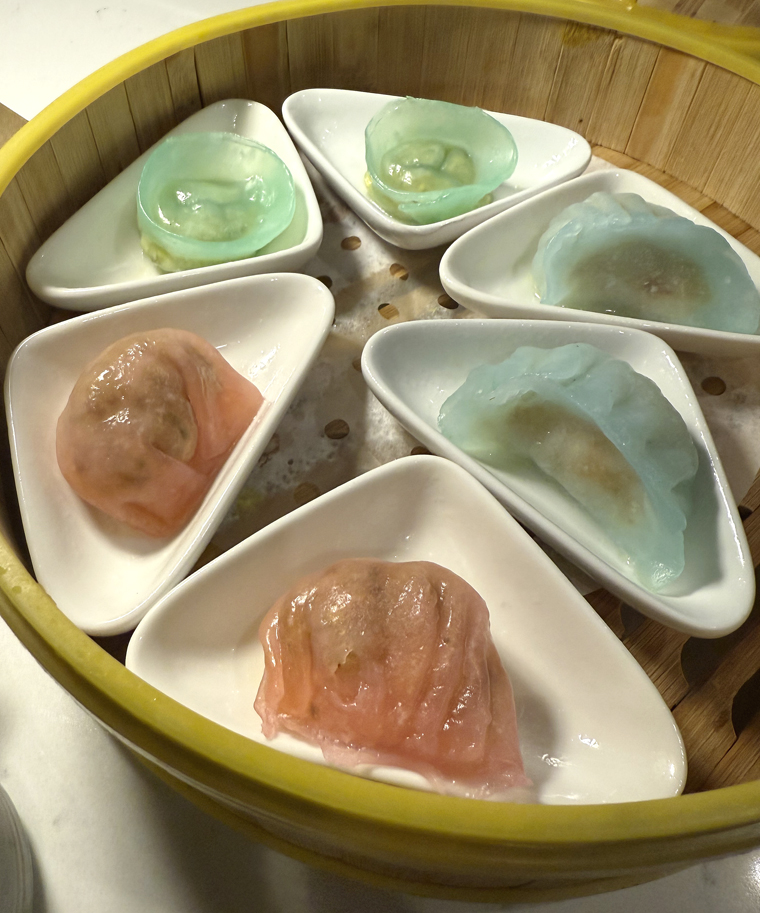
The hargao dumplings ($22) come six to an order, two each of prawn, chicken, and asparagus. The wrappers are thin, with that familiar chewiness that you usually get from tapioca flour. However, these are made with all-purpose and potato flours. They get an otherworldly iridescent coloring, too, from beet puree, spinach puree, and butterfly pea flower. Again, they’d be right at home at a dim sum restaurant.
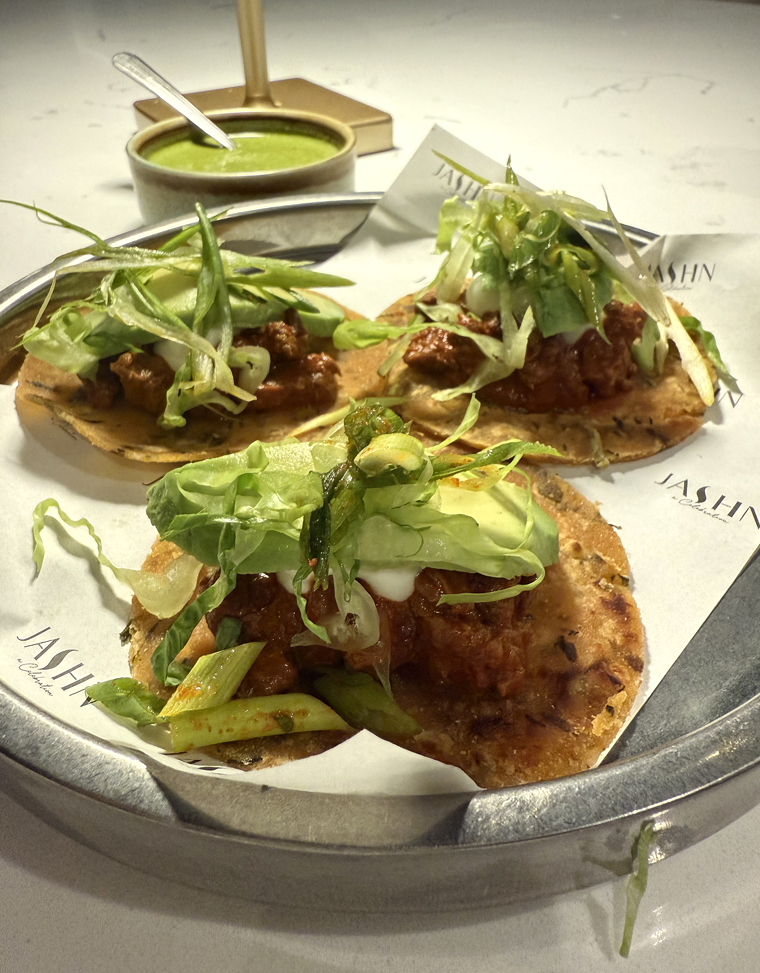
Mathania chili-spiced mutton ($20) with earthy, sweet, and spicy notes gets served Mexican-style — on tacos. Thepla, a classic Indian flatbread with fenugreek, is formed into circles the size of small tortillas, then topped with the lamb, avocado, and sour cream. Spoon on some mint-cilantro chutney, then pick it up with your fingers to enjoy.
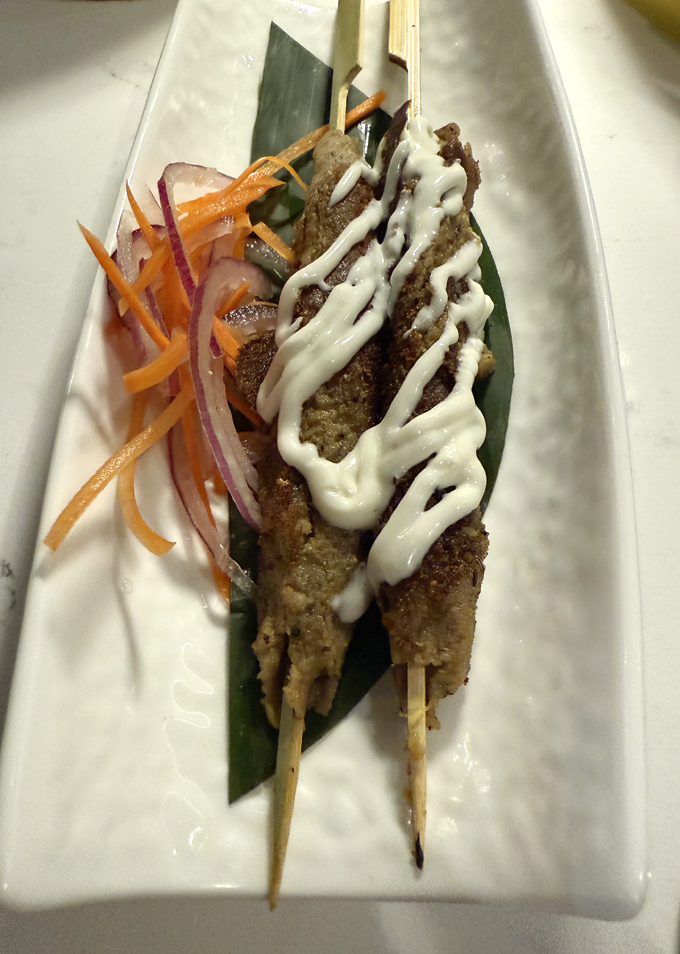
Kakori is a popular Indian street food kebab that’s grilled until so tender that it falls apart. At Jashn, it’s made vegetarian with a mixture of banana and walnuts ($16) that get a drizzle of cream cheese. This version lives up to the expected texture, so soft that it’s nearly impossible to get it off a skewer in one complete piece. Even my husband, aka Meat Boy, was surprised that the texture could almost pass for shredded, long-braised meat.
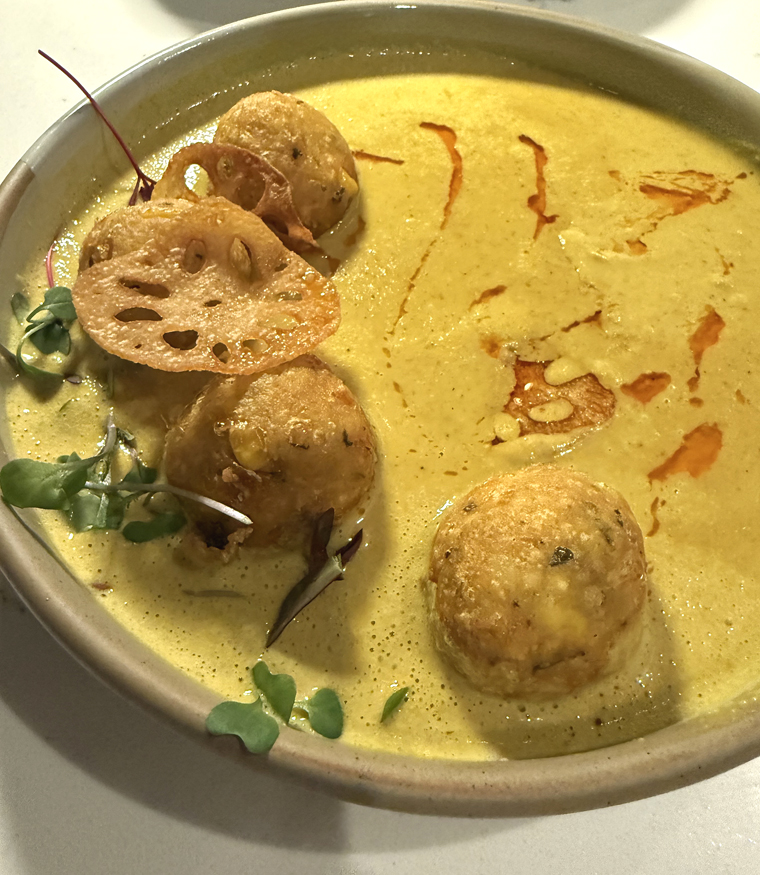
Another vegetarian dish, shishito pepper corn kofta ($24) are crispy balls that give way to a soft interior. The creamy, delicious sauce veers a little Southeast Asian with coconut milk, makrut lime, and lemongrass. There’s plenty of sauce, too, so you’ll want a side of saffron rice ($6) to go with it.
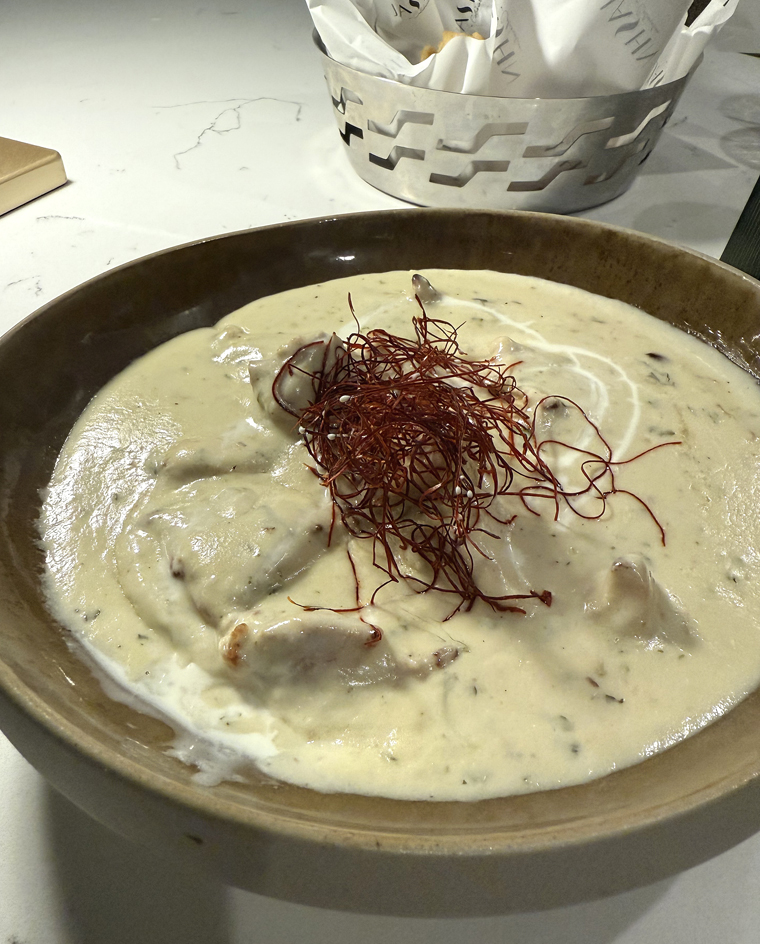
The butter chicken ($28) is probably unlike any other you’ve had before. It’s white, made with yogurt and cashews without any of the usual tomato. Tender chicken pieces are buried under a very thick and creamy sauce that gets a little sweetness from coconut. Just be prepared that this is a very rich rendition, owing to the fact that there’s no acidity from tomato to cut through it.
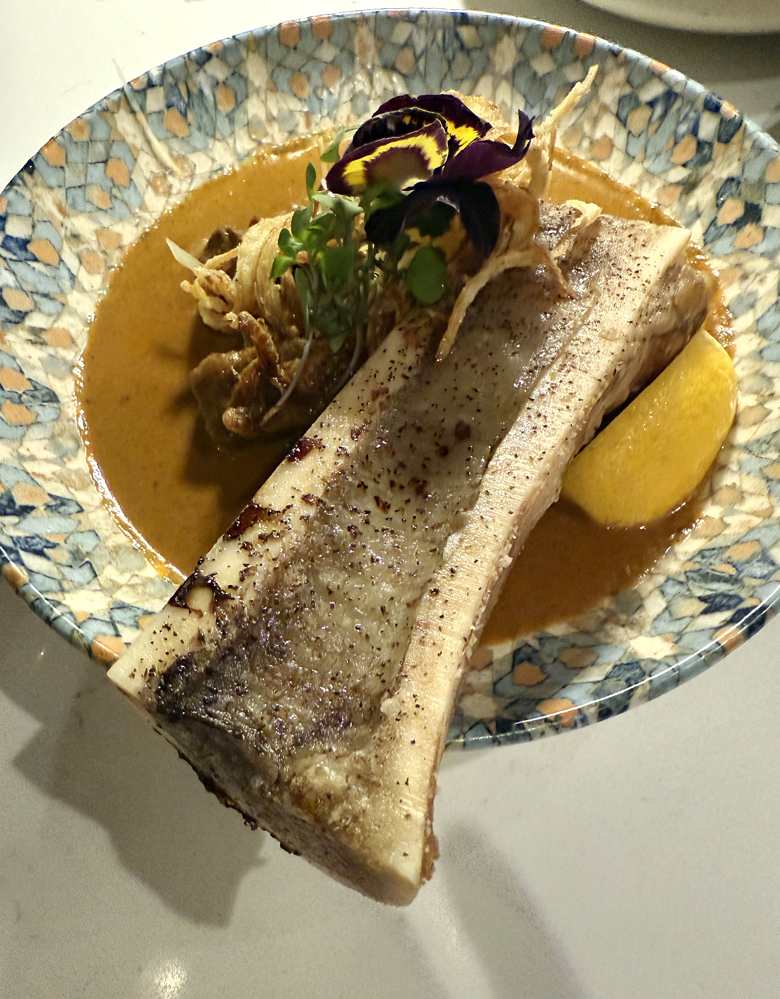
Nalli Nihari ($25) is a long-cooked beef stew that Parab has added a touch of flair to by presenting it with a marrow bone on top. Usually, the marrow is cooked into the stew. But here, you scrape out the buttery marrow and mix it into the deeply spiced gravy, yourself, or dollop a little atop a morsel of beef before popping it into your mouth. It’s a taste that’s at once luxurious and comforting.
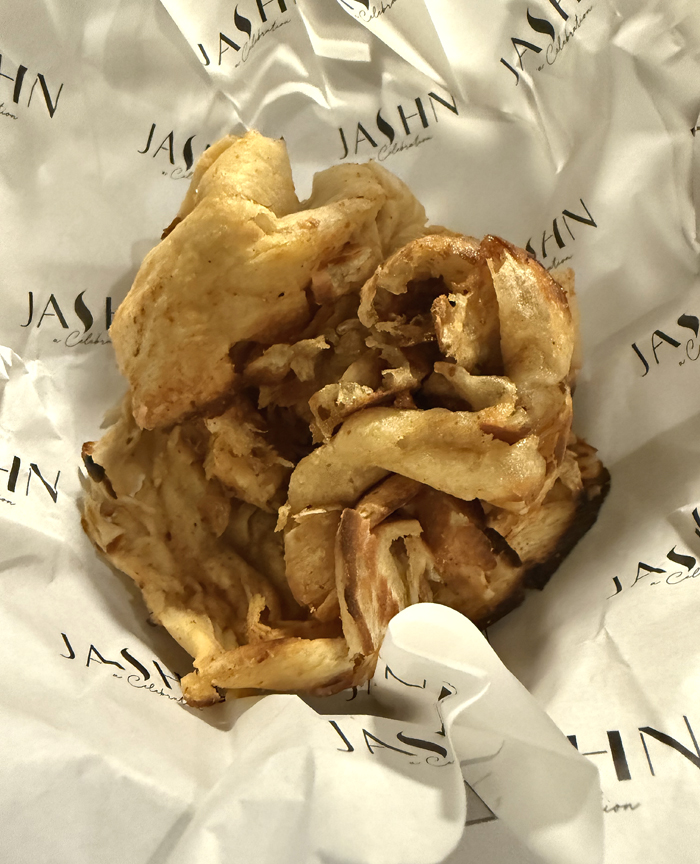
To enjoy alongside everything, the chur chur naan ($6) offers a different take on the more prevalent soft, thick naan. This version is flaky and crispy, and actually crumpled into a ball for serving. Tear off a piece to enjoy its buttery taste and layers upon layers.
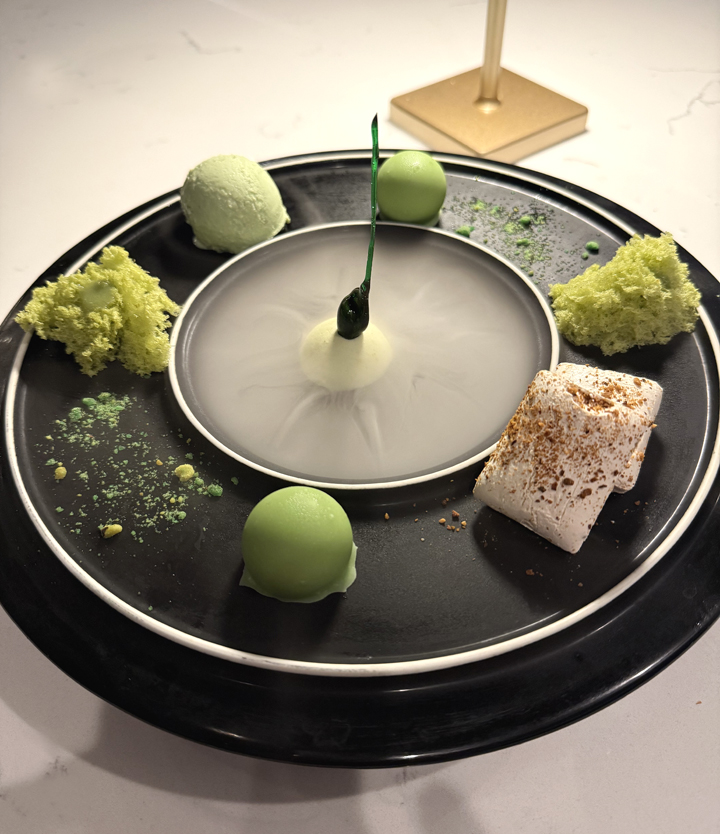
Dessert is where the showmanship comes out. Pistachio Textures ($16) is exactly that — the tiny nut featured in mousse, ice cream, ganache, “soil,” and even solo in a sugared candy coating, all arranged around the perimeter of a plate with a center of dry ice spewing vapor wisps.
Rose Kulfi ($18) is actually created tableside. A server dunks a fresh rose into liquid nitrogen to freeze it. You’re instructed to crush the petals into the milky custard base. More liquid nitrogen is added (video here), and in seconds, the mixture turns solid enough to be scooped into bowls that get topped with rose-strawberry “caviar.”
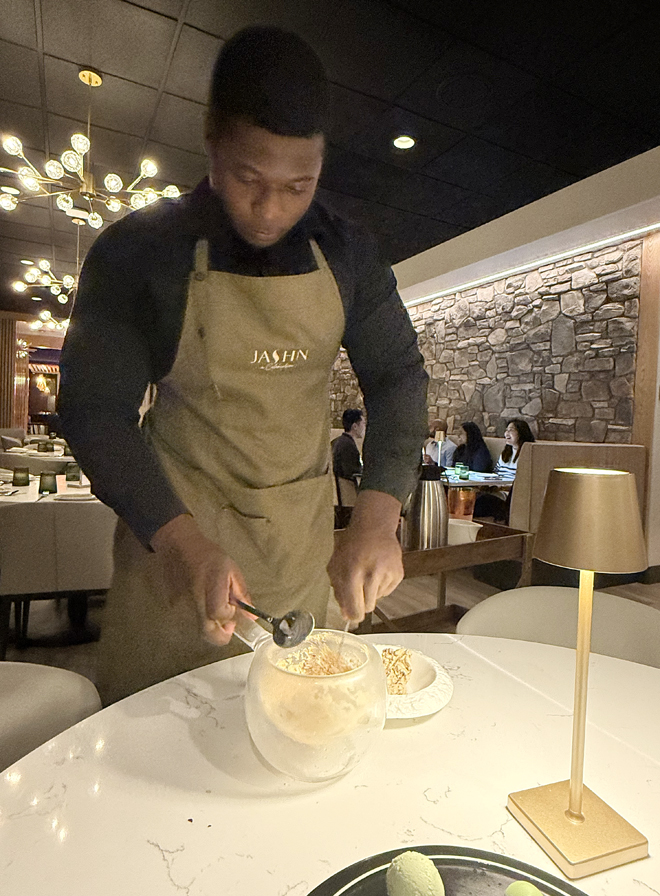
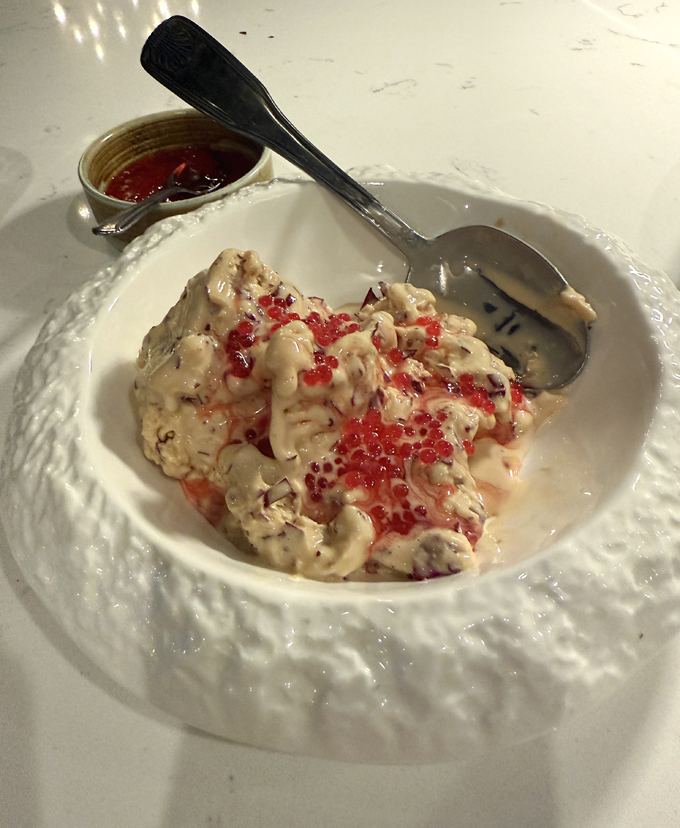
There’s no denying how fun this presentation is. The kulfi, with a denser texture than ice cream and a slight chewiness, is creamy and rich, with a definite floral note that pairs so well with strawberry without being overwhelming.
It’s a bit of magic that adds theatrics to this quiet part of the ‘burbs.