
Even after visiting twice in six months, there are still so many aspects about Japan that I sorely miss:
The speed and efficiency of its bullet trains.
The reverence for ancient cultural traditions.
The civility and orderliness.
And most of all, the pudding.
Whether we had just gorged on a dinner of sushi or ramen or even a fine kaiseki, my husband and I could not pass a 7-Eleven there at the end of the night without stopping in to grab a small container of pudding in the refrigerator case.
Think the smoothest, silkiest flan with a layer of dark, bittersweet caramel.
For all of $1.50 U.S.
Is it any wonder that one taste left us immediately hooked on this pudding that’s known as purin?
Yearning for it back home, I came across a particular intriguing version of it: “Soy Sauce Pudding (Shoyu Purin)”
It’s from the new cookbook, “The Japanese Pantry” (Smith Street Books), of which I received a review copy.
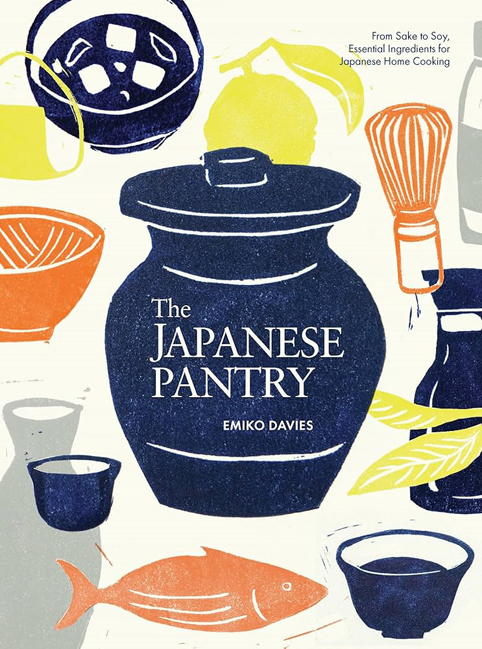
It’s by Emiko Davies, an Australian-Japanese food writer and veteran cookbook author, who runs a cooking school and natural wine bar, Marilu, with her sommelier husband in San Miniato, Tuscany.
Each of the book’s chapters highlight a specific pantry staple, such as miso or rice vinegar or tea, with corresponding recipes that spotlight it. For instance, in the miso chapter, there’s “Rice Cakes with Walnut Miso” and “Walnut Miso Cookies.” In the seaweed chapter, find “Kombu-Cured Sashimi” and “Teacup Steamed Custards (Chawanmushi). And in the tea chapter, there’s “Sweet Arrowroot Tea” and “Matcha Mochi Crepes.”
According to Nami Hirasawa Chen, the creative force behind the authoritative website on Japanese cooking, Just One Cookbook, there are three types of purin in Japan: yaki purin, cooked in a water bath in the oven; mushi purin that’s cooked in a steamer on the stovetop; and gelatin purin that forgoes all of that because it’s solidified with gelatin. That’s the method, she says, that is typically used for purin sold at supermarkets.
Davies’ recipe caught my attention because it calls for a splash of soy sauce in the custard base. Since I appreciate how Japanese desserts tend to be restrained in sweetness, especially in comparison to so many teeth-achingly cloying ones in the United States, I was curious to see how prominent the soy sauce would be in the final product.
Her recipe also peaked my interest because it uses only whole fat milk, while other purin recipes I’ve come across also incorporate heavy cream. Because the purin sold at Japanese convenience stores ate so light, I figured a milk-only recipe might more resemble that version.
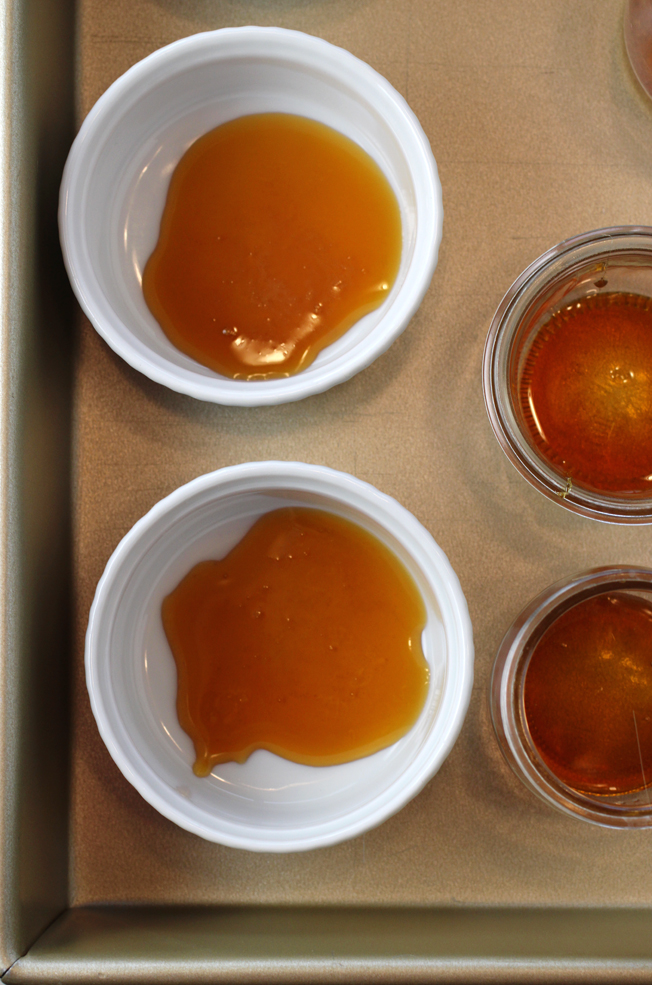
I did tweak one part of the recipe. I don’t know if it’s my ill luck with making caramel on the stovetop, but my first attempt at following her directions did not work. I melted sugar in a saucepan with 1 tablespoon of water, as she directed, watching it until it turned amber. However, by the time it did that, the sugar had crystalized into a hard mass at the bottom of my pan, with the tiny bit of water having long evaporated.
So, I consulted other recipes, then tried again. This time, I put the sugar in a saucepan on the stovetop without any water, and let it melt and caramelize on its own. It did so quite easily. After it had turned amber in color, I took the pan off the heat, then quickly — and carefully, as the contents my hiss and bubble up — I stirred in 1 1/2 tablespoons of water. This did the trick. The caramel stayed syrupy so that I could pour it into the bottom of ramekins and small glass jars.
Next, I heated milk and sugar on the stovetop before stirring in a tablespoon of soy sauce. Once that mixture cooled down, I whisked it, a little at a time, into a bowl of beaten eggs. Finally, I took the extra step that’s not called for in this recipe, to pour the custard through a sieve into a large spouted measuring cup, which made it easier to add the custard base to the ramekins.
Once filled, arrange ramekins in a baking pan. Add hot water so the level comes up about half way in the pan, then slide into the oven to bake.
Cool or chill in the refrigerator before serving.
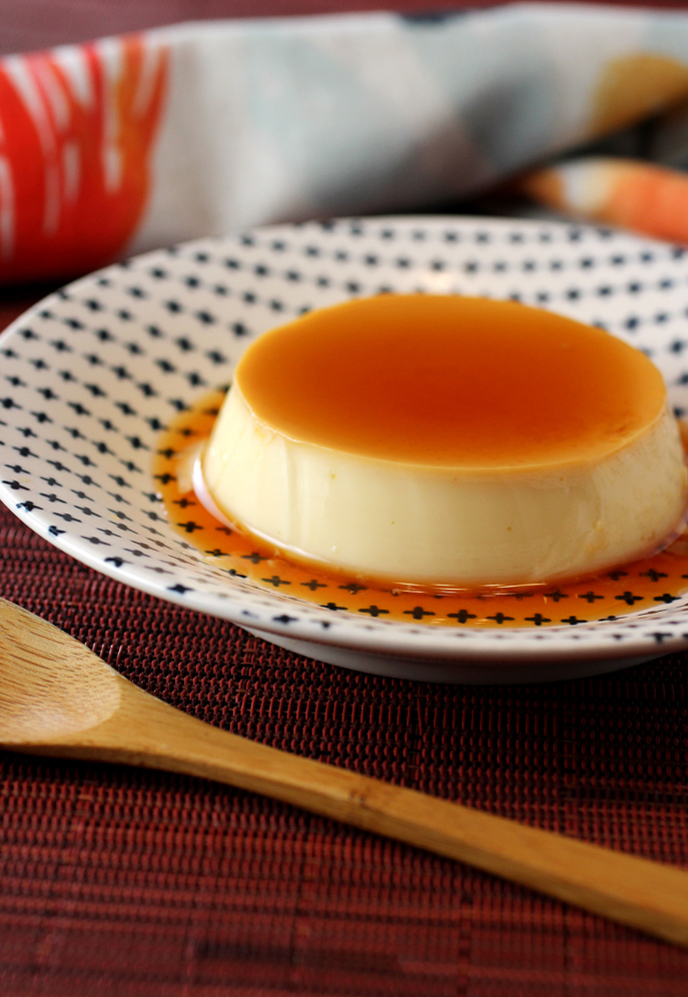
To unmold, run the thin blade of a knife around the edge of the ramekin, then place a rimmed plate over the top, and quickly invert. The pudding will release easily. I also made some in small glass jars to mimic the convenience store ones. You don’t have to unmold those.
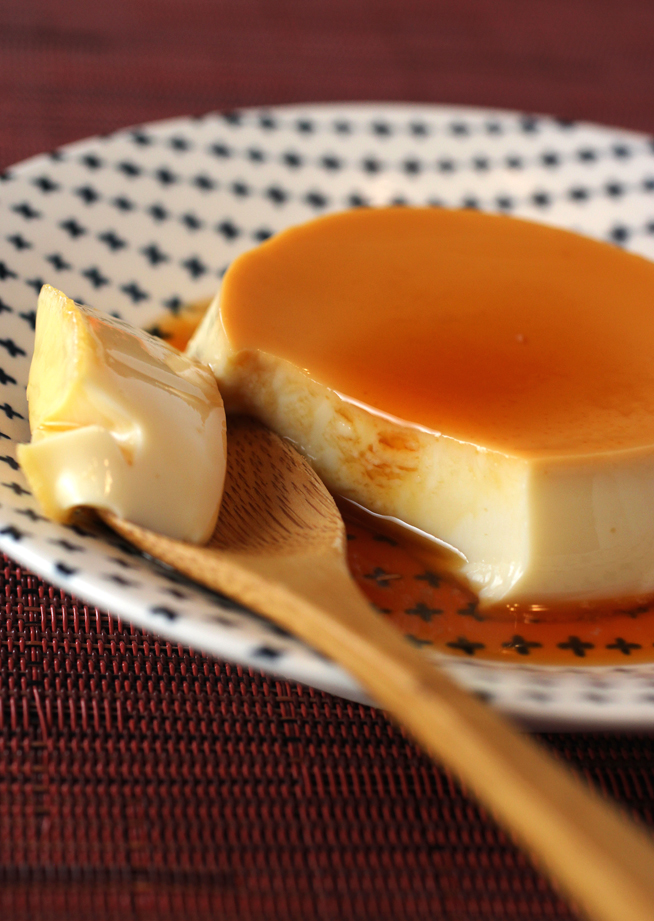
The taste is milky, eggy, and custardy. The soy sauce is subtle, adding a greater depth of flavor, as well as balancing the sweetness of the caramel. The pudding is quite flan-like, though, a little more delicate and jiggly.
It will definitely satisfy my cravings until the next time I pop into a corner store in Japan.
Soy Sauce Pudding (Shoyu Purin)
(Serves 6)
For the caramel:
65 grams (1/3 cup sugar)
For the pudding:
500 ml (2 cups) whole milk
50 grams (1/4 cup) granulated sugar
1 tablespoon soy sauce
4 eggs
Preheat the oven to 160°C (320°F). Arrange 6 ramekins in a deep baking dish.
To make the caramel, put the sugar in a small pan. Place over low heat and watch the sugar carefully as it begins to melt, then simmer, and finally, turn amber. Resist the urge to stir but just let it do its thing, at least until the very end, when a swirl of the pan can help. When it begins to color, it will do so very quickly so be ready to remove it from the heat at deep amber — too dark and it will be bitter. I don’t have to tell you that hot caramel is incredibly dangerous, so don’t let a drop touch your skin. When the caramel is the ideal color, remove the pan from the heat, and stir in 1 1/2 tablespoon water, taking care as it may bubble up.
Immediately pour the hot caramel into the ramekins (a spoon can be useful, or pour freehand). It solidifies very quickly, so don’t worry it if doesn’t cover the bottom of the ramekin — it will all come out perfectly in the end. Set aside.
Warm the milk and sugar in a saucepan over medium heat. As soon as you can see bubbles around the edge and the milk is steaming, take it off the heat before it can simmer. Add the soy sauce and have a taste — if you would like a stronger soy sauce flavor, add another teaspoon. Leave to cool slightly.
Whisk the eggs gently by hand in a bowl — a machine will make them too frothy and you’ll have puddings filled with holes. Once the milk has cooled to warm bath temperature, add it to the eggs. To ensure a smooth consistency and ease when pouring, strain the custard through a fine-mesh sieve into a 4-cup glass measuring cup with a spout. Pour the custard into the ramekins.
Fill the baking dish with hot water and put in the oven (if it’s a heavy dish, it’s safe to put it in the oven, then add water).
Bake for 25 minutes or until the custard has set — it will be wobbly to the touch but the top will be lightly browned.
Cool completely before serving, or they can be chilled until needed. They will keep in the fridge for 3 days.
To serve, run a knife around the edge of the ramekin and hold a plate over the top (ideally one with a bit of a lip to catch the caramel), then flip everything over in one swift movement so the pudding turns out.
Adapted from “The Japanese Pantry” by Emiko Davies
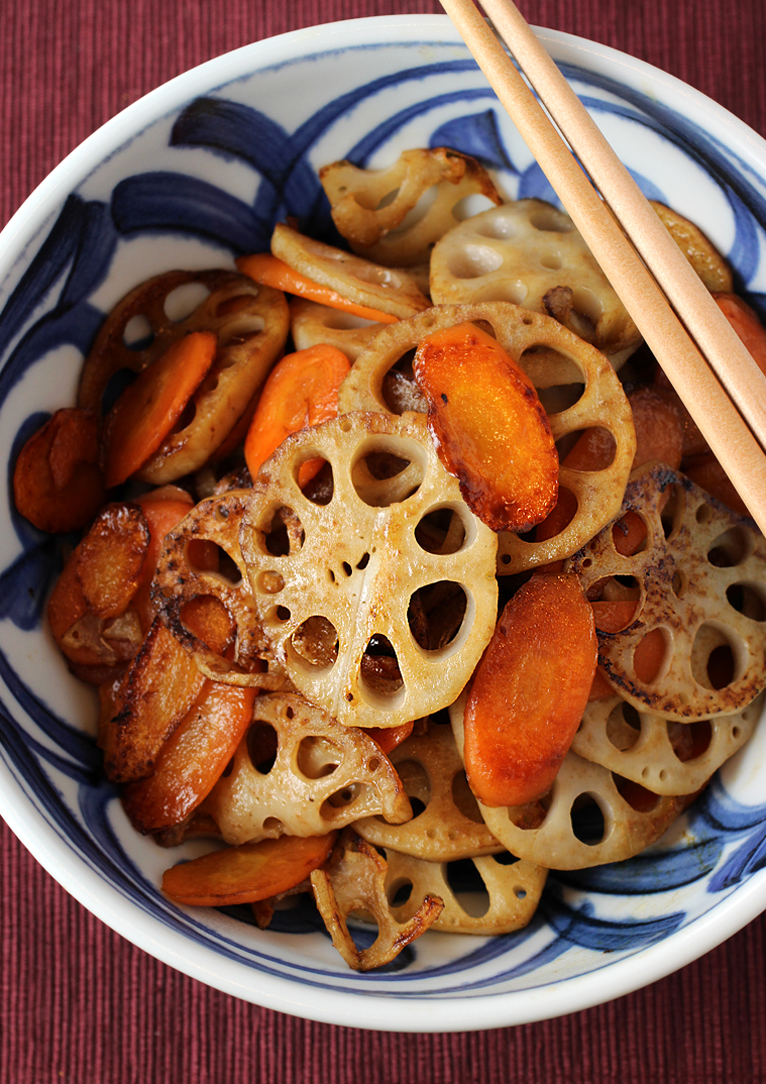
Another Emiko Davies Recipe to Enjoy: Fried and Braised Lotus Root and Carrot
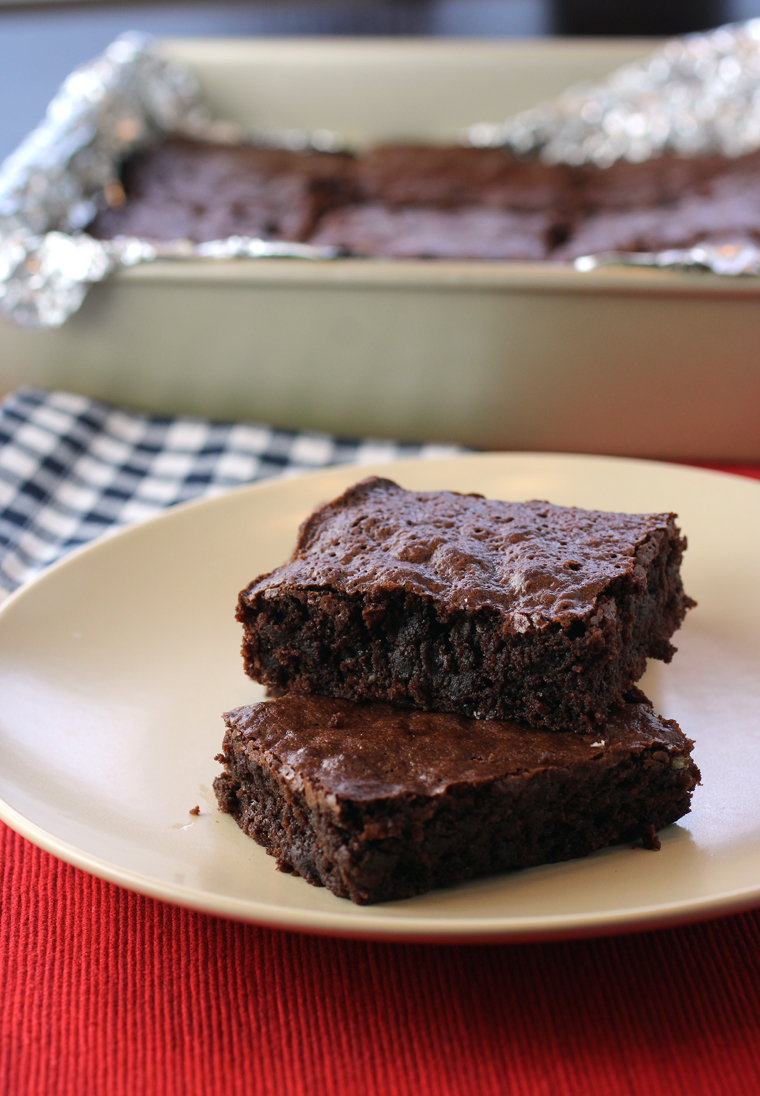
Plus Another Soy Sauce-Flavored Dessert: Flourless Soy Sauce Brownies by Hetty McKinnon