Chicago, IL — If ever there was a chef to rise from the lowest of the lows to the highest of highs, it is Curtis Duffy.
His impoverished upbringing was not only marked by constant upheaval, but with the worst of tragedies.
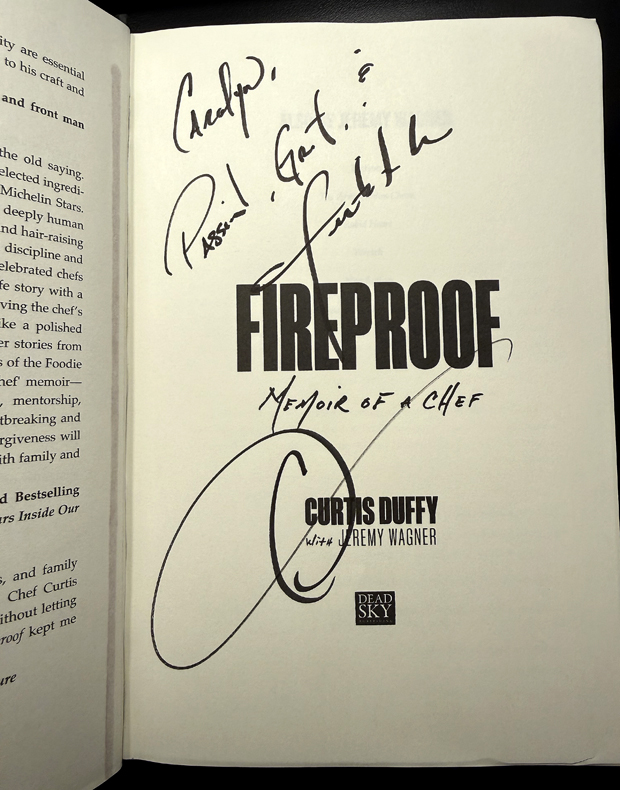
If you don’t know his compelling story yet, do yourself a favor and watch his documentary, “For Grace.” Or better yet, read his recent memoir, “Fireproof: Memoir of A Chef” (Dead Sky Publishing, 2025)
Either way, you will come away marveling at someone who faced down so many demons, and persevered to first open the Michelin three-starred Grace, then the Michelin two-starred Ever and its appropriately named bar-lounge next door, After, all in Chicago.
If you are a fan of “The Bear,” you will also immediately recognize Ever as the inspiration for the Michelin three-starred restaurant in the series where cousin Ritchie (Ebon Moss-Bachrach) stages under the helm of Olivia Coleman’s Chef Andrea Terry.

Admiration, fandom, and of course, the pursuit of great dining all steered me to Ever when I was planning my trip to Chicago.
It offers a tasting menu of about 8 courses for $325 per person. With eight different pours to match, the signature wine pairing is $195, the cellar wine pairing is $345, and the non-alcoholic pairing is $115.
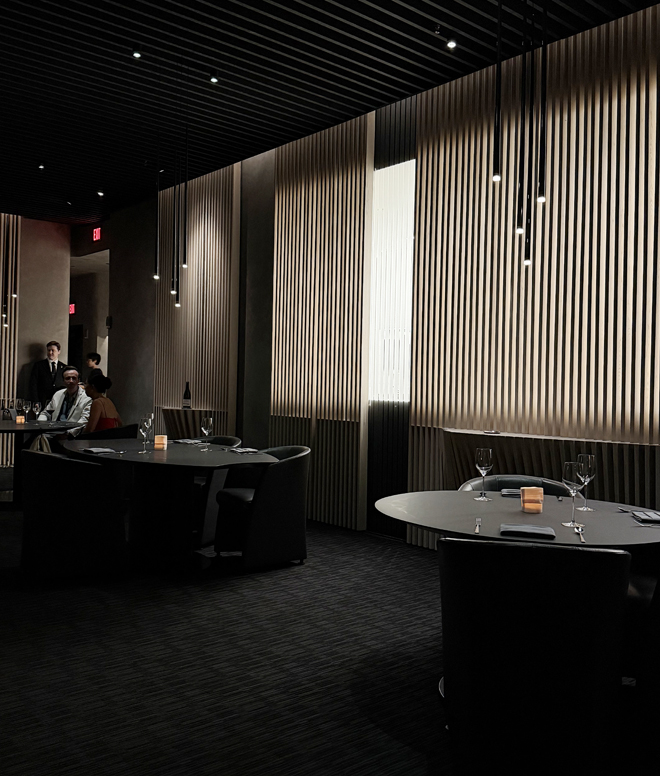
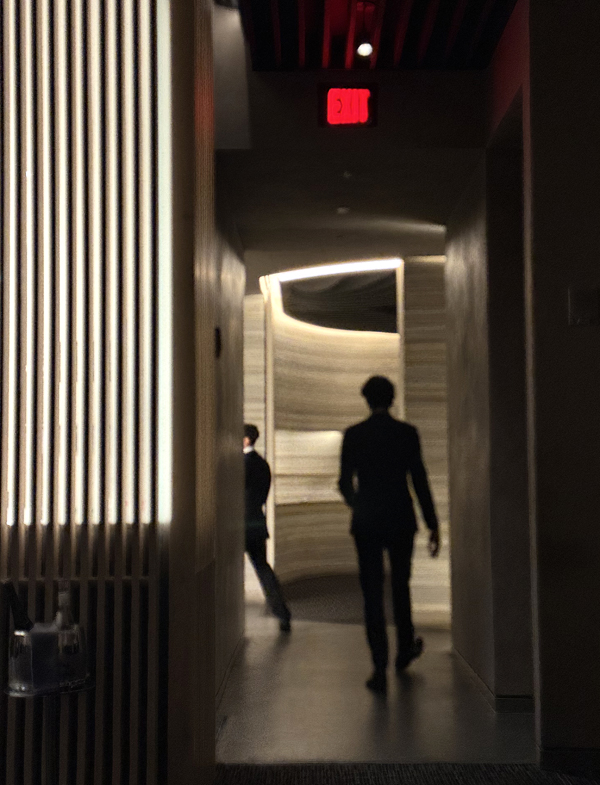
After walking through its doors, I doffed my jacket and handed over my copy of Duffy’s book that I had toted on the plane with me from the Bay Area in hopes that he might be in the restaurant that night to sign it. The host took charge of the book, and said she thought he was indeed on the premises this evening.
Immediately at the entrance, you’re greeted with a non-alcoholic drink composed before you with great flourish. Liquid nitrogen is poured into and out of the glasses to chill them instantly (see video). A non-alcoholic moscato is poured in and garnished with what looks for all the world like a green olive but is really a rare, unripe baby mountain peach from Japan known as a Wakamomo. The drink tastes of peaches and honey. The mountain peach, which is entirely edible, has a texture like a juicy grape.
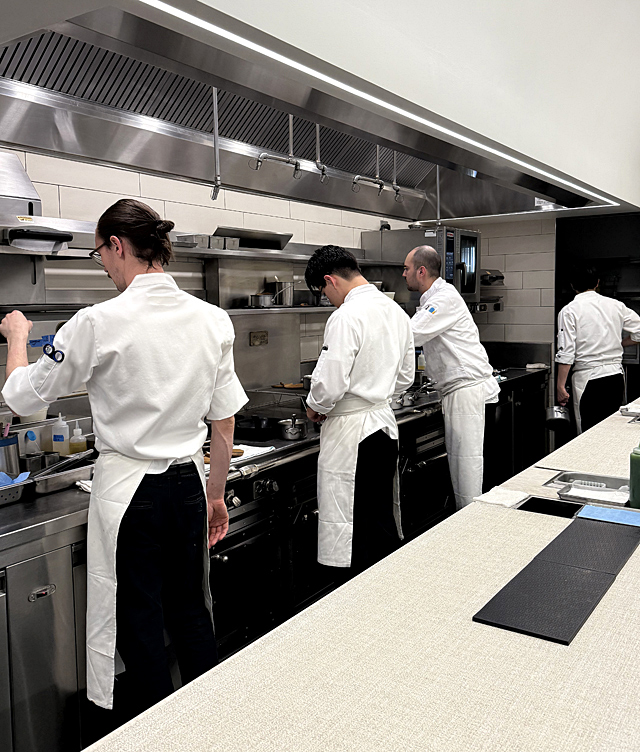
You’re escorted through the kitchen, which is markedly quiet. It is starkly black and white, with a black matte custom Bonnet stove, the first one made in that color especially for Duffy.
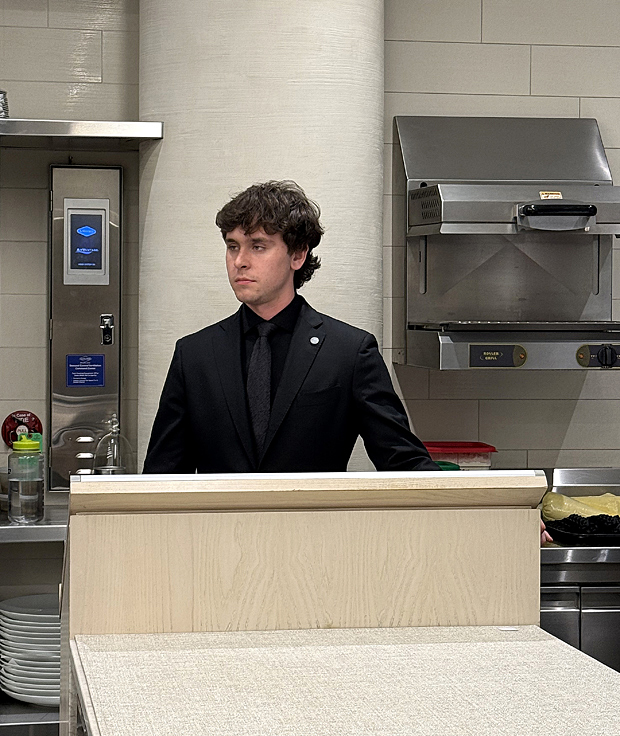
You recognize the expediter stand, positioned exactly like it appeared in “The Bear.” You’re escorted past a hallway, which brings to mind the scene in “The Bear” where Will Poulter’s pastry chef, Luca, corners legendary Chicago Chef Grant Achatz to repeatedly ask if his feats of culinary daring do are the result of wires used.
Finally, you’re seated in the dining room. It’s sleek and contemporary as can be, black and gray and stripped of unnecessary adornment, and dimly lit with precise pinpoints of light.
You look around and you realize the main glow emanating is from the kitchen. Unlike most any other restaurant where it’s situated off to one side, the kitchen here is located at the very center of the space.
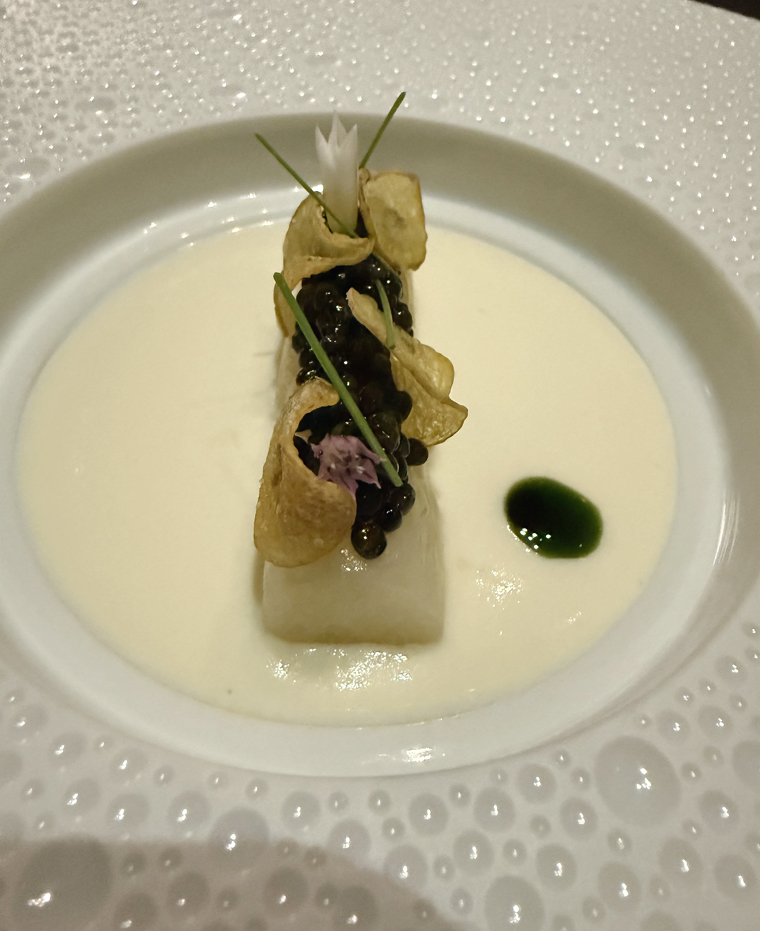
There is no amuse bouche. Instead, the meal, itself, begins with an elegant first course, silky white asparagus propped atop a smooth potato-asparagus puree. It’s all garnished with buttery tasting Oscietra Grand Reserve Caviar and the tiniest of potato chips. When you poke your fork into the asparagus spear, you find to your surprise that it’s already been sliced imperceptibly for easy eating.
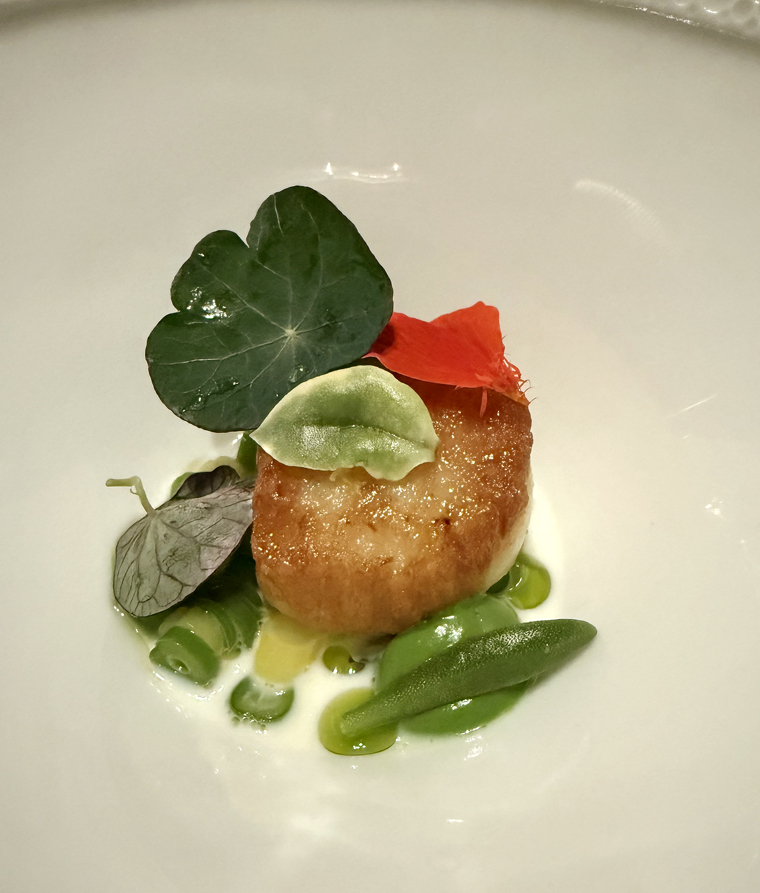
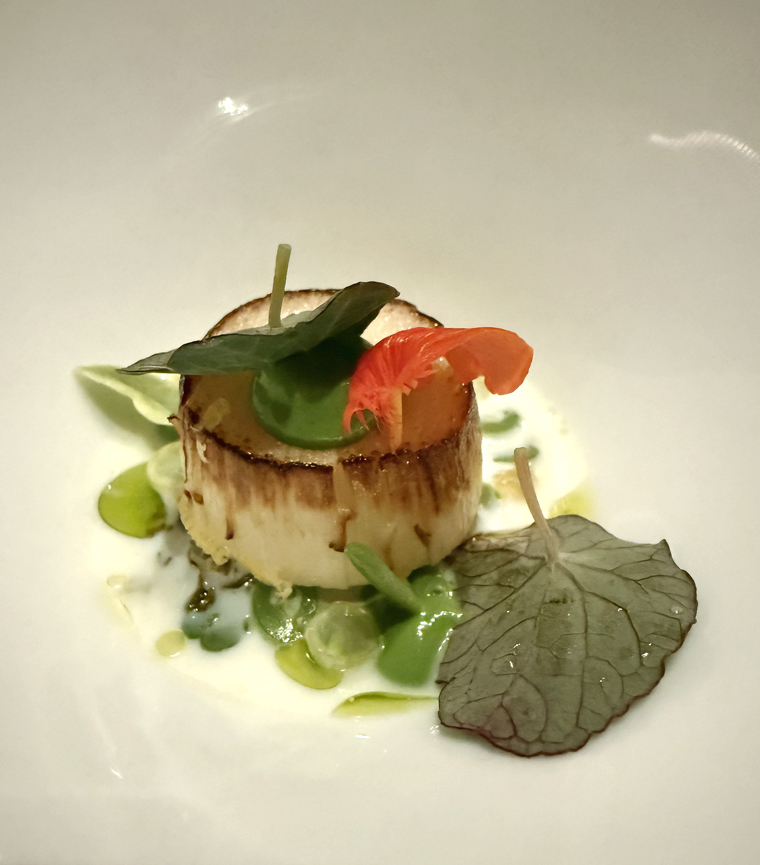
That’s followed by Hokkaido scallop for my husband, and heart of palm for me instead, owing to my allergy. The preparation for both remains largely the same. It’s a chilled dish, with French green beans, romaine jam, and nasturtiums. With the heart of palm, it’s nicely crunchy, plus nutty tasting with a tinge of sweetness.
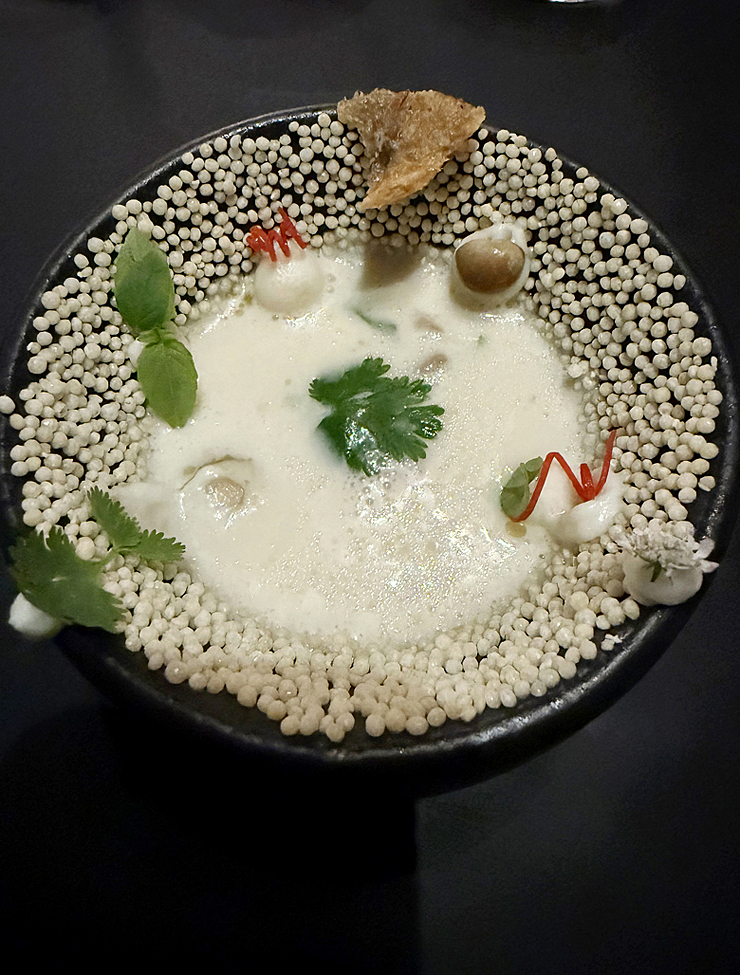
What arrives after has got to be the most beautiful rendition of tom kha gai imaginable. Bowls are set down on the table, each covered with tiny bits of crispy rice, plus teeny garnishes here and there, including a fabulous nugget of fried chicken skin. The coconut soup is poured in, releasing the fragrance of makrut lime leaves. You use your spoon to fleck off bits of the garnishes into the soup to enjoy.
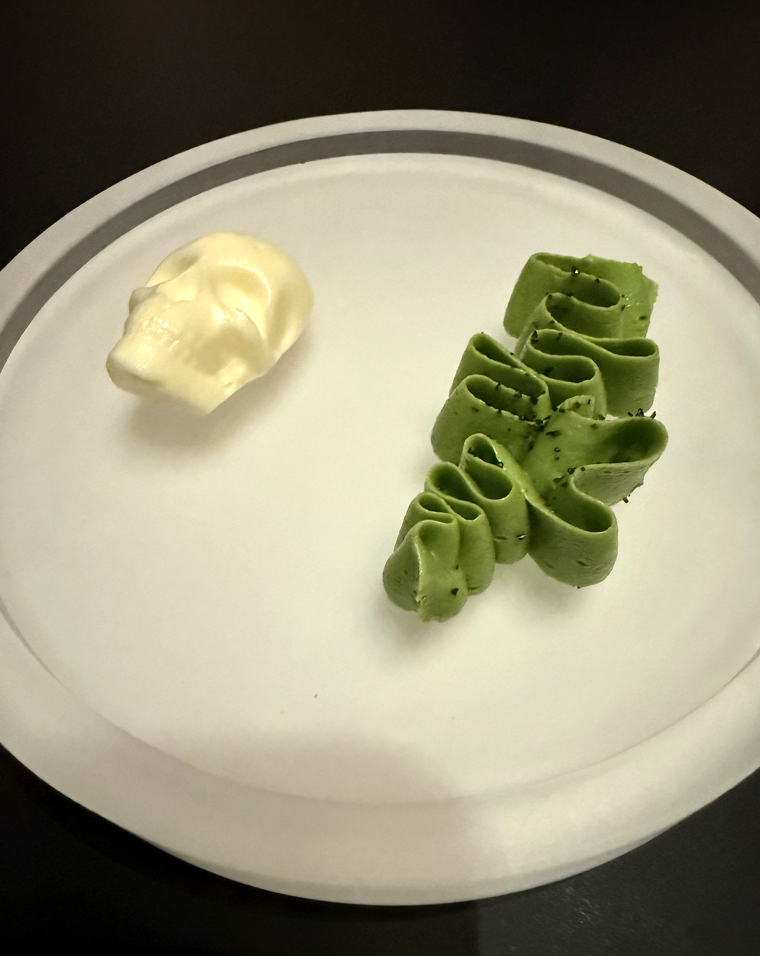
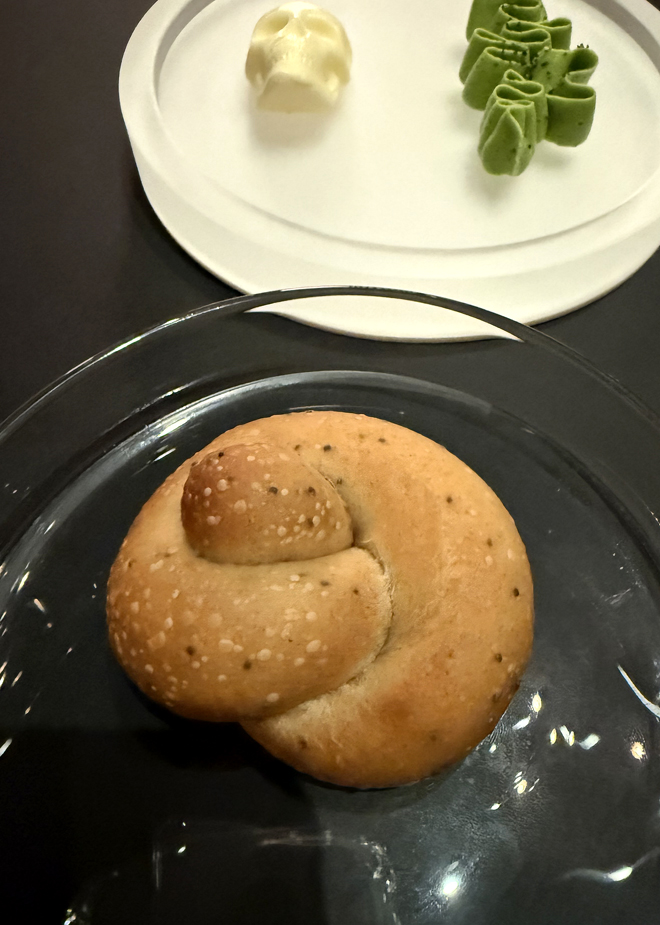
The first of three breads arrives with two types of butter: a vivid green squiggle fortified with basil, dill, chervil, and chives; and cultured butter in the shape of a skull — an homage to Duffy’s passion for skulls and metal music. The poppy seed-rye knot is my favorite of the night with its earthy, slightly tangy taste, and hearty yet tender texture.
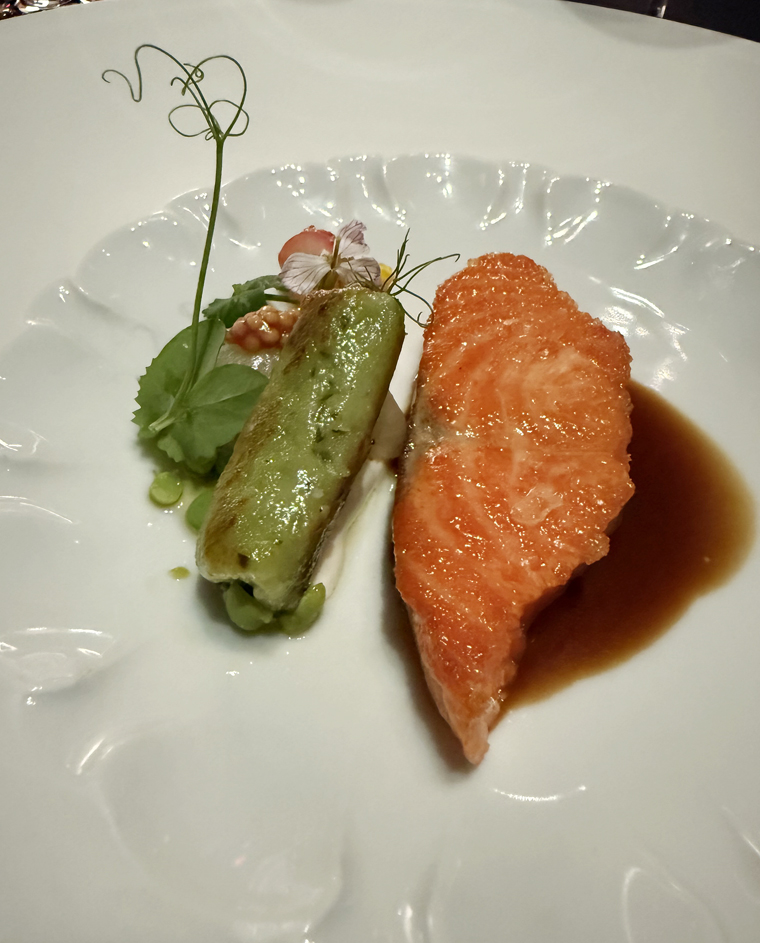
Scottish salmon is seared only on one side so that the skin gets quite crispy yet the rest of it remains almost sashimi-like. Meltingly tender in the center, the fish cuts like butter. It comes alongside a tender ricotta gnocchi in a pea-nettle puree, along with spring peas that are not only peeled but cut in half.
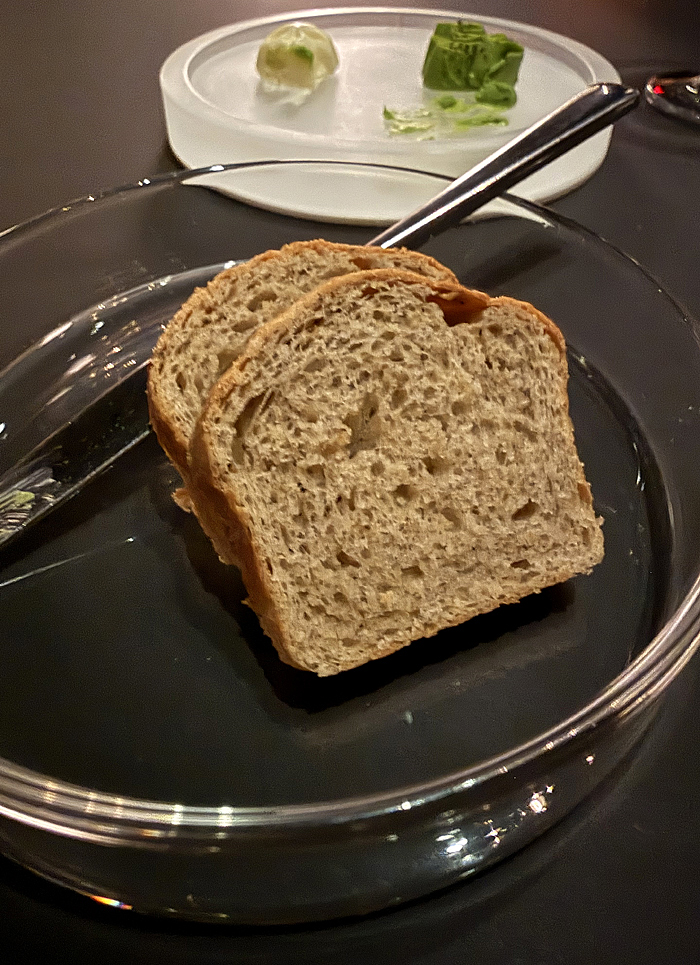
The second bread arrives: slices of tender coconut loaf flavored with lime gel.
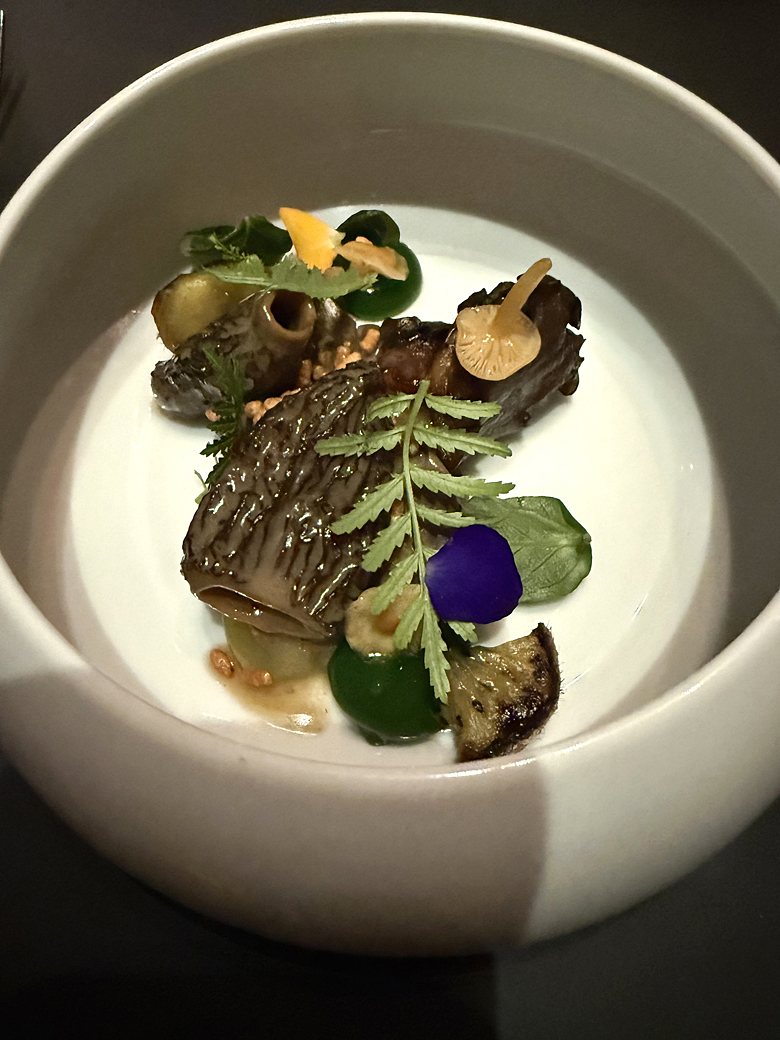
Mushrooms get their own dish to shine spectacularly. At the heart of it is morels surrounded by black king trumpet, maitake, a portobello puree, popped genmai rice, and kiwi. It tastes hauntingly like the deepest of forest floors.
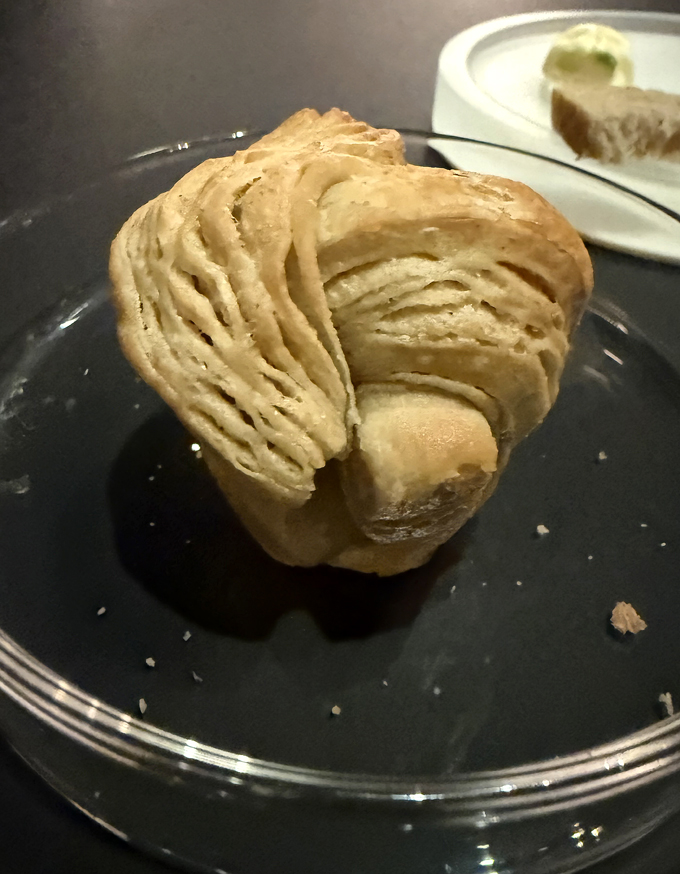
The last bread is described as a laminated dill focaccia. Muffin-shaped, with layers turned onto themselves in a cross-stitch pattern, it’s not as airy and spongy as classic focaccia, but more like a layered biscuit.
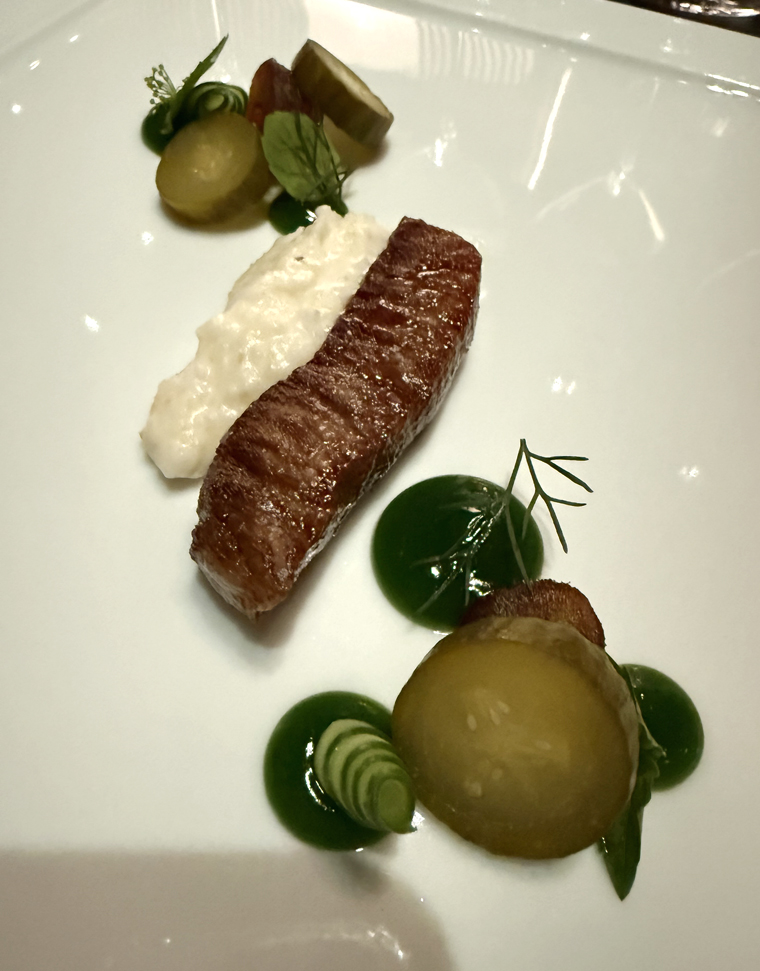
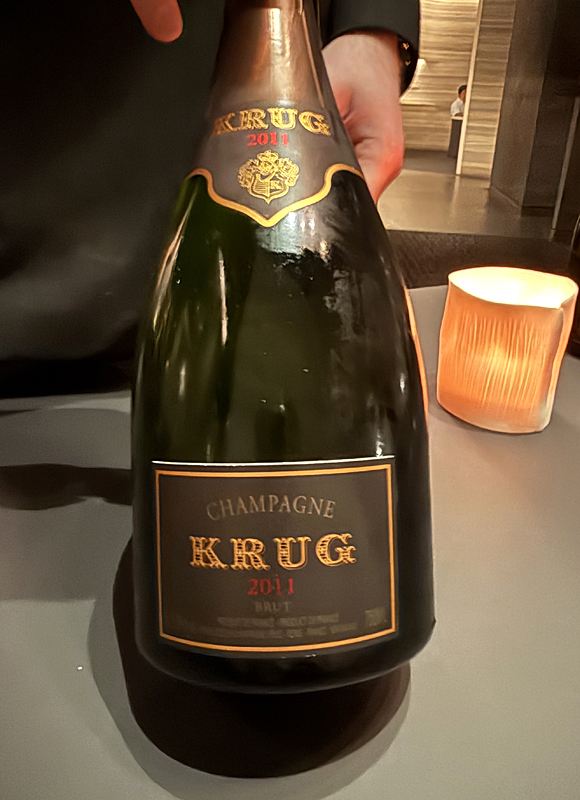
Take a forkful of Japanese Yamazaki A5, and it gushes in your mouth with delightfully fatty juices. Creamy grits enfolded with smoked oil accompany it, along with a surprise of dill pickle slices that shake up the palate with a big twang. It resets the taste buds after all that marbled meat while Medjool dates offer molasses-like sweetness as a counterbalance. Should you splurge on the cellar wine pairing, just know that the 2014 Penfold’s Grange Shiraz is a total winner with this with its velvety body and peppery finish.
Service is as crisp, efficient, and high caliber as you’d expect at an establishment with two stars. But it’s also warmly comfortable with any team member more than happy to answer any questions or shoot the breeze with you. When a server asked if they should remove my remaining half slice of bread after the last entree was done, my husband joked, “Oh, you don’t want to mess with her carbs.” Not only did the server then leave the bread plate, but she returned a minute later and discreetly added two more slices, whispering, “I thought you might appreciate this.”
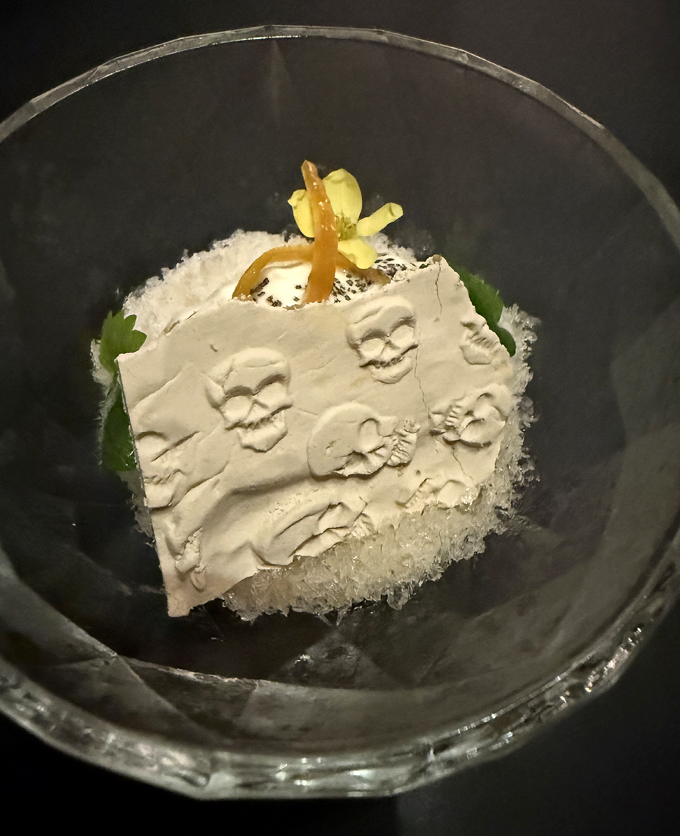
To get you ready for dessert, there’s cream cheese ice cream with cara cara oranges, a touch of honey, and a honey cookie imprinted with skulls.
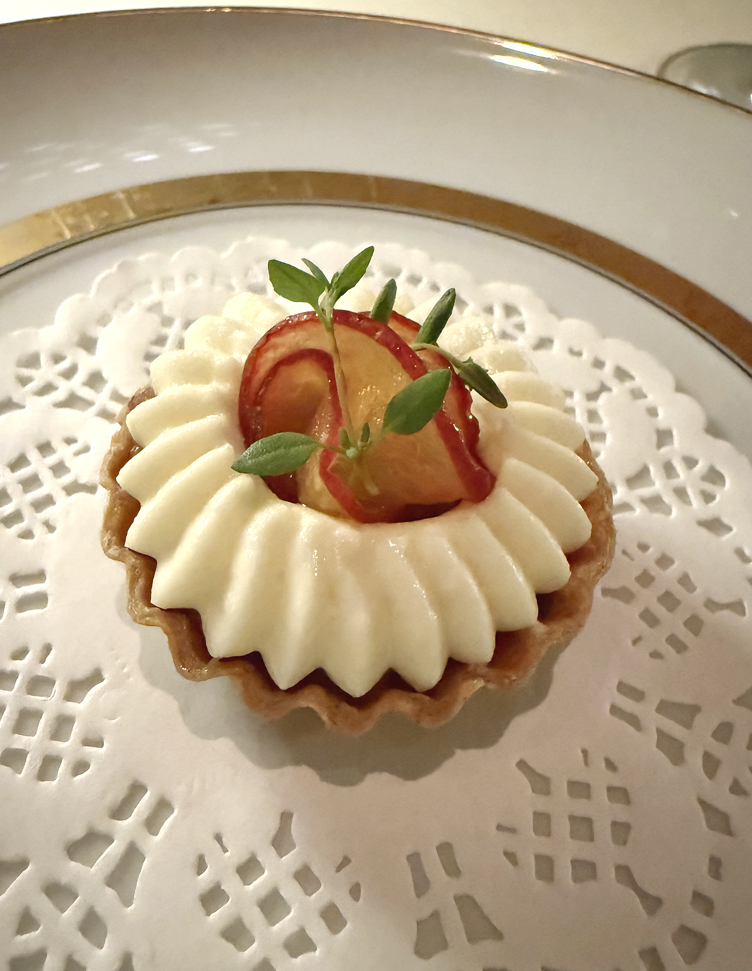
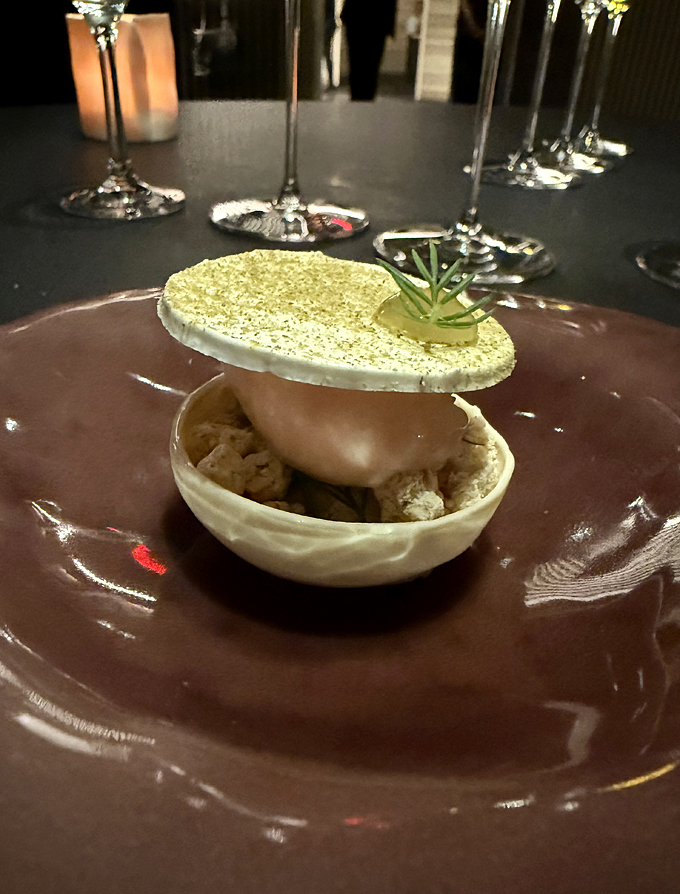
Then comes a chamomile and licorice meringue shell hiding buckwheat custard, chamomile gel, and frozen rhubarb cream. It’s light tasting and light eating, crisp and airy with fruitiness that hits then dissipates. A server amusingly remarked that the dessert reminded her of Lucky Charms, which it indeed does.
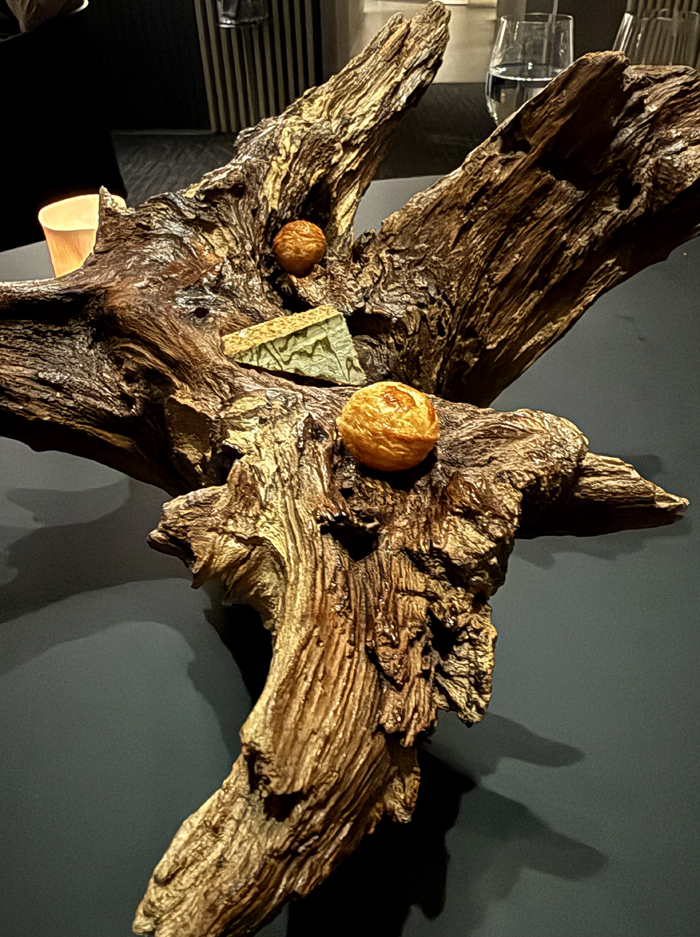
Mignardises are called “tinies” here. They may be itty-bitty, but they make a big impression, served on a large piece of driftwood. In its crevices hide an apricot jam puff pastry, and gooseberry pate de fruit covered in edible paper and made with kombu for a savory balance to all that sweetness.
When I’m ready to depart, my book is thoughtfully handed back to me, having been signed and personalized by the chef. I didn’t get to meet him that evening, and I did not see him when I walked through the kitchen. But Duffy even acknowledges in his memoir that he’s shy and introverted, so I can understand how he’d want to ensconce himself in a quieter part of the restaurant when guests troop through his kitchen.
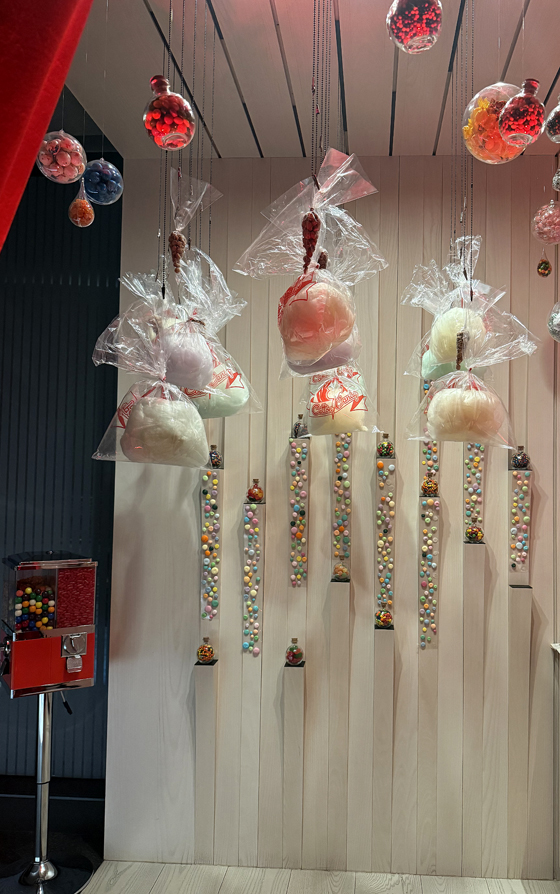
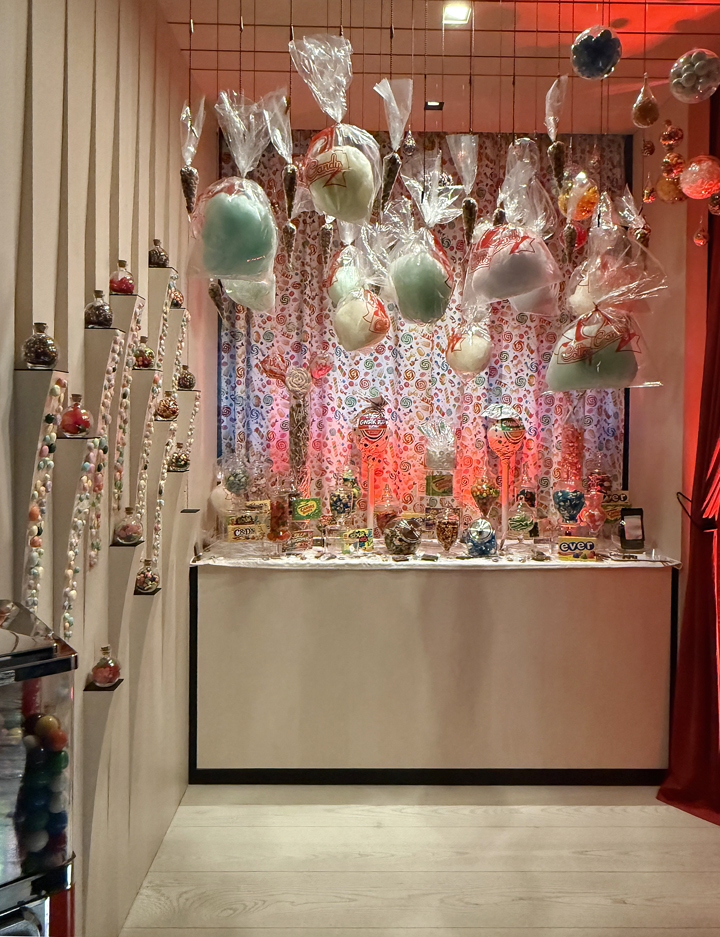
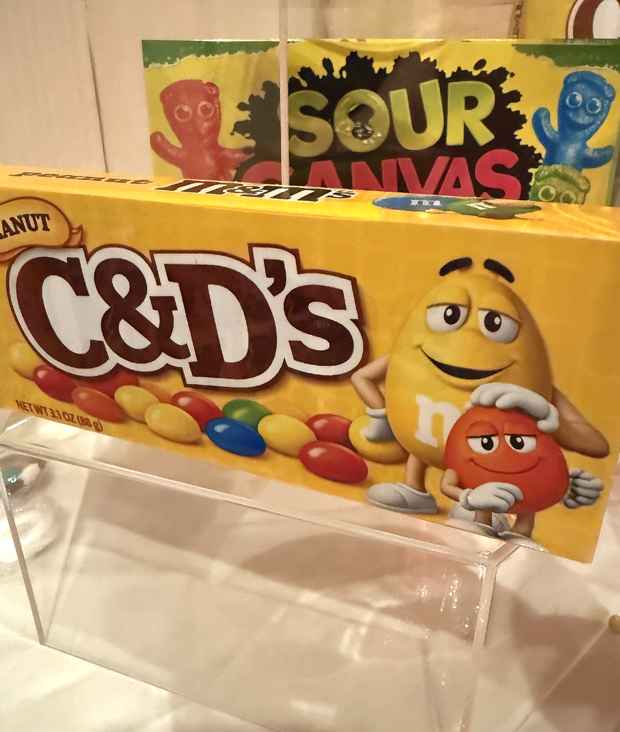
Before all that, though, there is one final treat: You are led to what used to be the entryway of the restaurant that was transformed a month and a half ago into the “Candy Parlor.” The bright, colorful, joyful space is festooned with jars of candy — everything from jawbreakers to gummies to lollipops to house-made chocolate bars. From the ceiling are hung bags of candied nuts, and clouds of cotton candy in flavors of grape and margarita. You’re invited to fill bags with whatever your heart desires. It’s a sweet way to exit, and a nod to Duffy who writes in his book about his major sweet tooth.
Much like his own personal journey, too, you move through Duffy’s restaurant, step by step, making your way from the dark back into the light — and all the better for it.
More: Chicago Dining, Part I: Bazaar Meat by Jose Andres