Husband-and-wife chefs, Sayat and Laura Ozyilmaz, may have opened their first restaurant, Dalida in San Francisco’s Presidio, three years ago, but you’d never know it from how tough it remains to land a table there.
So, it’s no surprise that this spring when the couple opened their follow-up, Maria Isabel, it immediately became one of the most sought-after reservations around.
Naturally, it also garnered widespread praise, including landing last month on Bon Appetit’s list of “Best New Restaurants” of 2026.
To say that San Francisco has been hungering for a restaurant like this is an understatement.
The city has no shortage of burrito joints, taco trucks, and homey mom-and-pop Mexican restaurants. It even boasts the only Michelin three-starred Mexican restaurant in the world: Californios.
But what was in short supply was a Mexican restaurant that was more upscale than those family-owned neighborhood stalwarts, yet more dressed-down than the ultra glam, highly finessed, special-occasion Californios.
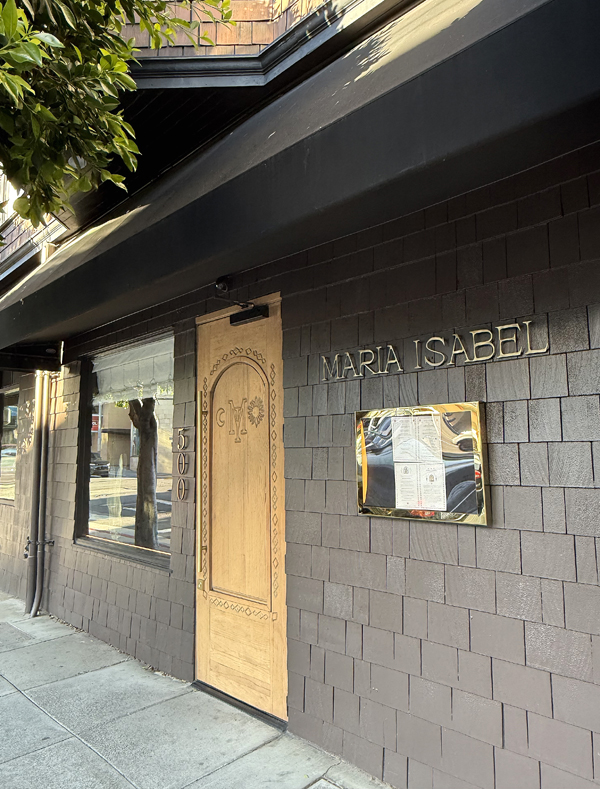
Enter Maria Isabel, named for Laura’s sister, Maria, and her mother, Isabel.
Dalida, named for Sayat’s mother, was born of his Turkish-Mediterranean heritage, while Maria Isabel was inspired by Laura’s roots.
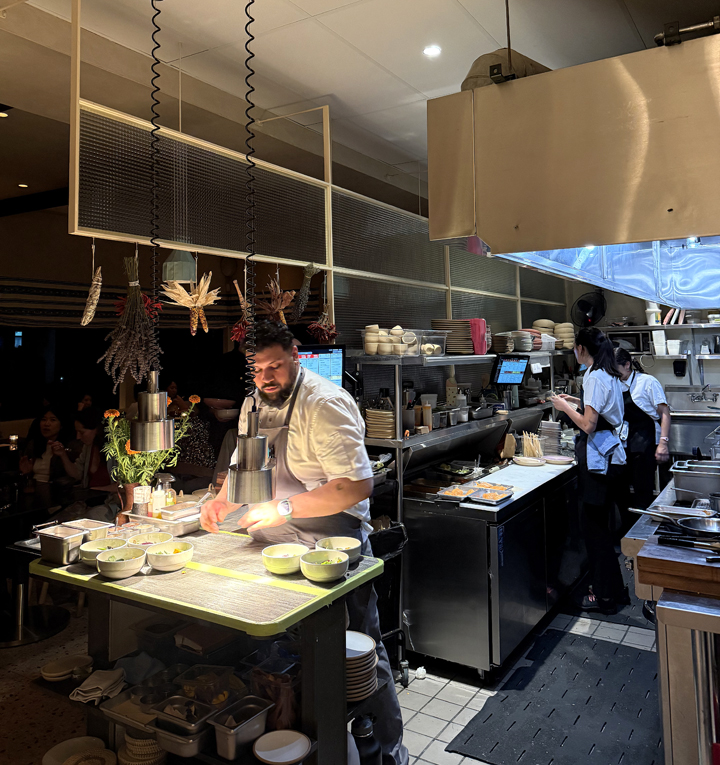
The Presidio Heights restaurant is the type of place you can stroll into in jeans or a more dapper ensemble, if you prefer. It immediately puts you at ease with servers who are more than happy to explain dishes and ingredients. It’s a place where you can make a meal out of a bunch of a la carte small plates and a creative cocktail or two; or settle in for a memorable tasting menu.
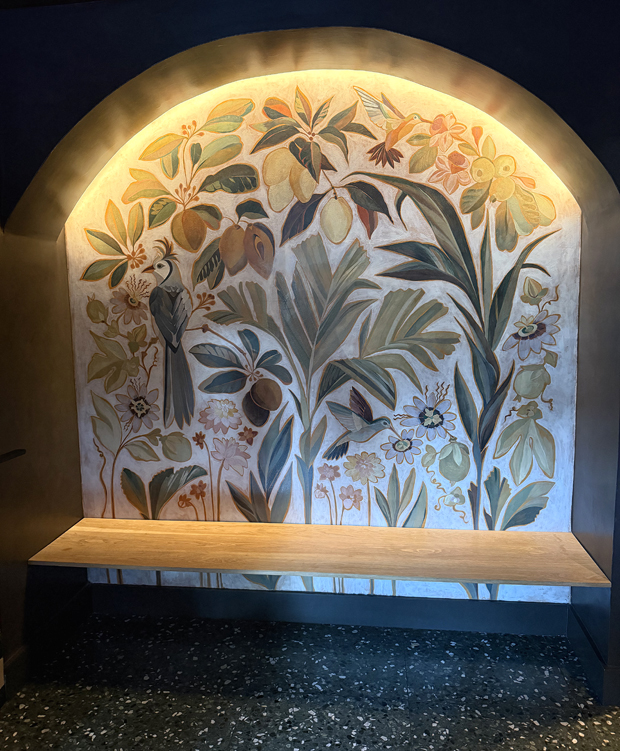
Across from the host stand is a lovely mural of Mexican flora and fauna painted by Oakland artist Emily Parkinson.
There are two dining rooms: one dimmer, more sultry and with a bar; and the other, where my friends and I sat, that was lighter and brighter, where the kitchen is located off to the side.
The $90 chef’s seasonal tasting menu of 6 to 7 courses is not only a pretty good deal when you consider the “platos principales” on the a la carte menu run $38 to $124 (though they’re shareable), but also affords the opportunity to try more dishes. So, that’s what we opted to enjoy. You can also add a couple supplemental dishes or anything from the a la carte menu, if you really want to go big, which we did.
With the tasting menu, there’s an optional $74 or $96 wine pairing. The latter includes pairings for the supplemental dishes, if you so choose. There’s also an $84 “Espiritus de Mexico” pairing of cocktails made with Mexican spirits, including lesser known ones. Thankfully, these are not full-sized cocktails, but more petite ones, so you won’t be stumbling and staggering out of the place afterward.
Definitely indulge in a pairing or a beverage of some sort because Maria Isabel’s program of Mexican spirits and Mexican wines is extensive. It’s a good bet you’ll discover distillates you’ve never heard of and wines from Baja or high-elevation regions that you’ve never had before.
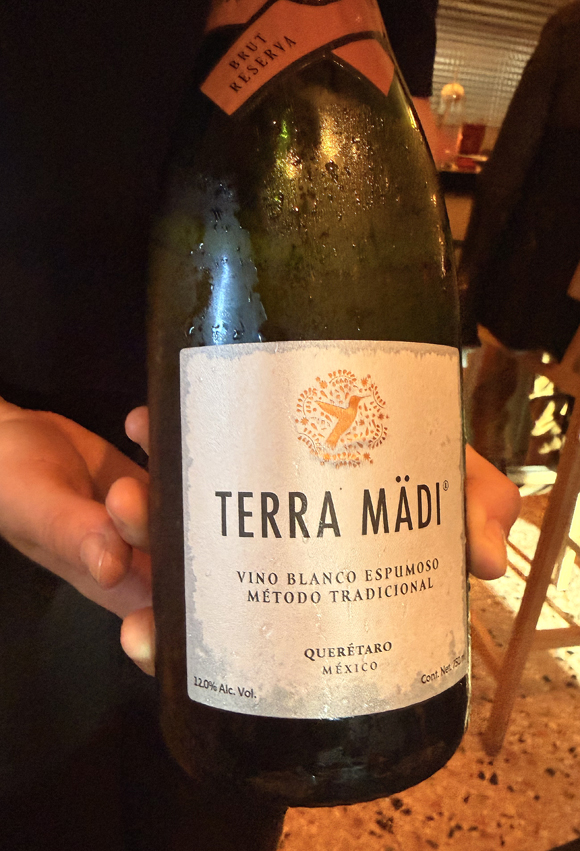
In fact, we were greeted with glasses of Terra Madi Vino Blanco, fresh tasting with plenty of green apple and pear, which was the first Mexican sparking wine I’d ever had.
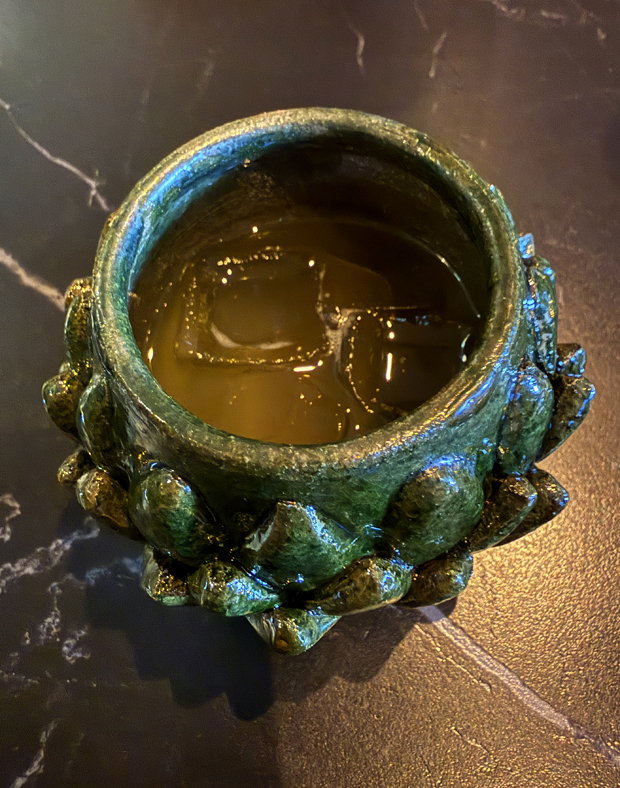
A welcoming aqua fresca arrived next, made with mango, that was tart and bracing, and served in an adorable little cup shaped like an agave fruit.
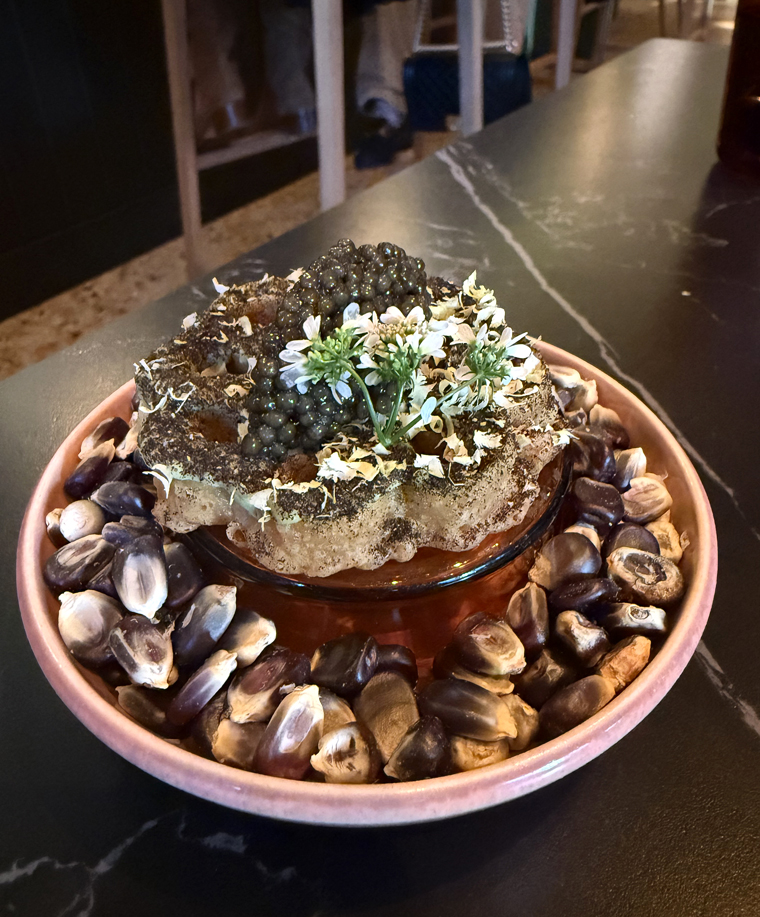
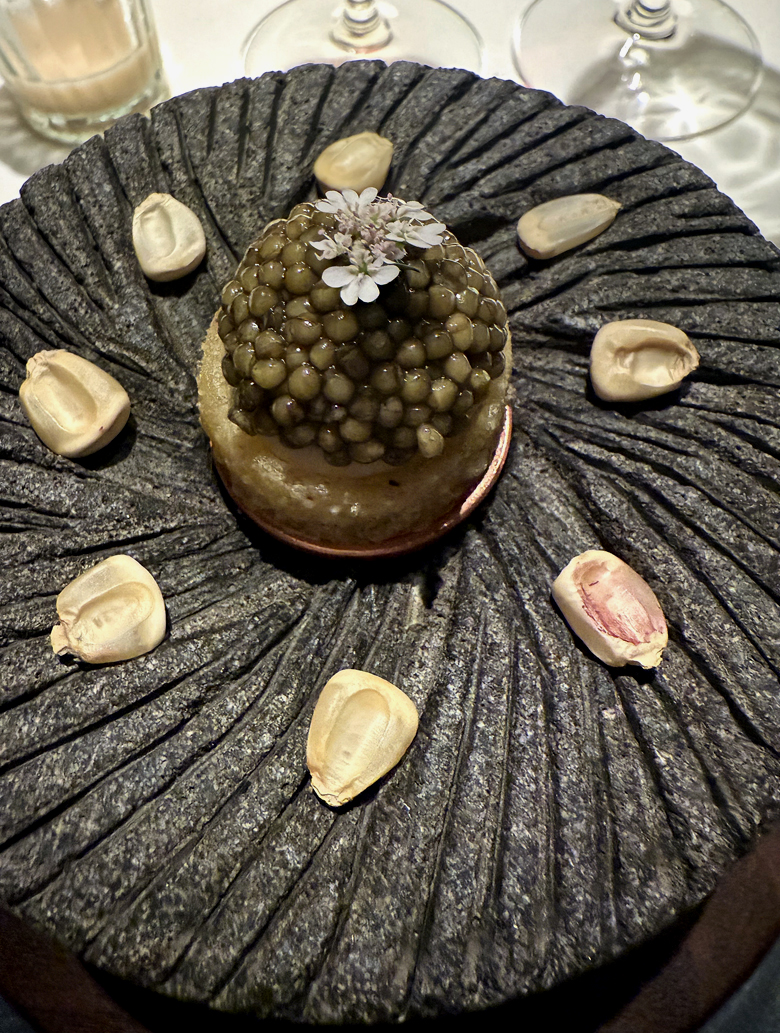
The supplemental, single-serving caviar guacamole bunuelo may be a bit of a splurge at $32, but it was a pure delight. Propped up on a pedestal surrounded by dried corn kernels, it was every bit deserving of its regal status. Thin, golden, delicate and crisp, the golden fritter formed with a rosette iron was mounded with guacamole, pistachios, and Tsar Nicoulai white sturgeon caviar. It’s like gourmet chips and dip — Mexican-style.
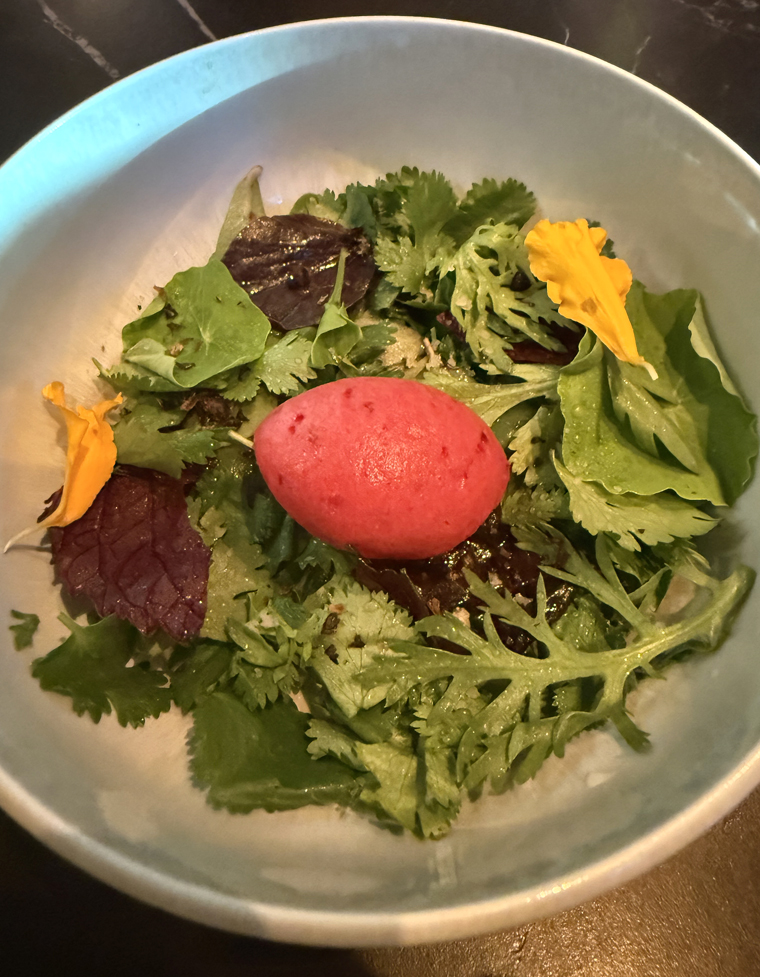
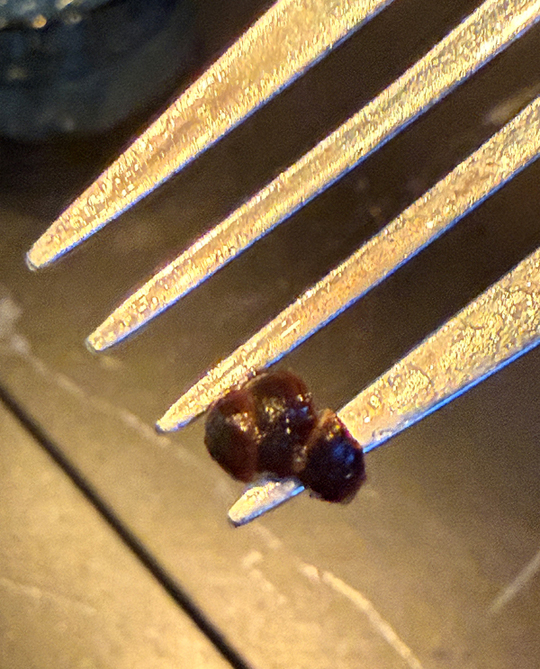
The tasting menu starts off with a salad that transports you to a Mexican desert scene, as it features nopales or shaved cactus paddles, wild greens foraged from around the Presidio, a vivid fuchsia quenelle of prickly pear sorbet from the fruit of the cactus, and — wait for it — roasted ants like the kind you’d find crawling around the cactus.
The ants were crunchy, acting like the tiniest of croutons. The frigid, creamy sorbet balanced out the bitter greens with its fruity tang.
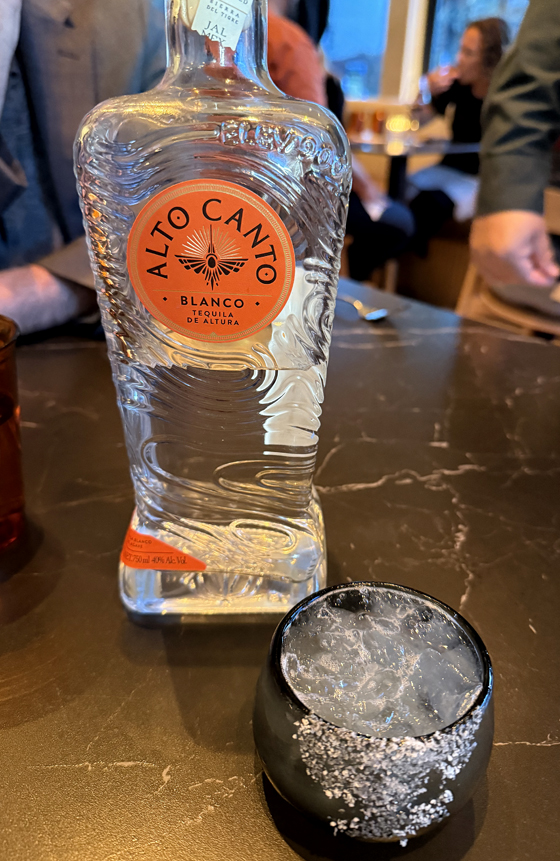
To go with, there was a refreshing, clean-tasting “Margarita de Tommy,” made with high-altitude tequila, and served with the classic salt rim on the glass.
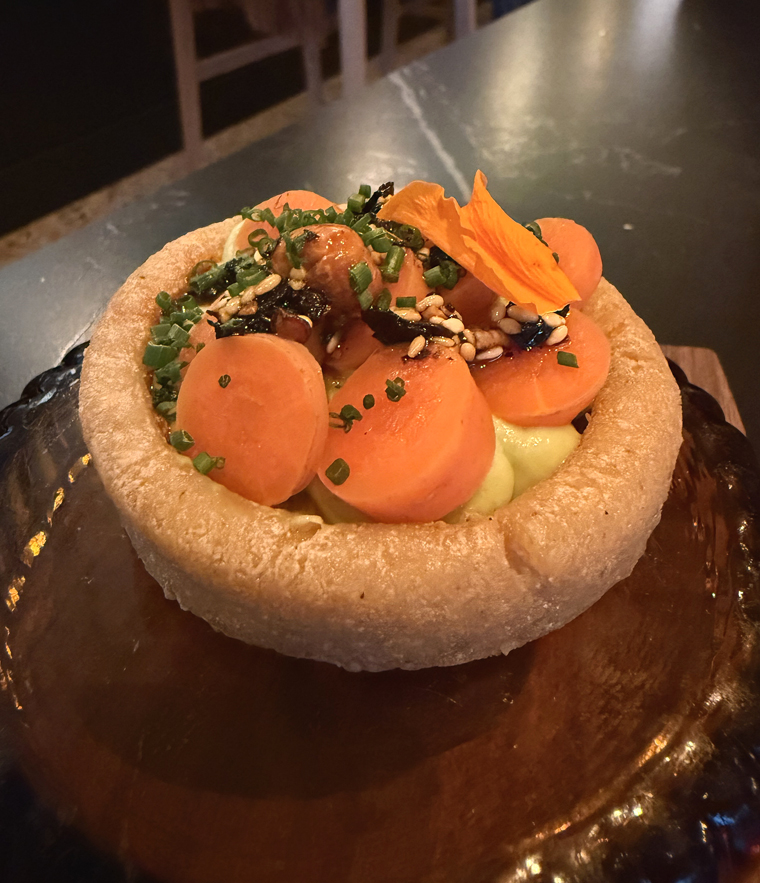
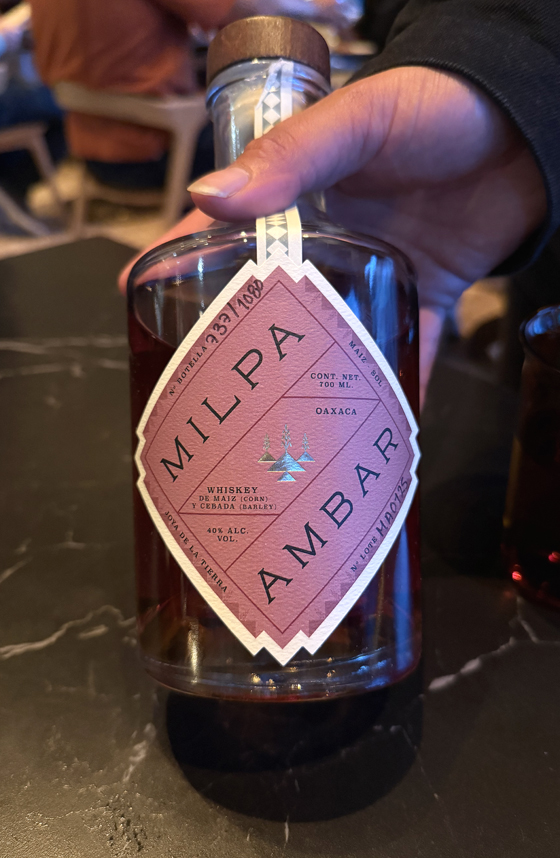
Maria Isabel goes the extra effort to nixtamalize its own corn, cooking whole kernels in an alkali mixture to create its own masa. You can really taste the difference. The sope on the tasting menu, a thick corn masa cake formed into a bowl shape, is typically filled with smoked mussels. Owing to my allergy, my version had lacto-fermented carrot coins instead, along with spicy salsa macha, creamy avocado mousse, and roasted grasshoppers for crunch. It makes for great finger-food with a rustic, pure corn taste that really carries through.
It was paired with Milpa Ambar, a three-year-aged Mexican corn whiskey, poured over a big round ice cube with a touch of piloncillo syrup. Smooth, with the taste of vanilla, it warms through and through.
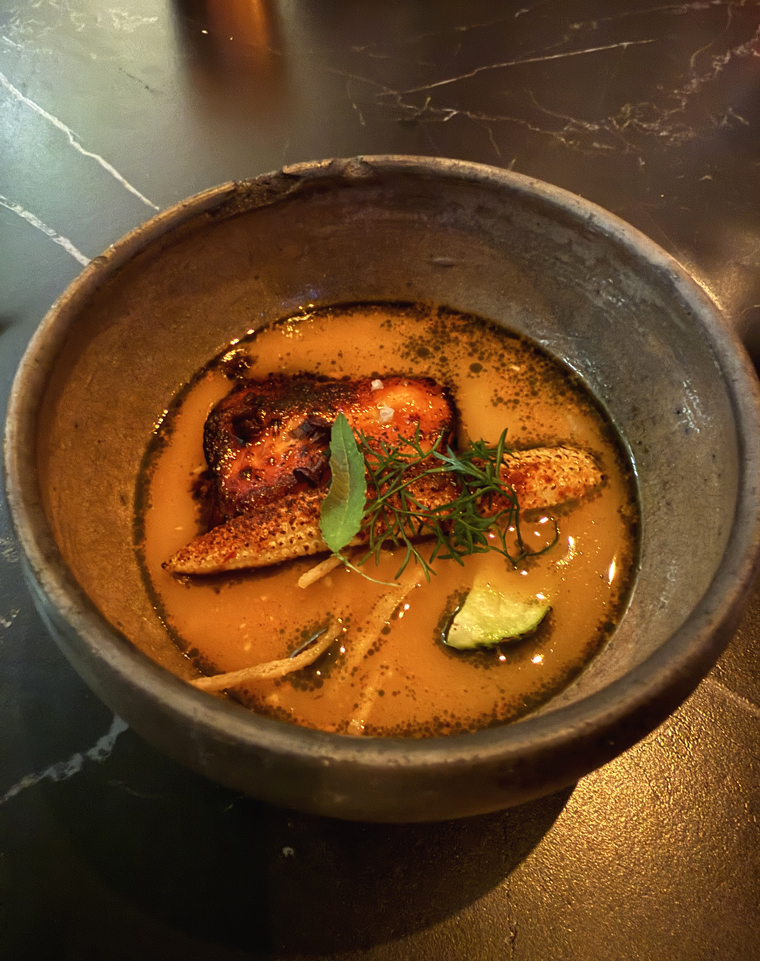
Laura Ozyilmaz arrived at the table to put the finishing touch on the next dish, herself, pouring the fragrant shrimp and hoja santa broth into a bowl with moist, local black cod, thin slices of avocado, and a single baby corn. (See video.) When she and her husband were planning the restaurant, they both knew a caldo de pescado had to be on the menu, as it’s a dish they can’t get enough of when they travel to Acapulco. It’s a beguiling dish — delicate and light, yet with layers upon layers of smokiness, earthiness, pepperiness, and gentle spiciness.
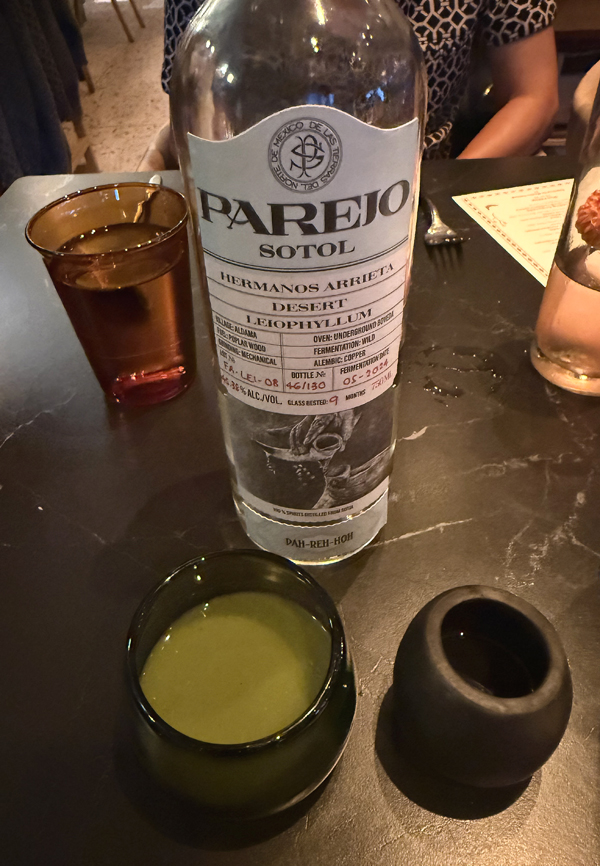
Alongside was a small glass of Parejo Cedrosanum Sotol, smoky and vegetal like mezcal, but not distilled from agave but rather the desert spoon plant that gives it even more herbal flavor. It’s served with a tomatillo chaser, tangy, bright, with a slight asparagus flavor, that plays up the distillate’s vegetative quality even more.
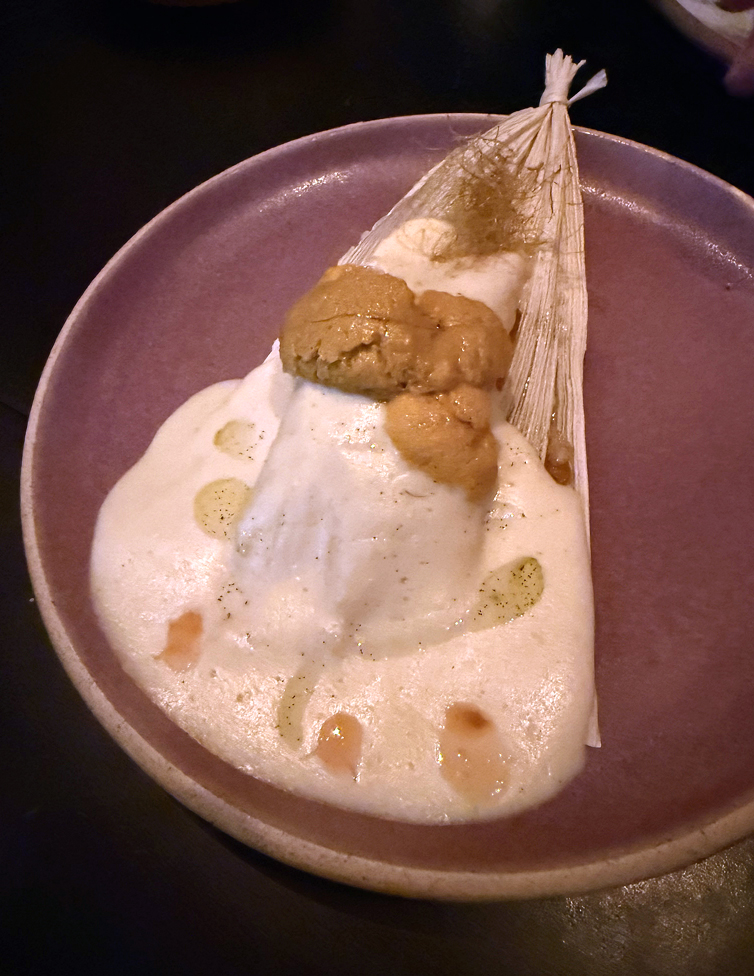
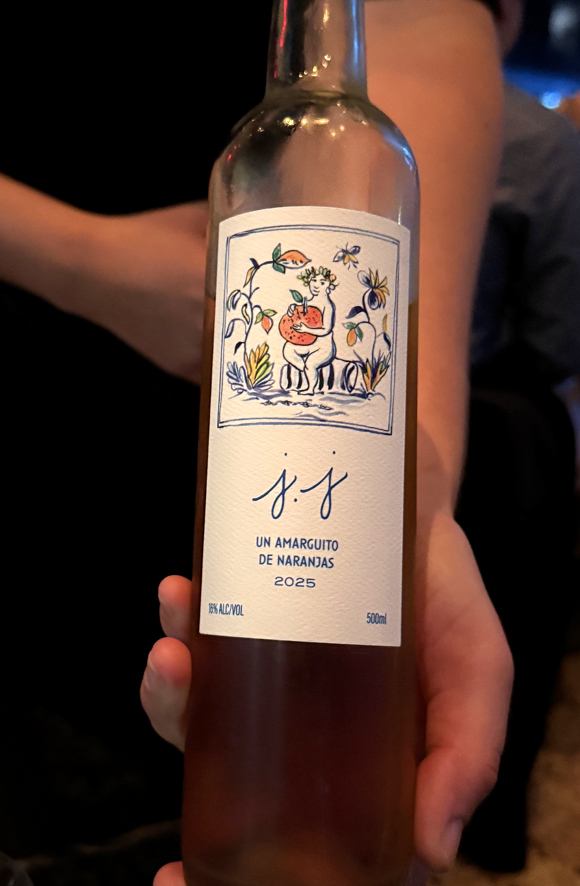
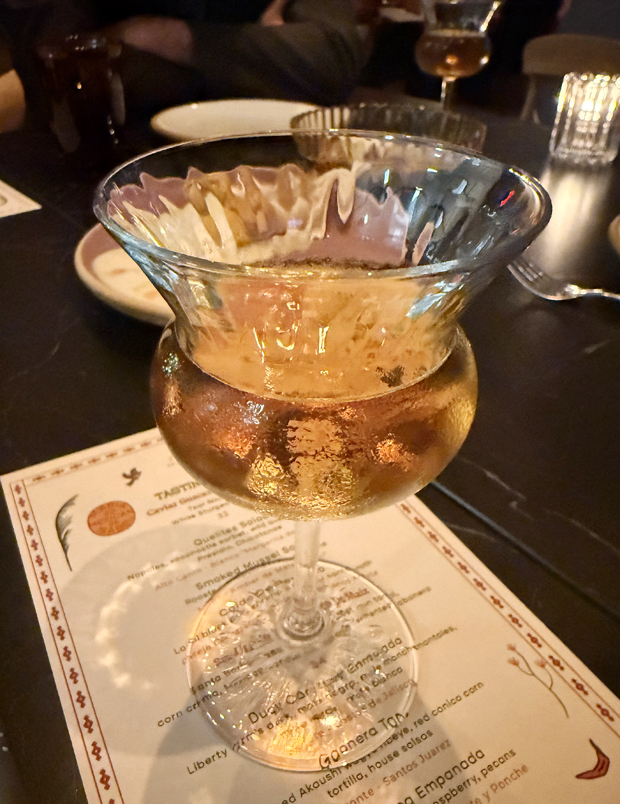
The other supplement on the tasting menu is the sweet, fluffy tamalito de maiz ($34) crowned with Santa Barbara sea urchin. The corn tamal is bathed in luxurious corn crema with a touch of vanilla oil, lacto-fermented habanero, and chewy kernels of roasted corn. It’s a rich dish, steeped in corn flavor with a touch of sweetness.
It was served with a glass of J.J. Un Amarguito de Naranjas from Baja, which might have been my favorite drink of the evening. It’s an orange wine to be sure. But it’s not a white wine tinted that hue because of skin-contact. Instead, it’s an actual wine made from blood oranges and lightly fortified with brandy. Admittedly, a couple of my dining companions weren’t too keen on it. However, if you are like me and love the bitter orange taste of a Negroni or chocolate-covered orange peels, then you will fall head over heels for this unique wine.
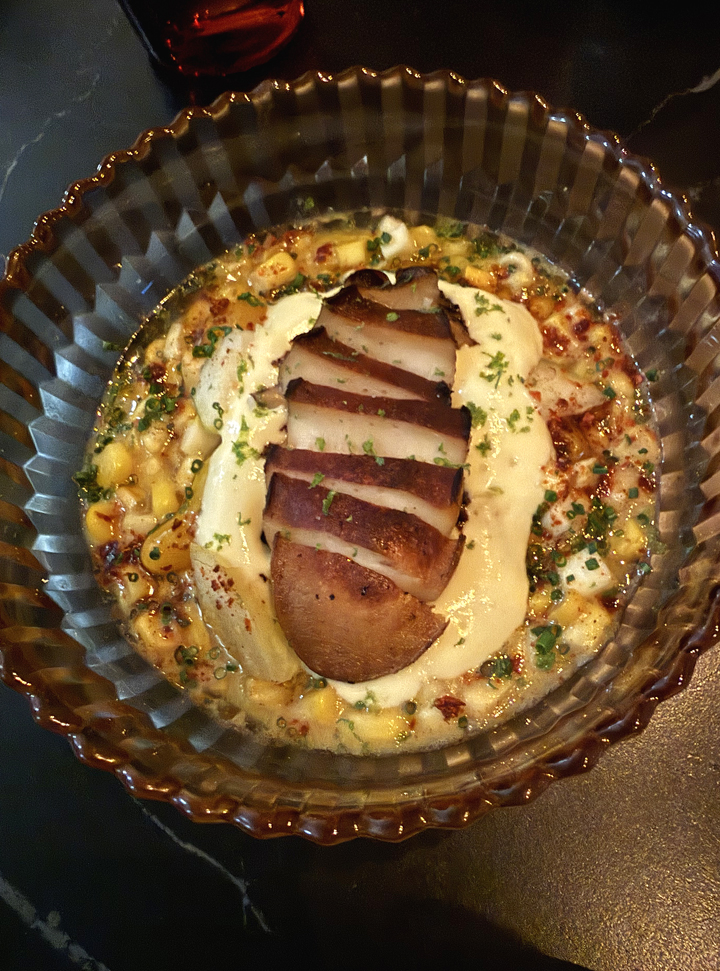
From the a la carte menu, we added the abalone esquites ($44) that had slices of the quite tender mollusk fanned out over fantastic corn hollandaise plus escabeche zucchini, smoked tomatoes, and fresh summer corn kernels. It was an explosion of sweet, starchy corn flavor that made you long for just another month or two of summer.
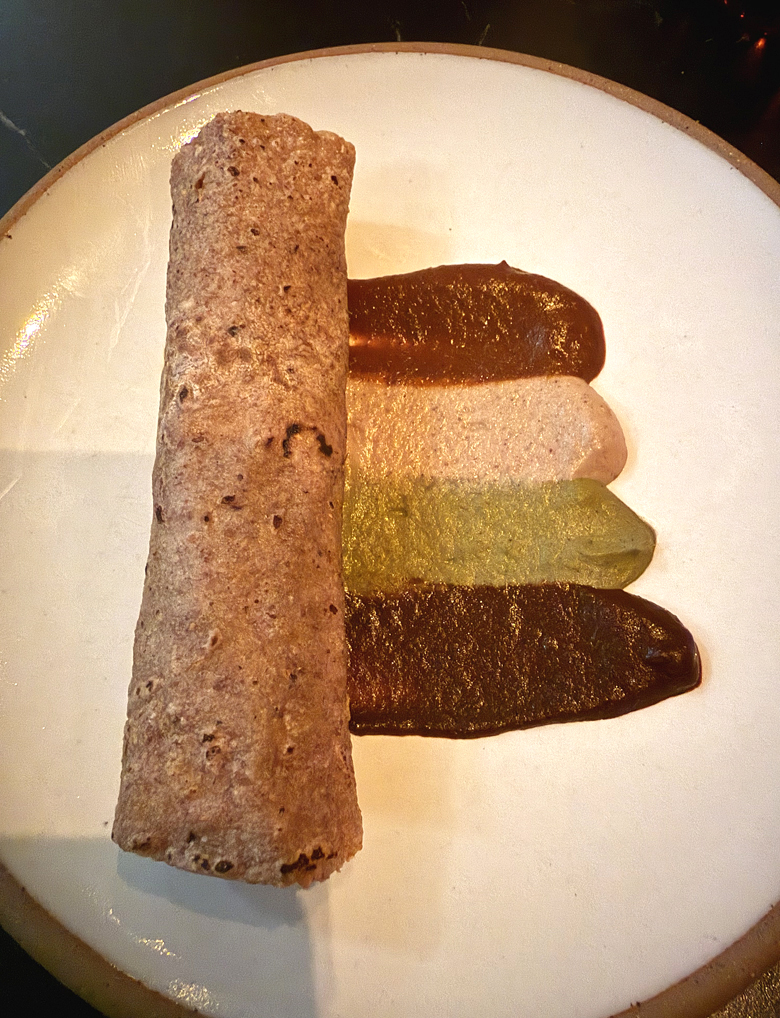
I love mole, and the succulent duck carnitas enmolada comes complete with four different ones, swooshed on the plate like pretty paint samples. There was the classic mole negro, which looked like dark chocolate ganache, not surprisingly since chocolate is one of its 35 ingredients; green mole verde with pumpkin seeds; mole blanco made with corn and white chocolate, the mildest — yet richest — tasting of the bunch; and mole manchamantales flavored with pineapple and peaches that reminded me a little of the taste of the sauce on Chinese sweet-and-sour pork.
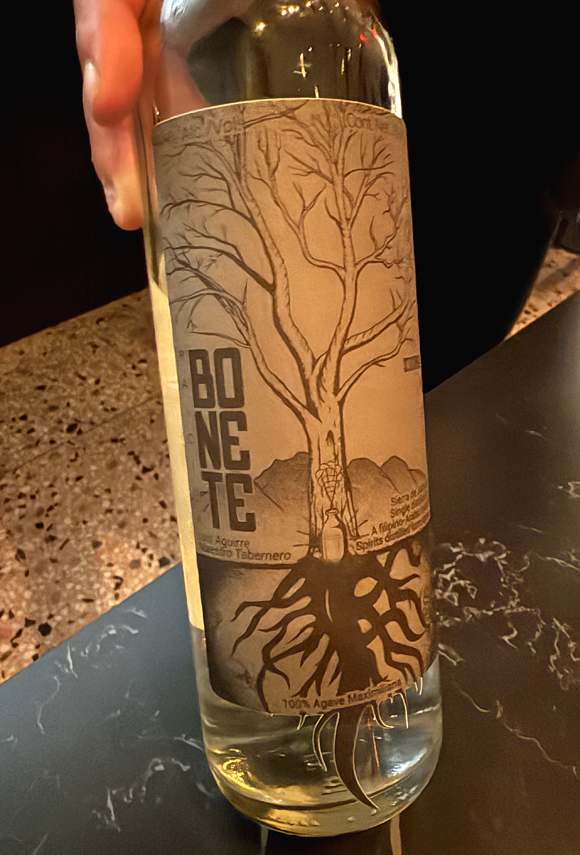
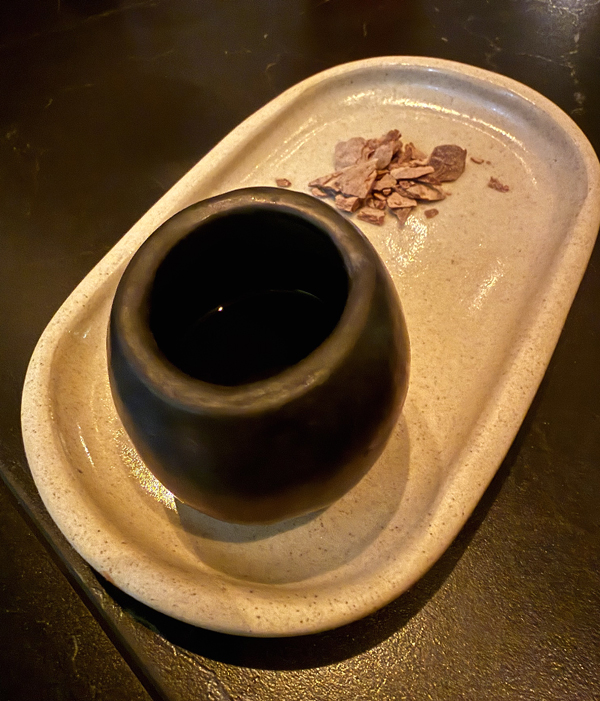
It was paired with a distillate that our server described as “like a Filipino-adjacent agave.” Turns out that Filipinos brought the art of distillation to Mexico. Made with two types of agave cooked in an underground oven, Bonete Costa de Jalisco is herby and earthy. It was served with cracked cacao nibs that brought out the earthy quality even more.
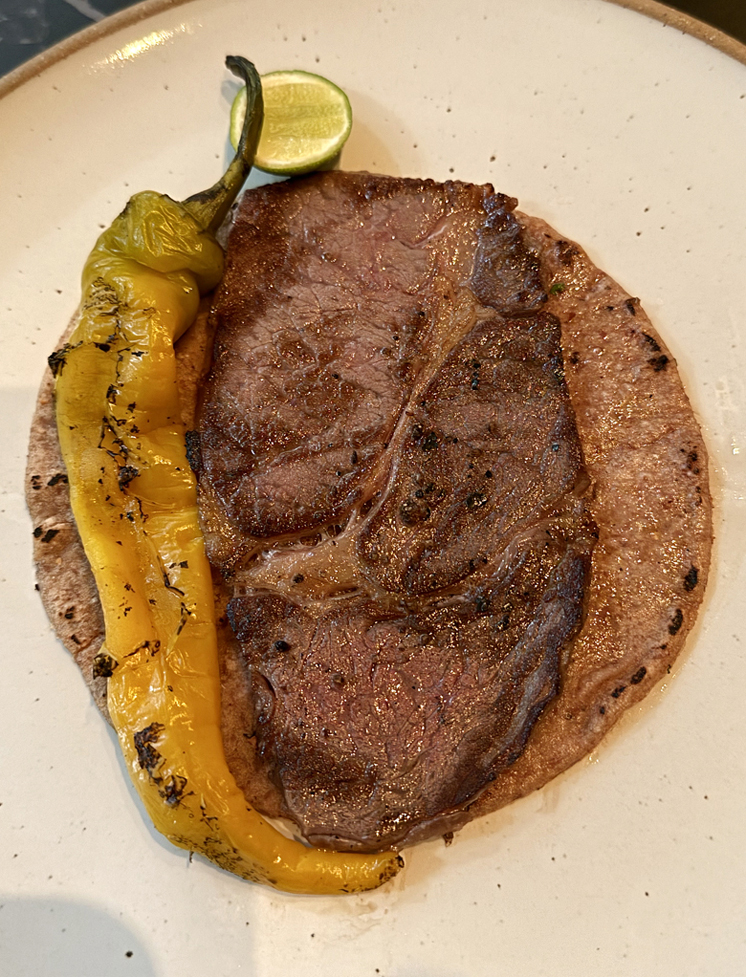
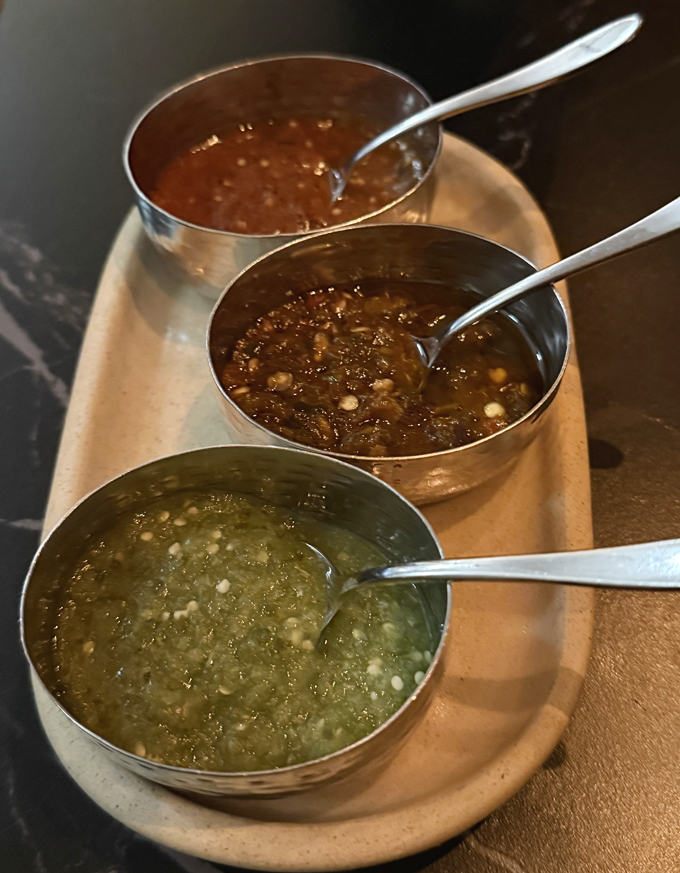
The final savory course is a taco. Not just any run-of-the-mill one, but one with a red conico corn tortilla practically smothered by a large, thin slab of dry-aged Akaushi Wagyu ribeye. It may be a slightly leaner variety than Kobe beef, but you’d hardly know it from the way it yields completely when you bite into it. The first rush of that savory beef juiciness lets you know immediately how primo this beef is. The tortilla boasts a vivid corn taste, deep enough to stand up to the beef. Three different salsas accompany, so you can mix and match to your stomach’s delight.
To go with, Mezonte Santos Juarez, a mezcal blend of three different agaves, with a smoky and savory taste with a hint of funky cheesiness.
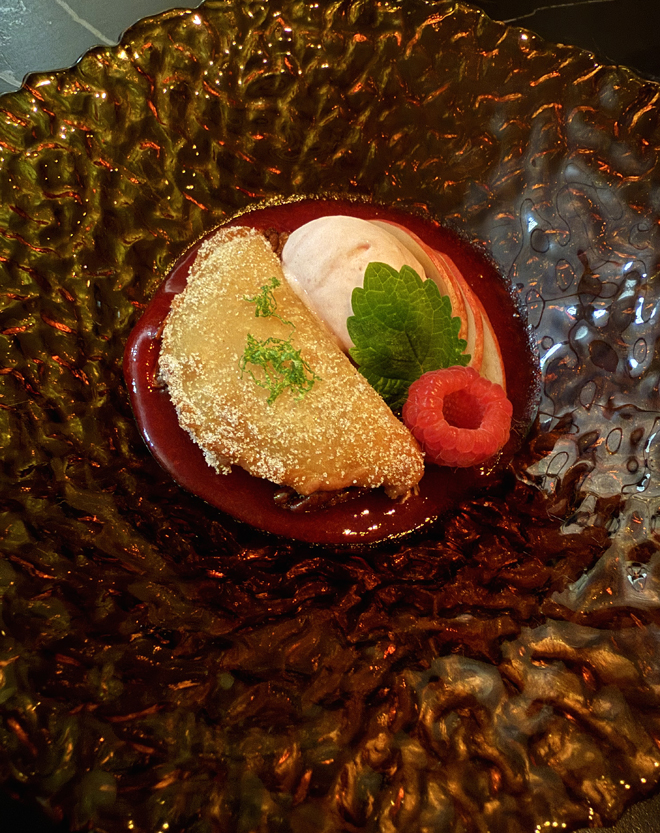
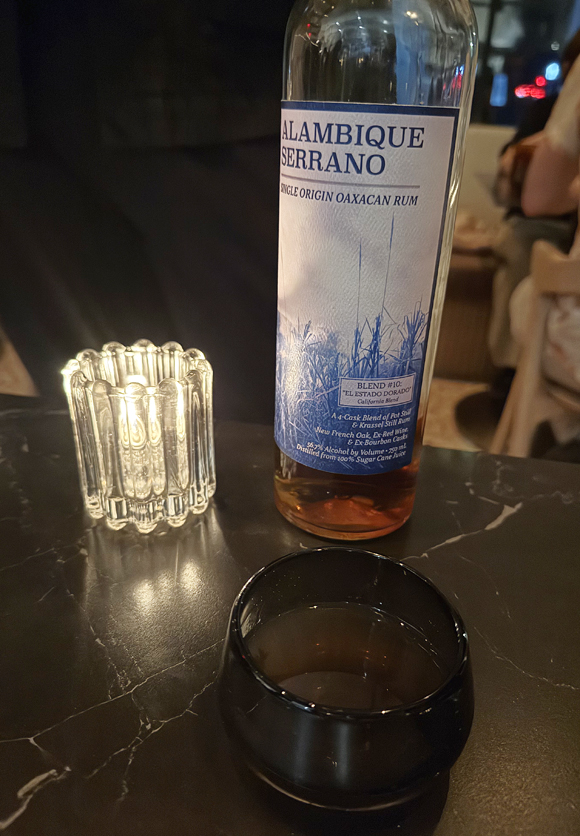
Dessert is a doll-sized empanada — crispy, lacy, and warm — that’s filled with rice pudding and plated prettily with a pool of dulce de leche, a small scoop of peach sorbet, a few candied pecans, finely julienned lemon balm, and a single fresh raspberry. It’s accompanied by a drink made with Alambique Serrano con Tejate y Poncha, a Oaxacan rum, along with piloncillo syrup, almond, and pomegranate. Our server said it has an almost Welch’s grape candy taste, and there is definitely a little of that, along with haunting sweet vanilla.
It’s always a gamble whether a second act will live up to the success of the first. But Maria Isabel does so with aplomb.
More: A Visit to Dalida