I’m not really surprised when restaurants meet expectations.
But I sure am when they manage to exceed them.
San Francisco’s Michelin two-starred Birdsong achieved that.
What’s more, when I dined there with family last week, Chef-Owner Christopher Bleidorn wasn’t even in the house, a testament to just how strong and capable his team is.
I knew the restaurant, which opened in 2018, had its own dry-aging room for proteins and that it specialized in live-fire cooking. I also knew that Bleidorn came with quite the pedigree, having honed his skills at such Michelin heavyweights as Alinea in Chicago; and Benu, Atelier Crenn, and Saison, all in San Francisco.
What I wasn’t prepared for was how transportive the dining experience was, drawing you in with its elegance yet also a real primalness.
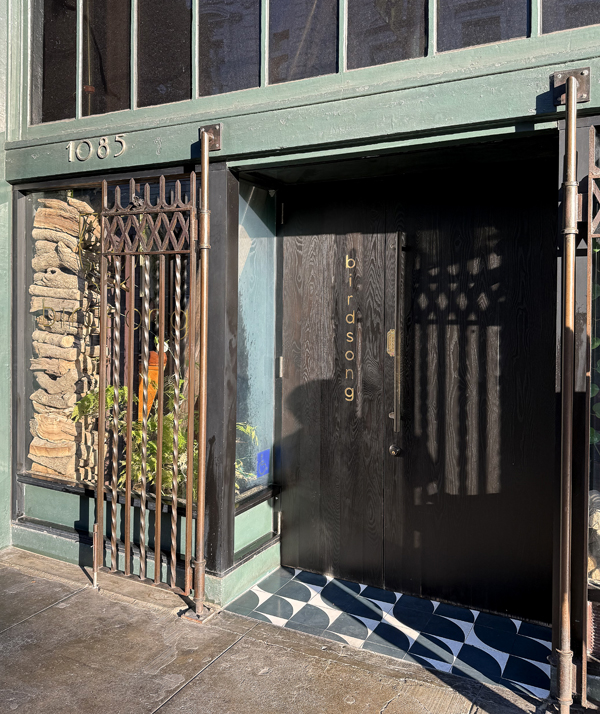
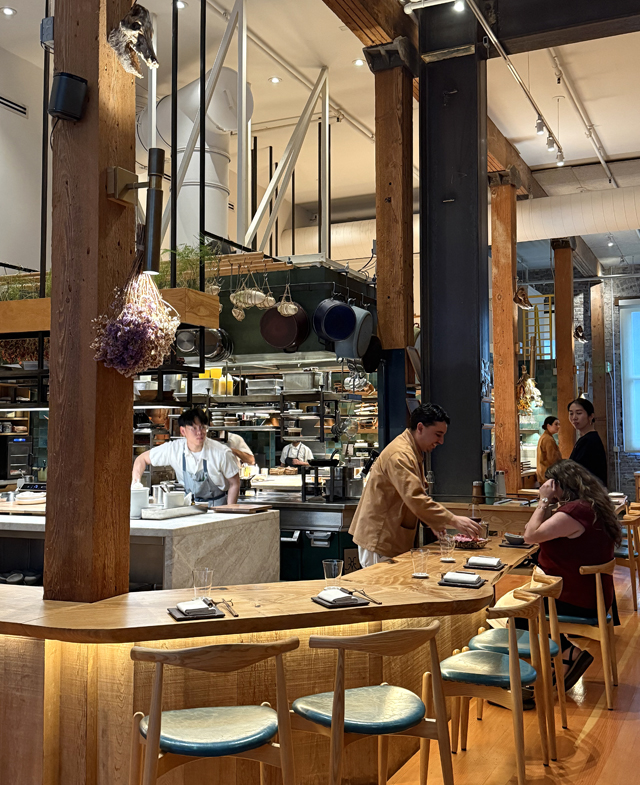
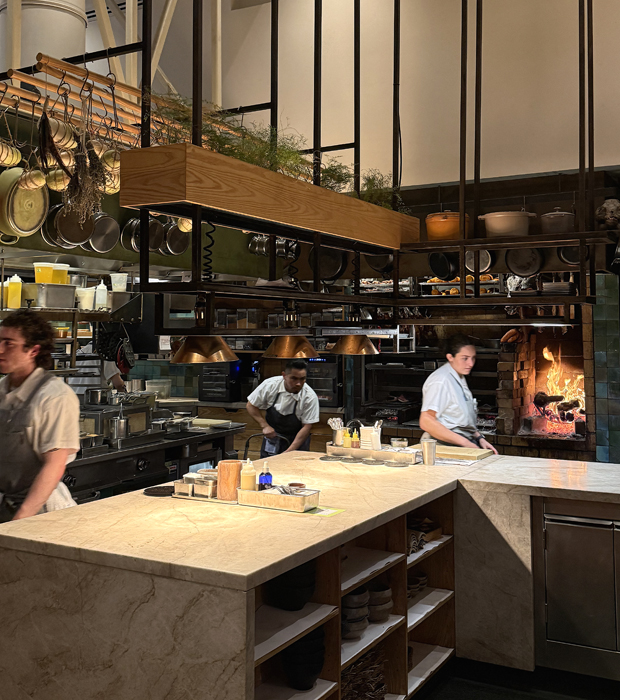
Let’s face it: the Mission Street restaurant is located in a perpetually seedy part of downtown. But once seated inside the contemporary dining room done up in minimalist Scandinavian esthetics with its focal point a massive open kitchen, you feel a million miles away.
When making a reservation, you prepay upon booking. You can choose a seat at the counter right in front of the kitchen or at a table just a few feet away. There are two different menus, too. The shorter Discovery Menu is $290 per person; the longer Journey Menu is $350 per person. A 22 percent service charge is included, though the restaurant indicates no gratuity is necessary beyond that.
We sat at a table and went with the Journey Menu. And what an odyssey it was.
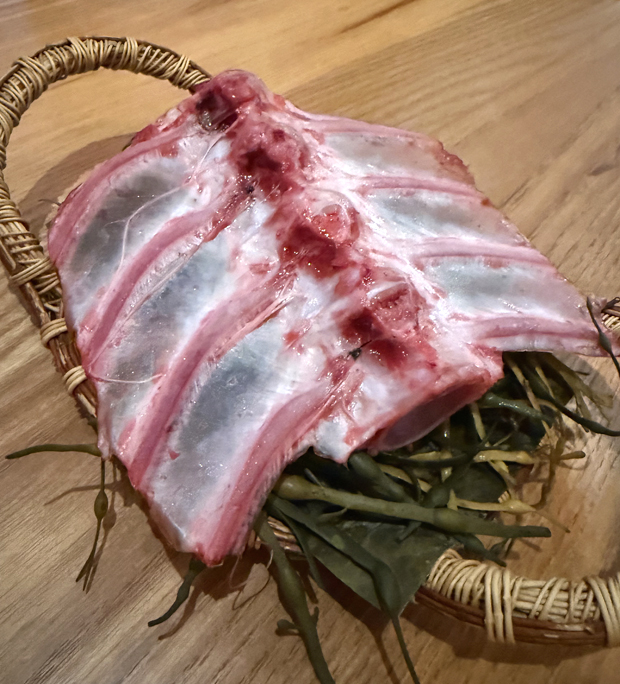
It began when a server plunked down onto the table the bony vertebrae of a tuna. Like show-and-tell, it served to illustrate just where the star ingredient in the first dish hailed from.
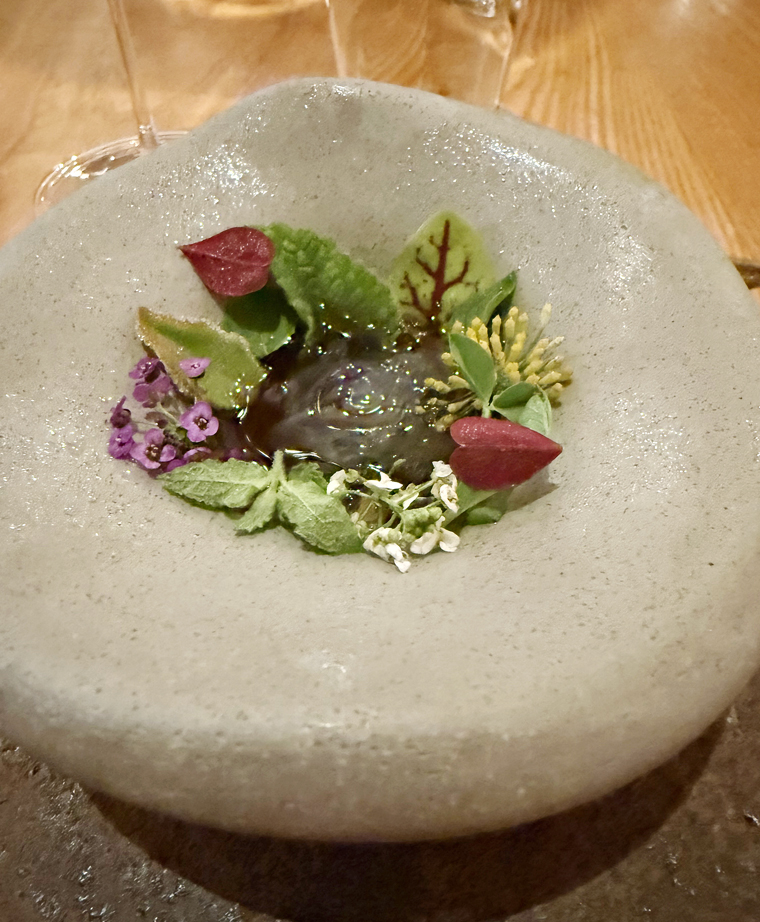
Indeed, the tuna marrow, slippery and kind of gelatinous, arrived in the divot of a heavy stone dish with seaweed and vinegar made from the bones of the fish. It carried the taste of sweet soy along with briny, umami dashi. It reminded me of the taste of Japanese green seaweed salad.
As with almost all the dishes that evening, you were encouraged to pick up the vessel at the end, bring it to your lips, and sip whatever lingering juices, broth, or sauce remained inside. Yes, when’s the last time you felt comfortable enough to do that at a fine-dining restaurant, and one with two stars no less?
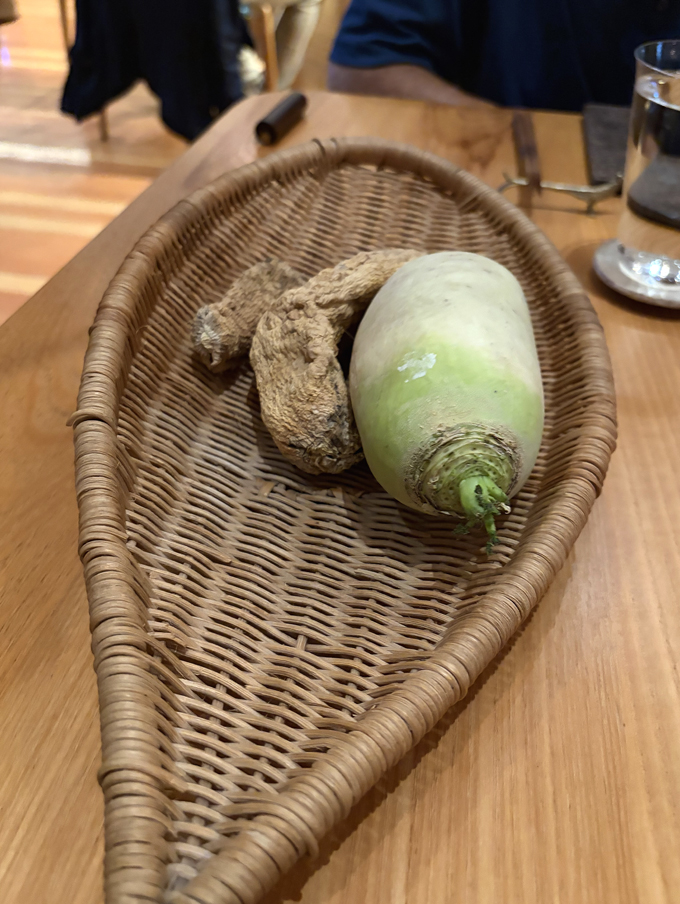
Next, we were shown a basket holding daikon in various stages: fresh, as well hung to dry over the fires for 8 weeks and 12 weeks, which increasingly shrunk and shriveled them.
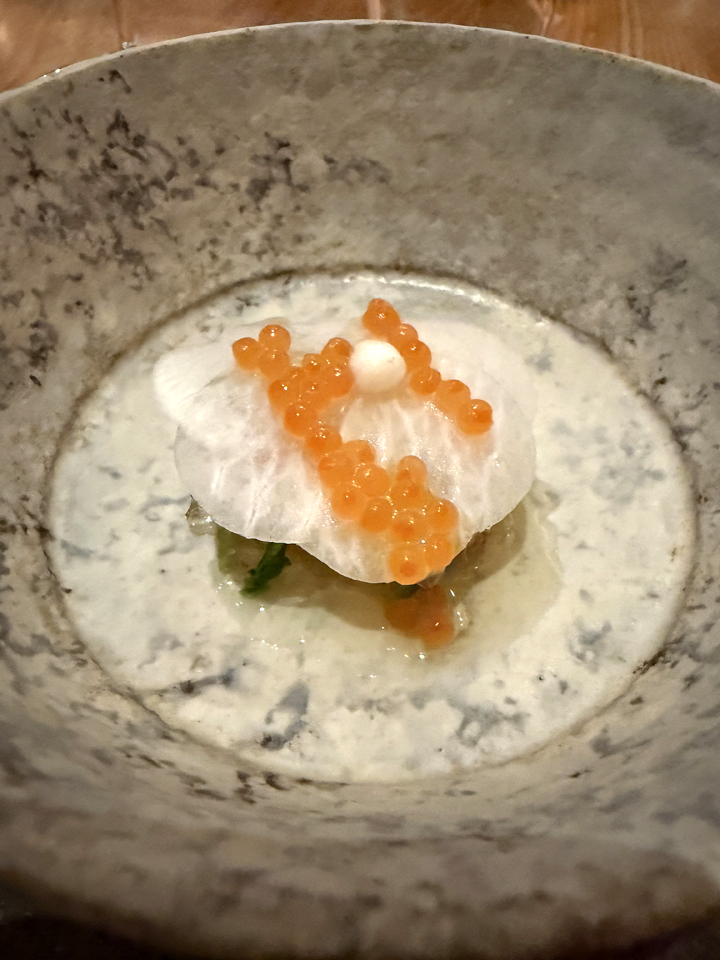
Slivers of fresh, smoked, and dry-aged ones starred in a dish that was a play on the classic radishes with butter. It was garnished with vinegar, a touch of cultured butter that added a fleeting hint of richness here and there, as well as smoked orange trout roe.
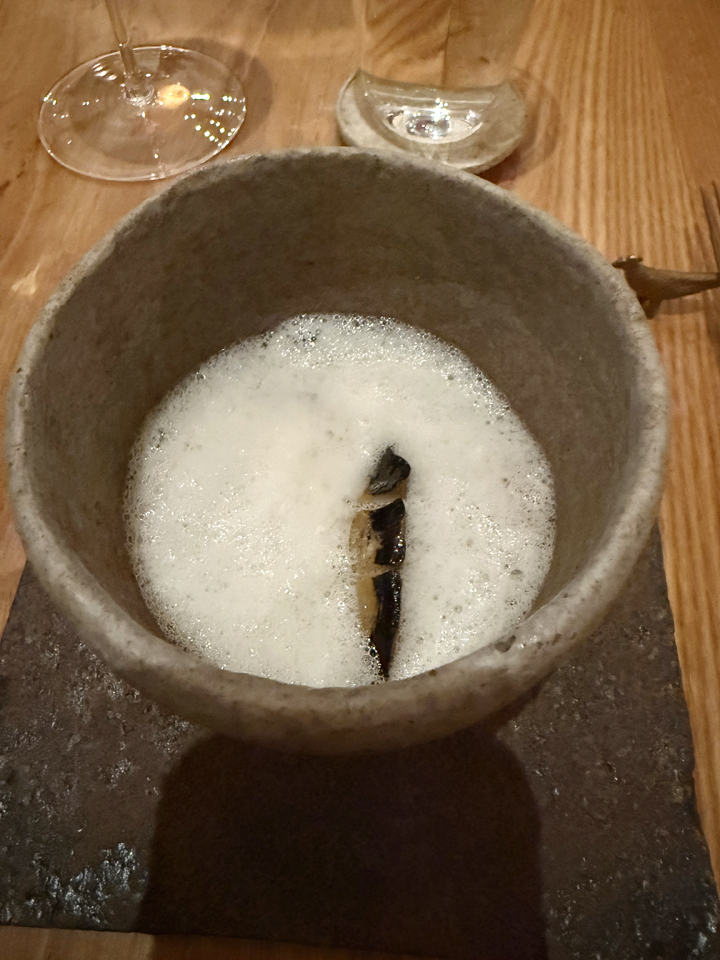
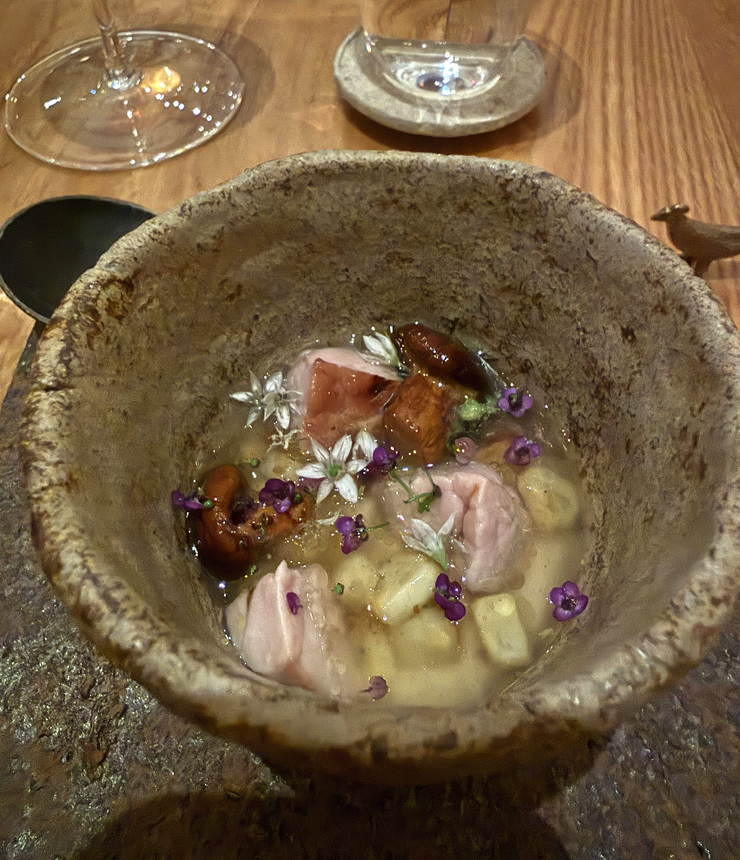
An earthenware bowl filled with a cloud of foam with a slice of grilled red abalone peeking out of the top was deceptive in its complexity. Dig below to find so much more: a smoky broth made from the abalone liver, pickled raisins for a pop of deep fruitiness with tang, and thin slices of braised pig face that were like soft, meltingly tender versions of bacon with the juiciest fat.
It’s a dish with big flavor that somehow still tasted clean, light and pure — a hallmark evident throughout our meal.
That was followed by a riff on chawanmushi. This Parmigiano egg custard, soft and quivering, came garnished with pieces of grilled sweetbread and corn kernels. You could taste the sweetness of the corn, but along with it, a deep char and real meaty quality. In fact, my cousin delightfully described it as tasting like a perfectly grilled steak — without the actual big hunk of beef anywhere to be found.
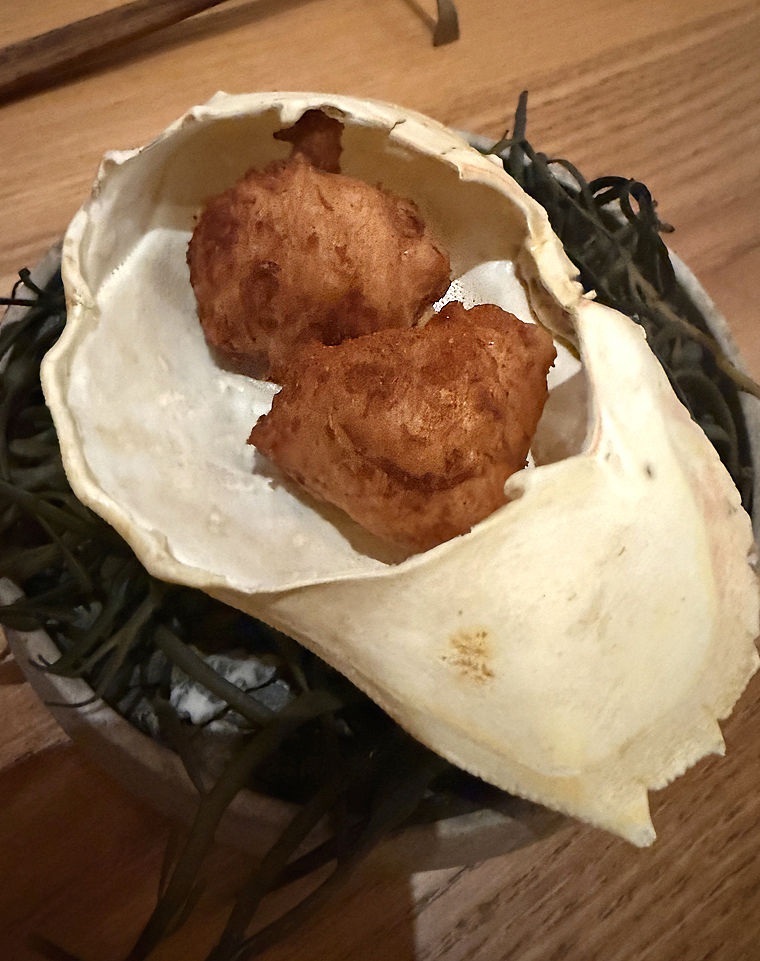
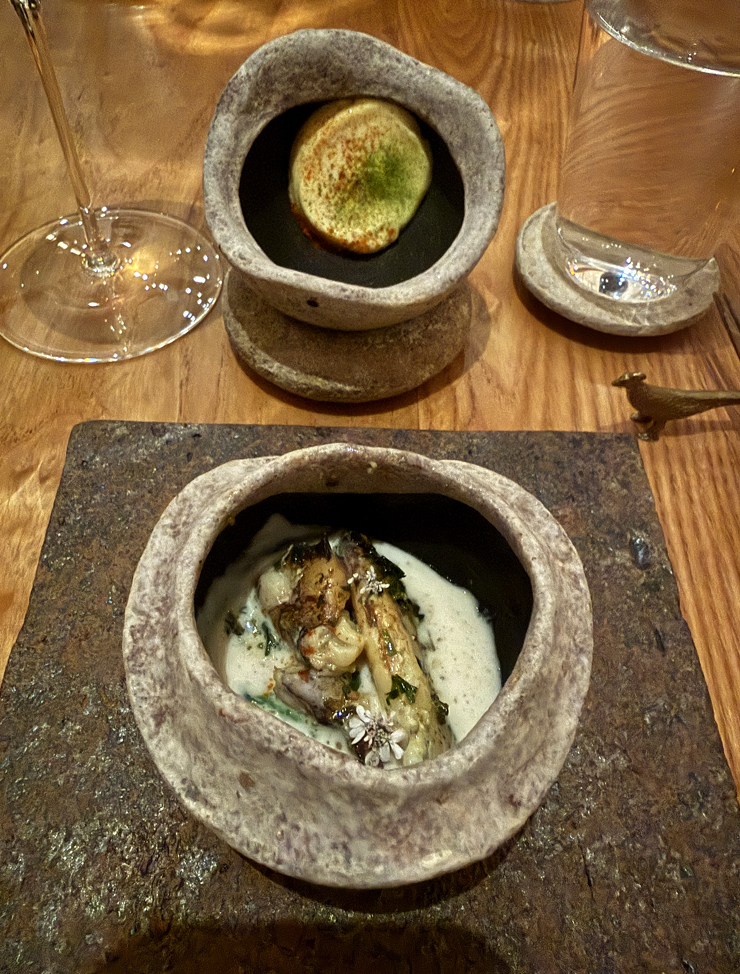
Dungeness crab was showcased in its entirety: First, golden sourdough fritters, soft and cakey like hushpuppies, were made with the grilled body meat, and served with a silky rich butter made with the crab brains. The butter was hidden in the lid of a bowl that held leg meat in a light, creamy sauce with cardoons and chartreuse.
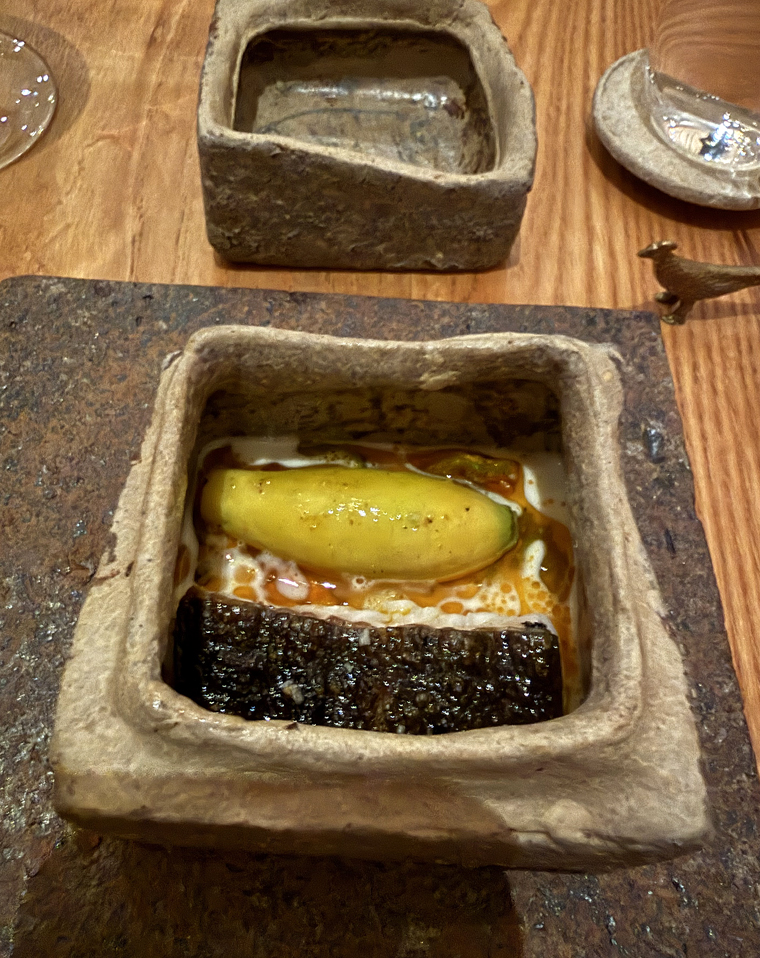
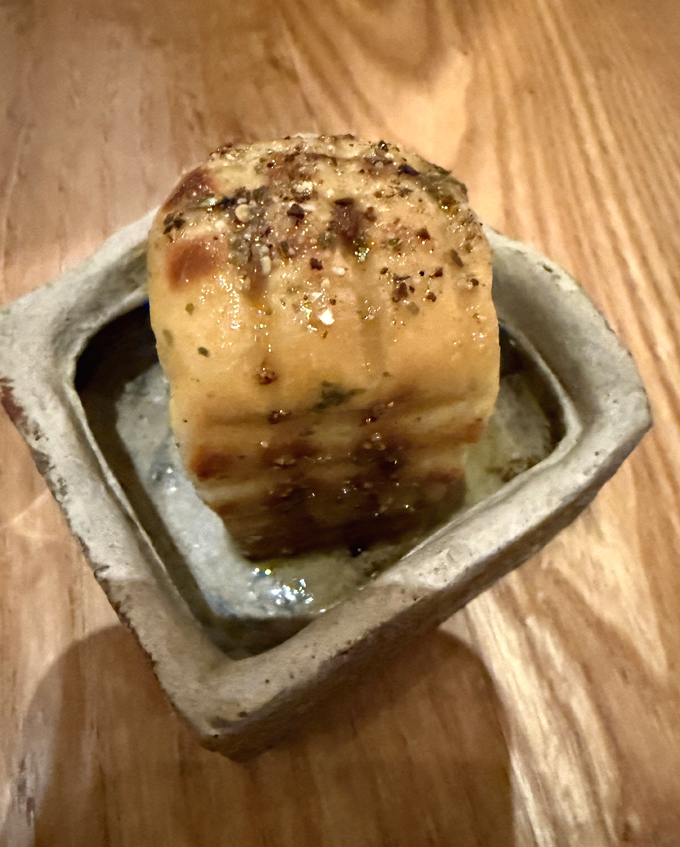
Black cod, grilled until its skin was as crisp as a potato chip was served with a baby squash. It arrived with a Parker House roll like no other. Not only was it infused with grilled seaweed, but it was finished at the table with a drizzle of warm, melted butter made with seaweed and the smoked bones of the fish. Soft as a cloud, the bread tasted of the sea, imbued with salinity and umami.
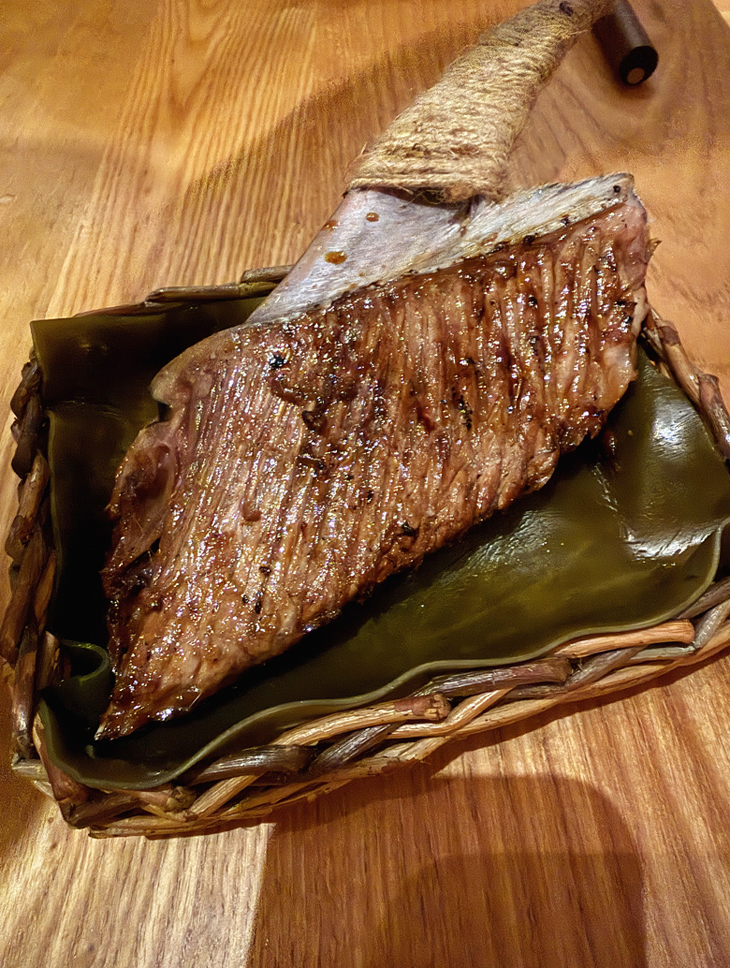
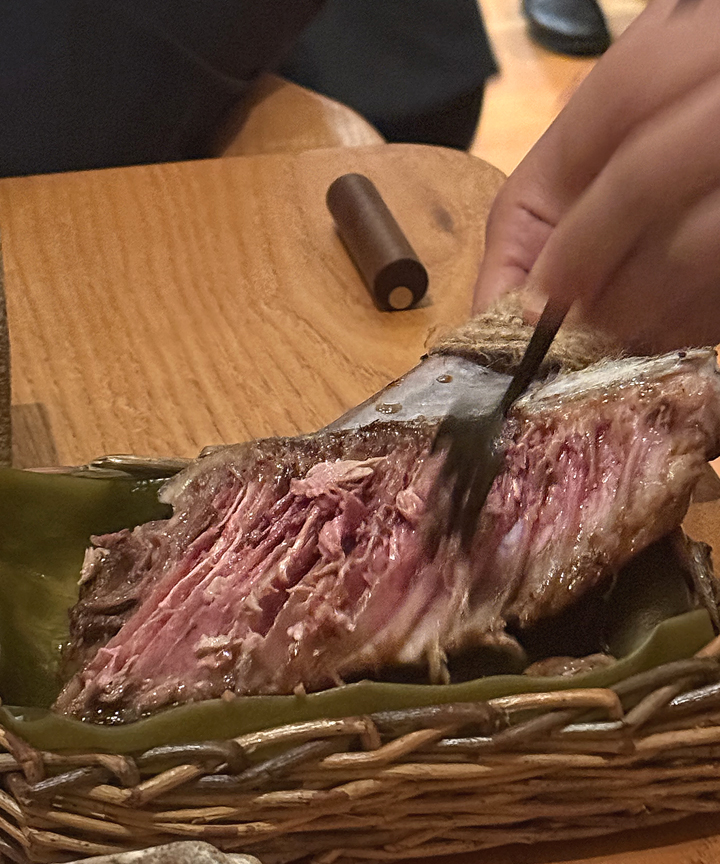
Birdsong offers a couple supplements to the menu. We chose the bluefin tuna dorsal fin ($65 per person). One of the chefs arrived at the table to serve it, explaining that the fin is a part of the fish that’s typically discarded. What Birdsong has done instead is turn this castoff into a showy star.
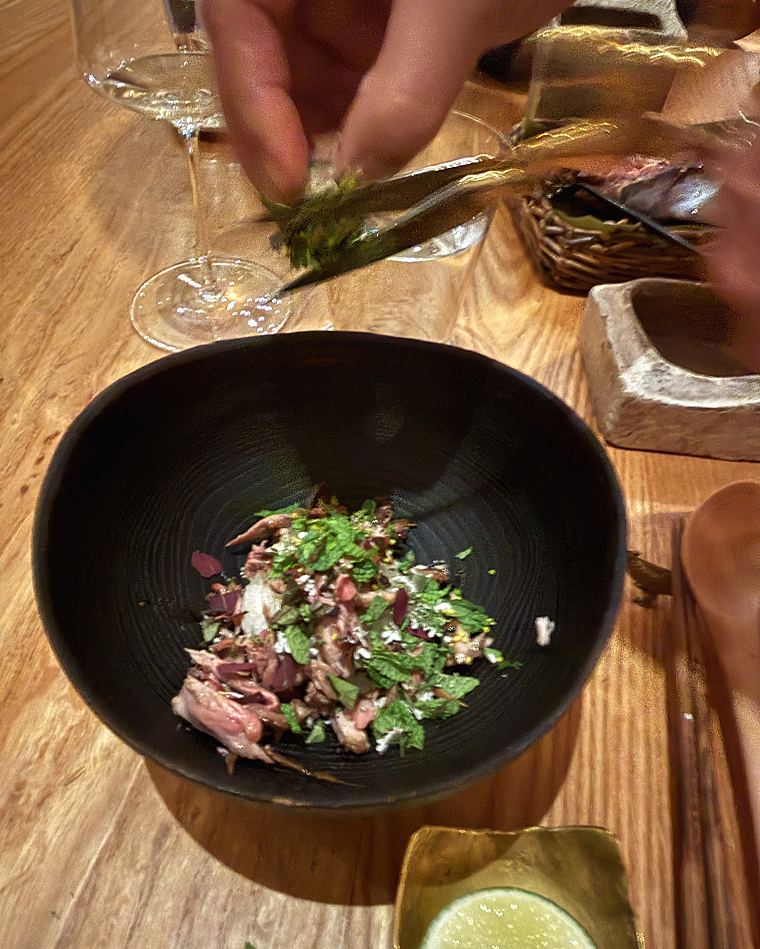
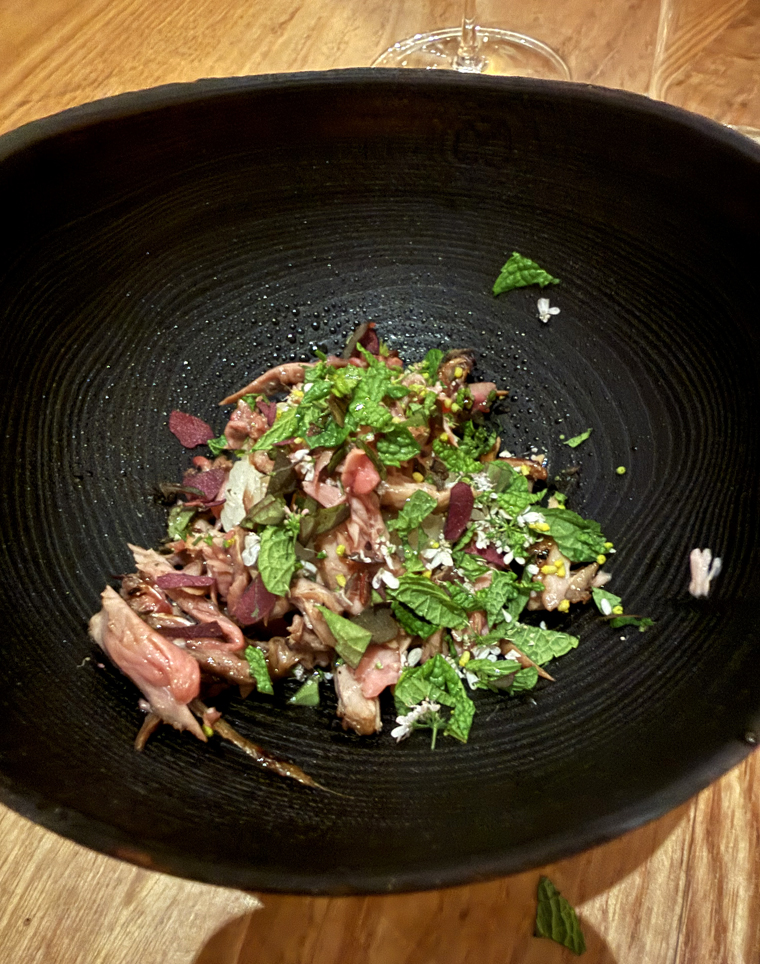
It’s grilled with soy sauce and sugar over almond wood. At the table, it’s scraped off the cartilage (see video), and placed atop crispy grilled Japanese rice. The chef then takes scissors to a little bouquet for fresh oxalis and mint, snipping off a flurry that lands on the tuna. Last but not least, he takes an atomizer and squirts on an infusion made from the restaurant’s rice water, fermented bones, and lemon.
A bowl of rice and fish is total comfort food. But here, it’s somehow turned luxe with all the attention and care. Dig in and the tuna is so meaty and so smoky against the grains of rice, both soft, and crispy. The fresh herbs are a wondrous touch. So fragrant and vibrant, they lend such a contrast and the perfect complement to the heartiness of the fish.
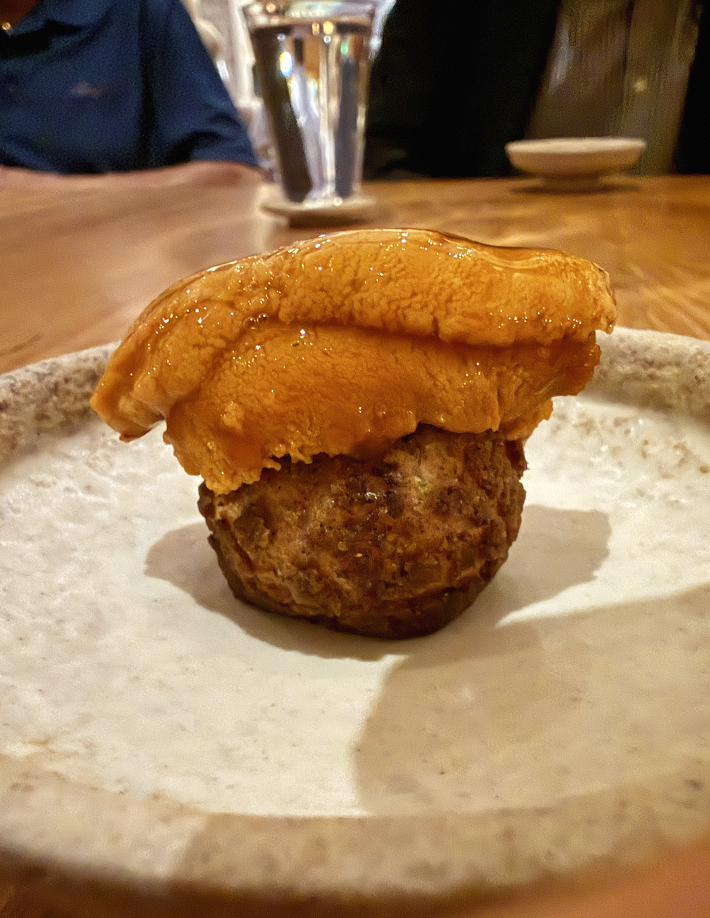
A one-bite wonder arrives next. It’s a lobe of glistening Santa Barbara sea urchin draped languidly over a cream puff. And you do have to eat it one bite because it holds a buttery, creamy filling with fermented shiitakes that will gush out the moment you bite down on it.
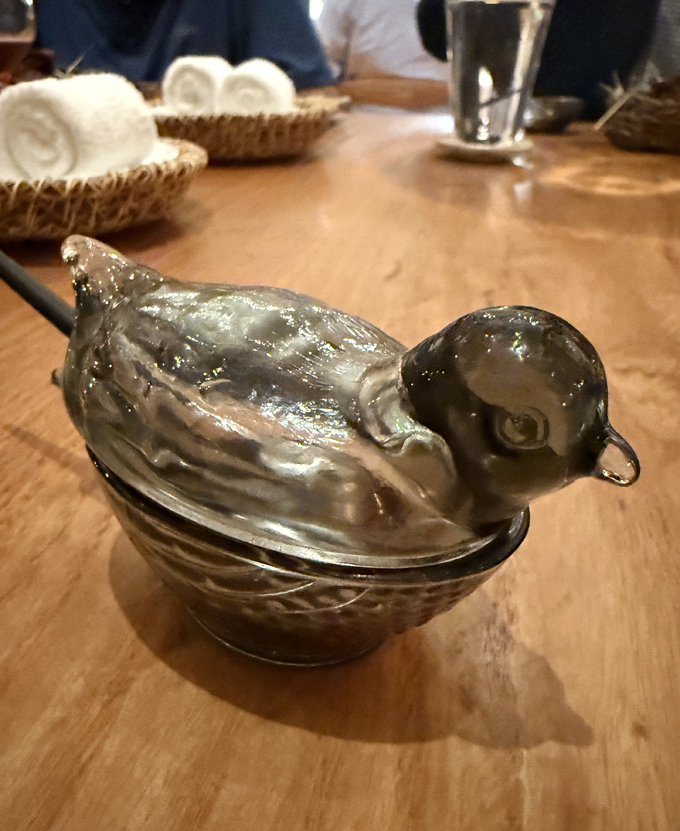
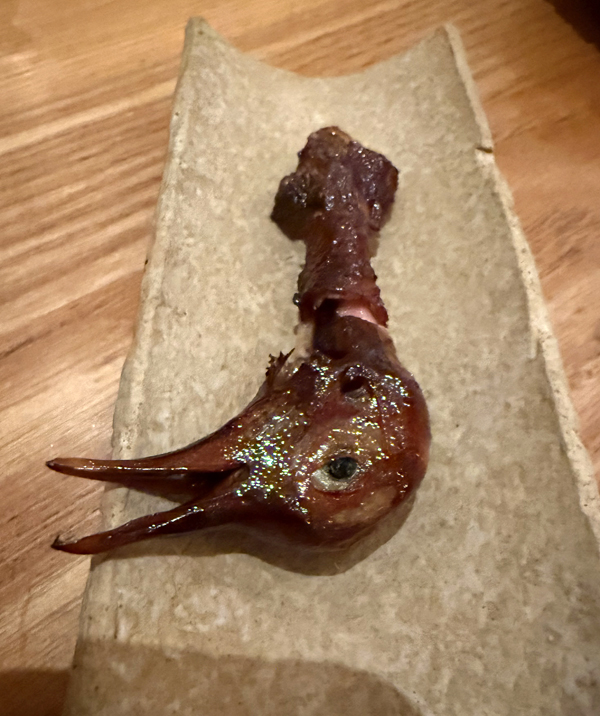
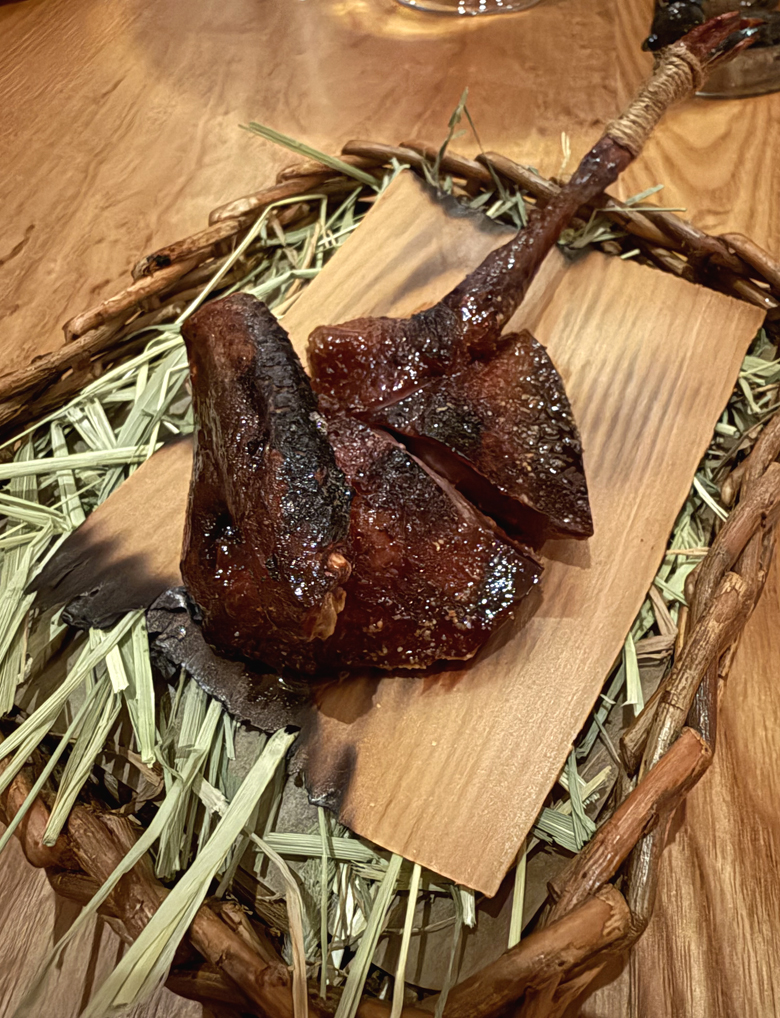
Four Kings restaurant in San Francisco’s Chinatown serves my favorite version of squab — fried, lacquered, and flavored with five-spice. But the one at Birdsong ranks right up there with it. Prepare to get down and dirty with fingers when it arrives — the leg and thigh lacquered with honey, then hot oil poured over it to crisp up the skin magnificently. The head with neck arrive on another plate, its neck skin conveniently loosened and sliced into two to encourage you to peel it off to enjoy. Alongside in a cute glass bird serving bowl is a condiment made from the heart and liver.
So richly smoky with a hint of sweetness, the squab practically tasted like heritage pork. You will be licking your fingers. Good thing that warm towels are at the ready with this dish.
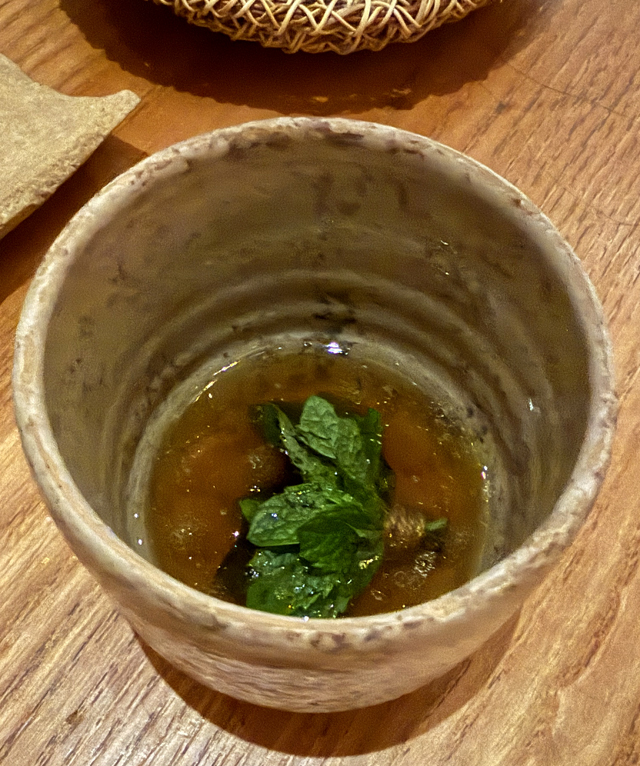
A cup of broth arrives soon after, made from the duck bones. It’s very rich, smoky, and buttery tasting, though, maybe a bit oily on the finish.
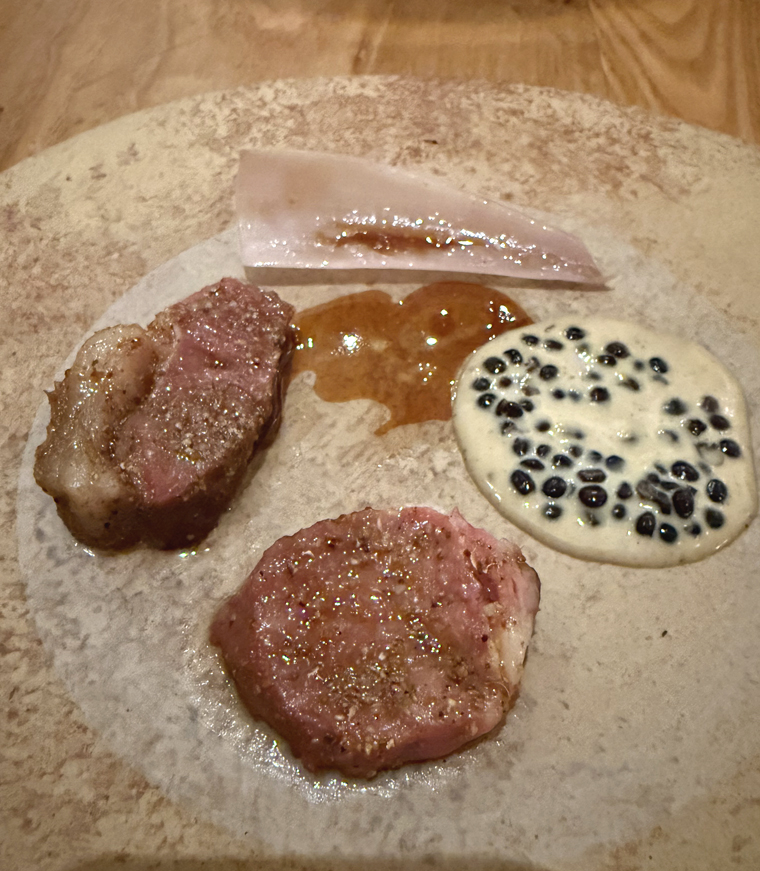
The last savory course is grass-fed Willamette Valley lamb that’s been dry-aged 30 days to concentrate its flavor, then grilled. It’s finished with a sauce made from its bones, and comes complete with smoked black lentils.
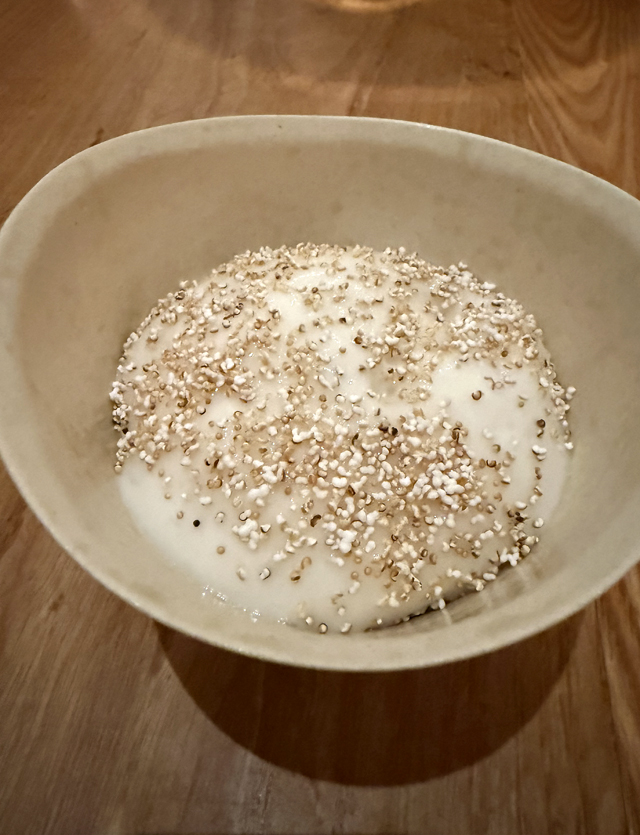
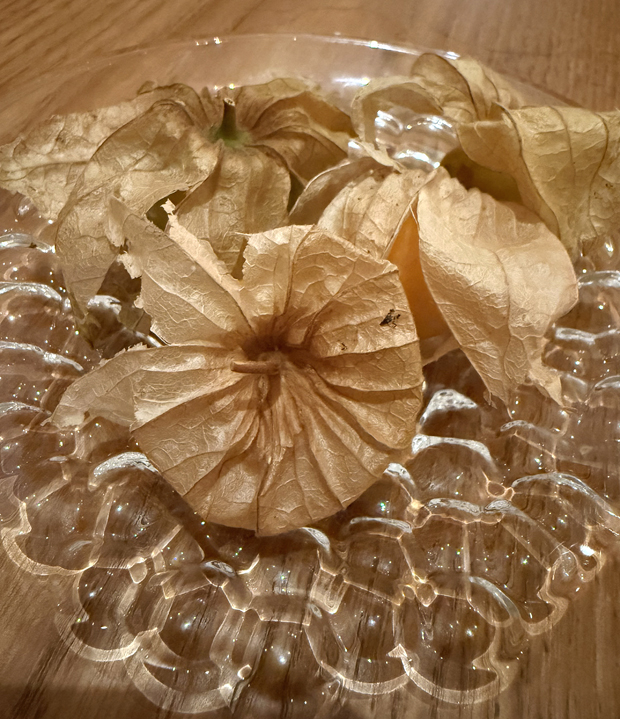
Then, it’s on to sweets, beginning with a refreshing strawberry shave ice with nutty tasting toasted rice. Alongside is a plate of seasonal fresh fruit — gooseberries at this time of year, that are tangy and juicy with the taste of tomato and melon.
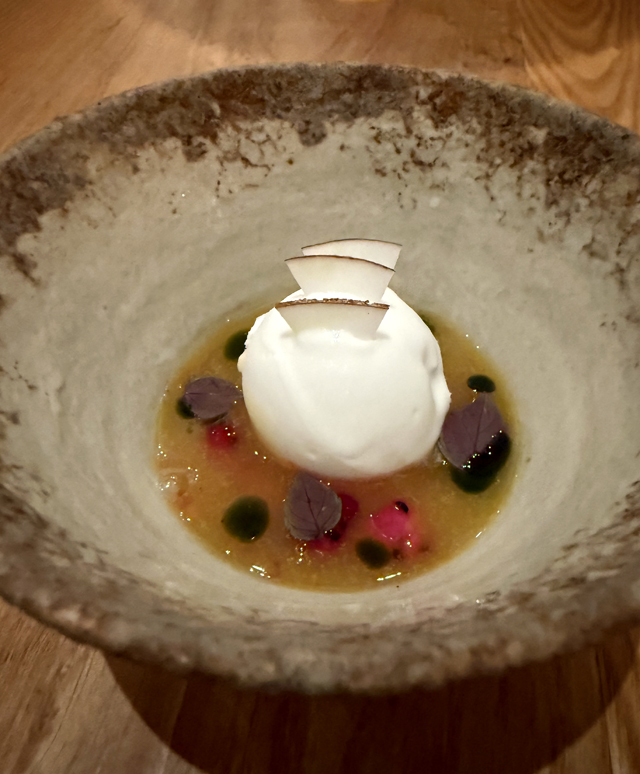
That’s followed by a light and refreshing coconut ganache with coconut custard in a pool of diced dragon fruit and cubes of agave gelee.
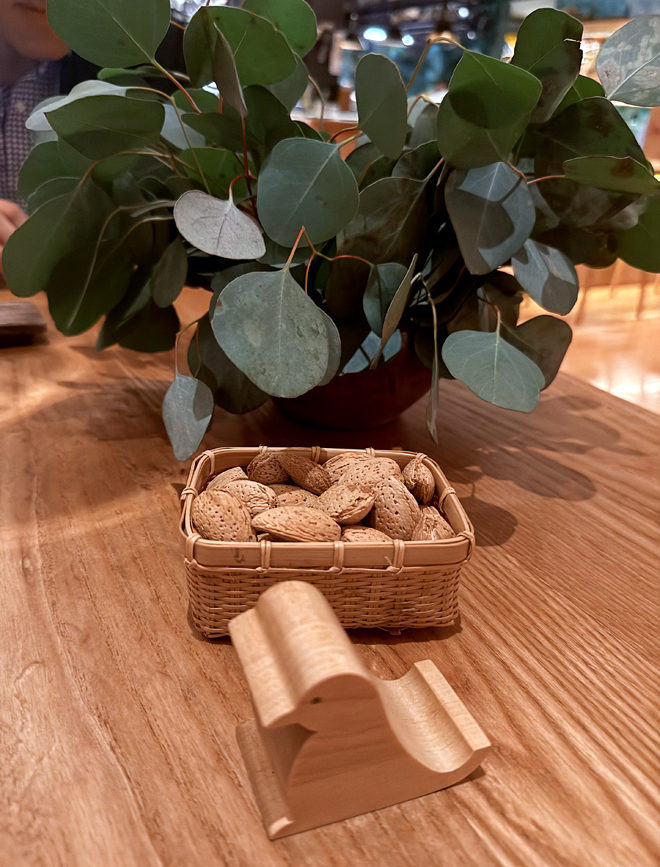
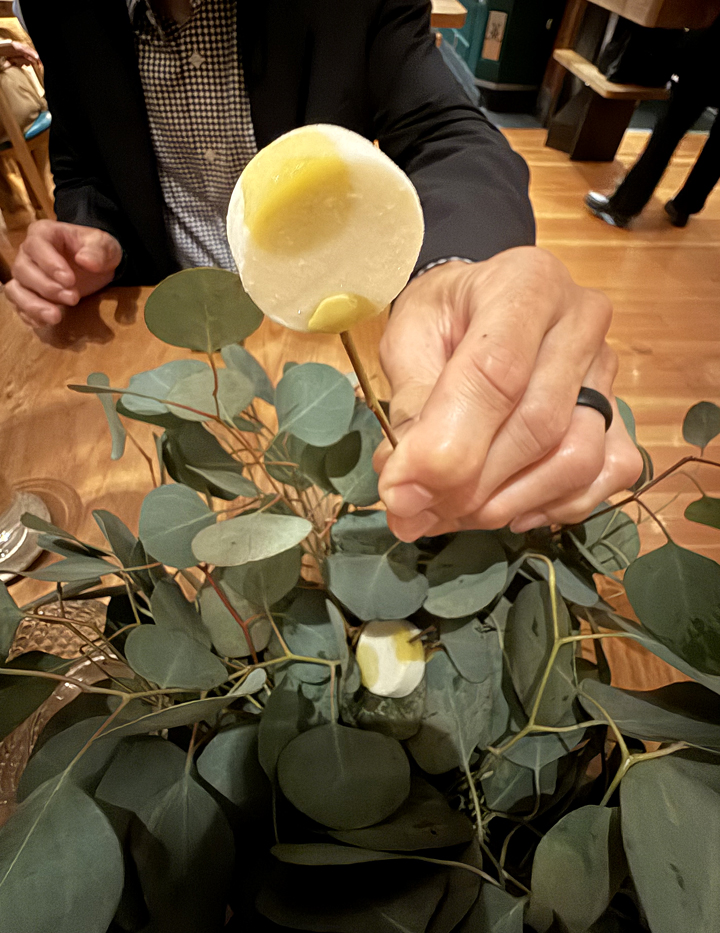
Mignardises are presented with fun theatrics as servers arrive at the table bearing vases of eucalyptus branches. Its menthol scent fills the air as you’re told to dig inside the leaves to find a lollipop of a creamy, ice-cold popsicle made of pine yogurt and olive jam that melts on the tongue, leaving behind the taste of the forest.
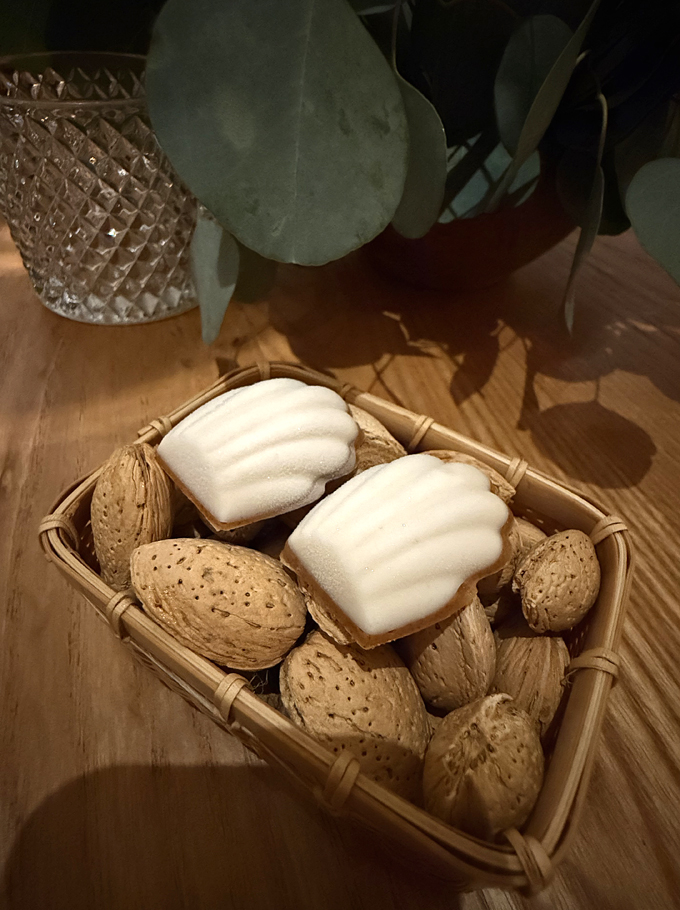
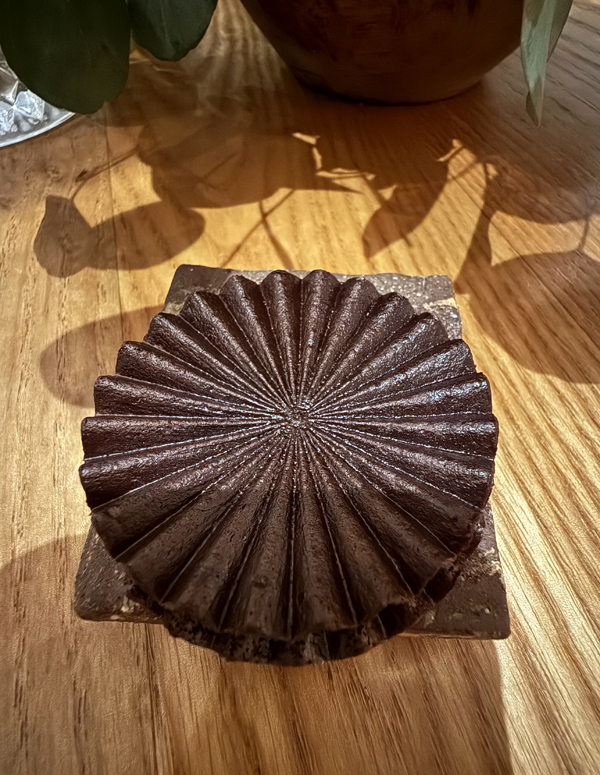
There are also madeleines, but not the tender little cakes you’re used to. Instead, these are unexpectedly made of frozen almond custard. Lastly, there’s a fanciful, delicate dark chocolate wafer cookie sandwiching a woodsy cedar caramel.
Before you leave, you’ll receive a copy of the menu plus a pouch of wildflower seeds that you’re encouraged to plant to strengthen our ecosystem of insects and birds. And should you use the restrooms, you’ll smile when you hear the piped-in sounds of songbirds.
Yup, that’s the restaurant in a song.
And a very splendid one at that.