Porto, PORTUGAL — At the end of your dinner at Euskalduna Studio, if you tell the chefs that they deserve two Michelin stars, they will tell you that they are satisfied with just the one.
That’s not them being modest, unambitious or content to rest on their laurels.
It’s them knowing that attaining that higher status would come at a cost. It would mean changing what they do, which is deliver beautiful, on-point food in an unexpectedly relaxed manner with charm, humor, and outright personality.
During a recent two-week trip to Portugal, where I ate at many restaurants, the one at Euskalduna Studio stood out as one of my favorites.
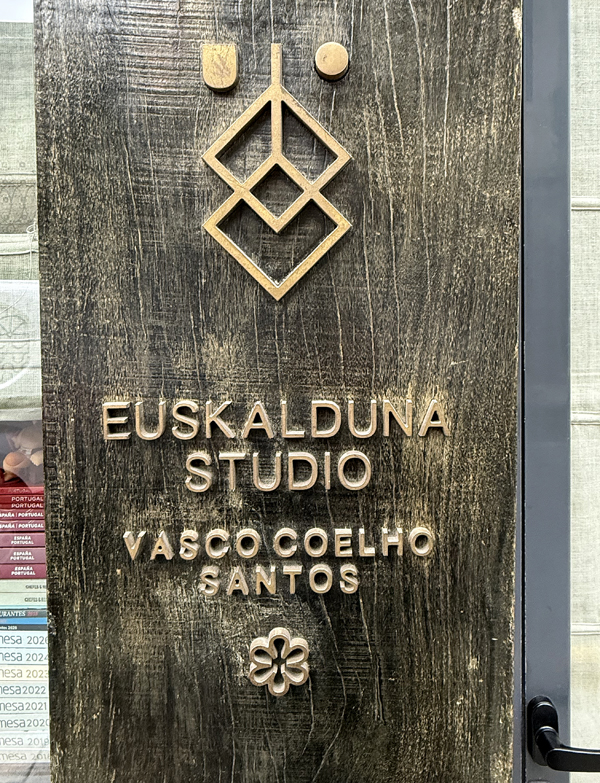
Chef Vasco Coelho Santos opened Euskalduna Studio a decade ago on a narrow, cobblestone street. Having worked at such legendary establishments in Spain as Mugaritz, Arzak, and El Bulli, he named his restaurant after the Basque word for — what else — “Basque.”
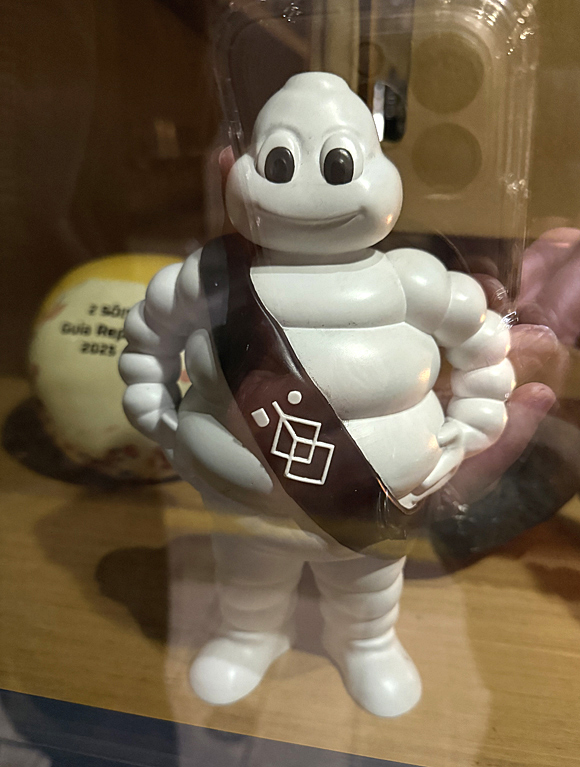
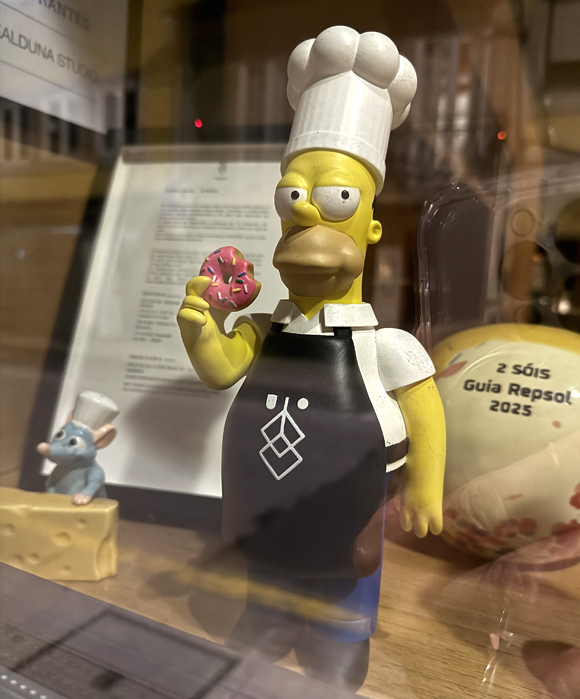
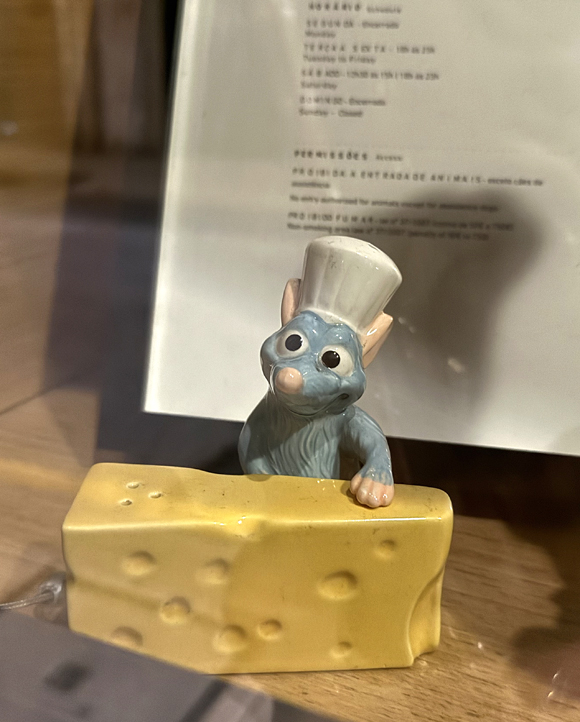
Peering in the front window, you get your first inkling that this place may take its food seriously, but not so the rest of the usual fine-dining trappings. Not when figurines of Homer Simpson and Remy from “Ratatouille” are arranged prominently alongside the Michelin Man.

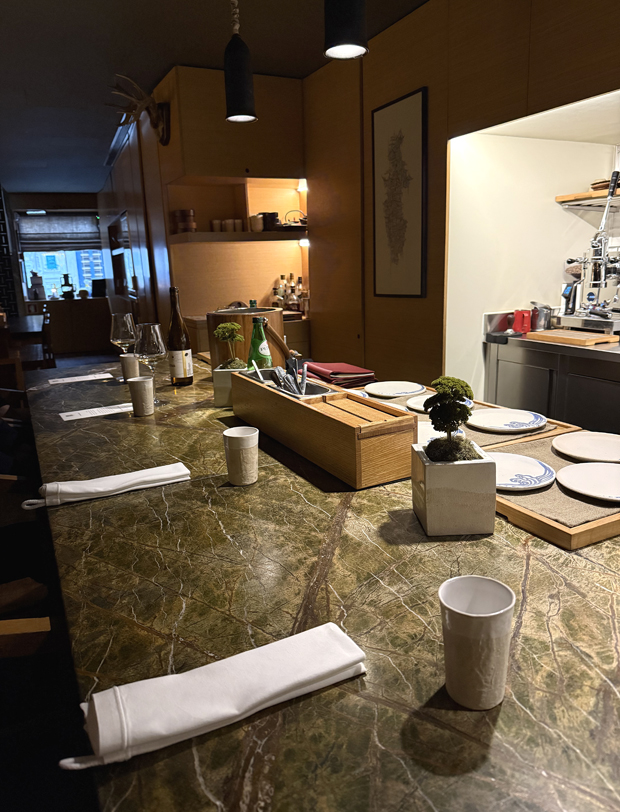
Save for two tables in the dining room, the main seating is at a counter that fronts the open kitchen. It is at one of those 10 seats that you want to perch yourself for an up-close look at all the cooking, plus the ability to interact with the chefs who are more than happy to converse.
When I asked one chef whether he minded if I took photos, he deadpanned, “Of course not. But we are not a very good looking bunch.”
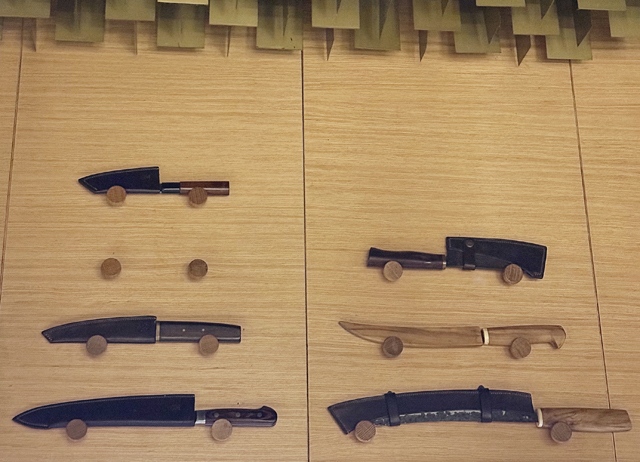
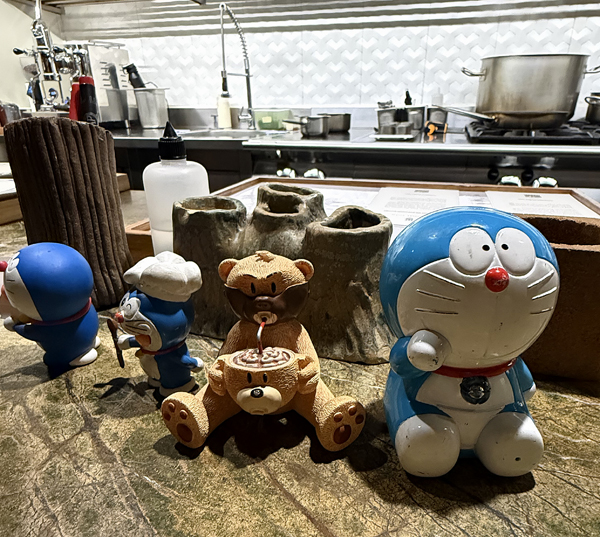
Santos wasn’t even there that evening, but you wouldn’t have necessarily known that, given how well the kitchen performed. Plus, you could still feel his presence — from his playful figurines on the counter to his collection of knives hanging on the wall above the kitchen, some of them worth more than 3,000 euros, I was told, because the knife forger no longer makes them.
The 10-course tasting menu is 160 euros. Wine pairings run 95, 150 or 250 euros. A non-alcoholic pairing is 65 euros and highly worth getting.
Unlike some restaurants that take the easy route and just open bottles of prepared non-alcoholic beverages, Sommelier Kamila Durkiewicz actually goes the extra mile — and way beyond — by making her own kombuchas. Pouring a light amber liquid into a glass, she asked us to guess what it was. To me, it smelled like oranges or tangerines, and tasted tropical like mangoes. Yet it contained no fruit at all. Instead, it was green tea, grown by a Portuguese farm, that had been roasted before being fermented. Yes, tea that somehow didn’t taste like tea at all but like a bowl of ripe Hawaiian fruit. Talk about mind-boggling.
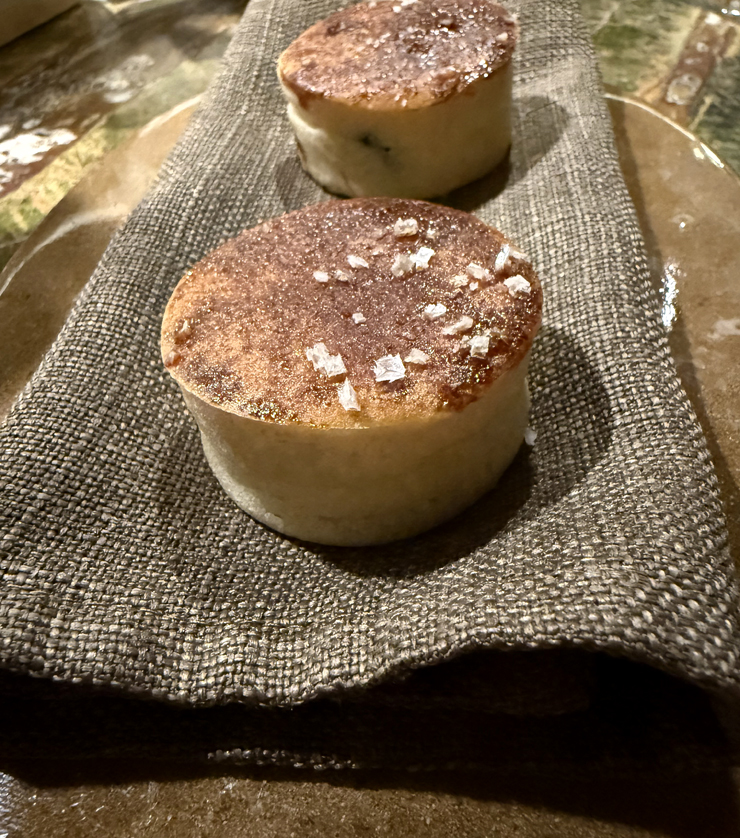
The first morsel is a small puffy pancake made from sourdough from the restaurant’s bakery, Ogi by Euskalduna, just a few doors down on the same street. Topped with teriyaki powder, it has the soft texture of a Japanese okonomiyaki but with the surprise of seaweed and a juicy oyster inside.
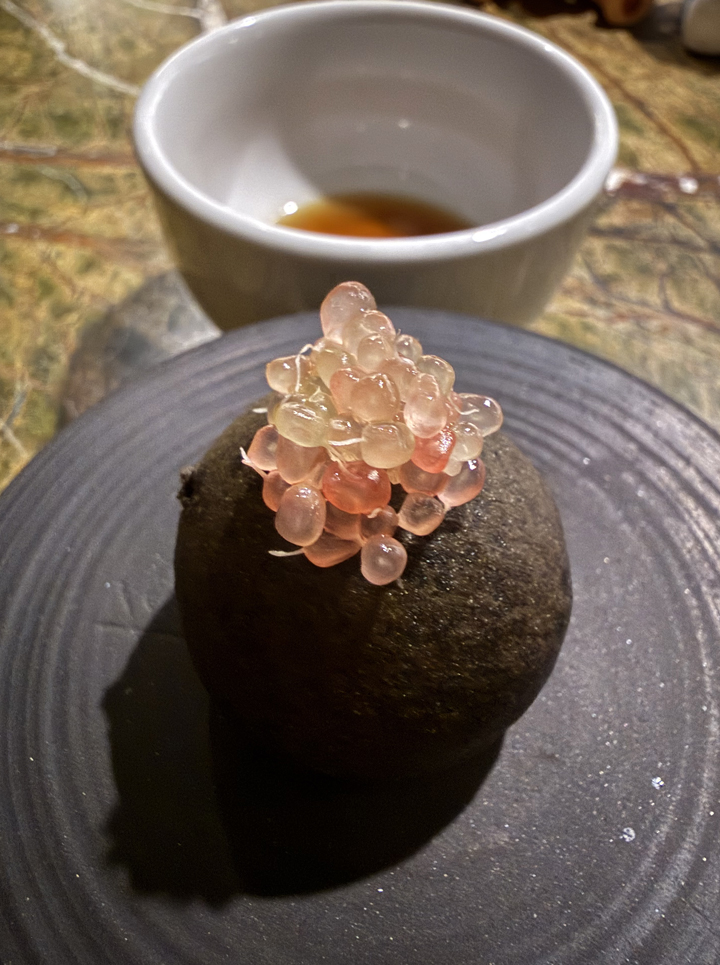
That’s followed by a takoyaki-like ball. It gets its dramatic dark charcoal color from squid ink. You’re told to eat it in one bite because the moment your teeth hit, it gushes a creamy mixture of squid and fermented koji. The taste is oceanic and savory, but with the merest touch of sweetness.
It’s served with a shallow cup of broth made by simmering the squid tentacles with roasted vegetables before being finished with soy sauce and a touch of hazelnut oil. I loved that surprise touch of nuttiness that amplified the umami taste. All it needed was some noodles to turn them into one dynamite pho broth.
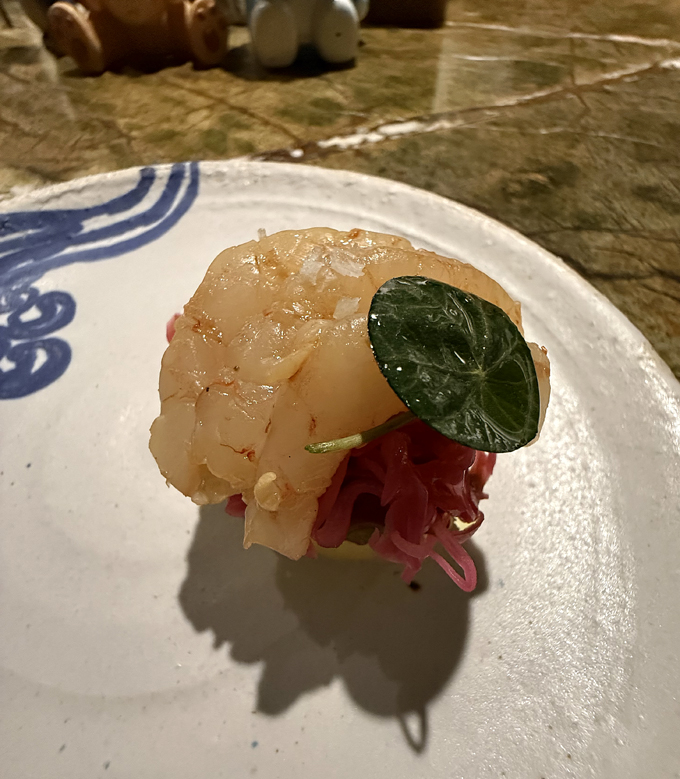
Although we were still at the beginning stages of the menu, the next canape was actually inspired by a Portuguese orange cake. Apparently, Santos came up with it on the fly when a delivery of asparagus didn’t arrive on time. Prawns and asparagus are ideal partners, after all. But prawns and cake? That shouldn’t work yet somehow does. When you realize that plump prawns have a natural sweetness to them anyway, it begins to make sense. Adorned with tomato jam and pickled cabbage, the prawns sit atop a sweet, fluffy orange-scented cake, making for one unforgettable bite that lingers long with the roundness of citrus.
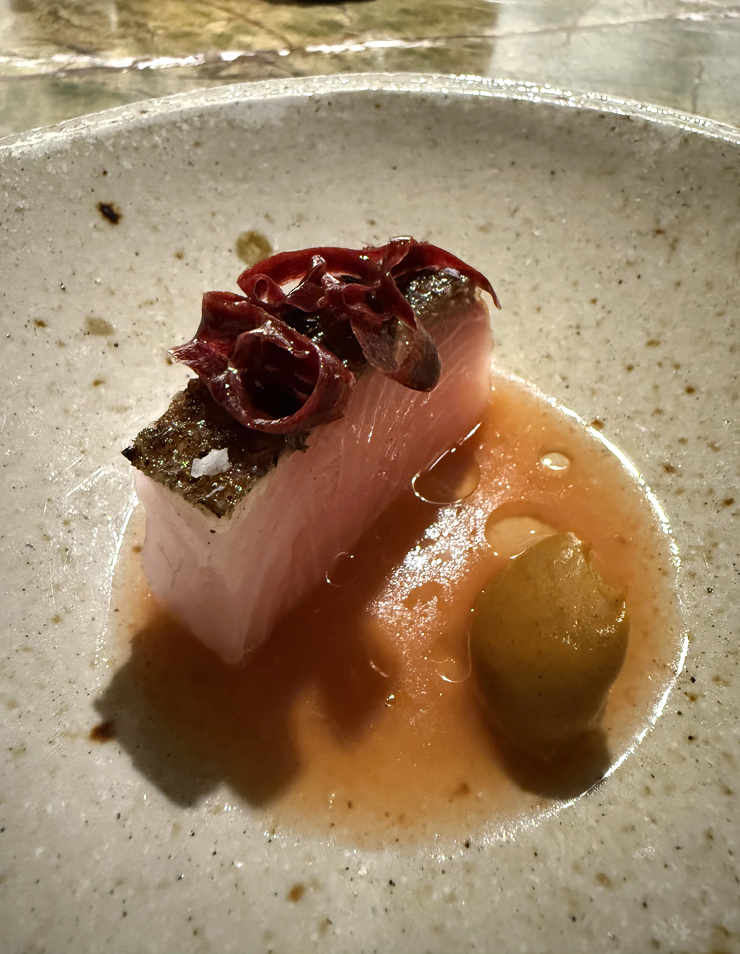
Amberjack from the Azores is dry-aged for a few days to impart a firmer, buttery texture. It’s then cooked only skin-side down until its skin is crackling crisp. It’s served with a caramelized carrot puree seasoned with raspberry vinegar and grapefruit in a clean-tasting dish with Japanese influences.
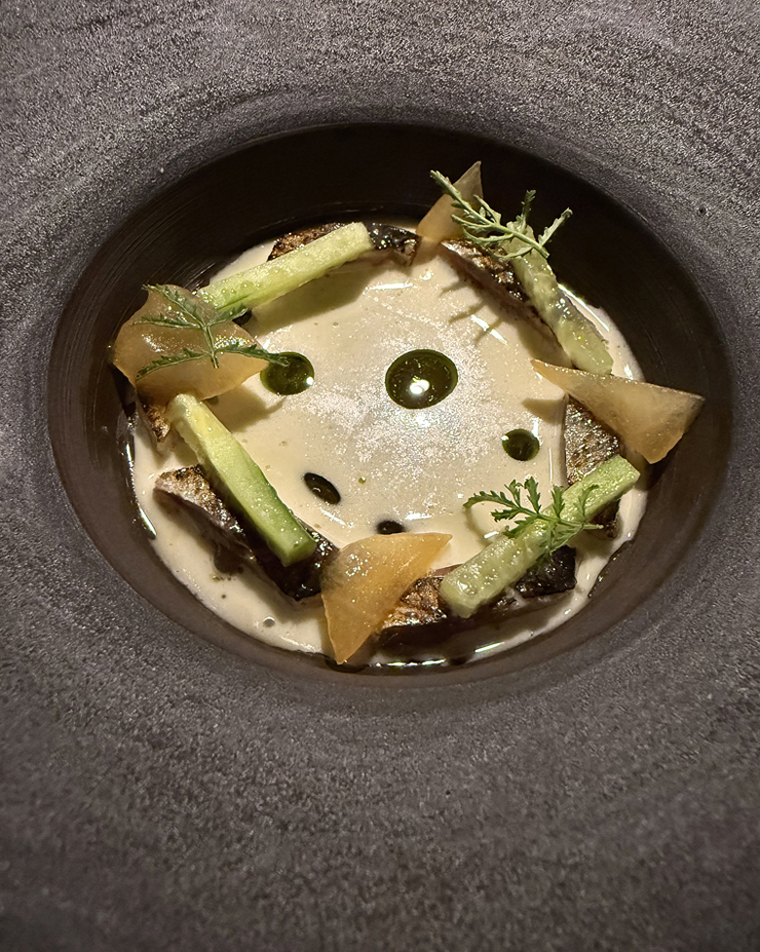
Sardines get their skin torched, leaving them crunchy and with a lovely charred taste alongside marinated cucumbers and chayote in pil pil, a creamy sauce made by emulsifying the natural collagen of fish with olive oil. The crowning touch is the Peruvian mint that tastes dreamily of mint conjoined with fresh orange.
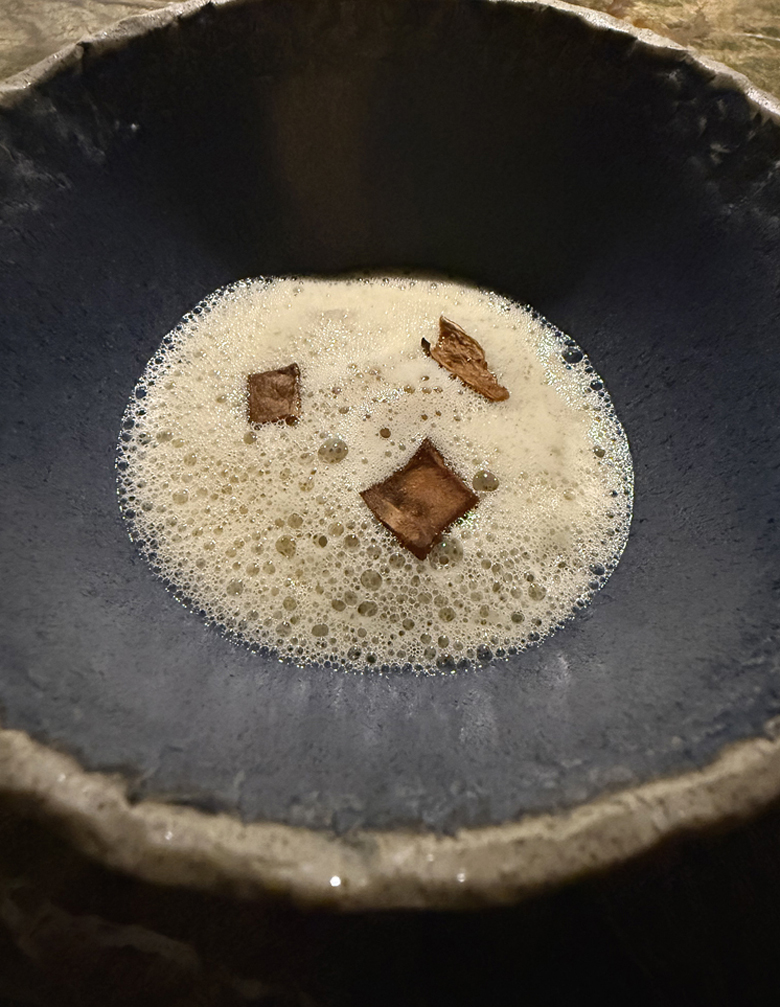
A rough-hewn ceramic bowl arrives holding a cloud of cappuccino-colored foam. This vegetarian dish inexplicably pairs beans with pineapple — and it’s a winner. The foam tastes like browned butter, but it’s really charcoal-caramelized pineapple foam with bits of dehydrated pineapple dotting it. Dig underneath to find white bean halves, cooked purposely a little more al dente to mimic the texture of chestnuts, along with chopped pistachios.
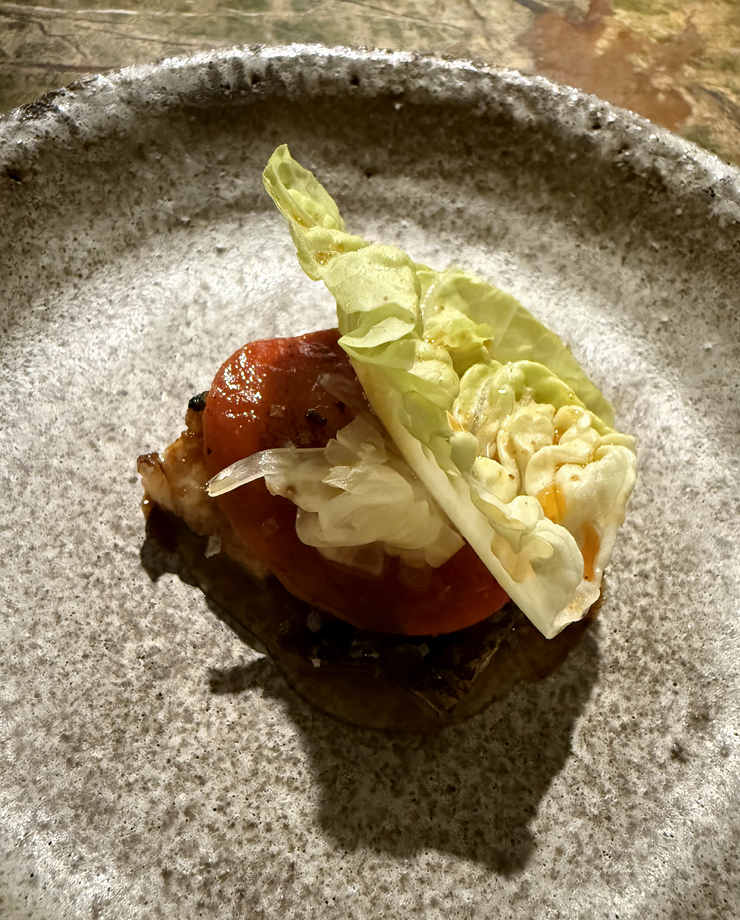
Porto’s St. John’s Festival in June, honoring St. John the Baptist, inspires the next dish. Because sardines are at peak-season then, folks celebrate by enjoying them grilled. Euskalduna’s version, however, uses eel instead. Brushed with sake and soy sauce, it’s grilled yakitori-style over Portuguese charcoal made from compressed coconut shells. Composed with pickled red peppers and a Gem lettuce leaf on top along with a drizzle of dashi, the eel is meltingly tender, incredibly smoky tasting, meaty with that coveted sliver of crisp skin, and boasts a powerhouse of umami.
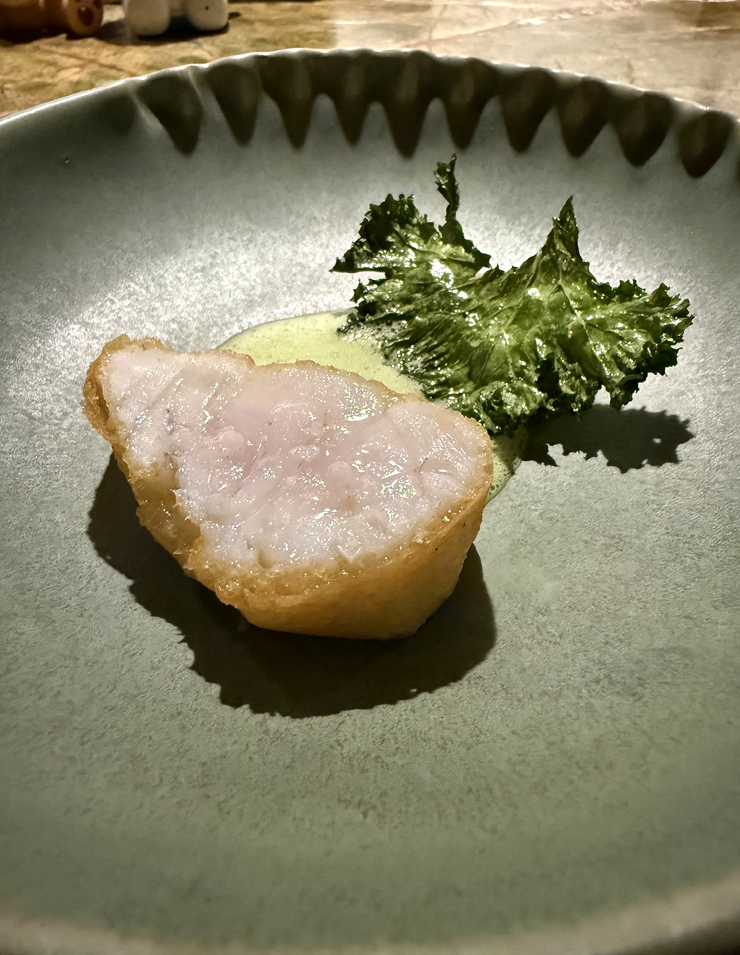
More crispy deliciousness arrives with a meaty morsel of grouper, cooked tempura-style, alongside a frilly fried kale leaf and smooth, buttery, caramelized cauliflower puree.
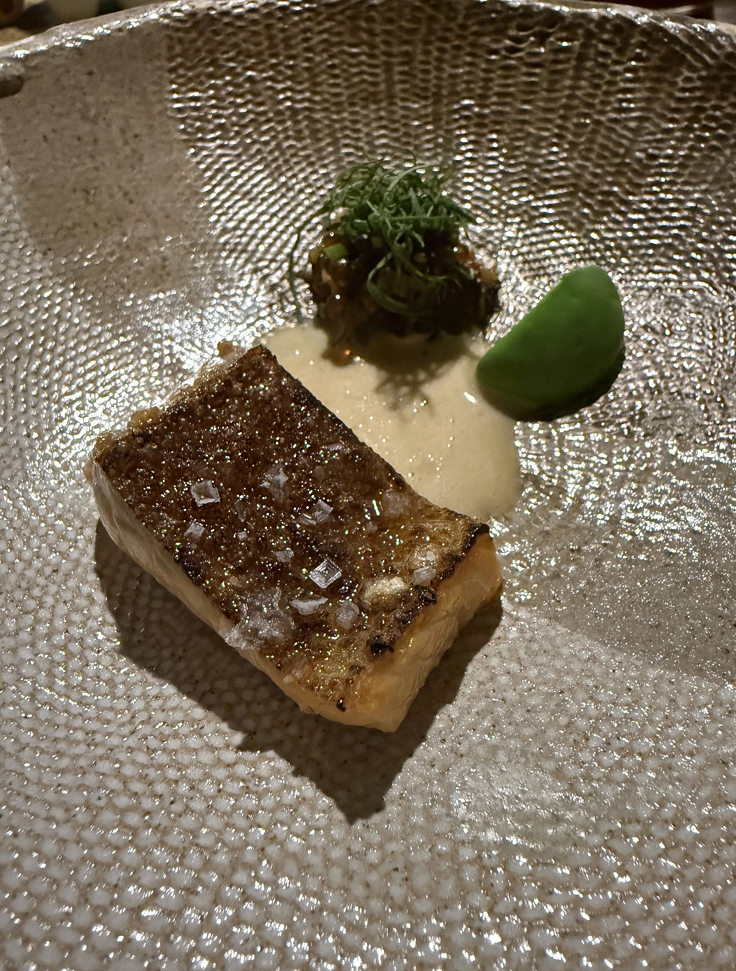
Dry-aged river trout gets charcoal-grilled, too, leaving its skin like crackling. This dish is so savory, thanks to a sauce made from the bones of the fish plus house-made corn bread miso and vegetarian, mushroom-based XO sauce. The deep corn taste really shines through.
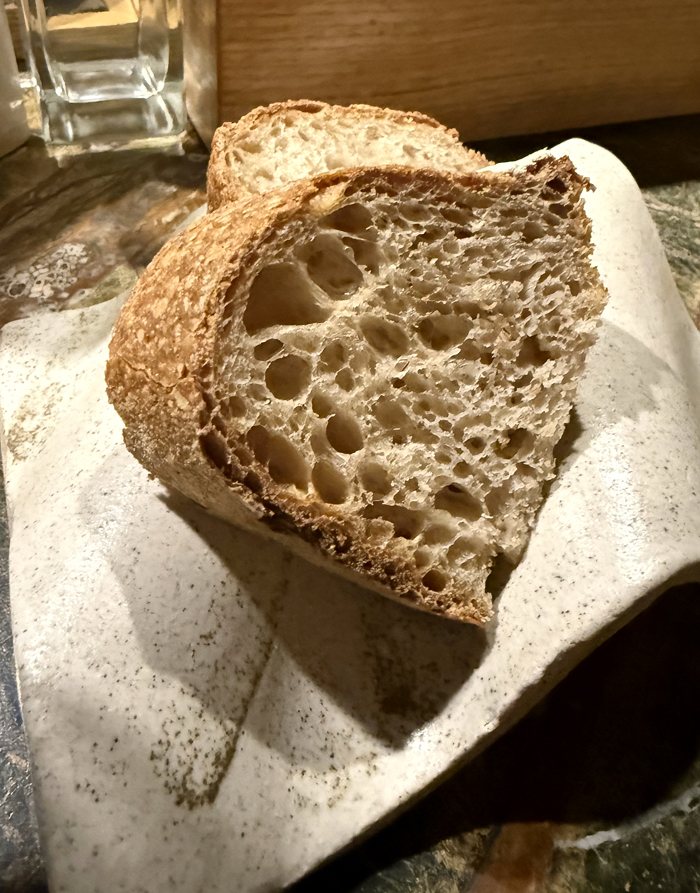
To enjoy with the final savory coarse, crusty, chewy slices of sourdough corn bread from the restaurant’s bakery are served. Made from stone-ground corn flour, this traditional Portuguese bread makes for a hefty, rustic loaf unlike the fluffy American cake-like cornbread.
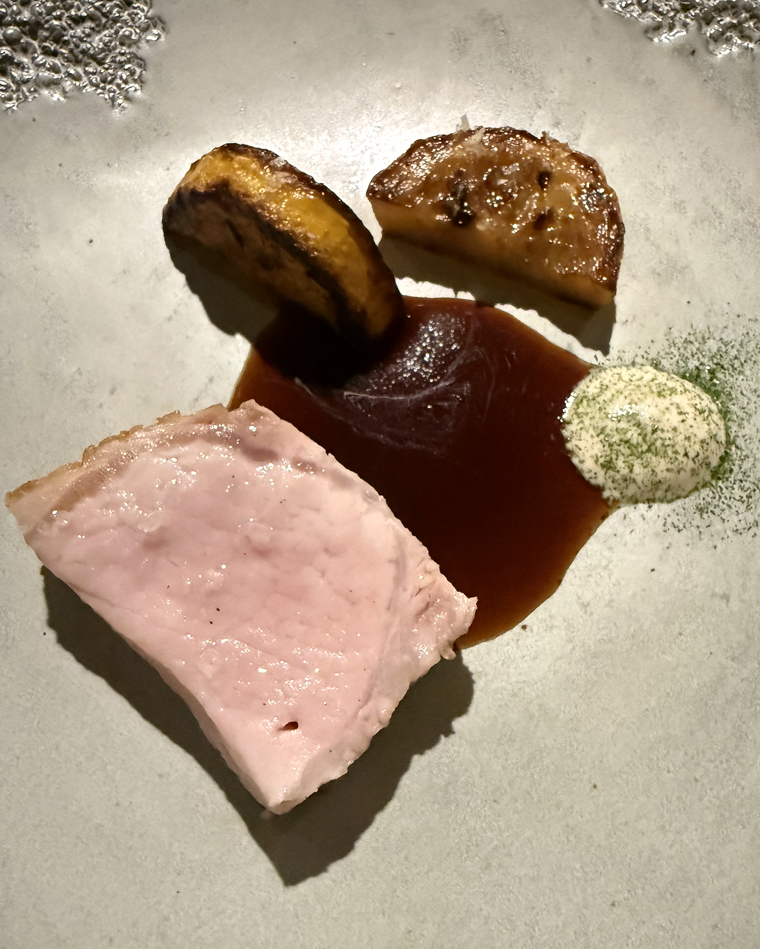
It’s the perfect accompaniment to the Iberian rib pork slab that we’ve all been eyeing for the past hour, perched on a shelf above the grill, where it’s been cooking ever so slowly and gently until it’s so yielding, so meltingly tender, and so juicy, with a thin rim of unctuous fat. Deeply caramelized half wheels of yellow squash that have turned custardy and sweet are perched on the plate with a dollop of yogurt sauce before the pork is finished with a jus made with the bones and Madeira wine, cooked for four days to reduce and concentrate into a glossy, syrupy, almost caramel-like sauce.
You bet the chefs know just how mouth-watering this sauce is. They’re generous with it, too, coming around to each diner with the pot to offer seconds of it. You eagerly accept because you can’t stop dragging your bread through more and more of it.
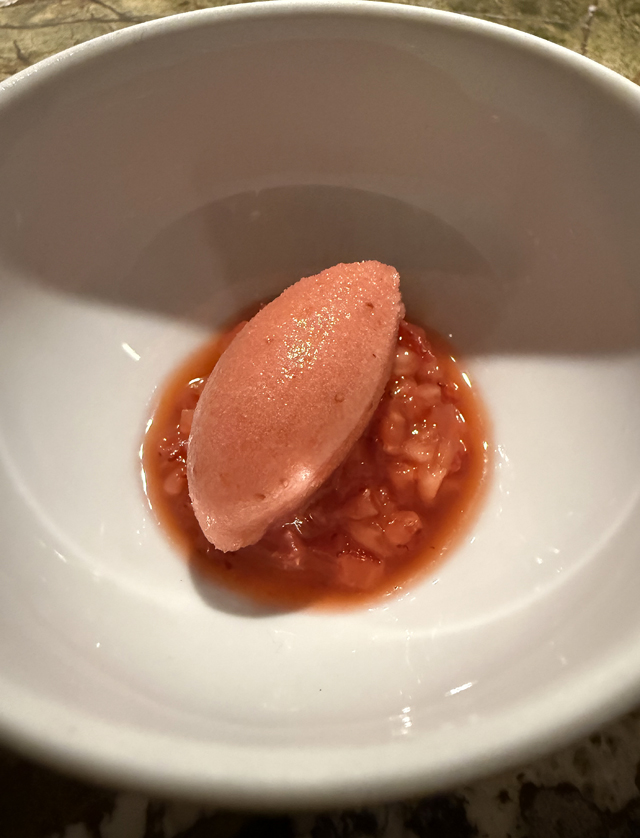
The pre-dessert is a zingy study in strawberries. There’s fermented strawberries with chopped up scoby, the gelatin-like bacteria and yeast culture used to make kombucha, along with strawberry kombucha ice cream and hibiscus cream. It all coalesces into a very prominent berry taste with an almost cheesecake-like note.
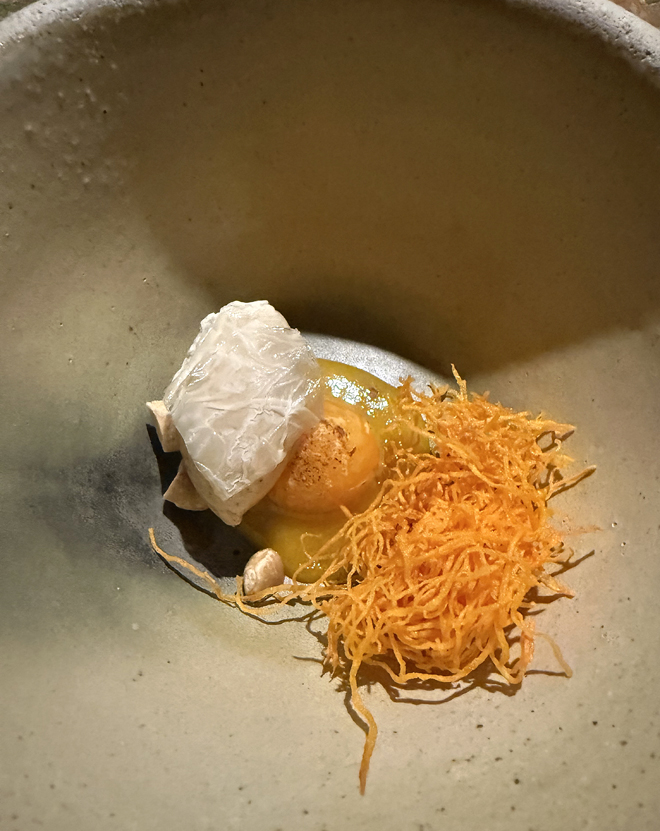
Dessert, itself, honors Portuguese doce e ovos, a velvety, thick, orange-hued cream made by cooking egg yolks in a sugar syrup. Only this version is more restrained in sweetness. It’s served with cinnamon ice cream topped with a veil of almond milk yuba and a flourish of crispy fried sweet potato strips. Hidden at the bottom are more almonds to heighten the sweet, toasty nuttiness.
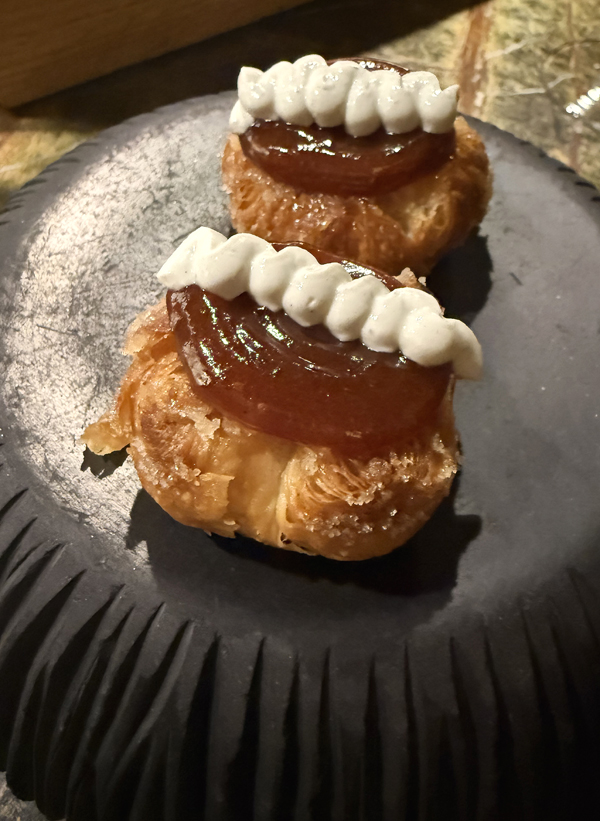
How can I not love a restaurant even more when its last offering is a mini kouign-amann dolloped with pear jam and a squiggle of Portuguese goat cheese? The pastry, made from leftover laminated dough from the bakery, is crispy through and through, buttery as all get out, a little sweet, a little tangy, and absolutely enticing to the last crumb.
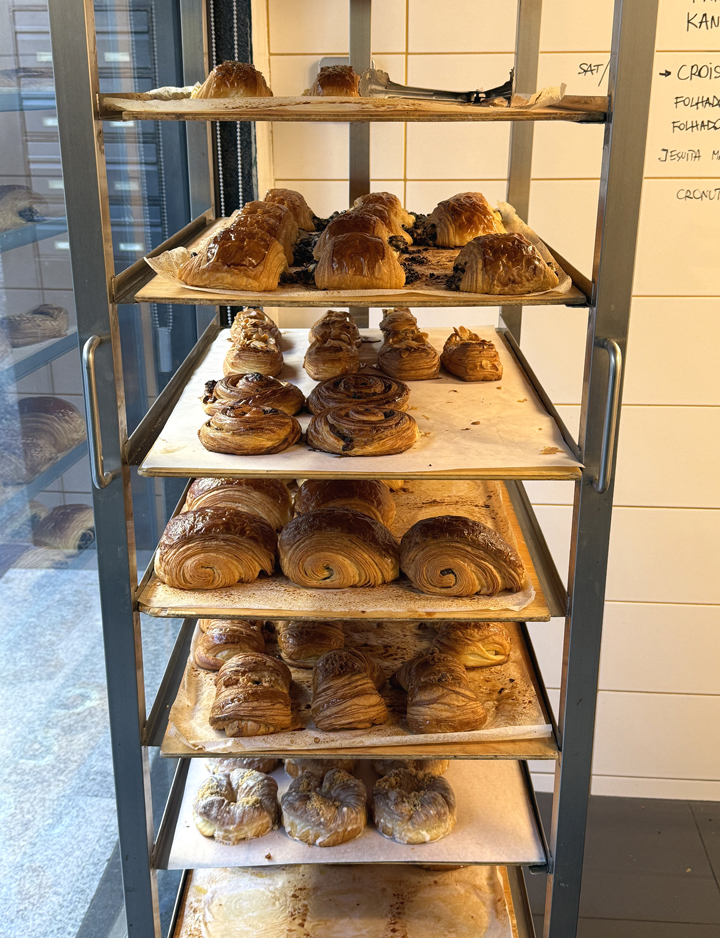
After tasting that impeccable treat, you know I just had to visit the bakery, too. The retail portion is the size of a closet, with a speed rack showcasing the day’s fresh-baked items, including pastries both sweet and savory, focaccia, and loaves of bread. Luis, who works the front, is a draw unto himself, dancing and grooving the whole time he is helping you.
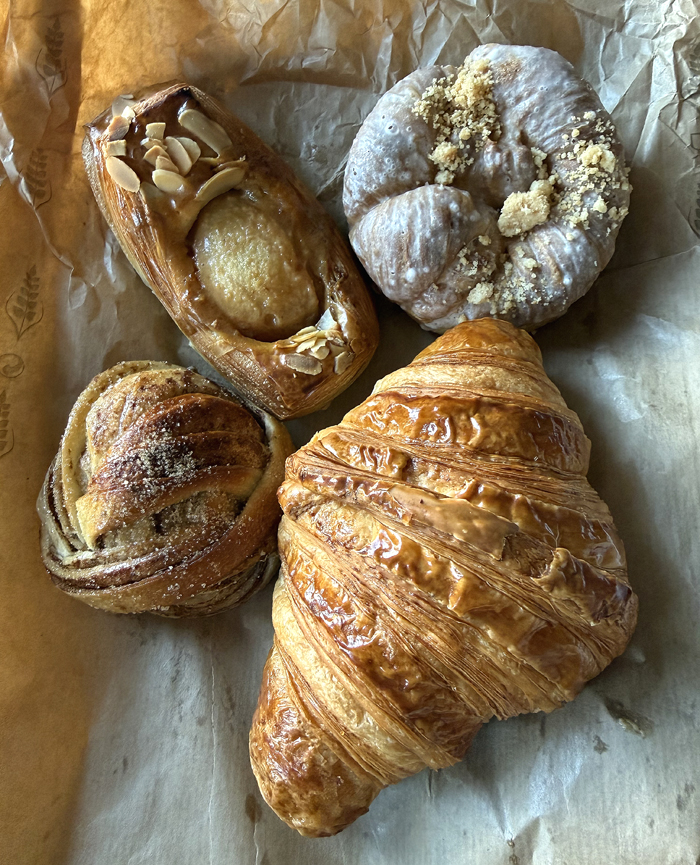
The pastries? Right up there with the best in the San Francisco Bay Area. So incredible, in fact, that I went back to Ogi by Euskalduna one more time before leaving Porto to get my fix again.
As for Euskalduna Studio, I’m glad it doesn’t plan on trading its character or approach just to up its star count. To me, it’s already pretty perfect just the way it is.
More: Portugal Dining, Part II