Monthly Archives: December 2011

Hawaii Part 5: Kona — Where Coffee is King
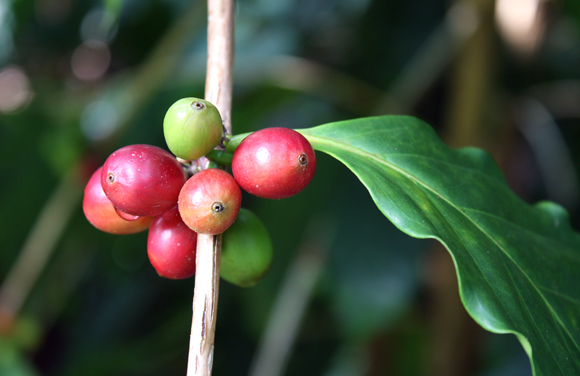
Red "cherries'' on a Kona coffee tree are the ripe fruit, from which the coffee seeds or beans come from.

KONA, HAWAII — When you think of the Kona district on the Big Island, it’s hard not to think of coffee immediately.

The first coffee was planted in Kona around 1828 by missionary Samuel Ruggles, where it thrived because of the mineral-rich volcanic soil.

It is now Kona’s most famous crop and probably its most expensive. You’ll find top-grade Kona coffee selling for upwards of $38 a pound. Don’t be fooled by the so-called “Kona Blends.” Yes, they’re cheaper — but for a reason. The blends are required to contain only 10 percent Kona coffee. The rest can be made up of much cheaper coffee from elsewhere around the world.

Kona coffee may get even more expensive in the future, as farmers have had to do battle with a pesky, virulent beetle that has been attacking the berries for the past couple of years. Moreover, just like farming elsewhere, it remains a hard profession that younger generations are turning their backs on.

Tom Greenwell is a fourth-generation grower. His great-grandfather, British adventurer, Henry Nicholas Greenwell, was one of the first exporters of Kona coffee in the late 1800s. Today, Tom Greenwell carries on the family tradition, overseeing Greenwell Farms, where the planting and picking are still done by hand on 35 lush acres.
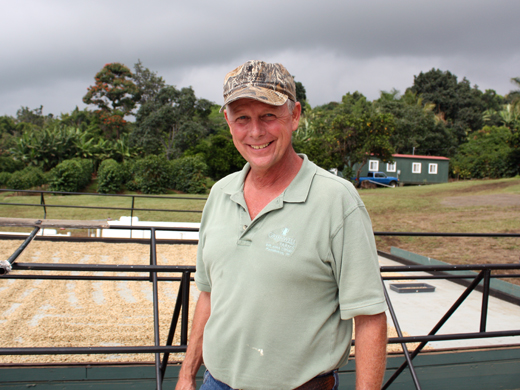
Tom Greenwelll, fourth-generation Kona coffee grower.

Recently, I had a chance to tour the farm with Tom Greenwell during my trip to Hawaii, courtesy of the Hawaii Visitors and Convention Bureau.

Before you even stick your head into the roasting building, the sweet aroma of roasty-toasty beans hits you. It’s like coffee syrup aromatherapy.

Greenwell Farms grows about 280,000 pounds of coffee annually. Small white flowers begin to bloom on the coffee trees in by February, followed by green berries in April. From August through February, the red fruit, known as a “cherry” (because it looks similar to one) has ripened and is ready for picking.
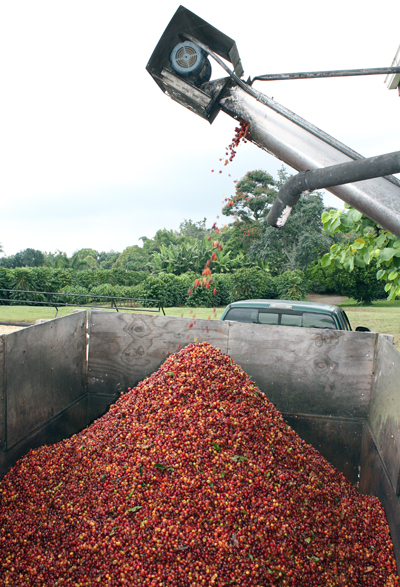
The pulper extracts the beans from the fruit.

The fruit is separated from the seed or bean with a machine known as a pulper. The beans are fermented overnight, then rinsed before being spread out on a rooftop to dry for at least 30 days. After that, the beans go into the roaster for about 15 minutes.
Read more

Hawaii Part 4: Four Magnificent Meals on Maui

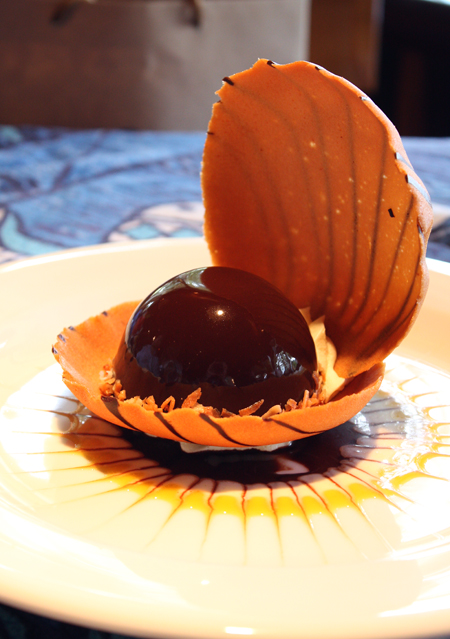
Dessert at Mama's Fish House in Maui is something to remember.

MAUI, HAWAII — You’re probably accustomed to restaurant menus that list the farms where the produce comes from and the ranches that raise the pork and beef starring in the dishes.

But how about a seafood restaurant that lists not only where the fresh fish it serves comes from, but the name of the fisherman who caught it and the method used to land it?

That’s what you’ll find on the menu of Mama’s Fish House in Paia on the north shore of Maui, which has been including that information since it opened 39 years ago. At a time when upscale restaurants on Maui were all steak houses, Vice President Karen Christenson’s parents opened this beach-side restaurant to spotlight seafood because it was cheaper then — and because the fishermen conveniently delivered.

Today, you’ll find descriptions on the menu such as “Deep-water ahi caught by Shawn Boneza trolling the north shore of Maui; seared in ginger and panko crust with kalua pig rice pilaf” ($40) and “Papio caught by David Wallace while adrift over deep sea ledges near Kaupo; upcountry style with caramelized Maui onion, tomato and jasmine rice” ($38).

How’s that to make a dish sound even more enticing?

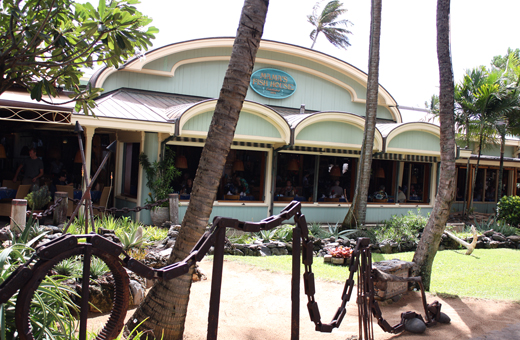
The beach is right outside the door at Mama's Fish House.

The entrance to the restaurant.

Recently, I had a chance to dine as a guest at four wonderful restaurants on Maui, including Mama’s Fish House, as part of my trip to Hawaii, courtesy of the Hawaii Visitors and Convention Bureau.

They take their fish seriously at Mama’s Fish House, a bustling tropical outpost with dining rooms decorated with outrigger boats and shells, as well as views of sand and palm trees.

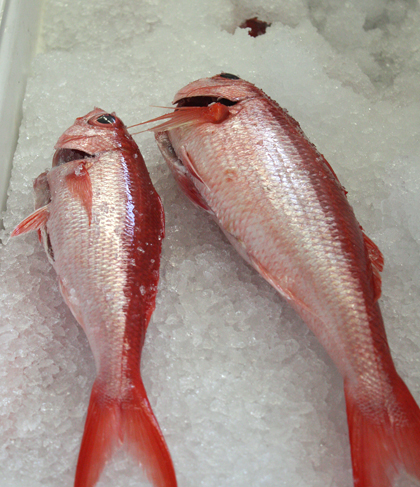
Fresh fish that arrived at the restaurant that morning.

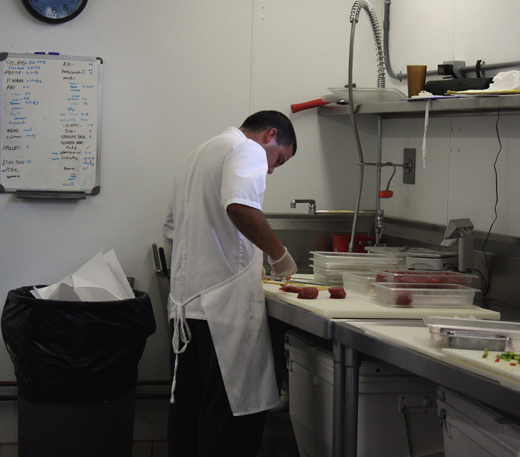
The fish come in whole and are cut and stored in a separate room at the restaurant.

Chef Perry Bateman, who has been at the restaurant an astounding 20 years, turns out about 1,000 meals a day. Everything is made from scratch, too.

Read more

Recent Entries »