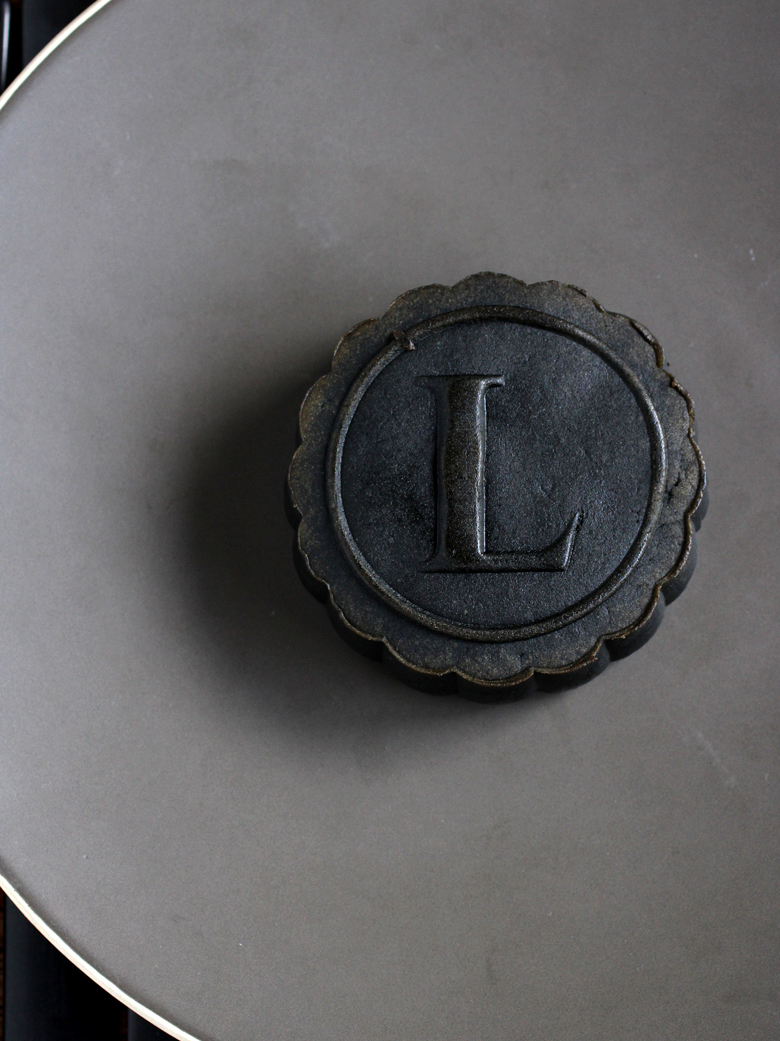
A gourmet mooncake spotlighting Japanese black sesame.
In the past decade, we’ve all seen how the once humble Italian panettone has gone luxe in a big way.
Now comes Liviana Black, which similarly aims to elevate Chinese mooncakes in a most chic and lofty level.
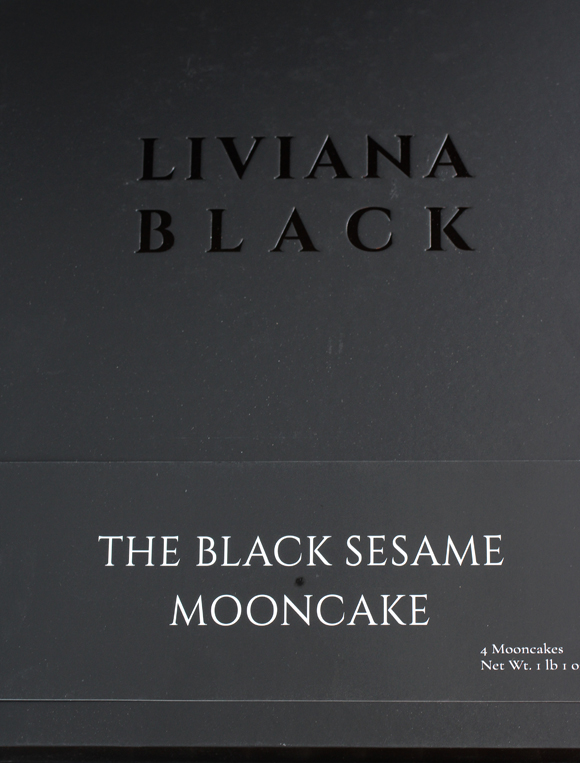
If you’ve grown accustomed to From Roy’s artisan panettones at their now eye-popping price tag of $125 each, then get ready for Liviana Black’s black sesame mooncakes at four for $88.
The fancy box.
Just like Roy’s panettones, these mooncakes come in artful packaging that immediately sets them apart, not to mention their strikingly moody noir color thanks to a little activated charcoal.
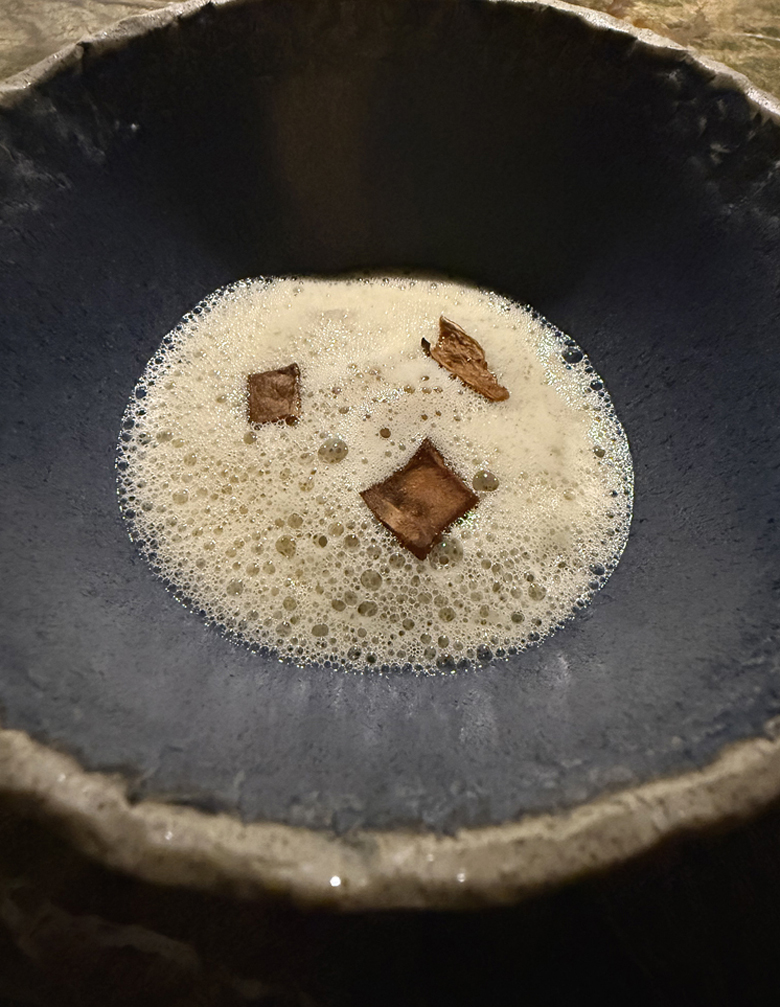
Charcoal caramelized pineapple foam with white beans and almonds at Euskalduna Studio.
Porto, PORTUGAL — At the end of your dinner at Euskalduna Studio, if you tell the chefs that they deserve two Michelin stars, they will tell you that they are satisfied with just the one.
That’s not them being modest, unambitious or content to rest on their laurels.
It’s them knowing that attaining that higher status would come at a cost. It would mean changing what they do, which is deliver beautiful, on-point food in an unexpectedly relaxed manner with charm, humor, and outright personality.
During a recent two-week trip to Portugal, where I ate at many restaurants, the one at Euskalduna Studio stood out as one of my favorites.
Chef Vasco Coelho Santos opened Euskalduna Studio a decade ago on a narrow, cobblestone street. Having worked at such legendary establishments in Spain as Mugaritz, Arzak, and El Bulli, he named his restaurant after the Basque word for — what else — “Basque.”
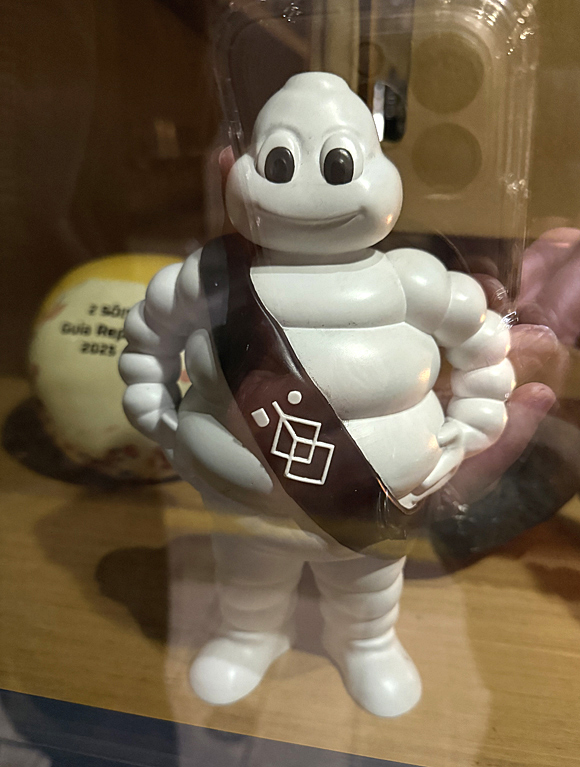
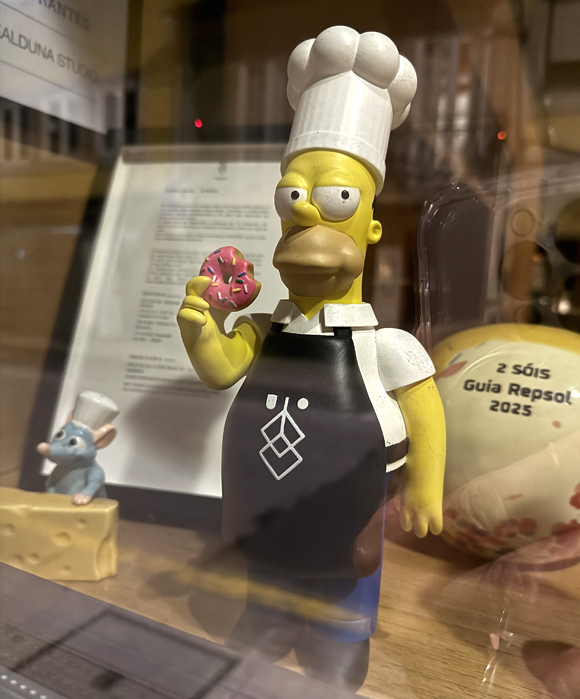
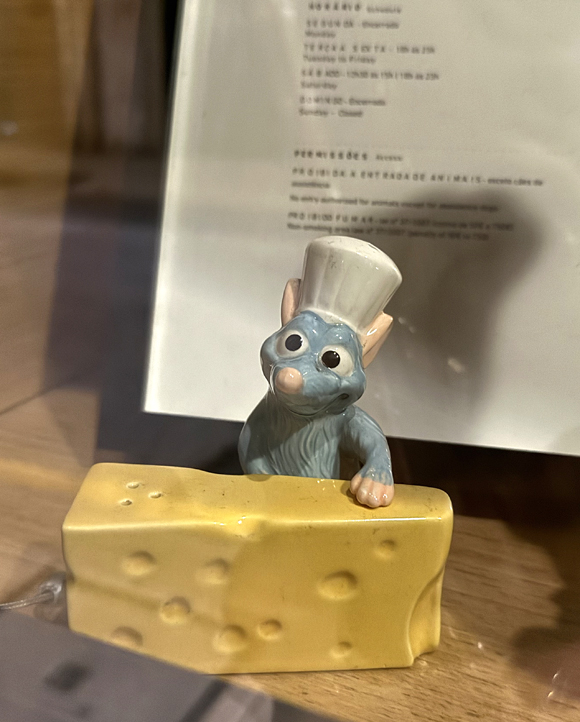
Peering in the front window, you get your first inkling that this place may take its food seriously, but not so the rest of the usual fine-dining trappings. Not when figurines of Homer Simpson and Remy from “Ratatouille” are arranged prominently alongside the Michelin Man.
Michelin-starred.Perched in the front window.With this.And this.And, of course, this.
Save for two tables in the dining room, the main seating is at a counter that fronts the open kitchen. It is at one of those 10 seats that you want to perch yourself for an up-close look at all the cooking, plus the ability to interact with the chefs who are more than happy to converse.
When I asked one chef whether he minded if I took photos, he deadpanned, “Of course not. But we are not a very good looking bunch.”
Your search for the best peanut butter cookie is now over.
There are plenty of peanut butter cookie recipes to be sure. Soft ones. Crispy ones. Ones made with smooth peanut butter; others made with crunchy. And plenty more done up with all sorts of bits and bobs.
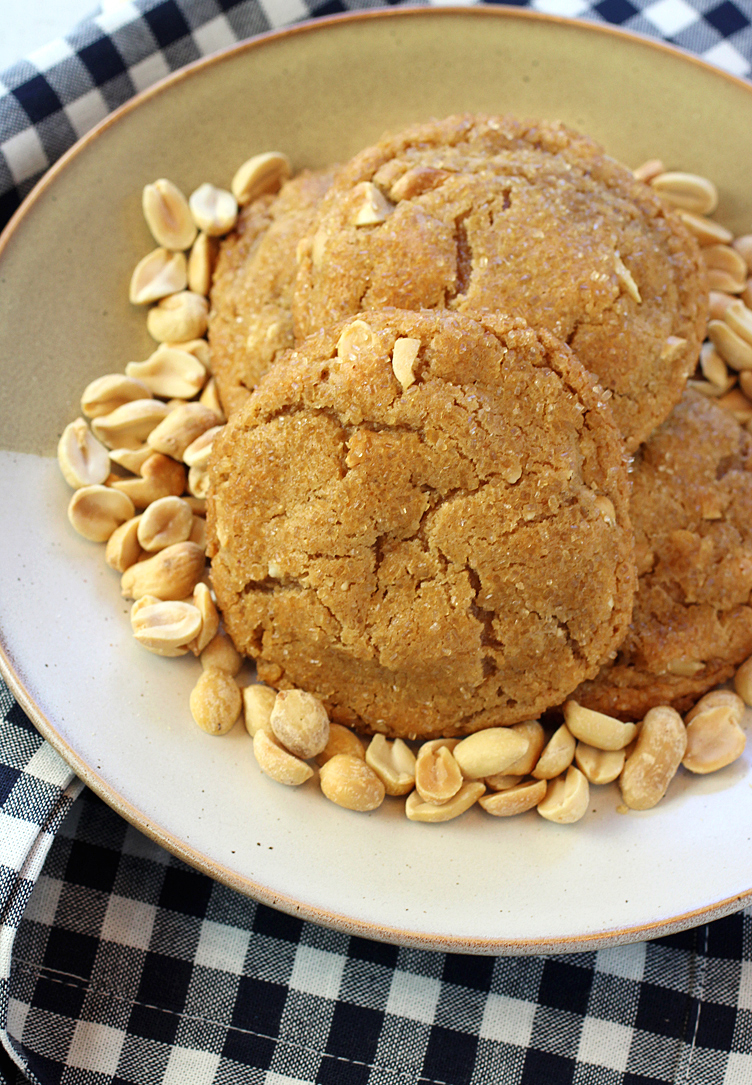
Then, there is Joanne Chang’s “Peanut Butter-Miso-Caramel” cookies.
They are in one simple word: perfection.
They not only taste deeply and richly of lush peanut butter, but have the added crunch of chopped roasted peanuts to boot. The piece de resistance is that little bit of white miso that adds a shadow of savoriness. They taste much like Asian peanut noodles, only sweeter and in delightful cookie form.
Best yet, they have a crackly sugar exterior that helps these cookies stay spot-on crispy outside and chewy throughout for days on end.
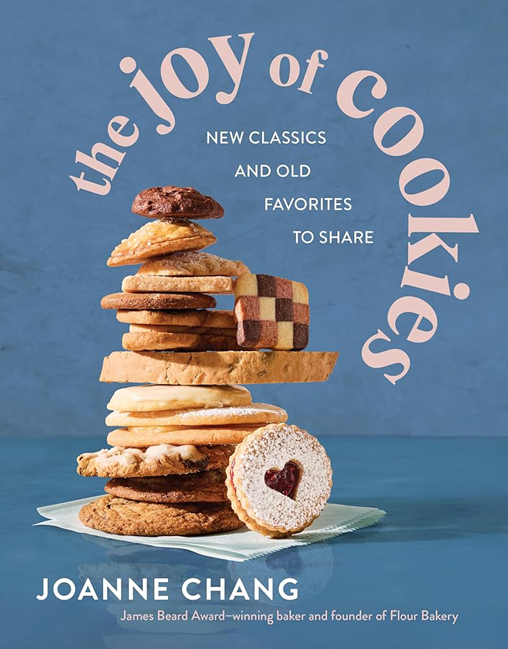
This fabulous recipe is from her newest and sixth cookbook, “The Joy of Cookies” (Harvest), of which I received a review copy.
If you’ve ever traveled to Japan, then you know full well the much-deserved affection for konbini culture.
Be it 7-Eleven, FamilyMart or Lawson, Japanese convenience stores seem stocked with most anything and everything needed in life, including an astonishing array of snacks and prepared foods that are not only fresh and delicious, but jaw-droppingly cheap. Talk to anyone who’s ever shopped at them and you’ll get an earful of wistful longing for those cushiony egg salad sandos, seaweed-wrapped rice balls, wasabi potato chips, assorted bentos, and so much more.
Yutori, which opened in Palo Alto this spring, brings a modern taste of that to the Bay Area.
Named for the Japanese word for “spaciousness” or “room to breathe,” this 5,000-square-foot space comprises a coffee bar, small marketplace selling Japanese home goods, and a takeout deli. Before the year ends, it will also add a sit-down restaurant.
Located on El Camino Real.
I paid a visit a few days ago, specifically to check out the konbini-like offerings in the refrigerator cases. The array of bentos, onigiri, and sandos will definitely remind you of Japan.