
A Visit to Cafe Vivant — Where the Chickens Come Home to Roast

When my husband told a friend at the gym that he was going to dinner at a restaurant where a whole chicken costs more than $100, the response was:
“What?!? Does it lay golden eggs?”
Not quite.
But Cafe Vivant, which opened in late October in downtown Menlo Park, is definitely not your average fast-casual rotisserie or fried chicken joint.
Instead, this unique upscale restaurant specializes in heritage-breed poultry. If you remember decades ago when heritage turkeys started to be all the rage, despite a price tag multiple times larger than your average Butterball, then you get the gist of how these chickens differ.
These breeds, which existed before chickens became an industrial commodity, take longer to raise, are harvested when they are older, and not surprisingly, are in much smaller supplies. The results are chickens raised more purely, with more pronounced flavor and texture.
The restaurant is owned by revered sommeliers Jason Jacobeit and Daniel Jung, who also run Somm Cellars in New York City, which specializes in rare and collectible wines. They have partnered with farmer Rob James of Corvus Farm in Pescadero, who raises a couple of the specialty breeds.
A couple weeks ago, I had the opportunity to dine at the restaurant with my husband and friends. We paid our tab, though it was heavily discounted by the restaurant for our visit.
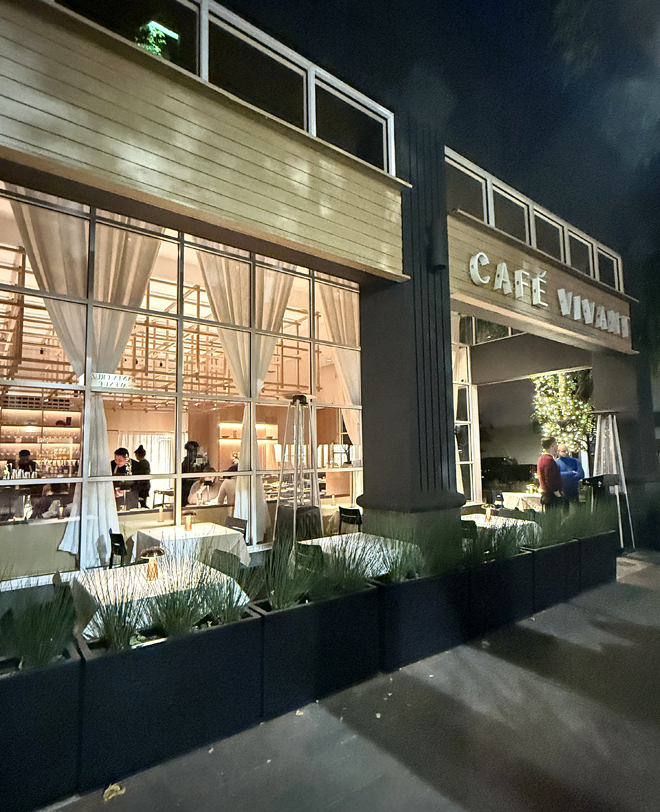
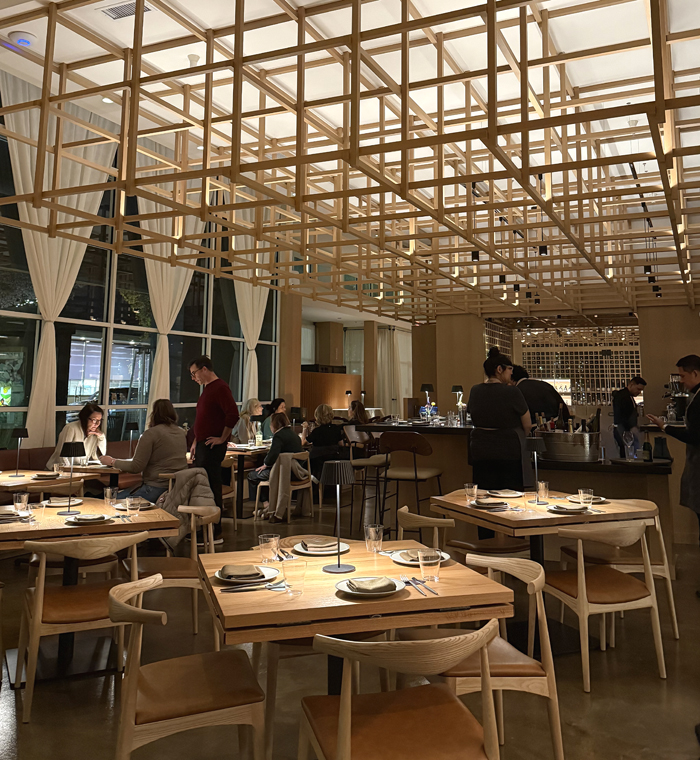
Step inside and you would never know this place used to be a La Boulanger. It has been completely transformed into an elegant, contemporary space with plenty of light wood.
There’s outdoor seating, private dining room, and a spacious bar. The ceiling is a focal point with its wood framework that mimics a massive wine storage unit.

Because this restaurant is owned by sommeliers, it has quite the wine list, including many wines by the glass, including a few prestigious ones available by a Coravin preservation system.
Executive Chef Jared Wentworth, who garnered Michelin stars in Chicago, including two at Moody Tongue, oversees the menu. Surprisingly, it offers quite a lot more than chicken, including butter-poached Maine lobster ($42), bouillabaisse ($58) and heritage pork belly ($45).
The presentations are beautiful to behold, as you see from the get-go from the canapes and appetizers.
The Dungeness crab cannoli ($22 for one) is fashioned from a crunchy Japanese rice cracker filled with creamy crab. You’ll want to drag it through the dab of fennel marmalade to get a touch of sticky, fruity sweetness with a whisper of anise.
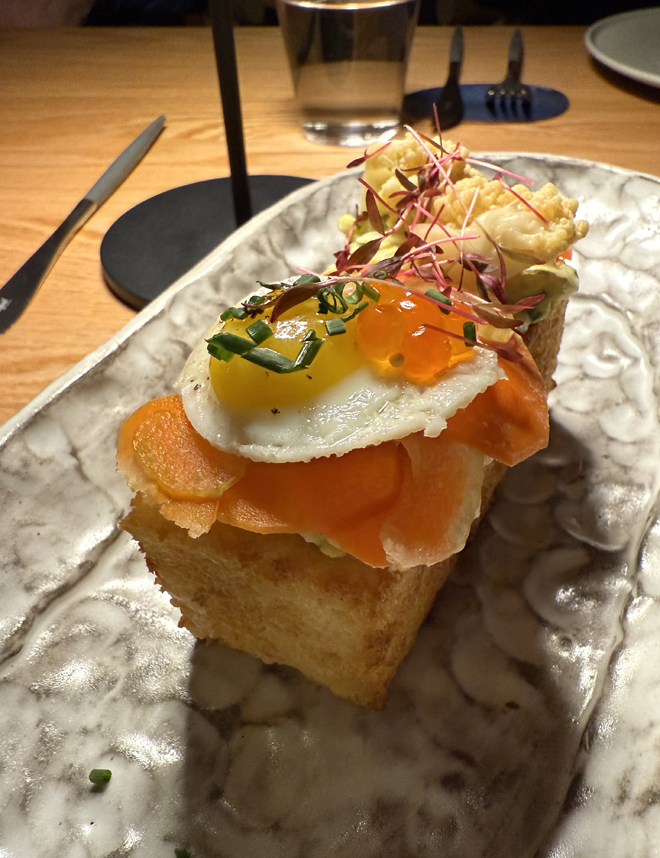
A thickly-filled 7-Eleven milk bread sandwich from Japan won’t necessarily come to mind with the heritage egg salad ($15 for one). This is its glammed-up, blinged-out cousin, with a thin layer of creamy egg salad smeared atop an outrageously buttery and crispy brick of brioche. Think the best French toast imaginable. The top is dotted artfully with a cute sunny-side up quail egg, salmon roe, fluffy scrambled egg, and pickled vegetables. It’s like a fancy passed hors d’oeuvre you’d find a butler carrying on a tray at a holiday party. Or so I imagine.
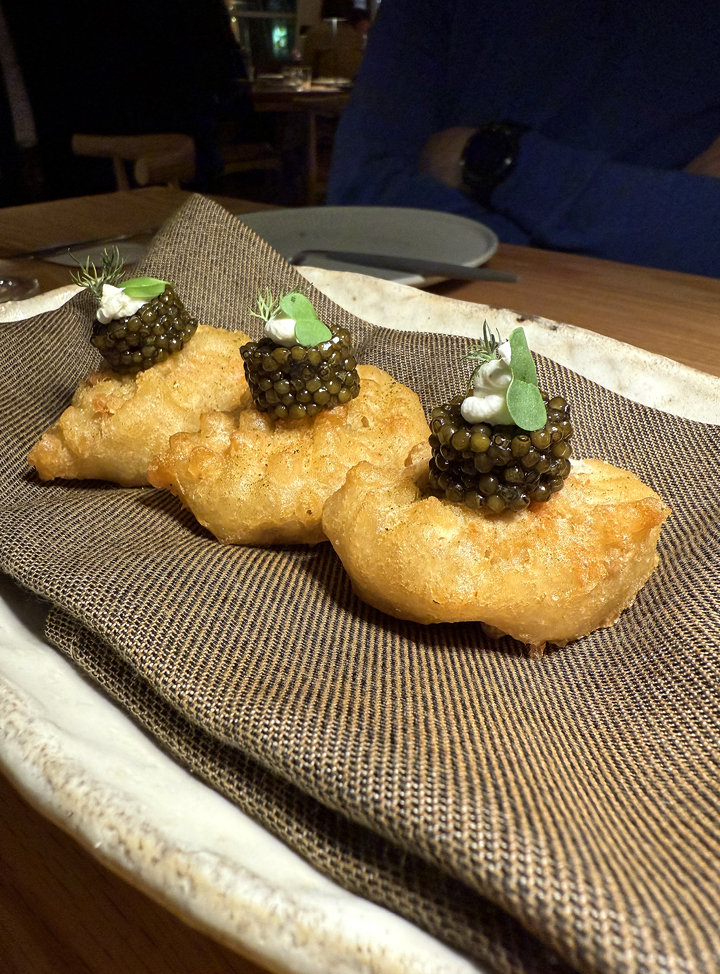
Heritage chicken nuggets (2 for $38) are indeed like fried chicken nuggets gone posh with a big dollop of Keluga caviar plus creme fraiche. Lightly battered and quite crisp, the two-bite nugget is very moist. The caviar adds salinity, butteriness, and a je ne sais quoi. There’s also a slight fishiness, so you do have to like that kind of land-sea pairing.
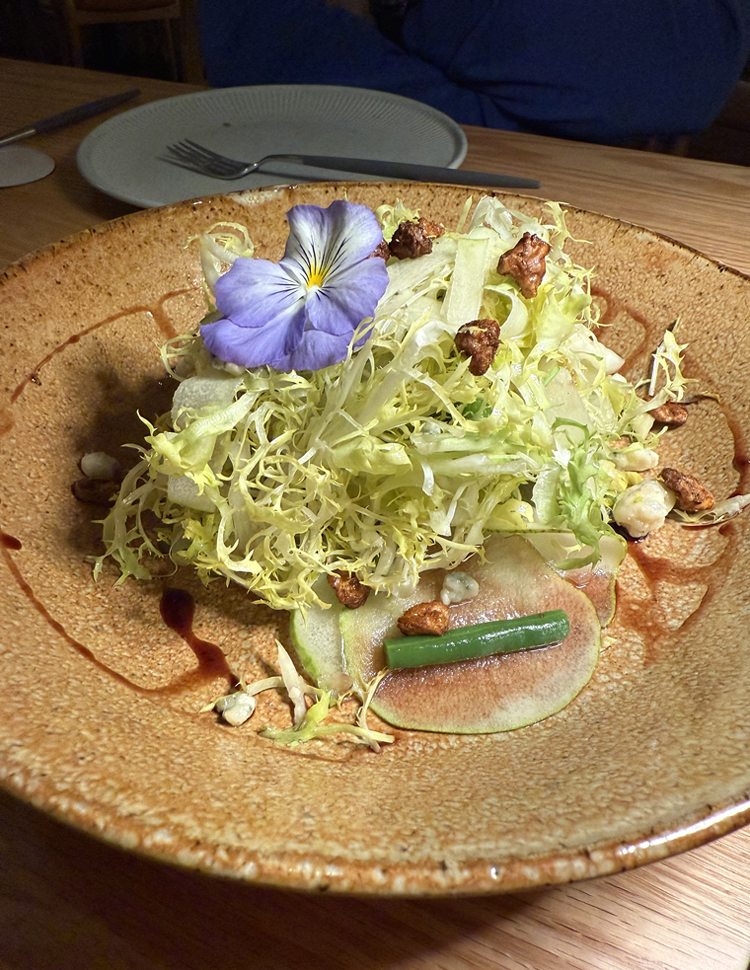
The shaved Bartlett pear salad ($18) is a nice respite from all that richness, done up prettily with curly endive and crispy walnuts in a light sherry-walnut vinaigrette with a blue nasturtium and crumbles of Point Reyes Blue.
Now, for the main reason we came: the chicken, of course. Each evening, there are two to three different breeds available, and your server will be only too happy to explain the differences among them.
The menu pricing may be confusing at first glance. The chicken is priced per person, but you have to order a whole chicken, which is listed as serving two. So, for instance, even if you’re a solo diner and want the Pescadero Red Chicken that is on the menu for $64 per person, you actually have to pay $128 for the entire bird and take the leftovers home.
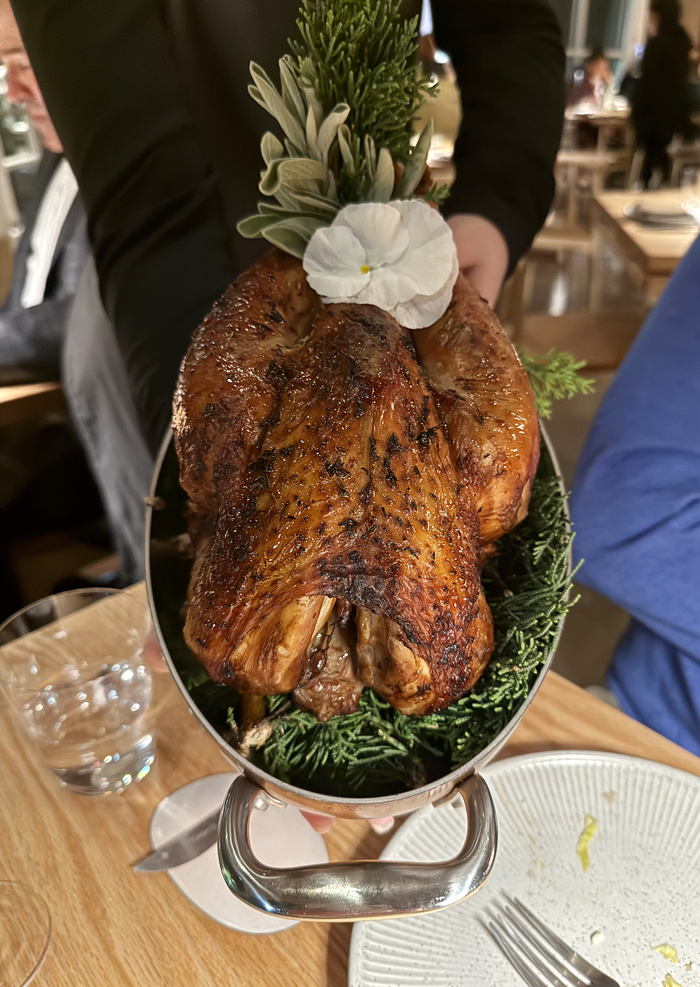
With a party of four, we ordered two chickens: that Pescadero Red Chicken grown raised for 125 days by the restaurant’s Corvus Farms; and the Delaware chicken, raised for 120 days in New Jersey (despite the name) by Good Shepherd Poultry Farm ($68 per person or $136 for the whole bird).
We chose those two varieties because the Delaware has the most dark-meat taste, while the Pescadero has more of a balance between white and dark meat.
All whole chickens come on a bed of foraged mushrooms, roasted vegetables, and a small carafe of lemon-thyme jus to pour over, if you like.
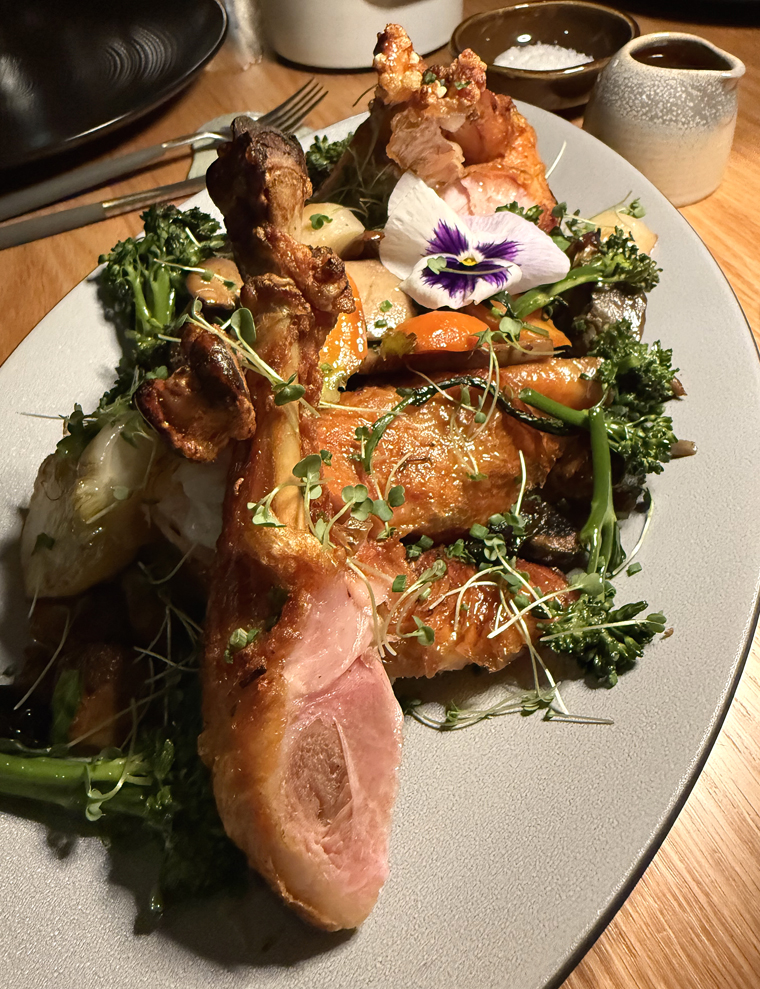
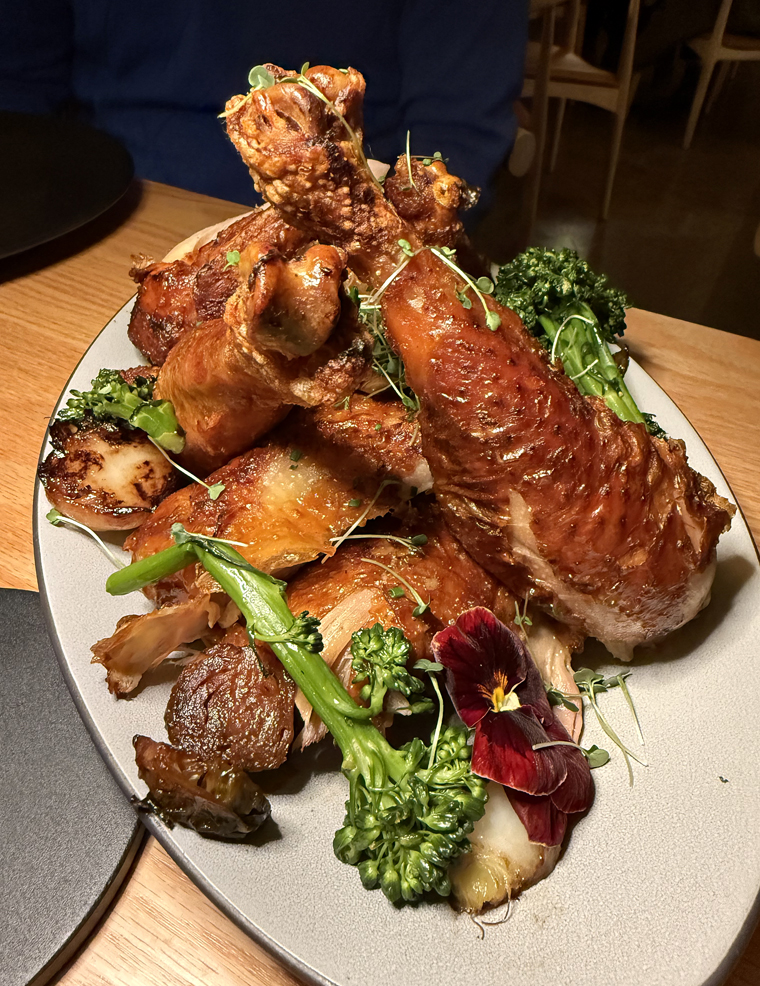
After roasting, each glistening, bronzed chicken is presented whole at the table with full pomp and pageantry before being whisked back to the kitchen to be sliced.
In appearance, the Pescadero is a plumper looking bird compared to the Delaware that hews leaner. Both were moist, with the Pescadero presenting itself with an abundance of tasty white meat. The Delaware’s flesh was denser, more toothsome, richer, and with a deeper poultry taste.
This is very good chicken to be sure, but I don’t think you should come necessarily expecting a mind-alterating experience. It’s not like going from eating a Sizzler’s steak to a Japanese A5 Wagyu or even a dry-aged USDA prime ribeye, where the contrast is immediately and impactfully startling. This is a more measured experience.
Because the chickens are brined, I did find them to be right up to the edge of saltiness, which might be a consideration for those sensitive to salt.
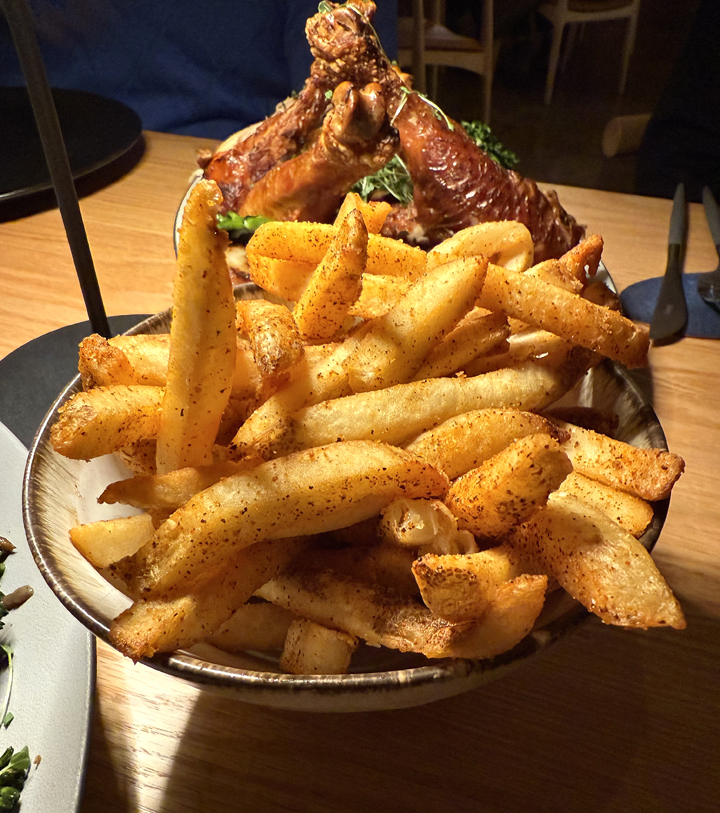
That comes into play, too, if you order the fries ($13). They’re nicely crisp and tossed in a spicy, seasoned salt, which when eaten with the chicken might be too much salt for some. The accompanying creamy, refreshing yuzu aioli helps temper that, though.
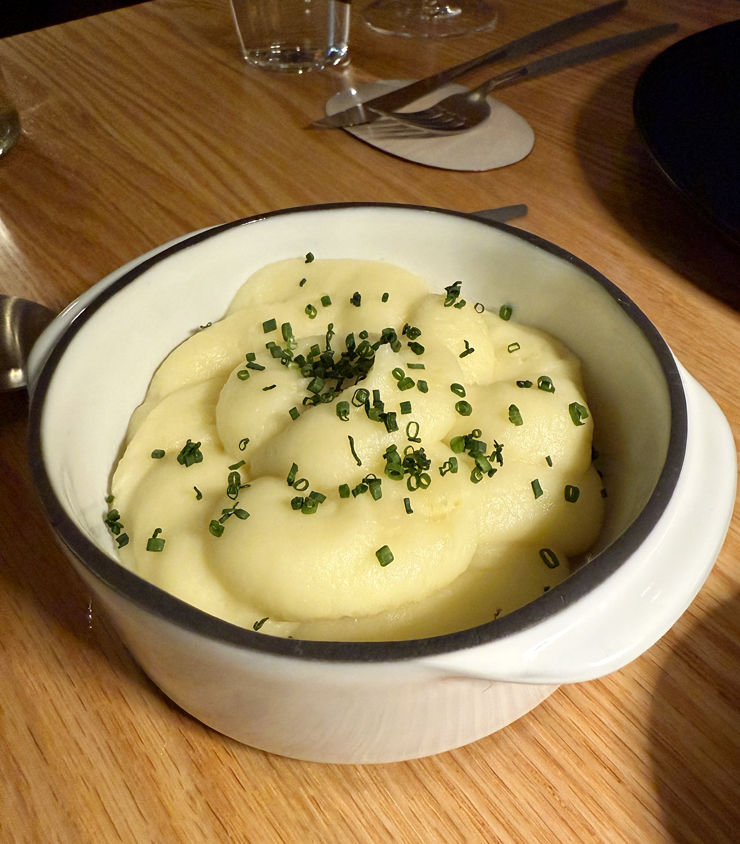
A better option might be the pommes Robuchon ($16), a crock of impossibly velvety mashed potatoes that gets an obscene amount of butter whisked in. It’s indulgent to the core.
Executive Pastry Chef Almira Lukmanova hails from Michelin three-starred Jungsik in New York City, and her desserts are nothing short of stunning. They are none too sweet, too, often with a touch of savoriness, and fashioned with intriguing combinations of ingredients.
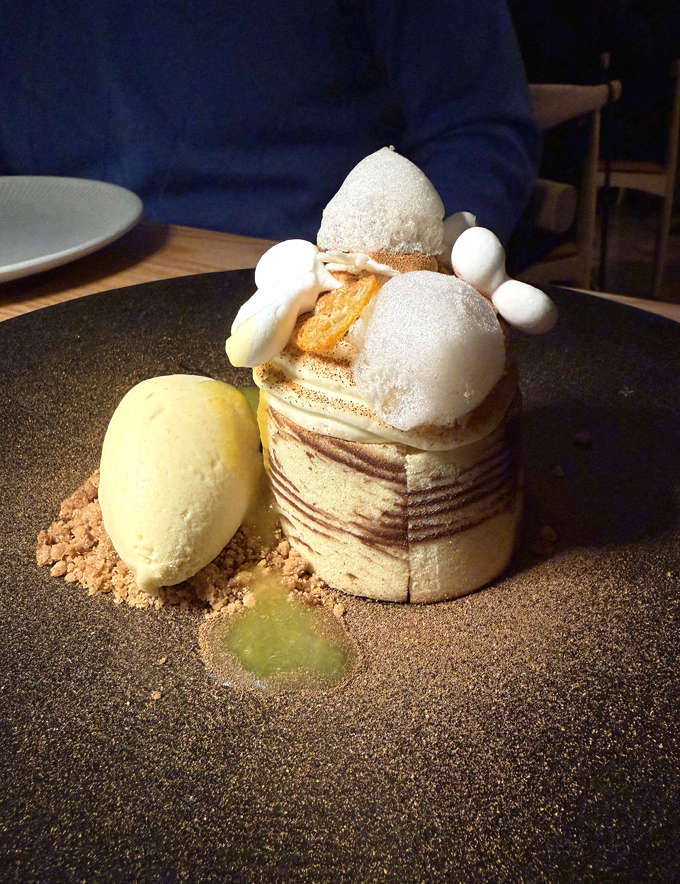
The yule log ($15) looks nothing like the traditional one typically served on its side with meringue mushrooms. This one is a stump of light-as-air Japanese sponge cake with buckwheat and ginger that gets finished at the table with fermented kumquat sauce. The accompanying bourbon-soba ice cream tastes a little like root beer on the finish.
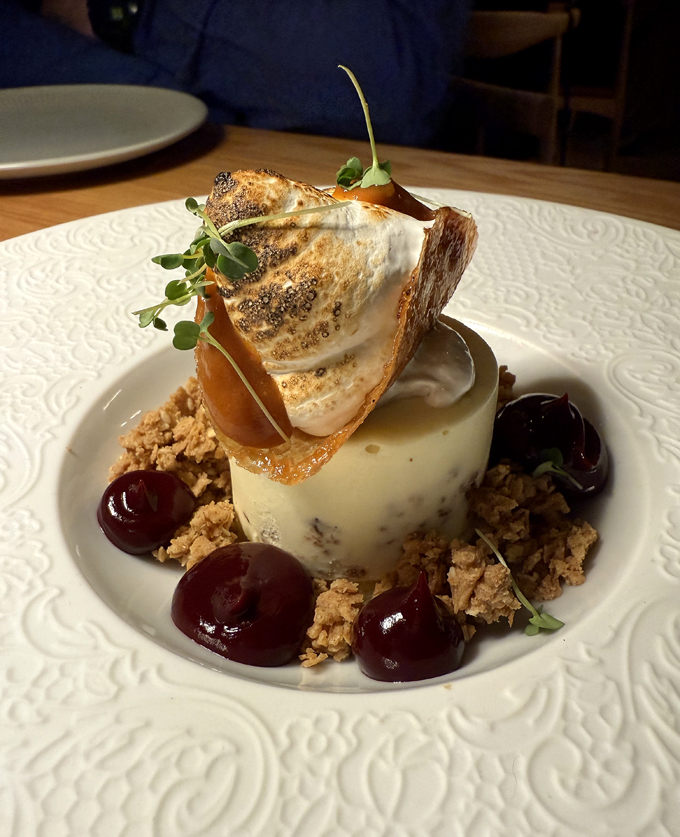
The baked Alaska ($15) gets crowned with a tuille cradling a fluff of torched meringue. It’s made with fried chicken ice cream, though, I can’t say that any of us detected any poultry flavor. Nevertheless, it was a wonderfully satisfying dessert with its silky ice cream, buttery Speculoos crumbles, raspberry compote, and spicy caramel.
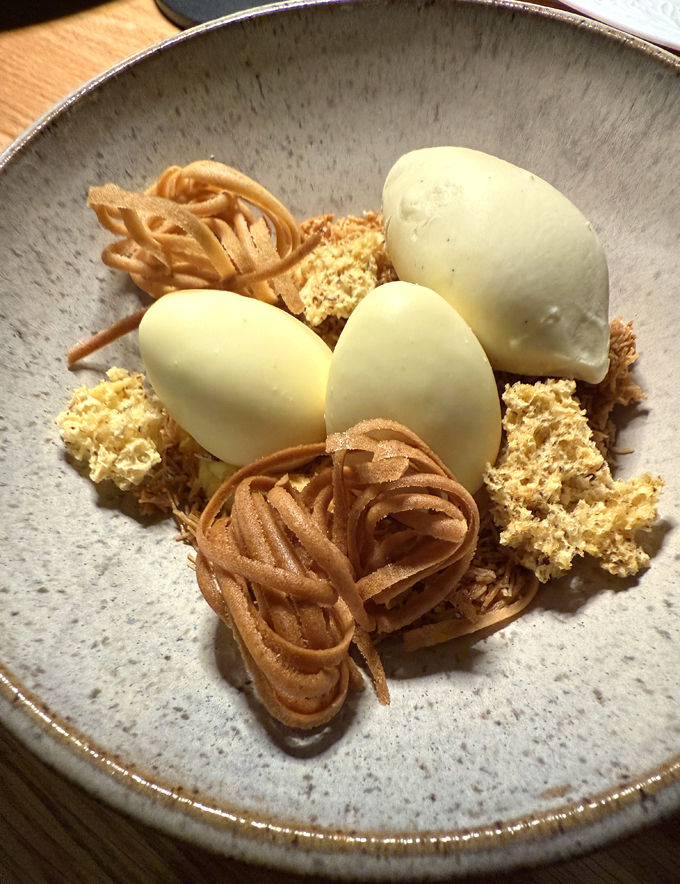
The most attention-getting dessert has been the Camembert cheesecake ($15) for its playful plating. It looks like a bird’s nest with eggs. Resting on a tangle of fried pastry strands, the white chocolate egg shells give way to the creamy cheesecake and sharp calamansi curd, along with a pineapple-pumpkin compote. Camembert can get pretty funky the more it ages. You can definitely taste the savoriness of the cheese here, but it never gets too pungent. The tartness of the curd really brightens and lightens it, too.

It’s so admirable what Cafe Vivant is attempting in applying such discerning standards to America’s most consumed protein. Admittedly, not everyone is able — or willing — to shell out this kind of money for chicken. But it makes you contemplate a time when all chickens can be raised and prepared with such care and thoughtfulness.
There was a local form near us in upstate New York that raised chickens that were not a modern breed. Dressed market birds around three pounds, not six. Available at local groceries (and not “heritage” priced), they tasted like the chicken of my childhood.
When people say, “Tastes like chicken,” they don’t know the irony.
I wonder if I can find old breed chicken like that in the local markets?