Category Archives: Asian Recipes

A Delicious Mother’s Day Remembrance

My Mom was like the Chinese-American June Cleaver.

For those of you too young to remember the 1960’s black-and-white television comedy, “Leave It to Beaver,” actress Barbara Billingsley played Mrs. Cleaver, a devoted wife in suburbia, caring for her hard-working husband, and two sons — the elder, Wally, and the younger, mischievous, Theodore “Beaver” Cleaver.

No matter what scrapes Beaver got into, Mrs. Cleaver never had a hair out of place.

And no matter if she was just vacuuming or tidying up the house, June Cleaver was always decked out immaculately in a fitted shirt, bouffant skirt, heels, and pearls.

My late-Mom may not have gone that far. But she was close.

My cousin Gary jokes that at a family barbecue at his house years ago, where everyone else turned up in T-shirts, jeans, shorts or chinos, there was my Mom — in a smart skirt and blouse ensemble, with a jade bracelet on her wrist.

There were no “Casual Fridays” back when she was working, so this was my Mom’s uniform, so to speak, whether she was at work at her office in San Francisco, or chatting with visiting relatives in her living room at home.

Even when she did housework, my Mom dressed in a simple shift, with buttons down the front or a zipper up the back, which she often had sewed, herself.

The idea of sweats or shorts on the weekends never entered her imagination. I don’t recall her wearing a pair of jeans. Nope, not ever.

In fact, I rarely even saw her in slacks. I think she only owned a pair or two. And they came out of the closet only to be packed in a suitcase when she and my Dad would take a cruise.

I look at old snapshots of her now and that’s the Mom that I see. Graceful, delicate, dainty, and neat as a pin.

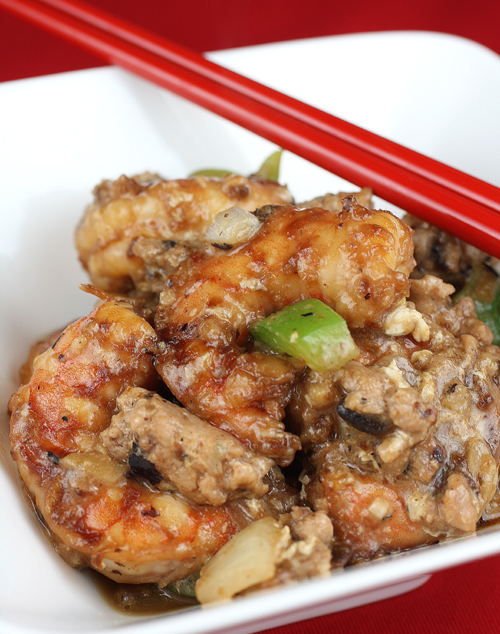
Which is why whenever I make her dish of “Prawns with Pork and Black Bean Sauce,” I can’t help but smile, because it’s a bit messy.

Read more

Mark Bittman’s 10-Minute Asian Salad and iPhone App Giveaway

New York Times food writer Mark Bittman has a way of making cooking effortless.

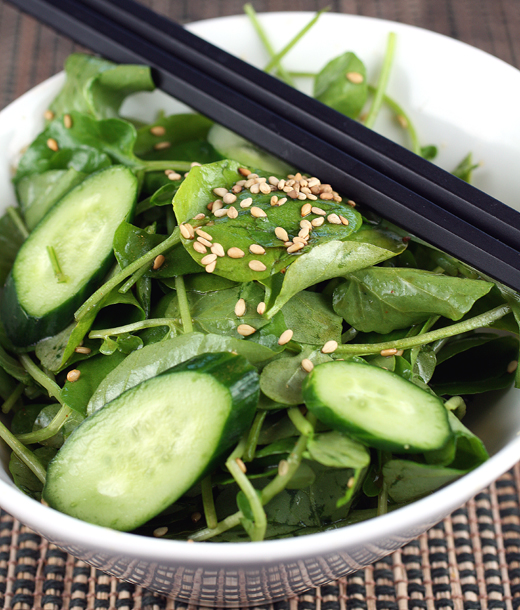
Take his “Watercress and Sesame Salad,” for instance.

Many times before, I’ve made a similar dressing using soy sauce, rice wine vinegar, sesame oil and sesame seeds, but never thought to pair it with delightful, peppery watercress like this.

It’s a light, bright little salad that comes together in 10 minutes for a quick first-course for any type of Asian meal. You could even make it more substantial by adding sliced cucumbers, carrot slivers, radishes, cherry tomatoes or even poached shrimp or seared tuna.

The recipe (reprinted at the end of this post) is from his classic book, “How to Cook Everything” (Wiley). This weighty, 944-page book is front and center on my bookcase. It’s a handy reference, because its plethora of recipes forms the basics of just about anything you’d want to make.

Now, there’s another handy way to enjoy this massive book — the “How to Cook Everything” iPhone app.

All 2,000 recipes from the book now are available with just a touch of your snazzy phone.  The app even helps you jot down a grocery list.

Five lucky Food Gal readers — located anywhere in the United States — will win a “How to Cook Everything” app, courtesy of John Wily and Sons, and Culinate. Here’s how:

Just tell me what you wish Mark Bittman could make easier in your life. Your answer can be food-related or not. The best five answers win the iPhone app. Deadline to enter is end of the day May 1. Winners will be announced May 3.

Here’s my own answer of what I wish he could make easier for me:

Read more

Them Bones, Them Bones

When I was a little girl, I remember many a dinner that featured a platter of little nuggets of Chinese pork spareribs.

No matter if they were coated in salty, pungent black bean sauce or sweet hoisin sauce, my Dad would root around with a serving spoon until he found the exact piece he was looking for.

As a kid, I would watch him digging around, and would wonder why he took so long to do this.

Only as an adult did I realize what he was actually doing.

He wasn’t looking for the meatiest sparerib, but the scrawniest — the one with barely any tender flesh on it. My late-Dad, who was born to first-generation, working-class Chinese immigrants, was used to scrimping, sacrificing, and making do with less. After all, when he was saving money to buy our family’s first and only house in San Francisco, he voluntarily took on the extra duties of cleaning and sweeping the stairs and hallways of the apartment building we lived in then in exchange for a cut in rent from the landlord.

That frugality carried over into his eating, too. When the Lazy-Susan stopped in front of him at a Chinese restaurant, he’d do that thing with the spoon for quite a few seconds, until he found the piece of chicken or duck or pork that was mostly all bone. He left the meatier pieces behind for my Mom, my two brothers, and I.

He’d use his fingers to gnaw on those bony pieces, savoring every last little bit of meat and succulent sauce. When the bone finally was discarded on his plate, it was clean as can be.

My Dad never wasted anything, that’s for sure. But he also knew a good thing when he tasted it. Those bony pieces of meat had some of the best flavor around. Good cooks know that cooking meat on the bone not only helps it cook faster but keeps it juicier, too. Bones also amp up the flavor of meat. That’s why they make such great stocks, why dogs love to chew on them, and why we all love to pick the tender bits off of hefty prime rib bones on holidays.

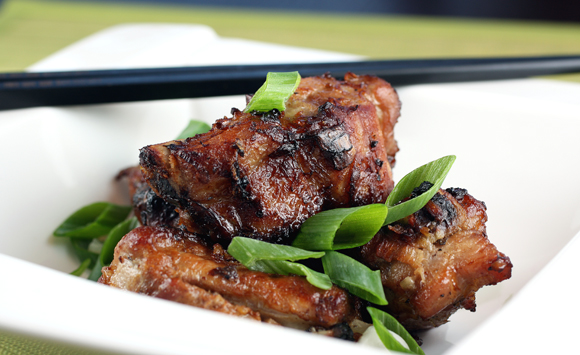
When I saw Tuty’s recipe for “Roasted Spareribs a la Scent of Spice” on her Scent of Spice blog, I couldn’t help but think of my Dad.

Read more

Cheater’s Baos

Would you scoff if I told you those fluffy, steamed Asian buns above were made with Pillsbury refrigerated buttermilk biscuit dough?

Yup, the stuff in the tube.

Believe it.

When my buddy, Andrea Nguyen wrote her first cookbook, “Into the Vietnamese Kitchen” (Ten Speed Press) in 2006, there was many a recipe that caught my eye. But none made my jaw drop like this one for “Shortcut Plain Steamed Buns.”

Years ago, Andrea learned this trick from her Chinese-American friend, Victor Fong, who, of course, learned it from his mother.

Crack open a tube of biscuit dough, then separate the rounds of dough. Pat each one into a flattened circle.  Then, fold each circle in half  to create half-moon shapes.

Read more

Cooking Up A Spring Feast in Sonoma

Drinking and eating, and not much heavy-lifting beyond that.

It’s so easy — too easy — to succumb to complete veg-out mode in Sonoma, what with its abundance of wineries and restaurants that beckon so invitingly.

But if you want to get a teeny bit more active by actually working for your food, Ramekins is the place to go.

This combo culinary school and inn is just an easy stroll from the main square. A bevy of cooking classes, about half of them hands-on, are offered at $55 to  $100 per person.

Ramekins is revamping its patio to install a pizza oven, too. In the coming months, look for a variety of grilling, bread-baking and pizza-making classes to be offered to take advantage of that sunny space.

Up on the second floor, there are six well-appointed guest rooms, done up in a luxe French farmhouse decor, priced at about $250 per night, depending upon the season. Stay overnight, and you can roll out of bed, enjoy a spread of homemade scones and coffeecake for breakfast, then walk downstairs to get cooking. How easy is that?

So easy, as I soon learned when I was invited as a guest to try a cooking class earlier this month.

Charles Vollmar, a longtime culinary instructor who owns Epicurean Exchange, was there to teach us all about “Spring Soups and Stews” in this hands-on class. Since there were only seven of us signed up for this class, we were each able to do a variety of tasks under very personalized instruction from Vollmar and a Ramekins assistant.

The demonstration classes are taught in a 36-seat theater equipped with a full kitchen and television monitors. Because our class was hands-on, though, we had the run of the second kitchen — an expansive restaurant-size kitchen with professional-grade equipment.

After donning aprons, we broke up into teams to cook one of four dishes: “Spring Asparagus Soup with Coconut Curry,” “Chicken and Barley Soup with Asparagus and English Peas,” “Spring Vegetable Ragout with Chanterelles and Fava Beans,” and “Spring Lamb and Artichoke Tagine.” Yours truly was in charge of the lamb.

Vollmar demonstrated how to turn a baby artichoke, then made sure we each had a chance to try it. With a paring knife, we removed the tough outer leaves, trimming the stalk, cutting the head in half, and removing the hairy choke and uncovering the tender heart. Although I’ve turned artichoke hearts before, I don’t think I’ve ever done such a pile of ’em. But then again, lucky me had them as one of the main ingredients in my dish. And oh, we were doubling the recipe, too.

Read more

« Older Entries Recent Entries »