Category Archives: Chefs

Kids’ Dessert Class, “MasterChef” Auditions in San Francisco & More

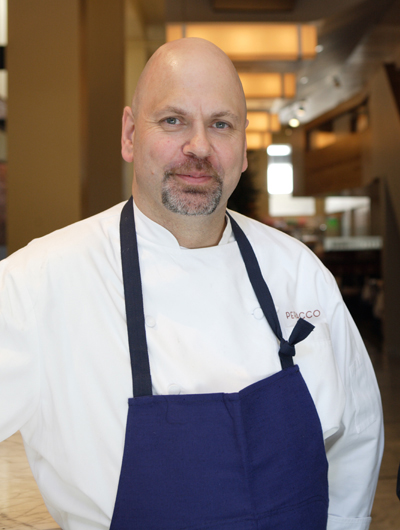
Executive Chef Kory Stewart of Americano Restaurant will be hosting a sweet time. (Photo courtesy of the restaurant)

Americano Restaurant in San Francisco Invites Kids to Make Dessert

Executive Chef Kory Stewart of Americano Restaurant at the Hotel Vitale in San Francisco will host a fun kids’ dessert baking class, 1 p.m. to 3 p.m. Dec. 17.

Kids, ages 4-12, will learn to make and decorate holiday cookies, as well as a gingerbread house.

Price is $25 per child. Reservations are required; they can be made here online or by calling (415) 278-3777.

Do You Think You Have What It Takes To Become America’s Next “Masterchef”?

Judges Gordon Ramsay, Graham Elliot and Joe Bastianich are back for a third season of the hit show, “Masterchef,” in which amateur chefs compete for the top culinary title and a prize of $250,000.

Joe Bastianich, Chef Graham Elliot and Chef Gordon Ramsay of "Masterchef'')

Auditions are being held nationwide for the next round of contestants. Bay Area folks will get a chance to strut their stuff when auditions take place in San Francisco, 10 a.m. to 6 p.m. Dec. 10 at Le Cordon Bleu, 350 Rhode Island St.

Read more

Spunky Barbecue Sauces and Rubs & A Food Gal Giveaway

Sauces you won't forget. Made in San Francisco.

Chef Sarah Burchard knows her meat — and what goes well on top of it.

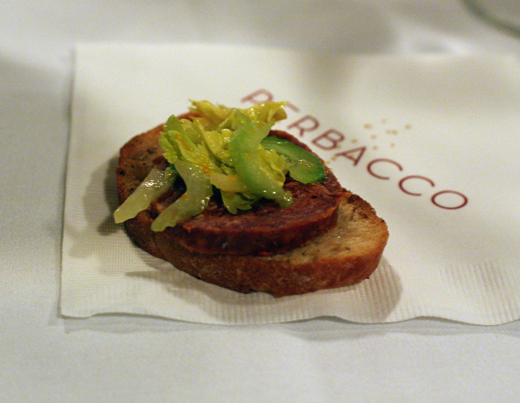
After all, for three years, she worked at Perbacco, then Barbacco, both in San Francisco, where she regularly broke down whole animals to make the fabulous house-made salumi. She left her position as chef de cuisine at that latter restaurant earlier this year to start her own San Francisco company, S&S Brand, with boyfriend and fellow chef, Spencer O’Meara, who’s no stranger to grilling and smoking meats.

They’re now selling their three specialty barbecue sauces (St. Louis Style, Tennessee Style, and Carolina Style), as well as six rubs (BBQ Spice, 4 Peppercorn, Fish Rub, Jerk Rub, Poultry Rub, and Ranch Rub).

Pork loin with BBQ rub and Tennessee Style sauce.

Recently, I had a chance to try some samples. The BBQ Spice and the 4 Peppercorn both livened up grilled pork loins. I especially liked the Szechuan peppercorns in the latter rub, which added a subtle palate tingle.

The barbecue sauces are what really steal the show, though. Not that barbecue sauces are ever wimpy, but these are major attention-getters. With their powerhouse of tang and spice, these sauces are assertive and sassy. In fact, if you drizzle these on meat that you’ve smeared the rubs on, you probably won’t even taste the rubs. The Tennessee Style sauce, full of mustard and onions, is sharp and piquant. The St. Louis Style, redolent of molasses, cumin and coriander, is smokier and sweeter.

The sauces contain high fructose corn syrup because of the addition of Heinz Ketchup. But Burchard and O’Meara are in the process of switching to organic ketchup, so the sauces will be made with sugar in the near future.

The sauces are $8 each for a 12-ounce jar; the rubs are $7 each for a 2-ounce tin.

Six varieites of gourmet rubs.

Contest: One lucky Food Gal reader will get a chance to try an S&S Brand Combo Pack, which includes all three barbecue sauces and all six rubs. It’s a $57 value. Contest, open only to those in the continental United States, will run through midnight PST Dec. 10. The winner will be announced Dec. 12.

How to win?

Read more

Hawaii Part 5: Kona — Where Coffee is King

Red "cherries'' on a Kona coffee tree are the ripe fruit, from which the coffee seeds or beans come from.

KONA, HAWAII — When you think of the Kona district on the Big Island, it’s hard not to think of coffee immediately.

The first coffee was planted in Kona around 1828 by missionary Samuel Ruggles, where it thrived because of the mineral-rich volcanic soil.

It is now Kona’s most famous crop and probably its most expensive. You’ll find top-grade Kona coffee selling for upwards of $38 a pound. Don’t be fooled by the so-called “Kona Blends.” Yes, they’re cheaper — but for a reason. The blends are required to contain only 10 percent Kona coffee. The rest can be made up of much cheaper coffee from elsewhere around the world.

Kona coffee may get even more expensive in the future, as farmers have had to do battle with a pesky, virulent beetle that has been attacking the berries for the past couple of years. Moreover, just like farming elsewhere, it remains a hard profession that younger generations are turning their backs on.

Tom Greenwell is a fourth-generation grower. His great-grandfather, British adventurer, Henry Nicholas Greenwell, was one of the first exporters of Kona coffee in the late 1800s. Today, Tom Greenwell carries on the family tradition, overseeing Greenwell Farms, where the planting and picking are still done by hand on 35 lush acres.

Tom Greenwelll, fourth-generation Kona coffee grower.

Recently, I had a chance to tour the farm with Tom Greenwell during my trip to Hawaii, courtesy of the Hawaii Visitors and Convention Bureau.

Before you even stick your head into the roasting building, the sweet aroma of roasty-toasty beans hits you. It’s like coffee syrup aromatherapy.

Greenwell Farms grows about 280,000 pounds of coffee annually. Small white flowers begin to bloom on the coffee trees in by February, followed by green berries in April. From August through February, the red fruit, known as a “cherry” (because it looks similar to one) has ripened and is ready for picking.

The pulper extracts the beans from the fruit.

The fruit is separated from the seed or bean with a machine known as a pulper. The beans are fermented overnight, then rinsed before being spread out on a rooftop to dry for at least 30 days. After that, the beans go into the roaster for about 15 minutes.

Read more

Hawaii Part 4: Four Magnificent Meals on Maui

Dessert at Mama's Fish House in Maui is something to remember.

MAUI, HAWAII — You’re probably accustomed to restaurant menus that list the farms where the produce comes from and the ranches that raise the pork and beef starring in the dishes.

But how about a seafood restaurant that lists not only where the fresh fish it serves comes from, but the name of the fisherman who caught it and the method used to land it?

That’s what you’ll find on the menu of Mama’s Fish House in Paia on the north shore of Maui, which has been including that information since it opened 39 years ago. At a time when upscale restaurants on Maui were all steak houses, Vice President Karen Christenson’s parents opened this beach-side restaurant to spotlight seafood because it was cheaper then — and because the fishermen conveniently delivered.

Today, you’ll find descriptions on the menu such as “Deep-water ahi caught by Shawn Boneza trolling the north shore of Maui; seared in ginger and panko crust with kalua pig rice pilaf” ($40) and “Papio caught by David Wallace while adrift over deep sea ledges near Kaupo; upcountry style with caramelized Maui onion, tomato and jasmine rice” ($38).

How’s that to make a dish sound even more enticing?

The beach is right outside the door at Mama's Fish House.

The entrance to the restaurant.

Recently, I had a chance to dine as a guest at four wonderful restaurants on Maui, including Mama’s Fish House, as part of my trip to Hawaii, courtesy of the Hawaii Visitors and Convention Bureau.

They take their fish seriously at Mama’s Fish House, a bustling tropical outpost with dining rooms decorated with outrigger boats and shells, as well as views of sand and palm trees.

Fresh fish that arrived at the restaurant that morning.

The fish come in whole and are cut and stored in a separate room at the restaurant.

Chef Perry Bateman, who has been at the restaurant an astounding 20 years, turns out about 1,000 meals a day. Everything is made from scratch, too.

Read more

Hawaii Part 2: Chefs Who Pioneered Hawaiian-Regional, Fine-Dining Cuisine

Fabulous ginger-crusted onaga at Alan Wong's.

HONOLULU, OAHU –  Alan Wong. Sam Choy. Roy Yamaguchi. George Mavrothalassitis. And Peter Merriman.

Together, they make up a large part of the culinary cognoscente who first put Hawaiian fine-dining on the map. In their hands, the unique ingredients of the islands have been elevated to new heights with sophisticated techniques and glorious ethnic influences.

On a recent trip to Oahu, courtesy of the Hawaii Visitors and Convention Bureau, I was invited to dine as a guest at two of these pioneering Honolulu restaurants. They did not disappoint, either.

In 1995, the flagship Alan Wong’s restaurant opened in an unlikely spot: the third floor of a rather non-descript office building. It boasts no view of the ocean or beach, just cars whizzing by on the street or kids skate-boarding after dark.

But when the elevator doors open to the restaurant, you step into a warm, inviting and always busy dining room full of couples and families celebrating birthdays as befits this special occasion place.

The menu offers a la carte choices, as well as two tasting menu options — a five-course menu sampling and a six-course chef’s tasting menu. The former is a roundup of some of Wong’s signature dishes, while the latter features newer dishes.

My husband and I opted for the $75 five-course, though the cooks threw in a few extra goodies.

Soup and sandwich go glam at Alan Wong's.

Wong’s food is full of whimsy and bold flavors, as evidenced by the famous “Soup and Sandwich,” which features chilled Hamakua Springs tomato soup in a martini glass that’s playfully juxtaposed with a grilled cheese kalua pig sandwich. Yes, in Hawaii, you can get great tomatoes practically all year-round. Eat your heart out, mainlanders. Bite into the crisp sammy and prepare to swoon as tender, smoky pig meets gooey mozzarella.

Ahi done up like a sea anemone.

Another inventive take was the ahi, which comes wrapped in slivers of wonton wrappers, then is deep-fried until it looks like a golden sea anemone on your plate.

Read more

« Older Entries Recent Entries »