Category Archives: Enticing Events

When Did Eating Get So Complex?
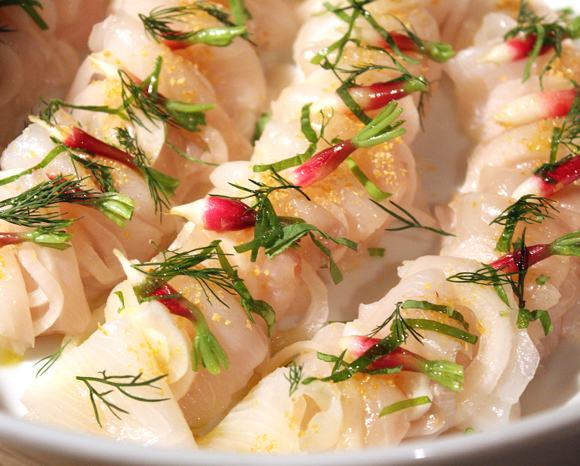
It’s complicated.

Boy, is it.

When it comes to eating these days, it seems like it’s never been harder to try to do the right thing.

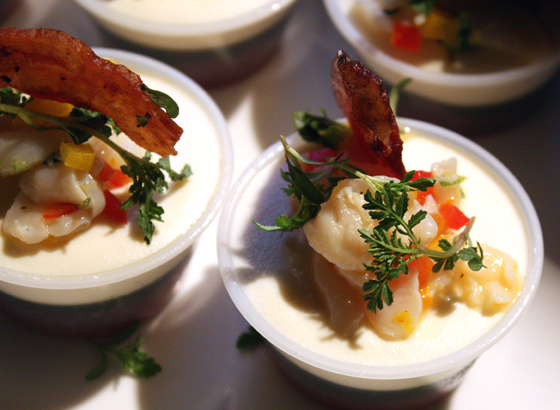
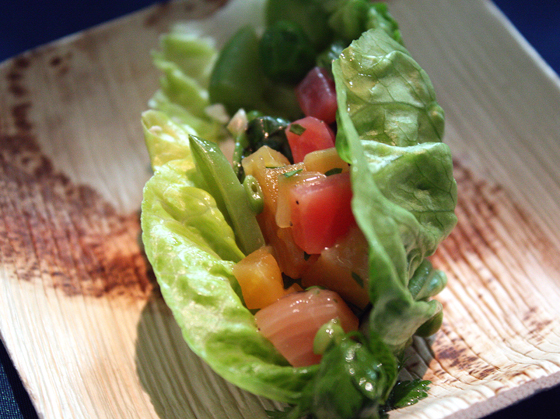
This past weekend at the Monterey Bay Aquarium, a bevy of journalists, scientists, environmentalists, farmers, chefs, and yours truly gathered together for the annual “Cooking For Solutions” event that’s dedicated to promoting sustainability on land, sea and air.

Chef Suzanne Goin of Lucques in Los Angeles was honored as “Chef of the Year” by the aquarium. And Chef Rick Bayless of Chicago’s Topolobampo and Frontera Grill was named “Educator of the Year.”

They were joined at the event by a roster of big-name chefs, including Rick Moonen of RM Seafood in Las Vegas; Kevin Gillespie of Woodfire Grill in Atlanta and “Top Chef” fame; Gerald Hirigoyen of Piperade and Bocadillos, both in San Francisco; Charles Phan of the Slanted Door in San Francisco; and Joanne Chang of Flour Bakery + Cafe in Boston.
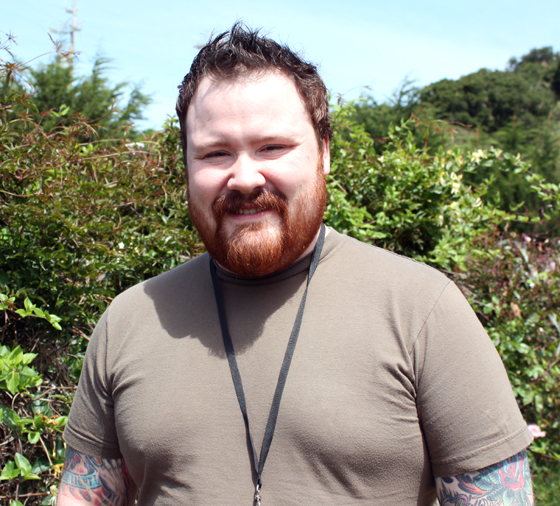
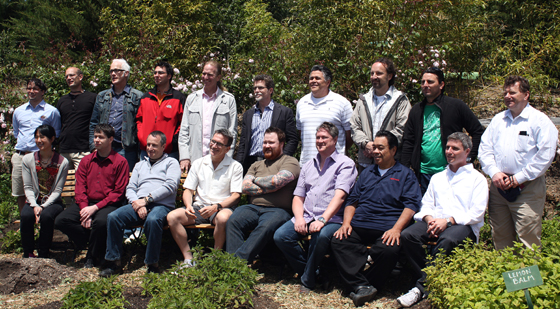
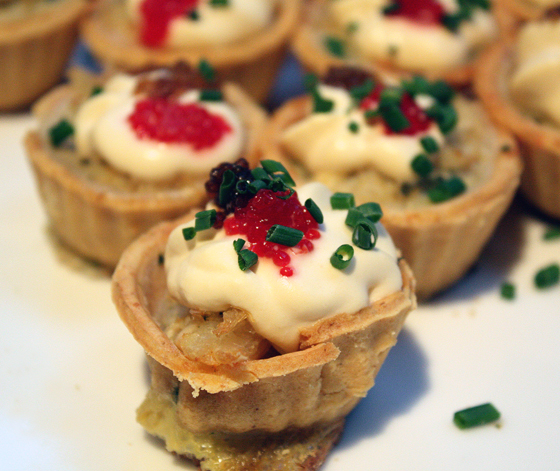
The event was a festive affair with gourmet eats and drinks — all sustainable, organic or biodynamic, of course.  But it was also a sobering affair as experts weighed in on how our eating choices have affected the planet.
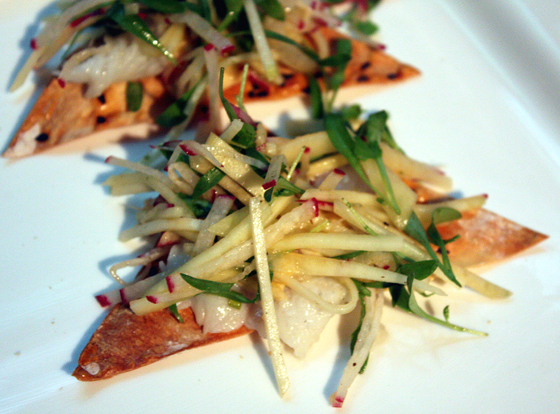
Food for thought:

Over the past 50 years, we’ve gone from consuming 10 kilos of fish per person annually to 17 kilos.

Half of our seafood consumption now comes from aquaculture, not wild species. Eighty percent of the fresh and frozen salmon consumed in the United States is farmed. Seventy-five percent of the shrimp consumed in the United States is farmed. A great majority of our farmed seafood is produced in Asia, where standards may be less stringent than in other parts of the world.

Most farmed fish are fed pellets made of fish meal. Although carp and tilapia can subsist on plant-based diets, about 50 percent of carp that’s farmed and more than 80 percent of tilapia that’s farmed end up being fed fish meal.

Fish farms in the ocean can lead to pollution, disease and escapement of these fish into the wild. But experts say that even on-land, enclosed fish farms have escapement issues with tiny fish making their way into drains.
Read more

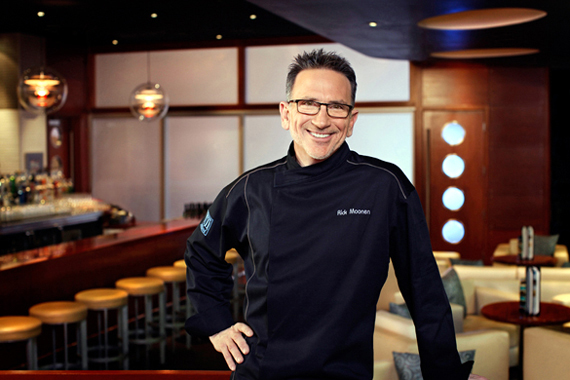
Take Five with Chef Rick Moonen, On “Top Chef Masters” and Saving the World’s Seafood Populations

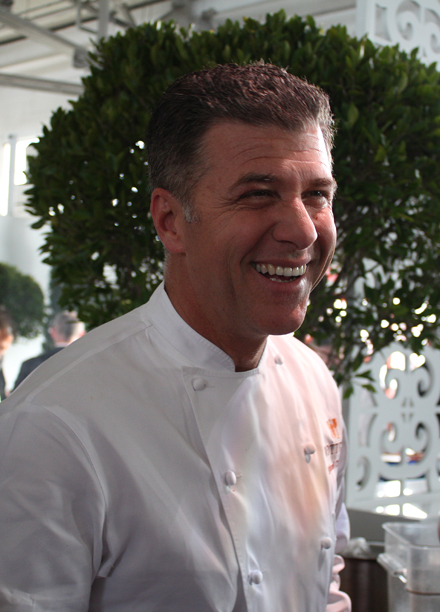
In person, talking a mile a minute, and jumping up from his chair to make a point with arms gesturing wildly, Chef Rick Moonen is a blur of frenetic energy just as he is as a competitor on this season’s “Top Chef Masters.”

The 53-year-old chef jokes that he gets mistaken for fellow bespectacled, facial-scruffed Chef Rick Bayless ever since the two of them appeared together on the first season of that wildly popular Bravo TV show. This despite the fact that Moonen is a Las Vegas chef, whose restaurant RM Seafood is known for its menu of eco-friendly fish, and Bayless is a Chicago chef, whose restaurants Frontera Grill and Topolobampo, are famous for authentic Mexican cuisine.

Indeed, at RM Seafood, Moonen has banned Chilean Sea Bass, Japanese hamachi, monkfish, and grouper from his menu because they are so over-fished. He also refuses to serve Atlantic farm-raised salmon because of its destructive impact on the environment. Instead, he takes pride in featuring sustainable, but lesser known species such as Hawaiian walu and Australian ocean trout.

If he hadn’t been a chef, Moonen, who grew up playing with chemistry sets and Tinkertoys, says he would have been a teacher or doctor of alternative medicine. Good thing for us, he chose the culinary road instead.

Moonen was in Monterey this past weekend, where he was one of the guest chefs at the ninth annual “Cooking for Solutions” event at the Monterey Bay Aquarium. I caught up with him during a break to chat about his redemption on this season’s “Top Chef Masters” and about his dedication to the world’s oceans.

Q: When I interviewed Chef Michael Chiarello of Bottega in Yountville about his defeat in last year’s ‘Top Chef Masters,’ he said you were the one who really would have given him a run for his money in the competition. Was it a huge disappointment to you last season when you were knocked out practically at the start because you weren’t able to plate anything before time ran out in the first ‘Quick Fire’ challenge?

A: I would have beat him. He knows it. I know it. (laughs) If I had just put a piece of parsley on the plate, I would have had it.

That’s why this year, they created the ‘Moonen Rule.’ The ‘Quick Fire’ scores don’t count now in the final tally.

Q: That’s right! Seriously, that change came about because of what happened to you last year?

A: No one told me that officially. But I think it is the ‘Moonen Rule.’

It was a very big disappointment for me last year. I realized I blew it. It’s me, I’m anal-retentive, compulsive, ADD-Rick. Imagine you’re a clown. I grab you and put a gun to your head and tell you that you have to be funny. That’s what it felt like. Now, if you had given me a minute to really think and organize, I would have kicked his butt.

Q: Why did you want to do the show in the first place?

Read more

Scenes From the 23rd Annual Star Chefs & Vintners Gala

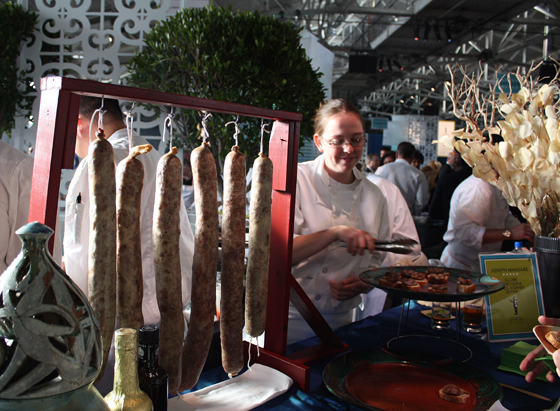
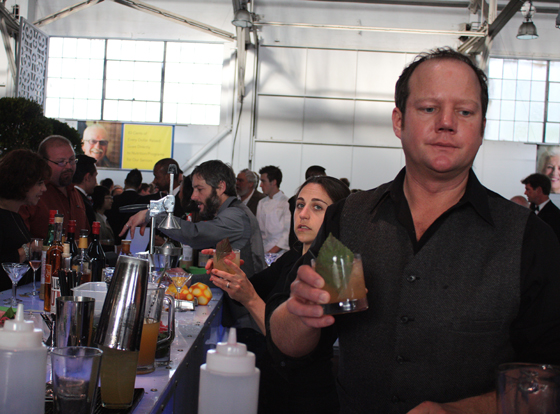
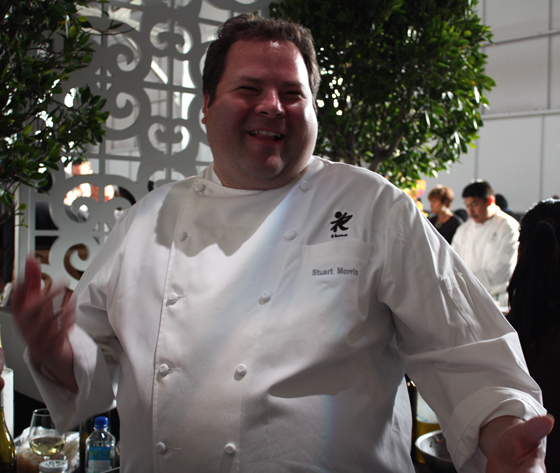
For foodies, it was indeed a starry time on Sunday evening at the lavish Star Chefs & Vintners Gala at Fort Mason in San Francisco.

About 1,000 folks turned out to don their finest and to support Meals on Wheels of San Francisco, the city’s oldest and largest provider of home-delivered meals to seniors.

The Bay Area’s top chefs and vintners provided an impressive spread of eats and drinks for this annual event, which raised $1.1 million last year for this worthy organization that serves 16,000 meals to home-bound seniors every week.

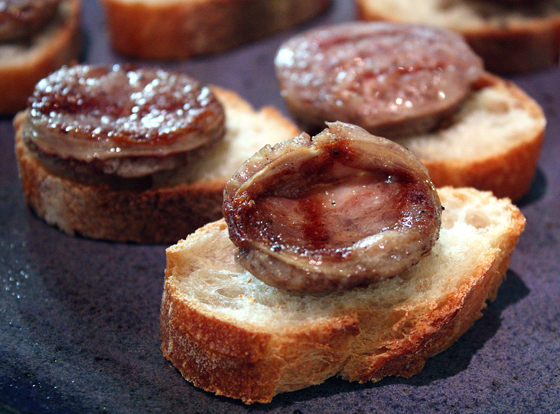
Yours truly was invited to be a guest at the gala, which started off with a bang with an expansive walk-around hors d’oeuvre and wine reception, where chefs and vintners manned stations to pass out tastes of their finest.

It was quite crowded in the Festival Pavillion, but well worth the effort to jockey for position for such stellar eats.

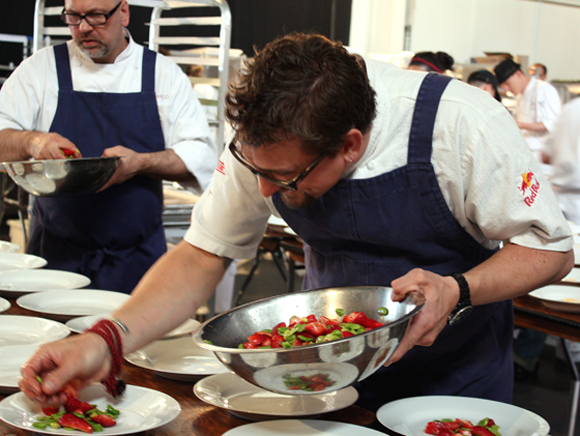
I had a chance to sneak back into the kitchen area to see the chefs scurrying about to get the first courses ready for dinner, as an army of servers lined up in formation at the ready to ferry the dishes to the dining room.

Read more

My Ode to New York Times Food Writer Kim Severson

Before I ever met food writer Kim Severson, I wanted to hate her.

Oh, don’t get me wrong. I’m not normally a hater. Not at all.

But imagine two athletes playing the same position, yet on opposing teams. There’s just a natural rivalry that develops.

That’s what I felt initially for Kim, now a New York Times food journalist, who years ago, was a food writer for the San Francisco Chronicle, when I was the same for the competition, the San Jose Mercury News.

She started her career as a hard news reporter, before switching to food writing. I had done the same. I’d turn up to events, only to find her there, too. I’d finish writing a story, only to find she’d just done a similar one — often far better, too. I’d be nominated for a writing award, only to find out she was up for two of them in the same competition.

That’s why I wanted to hate Kim Severson.

That is, until I actually met her, of course.

Because I ended up liking her immensely from the get-go.

When you compete head-to-head with someone on a pressure-packed field, there’s a tendency to build them up in your mind into something that they’re not. It’s a great motivator that propels you onward to try to beat or surpass them. But then reality sets in, and you realize that what you truly feel for this person is not envy or hatred, but the utmost admiration.

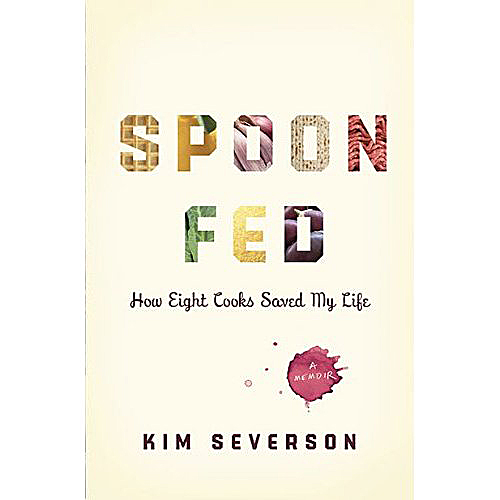
And that’s really what I felt for Kim from the moment I first laid eyes on her byline. The woman can flat-out write. She can turn a phrase like no one else, bringing you to tears one moment, and sending you into convulsions of laughter the next. That’s no more evident than in her new autobiographical book, “Spoon Fed” (Riverhead Books), a brave, revealing look at one of the nation’s most gifted food writers and the iconic female cooks who taught her valuable lessons along the way.

As I turned the pages, it was stunning to realize that Kim, whose talents strike fear in so many other food writers like myself, was herself so full of self-doubt and anxieties about her own abilities. Worse yet, she wrestled with all that while battling alcoholism when living in one of the premier wine capitals of the world — Northern California.

Even if you’ve never been fortunate enough to meet Kim in person, you come away from her book with so much respect for a woman who is ballsy, smart, resilient and generous of spirit.

Read more

San Francisco’s Historic Old Mint Showcases Food Exhibit

San Francisco’s grand Classical Greek Revival-style Old Mint once held one-third of the nation’s gold reserves.

This month, those hallowed halls, where more than $50 million in coins were once produced annually, will showcase valuables of a different sort — an exhibit and presentations of the Bay Area’s storied food history.

The Old Mint, steps from the InterContinental hotel in downtown San Francisco, is now in the process of being converted into a museum by the San Francisco Museum and Historical Society.

For three weekends this month, the Mint will open its doors to the public, noon to 5 p.m. May 15-16, May 21-22, and May 28-31. Visitors will get to view the exhibit, “From Earth to 5-Star,” which will highlight culinary innovations and regional products such as cheese, bread, chocolate and wine. A second gallery will spotlight insights into the future of Bay Area food by experts such as Chef Charles Phan of the Slanted Door; Bill Niman, former founder of Niman Ranch and now a local goat rancher; and Chef Judy Rogers of Zuni Cafe.

Additionally, a series of panels with culinary experts will explore the history and significance of food in the Bay Area:

Read more

« Older Entries Recent Entries »