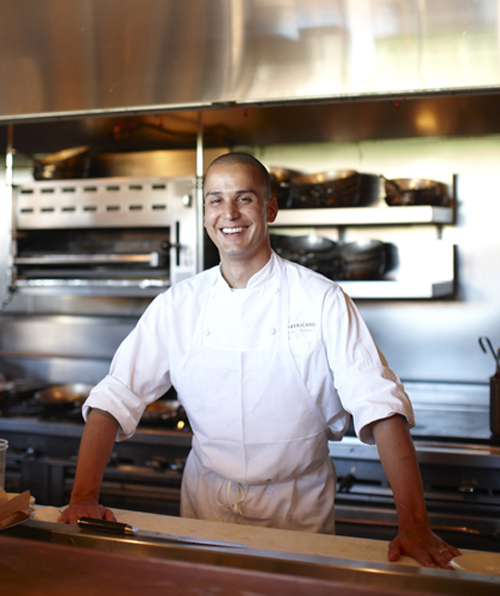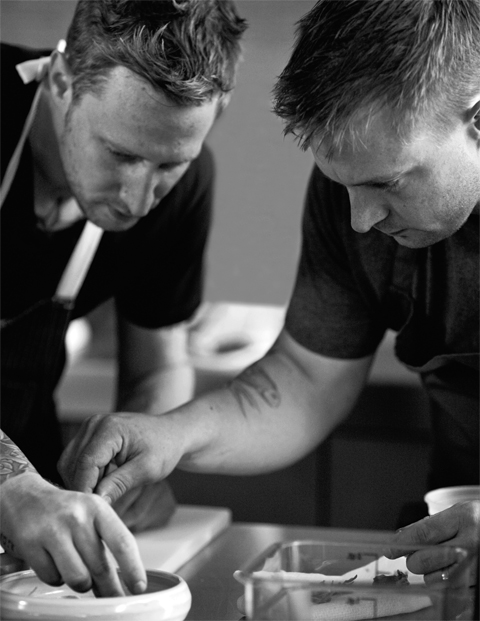
Chef Sarah Burchard knows her meat — and what goes well on top of it.
After all, for three years, she worked at Perbacco, then Barbacco, both in San Francisco, where she regularly broke down whole animals to make the fabulous house-made salumi. She left her position as chef de cuisine at that latter restaurant earlier this year to start her own San Francisco company, S&S Brand, with boyfriend and fellow chef, Spencer O’Meara, who’s no stranger to grilling and smoking meats.
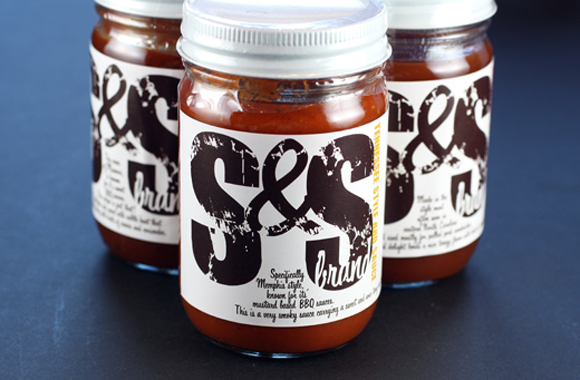
They’re now selling their three specialty barbecue sauces (St. Louis Style, Tennessee Style, and Carolina Style), as well as six rubs (BBQ Spice, 4 Peppercorn, Fish Rub, Jerk Rub, Poultry Rub, and Ranch Rub).
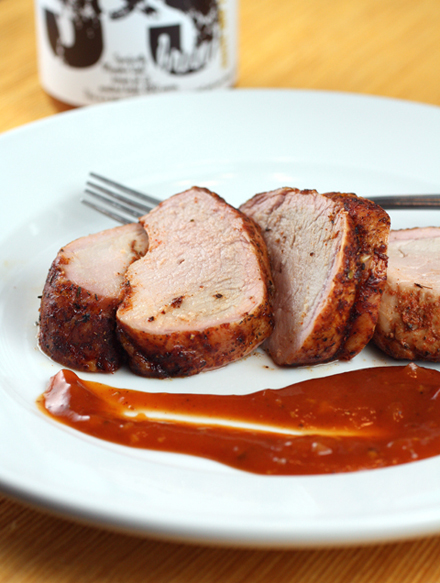
Recently, I had a chance to try some samples. The BBQ Spice and the 4 Peppercorn both livened up grilled pork loins. I especially liked the Szechuan peppercorns in the latter rub, which added a subtle palate tingle.
The barbecue sauces are what really steal the show, though. Not that barbecue sauces are ever wimpy, but these are major attention-getters. With their powerhouse of tang and spice, these sauces are assertive and sassy. In fact, if you drizzle these on meat that you’ve smeared the rubs on, you probably won’t even taste the rubs. The Tennessee Style sauce, full of mustard and onions, is sharp and piquant. The St. Louis Style, redolent of molasses, cumin and coriander, is smokier and sweeter.
The sauces contain high fructose corn syrup because of the addition of Heinz Ketchup. But Burchard and O’Meara are in the process of switching to organic ketchup, so the sauces will be made with sugar in the near future.
The sauces are $8 each for a 12-ounce jar; the rubs are $7 each for a 2-ounce tin.
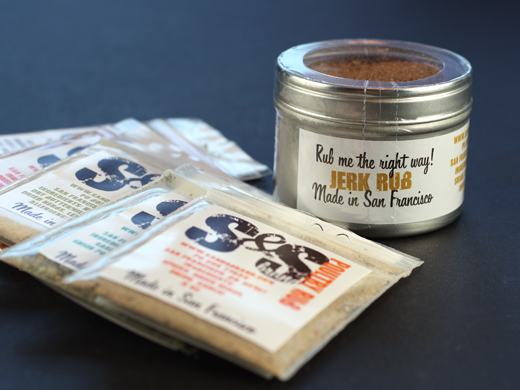
Contest: One lucky Food Gal reader will get a chance to try an S&S Brand Combo Pack, which includes all three barbecue sauces and all six rubs. It’s a $57 value. Contest, open only to those in the continental United States, will run through midnight PST Dec. 10. The winner will be announced Dec. 12.
How to win?
Read more