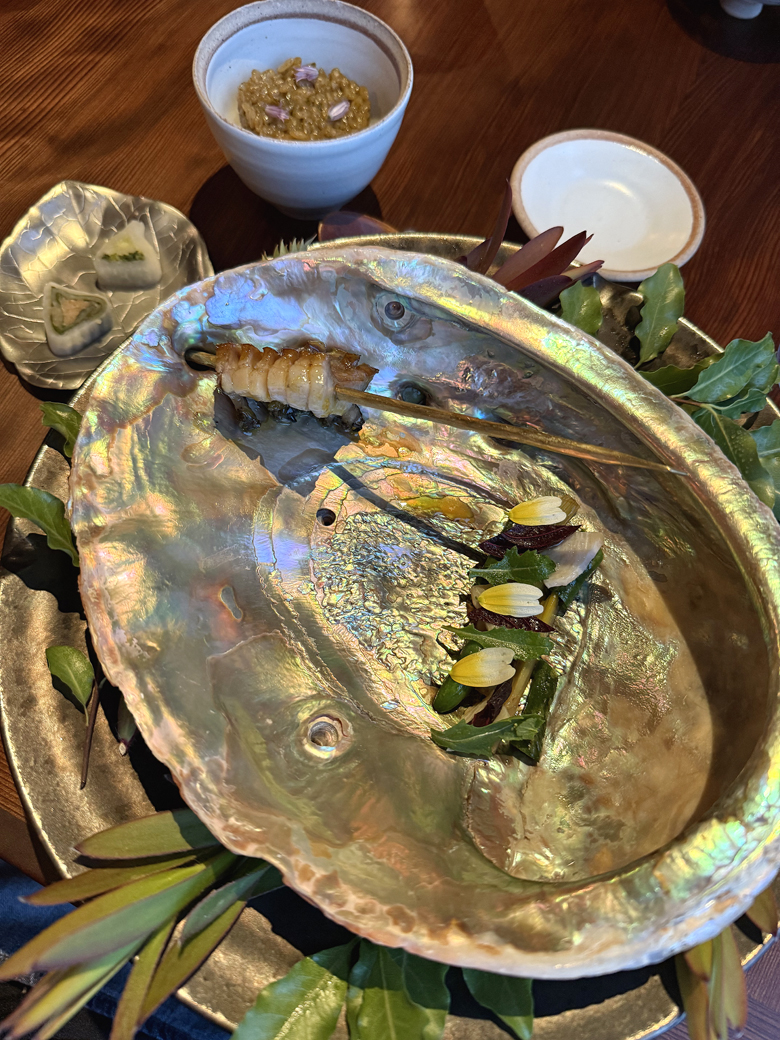
The signature abalone course at Harbor House Inn, which will set the bar for any other abalone dish you enjoy in the future.
From the first time I dined at Harbor House Inn in 2018 before it officially opened to the public to my most recent visit this month, it remains to me the restaurant that most thoroughly embodies a true sense of place.
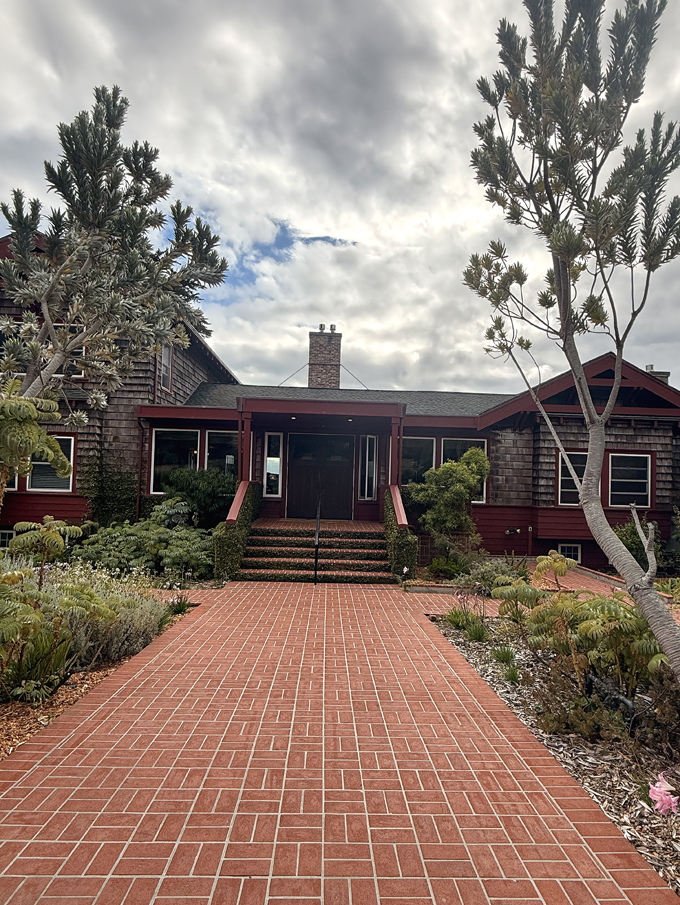
Maybe it’s partly the secluded setting in tiny Elk, a three hours’ drive north out of congested San Francisco through peaceful winding roads of bucolic vineyards and towering redwoods, that somehow vanquishes any of life’s troubles, worries or stresses. Maybe it’s the view from the property of the rugged coastline overlooking Wharf Rock East Arch, the dramatic rock formation bored through by centuries of powerful, unrelenting Pacific waves. And maybe it’s the vision and execution by Executive Chef Matthew Kammerer and his team, who have gone to great lengths to spotlight ingredients, plateware, and decor that are distinctly of the land and sea there.
It all adds up to terroir personified, creating a truly immersive and transportive experience.
The Harbor House Inn.
Of course, few Michelin two-starred experiences come at a modest price. Harbor House Inn’s tasting menu is $325 per person. If you elect to stay overnight in one of its 11 rooms or cottages, a wise choice given that there are few other accommodations close by, it will run you a minimum of $500 per night. Make the splurge, though, and you’re in for a most memorable occasion.
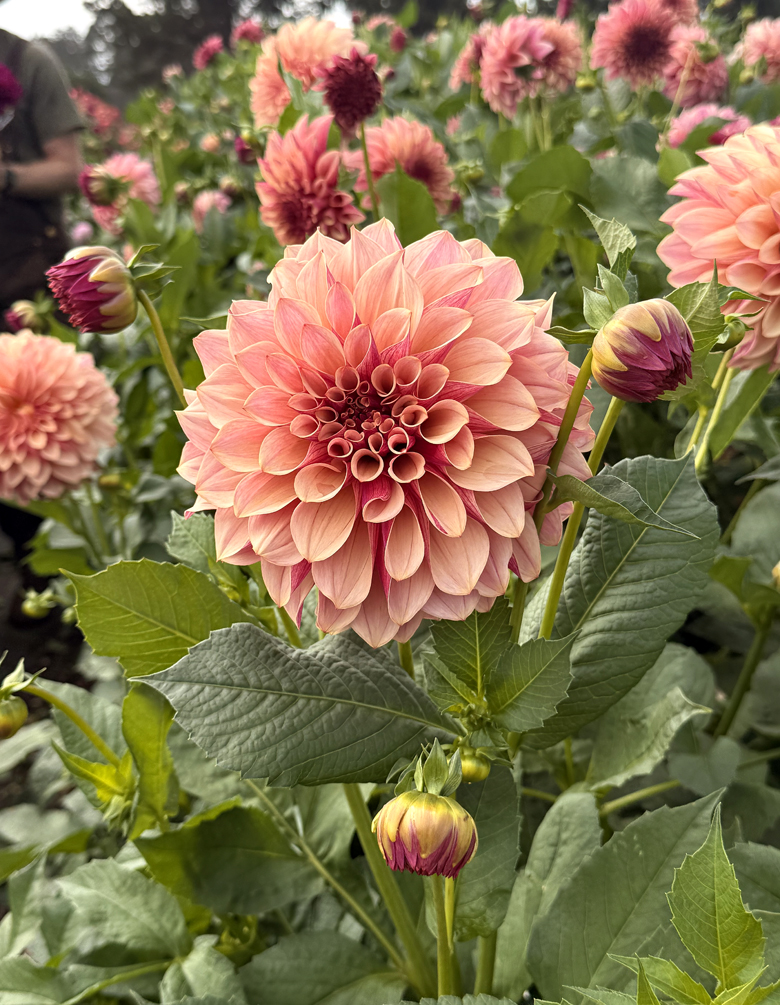
One of the many varieties of dahlias at EarthSpoke Farms.
Mendocino, CA — Tulips and calla lillies have long been my favorite flowers. But after visiting EarthSpoke Farms in Mendocino last week, I just might have to add a third.
Founded in 2022, it grows dahlias. More than 250 varieties. In every vivid color imaginable. In sizes that range from a mere 1 1/2 inches to a staggering 10 inches across.
If you happen to have this Saturday or next free to take a drive up the coast, now is the time to take advantage of one of the last u-pick events of this season at one of the largest dahlia farms in California.
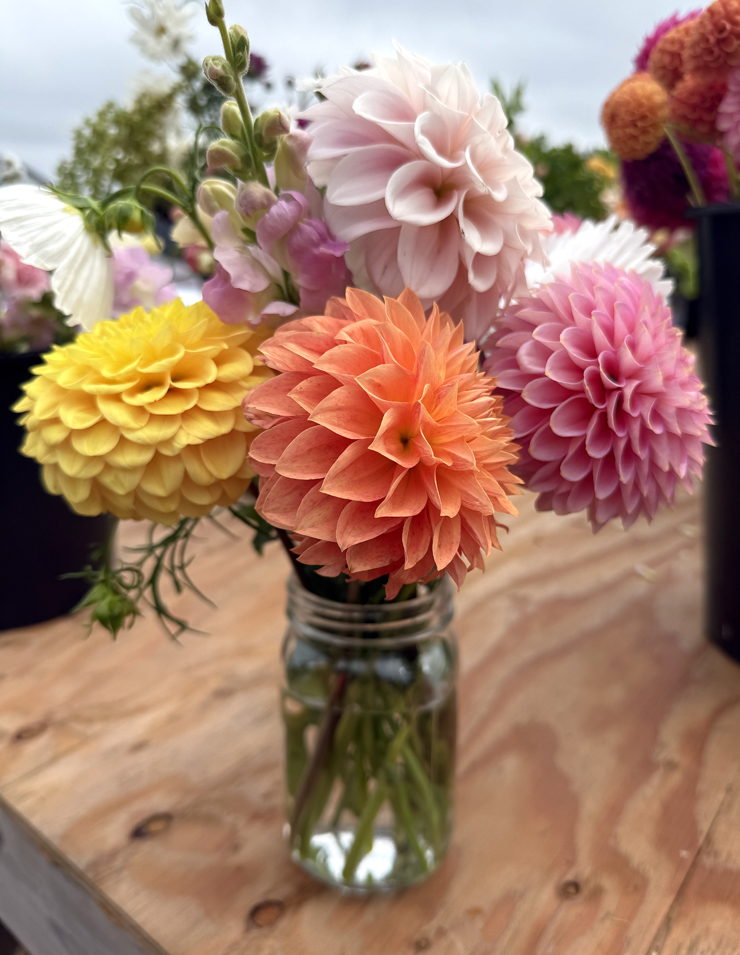
My u-pick bouquet that I assembled.
Reserve a spot, and for $50, you are given a mason jar half-filled with water and a pair of scissors to snip stems in the supporting garden planted with snap dragons, pussy willows, roses, zinnias, and other greenery. To complete your arrangement, you get to pick six dahlias from the nearby buckets of freshly-cut ones. Change the water regularly, and your bouquet should last about a week.
Parkdale, OR — As a kid, Randy Kiyokawa dreamed of becoming either a police officer or a DJ, professions he knows couldn’t have been more different from one another.
But as Kiyokawa grew to learn, familial expectations have a way of steering one’s path in life. As his parents’ youngest child and only son, he knew deep down that his destiny likely would entail succeeding them in overseeing the family fruit farm, one of the few remaining Hood River Valley farms owned by Japanese American families who returned here following their internment during World War II.
Planted with 157 acres of fruit trees, including more varieties of apples than probably any other farm in the valley, Kiyokawa Family Orchards is a testament to perseverance and adaptation.
Thankfully, its legacy will continue now that Kiyokawa, on the brink of turning 64, is poised to turn the farm’s operations over to the fourth generation — his daughter.
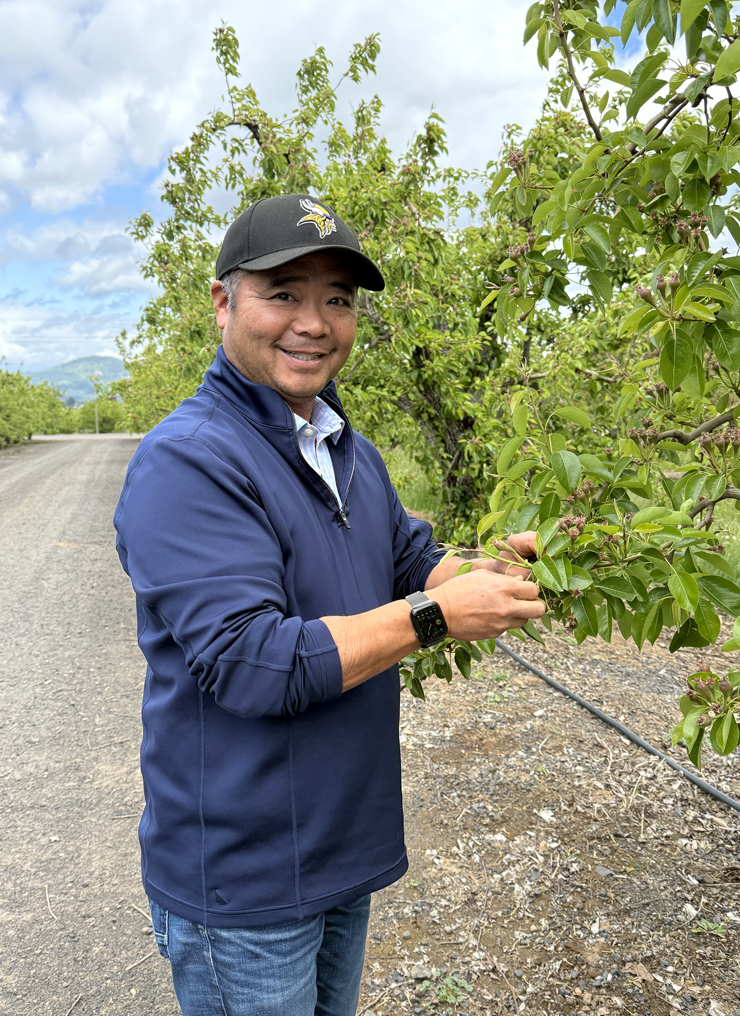
Last month, I had a chance to visit the farm. Though it hadn’t yet opened to the public for the season, work was still happening, most notably on the small homes on site. He provides free housing to his 40 employees
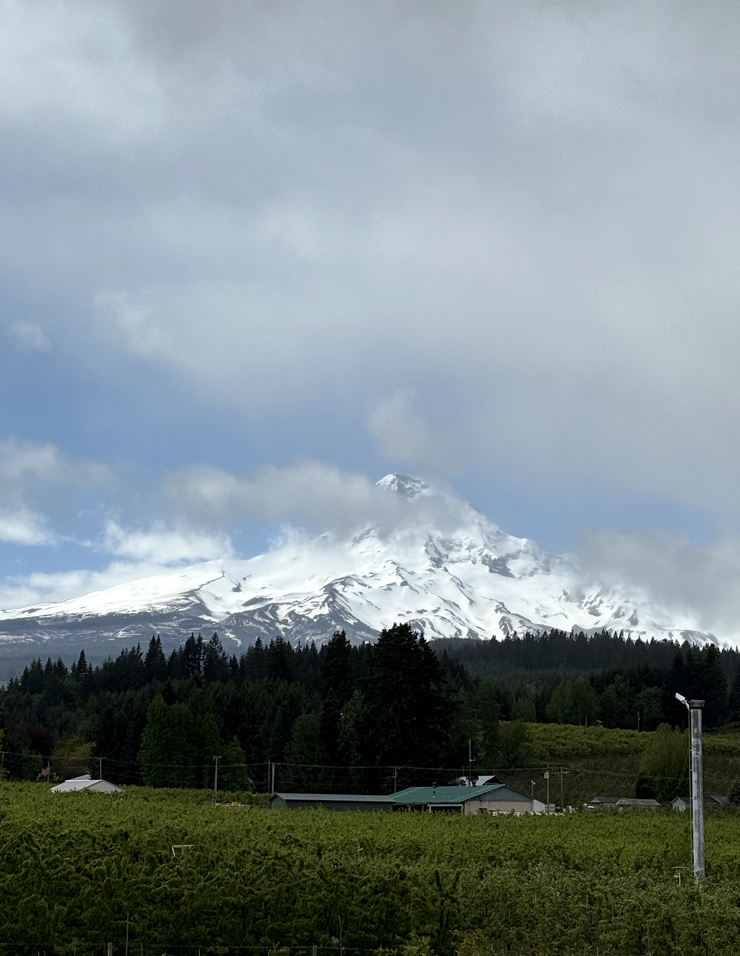
His farm boasts a stunning view of Mount Hood.
Kiyokawa walked me around the property, where blossoms were just starting to appear on Bosc, Comice, and Anjou pear trees. He also grows peaches, plums, and baby kiwi. In a nod to his wife’s heritage, he also planted Persian plums and sour cherries.
It’s apples, though, for which his farm is best known — 125 varieties in all.
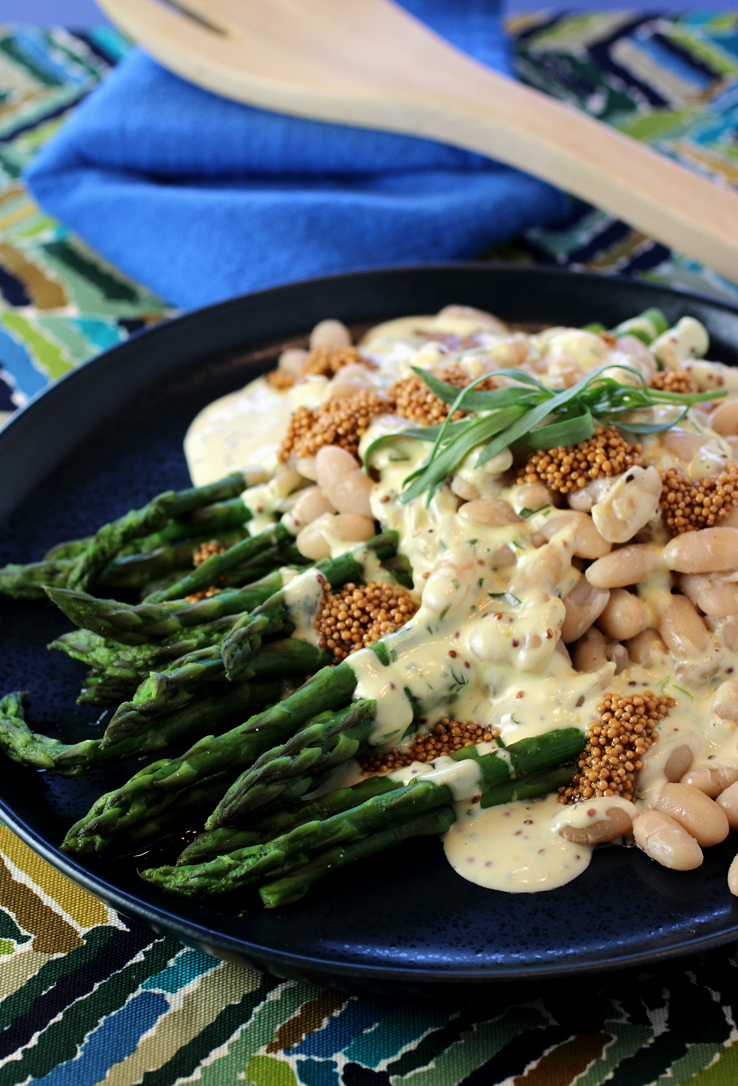
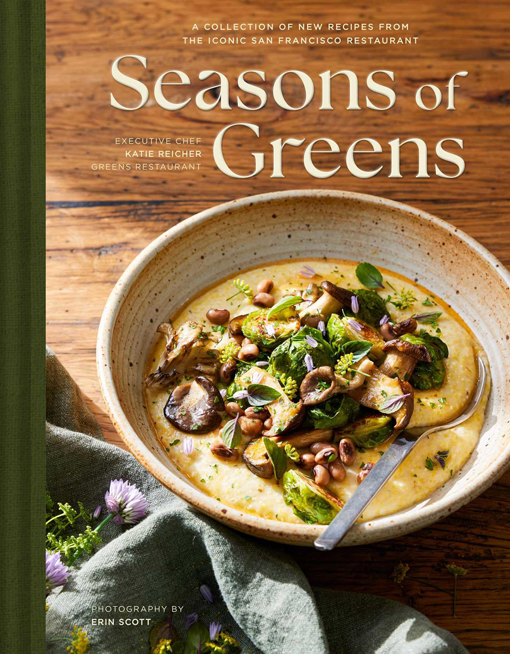
Jazz up your asparagus game with a perfect cooking technique, plus flavorful garnishes.
When it comes to asparagus, I typically prefer grilling or roasting whole spears because the high heat caramelizes them, bringing their natural sweetness to the forefront.
But Katie Reicher, executive chef of pioneering Greens Restaurant in San Francisco, has taught me another method, one with impeccable timing that renders the spears yielding yet not droopy, and tender but with still a little bite.
Her way is pan-steaming, complete with a genius move — blitzing the tough asparagus ends that are usually discarded with a little water in a blender instead to create the cooking liquid. It gets poured into a ripping hot pan with the asparagus, where it steams and simmers before evaporating and leaving them perfectly done.
Not only are you not wasting any part of the pricey asparagus this way, but you’re imparting more flavor, too.
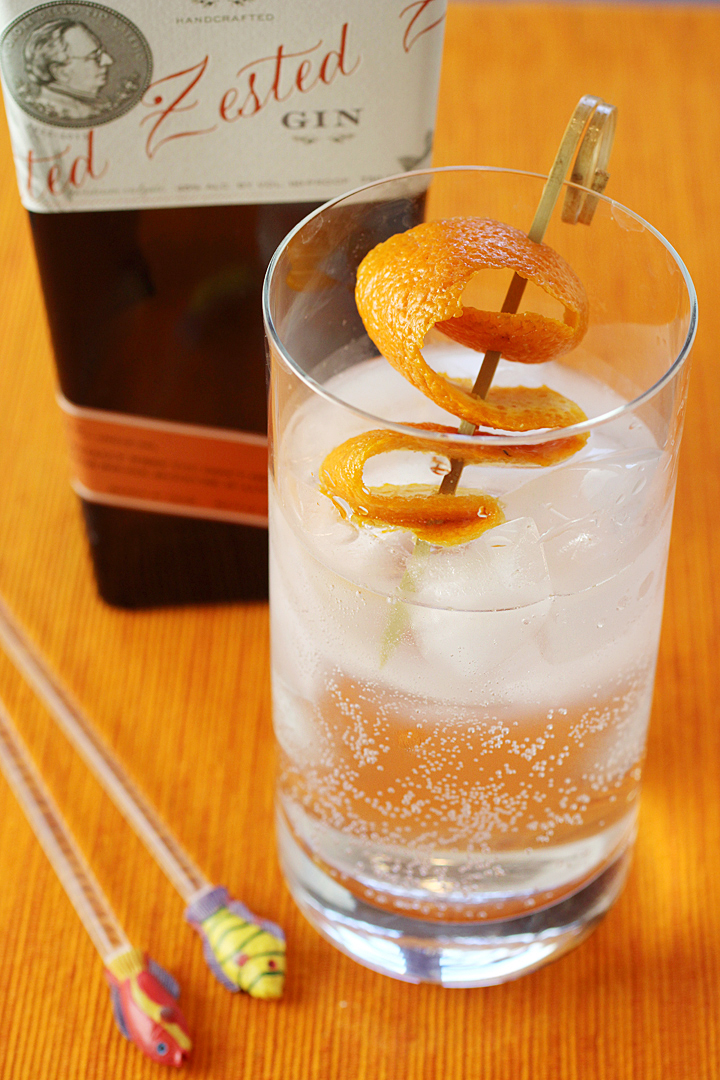
I love a cocktail that has the taste and aroma of orange, and Uncle Val’s Zested Gin ($30) has both in spades.
Twist open the bottle and take a whiff to be floored by the fragrance of bright orange citrus with a hint of clove.
I had a chance to try a sample of this small-batch gin that’s made with bergamot, orange, coriander, barley malt, and, of course, juniper. But don’t worry; for those not too keen on the medicinal taste of juniper, this gin keeps it in balance.
Uncle Val’s is a brand by 3 Badge Beverage Corporation. It was founded by August Sebastiani. Yes, of that Sebastiani family.
In fact, the corporation is run out of an old fire station in Sonoma built in the 1880s by his great-grandfather Samuele Sebastiani, a mason and quarry miner, who went on to start making wine. It’s also where Samuele’s son (August’s grandfather) would go on to become a volunteer firefighter. The corporation is named for the three fire service badges that he earned.
Fourth-generation vintner August bought the old fire station in 2014 that had been vacant for nearly a decade. He established Uncle Val’s Gin to pay tribute to the herbal concoctions that his late-Uncle Zio Valerio (aka Uncle Val) distilled from cuttings from his Tuscan garden.
With its rounded orange taste, the gin is ideal in a Negroni. Or a gin & tonic. Or even just over ice with an orange twist.
Although Uncle Val’s gins are available at several Bay Area stores, you might have to hunt harder specifically for the Zested Gin, which is stocked in fewer places. However, it can be found at Village Market in Oakland and Bottle Barn in Santa Rosa. You can also enjoy at the bar at the Ritz-Carlton in San Francisco and Pearl Hour in Monterey.
Cheers: Each small-batch bottle of gin features a label with one of Uncle Val’s more notable sayings. Mine sported this one: “A closed mouth catches no flies.” Meaning think before you speak — or else pay the price later.
Half Shell Vodka
If you have a tendency toward fumble fingers, you don’t have to worry about mishaps when carrying a bottle of Half Shell Vodka.
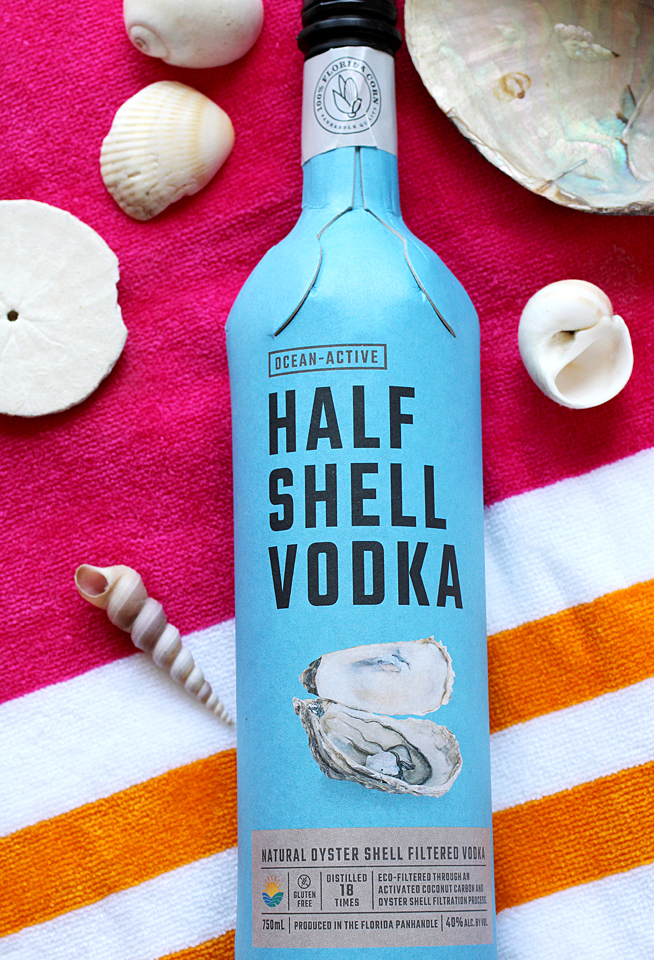
Unbreakable and light as can be. That’s Half Shell Vodka.
That’s because this vodka is billed as the first one packaged in a completely recyclable paperboard bottle. Accidentally drop it, and there will be no damage.
In fact, when I received a sample to try, I almost didn’t believe it was inside the mailing box because it felt so incredibly light.
It sports a screw top and a liner in a bottle that’s made of 94 percent recycled paperboard for a much smaller carbon footprint.
The Santa Rosa Beach, FL company distills its vodka 18 times from U.S.-grown corn, then uses reclaimed oyster shells (from bars and restaurants) and activated coconut carbon (think charcoal made from coconut shells) to filter the spirit. But that doesn’t mean you’ll find any lingering shellfish or coconut taste in this vodka. The system is merely used to enhance smoothness and purity.
Indeed, this vodka has a clean taste with a fluid boozy warmth.
Find it for $24.99 at select Whole Foods in Northern and Southern California.
Cheers: Half Shell Vodka runs a “Sip for Sustainability” nonprofit partnership program that helps raise funds for sustainability and conservation efforts nationwide.