Category Archives: Great Finds

Korean Tea, Part 2: The Traditional
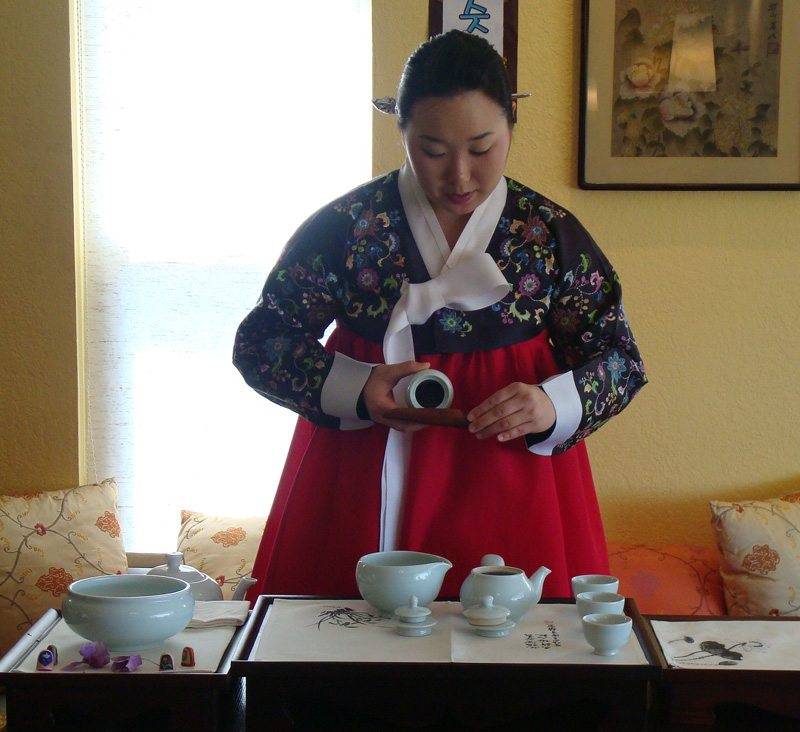
Ellen Kim performs a traditional Korean tea ceremony.

Driving past the profusion of strip malls that make up El Camino Real in Santa Clara, it’s easy to miss so much.

But look closely along that stretch, and you’ll spot what was until recently the only Korean tea house in the Bay Area.

It’s easy to overlook Chasaengwon tea house on the second floor of a non-descript office/retail building at bustling 3330 El Camino Real, Santa Clara, near a See’s Candy store. But if you do, you’ll be thoroughly missing out.

Jinsook Hong opened her charming tea house/cafe here because the city already was home to a sizable Korean-American community. Hong operated a tea house in her native Korea, until immigrating here 21 years ago.
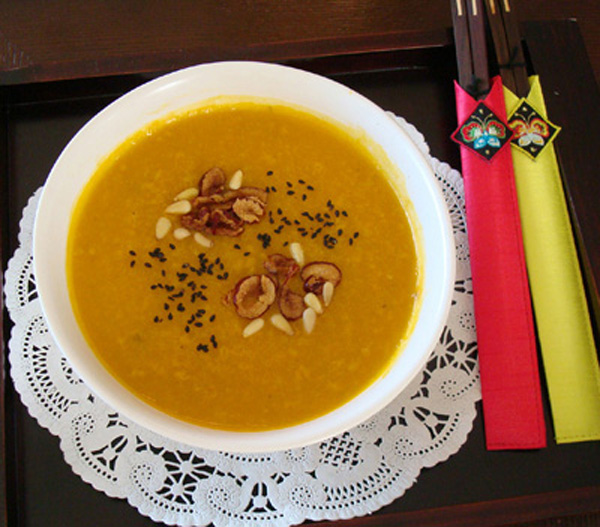
Kabocha soup

A quiet matriarchal figure, Hong is here seven days a week, 10 a.m. to 10:30 p.m., carefully preparing all the tea and all the food, such as hearty kabocha or abalone soup, and the most popular item – a huge bowl of green tea shave ice with green tea ice cream, mochi and fresh fruit that’s big enough for four people to share. She will even prepare a special menu if given advance notice.
Read more

Korean Tea, Part 1: The New

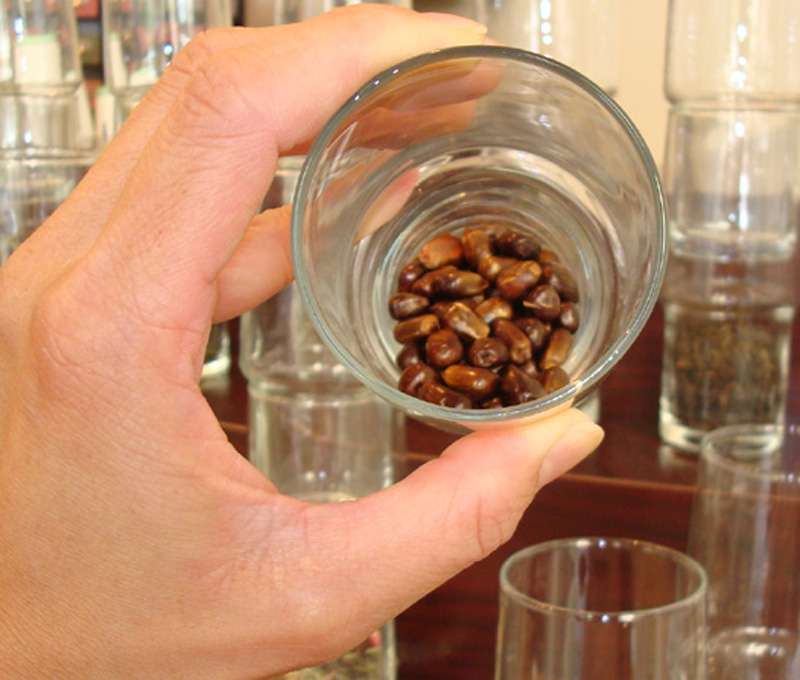
Korean corn tea that tastes like popcorn in a mug

You’ve enjoyed trendy wine bars. Now, take a seat at a soothing tea bar.

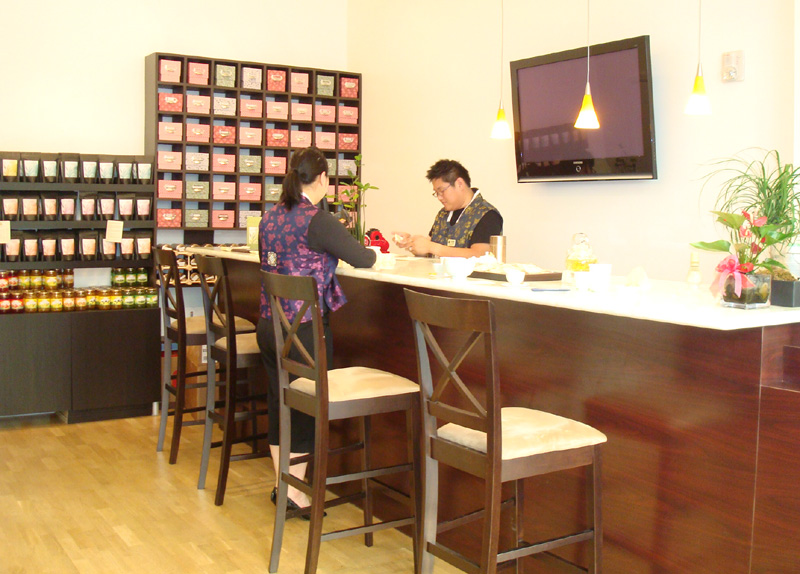
Puripan Tea Garden opened its doors a month ago at San Jose’s Santana Row. This cozy oasis sells 70 types of loose-leaf teas, the majority of them Korean. Although Koreans traditionally don’t drink black teas, the store has imported a range of black teas from India and China, as well.

If your experience with tea has been limited to the bagged variety, you are in for a treat here. Most run-of-the-mill tea bags contain more tea “dust” than actual leaves. Glass containers here display tea leaf samples that can be opened to experience their intoxicating fragrances.

Take a breather at Puripan Tea Garden

Besides many types of green tea, Koreans have a tradition of brewing tea from grains such as corn and barley, as well as more unusual plants such as persimmon leaves. Store proprietor Ellen Kim explained that during Korea’s Chosun Dynasty (the 1300s), the tax on tea was so high that people resorted to brewing “tea” with other ingredients.

Read more

Nuts About These Nuts

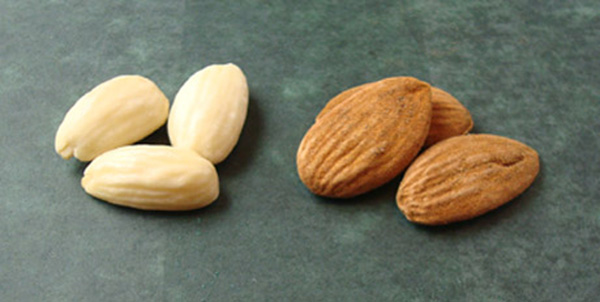
Regular blanched almonds on the left; Sicilian Pizzuta almonds on the right.

As you know, I love nuts of all kinds. My latest paramour? The native Sicilian almond called Pizzuta.

This rather flat-shaped almondÂis amazing. It has a rich, intense, almost creamy flavor. Think marzipan — but with a pleasant, toasty bitterness and none of the aching, cavity-inducing sweetness.

Read more

The Only Sustainable Sushi Bar in North America

At Tataki Sushi & Sake Bar, it\s not business as usual.

That is just what Tataki Sushi & Sake Bar in San Francisco is believed to be.

The tiny, seven-month-old restaurant serves only seafood that isn’t overfished, farmed without proper management, or contains high levels of mercury and other contaminants.

Find out more about why business partners, Chef Kin Lui, Chef Raymond Ho, and Casson Trenor (a sustainable fisheries expert) decided to open such a restaurant by reading my story today in the San Francisco Chronicle Food section.

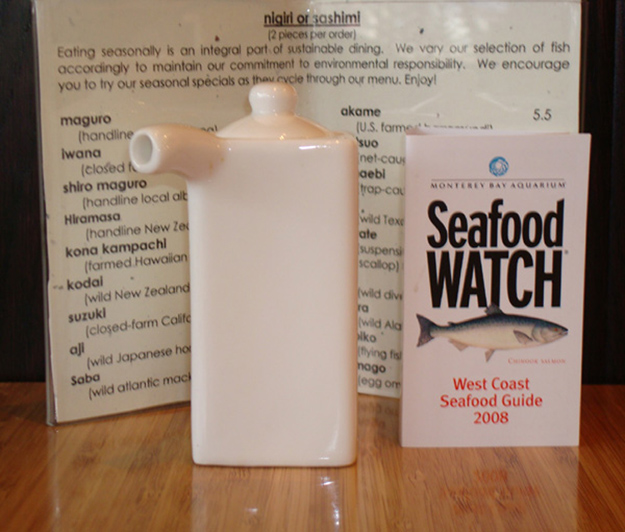
Tataki, the site of a former Subway sandwich shop, grabs your attention right when you walk in. A Monterey Bay Aquarium “Seafood Watch” pocket guide, which lists best and worst sustainable seafood species, is front and center on every table. A copy is also tucked into every take-out menu.

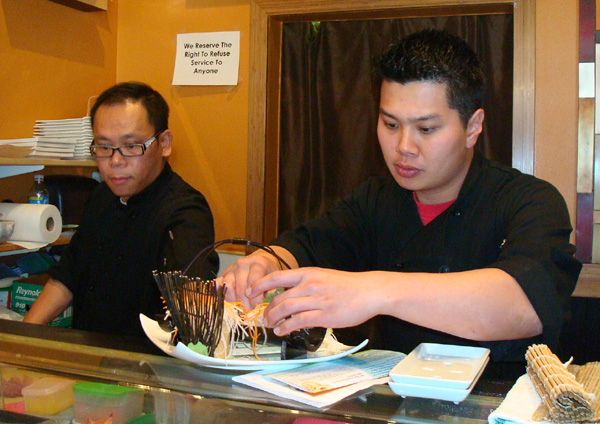
Co-chefs Raymond Ho (left) and Kin Lui (right).

Oct. 22, Tataki will be the site of the official launch of three new, ground-breaking sustainable sushi guides created in partnership with the aquarium, Blue Ocean Institute, and Environmental Defense Fund. Each will include information on as many as 60 different seafood species commonly found on sushi menus.

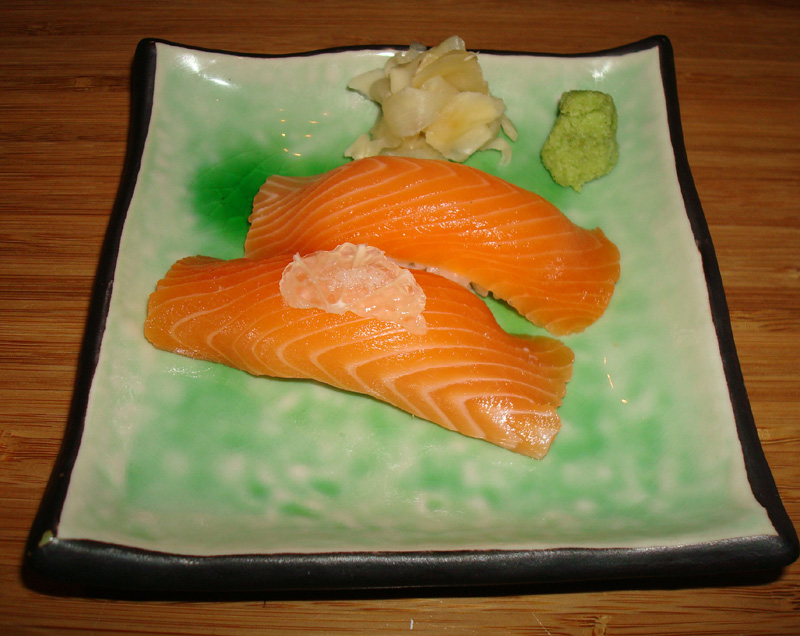
Sustainable artic char, similar to farmed salmon in taste and texture, but without environmental and health concerns.

Want to do the right thing? Then, you’ll stop eating unagi, bluefin toro, hamachi, octopus (tako), monkfish liver (ankimo), farmed salmon (sake), imported King crab (kani), imported albacore tuna (shiro maguro), and sea urchin (uni) from Maine — all of which are unsustainable, according to the aquarium’s new guide.

Read more

« Older Entries Recent Entries »