Category Archives: Health/Nutrition

Take Five with Peninsula Chef-Restaurateur Jesse Cool, On Three Decades of Championing Organic Food
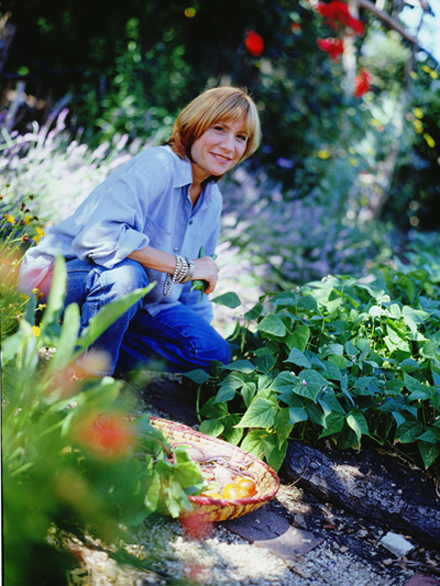
Jesse Cool in her organic garden in Palo Alto. (Photo courtesy of Jesse Cool)

Long before it was popular, Peninsula chef-restaurateur Jesse Cool served organic food. Back then, it wasn’t what most diners wanted to eat. They certainly didn’t want to pay extra for it, either.

How the culinary landscape has changed. And Cool couldn’t be more pleased.

Despite hard times for so many restaurateurs now, Cool is coming off her busiest year ever in 2008. There’s more to come, too.

June 7, she’ll host “Dirt to Dining,” a benefit held at her Palo Alto home for the Ecological Farming Association. Spend an afternoon enjoying appetizers, mingling with organic farmers and vintners, and learning about organic gardening and pest control. There also will be a silent auction.

Price is $25 for the garden tour alone; $75 for the organic food and wine tasting if purchased by May 29 ($100 at the door). For information, call (650) 854-1226.

Additionally, Cool just closed her 10-year-old jZCool Eatery in downtown Menlo Park. She is moving her CoolEatz Catering to a larger site in the Menlo Business Park in East Menlo Park. In June, a new organic lunch cafe will open there, as well.
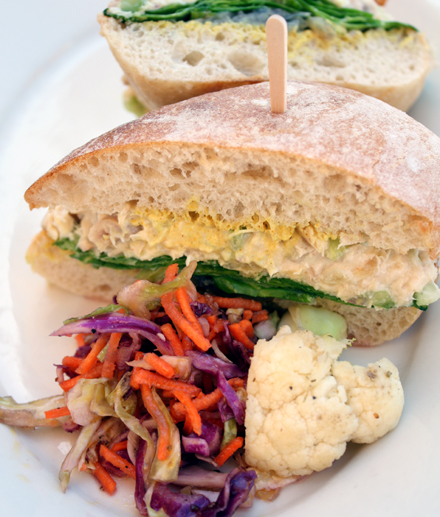
Pasture-raised chutney chicken salad sandwich at the Cool Cafe.

The business park also happens to be where she held her 60th birthday party earlier this year. I sat down with her over lunch at her Cool Cafe inside the Cantor Arts Center in Palo Alto to dish about how her interest in local and sustainable food came about, what she’s most proud of, and whether 60 is indeed the new 40.

Q: You’re the hippest 60-year-old around. How do you do it?

A: I am who I am. I think it’s more organic to be real about your age. I attribute it to exercise, attitude, and eating real good food. It does make a difference.

Q: This is the chicken-and-egg question: Who was the first organics pioneer in the Bay Area — you or Alice Waters?

A: We both were. In the beginning, I was into organics and chemical-free. That spilled into sourcing locally.

In the beginning, Alice was into small, local, and artisan. We were both ingredient-driven.

Q: Back in the day, organic food was a hard sell, wasn’t it?

A: It was when I started with Late for the Train in Menlo Park in 1976 and Flea St. Cafe in Menlo Park in 1980. Back then, I couldn’t put organic on the menu without people thinking it was hippy-dippy, that it was unwashed and unsanitary, which it wasn’t.

Being in the South Bay made it even harder. Just try getting product down here back then. The trucks stopped at San Francisco and Berkeley. I had to go pick up from Niman Ranch, myself.

The cool thing is it’s mainstream now. Food is finally connected to personal, long-term well-being.
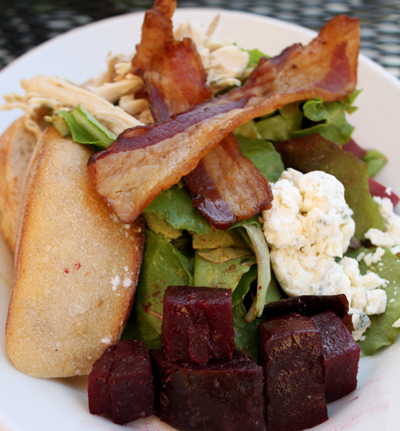
Balsamic beet salad with Pt. Reyes blue cheese.

Q: What’s your business philosophy?

A: That the customer comes last. Always.

Q: Really?

A: I decided to do organics for my staff, so they wouldn’t have to wash this stuff off the produce. I didn’t want my staff or the farmers around chemicals. We figured if we took care of our staff and the farmers, that it would spill over to the customers.

Q: You faced some real challenges early on?

Read more

Remember This Awesome Ricotta Pound Cake Recipe From Pastry Chef Gina DePalma?

The woman behind the best ricotta pound cake ever.

If you’ve ever baked it, you’ll never forget it. It’s that good.

And if you’ve loved eating it as much as I have, then you’ll want to help the wonderful woman who created it, who is now waging a battle against cancer.

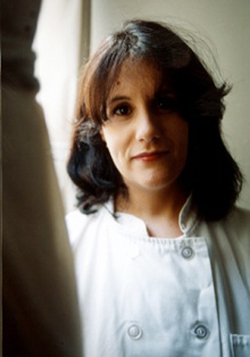
Pastry Chef Gina DePalma of Babbo. (Photo courtesy of Gina DePalma)

The ultra talented, James Beard-award-winning Gina DePalma, the pastry chef of New York’s acclaimed Babbo, was diagnosed last year with ovarian cancer that had spread throughout her body. After surviving a nine-hour surgery last year that left her hospitalized for a month, as well as the ravages of six rounds of chemotherapy, her cancer is now in remission. But the 42-year-old is now fighting to regain her strength and health. She’s now only able to work part-time at Babbo.

“I alternate from being hopeful, and grateful that we caught this when we did, to being shocked and stunned that it happened to me,” DePalma says. “I get angry, sad, and truly terrified at what lies ahead. Getting cancer is an isolating experience, even if you are surrounded by as much love as I have been.”

She started a non-profit to help publicize her battle, and to help spread the word about this affliction, which claims so many women each year. Her Cowgirl Cure Foundation will be hosting a cocktail reception on May 18 at Jim Lahey’s New York pizza joint, Co., to benefit ovarian cancer research at Mount Sinai Medical Center. Tickets are $250 per person. Contact David Semanoff at dsemanoff@quinnandco.com for more information.

Beginning today, there also will be a benefit auction to raise funds for the medical center’s research. Among the items you can bid on are dinner for four at Babbo, and a dessert party for four at your house with DePalma. The auction will run for 10 days, so be sure to get your bids in now.

Read more

Sustainable Sushi

Sit down at your favorite sushi bar to order mirugai, bonito, hotate or akame.

Chances are that you’re not really sure what you’re always eating, given that the seafood names are in Japanese. Moreover, chances are even greater that you’re unsure whether what you’re eating is sustainable or being over-fished to extinction.

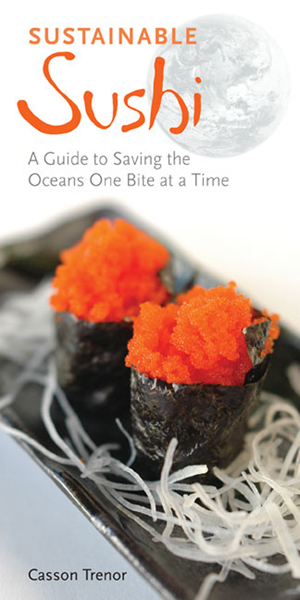
You may remember my post last year about three new sustainable sushi guides by three environmental organizations. Now, on the heels of those, comes Sustainable Sushi (North Atlantic Books) by Casson Trenor, a sustainable seafood expert who’s also a consultant to Tataki Sake and Sushi Bar in San Francisco, the first sustainable sushi restaurant in North America.

Author Casson Trenor

At 110 pages, this book is a more in-depth look at 39 species found on sushi menus. Trenor includes information on such crucial issues as mercury levels, dredging, and crowded fish farms. The species are color-coded so that you can tell from just a glance whether it’s sustainable, unsustainable, or one that you should proceed with caution about. It’s a must-read for any sushi aficionado.

Read more

« Older Entries Recent Entries »