Category Archives: Recipes (Savory)

Cheater’s Baos

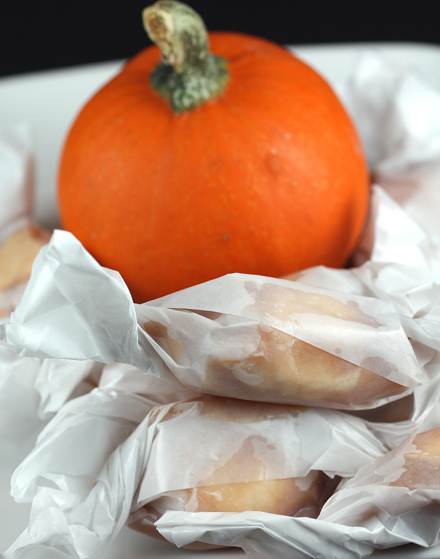
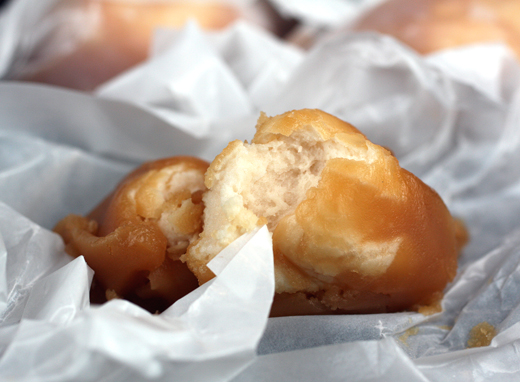
Would you scoff if I told you those fluffy, steamed Asian buns above were made with Pillsbury refrigerated buttermilk biscuit dough?

Yup, the stuff in the tube.

Believe it.

When my buddy, Andrea Nguyen wrote her first cookbook, “Into the Vietnamese Kitchen” (Ten Speed Press) in 2006, there was many a recipe that caught my eye. But none made my jaw drop like this one for “Shortcut Plain Steamed Buns.”

Years ago, Andrea learned this trick from her Chinese-American friend, Victor Fong, who, of course, learned it from his mother.

Crack open a tube of biscuit dough, then separate the rounds of dough. Pat each one into a flattened circle.  Then, fold each circle in half  to create half-moon shapes.

Read more

Cooking Up A Spring Feast in Sonoma

Drinking and eating, and not much heavy-lifting beyond that.

It’s so easy — too easy — to succumb to complete veg-out mode in Sonoma, what with its abundance of wineries and restaurants that beckon so invitingly.

But if you want to get a teeny bit more active by actually working for your food, Ramekins is the place to go.

This combo culinary school and inn is just an easy stroll from the main square. A bevy of cooking classes, about half of them hands-on, are offered at $55 to  $100 per person.

Ramekins is revamping its patio to install a pizza oven, too. In the coming months, look for a variety of grilling, bread-baking and pizza-making classes to be offered to take advantage of that sunny space.

Up on the second floor, there are six well-appointed guest rooms, done up in a luxe French farmhouse decor, priced at about $250 per night, depending upon the season. Stay overnight, and you can roll out of bed, enjoy a spread of homemade scones and coffeecake for breakfast, then walk downstairs to get cooking. How easy is that?

So easy, as I soon learned when I was invited as a guest to try a cooking class earlier this month.

Charles Vollmar, a longtime culinary instructor who owns Epicurean Exchange, was there to teach us all about “Spring Soups and Stews” in this hands-on class. Since there were only seven of us signed up for this class, we were each able to do a variety of tasks under very personalized instruction from Vollmar and a Ramekins assistant.

The demonstration classes are taught in a 36-seat theater equipped with a full kitchen and television monitors. Because our class was hands-on, though, we had the run of the second kitchen — an expansive restaurant-size kitchen with professional-grade equipment.

After donning aprons, we broke up into teams to cook one of four dishes: “Spring Asparagus Soup with Coconut Curry,” “Chicken and Barley Soup with Asparagus and English Peas,” “Spring Vegetable Ragout with Chanterelles and Fava Beans,” and “Spring Lamb and Artichoke Tagine.” Yours truly was in charge of the lamb.

Vollmar demonstrated how to turn a baby artichoke, then made sure we each had a chance to try it. With a paring knife, we removed the tough outer leaves, trimming the stalk, cutting the head in half, and removing the hairy choke and uncovering the tender heart. Although I’ve turned artichoke hearts before, I don’t think I’ve ever done such a pile of ’em. But then again, lucky me had them as one of the main ingredients in my dish. And oh, we were doubling the recipe, too.

Read more

How I Measure Time in Char Siu Baos

When it comes to Chinese pork buns, there is BM and there is AM.

BM as in “Before Microwaves,” before those boxy, miracle appliances became standard on our kitchen counters. And AM as is in “After Microwaves,” when we realized we couldn’t live without the darn things.

Those two periods in time had a profound effect on how I ate my delicious pork buns.

I’ve always enjoyed both the shiny, golden baked pork buns, as well as the fluffy, white steamed ones at many a dim sum restaurant.

My parents often bought some home, too, tied up in a pink square box.

BM, those were always the steamed buns that nestled in our fridge, never the baked ones. Lacking a toaster oven, my parents thought it a wasteful use of electricity to turn on the oven just to warm up a couple of small pork buns.

But the steamed ones were easy enough to handle by just placing them in a steamer on top of the stove. It took a little time to heat up the burner, to get the water boiling and the steam to penetrate the baos, but in those BM days, it seemed more than fast enough.

As a kid getting ready for school, I often awoke before my parents did. It would be my job in the morning to turn on the stove to get the kettle boiling for their coffee, and to take a couple of buns out of the fridge to place in the steamer for our breakfast. Bread-like, filled with sweet chunks of barbecued pork, and warm enough to make your fingers feel toasty on foggy San Francisco mornings, it was a perfect wake-me-up meal at that bright-eyed hour.

I can’t remember when we got our first microwave. But I do remember that AM, we sure seemed to have a lot more baked buns in the house. After all, warming them up in the newfangled microwave was a cinch, even if you had to sacrifice crispy tops in the process.

Nowadays, I still enjoy both steamed and baked varieties. My husband, though, swears his allegiance to the baked ones. I’m not sure if it’s because, as in my case, they became more ubiquitous in his household AM. All I know is that when I told him I was going to try making my very own baked char siu baos, he lit up like, well, metal sparking in the microwave.

Good pork buns can have that effect on people.

And these are no exception. The recipe is from my good friend, Andrea Nguyen whose new book, “Asian Dumplings” (Ten Speed Press) was just named a finalist for an IACP cookbook award. (Wooo, you go, girl!)

Read more

Momofuku’s Famous Pork Buns

Yes, I made them.

And they are pretty f***ing good.

Oooh, did I say that? Chalk it up to me channeling the one and only David Chang, the potty-mouthed, no-holds-barred New York chef sensation who created these wonderfully pillowy steamed buns stuffed with juicy, fatty-delicious pork belly.

How good are they? When my husband and I visited New York last year, we ate these pork buns three out of four days we were there. If they were on the menu, we simply had to have them.

Chang serves these at his Momofuku Noodle Bar, Momofuku Ssam Bar, and Momofuku Milk Bar bakery. They’re so popular that you’d be hard-pressed to walk into any of these establishments and not find them gracing every table.

The recipe comes from the “Momofuku” cookbook (Clarkson Potter), written by Chang and New York Times writer Peter Meehan.

Making them at home is straight-forward, but does take some effort.

You have to marinate, cook, cool, and neatly slice the pork belly.

You have to make the quick pickles, which are so easy and fantastic tasting.

Read more

Black Bean Sauce Confession

I’ve made a lot of things from scratch — pasta, cookies, cakes, pita bread, biscuits, marmalade and preserved lemons.

But one thing I often do NOT make myself is Chinese black bean sauce. Yes, I admit I do use the stuff in the jar.

I make no excuses for using the heady, handy, pungent condiment that’s always at the ready in my fridge. After all, it’s so easy to grab a tablespoon or full when I’m making a fast weeknight dish, such as “Stir-Fried Brussels Sprouts and Pork in Black Bean Sauce.”

Read more

« Older Entries Recent Entries »