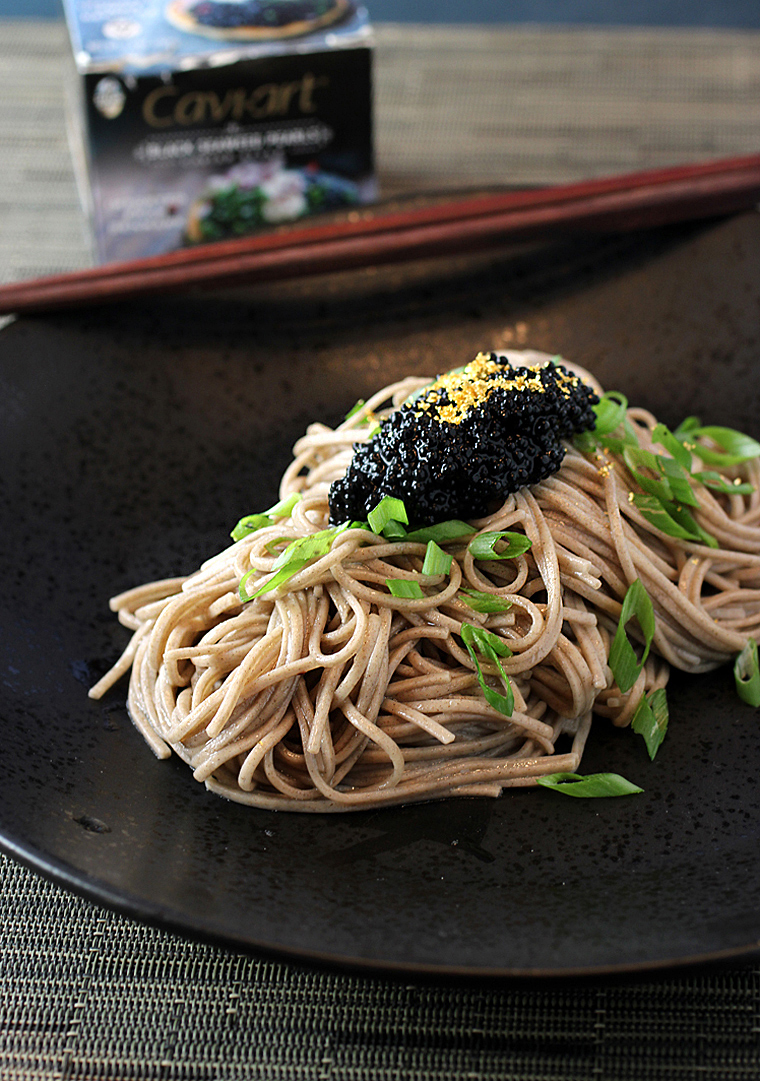
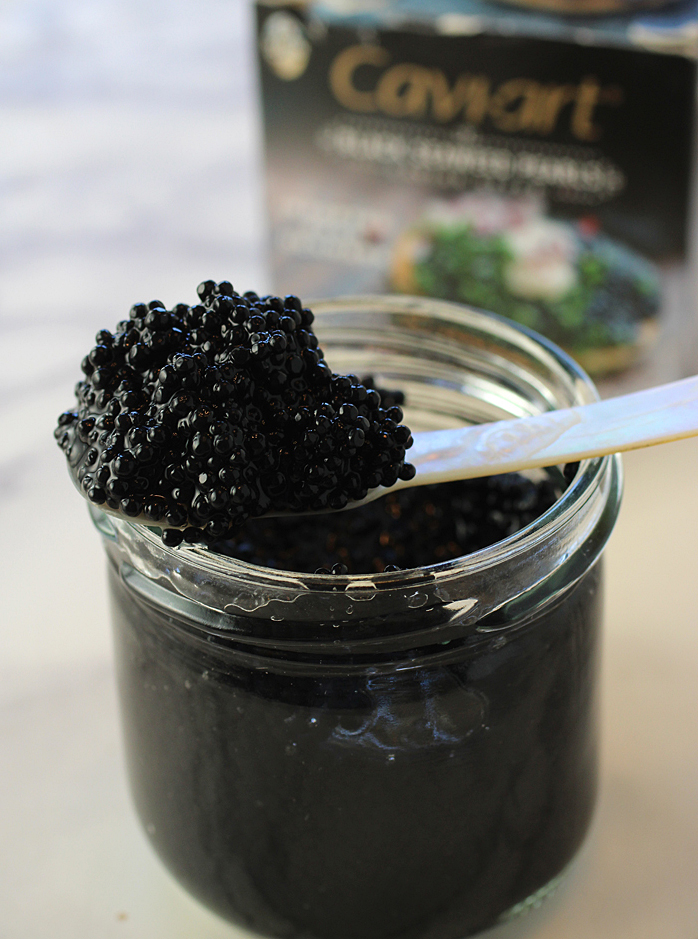
They are tiny and black, boast a briny taste, and look for all the world like caviar.
But these are not sturgeon roe by any means. In fact, they are vegan and made from seaweed.
Caviart was developed by Danish Chef Jens Moller, who sources sustainable seaweed in France to make these plant-based pearls in Denmark that are free of gluten, soy, cholesterol, and fat. They have no calories, either.
I had a chance to try a sample. The pearls glisten and are more minuscule than typical caviar. They don’t necessarily have the initial crunchy pop of real caviar, but they have a delicious sea taste that’s a little earthy and a lot savory. There’s also a depth of flavor, thanks to the additions of turmeric, cayenne, leek, dill, tarragon, and laurel. So, it’s not solely salinity that you taste.
Use it any way you would the real deal.
The mock caviar is a perfect way to dress up the holiday table because it makes any dish more festive. It’s ideal for vegetarians and vegans, and tasty enough to pass muster with gourmet carnivores.
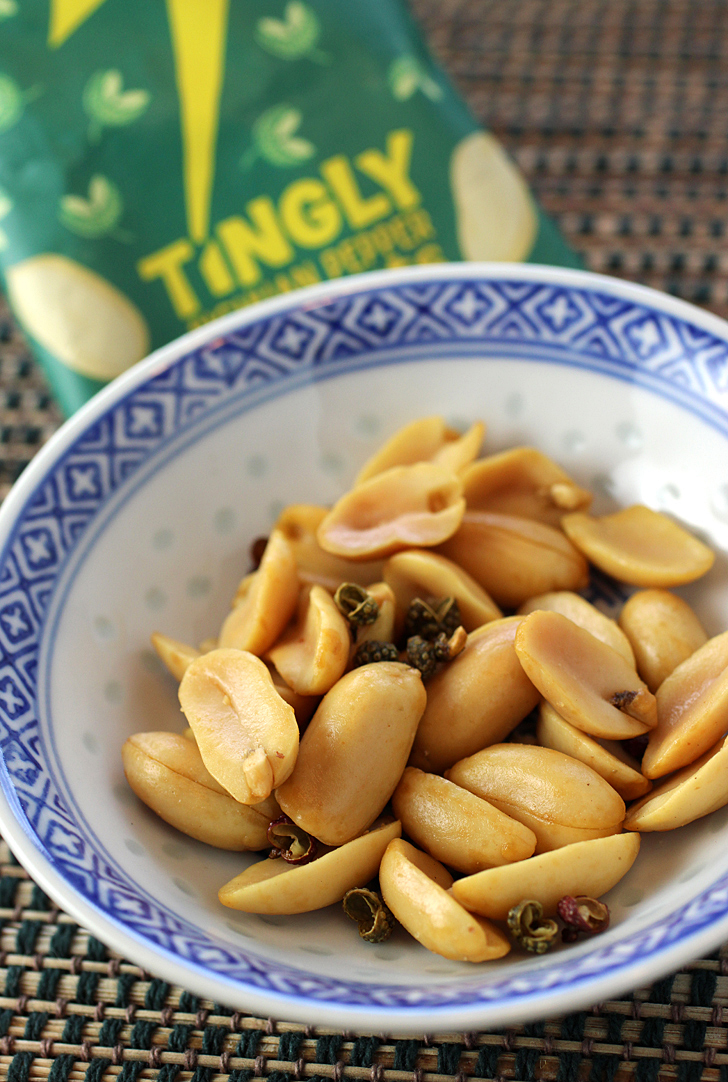
50Hertz Tingly Peanuts get a real pop from green Sichuan peppers.
50Hertz Tingly Foods
Nope, this company has nothing to do with rental cars, but everything to do with the famously tingly and mouth numbing Sichuan peppers.
50Hertz Tingly Foods sells an array of dried peppers, pepper oil, and pepper snacks. The company is named for the number of units of frequency per second that one experiences tingling from Sichuan pepper, according to scientists at the Institute of Cognitive Neuroscience at University College London.
It was founded by Yao Zhao, a former green energy specialist at the World Bank in Washington, DC, who used his own savings to do so after becoming inspired by a pepper oil he brought back after visiting his mother in China. Last year out of thousands of entries, 50Hertz was selected as one of 14 newly established food brands by Target’s Forward Founders accelerator mentorship program.
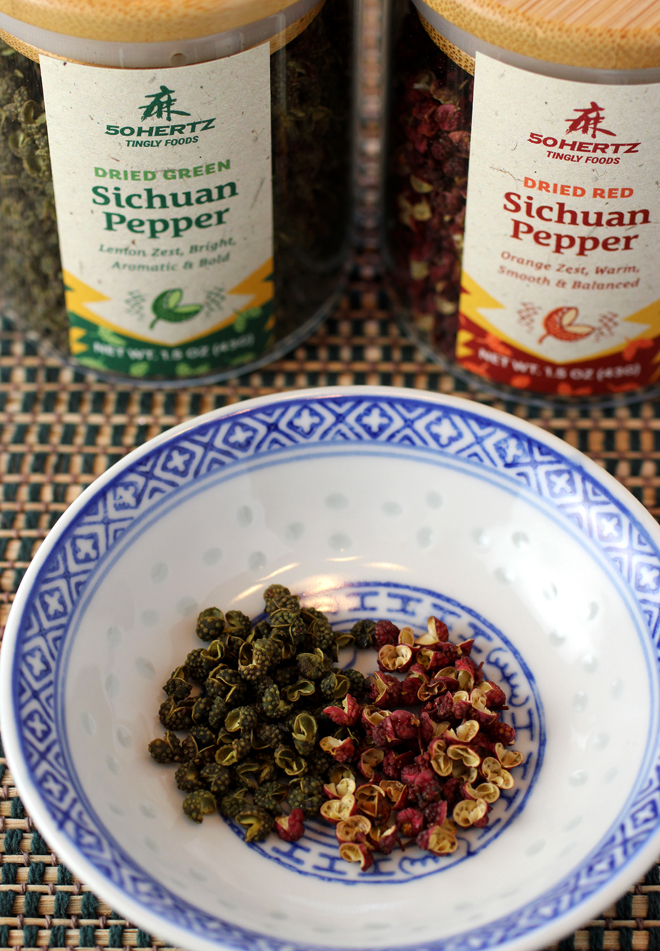
Dried green and red Sichuan peppers.
Most people are familiar with the traditional red Sichuan peppers, which are most commonly available in Asian grocery stores. But 50Hertz also sells green Sichuan peppers, which are not an immature version but an entirely different plant. 50Hertz’s web site neatly sums up the two by comparing them to red and white wine: “Flavor-wise, the green is brighter, more aromatic, and pairs better with fish, seafood and vegetables, just like white wine, while the red is more full-bodied, woodsier and pairs better with tofu, red meat, like red wine.”
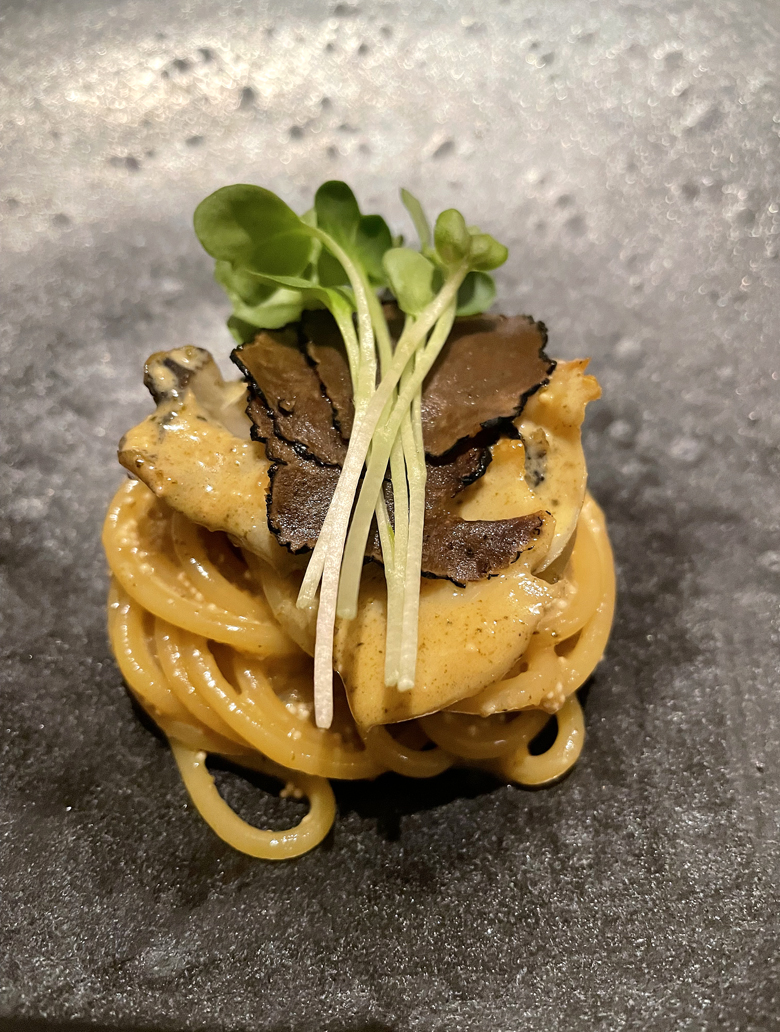
The unexpected truffle pasta dish on the kaiseki menu at N/Naka.
Since learning of it from the first season of Netflix’s “Chef’s Table” in 2015, I have been fascinated by the Los Angeles restaurant, N/Naka.
This Michelin two-starred restaurant opened in 2011 to serve kaiseki, the elegant, multi-course Japanese meal spotlighting ingredients at their seasonal peak in a series of specific cooking techniques.
Back then, it was a type of cuisine that was a rarity in the United States. And even more so when it was crafted by a woman, Chef-Owner Niki Nakayama and her wife, Sous Chef Carole Iida-Nakayama, who dared to put their own thrilling contemporary touches on this classic Japanese haute cuisine.
At all of 26 seats, this restaurant is notoriously difficult to book. While I travel to Los Angeles maybe once a year, I’d never managed to plan the trip in advance enough to even try to snag a table there.
Until two weeks ago. That’s when the stars aligned and Lady Luck was on my side, giving me entree to a dining experience that was nothing short of singularly magical.
You see, N/Naka opens its online reservation bookings once a week at 10 a.m. on Sunday for tables a month later. But sign on right at that second, and you’ll likely find all the reservations gone already and your dreams vanquished — just like that.
After experiencing that disappointment a few times, I started searching online for reservation tips. I came upon a thread that advised staying on the booking site for at least an hour after reservations open, because people will click on a specific reservation that gives a 10-minute window to finalize, only to decide they don’t want it after all. The thread also mentioned that tables of 4 or 6 were easier to come by than for 2.
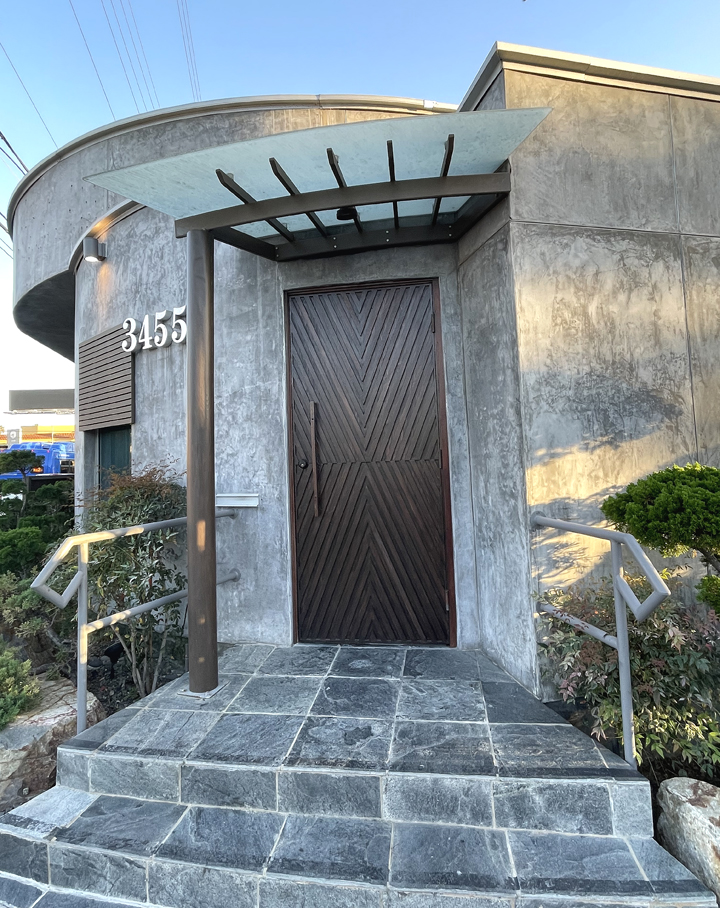
The unassuming, unmarked entrance of this Michelin two-starred restaurant.
So, for more than half an hour, I kept refreshing the page again and again, growing more apprehensive by the minute. A 9 p.m. reservation for 6 people popped up, tempting me to claim it as I figured I could somehow rope a few more people into trekking to Los Angeles with my husband and me. But I hate dining that late, especially for a tasting menu that lasts 3 hours. So, I bit my tongue, and passed on it, wondering if I had just made a huge mistake.
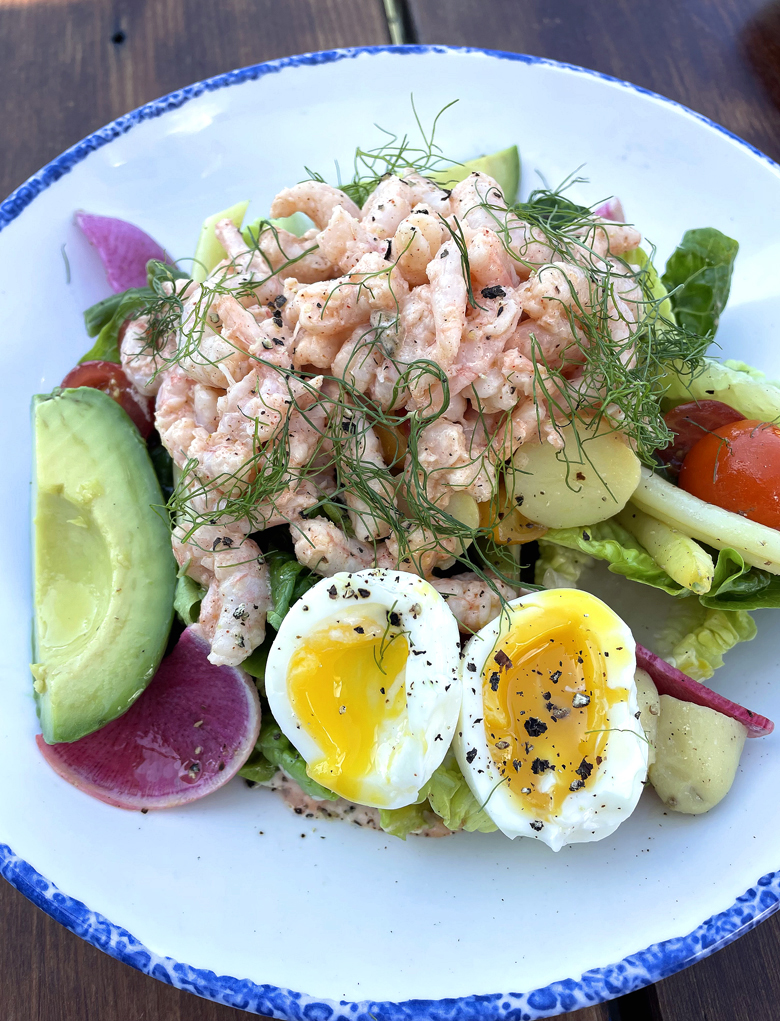
A splendid rendition of a Louie salad at Nick’s Cove.
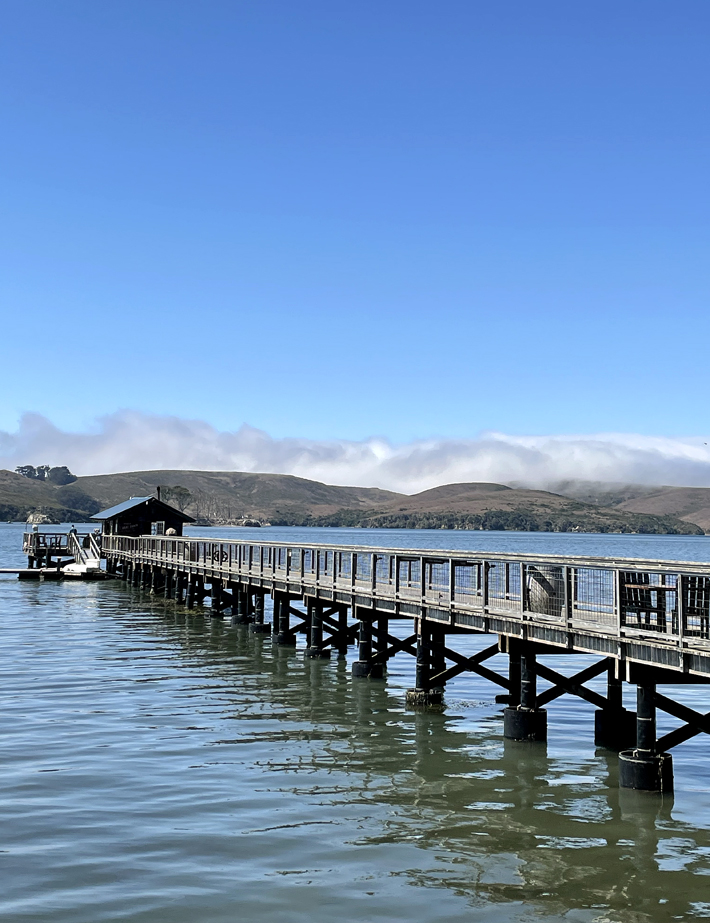
On a clear day along the shimmering blue waters of Tomales Bay, nothing makes you appreciate even more how lucky you are to live in this region than an al fresco lunch at Nick’s Cove in Marshall.
If it’s been a while — or if you’ve never visited — now’s the perfect time to spend some time at this 92-year-old coastal landmark. Not only have its charming cottages been newly refurbished, but celebrated San Francisco chef Chris Cosentino was brought in to refresh the menu.
On a recent trek along the coast, my husband and I took a seat outside on a weekday, after placing our orders at the bar and receiving a pager. When your order is ready, the pager vibrates, signaling it’s time to pick up your tray.
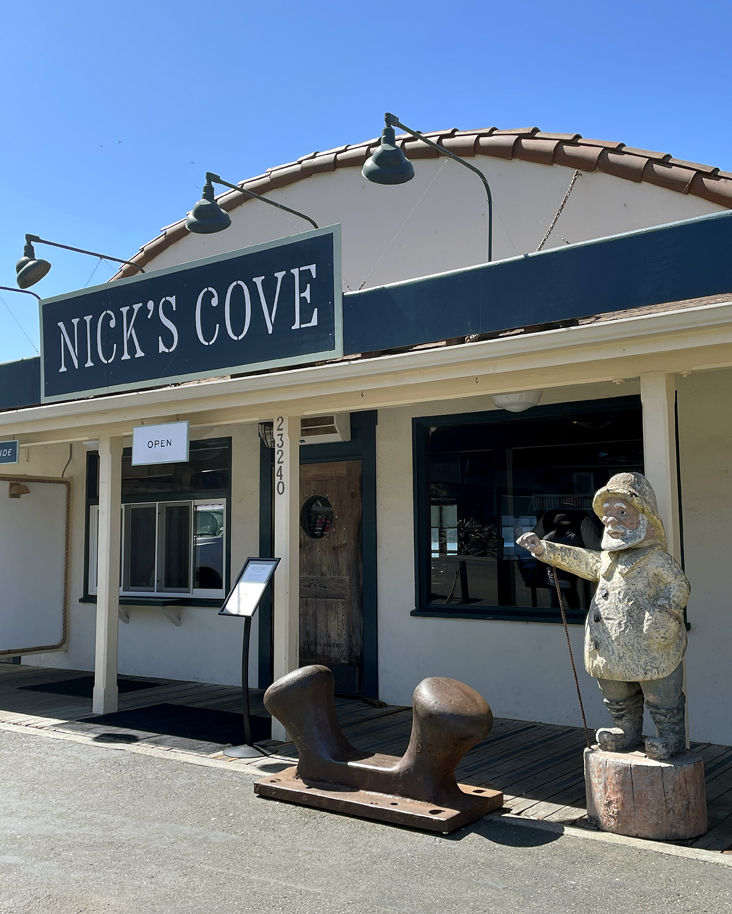
The entrance to Nick’s Cove.The view.
We indulged in a half dozen Nick’s BBQ’D oysters ($25), which arrived on a hot cast-iron pan, tasting sweet, smoky, and plenty garlicky.
Safe Catch Wild Pink Salmon with summer tomatoes and chive blossoms.
With fresh wild Alaskan salmon a pretty penny and California’s commercial salmon fishing seasoned cancelled this year because of dwindling wild stocks, what’s a salmon lover to do?
Open up a can.
Canned salmon has come a long way since my childhood, when my economical mom would pry open the top of a tin and plop out the contents, bones and all that were soft enough to actually eat, but perhaps not the most attractive looking.
Sausalito’s Safe Catch takes canned salmon to new heights, First, it sources sustainable salmon from the Alaska Salmon Fishery or northern Pacific Ocean, following the Monterey Bay Aquarium’s Seafood Watch Guide. Second, every salmon is tested for mercury, with Safe Catch accepting only those that are 25 times lower than the FDA action limit. Third, each can contains no fillers, just salmon and salt.