Category Archives: Thomas Keller/French Laundry/Et Al

Better Than The Gold Standard In Cookies

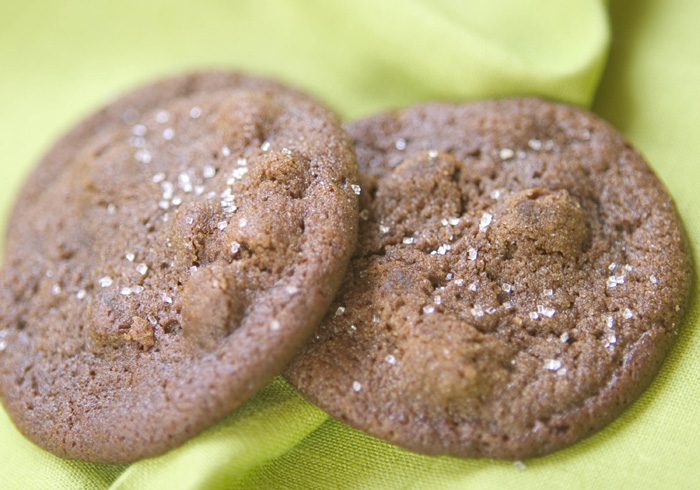
Chocolate gingersnaps -- Yum! (Photo courtesy of Platine)

Munch, munch, munch…

Oh, sorry, I had my mouth full. Chomp, chomp…I can’t stop eating these cookies that arrived in the mail; that’s how good they are.

Platine, the French word for “platinum,” is tres magnifique. These handmade, mail-order cookies from Southern California are the creation of Jamie Cantor, who graduated from the Culinary Institute of America campuses in Hyde Park, NY and St. Helena, CA. She then went on to work for several years at the French Laundry in Yountville, before moving to Los Angeles to start her own bakery.

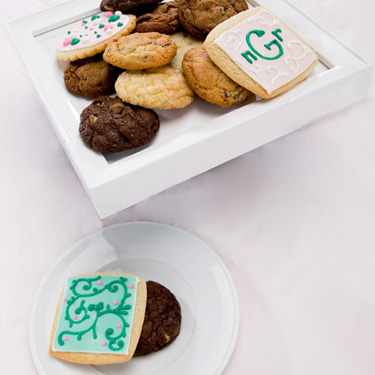
Decisions, decisions. It's hard to choose only one. (Photo courtesy of Platine)

You can taste the premium ingredients from the first bite. Every cookie is baked to order, so when they arrive on your doorsteps, they still taste very fresh. Choose from rich brownies to chewy cookies such as oatmeal raisin, snickerdoodle, and my fave — chocolate gingersnap. In fact, pardon me, while I sneak another one…crunch, crunch…

Read more

Take Five With Chef Ron Siegel, On the 10th Anniversary of His Historic “Iron Chef” Triumph

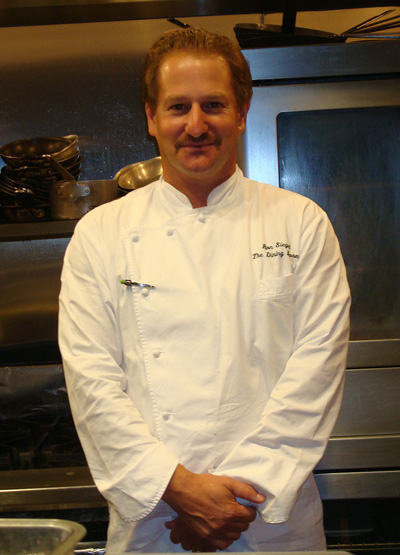
Chef Ron Siegel in the kitchen at the Cliff House in San Francisco

It’s hard to believe that it will be a decade this Labor Day weekend that Chef Ron Siegel made history, becoming the first and only American to ever beat an “Iron Chef” on the original Japanese-version of that wildly popular culinary TV show.

Siegel, now the celebrated chef of the Dining Room at the Ritz-Carlton in San Francisco, walked into Kitchen Stadium, having never really followed the show, and not fully realizing the magnitude of what was to come. The Japanese also underestimated their American challenger. Siegel had quite the credentials already, having cooked at Aqua in San Francisco and Daniel in New York. The former opening sous chef for the French Laundry in Yountville, Siegel was then the chef of the well-regarded Charles Nob Hill in San Francisco. Even so, the producers of the show feared he wouldn’t even complete any dishes.

But when “Battle Lobster” ended, Siegel had not only crafted five dishes, but food so spectacular that he emerged victorious over Iron Chef Hiroyuki Sakai. His life, and his cooking, was forever changed.

Even today, diners still come up to shake his hand and congratulate him. And the video on YouTube of the epic battle has attracted more than 4,800 viewers.

You might expect Siegel to be an avid fan of today’s crop of reality-TV cooking shows, but you’d be wrong. Still, he came this close to being on the first season of “Top Chef” _ not as a competitor, but as a judge. In the end, though, the producers went instead with Fleur de Lys in San Francisco as the setting for the first challenge.

Fame, apparently, has not gone to his head. The Dining Room’s pastry chef, Alexander Espiritu, who has worked with Siegel for four years, says, “I’ve never worked with any other chef whom I got along with so well. The most important thing I’ve learned from him is to relax. As Ron always says, ‘Don’t worry, it’ll happen.’ ”

I caught up with the 42-year-old, father-of-four last week when he was the guest chef at a special heirloom tomato dinner at the Cliff House in San Francisco. Siegel had me in stitches, chatting about Iron Chef, his years at Palo Alto High School, and of course, tomatoes.

Q: Would it be fair to say that if you had never done “Iron Chef” that your style of cooking might be quite different today?

A: Yes. I think I probably would have matured enough to let other influences in. But I never would have gone to Japan five times like I did, and learned so much about the food and culture there. The passion the Japanese have for food is just incredible.

Q: What do you think when you look back at your Iron Chef battle?

A: I would go back and do that show again in Japan. I wouldn’t do the American version, though. I don’t think it’s as good. That’s what happens when Americans remake things. “La Femme Nikita” is a prime example of that. I just hope they never remake “Babette’s Feast.”

Q: If the Japanese “Iron Chef” show was still around, who would you choose the next time around to battle?

A: Sakai again. He’s amazing. I remember when I first met him. I was in a suit, and he comes in, wearing this warm-up jacket. I don’t know how old he was then, but the guy was ripped. He looked like Rocky Balboa. And he was just so polite.

Q: So you’re not a fan of the newest cooking competition shows?

A: I saw “Hell’s Kitchen” a few times. Can they not pick someone who can cook on that show? I have seen “Top Chef,” but I don’t really watch it. Actually, I like the History Channel. And “The Shield.” It has nothing to do with cooking, but it was a good show! It was so violent and intense.

Q: You were recently on the Discovery Channel’s “MythBusters” show?

A: For all of 10 seconds. Or maybe 20 seconds. I was tasting steak. They wanted me to test whether if you blow up steak, it’ll taste more tender.

Q: Uh, OK. And does it?

A: Well, they were such small pieces, it wasn’t always easy to tell.

Q: So what do you think about chefs being the new celebrities?

Read more

A Salute to Cheese

Indulge in cheese at Slow Food NationSurround yourself with cheese, cheese, and more cheese at Slow Food Nation’s Cheese Pavilion of Taste, Aug. 30-31, in San Francisco.

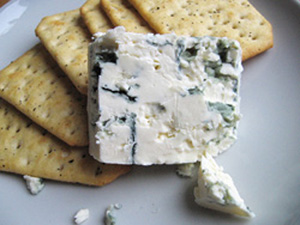
Cheese lovers will be beside themselves when 54 producers from around the country show off everything from raw-milk cheese to artisan yogurt. Some cheeses are made on such a small scale that they’re not normally easily found in stores, either.

It’s just one of 15 taste pavilions that will be set up at the 50,000-square-foot pier at Fort Mason. Each will focus on a particular ingredient or food. Attendees can sample and learn more by viewing demonstrations and talking to producers. Bread will be baked in wood-burning and tandoori ovens in the Bread Pavilion, and ice cream will be hand-cranked at the Ice Cream Pavilion.

Read more about the cheese pavilion in my posting on the Slow Food Nation blog.

The Green Kitchen, part of the Taste Pavilions, has a stellar line-up of chefs from around the country who will demonstrate how basic tools and simple ingredients combine to make culinary delights.

Read more

New Thomas Keller and Hiro Sone Books

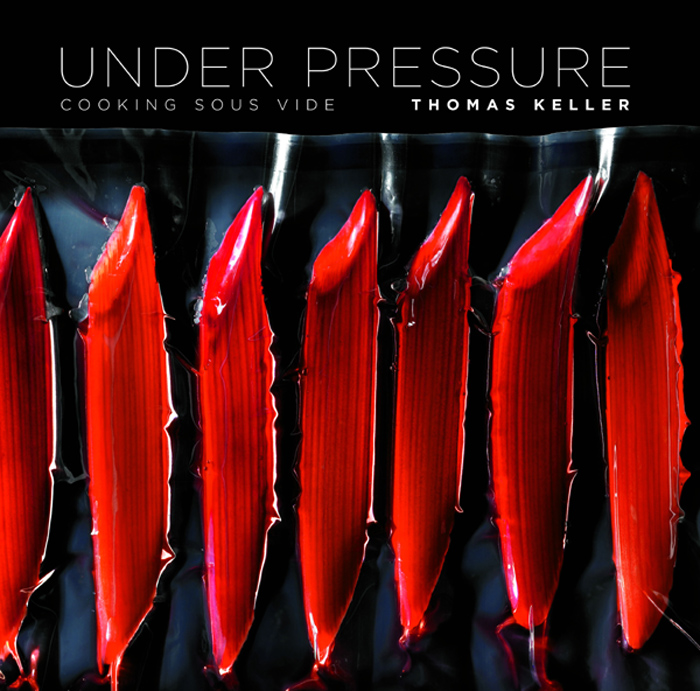
Thomas Keller's new book due to be released this fall

Molecular gastronomy fans will be glad to know that Thomas Keller’s long-awaited new cookbook on sous vide cooking will be published by Artisan in November. It will feature an introduction by San Francisco author and noted food scientist, Harold McGee.

“Under Pressure,” though geared for the professional cook, no doubt will provide a fascinating look at this technique that’s now widely used by top restaurants around the world. In sous vide, food is vaccum-sealed in a bag, then cooked in water at a precise temperature below simmering to seal in flavors and juices.

Thomas KellerAlthough Keller of French Laundry fame had hoped to market a vaccum-seal system for the home, he now says that’s unlikely because the device would be too large and cumbersome for most home kitchens. Instead, he may market an immersion circulation system that would allow for more precise sous vide cooking at home.

Fellow chef Hiro Sone, of Terra in St. Helena and Ame in San Francisco, also is hard at work on a new cookbook with his wife and trained pastry chef, Lissa Doumani. His last book, “Terra: Cooking from the Heart Of Napa Valley,” was published seven years ago. Read more

The 100th Anniversary of Umami

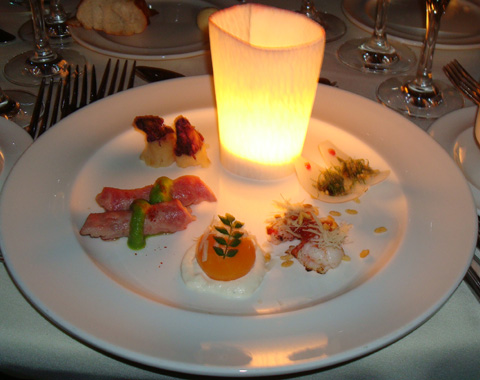
Chef Kunio Tokuoka of Kyoto Kitcho in Japan serves a candle-lit, show-stopping appetizer featuring umami-rich ingredients such as kombu simmered beef, spiny lobster with bonito, and savory egg yolk custard with somked chicken mousse/Parmigiano-Reggiano

You know sweet, sour, salty and bitter. But do you know umami?

You do if you’ve enjoyed tomatoes, Parmesan cheese, anchovies, mushrooms, cured ham, aged beef, and miso soup.

Those are just some of the ingredients or dishes that are high in umami, otherwise known as the “fifth flavor.” Often described as tasting “savory”  or “delicious,” umami was discovered 100 years ago by Japanese scientist Dr. Kikunae Ikeda who studied the taste of kombu dashi (kelp soup stock).

Last week, chefs and scientists gathered in San Francisco for a one-day seminar on umami, followed by a four-course lunch spotlighting that savory flavor. The event was organized by the non-profit Umami Information Center (which is funded by various food companies) to mark the centennial anniversary of umami’s discovery.

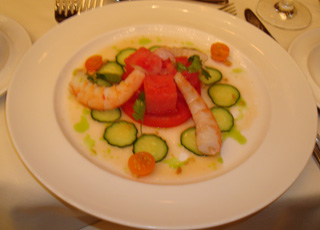
Hiro Sone's umami-rich ginger-poached shrimp and watermelon salad with lemongrass vinaigrette made with a touch of Asian fish sauce

Glutamate (glutamic acid), the most common amino acid we consume, is what produces umami. Although we tend to blanch when we hear the words “monosodium glutamate” (glutamate with salt), glutamate is a naturally occurring substance in many foods. “Chinese Restaurant Syndrome” (a supposed reaction to eating too much MSG-laced food) has been largely debunked, says Gary Beauchamp, director of the Monell Chemical Senses Center.

“The idea that glutamate could be poison is ludicrous,” he says. Indeed, human milk is much higher in glutamate than cow’s milk.

What glutamate does is make many things taste so much better by adding more complexity and mouth fullness.

Read more

« Older Entries Recent Entries »