Take Five with Chef Rick Moonen, On “Top Chef Masters” and Saving the World’s Seafood Populations
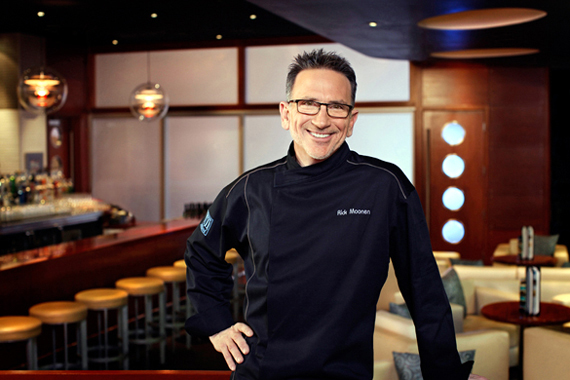
In person, talking a mile a minute, and jumping up from his chair to make a point with arms gesturing wildly, Chef Rick Moonen is a blur of frenetic energy just as he is as a competitor on this season’s “Top Chef Masters.”

The 53-year-old chef jokes that he gets mistaken for fellow bespectacled, facial-scruffed Chef Rick Bayless ever since the two of them appeared together on the first season of that wildly popular Bravo TV show. This despite the fact that Moonen is a Las Vegas chef, whose restaurant RM Seafood is known for its menu of eco-friendly fish, and Bayless is a Chicago chef, whose restaurants Frontera Grill and Topolobampo, are famous for authentic Mexican cuisine.

Indeed, at RM Seafood, Moonen has banned Chilean Sea Bass, Japanese hamachi, monkfish, and grouper from his menu because they are so over-fished. He also refuses to serve Atlantic farm-raised salmon because of its destructive impact on the environment. Instead, he takes pride in featuring sustainable, but lesser known species such as Hawaiian walu and Australian ocean trout.

If he hadn’t been a chef, Moonen, who grew up playing with chemistry sets and Tinkertoys, says he would have been a teacher or doctor of alternative medicine. Good thing for us, he chose the culinary road instead.

Moonen was in Monterey this past weekend, where he was one of the guest chefs at the ninth annual “Cooking for Solutions” event at the Monterey Bay Aquarium. I caught up with him during a break to chat about his redemption on this season’s “Top Chef Masters” and about his dedication to the world’s oceans.

Q: When I interviewed Chef Michael Chiarello of Bottega in Yountville about his defeat in last year’s ‘Top Chef Masters,’ he said you were the one who really would have given him a run for his money in the competition. Was it a huge disappointment to you last season when you were knocked out practically at the start because you weren’t able to plate anything before time ran out in the first ‘Quick Fire’ challenge?

A: I would have beat him. He knows it. I know it. (laughs) If I had just put a piece of parsley on the plate, I would have had it.

That’s why this year, they created the ‘Moonen Rule.’ The ‘Quick Fire’ scores don’t count now in the final tally.

Q: That’s right! Seriously, that change came about because of what happened to you last year?

A: No one told me that officially. But I think it is the ‘Moonen Rule.’

It was a very big disappointment for me last year. I realized I blew it. It’s me, I’m anal-retentive, compulsive, ADD-Rick. Imagine you’re a clown. I grab you and put a gun to your head and tell you that you have to be funny. That’s what it felt like. Now, if you had given me a minute to really think and organize, I would have kicked his butt.

Q: Why did you want to do the show in the first place?
Read more


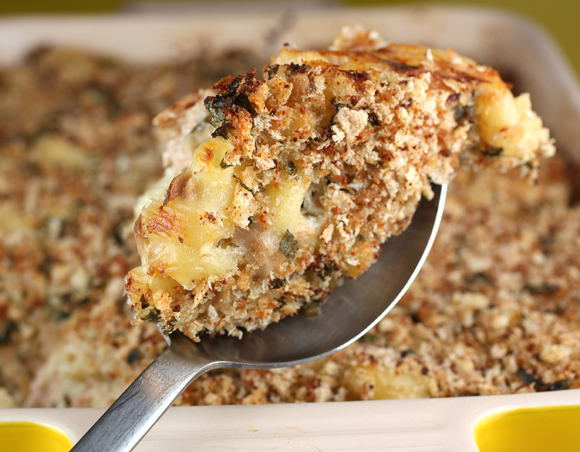
Upscale Tuna Noodle Casserole

I get a kick out of foams, froths, sous vide, and all the other modern wonders of molecular gastronomy.

But sometimes, I just want to kick it old-school.

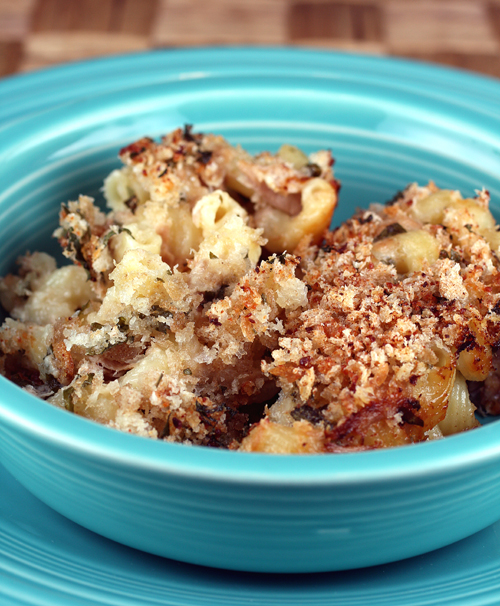
And it doesn’t get any more back-in-the-day nostalgic than tuna noodle casserole.

Like so many of you, I grew up on the beloved casserole made with cream of mushroom soup and canned tuna baked in the trusty ol’ Pyrex dish.

That’s why when I spied the recipe for “Campanile Tuna Noodle Casserole” in the cookbook, “New Classic Family Dinners” (Wiley), I knew I had to make it. The book is by Chef Mark Peel of Campanile, that beloved landmark restaurant in Los Angeles, which you must try if you haven’t yet.

This dish can actually be found on the menu there, and it’s always a hit with children and adults alike, Peel writes.

I can see why, because it’s a taste of childhood but with way better ingredients and punched-up flavor.

Read more


San Jose’s Bluefin Restaurant — Where Sharks Gather

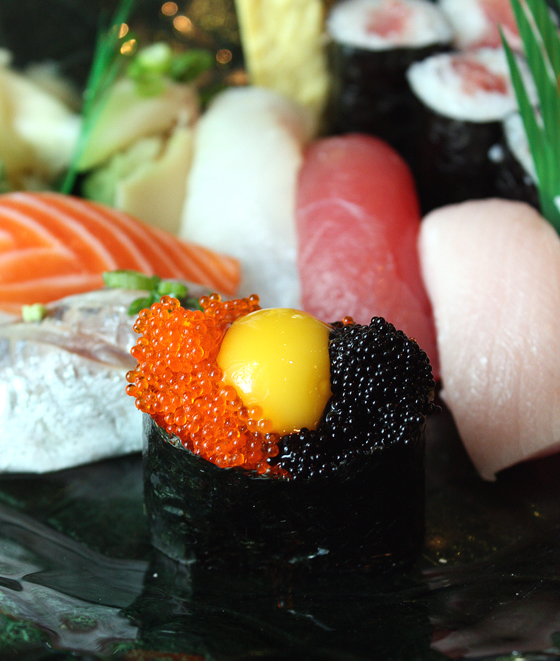
It’s a Japanese restaurant owned by a Korean-American chef that’s named after one of the world’s most expensive and endangered fish.

And it’s a place where sharks gather — as in Manny Malhotra, Joe Pavelski and Kent Huskins of the San Jose Sharks hockey team, who circle the ice at HP Pavillion, then come here for a bite to eat.

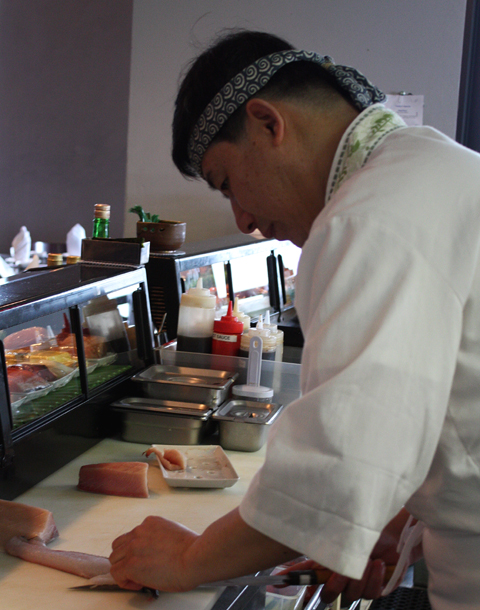
Executive Chef Jun Chon, opened Bluefin restaurant last October on The Alameda in San Jose, not realizing the name he had chosen was that of a species many environmentalists are urging be declared endangered because it has become so over-fished.

“I have gotten criticized a few times about the name,” Chon says. “I only picked the name because it was simple and easy to remember. It’s the king of fish. I didn’t think about the endangered part.”

It’s a Catch-22 for many sushi chefs these days. So many of the most popular fish used for sushi are over-fished. But so many customers still want to eat those varieties that chefs feel almost obliged to serve them.

Chon says he tries to follow the Monterey Bay Aquarium’s guidelines for sustainable fish, but he believes it would be nearly impossible to adhere to them strictly. As it is, he says he won’t buy unagi from China because of the use of antibiotics. He only purchases certified yellowtail. And while he does buy toro (the fatty, luscious belly flesh of the bluefin tuna), he tries to buy only farm-raised from Spain or Japan. As pricey as it is — $16 for two slices — the restaurant sells two to 10 orders a night.

Chon, 49,  is an unlikely restaurateur — the eldest son of a Korean mother born in Japan who never learned to cook growing up, and who majored in mechanical engineering at the University of California, Berkeley only because his limited English made it difficult to study other courses besides math and science.

Read more

The Art of Wagashi at Minamoto Kitchoan

Cupcakes, cookies, French macarons.

So yesterday.

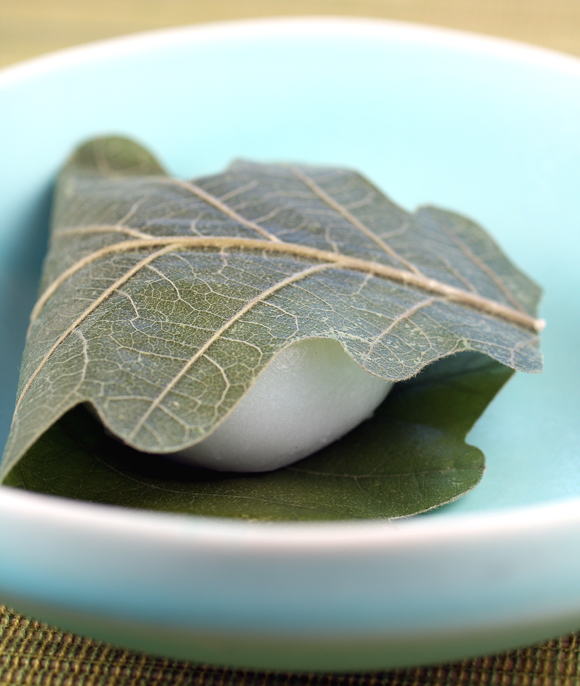
For unique sweet treats that will truly surprise and tantalize, step inside Minamoto Kitchoan, a Japanese confectionery store that has locations in downtown San Francisco and in San Jose’s Mitsuwa Marketplace plaza.

The stores specialize in wagashi, handmade, intricate sweets made with mochi, azuki red bean paste and fruit. Traditionally, they were designed to be served during Japanese tea ceremonies. With their sweet flavor, they are the ideal accompaniment to a cup of hot, fragrant, astringent green tea.

Minamoto Kitchoan receives a shipment every two months from Japan. The wagashi are shipped frozen in a state-of-the-art process that renders them much colder than in any home freezer, yet doesn’t impair their delicacy.

Read more

Tasty Tofu and Tomatoes

One of the advantages of being the youngest in the family was that I was doted on by all manner of aunties, uncles and cousins.

One of the biggest drawbacks, though, was that by the time I was born, all but one of my grand-parents had already passed away.

My mother’s mother was still alive when I was a toddler. But by that time, she was quite advanced in age, bed-ridden, and being cared for by another of her daughters. Worse, my grandmother spoke no English. And I spoke no Cantonese.

I would run into her bedroom to say hello, as best I could. She would respond in Chinese, as she lay in bed. If my Mom or aunt were not present to translate, I would have no idea what she had just said. I’d smile meekly, and just nod, not knowing what else to do.

So, when I hear folks talk nostalgically about the wonderful food their grandmother cooked for them when they were growing up, I get wistful, because I never had that magical experience.

Which is why “The Asian Grandmothers Cookbook (Sasquatch Book) touches my heart so. It was written by my friend, Patricia Tanumihardja, who grew up in Singapore and now lives on the Monterey Peninsula.

Pat interviewed and cooked with Asian grandmothers, mothers and aunts to create this book of 130 recipes for home-style dishes that might otherwise have never been written down and might have faded away from memory.

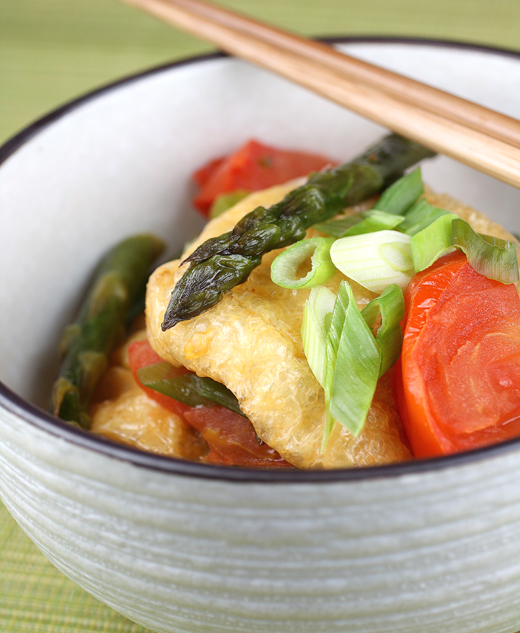
Dishes such as this super simple, “Deep-Fried Tofu Simmered with Tomatoes,” that’s perfect on a harried weeknight.

Read more

« Older Entries Recent Entries »