The Joys of Jook

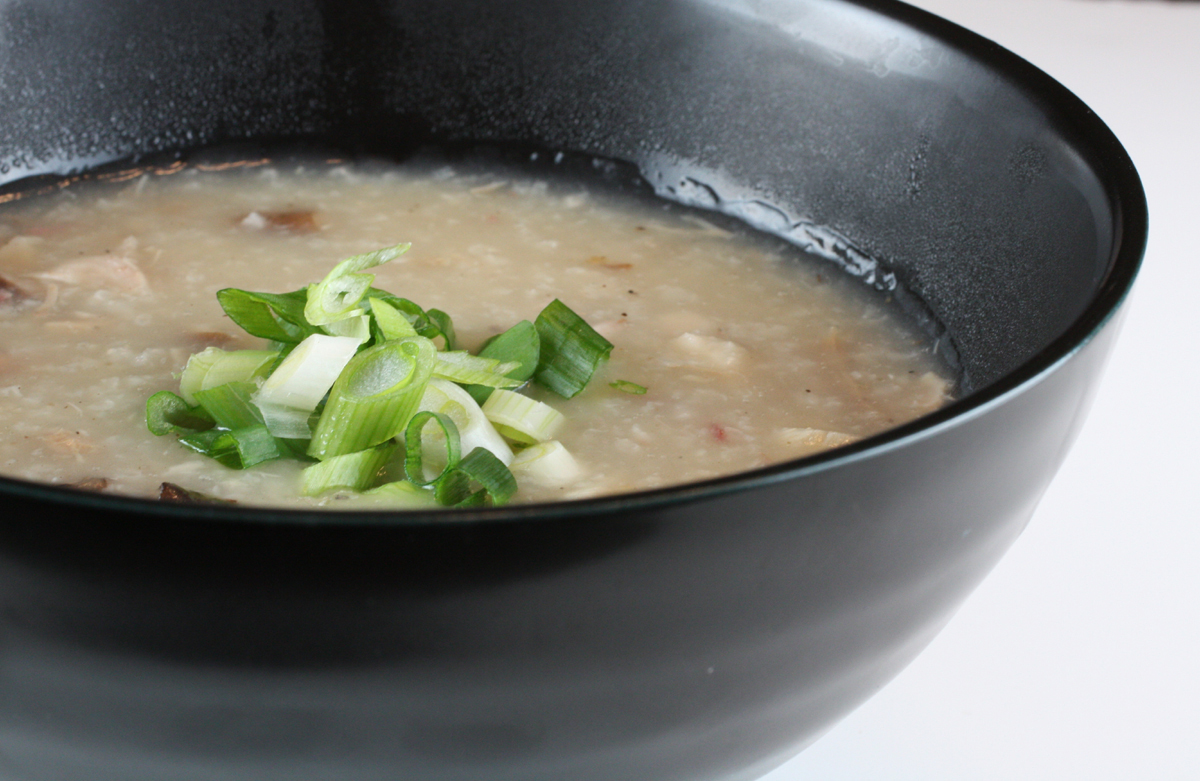
A big bowl of comfort -- turkey and ham jook.

For most people, the big winter celebrations come to an end when the Christmas tree is taken down, and the New Year’s streamers and empy Champagne bottles are tossed out.

Not for me.

It never really feels finis for me until I make my huge pot of jook, the creamy, comforting rice porridge that I, like so many others of Asian heritage, grew up with.

My late-Mom always made it with the Thanksgiving turkey carcass. She sometimes made it, too, right after Easter with the leftover ham.

Following her tradition, I freeze my Thanksgiving turkey carcass exactly for this purpose. A few weeks later, it’s joined in the freezer by the big, bulky bone from Christmas’ centerpiece, a Berkshire ham. There, these two picked-over, yet still flavor-packed specimens wait until Jook Day comes.

And that day is usually sometime in January when we start to crave turkey and ham again after having had more than our fill over the December holidays. Then, I defrost the ham bone and turkey carcass overnight in the fridge.

In they go into the biggest pot I have in the house, where they combine slowly for four hours with grains of rice: Short-grain if you like your porridge or congee exceedingly creamy with the rice grains almost completely broken down; Jasmine or long-grain if you prefer your jook to be a little more brothy with still slightly distinct grains of rice.

I like to cook my porridge with coins of fresh ginger, Chinese black mushrooms, a drizzle of sesame oil, and a pinch of white pepper. When it’s finally creamy, practically custardy, I ladle it into big bowls, then sprinkle on slivers of green onion.

Then, I sit back and savor my favorite one-last-taste of the holidays.

My Version of Jook

Read more


Go Red

February is American Heart Month, so be good to your ticker.

Alarmingly, heart disease is the number one killer of women. So resolve to eat healthier, exercise more, quit smoking, lose weight, and keep your cholesterol, diabetes and high blood pressure under control.

The Food Gal will be doing her part in all of this, too. Yours truly will be joining a handful of other women on ABC’s “View From the Bay” ( KGO-TV channel 7), 3 p.m. to 4 p.m. Tuesday, with hosts Spencer Christian and Janelle Wang. We’ll be participating in a fashion show organized by the American Heart Association and Macy’s. Basically, I’m just hoping I don’t trip over my own two feet walking down the runway.

You can do your part, too, by wearing red on Feb. 6, National Wear Red Day. Landmark buildings around the Bay Area, including San Jose City Hall’s dome, will be lit up in red that day for the occasion.

Read more


Meaty Times at Poggio in Sausalito

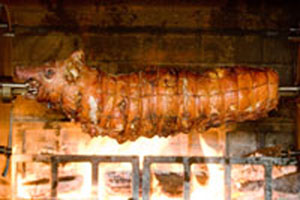
Tuscan porchetta every Monday through March. (Photo courtesy of Poggio)

Carnivores will want to head to picturesque Poggio for two marvelous meaty events.

First up, every Monday through March 30, the Italian restaurant will feature a Porchetta Dinner for $16 per person.

Executive Chef Peter McNee learned the Tuscan technique in Italy, in which a small pig is deboned and stuffed with herb sausage. Then, it is roasted in a wood-burning rotisserie until the skin is super crispy and the meat tender as can be.

Read more

Dim Sum for the New Year

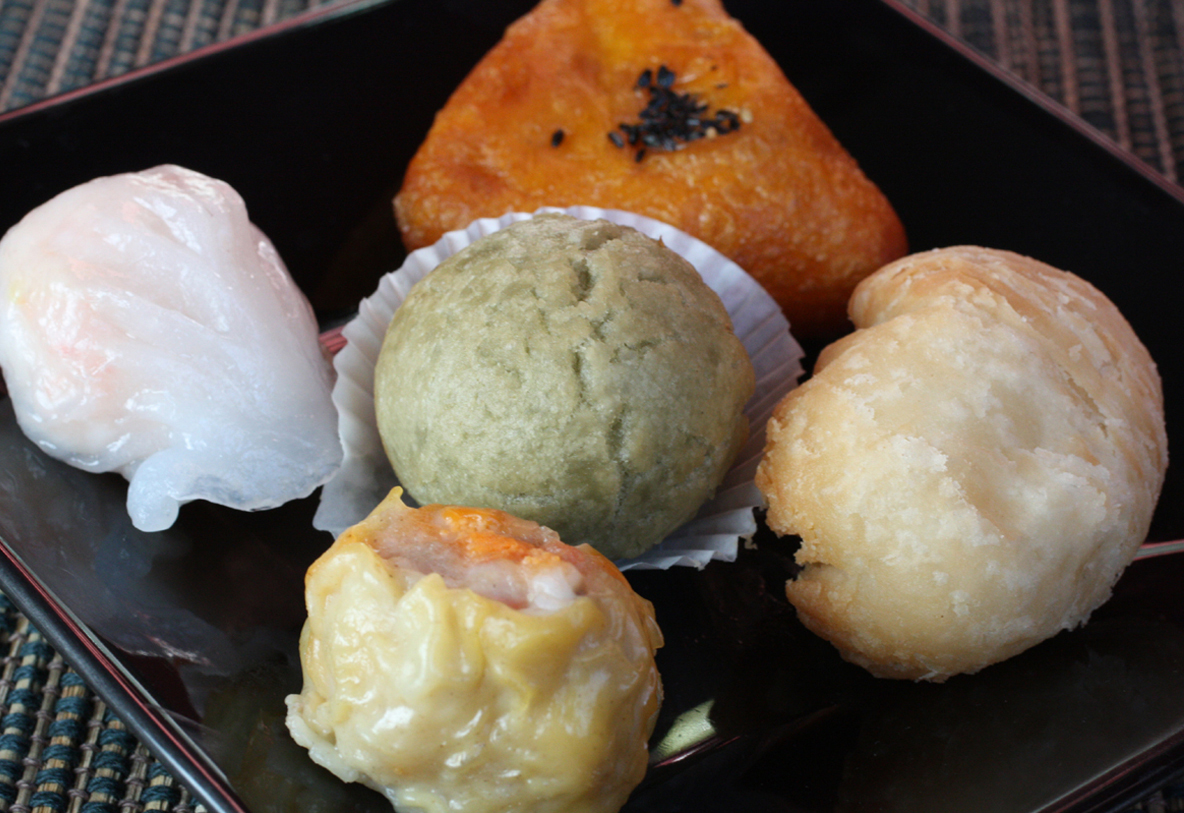
Clockwise from top: Sweet potato puff, durian puff, siu mai, har gau, and (center) sweet green tea dumpling -- all from Dynasty Seafood Restaurant in Cupertino.

Dim sum may mean “touch the heart” in Chinese.

But we all know these precious morsels tantalize the tummy, too.

Read the definitive guide to dim sum restaurants in the Bay Area in today’s San Francisco Chronicle Food section, which yours truly contributed to.

While helping to research this story, I picked up some helpful tips along the way:

1) To really judge the quality of your dim sum, refrain from using soy sauce, chile paste, hot mustard and the like. At least with your first bite. Just as we are so often guilty of drowning pristine sushi in soy sauce and wasabi, we unthinkingly do the same with dim sum. When it’s au naturale, though, you can really judge whether a filling has real flavor, and whether a wrapper is well made.

2) Bigger is not always better. As my friend Andrea Nguyen says, there’s a reason they’re made small. Nguyen, whose newest cookbook “Asian Dumplings” comes out in September, notes they should be bite-size. Once they start to get too large, the quality of the wrappers suffer.

Read more

« Older Entries Recent Entries »