Toronto Dining, Part II: Michelin-Starred Alo
Toronto, ON, Canada — The dining experience at Alo unfolds a little mysteriously, a little mischievously.
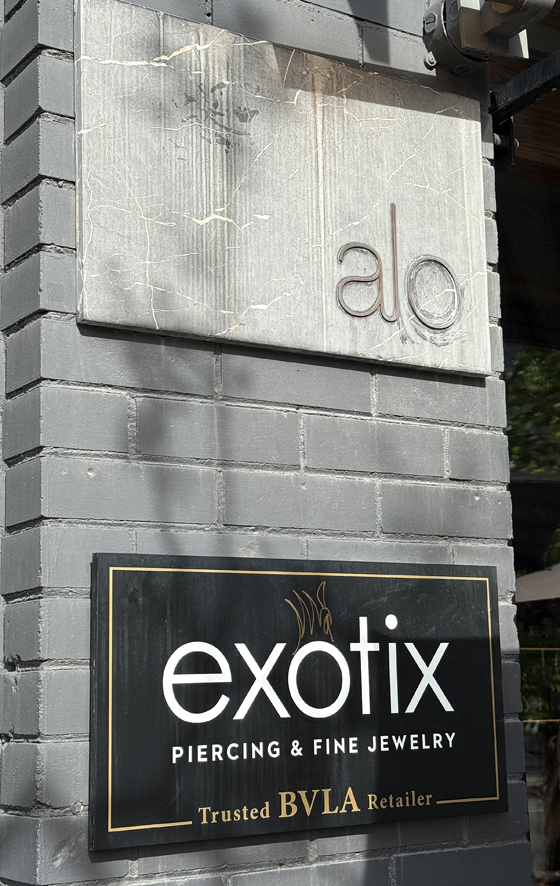
It starts when you walk up to the historic brick building that houses not only this fine-dining restaurant, but also Exotix, or what’s billed as Toronto’s first and only body piercing specialty studio. Okay, that’s got to be a first for a location for a Michelin-starred restaurant.
Inside the small foyer is a sharp-dressed hostess behind a stand who will check you in, then press the button to summon the elevator.
You step inside the elevator where it’s nearly pitch-black, not only in terms of the lighting but also its black-covered interior walls. So much so that I couldn’t even make out the floor numbers on the buttons. My husband decided to push the very top one. Good instincts since Alo is on the third floor of this three-story building.
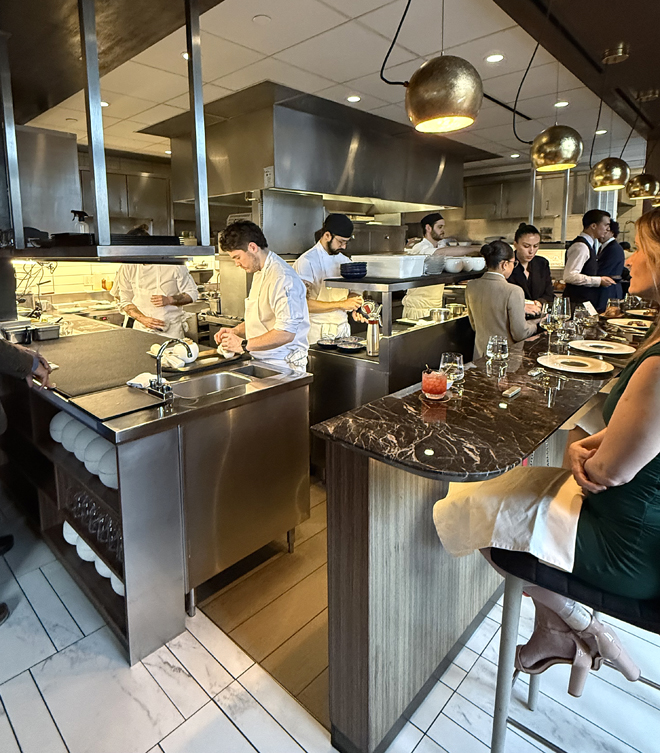
When the elevator doors open, all that darkness gives way to a chic space with a modern, black-topped bar, an open kitchen with chef’s counter seats, and a plush dining room done up in violet and lavender.
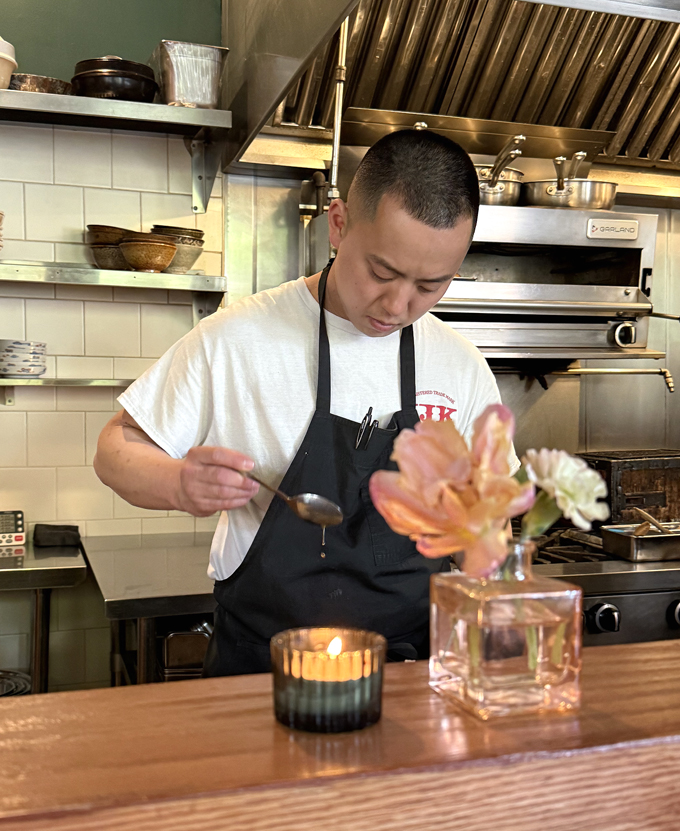
Chef-Owner Patrick Kriss, who was as a sous chef at Michelin three-starred Daniel in New York and also worked at Michelin three-starred La Maison Troisgros in France opened Alo opened in 2015.
The fine-dining restaurant, which serves contemporary French cuisine with global influences, received a Michelin star in 2022, and has held it ever since. Kriss also has since grown it into an entire group with four other restaurants, a take-out spot, private events venue, and catering company.
The name “Alo” comes from the Latin word alo, which translates to “I feed” or “I nourish.” And it certainly does that.
Choose either a 4-course, 6-course, or 10-course experience. We reserved for the six-course tasting menu ($185 Canadian or roughly $133 U.S.) We also added a couple supplemental courses, and Kriss graciously sent out a few dishes on the house.
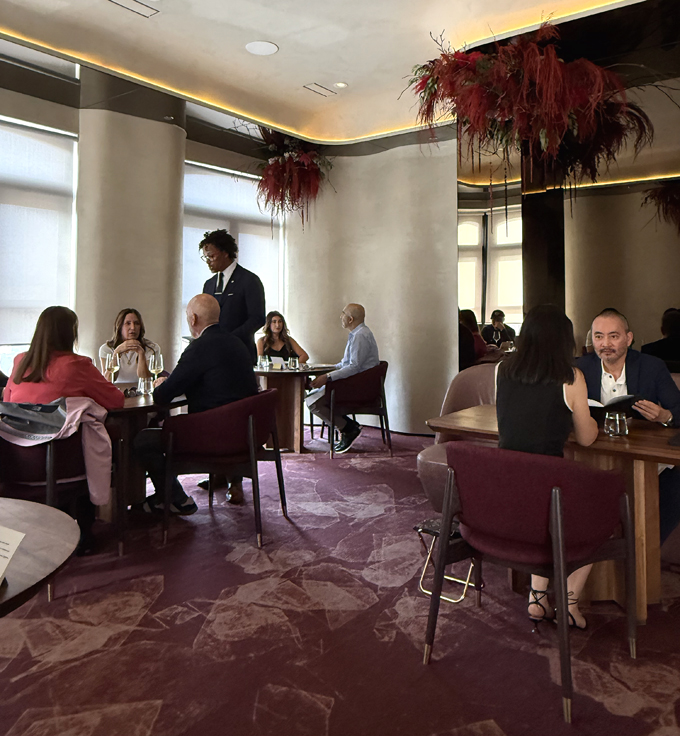
The wine pairing is $130 Canadian (roughly $93 U.S.), and you’d be wise to choose it since Wine Director Christopher Sealy was not only chosen Michelin Toronto Sommelier of the Year in 2022, but like a jazz musician, he likes to riff on the pours according to the elements of the dish, as well as to his own mood and spirit that evening.
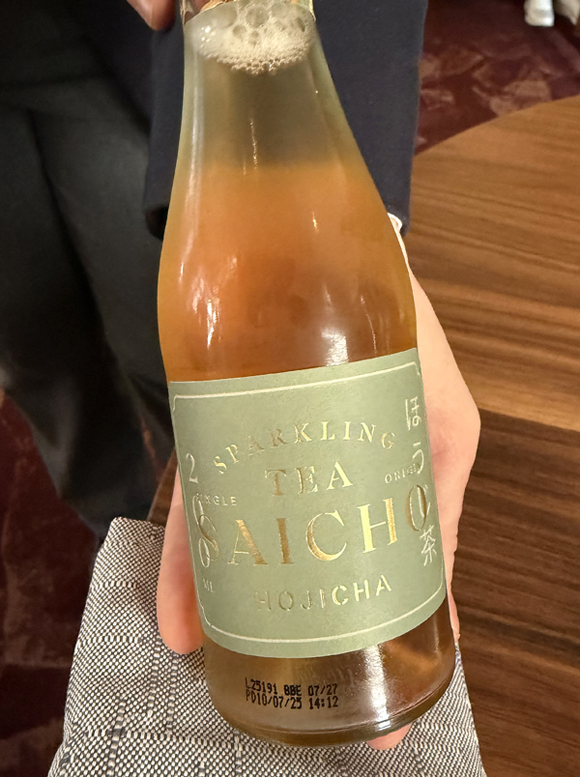
As we settled in, we were welcomed with our choice of Champagne or non-alcoholic sparkling tea. Normally, I’d choose the former, but the latter so piqued my interest that I opted for the sparkling Saicho hojicha. Deeply golden in color, lightly fizzy, and pleasantly none too sweet, it’s made with single-origin roasted green tea. The smoky, toasty, roasty flavor of the tea really comes through. This isn’t remotely like soda, but rather a sophisticated tea drink. I loved it so much that I might have to purchase a bottle or two online now.
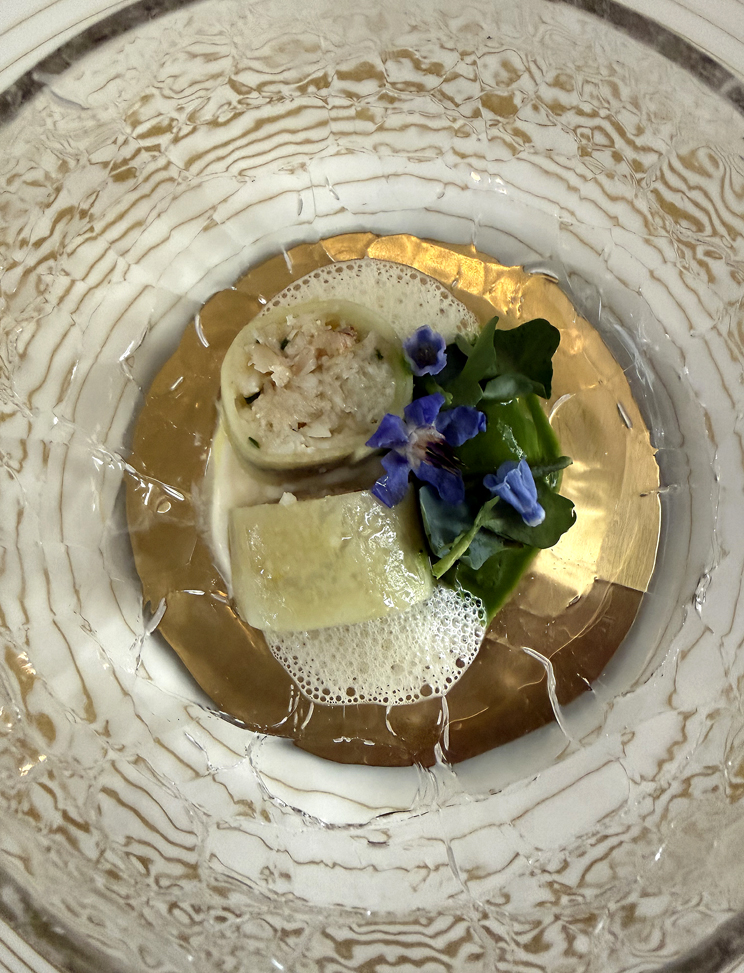
Dinner began with Shigoku oyster alongside cucumber-wrapped Dungeness crab, a delicate, refreshing dish amped up with just enough horseradish and Meyer lemon.
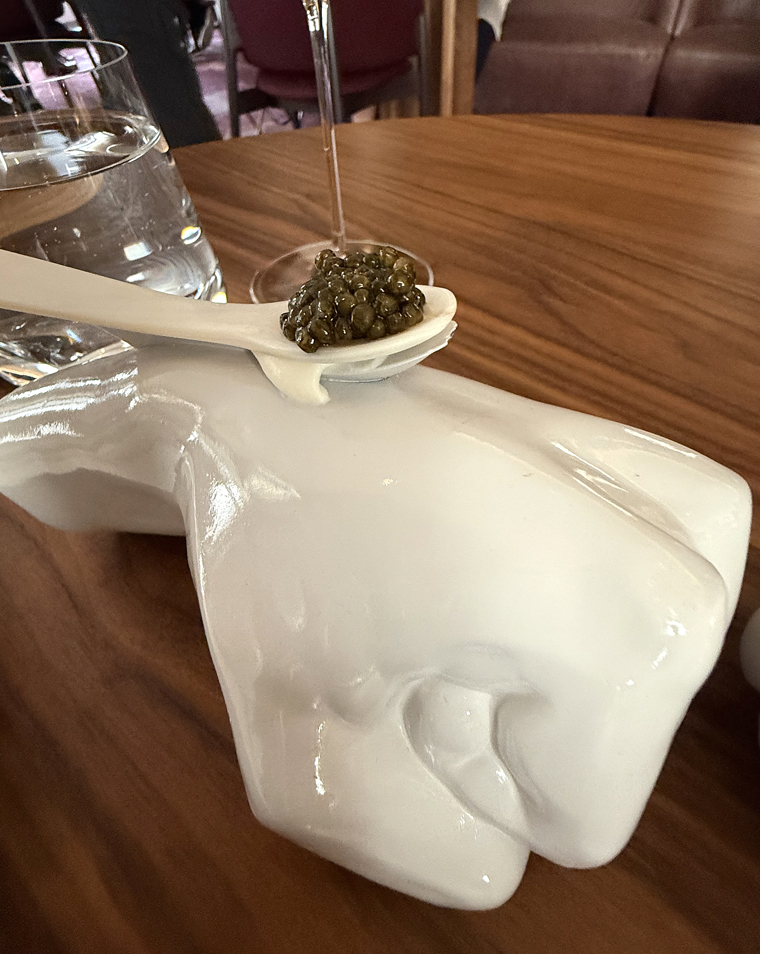
Then came a fun surprise from the kitchen: caviar bumps taken to a whole new level, served atop hand sculptures carefully placed on the table (video). Let the Petrossian Kaluga caviar slowly roll around on your tongue to enjoy its buttery, sweet sea taste to the fullest.
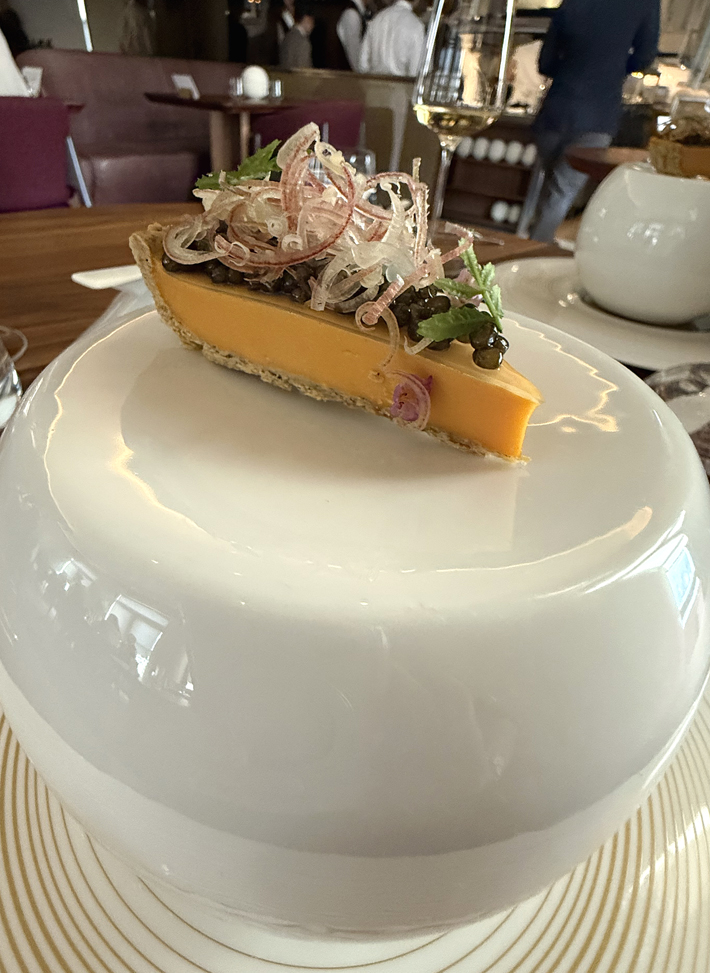
Accompanying it was a miniature slice of a perfect looking cheesecake in the colors that a server jested made her think of Ritz crackers with Cheese Whiz. Of course, it was far grander than that. Sitting on a buttery crust, it was actually a sea urchin custard tart, finished with caviar and shiso flowers that had the light texture of a chiffon pie.
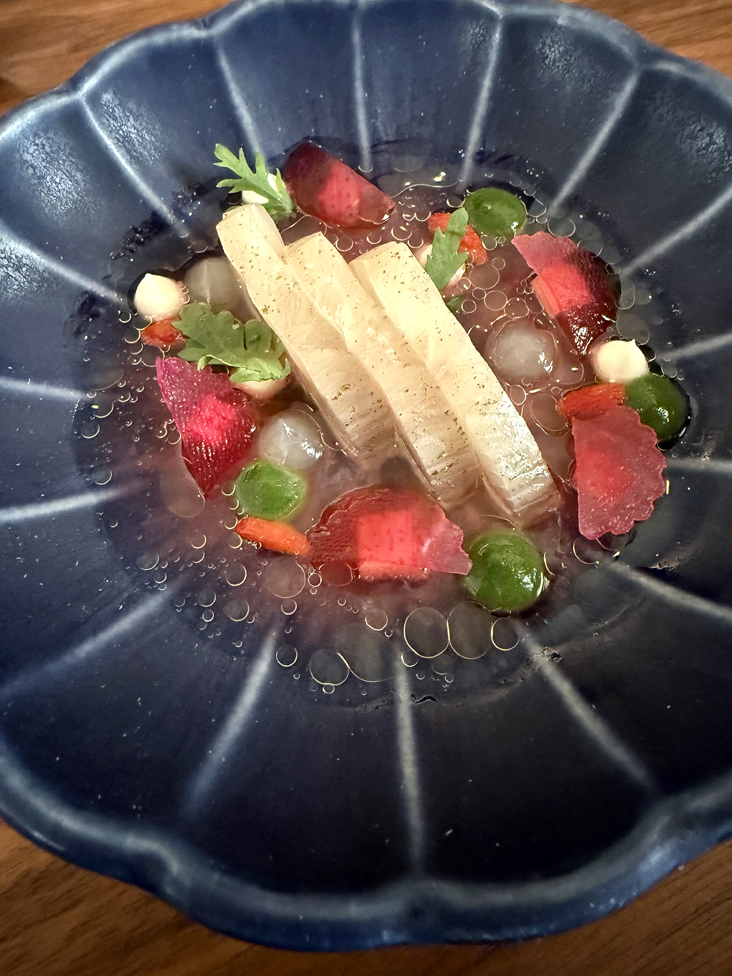
That was followed by the actual second course, sakura-cured shima-aji served in a rhubarb-ginger-sake sauce with goji berries. It was floral and clean tasting, with a touch of acidity, along with notes of cherry that really transcended. We spooned up every last drop of sauce because it was just that good.
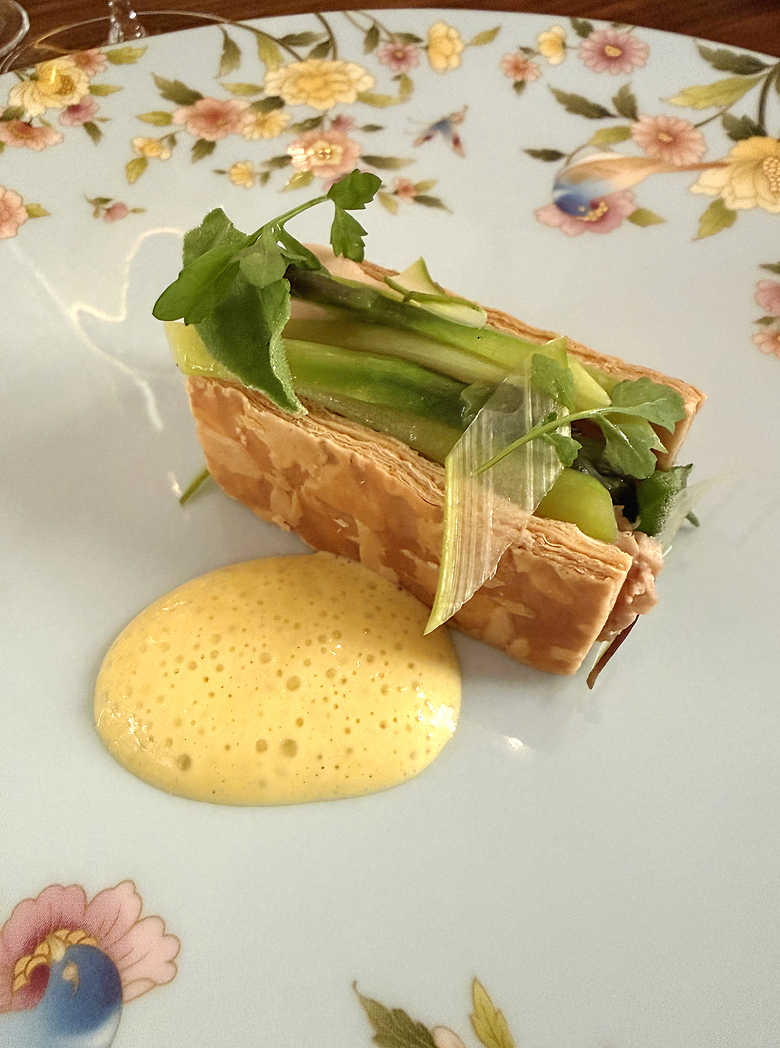
Next came a new dish to the menu: a mille-feuille that was a play on a raspberry dessert that’s been on the menu since day one at sister restaurant Aloette. Only this version was a savory one with the crispy pastry book-ending jura wine-poached foie gras, asparagus, and a touch of hazelnuts. An aerated sauce, lemon-yellow and made with the same jura wine, was dolloped tableside.
Sealy poured both a 2025 Cozs Pop Vinho Branco, a skin-contact or orange wine, and a Barc & Vallee Touraine Sauvignon from the Loire Valley, as he explained that Kriss’ dishes can be deceptive. You spot foie gras on the menu and you expect that to be the hero of the dish. But in this case, it was a supporting player adding lushness to the real star, the spring asparagus.It was interesting to try each wine with the dish, with the first one boasting a heavier body, citrus notes, and salinity on the finish, and the second wine bright, tangy, and zesty.
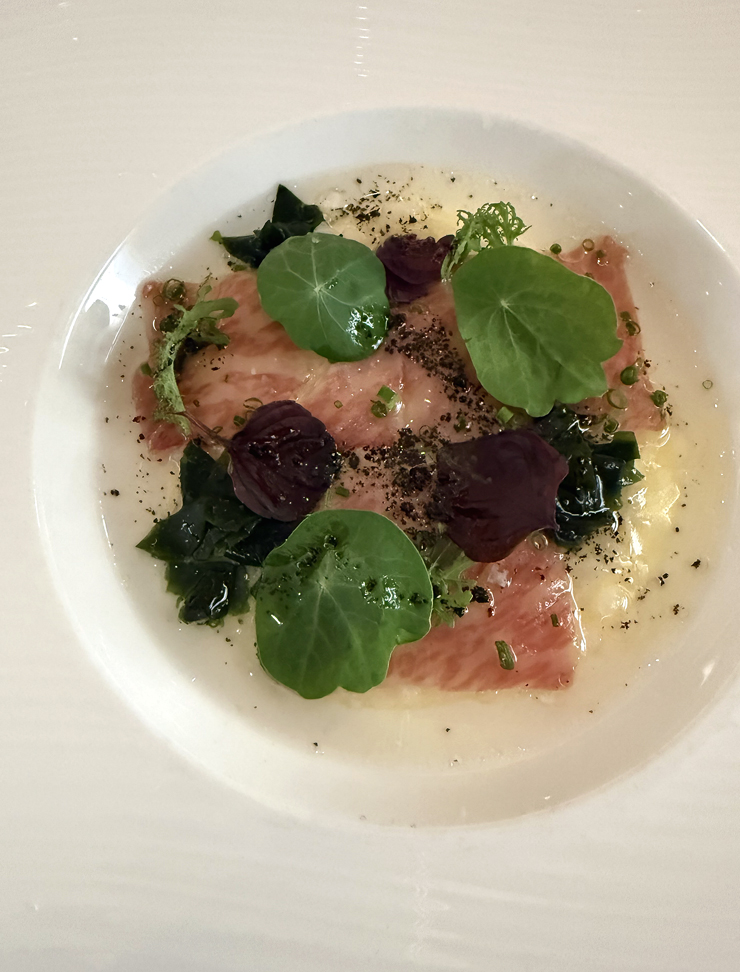
Up next, one of the supplemental courses we opted for: Koshihikari rice draped with Wagyu slices and black truffle, and finished with dashi ($50 Canadian for each serving or $36 U.S.). Think of it as the most luxurious rice porridge you’ve ever had. The rice texture was a cross between risotto and congee, with the grains not completely broken down yet, but tender, soft, and creamy. The dish exploded with umami and earthiness with the Wagyu adding richness to lift a homey dish into the realm of royalty. If someone set a quart of it in front of me, I would lap it all up — and then ask for seconds.
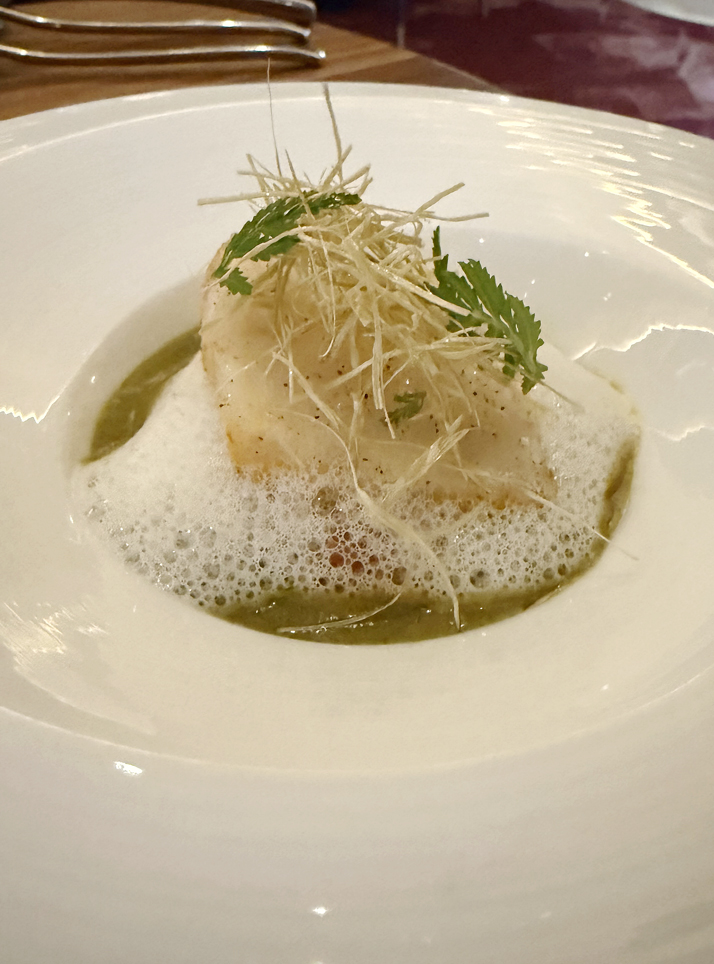
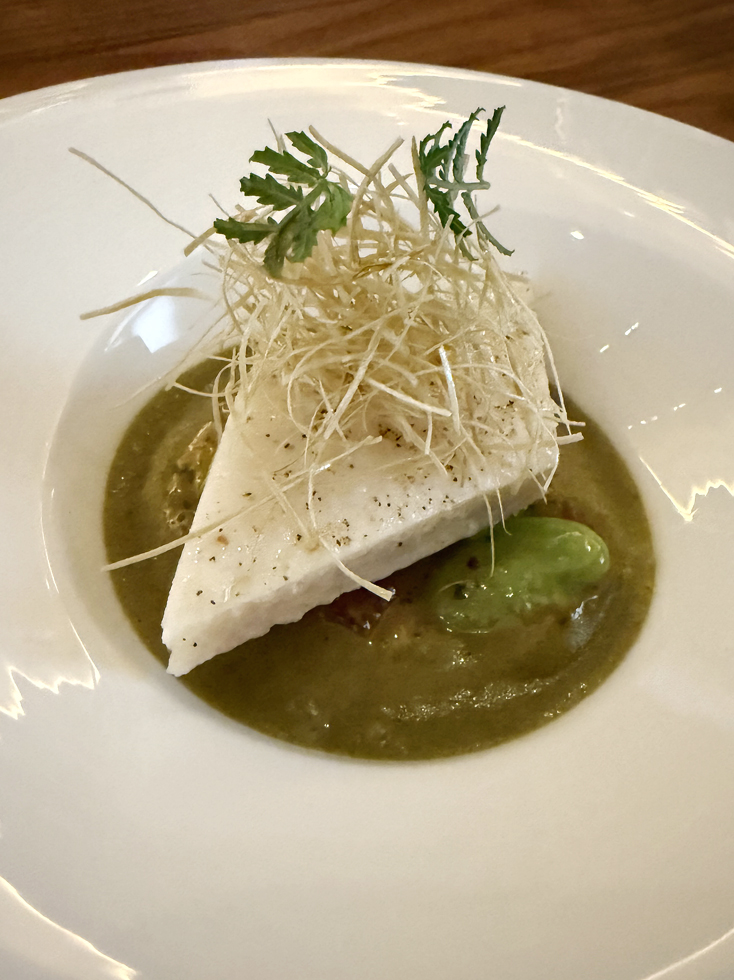
For the next course, my husband was served scallop, while owing to my allergy, I was given Spanish Dover sole instead. Both had the same preparation with a sauce of buttery, green Cerignola olives, fava beans and charred tomatillos, with the scallop getting an extra flourish of marigold foam. Tangy, grassy, and with a gentle hit of heat, the sauce would have been delicious on enchiladas, too.
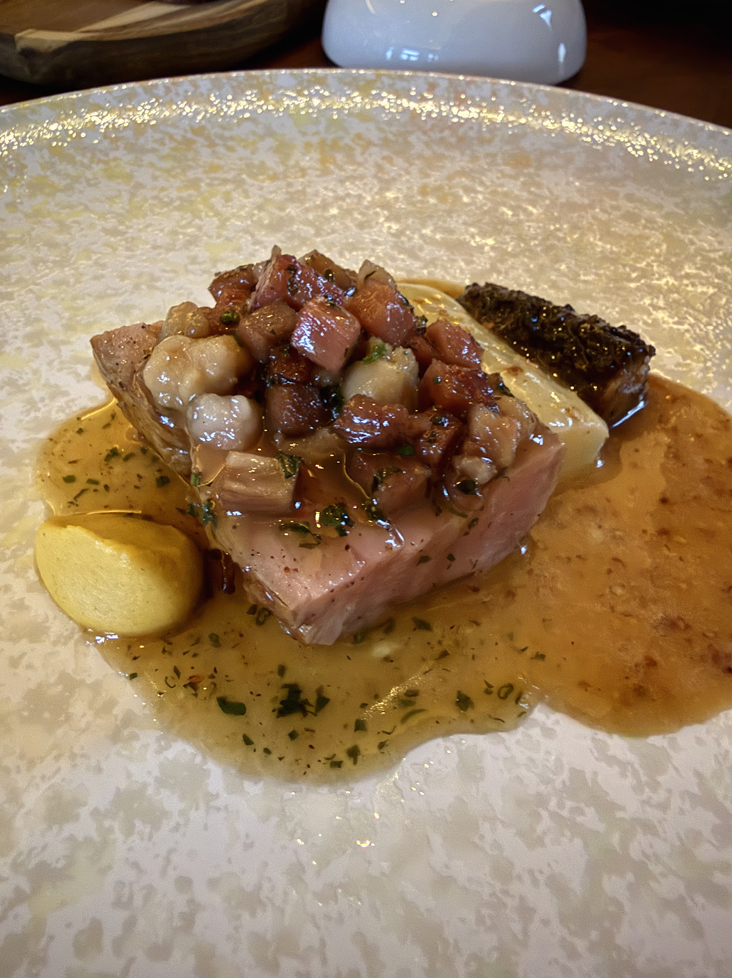
My final savory course was veal tenderloin crowned with a relish made of chopped sweetbreads and pastrami veal tongue, and sauced with jus with a touch of mustard. White asparagus and a morel mushroom accompanied. The chunky, meaty relish added heft and texture, and the sauce a jolt of piquancy.
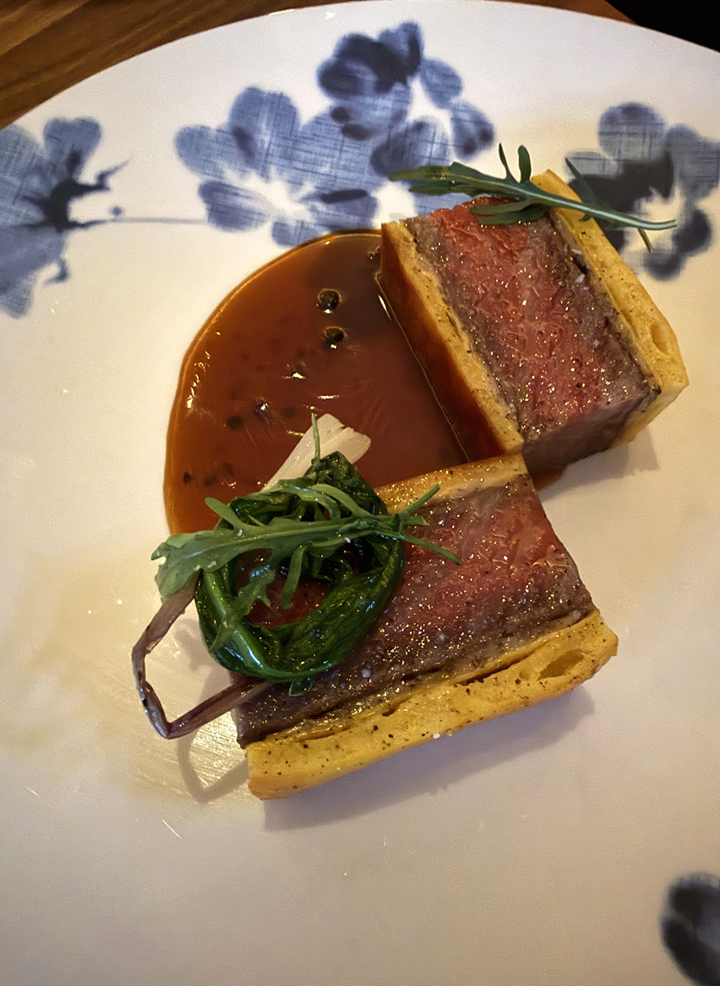
My husband opted instead for the upgraded, supplemental A3 Wagyu ($110 Canadian or $79 U.S.) that was reminiscent of a Japanese beef katsu sando in appearance and a Wellington in taste. Made with brioche slices and meltingly tender beef, it was finished with ramps and mushroom duxelles.
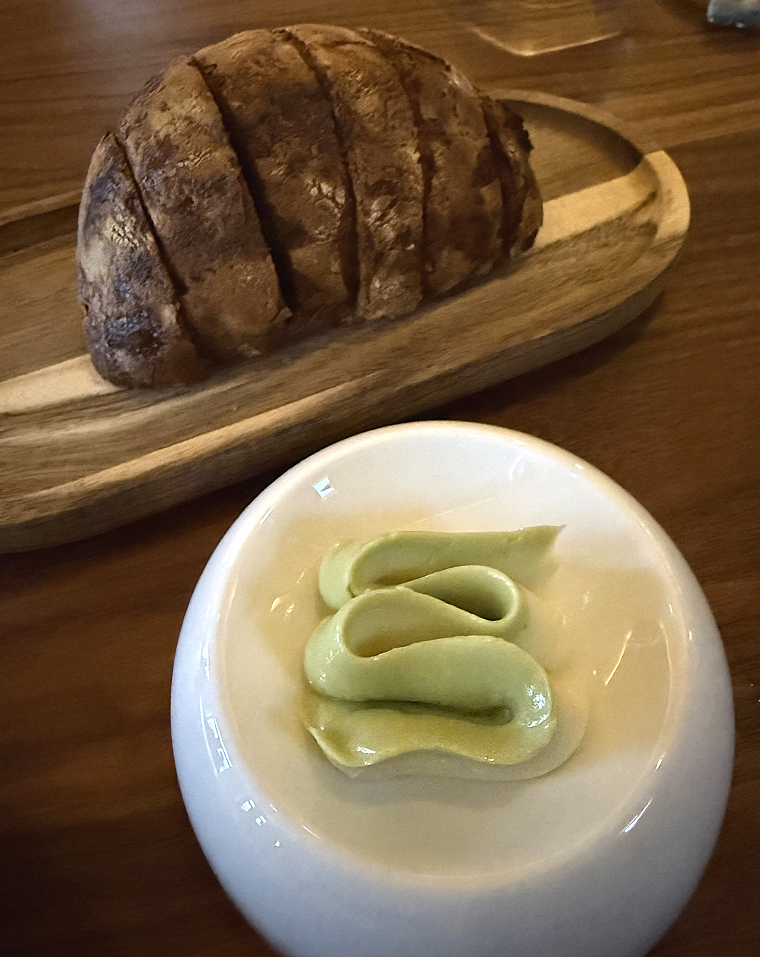
A loaf of dark, crusty spelt-molasses bread arrived with wild ramp-infused butter to enjoy on slices that had almost a custardy crumb.
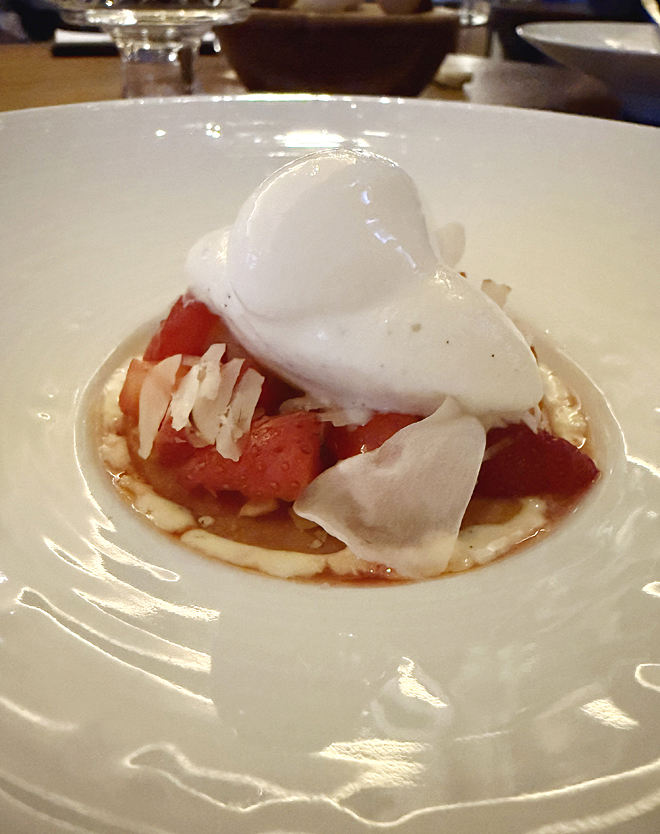
Ontario strawberries with tapioca pudding, rich Hokkaido milk sorbet, toasty macadamia nuts, and sparkling sake foam made for a fresh tasting dessert that wasn’t overly sweet or heavy, and tasted of classic strawberries with cream.
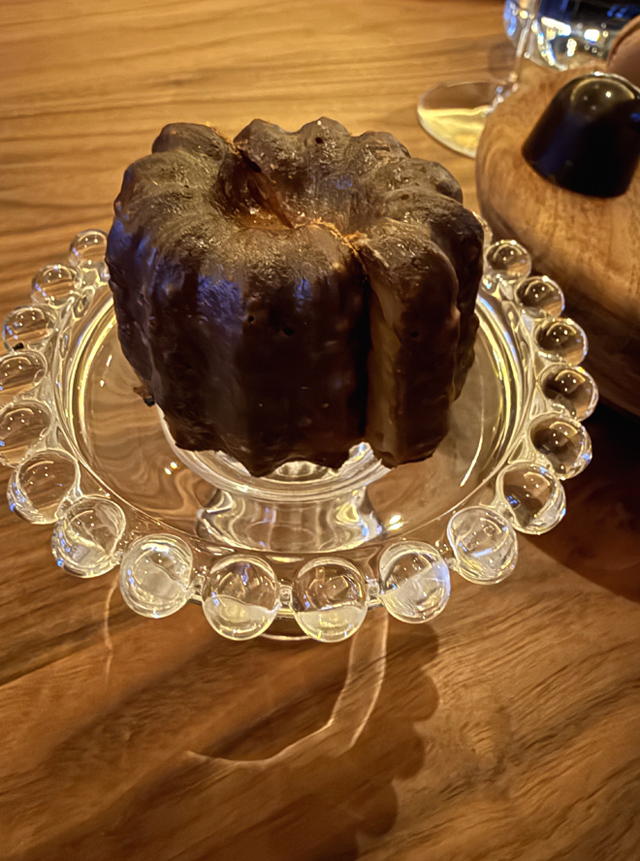
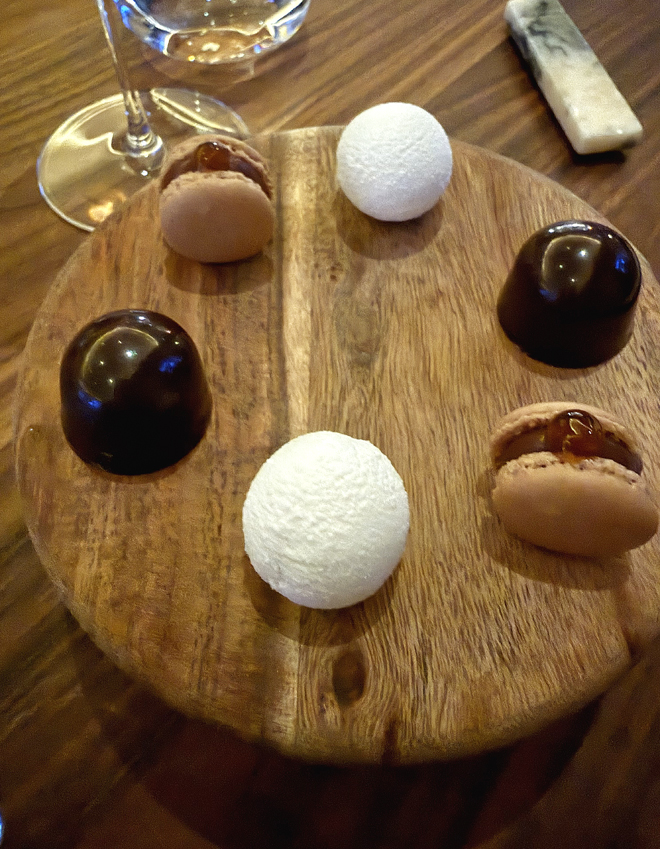
Mignardises included a canele, dark chocolate truffles, chilled white chocolate truffles that melted instantaneously in the mouth, and chocolate-hazelnut macrons.
Should you need to use the restroom, you will be politely escorted to it because it’s likely you’d miss it on your own, as its entrance is seamlessly camouflaged behind a decoratively patterned wall.
Like the dark elevator ride up, it all combines to make you feel as if good fortune somehow has led you to a place that’s a little secret, and a lot special.