Ginger-Braised Chicken — With the Emphasis on Ginger

Anyone who knows me well knows full well how much I love ginger.
In baked goods. In beverages, hot and cold. In soups, stir-fries, and stews. And even inhaled by the handful when candied.
So, when I came across a recipe for a dish that uses an entire cup of julienned fresh ginger, I was all in.
“Ginger-Braised Chicken” did not disappoint.
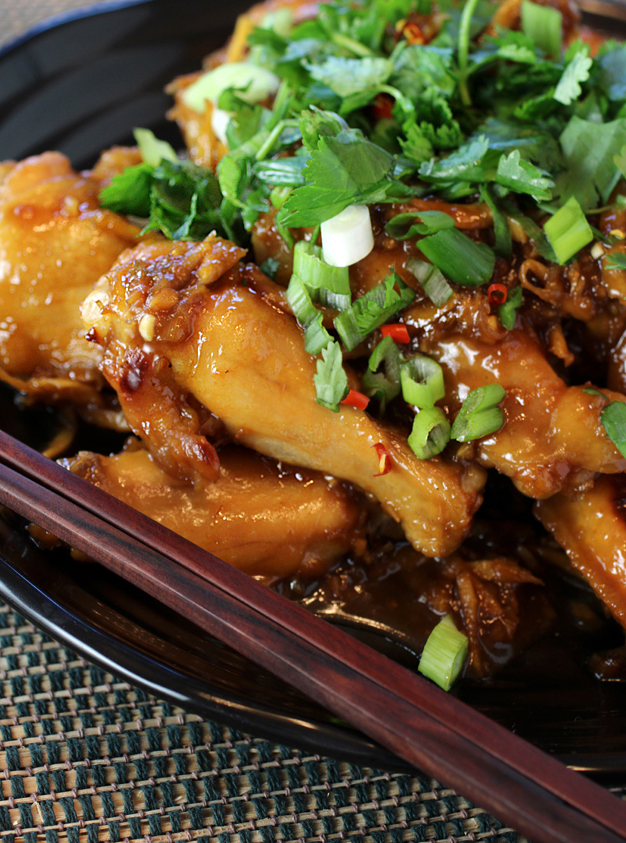
Shards and shards of ginger flavor chicken wings in a sweet, sticky, savory sauce full of sharpness and warmth.
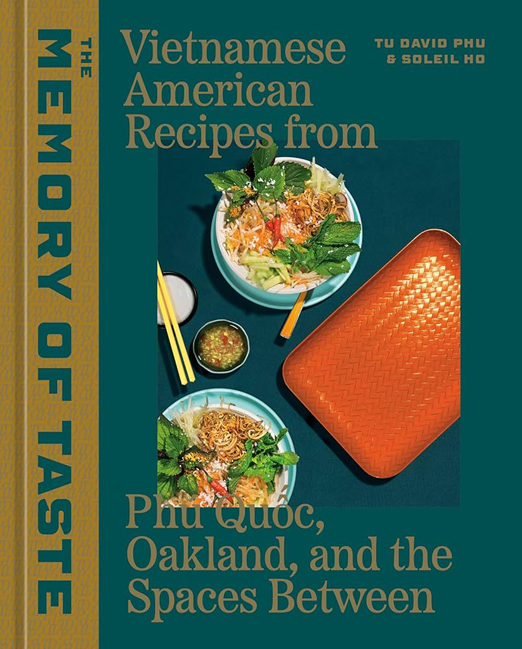
This ginger-loving recipe is from “Vietnamese American Recipes from Phu Quoc, Oakland, and the Spaces Between” (4 Color Books, 2024), of which I received a review copy.
It is by Tu David Phu, a Vietnamese American chef raised in Oakland, who competed on “Top Chef” Season 15. He is now the owner of Gigi’s, a Vietnamese wine bar in San Francisco.
It was co-written by Soleil Ho, a Vietnamese American writer, podcaster, and former restaurant reviewer at the San Francisco Chronicle.
The cookbook is a very personal one, recounting how Phu’s parents fled Vietnam by boat when they were only in their early 20’s, only to be robbed of all their possessions by pirates. They ended up at a Thai refugee camp for months, where in order to survive his mom learned how to create something delicious out of any scrap or morsel she could get her hands on. In 1975, they made their way to the United States, where his mother took a job as a seamstress while his father became a fishmonger.
Like so many refuge families, Phu’s did not talk much about their past. But through cooking and spending time together shopping and prepping ingredients, he finally learned to appreciate their struggles and to understand how they had impacted his own values and philosophies.
The recipes in this book illustrate the many dimensions in his life, from classic Vietnamese dishes he grew up with, including frugal ones that make use of off cuts, to fine-dining ones he mastered as a chef and novel adaptations that are all his own.
Savor everything from “Curry Coconut Noodles” and “Tomato-Braised Salmon Belly” to “Crab Beurre Monte Chawanmushi” and “Pork Bulgogi Summer Rolls.”
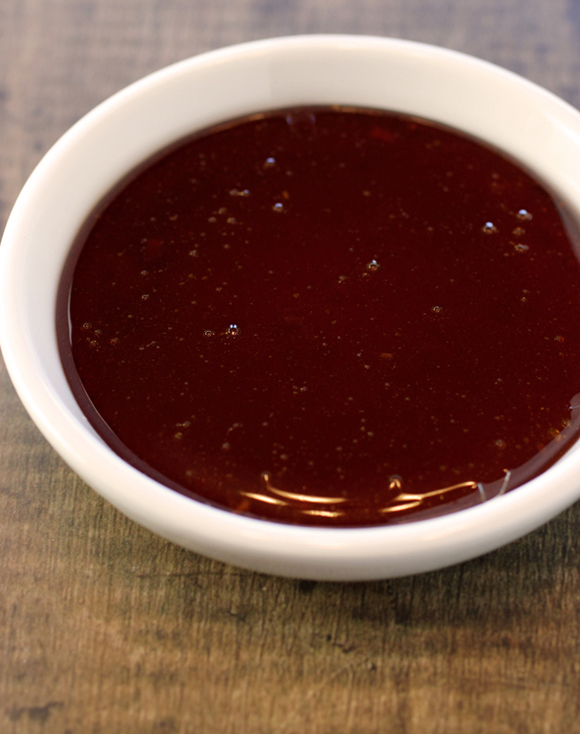
For this chicken dish, you’ll need to make a coconut caramel sauce. It’s a simple mixture of sugar, coconut water, and lemon juice, but does require some care. It all gets simmered in a saucepan until the sugar dissolves into a thick, dark, bubbling caramel. Once it does, place the saucepan into an ice bath to cool it down. It will continue to thicken and even harden as it cools. If it solidifies too much, just reheat it gently until it’s once again a spoonable consistency. The recipe makes more than you’ll need for this chicken dish. You can save the rest to use another time; or make half the recipe, which will leave you with less leftover.
Marinate the chicken wings with fish sauce, garlic, sugar, and salt. Saute shallot, lemongrass and Makrut lime leaves in a large pot. Stir in some of that homemade coconut caramel sauce, before adding the chicken and its marinade.
Simmer for half an hour, then add in that heap of ginger, and continue cooking. If the sauce is sticking to the pan or too reduced, just add a splash of water, and continue cooking until the chicken wings are cooked through.
Garnish with cilantro, green onions, and slivers of Thai bird’s eye chili, if using.
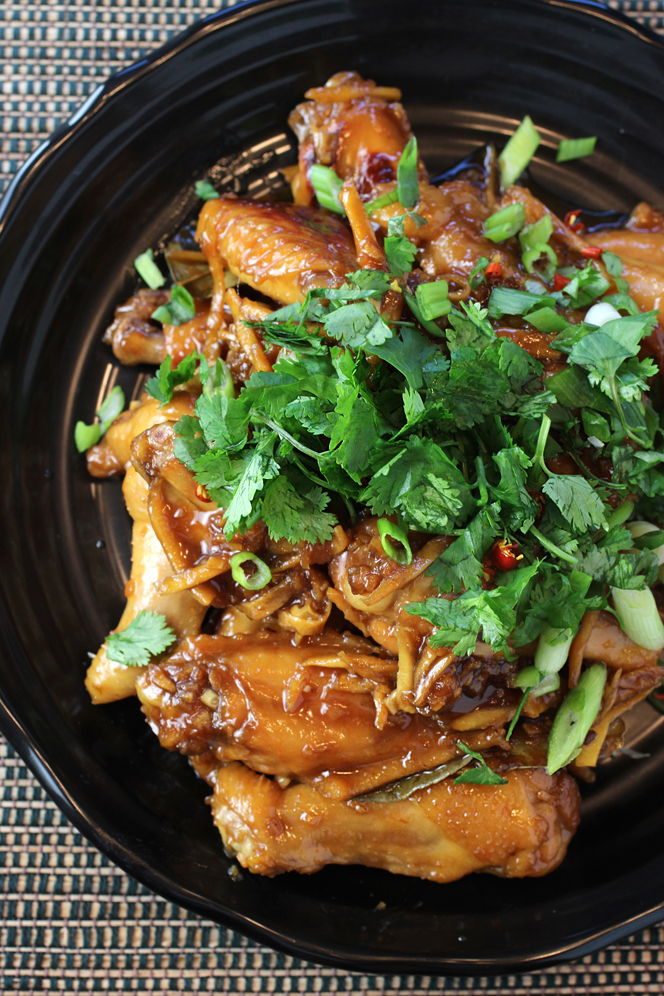
Although the recipe instructs to cook the chicken until the sauce reduces by a third, I never found that to be necessary, since there wasn’t that much sauce to begin with. In fact, these wings are more glazed than saucy.
No matter, they are absolutely delicious, coated all over in a thick, caramelized sauce that’s sweet, savory, beautifully aromatic, very gingery, and slyly spicy if you come upon one of those Thai bird chili rings.
Steamed rice is the perfect accompaniment, especially when those pearly grains intermingle with all those intoxicating ginger shards.
Ginger-Braised Chicken
(Serves 4)
2 pounds whole chicken wings
1 tablespoon fish sauce
1 teaspoon minced garlic
2 tablespoons granulated sugar
1 teaspoon kosher salt
2 tablespoons neutral oil (such as vegetable oil)
2 tablespoons minced shallot
1 tablespoon minced lemongrass
2 Makrut lime leaves
2 tablespoons Nuoc Mau Dua (Coconut Caramel Sauce; recipe follows)
4 ounces fresh ginger, peeled and cut into slender matchsticks (about 1 cup)
3 to 4 cilantro sprigs for garnish
1 Thai bird’s eye chile, minced, for garnish (optional)
Steamed rice, for serving
Disassemble the wings by cutting through the joints with a sharp knife. Each should separate into three sections: flat, drumette, and wingtip.
Make the marinade: In a large bowl, combine the fish sauce, garlic, sugar, and salt. Toss the wings in to incorporate, massaging a bit to ensure they are thoroughly coated, and let them marinated for 30 minutes at room temperature.
Now, you can start the process of braising. Set a large, heavy pot over medium heat. Allow the pot to preheat for 3 minutes, then add in the neutral oil. When the oil starts to shimmer, add the shallot, lemongrass, 2 lime leaves, and the Coconut Caramel Sauce. Allow the mixture to simmer for a minute, then add in the marinated chicken, along with any extra chicken juice and marinade goodness.
Stir everything together and continue simmering for 30 minutes. Add the ginger and increase the heat to high to return to a simmer. (If the sauce looks too thick or reduced at this point, add a splash of water.) Lower the heat so the pot is barely at a simmer and cover it with a lid. Let the mixture cook for 15 minutes, or until you’re able to easily pierce through a flat piece of chicken using a chopstick.
You’ll know the chicken is done when the internal temperature of a wing reaches 165°F on a probe thermometer, though really, it’s impossible to overcook chicken wings. Remove the lid and let cook for 15 minutes more so that the liquid reduces by a third, if need be.
Transfer the braised chicken wings to a wide, shallow bowl and garnish with cilantro, green onions, and chile (if using). Serve with a side of steamed rice.
Coconut Caramel Sauce
(Makes 1 cup)
2 cups granulated sugar
1 cup coconut water (no pulp)
1 drop lemon juice (optional, see Note)
In a large bowl, one that’s wide enough to comfortably fit a 3-quart, heavy stainless-steel pot with handles, combine ice cubes and water to prepare an ice bath. Make sure you’ll be able to easily perch the pot in the ice bath without having to hold it. Set up the ice bath in the sink so that it can overflow without making a mess.
In the stainless steel pot, combine the sugar, coconut water, and lemon juice (if using). Place over medium heat and, using just the pot handles, gently swirl the pot until the sugar dissolves, darkens, and registers 380°F on a candy thermometer, 10 to 15 minutes. Be careful not to splash yourself, or you will be very, very sad.
Remove the pot from the heat and sink it immediately in the ice bath to prevent the mixture from over-caramelizing. Be very careful not to let any water get into the caramel — the temperature difference will make the mixture pop, and you could potentially take out an eyeball. Allow the caramel to cool to room temperature in the bath.
Store the caramel sauce in an airtight jar in the fridge for up to 6 months.
If the caramel sauce hardens too much to use easily, gently rewarm it until it is a spoonable consistency.
Note: A drop of lemon juice used in this recipe helps prevent the sugars in the sauce from crystalizing.
Recipes adapted from “Vietnamese American Recipes from Phu Quoc, Oakland, and the Spaces Between” by Tu David Phu and Soleil Ho
To Go With: Vietnamese-Style Sauteed Artichokes