
Great Finds, Part II: The Dumpling Class
For a dozen years, Eddie Lo was on the tech fast track in Silicon Valley.
After graduating with a bachelor’s in industrial engineering degree from the University of California at Berkeley, followed by a master’s in operations research and information engineering from Cornell University, he worked at such heavy weights as Cisco, YouTube, Google and Coinbase.
Then, he made a major pivot.
He traded project management of cryptocurrency and data for pleating Chinese dumplings instead.
Lo launched “Eating with Edmund,” hands-on dumpling classes at his San Francisco home, four and a half years ago. Since then, he’s taught more than 5,000 people.
His 3-hour classes, limited to a maximum of eight people at a time, consistently sell out, too. They are priced at $129 per person.
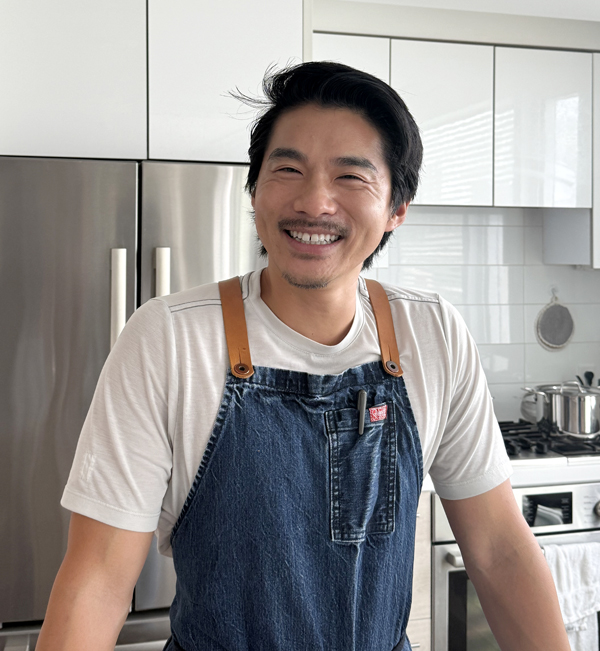
“Tech was a lot of yelling and a lot of stress,” he says. “It wasn’t my happy place. The happiest I am is when I’m cooking.”
After all, he grew up with parents who immigrated from China to Milwaukee where they ended up starting their own Chinese restaurants. As a kid, he’d help out at the restaurant, and tote his homework there after school.
In fact, the recipes he teaches now are based on his mom’s Shanghai dumplings.
I had a chance to check out it all out last week when he graciously invited me and a friend as his guests to check out a dumpling class.
I’ve made many a dumpling before — but almost always have defaulted to purchased wrappers. Admittedly, my dumpling folding/pleating skills won’t win any awards. Sure, I can get the job done, but not necessarily in the most consistent and neatest looking way. I was eager to see if Lo’s instructions would vastly improve upon that.
We gathered around his kitchen island with pre-measured bowls of flour and water before us as Lo showed us how to combine both, then mix with our hands to form a pliable dough.
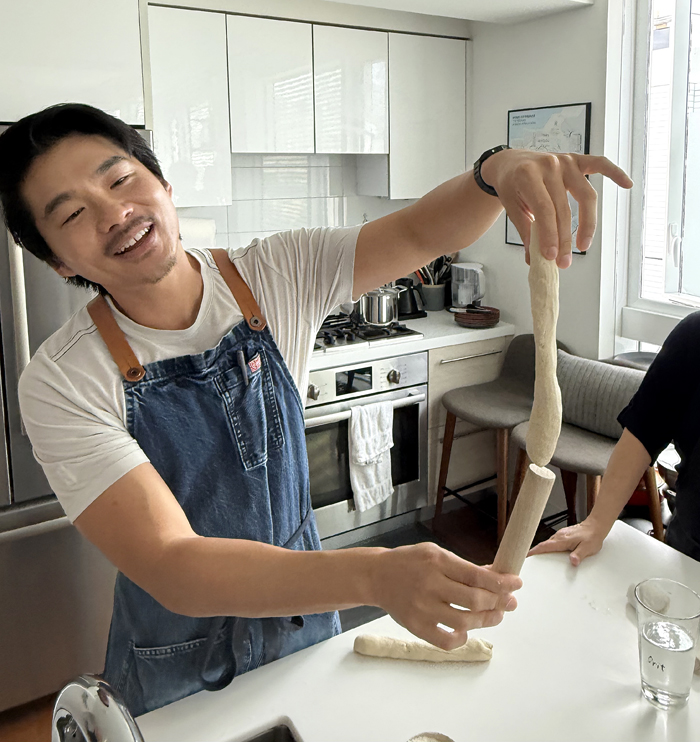
As it rested, he grabbed other premade dough to show us how to roll it into a cylinder, tear off equal sized pieces, then flatten and roll each one to form a round wrapper.
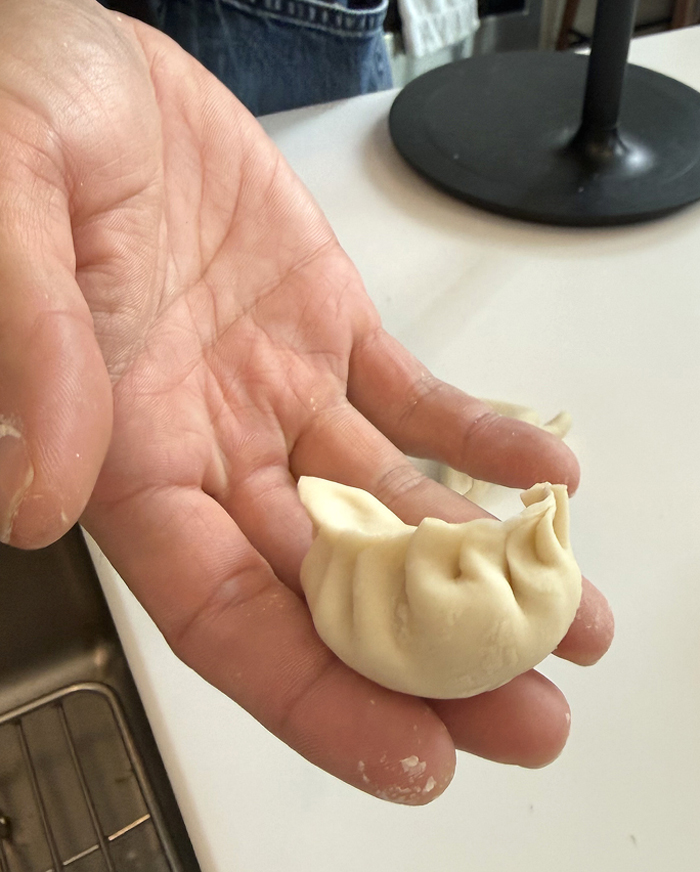
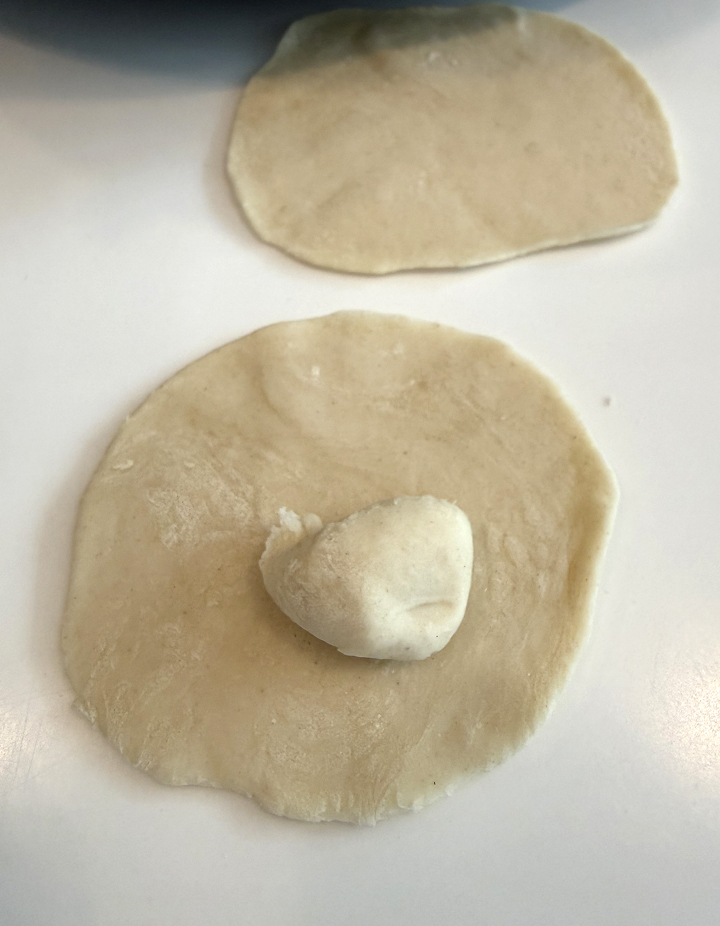
As I looked around, you could see everyone stifle a laugh because our first ones looked more like amoebas or lopsided eggs. But after a few attempts, they began looking more and more like circles with the very centers just a little thicker than the perimeters — exactly what they should be.
Then, it was on to practicing crimping our dumplings, a skill that definitely needed help at the beginning with so many of us befuddled by uneven folds. As Lo came around to check on each of us, little by little, we started to get the hang of it.
Finally, it was time for the real deal — making our own wrappers, filling them, and pleating them. We would each make 11 dumplings, filling them with either a mix of ground pork and ground Wagyu beef or Hodo tofu for those who are vegetarian.
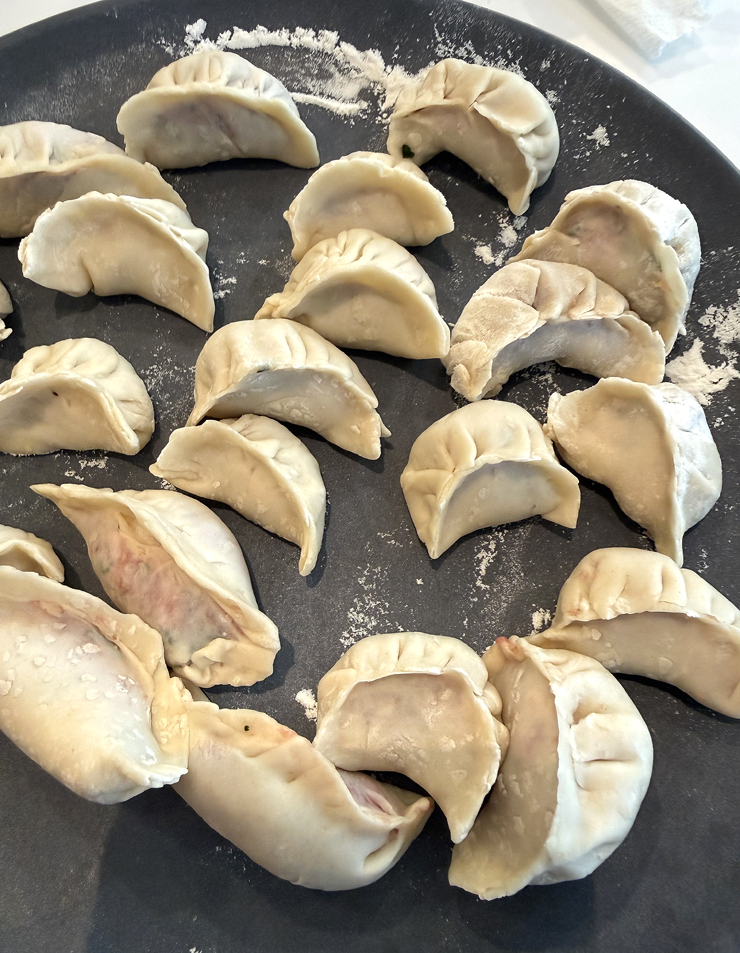
Some of us finished faster than others. Some dumplings turned out more squat; others more elongated. A couple dumplings even had to have makeshift dough patches applied when holes appeared where the wrappers had been rolled too thin.
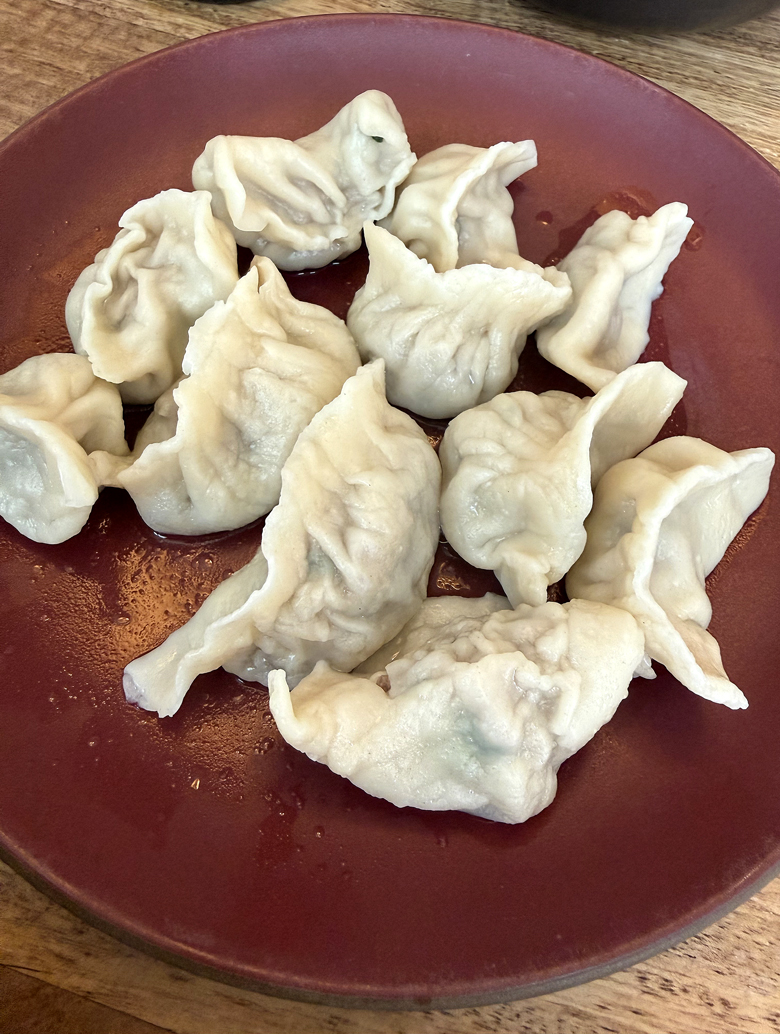
Our completed dumplings were brought to the stove, where we placed them into separate pots of boiling water, ensuring we’d actually end up eating the exact dumplings we had made.
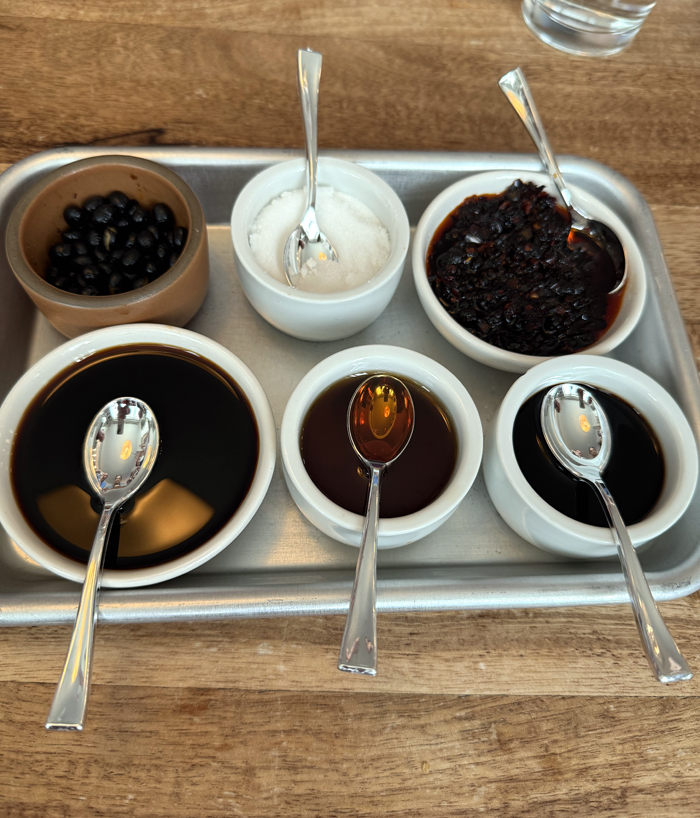
As they cooked, we took our seats at Lo’s dining room table to mix up our own personalized dipping sauce using black vinegar, sesame oil, sugar, chili crisp, and LivCookEat Finishing Soy Sauce, an artisan brand made in Taiwan by Lo and business partner Olivia Wu, a former Google executive chef and former writer for the San Francisco Chronicle.
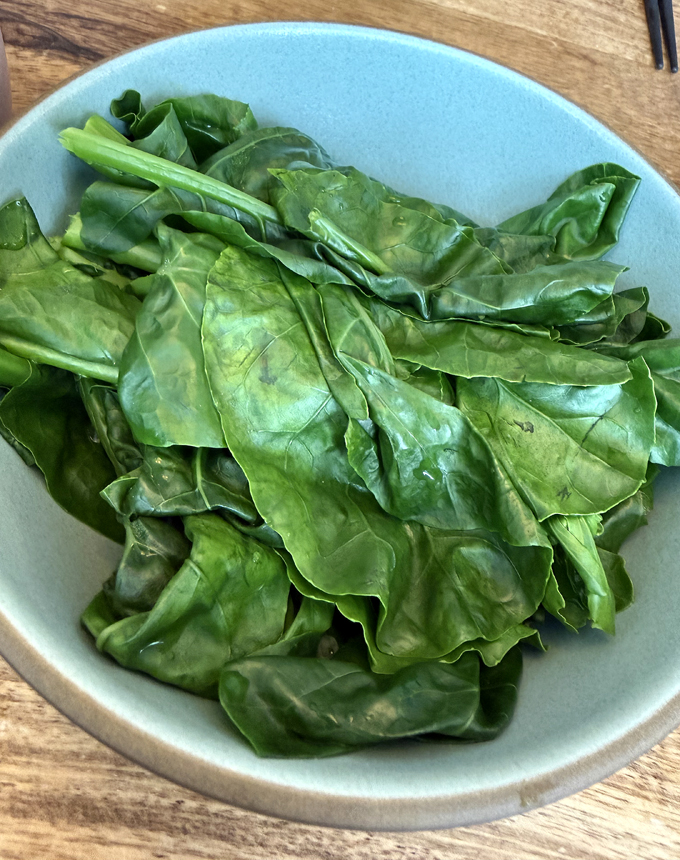
When ready, platters of our homemade dumplings were set before us along with bowls of blanched organic gai lan (Chinese broccoli).
For a moment or two, there was only silence as we all dug in appreciatively. The freshly made wrappers were definitely smoother and silkier in texture than store-bought ones, and the filling so wonderfully juicy, with a coarser texture so that it tasted almost as if the meat had been hand-chopped, even if it wasn’t.
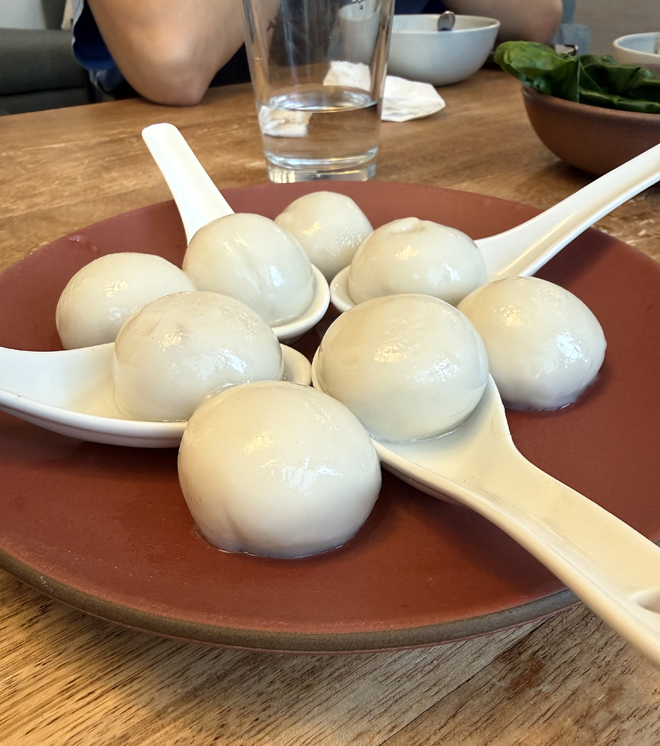
After all devoured, Lo brought out balls of tang yuan for dessert. Made with glutinous rice flour, they were sticky-chewy like mochi and filled with red bean paste that he had made from scratch so it was just sweet enough rather than cloying.
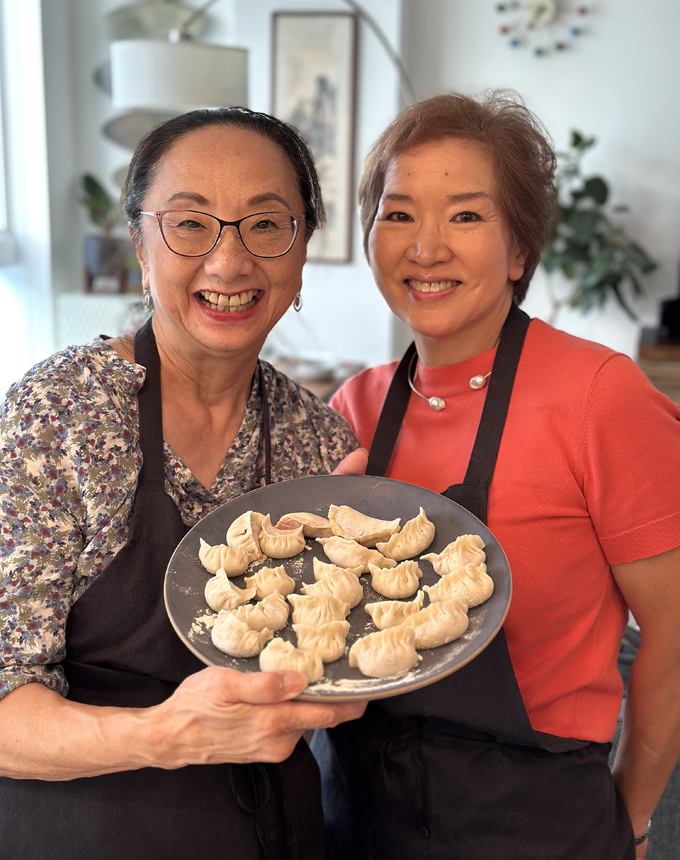
There were parting gifts, too — mini jars of Fly By Jing sauces to take home. But perhaps the best gift of all was the newfound confidence in knowing that from now on when it comes to tackling from-scratch dumplings, we got this.
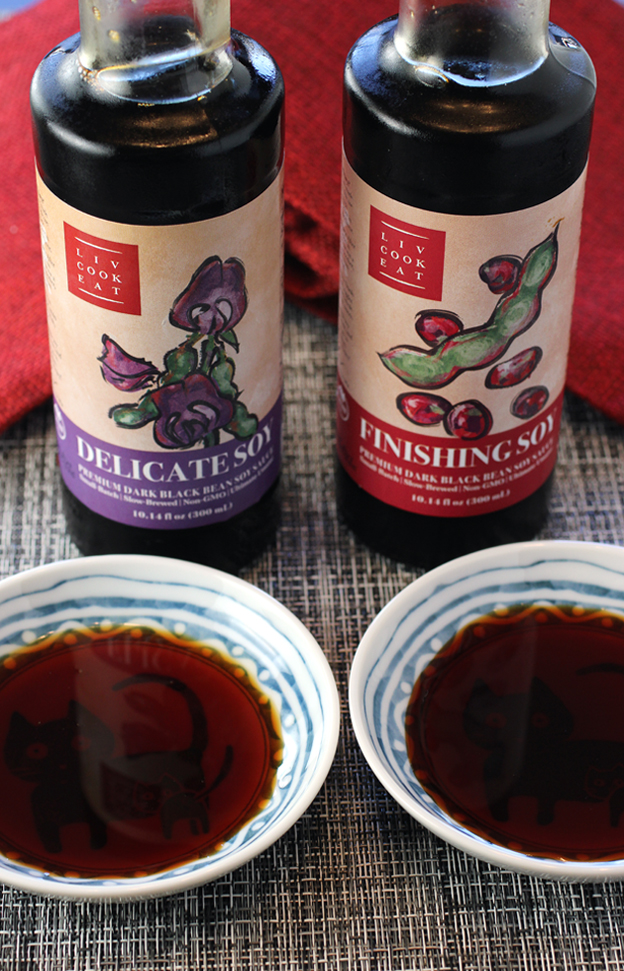
Great Finds, Part I: The Soy Sauce