
The Best Kind of Picnic
Charcuterie and wine may be the usual mainstays of picnics.
But a picnic all about cake and nothing but cake?
Now, that’s the stuff of dreams — and surely worth the sugar high and food coma to follow.
Unless you’ve been living under a rock or eschewing all carbs (say what?), then you know all about the phenomenon known as Cake Picnic.
It is the fantastical creation of the Bay Area’s Elisa Sunga, who dove head-first into baking during the pandemic and chronicled her exploits along the way online.
As a devoted gathering of followers ensued, she got the idea in April 2004 to invite those willing to a cake picnic in San Francisco. All they had to do is show up at the park with a whole cake to share.
Sunga was admittedly nervous that anyone would heed the call. But she needn’t have worried, as a whopping 183 people showed up bearing 183 different cakes. There were simple ones, fancy ones, squat ones, towering ones, and everything in between.
It was such a joyful success that Sunga found herself fielding inquiries to bring Cake Picnic to other cities. Since then, the sugary event has been held around the globe.
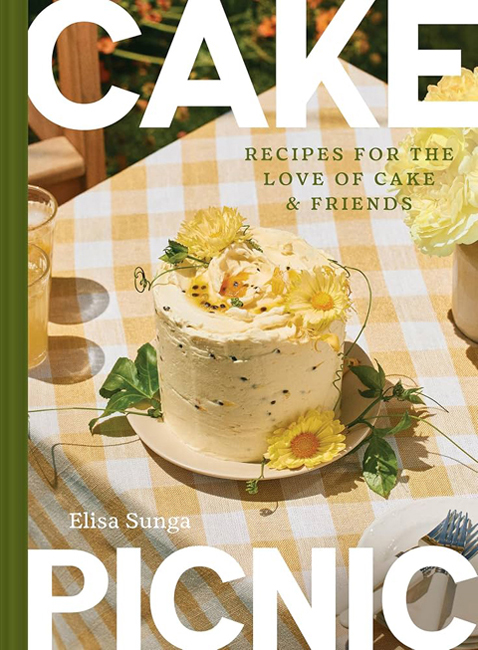
Now comes “Cake Picnic” (Chronicle Books), Sunga’s cookbook that captures the sweet magic of those events.
The book, of which I received a review copy, includes 50 fabulous cake recipes, some easy and others more challenging, as well as strategic advice on how to host your own Cake Picnic.
Even if you choose to enjoy your cake indoors with only a few guests instead, no doubt you’ll find a recipe here that will have you running to your kitchen to preheat your oven pronto.
Get tempted by everything from “Champagne Confetti & Cranberry Curd Cake,” “Cherry & Pine Nut Brittle Sheet Cake,” and “Torched Rosemary Caramel Cake” to “Chamomile Honey Cake,” “Burnt Miso Tres Leches Cake,” and “Chocolate Cake with Potato Chip Toffee.”
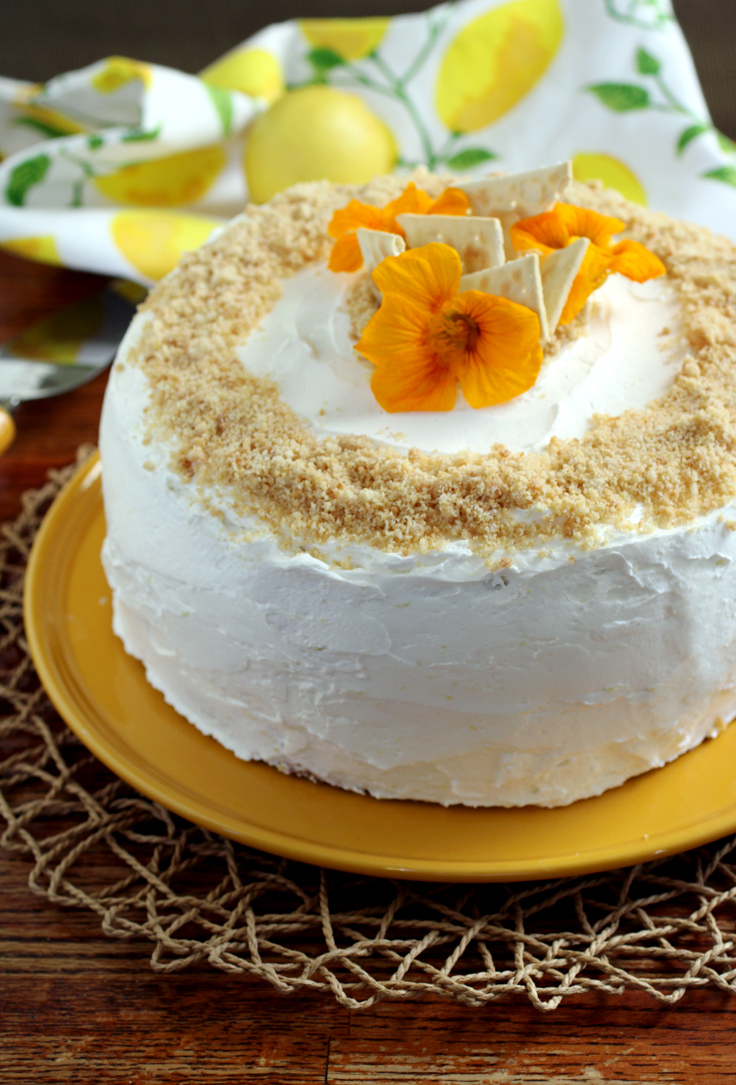
Curiosity always tends to draw me toward unusual combinations of ingredients. So, when I spotted Sunga’s “Lemon Curd & Saltine Cracker Cake” recipe, I knew I had to give it a go.
Pulverized saltine crackers in the batter? Still more of them baked into a crispy streusel that gets strewn between the cake layers? I just had to see what that might be like.
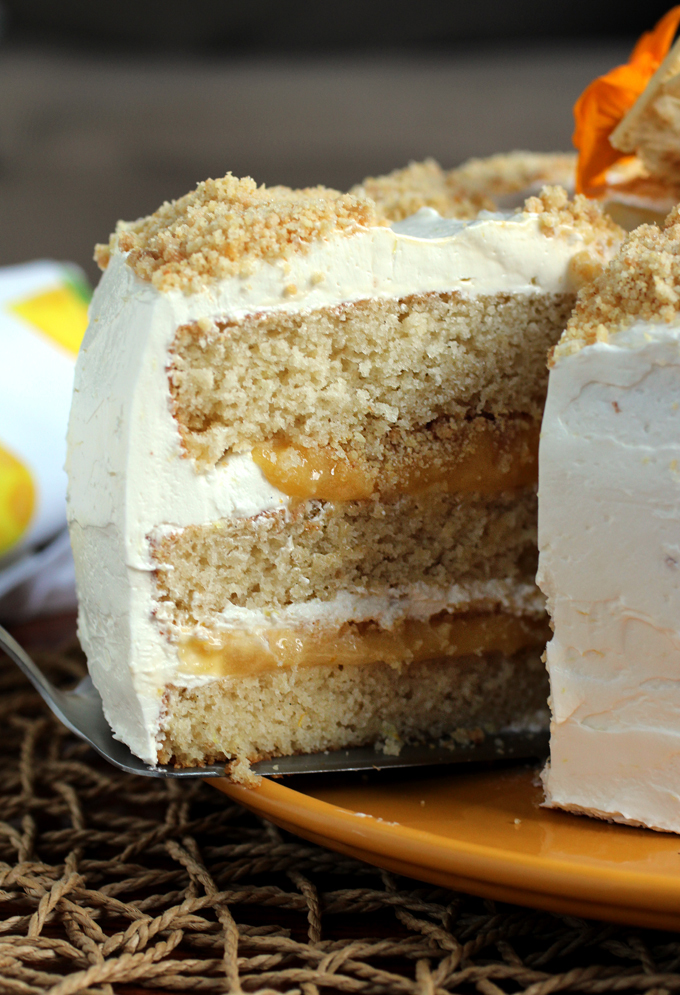
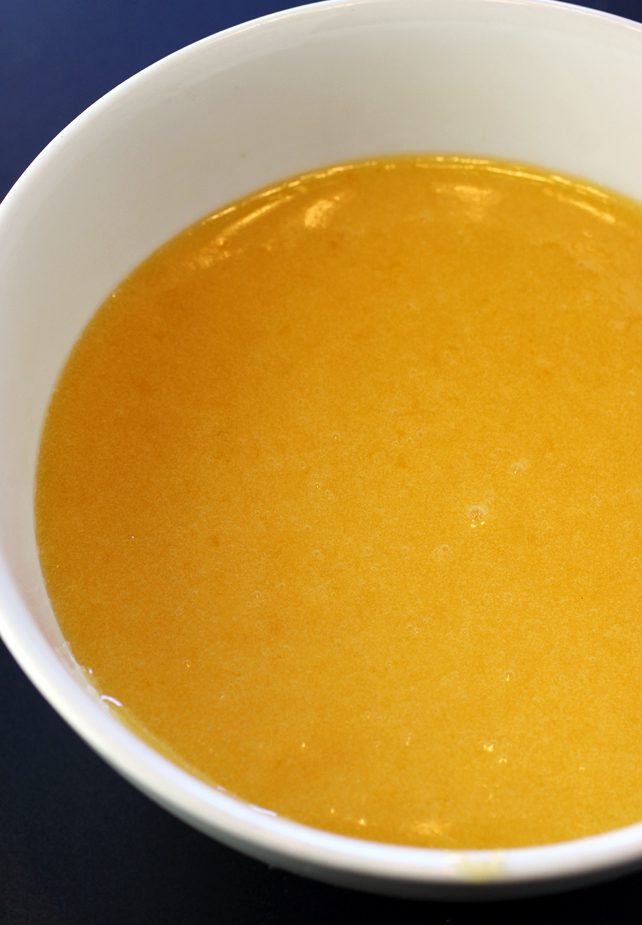
The three-layer cake gets a good dose of racy lemon curd between the layers, too. Just heat sugar, lemon zest, lemon juice and egg yolks on the stovetop, whisking the whole time. Once it thickens, whisk in pieces of butter until smooth and silky. Refrigerate until ready to use.
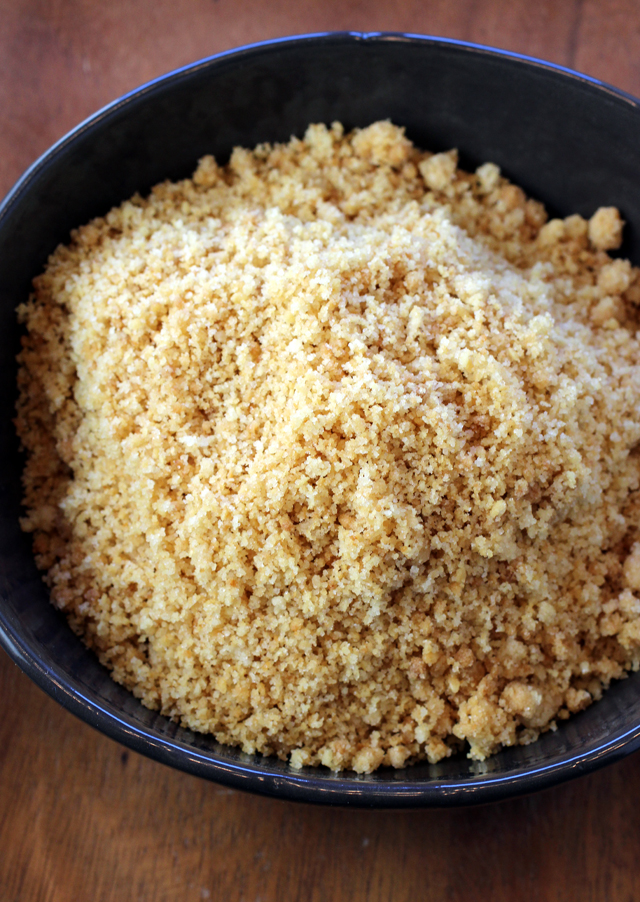
To make the crunchy saltine cracker crumbs, just blitz the crackers in a food processor, then combine with sugar, salt, and melted butter. Transfer to a baking sheet, and bake until golden as your kitchen becomes engulfed in the delightful fragrance of butter and toasted crackers.
For the cake, blitz more saltines in the food processor. Transfer the saltine “flour” to the bowl of a stand mixer, along with all-purpose flour, sugar, salt, baking powder, and baking soda. Unlike most cake recipes that call for adding the eggs to a mixture of whipped butter and eggs, this one does things a little differently. The butter gets mixed into the dry ingredients first until a sandy texture is achieved. Only then do you use a spatula to fold in buttermilk that’s been whisked with eggs and vanilla. You’ll end up with a batter that’s slightly grainy, and that’s okay.
Divide the batter among three cake pans, and bake until golden. Once the cakes are cool, unmold them.
The cake is frosted with a luscious lemon Swiss meringue that’s made by whisking sugar and egg whites in a double-boiler. Once it achieves the right consistency, place the bowl on your stand mixer with the whisk attachment. Whip it until stiff, glossy peaks form, then gradually add pieces of butter — an entire 2 cups or 4 sticks (don’t think about it; just do it). Finally, add lemon juice, lemon zest, and a touch of salt. Continue whipping until the buttercream is smooth, light, and airy.
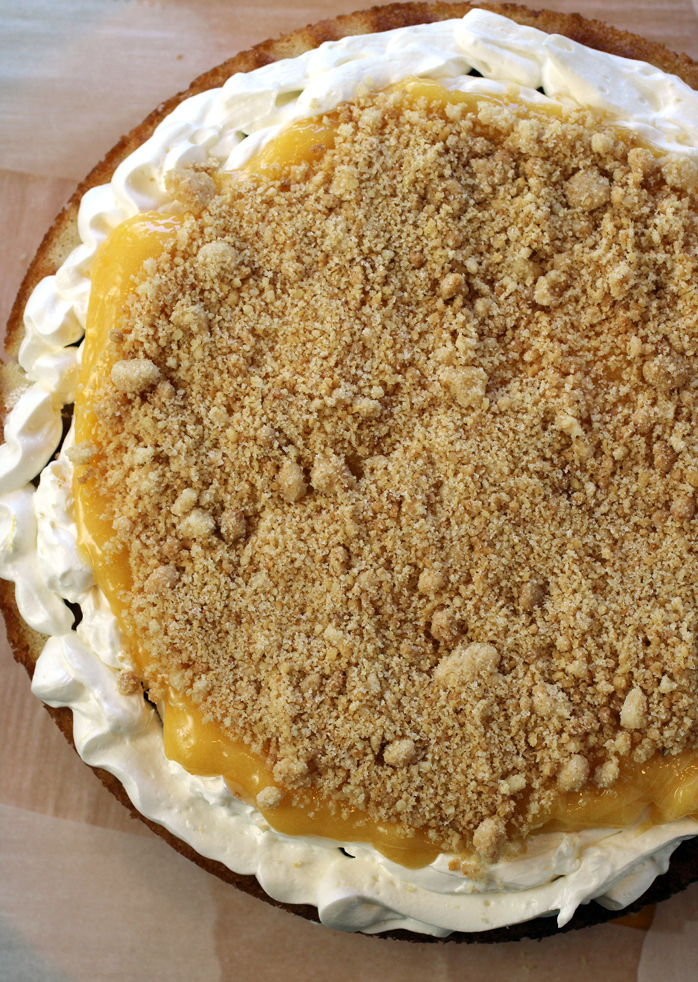
A layer of buttercream, curd and then saltine cracker crumbs gets spread on one cake round before a second cake round is placed on top and the process repeated. When the final cake round goes on top, use the remaining buttercream to frost the top and sides.
Yes, this cake is a bit of a production. But you can easily make the curd one day, the saltine streusel another day, and the actual cake the day after all that.
What I appreciate about this cake recipe is that it uses an even number of yolks and whites (6 yolks for the curd; 6 whites for the buttercream), plus 3 whole eggs, so that you don’t end up with any extra white or yolk to deal with.
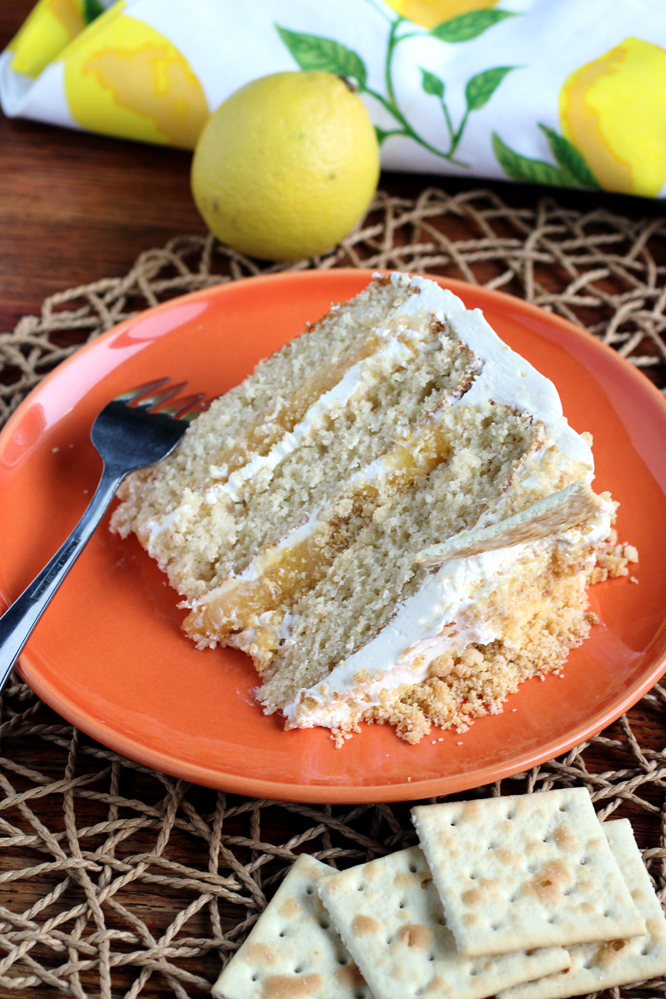
This fun cake has all the feels. It’s at once sweet yet tangy and salty; tender yet crispy in bites; and undeniably buttery.
This moist cake has a plush texture. The buttercream is rich and indulgent with the perky lemon curd adding a bright tartness to balance it all out.
Sunga describes it as a lemon meringue pie in cake form. The taste is indeed very much like that.
I shared slices with my husband and enthusiastic neighbors. It wasn’t a picnic per se. But the spirit of generosity was there, as well as the sweet rewards.
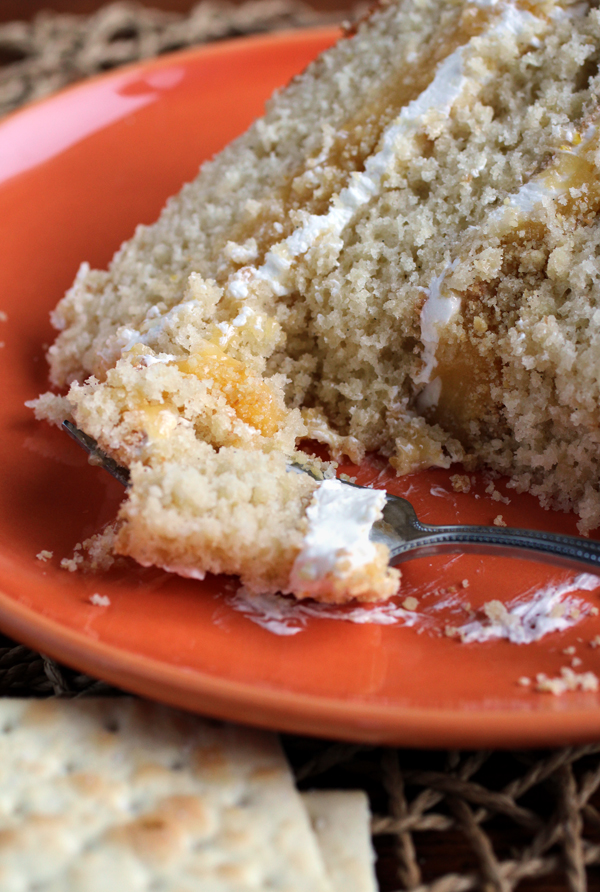
Lemon Curd & Saltine Cracker Cake
(Makes one three-layer 9-inch cake)
For the lemon curd:
1 cup (200 grams) granulated sugar
2 tablespoons lemon zest, from 2 to 3 large lemons
6 egg yolks
1/2 cup (120 grams) lemon juice, from about 3 large lemons
1/2 cup (113 grams) unsalted butter, at room temperature, cut into 1-inch pieces
To make the lemon curd: In a medium, heavy-bottomed saucepan, combine the sugar and lemon zest. Use your fingers to rub the zest into the sugar until fragrant and free of clumps. Add the egg yolks and whisk until smooth, then gradually stir in the lemon juice. Cook over medium-low heat, whisking constantly, until the mixture thickens enough to coat the back of a spoon, 8 to 10 minutes. Do not let the mixture boil, as this can curdle the eggs. Remove from the heat and whisk in the butter, one piece at a time, until fully melted. For an extra-silky texture, strain the curd though a fine-mesh sieve or blend with an immersion blender. Transfer to an airtight container, pressing plastic wrap directly onto the surface to prevent a skin from forming, and let cool completely. The lemon curd can be refrigerated for up to 1 week or frozen for up to 3 months.
Saltine Cracker Crumbs
24 saltine crackers
6 tablespoons (75 grams) granulated sugar
1/4 teaspoon kosher salt
1/4 cup (57 grams) unsalted butter, melted
To make the saltine cracker crumbs: Preheat the oven to 325°F (165°C). Line a baking sheet with parchment paper.
In a blender or food processor, pulse the saltines until finely ground to make saltine flour. In a medium bowl, whisk together the saltine flour, sugar, and salt.
Drizzle the melted butter over the mixture and stir with a fork until small-medium clumps form and no dry flour remains. Transfer the mixture to the prepared baking sheet and bake for 12 to 14 minutes, or until golden brown. Let cool completely to room temperature. Break larger chunks into smaller pieces. The saltine cracker crumbs can be stored in an airtight container at room temperature for up to 3 days.
Saltine Cracker Cake
48 saltine crackers
1 1/2 cups (350 grams) buttermilk, at room temperature
3 eggs, at room temperature
2 teaspoons vanilla extract or paste
1 3/4 cups plus 3 tablespoons (380 grams) granulated sugar
1 2/3 cups (210 grams) all-purpose flour
2 teaspoons kosher salt
2 teaspoons baking powder
1/2 teaspoon baking soda
1 cup (227 grams) unsalted butter, at room temperature, cut into 1-inch pieces
To make the saltine cracker cake: Preheat the oven to 325°F (165°C). Grease and line three 9-inch round cake pans with parchment paper.
In a blender or food processor, pulse the saltines until finely ground to make saltine flour.
In a medium bowl, whisk together the buttermilk, eggs, and vanilla.
In the bowl of a stand mixer fitted with the paddle attachment, combine the sugar, all-purpose flour, saltine flour, salt, baking powder, and baking soda. With the mixer on medium-low speed, gradually add the butter pieces and mix until the texture is sandy.
Using a spatula, mix in half of the buttermilk mixture, stirring gently. Fold the remaining buttermilk mixture in until fully incorporated.
Divide the batter evenly among the prepared pans and use an offset spatula to smooth the tops. Bake for 23 to 30 minutes, or until a toothpick inserted into the center comes out clean or with only a few moist crumbs. Remove from the oven and place on a wire rack. Let the cakes cool in the pan to room temperature before running a butter knife inside the rim of the pans and inverting the cakes onto the rack.
Lemon Swiss Meringue
1 3/4 cups (350 grams) granulated sugar
6 egg whites
2 cups (452 grams) unsalted butter, at room temperature, cut into 1-inch pieces
1/2 cup plus 1 tablespoon fresh lemon juice, plus more if preferred, from 2 to 3 lemons
2 tablespoons lemon zest, from about 2 large lemons
1 teaspoon kosher salt
1 or 2 drops yellow wood coloring (optional)
To make the lemon Swiss meringue buttercream: Fill a medium saucepan with water and bring to a simmer. In the bowl of a stand mixer, combine the sugar and egg whites. Place the bowl over the simmering water, ensuring the bottom does not touch the water, and whisk constantly until the sugar dissolves and the mixture reaches 160°F (70°C). Rub a small amount between your fingers — it should feel smooth.
Remove the bowl from the heat and attach it to the stand mixer fitted with the whisk attachment. Beat on high speed until stiff, glossy peaks form, about 10 minutes. With the mixer on low, gradually add the butter, one piece at a time. Scrape down the sides of the bowl, increase the speed to high, and whip for another 5 minutes. Switch to the paddle attachment and beat on medium for 10 minutes. Add the lemon juice, lemon zest, salt, and food coloring (if using) and beat to fully incorporate. The buttercream should be light, airy, and doubled in volume. Fit a pastry bag with your preferred tip and fill it with one-third of the buttercream.
Decorations
Saltine cracker crumbs, whole lemons, sliced lemon quarters, lemons with tree leaves, or yellow flowers and petals (optional)
To assemble and decorate the cake: Place the first cake layer on a cake board or serving plate, securing it with a small dab of lemon Swiss meringue buttercream directly on the board. Using an offset spatula, spread about 1/4 cup of the buttercream over the surface. Pipe a rim of buttercream around the top edge of the cake. Fill the inside of the rim with half the lemon curd, using an offset spatula to smooth it evenly. Sprinkle a handful of prepared saltine cracker crumbs over the curd, pressing gently to adhere.
Place the second cake layer on top, aligning it carefully, and repeat the process: spread a layer of buttercream pipe a rim of buttercream, fill the center with the remaining curd, and top with saltine cracker crumbs.
Place the third cake layer on top, aligning it carefully, flat side up for a smooth finish. Apply a thin crumb coat of buttercream over the entire cake to seal in crumbs, using an offset spatula to smooth it evenly. Chill the cake for 20 minutes to set the crumb coat.
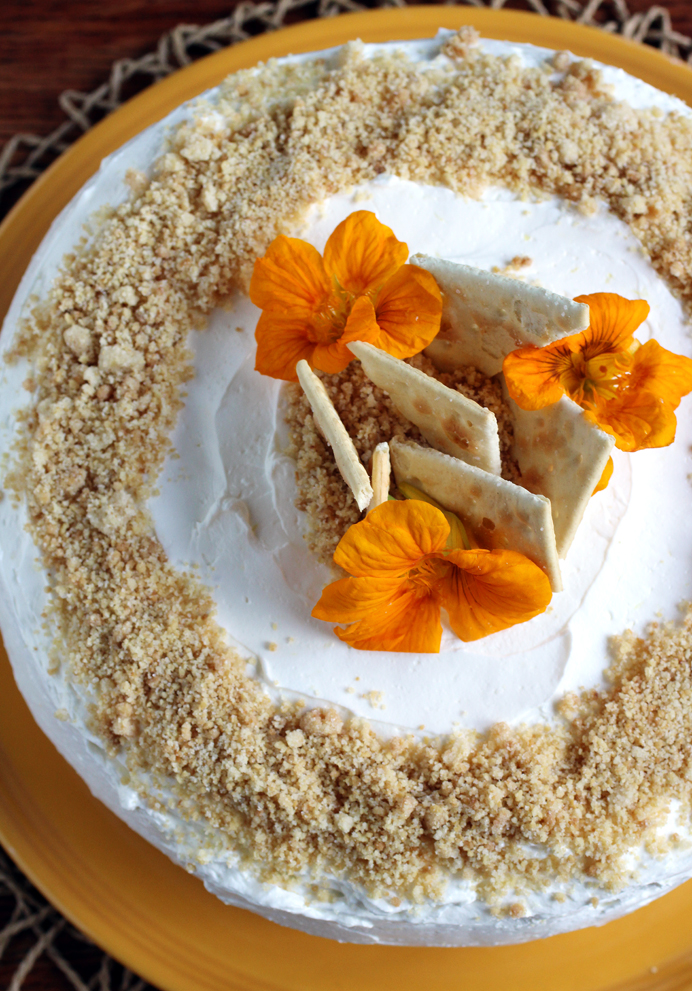
Once set, use the remaining buttercream to frost the top and sides of the cake, smoothing it evenly or creating textured patterns with a spatula. Decorate as desired. Remove nonedible decorations before serving.
From “Cake Picnic” by Elisa Sunga