The Phenomenon Known As Kogi BBQ
We in the San Francisco Bay Area like to think we have access to everything tasty.
But one thing we sadly don’t have is Kogi BBQ.
At least not yet.
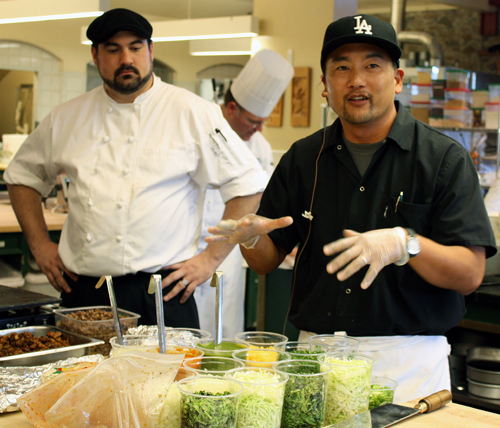
Roy Choi, a Seoul-native who graduated from the Culinary Institute of America and cooked at the likes of Le Bernardin and Aureole, both in New York, has turned the world of tacos topsy turvy on the streets of Los Angeles.
The classically-trained, extremely articulate chef has taken his high standards and top-notch skills, and applied them to humble taco truck offerings. Ten months ago, he started hawking his own brand of Korean tacos from one roaming truck that announces its location via Twitter. Now, he has four trucks, each of which serves more than 2,000 people a day. How crazy is that?
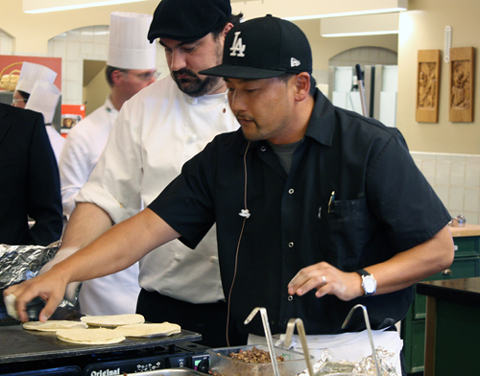
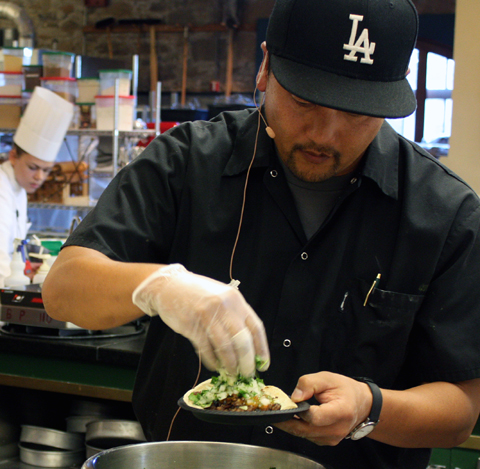
Fortunately, I didn’t have to drive all over Los Angeles to chase down one of his trucks to try the famous Kogi taco. Instead, I was able to snag one when Choi did a cooking demo at last weekend’s “Worlds of Flavor” conference at the Culinary Institute of America at Greystone in St. Helena. With this year’s theme, “World Street Food, World Comfort Food,” what could be a more perfect fit than a Korean taco?
And a most delicious one at that. As Choi explained, street food often gets the bum rap of being something thrown together, slap-dash. But take a bite of one of his tacos and discover how incredibly complex it is.
The sweet, smoky, tender taste of Korean short ribs transforms the taco into something all together new. The meat is marinated in a blend of soy sauce, maple syrup, yellow onions, green onions, garlic, kiwi, Asian pear, mirin, orange juice and 7-Up. It’s cooked at high heat to char and caramelize it. Then it’s diced, cooked on the flat-top, and heaped on two soft corn tortillas along with salsa verde or salsa roja; diced onion; a mix of shredded cabbage, romaine and green onions; Kogi chilie vinaigrette; and toasted and crushed sesame seeds.
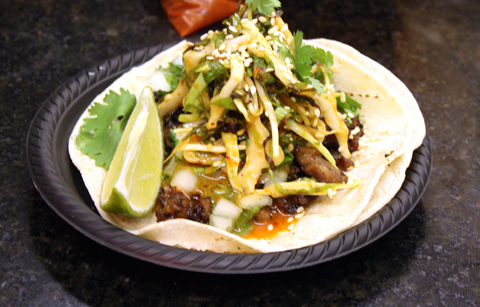
It’s a thing of absolute beauty. And it sells for an absolute pittance.
“We make everything from scratch, and we sell our food for $2,” Choi said. “I’m not sure if that’s the best business model, but our goal is not to lose money. My other goal — I don’t achieve it every day — but it’s that every single bite hopefully makes you stop in your tracks.”