Category Archives: Going Green and Sustainable

Gather Around Gather in Berkeley
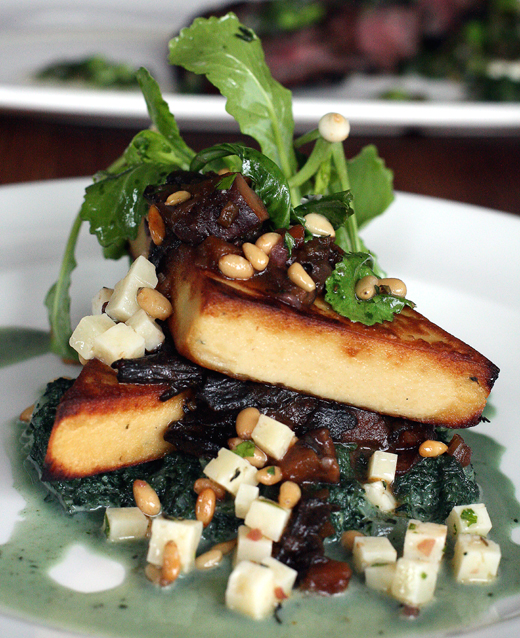
Seared panisse -- wedges of crisp polenta-like cakes made of creamy, custardy chickpeas -- at Gather restaurant.

At Gather restaurant in Berkeley, it’s all about head-to-tail and root-to-shoot cooking.

The nearly year-and-a half-old restaurant at the David Brower Center takes the unique approach of making its menu 50 percent vegetarian with plenty of vegan options.

If you’re rolling your eyes, thinking it’s some hippy-dippy Berkeley joint that won’t appeal to gauche, non-Birkenstock-wearing carnivores, you’d be wrong. In fact, my husband, aka Meat Boy, has happily eaten there twice with me, once when we paid our own tab and most recently when we were invited to dine as guests of the restaurant last month.

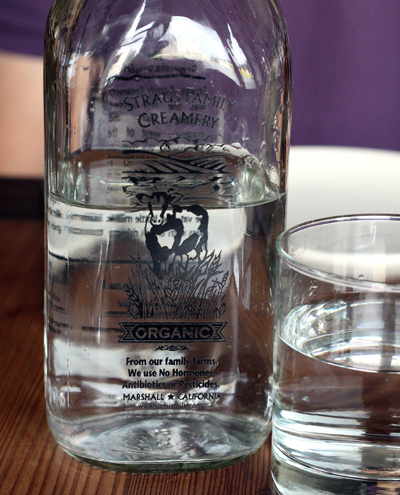
Popular with theater-goers, the restaurant was packed almost from the moment it opened its doors for dinner at 5 p.m. that Saturday evening. The space is very California-like with a warm, laid-back vibe. There’s plenty of rustic, reclaimed wood, as well as metal, steel and concrete. Fun touches include light fixtures made from recycled vodka bottles, filtered water served in recycled milk bottles, and comfy banquettes crafted from old leather belts (I even spotted one still sporting its Gap insignia).
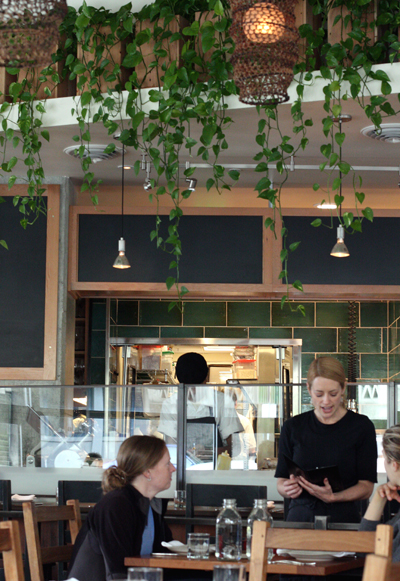
The dining room made with reclaimed materials.

Filtered water in recycled Straus Creamery milk bottles.

The restaurant was started by Bay Area food activists Ari Derfel and Eric Fenster, who founded Back to Earth,  a nine-year-old organic catering company. Executive Chef Sean Baker, former sous chef at the vegan restaurant, Millennium in San Francisco, and executive chef at Gabriella Cafe in Santa Cruz, was named “2010 Chef of the Year” by Esquire magazine for his intriguing and innovative cuisine.

The compact menu features organic, local and sustainable ingredients, with vegan and gluten-free options spelled out clearly.

One dish, above all, has received a ton of buzz since the restaurant opened — “vegan charcuterie” ($16). It’s a beautiful wood board arrayed with four or so little tastes that change regularly. It doesn’t try to mimic meat salumi in any way except in its convivial nature that makes it perfect for sharing. It’s a great way to start the meal with a glass of wine.
Read more

Cool New Water Bottle and Food Gal Giveaway

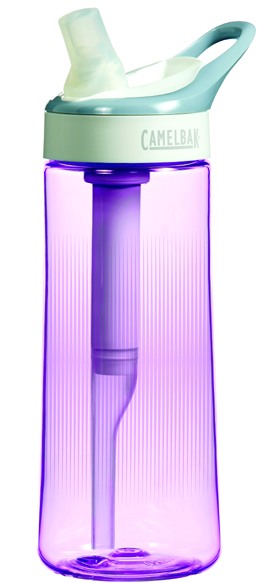
Win a new Groove water bottle with built-in filtration system. (Image courtesy of Camelbak)Camelbak, maker of those nifty water packs for biking and hiking, wants you to get into the Groove.

A new portable filtration water bottle to be exact.

The Camelbak Groove is a reusable water bottle that comes with its own carbon filter built into the drinking straw. Fill the bottle with tap water, and as you sip, the water is filtered before it hits your mouth.The straw has a bite valve — the same one apparently used by NASA astronauts in space — that locks into place when not in use, so you don’t have to worry about spills or leaks.

It’s great to stash in your car or to keep at your desk. Or tote one in your purse or briefcase. No more spending money on disposable water bottles or worrying about recycling them.

The 20-ounce bottle is made of BPA-free plastic and comes in four colors. It sells for $25. Replacement carbon filters (each of which should last for up to 60 gallons) cost $10 for a two-pack.

The Grooves are available online at the Camelbak Web site or at stores such as Target.

Contest: I’m happy to be able to give away one Camelback Groove to each of five lucky Food Gal readers. Entries, limited to those in the continental United States, will be accepted through midnight PST May 14. Winners will be announced May 16.

How to win?

Read more

Convenient CSA Pickup at a Caltrain Station

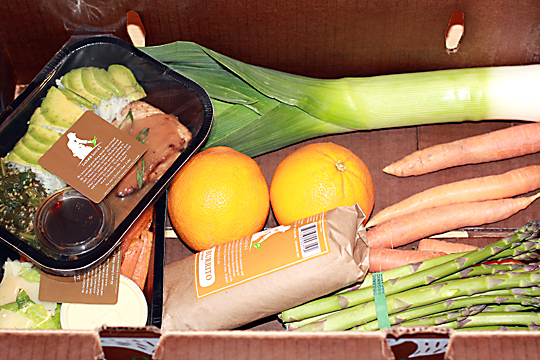
Would you believe you can pick up this bounty at a train station?

Leave it to Luke’s Local — the gourmet convenience store at a Caltrain station — to make getting farm-fresh produce on your commute even easier now.

The tiny store, which opened last year in a long-vacant ticket office at the Hillsdale station in San Mateo, just started offering a Community Supported Agriculture “Meal Box” that folks can pick up once a week at Luke’s Local. Imagine getting off the train after a long day at work, then picking up a box that contains not only fresh fruits and veggies, but a couple of ready-to-heat meals that you can load in your car to take home.

A sample "Meal Box'' from Luke's Local.

Luke Chappell, owner of the store, is offering this new service in a joint effort with Farmshares, a Community Supported Agriculture program of local farms in the Capay Valley. When you subscribe to the service, you pick up your box every Wednesday night at the train station.

Read more

Coffee with a Mission and a Food Gal Giveaway

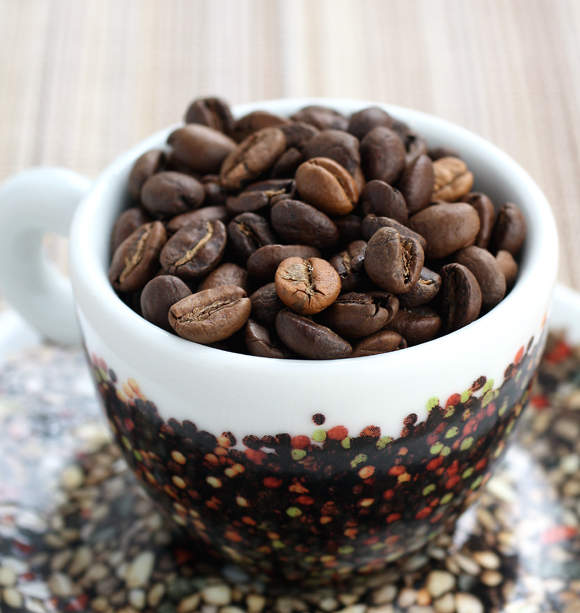
Coffee beans from the Aleta Wondo village of Ethiopia.

The impoverished Aleta Wondo community of Ethiopia grows some of the world’s finest coffee beans.

Brew a cup as I did from some sample beans, then revel in the smooth, rich notes of vanilla and bergamot without any of the ubiquitous “burnt” flavor of so many dark roasts these days.

Yet the farmers who grow these precious beans often don’t make enough money to feed or care for their children properly.

Enter Common River, a Mill Valley non-profit, which is working to change that.

Started by Donna Sillan, an international public health consultant, and Tsegaye Bekele, an Aleta Wondo native who now lives in Marin after starting a plumbing business in the Bay Area, the organization was able to build a new school in Aleta Wondo that educates 130 children in the community. It also started a summer camp program there that is staffed by Mill Valley volunteers.

Moreover, Sillan and Bekele began exporting the Aleto Wondo coffee to the United States. All the profits from the sale of the coffee goes back to the village of farmers to help fund the school and other needed projects.

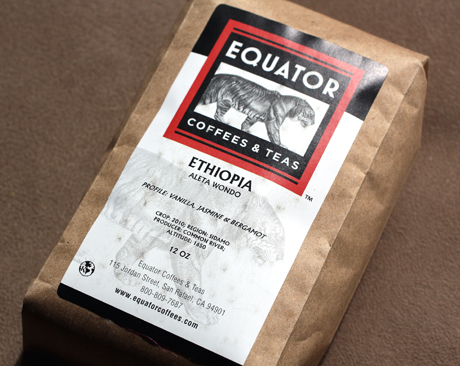
The beans are sold under the Equator brand.

You can do your own part to help by trying the coffee, yourself. It’s available at Whole Foods in Mill Valley and San Rafael. It’s also for sale directly on the AletaWondo site. Additionally, Equator Coffees & Teas, the socially conscious coffee company that just opened its first retail cafe at the San Francisco International Airport’s Terminal 2,  buys the Aleta Wondo beans and sells it under its own label.

Contest: One lucky Food Gal reader will get a chance to enjoy a 12-ounce bag of the Aleta Wondo coffee beans. Entries, restricted to those who live in the continental United States, will be accepted through midnight PST April 16. Winner will be announced April 18.

How to win?

Read more

Take Five with Chef Gaston Acurio of La Mar in San Francisco, Who Dropped Out of Law School to Cook

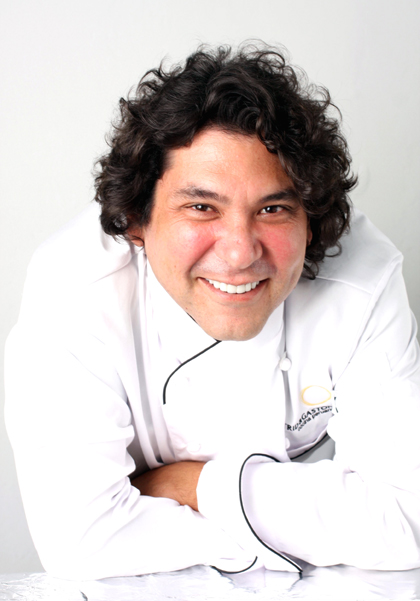
Chef-Owner Gaston Acurio of La Mar. (Photo courtesy of the chef)

Chef Gaston Acurio is probably more recognized in other parts of the world than he is in the United States. But no doubt that will change in the coming years as the 43-year-old chef expands his already impressive culinary empire further in this country with his bold take on contemporary Peruvian cuisine.

Acurio, who has 32 restaurants in 14 cities around the globe from Lima to Sao Paulo to Santiago, staked his first foothold in the United States two and a half years ago when he opened the lively La Mar Cebicheria on San Francisco’s Embarcadero with its striking turquoise sea-blue decor. In August, he will open his second La Mar in the United States — this one in New York’s Madison Square Park in the former Tabla restaurant site.

Last week, when Acurio was in town to work on new dishes at La Mar San Francisco, I had a chance to sit down and talk with him about his new partnership with the Monterey Bay Aquarium, his future plans in San Francisco, and how his politician father came to terms with the fact that his only son was not going to follow in his footsteps.

Q: Is it more challenging to open restaurants in the United States than elsewhere?

A: No, our experience with San Francisco was great. The people in San Francisco love to eat and they recognize good food. In a lot of cities, you might go out to eat before you do something else. Here, you go out to eat just to go out to eat.

People here are also very open to trying new things. It’s not like trying to start a restaurant in Italy or Paris. Nobu closed his restaurant in Paris after only one year. Parisians just don’t want to spend $150 on ethnic food because they are proud of their own food. The same is true in Italy. Those are challenging places to open restaurants.

Q: Will you open more restaurants in the United States after the New York one is up and running?

A: Of course. We are looking right now in Los Angeles, Chicago and Miami.

The presence of Peruvian food in the United States is just getting started. We have a big responsibility to do it well or else we will close the door to those who come after us.

Q: Are most Americans confused about what Peruvian food is?

A: Most are. Peruvian food has five big influences: Japanese, Chinese, Spanish, African and Inca/South American. Cebiches are our flagship like sushi for the Japanese. Our stews are European-like. Our sauces are like African ones. And herbs and chilies are very important in our cuisine.

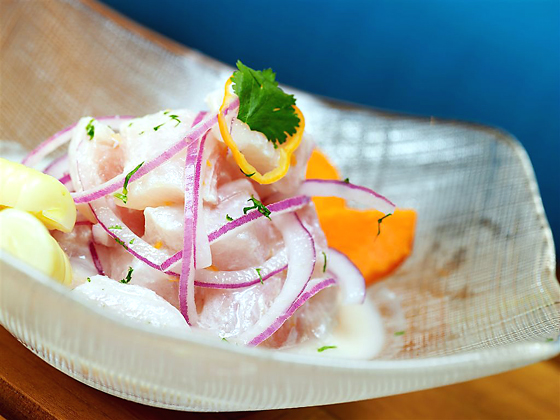
La Mar cebiche clasico made with halibut, habanero, and Peruvian corn and yam. (Photo courtesy of La Mar)

Q: With your partnership with the Monterey Bay Aquarium, you will have ‘Seafood Watch Guides’ available for the public at your restaurants and you will serve only sustainable seafood at all of your restaurants? How challenging will that be?

Read more

« Older Entries Recent Entries »