A Porky Time at San Francisco’s Ferry Building
Last week, I ended up on a most porky mission.
Yes, foraging for all things pleasingly porcine at San Francisco’s Ferry Building Marketplace.
And what a very piggish day it turned out to be for moi.
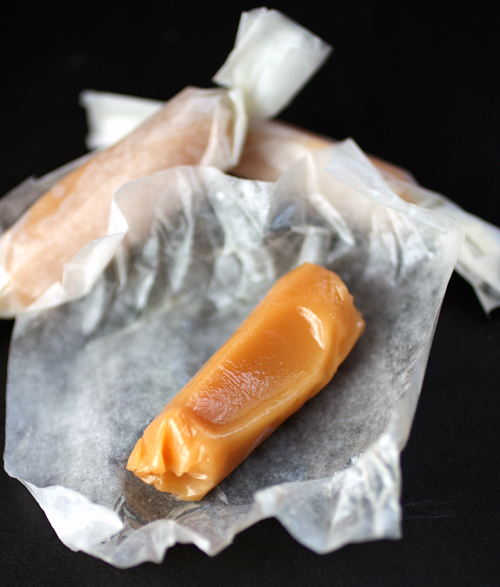
After all, as I ducked into Boccalone Salumeria, I was happy to discover that the charcuterie store had just received its first batch of the new Humphry Slocombe lard caramels. Yes, you read that correctly:
Lard. In. Caramels.
Humphry Slocombe, the crazy good San Francisco ice cream store, has started making caramel candies using Boccalone’s lard.
These babies are outrageous. The second you unwrap the wax paper wrapper, you’ll notice the sheen of grease on it. These have got to be the richest caramels ever. Sweet, sticky, and with an almost bacony, fatty lushness to them, these candies just coat your entire mouth like biting into a juicy piece of pork belly would.
A package of four is $3.20.
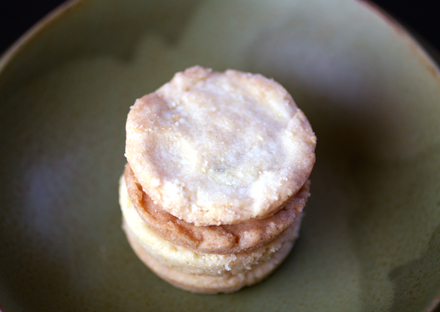
Of course, I also had to buy a package of the Humphy Slocombe shortbread cookies, made with Boccalone lard, as well as butter. Trust me, don’t think about the consequences. Just eat them.
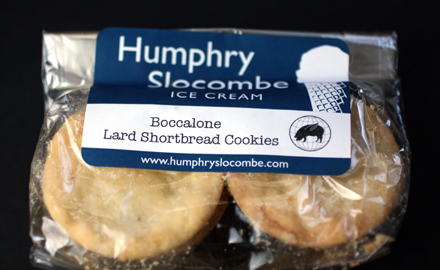
The cookies (a package of four for $3.20) are very crisp, with a crumbly texture, and the subtle taste of sea salt. Again, there’s a long finish to them because of all the F-A-T. But again, don’t dwell on that. Just chew.
Boccalone now also sells jars of pork ragu, made with ground pork, bits of its Boccalone salumi, red wine, and fennel.