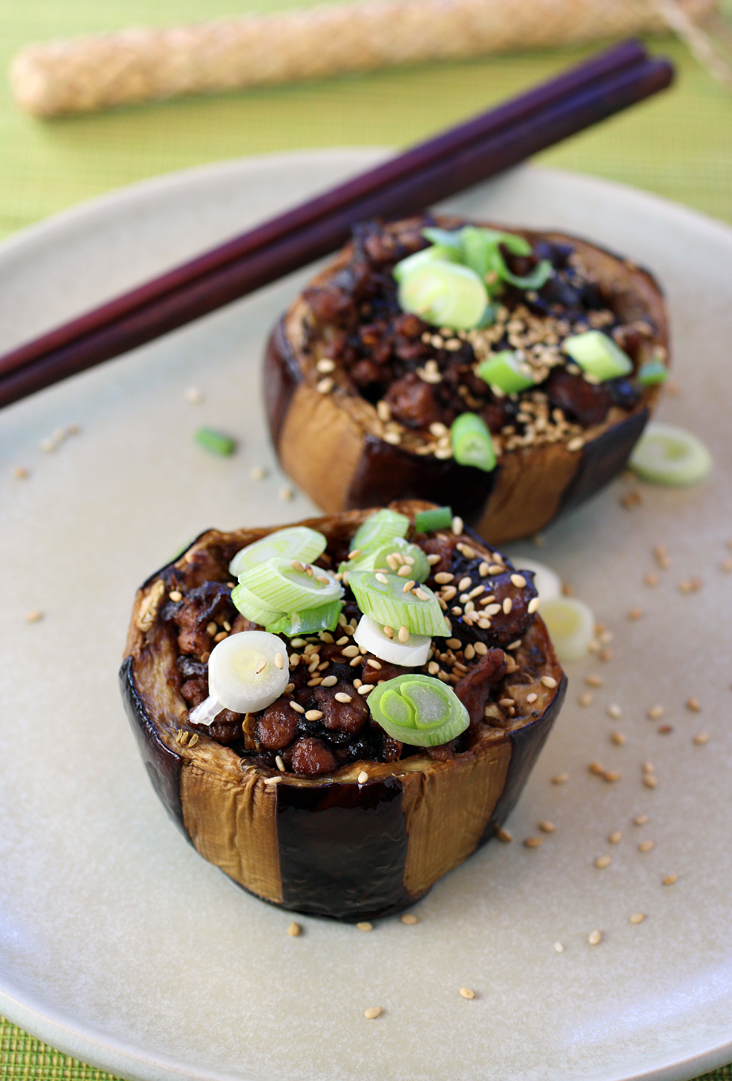
Eggplant cups stuffed with a savory pork and eggplant mixture.
As someone who keeps a bare minimum of apps on her phone, I admit that Kitchen Stories was new to me.
The app was founded in 2014 by two business students with a penchant for cooking. They bill Kitchen Stories as the first video-based, design-oriented cooking app.
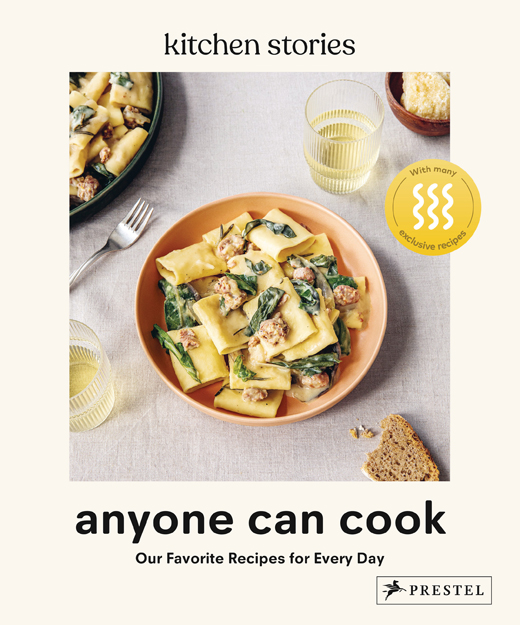
Now, the two have come full circle with a Kitchen Stories cookbook, “Anyone Can Cook” (Prestel), of which I received a review copy.
In the cookbook, the app team, based in Berlin, offer up a globally-inspired array of recipes such as “Glass Noodle Salad with Lemongrass Dressing,” “Spicy Chickpea Burgers,” “Savory Dutch Baby with Smoked Salmon and Horseradish,” and “Rigatoni with Walnut-Ricotta Pesto.”
I decided to give it a whirl with “Miso Pork Stuffed Eggplant,” which reminded me of an oversized version of a dim sum specialty.
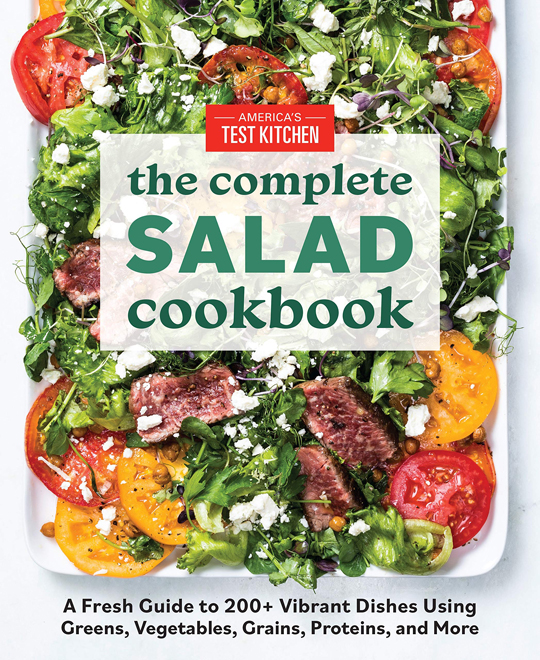
It showcases more than 200 recipes for salads that will take you through summer and beyond, including “Southwest Beef Salad with Cornbread Croutons,” “Roasted Grape and Cauliflower Salad with Chermoula,” “Shaved Salad with Pan-Seared Scallops” and “Cherry and Goat Cheese Couscous Salad.”
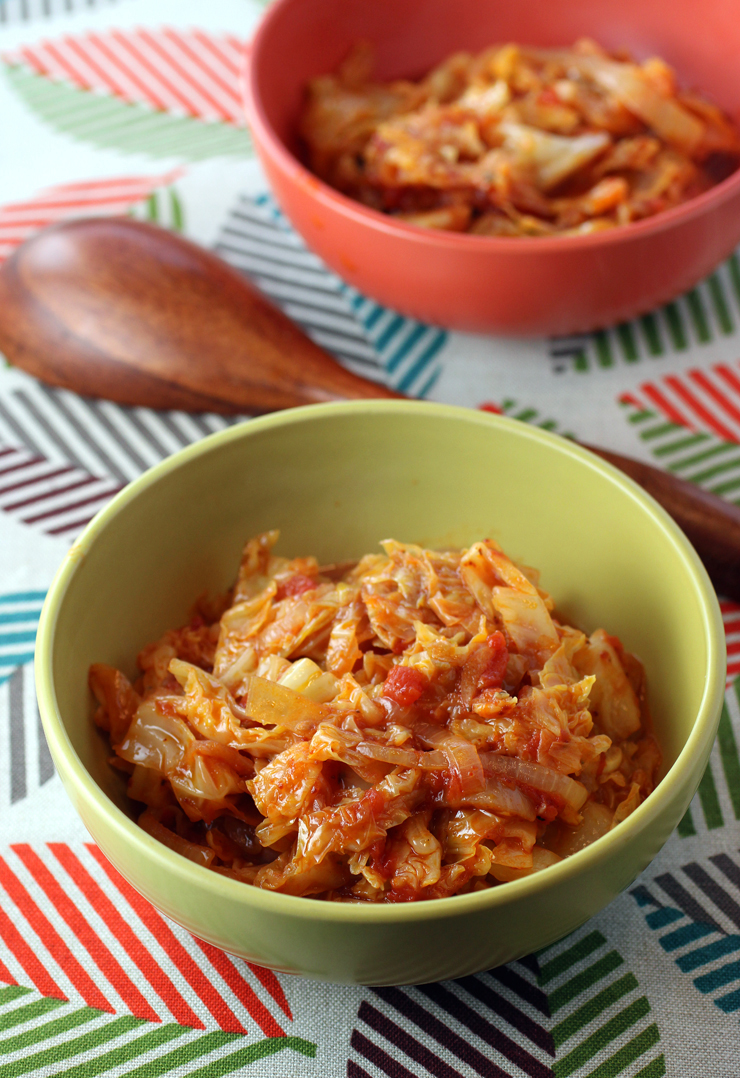
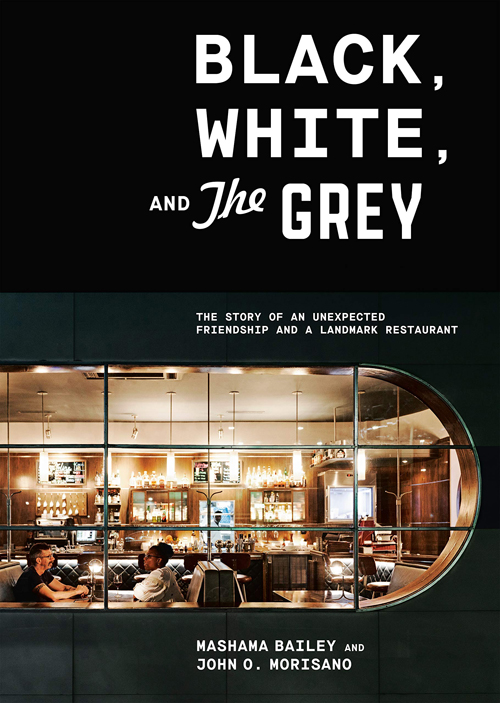
A book so worth getting not just for the recipes like this braised cabbage with tomatoes, but for the story of two people who persevered to build their dream restaurant.
It’s not only a compelling memoir about a unique restaurant with a formidable sense of place, but it includes some delightful recipes, as well.
The Grey opened in December 2014 in Savannah, GA in what was once a segregated Greyhound bus depot. The restaurant is the vision of entrepreneur businessman Morisano, who had no previous restaurant experience whatsoever, and Bailey, who formerly cooked at Prune in New York, but had never opened her own restaurant before.
Morisano, who is white, and Baily, who is Black, formed a partnership to bring a new inclusivity to this once-divided symbol of the South, and in so doing, also elevated the region’s cuisine with fresh vitality. It proved a critical success, earning Executive Chef Bailey the James Beard Award for “Best Chef Southeast” in 2019.
For the two business partners, though, it was anything but a smooth road. That makes the book all the more commendable for its candid look at the sweat, tears and fortitude it took for them to understand and trust one another in this arduous project. With America’s reawakened reckoning with racism this past year, this book couldn’t be more timely. It touches on the here and the now, demonstrating how our present is vastly shaped by our past, much of it hard to forgive.
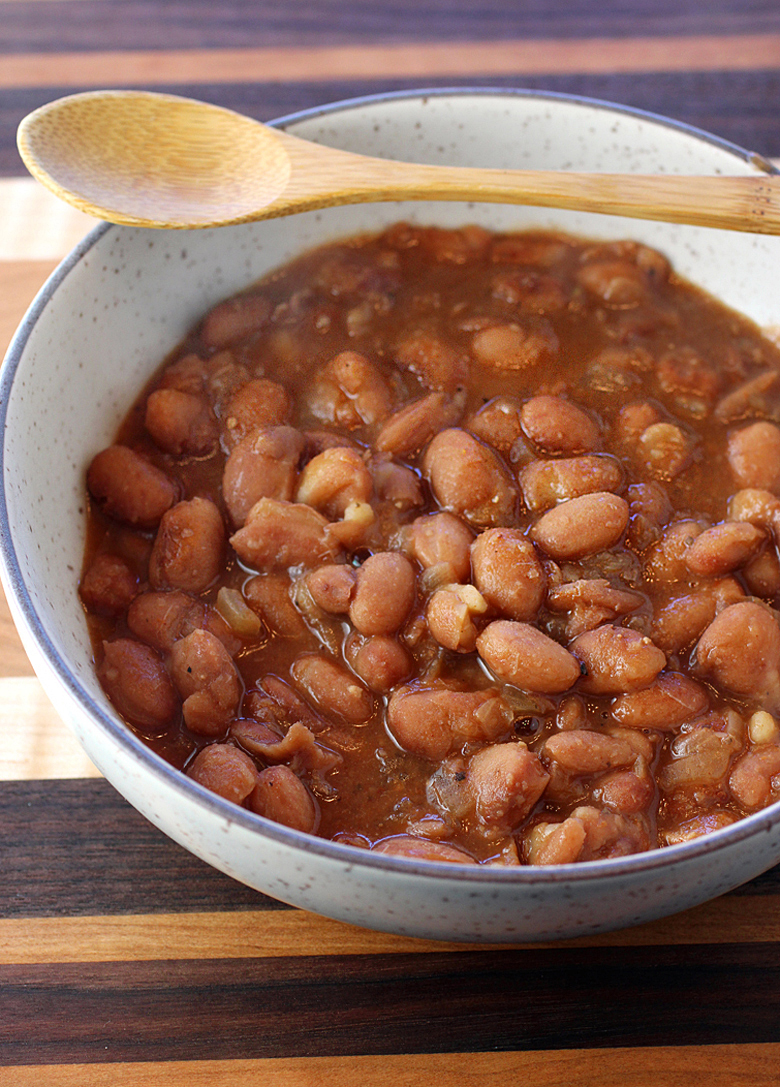
I am not the biggest fan of traditional baked beans. They’re just way too sweet, and frankly, I’d rather save the sugary part of my meal for dessert.
What makes these Southern baked beans so miraculous is that they are not cloying at all, but deeply, profoundly savory with just a whisper of natural fruity sweetness from tomato paste. In fact, it’s rather astonishing the depth and complexity they take on, given how few ingredients are used.
There’s no time like Fourth of July to try this espresso-garlic marinated flat iron steak on the grill.
Don’t just sip that morning espresso. Use it to marinate steak for a sensational supper.
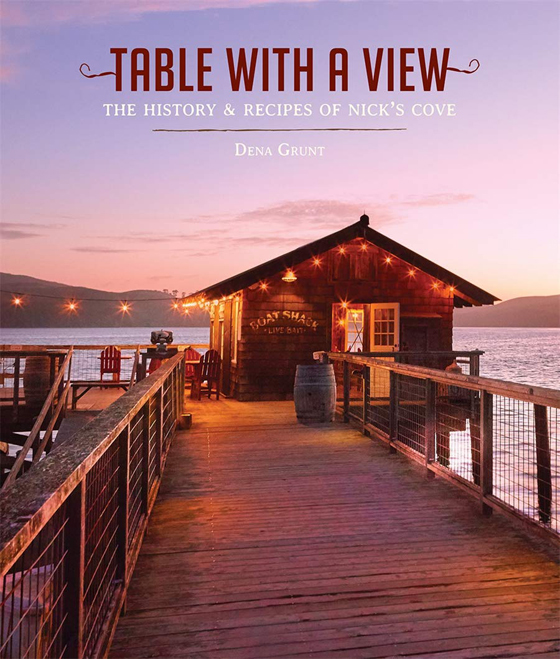
“Espresso-Marinated Flat Iron Steak” is definitely a recipe worth saving some of those coffee beans to try. It’s from the new cookbook, “Table with a View: The History of Recipes of Nick’s Cove’ (Harry N. Abrams) by Dena Grunt, the owner of Nick’s Cove, the picturesque restaurant and resort overlooking Tomales Bay.
Originally built in the 1930s, this historic resort features charming waterfront cottages, a rustic bar, and a restaurant where Chef Kua Speer showcases local seafood, cheeses, and produce, including vegetables, fruits and herbs from The Croft, the resort’s own garden.
Leafing through the book is like taking a vacation unto itself with beautiful photos of brilliant-blue Tomales Bay. You’ll definitely work up an appetite, too, spying recipes from the resort for “Dungeness Crab Cakes with Spicy Paprika Mayo,” “Rabbit Sugo Papparadelle,” “Tomales Bay Clam Chowder,” and “Lobster Poutine.”
Flat iron steak is so named because it’s thought to resemble the shape of an old-school metal iron. Cut from the chuck (or shoulder), it has quite a bit of marbling, unlike the much-leaner flank steak of which it bears a resemblance.