Category Archives: Restaurants

Harmony and Simplicity Meet at Hachi Ju Hachi in Saratoga
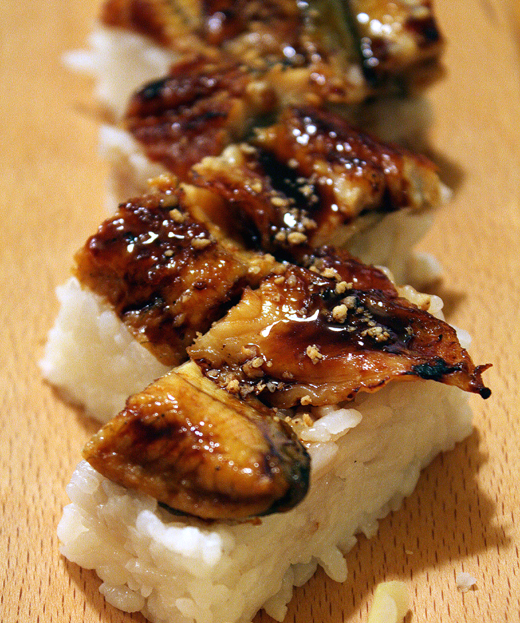
At Hachi Ju Hachi, the Japanese restaurant in downtown Saratoga, you won’t find the standard menu of teriyaki, Philly rolls, and Bento Box “A”’s like that of so many other establishments. Nor will you find bells, whistles, over-the-top flourishes or modern sensibilities that jar and shock.

Instead, you will find dishes with a real purity of flavor and lovely simplicity.

Chef-Owner Jin Suzuki may be only 45 years old, but he is decidedly old-school when it comes to cooking.

At 19, he started his training as a chef at a restaurant just outside of Tokyo. For six months, all he did was clean the windows and floors. He wasn’t even allowed to step foot inside the kitchen to wash dishes. It would be another three years before he was allowed to wash the rice. All of this had a profound effect on him.

“The more I saw, the more I got curious,” he says. “I learned that in-between confidence and arrogance is humility. So many chefs can be good technically. But so few chefs can attain spirituality in their cooking.”

One need only glimpse Suzuki, with his crisp chef’s coat, perfectly knotted tie, geta sandals, and serene composure to know this is a chef who has indeed attained that.
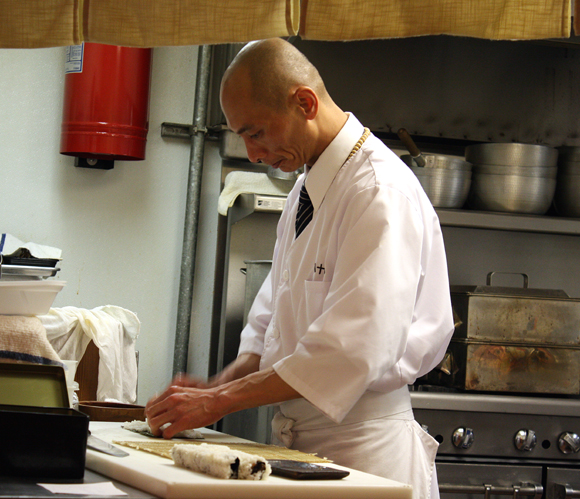
The name of the restaurant, Hachi Ju Hachi, which opened in November, comes from the word for  “rice” in Japanese. Taken apart, the kanji characters represent the number,”88.” Whether it was fate or not that led Suzuki to this exact location to open his restaurant is anyone’s guess. All he knows is that a few months after he opened, he happened to notice that the sidewalk tree right in front of his restaurant bears an identification medallion with “88” engraved on it. Coincidence? Or not?

Suzuki likes to believe it was destiny that led him to Saratoga, where he practices his version of washoku: traditional Japanese food based on the principles of harmony, balance, simplicity and restraint.
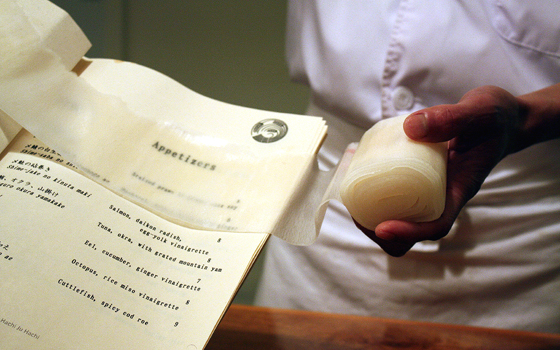

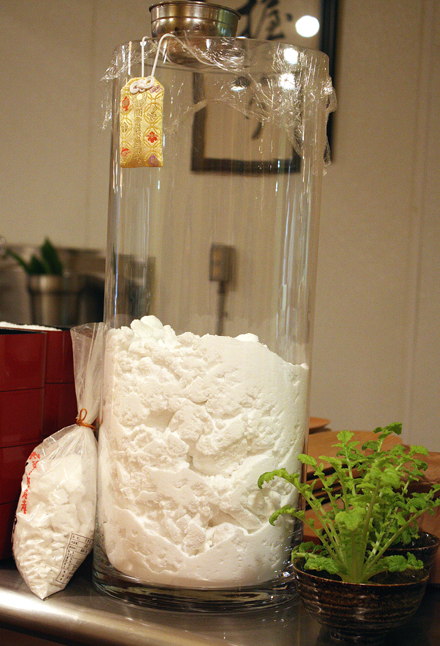
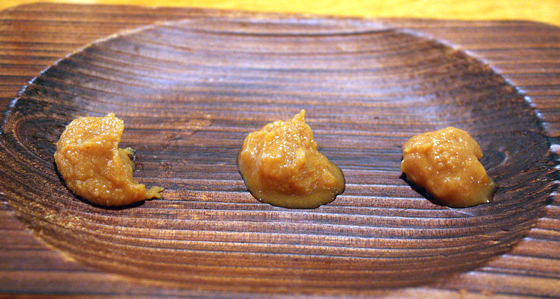
He practices techniques that form the basis of the art of kaiseki (Japanese haute cuisine), some of which are not even done in Japan anymore because they are so time-consuming to do, he says.  This is a man who makes his own salt by boiling iodized salt and sea salt in water for six hours until the liquid evaporates and all that is left is a softer, milder alchemy with an almost faint sweetness. He preserves shiitake mushrooms by braising them in sake, soy and kombu until they are soft, sticky and almost candy-like. Suzuki also makes his own miso with shrimp heads that he’s fermented for six months, as well as homemade tofu using white sesame, black sesame, edamame and corn.

“When I learned how to make tofu properly, it moved my soul,” he says. “I kid you not.

Although the restaurant has a few tables, most of the seats — and the best ones — are at the shiny, blond bar that has a view of the kitchen. A kids’ playroom, complete with all manner of toys, is at the back of the restaurant for diners’ children, as well as Suzuki’s 4-year-old daughter, who sometimes helps deliver menus to patrons.
Read more

Kobe Beef and Killer Cabernet Sauvignon — at Two South Bay/Peninsula Restaurants

Take some of the richest, most marbled beef around.  Pair it with an inky, full-bodied, Old World-style Napa Valley Cab.

What’s not to like?

Especially when it’s Snake River Farms’ American-style Kobe and Signorello Estate’s 2005 and 2006 Estate Cabarnet Sauvignon with its balance of raspberry, cedar, earth, and tobacco notes.

The two specialty producers have partnered for the past few years to introduce foodies to the luxurious combination of Kobe and Cab. In fact, Signorello even runs a “Kobe & Cabarnet Club,” in which participants receive three shipments a year of Kobe cuts with bottles of Cabernet Sauvignon. Each shipment averages $390.

If that’s a little too rich for your blood, those in the South Bay will be glad to know they can experience the “Kobe & Cab” magic in a slightly more economical way at two local restaurants.

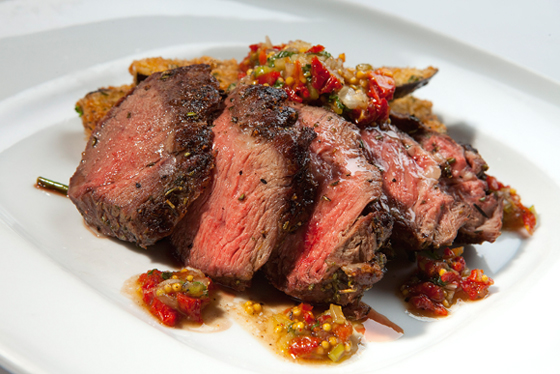
The Grill on the Alley in San Jose is serving a 12-ounce New York Snake River Farms steak seasoned with grilled asparagus ($65) with a bottle of 2005 Signorello Cab ($75)  through at least the end of May.

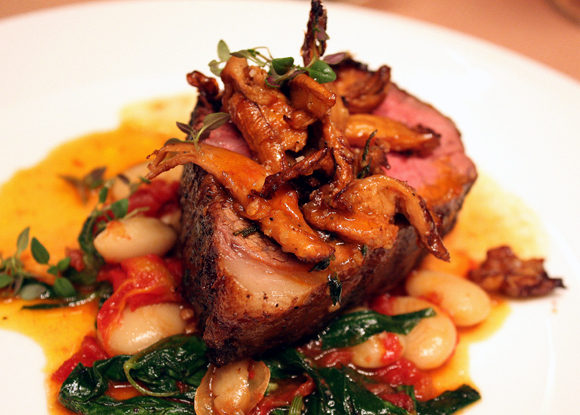
And Quattro at the Four Seasons Silicon Valley in San Jose is featuring two dishes at lunch and dinner through the end of April: An open-face Snake River Farms tri-tip steak sandwich with porcini gravy, fried artichokes and aioli ($19); and a Snake River Farms rib eye with gigante beans, oven-cured tomatoes, black chanterelles and spinach ($45).

The 2006 Signorello Estate Cabarnet Sauvignon is available there by the glass ($21) or bottle ($85).

I had a chance to find out just how wonderful the meat pairs with the wine when I was a guest at a special kick-off dinner at Quattro last month that spotlighted not only Signorello wines and Snake River Farms’ Kobe beef, but also its incomparable Kurobuta pork.

The Wagyu breed is famous in Japan, where the cattle have been raised in the Kobe region for hundreds of years. Snake Rivers of Boise, Idaho crosses Japanese Wagyu with Black Angus cattle for its American-version of Wagyu beef.

No, Snake River Farms doesn’t massage its cows with sake and feed them beer as the folklore in Japan goes. Instead, the Snake River Farms cows are fed Idaho potatoes, white wheat, corn and alfalfa hay. While most other cows in the United States are brought to market at 16 months, the Snake River ones are fed up until they’re 30 months old, resulting in more flavor and a whole lot more marbling.

Just how good is this stuff? Uber-chefs, Michael Mina, Wolfgang Puck and Thomas Keller are huge fans, especially Keller who buys almost all of the Snake River rib eye caps produced (the extremely marbled muscle around the outside of a center-cut rib-eye steak).

Read more

A Celebration of Lamb and Asparagus

If there are two ingredients that sing of spring, it’s lamb and asparagus.

To celebrate both, the Lark Creek Restaurant Group is partnering with California asparagus growers and lamb ranchers to showcase those ingredients on menus at four of its San Francisco Bay Area restaurants through the end of the month.

Guests also can take home recipes for each dish to recreate them in their own kitchen.

Here are some of the dishes you can enjoy:

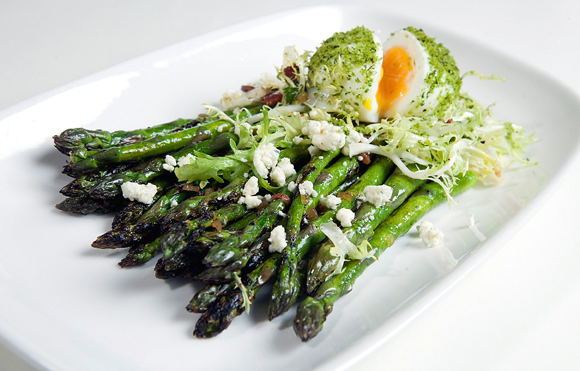
*  One Market in downtown San Francisco, walking distance from the Hotel Vitale, will be serving up warm, grilled Zuckerman’s Farm asparagus salad with 62-degree Marin Sun Farms chicken egg; and grilled Sonoma lamb loin chops marinated with espelette chili and garlic.

* LarkCreekSteak, also in downtown San Francisco, steps from the Marriott Marquis, will feature pan-roasted local asparagus with toasted macadamia nuts; and grilled lamb chops with harissa, mint sour cream, and fava beans.

Read more

Four New Lovely Lunch Options

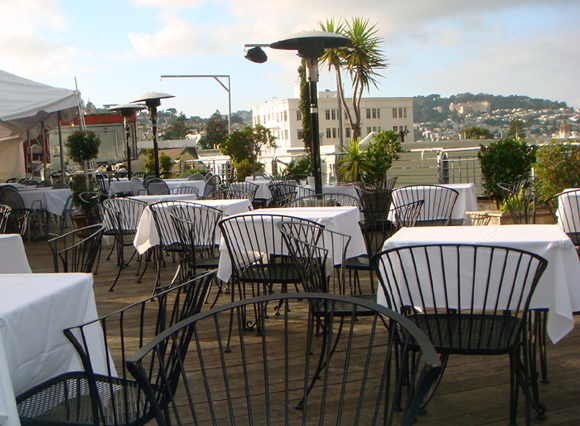
Enjoy a bird’s eye view of San Francisco from Medjool Restaurant’s new rooftop terrace, where you can sit back with a delicious lunch as you take in the colorful sights from high above Mission Street.

The Mediterranean restaurant, a short drive from the Holiday Inn Civic Center, just started offering a  new lunch service with the likes of  a Medjool sampler platter ($13) with hummus, baba ghanoush, and tabouli; mixed green salad with pears, toasted almonds, blue cheese and shallot vinaigrette ($9.50); Kobe beef burger ($10.50); or fish and chips with house-made tartar sauce and fries ($10.50).

Lunch on the open-air terrace is available, 11:30 a.m. to 2:30 p.m. Monday through Friday. Don’t forget to stop at the ATM first, though, as it’s cash only at this height.

Down on the Peninsula, Marché of Menlo Park has started serving lunch for the first time since opening nine years ago.

Monday through Friday, 11:30 a.m. to 2:30 p.m., enjoy lighter fare such as asparagus soup ($6); crab salad sandwich with avocado and aioli ($18); and duck confit salad with toasted walnuts ($15). There’s also a three-course, prix-fixe option for $30, with an additional $15 for paired wines.

In Burlingame, Medallion Steakhouse is getting in on the weekday lunch-time action, too.

Read more

Palo Alto’s Shokolaat Shakes It Up

After two and a half years as a small-plates restaurant, the chic Shokolaat restaurant and patisserie in downtown Palo Alto, tweaked its concept two months ago to make the switch to entree-sized main dishes instead.

Chef/Co-Proprietor Shekoh Moossavi said the change has been a hit with diners, who had wanted more substantial fare.

I was invited to dine as a guest recently to try the new menu, which features the likes of roasted quail with shallot confit risotto ($21), and Mediterranean sea bass with parsnip puree, Brussels sprouts and applewood smoked bacon $21).

As you step inside the dimly lit restaurant from the roomy outdoor seating area, the first thing you can’t help but notice is the pastry and chocolate cases, front and center. Moossavi, who has worked at Gary Danko and Acquerello, both in San Francisco, handles the savory side of the menu, while her husband, Pastry Chef Mark Ainsworth, handles the sweets.

Ainsworth, who worked at the Lodge at Pebble Beach in Carmel, creates such delights as Bailey’s Mousse Bombe  and the traditional Gateau Basque cake filled with semolina custard. Artsy chocolate bonbons run the gamut from “Don Juan” (Anejo tequila with lime juice, lime-infused sea salt and white chocolate) to “Johnny-B-Good” (Kentucky Straight Bourbon blended with milk chocolate and vanilla, then encased in dark chocolate).

Shokolaat also makes all its own bread, too, and sells loaves to take home. If you time dinner just right, too, the waitstaff will send you home with a free loaf of bread if there are still any left at the end of the night that haven’t yet sold.

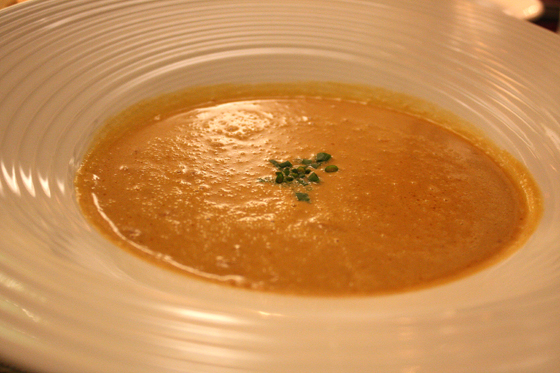
We started with a velvety shrimp and crab soup ($7) that was made with an intense seafood stock with the sweet-briny taste of the sea.

Read more

« Older Entries Recent Entries »