Category Archives: Seafood

Sustainable Is…

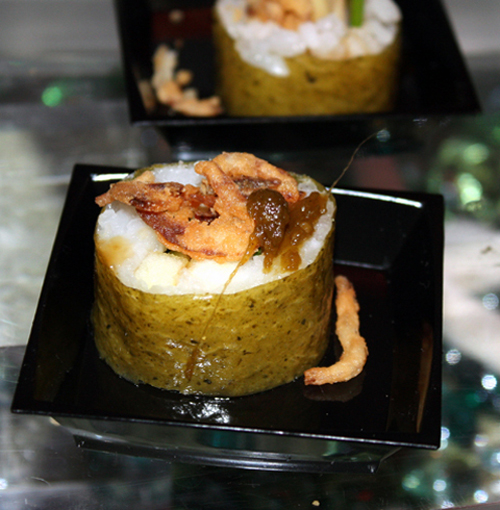
Tracy Griffith's sustainable sushi.

At last week’s eighth annual “Cooking for Solutions” event at the Monterey Bay Aquarium, chefs, winemakers, scientists, purveyers, fishermen, farmers, and food writers came together to learn and discuss  how to better follow a more sustainable path — one that lessens the impact on earth and oceans.

What is sustainable? It comes in all guises. Come see for yourself.

Sustainable is…

Tracy Griffith, sushi chef and sister of actress Melanie, whose seared albacore roll (see photo above) served at the gala showcased a sustainable fish that’s one of the top choices on the aquarium’s “Seafood Watch Guide” and “Sushi Guide.”

Earthbound Farms' organic fro-yo served at its farmstand.

…Carmel Valley’s Earthbound Farm, the pioneer in pre-washed salad greens. With 40,000 acres in California, Arizona, and Mexico, it  now is the largest organic farm in the world. Its farm stand on Carmel Valley Road is open year-round. It just started selling its own organic fro-yo, too.  Slightly tart and lighter in body than Pinkberry, the creamy treat comes in natural honey and a fruit flavor (You can get the two swirled together, too). The day I was there the featured flavor was raspberry.

Chef Thomas Keller.

…Thomas Keller. The acclaimed chef of the French Laundry in Yountville was honored as “Chef of the Year” by the aquarium for his work in promoting fresh, local, and sustainable ingredients through his spectacular four-star cooking.

Keller graciously signed copies of his cookbooks during the event, as fiancee Laura Cunningham, former director of operations for his restaurants, looked on. She wasn’t wearing her Keller-designed engagement ring that night, only because it was being re-sized. Still no word yet on whether the nuptials will take place this year or next.

The jovial Alton Brown.

…the Food Network’s Alton Brown, who was honored as “Educator of the Year” by the aquarium. Brown and his wife plan to set up a foundation to foster sustainable food projects. He’s also received the nod from the Food Network to do several “Good Eats” shows highlighting sustainable seafood.

Tataki Sushi & Sake Bar in San Francisco, the first sustainable sushi bar in North America. Diners are heartily embracing the concept, so much so that the tiny sushi bar now sometimes has a wait of two hours on weekdays.

At the “Cooking for Solutions” gala, Tataki’s sushi chefs handed out “faux-nagi” — scored wild sablefish brushed with the traditional sweet soy-rice wine sauce that has the same silky mouth-feel as overfished unagi (eel).
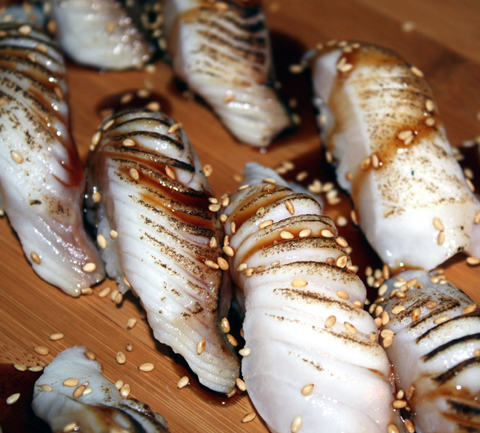
It tastes like unagi, but this is sustainable.

Greenfish Catering, a five-year-old San Jose company that specializes in sustainable sushi platters, bento boxes, and catered events that feature good-for-you and good-for-the-environment ingredients such as farm-raised oysters.
Read more

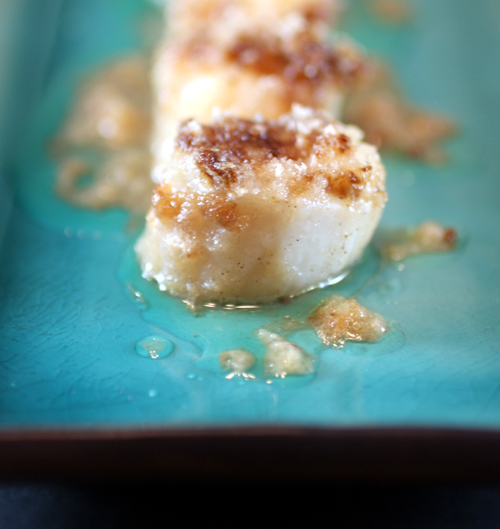
Sensational Scallops with Porcini Butter

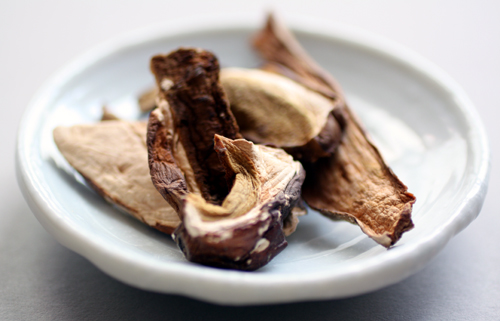
Dried porcini.

I am not made of money. Greenbacks are not stuffed into my mattress. And the closest I’ve come to a Cartier watch is the advertisements I’ve gazed at in glossy magazines.

Nevertheless, I cooked sea scallops. With porcinis. Lots of butter. And truffle oil.

Yes, even in this economy.

Before you think me crazy for making such a luxurious dish in a lean and mean time, I am here to say that is precisely why you should make such a recipe here and now. Because even when times are bad, we ought to spoil ourselves just the teeniest bit if we at all can. It’s what makes life worth living. And it’s what keeps us going. It’s a small treat to reassure ourselves that no matter what has befallen us, we’re still good people, and we still deserve good will, good tidings, and darn it all, good food to boot.

To be sure, I had bought the truffle oil (even if most of the ones on the market are artificially flavored) and the dried porcinis in flusher times. But the great thing about these ingredients is that a little goes a long way. A dab of truffle oil, a few ounces of dried mushrooms — each adds so much more depth and complexity greater than their minuscule amounts used.

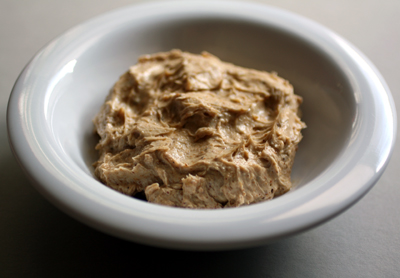
Porcini compound butter.

This simple recipe for “Baked Scallops with Porcini Butter” comes from one of my favorite cookbooks of last year, “Fish Without A Doubt” (Houghton Mifflin) by Chef Rick Moonen of RM Seafood in Las Vegas, and writer/editor Roy Finamore. It includes more than 250 recipes using sustainable seafood. It’s chock-full of information on the most eco-friendly seafood, as well as others we should avoid because they are over-fished or harvested in ways that damage the environment. If there’s room for only one seafood book on your shelf, this would be the one.

When buying scallops, look for dry-packed ones. Avoid the ones that have been dipped in a solution of sodium tripolyphosphate, which helps extend their shelf life. Not only will you end up paying more in weight for these plumped-up scallops, but because they are so packed with water, they will steam — rather than properly sear — when cooked.

The finished dish.

This easy dish is a little like the traditional coquilles St. Jacques, except that it’s made with a compound butter composed of dried porcinis, truffle oil, and sherry vinegar. A single-layer of scallops gets laid out in a gratin dish, with the butter smeared both underneath and on top of them. Dry bread crumbs are sprinkled on just before baking. I used Japanese panko crumbs, but you can use whatever you have on hand.

Read more

A Taste of Nantucket at Marche

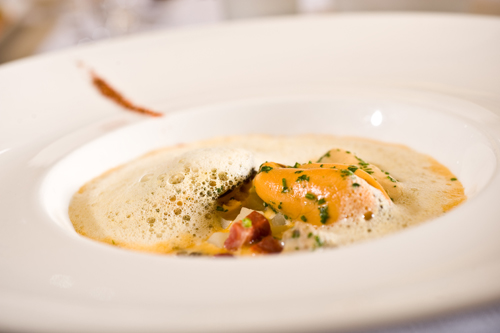
Clams and mussels with chorizo. (Photo courtesy of Chris Ayers)

Enjoy the flavors of Nantucket without having to fly to the East Coast.

Menlo Park’s Marche restaurant brings the impeccable seafood of that region to you for a special dinner on March 20. This will be the restaurant’s sixth annual “Taste of Nantucket” soiree.

Nantucket fisherman Stephen Bender will be flying directly from Nantucket with just-harvested Nantucket Bay scallops, Polpis Harbor oysters, freshly dug clams, and a wealth of other fish and seafood.

Read more

Sustainable Sushi

Sit down at your favorite sushi bar to order mirugai, bonito, hotate or akame.

Chances are that you’re not really sure what you’re always eating, given that the seafood names are in Japanese. Moreover, chances are even greater that you’re unsure whether what you’re eating is sustainable or being over-fished to extinction.

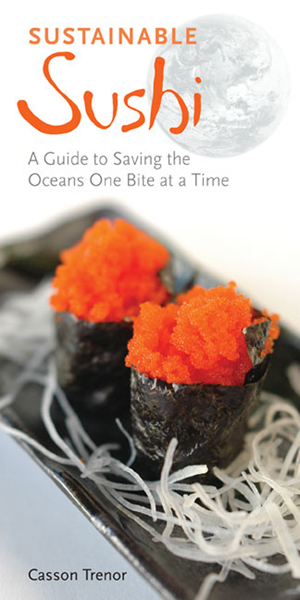
You may remember my post last year about three new sustainable sushi guides by three environmental organizations. Now, on the heels of those, comes Sustainable Sushi (North Atlantic Books) by Casson Trenor, a sustainable seafood expert who’s also a consultant to Tataki Sake and Sushi Bar in San Francisco, the first sustainable sushi restaurant in North America.

Author Casson Trenor

At 110 pages, this book is a more in-depth look at 39 species found on sushi menus. Trenor includes information on such crucial issues as mercury levels, dredging, and crowded fish farms. The species are color-coded so that you can tell from just a glance whether it’s sustainable, unsustainable, or one that you should proceed with caution about. It’s a must-read for any sushi aficionado.

Read more

Awesome Abalone

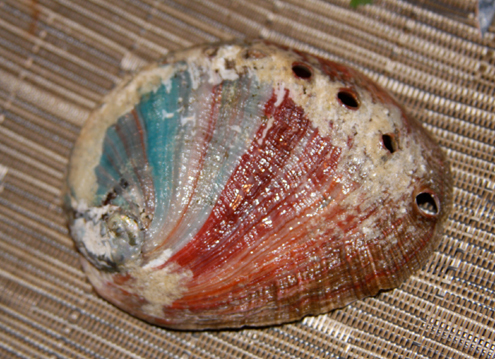
"Super'' red abalone. (Photo courtesy of Steve Lonhart, SIMoN/NOAA)

Face it, not many of us can sport six-pack abs.

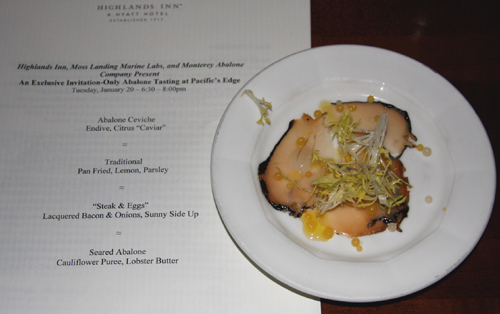
But the Highlands Inn in Carmel can give you “Super Abs” — for a price.

That’s short for abalone that’s farm-raised in a sustainable manner by the Monterey Abalone Company. And these particular ones are ”super” because the red abalone (the most common type raised off California waters) are being cultivated wtih a new method that results in faster growth, a brighter color, and apparently more flavor. (Yours truly has only tasted the “regular” Monterey Abalone Company abalones. And those are mighty fantastic already.)

Abalone ceviche. (Photo courtesy of Steve Lonhart, SIMoN/NOAA)

The abalone company is working in conjunction with Moss Landing Marine Laboratories to do this. Highlands Inn has exclusive rights to all of the “Super Abs” now available to be harvested.

Read more

« Older Entries Recent Entries »