Category Archives: Travel Adventures

Maui’s Magnificent Agriculture

When in Hawaii, you have to indulge in pineapple, right?

MAUI, HAWAII — Whenever I visit Hawaii, I fall head over heels — not for the sun, sand or surf, but the fruit.

I scour farmers markets for apple bananas and varieties of mangoes you never find on the mainland. I’ve even made a beeline to the frugal ABC stores for chilled papaya halves, already packaged with a wedge of lime. Because when it comes to fresh fruit in this tropical paradise, I admittedly turn rather fanatical.

So, of course, I jumped at the chance two weeks ago when I was invited to be a judge for the Maui County Agricultural Festival cook-off at Maui Tropical Plantation. In this competition,  presented by the Maui County Farm Bureau and Slow Food Maui, professional chefs were each paired with a local farmer to create a dish that showcased a particular fruit, vegetable or protein raised on Maui.

To first get a better understanding of Maui’s bounty, our hosts from the Maui Visitors & Convention Bureau, gave us a fruit tutorial.

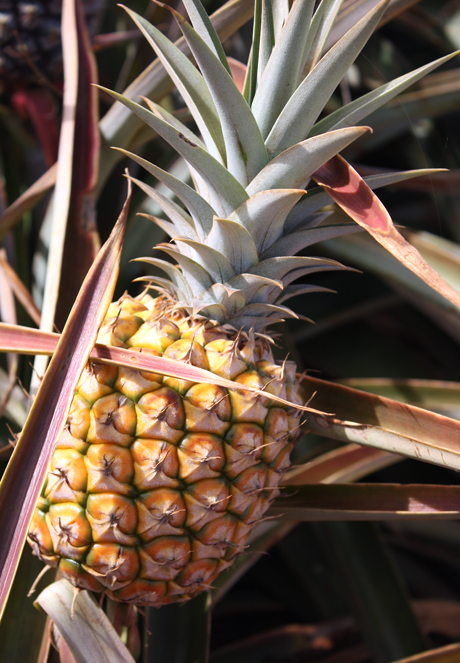
Take a tour of the working pineapple plantation.

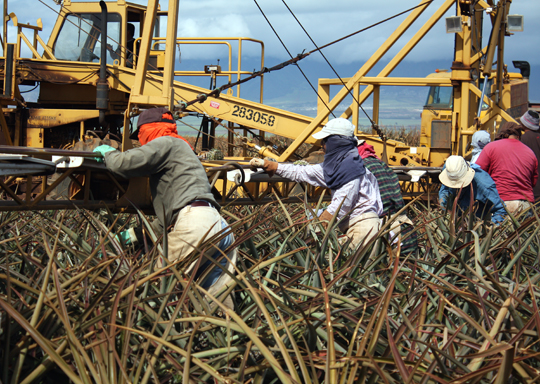
Workers plant and pick the pineapples by hand.

It started with a Maui Gold Pineapple Tour, the only working pineapple plantation tour on this island. Price is $65 for adults; $55 for children, ages 5-12. And each person gets to take home their very own pineapple afterward.

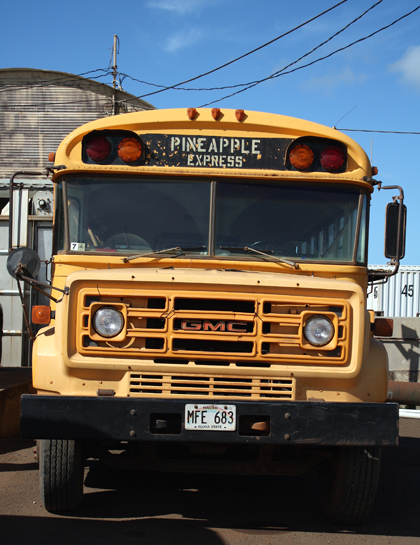
Board the “Pineapple Express” bus to get a tour of the fields. There are 1,500 acres planted here — all by hand. An especially efficient worker can plant 7,000 pineapples a day.

Pineapple, which originated in Brazil, actually grow on stalks. It takes two years for a new crop to emerge after it is first planted.  And it takes a surprising 18 to 24 months for the fruit to mature.

Read more

Highlights From Florida — Beyond the Pillsbury Bake-Off

When I wasn’t sequestered behind closed doors as a judge of the 45th Pillsbury Bake-Off last week, I did manage to get out and about to discover some other fun things in Orlando. Here are other highlights of that trip:

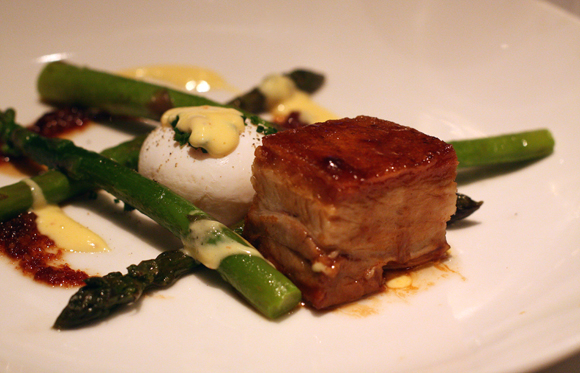
* Poached farm egg, aleppo pepper hollandaise, California asparagus and pork belly at Luma on Park in Winter Park, Fla.

A perfectly poached egg that oozes a bright orange yolk to make a dish of juicy pork belly even richer. It doesn’t get better than that at this sophisticated restaurant with a glam two-story glass wine “jewel box” that displays bottles upon bottles of fine vintages.

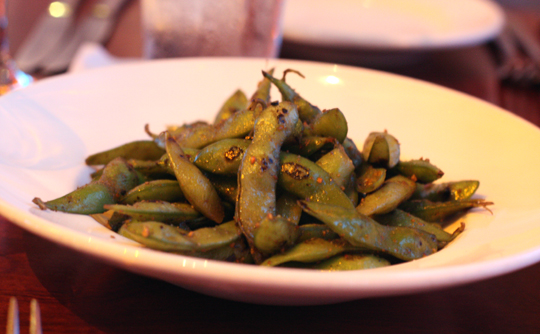
Not your average edamame.

* Togarashi spice stir-fried Japanese edamame at Emeril Lagasse’s Tchoup Chop in Orlando.

Read more

Judging the 45th Pillsbury Bake-Off

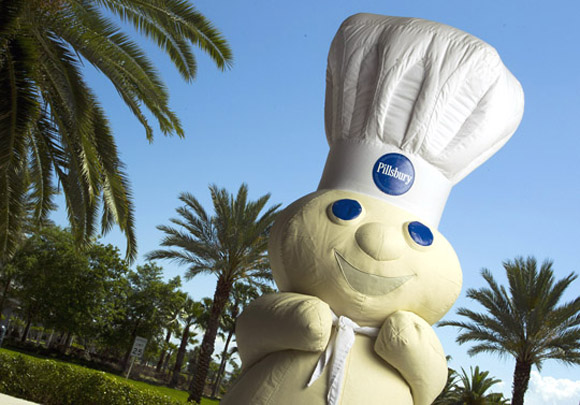
My guy. (Photo courtesy of Pillsbury)

The Dough Boy and I — we go way back. We’re tight — like this (fingers intertwined). He’s even let me poke him in the tummy.

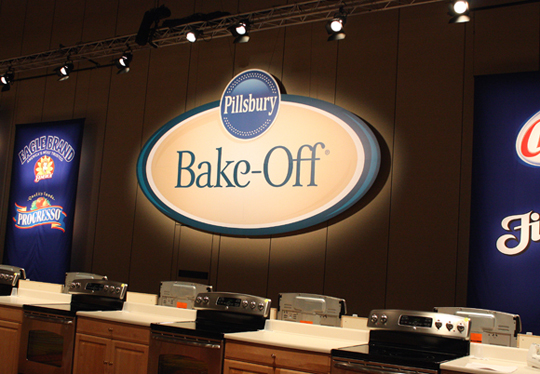
So, I was thrilled to be united with my doughy guy earlier this week, when I was invited to be a judge for America’s oldest and most lucrative cooking contest, the Pillsbury Bake-Off in Orlando.

It was my third time as a judge in this competition. And my third time having a hand in deciding who went home with the grand prize of $1 million.

Started in 1949, the event celebrates the joy of home-cooking as only amateurs are allowed to enter. Each time, tens of thousands of entries from home-cooks are whittled down to just 100 finalists who compete to create an original, great tasting dish that will impress not only a panel of discriminating judges, but the entire nation, which has grown up with this iconic contest.

The judges are chosen almost a year ahead of time. From that moment onward, we had to avoid reading, seeing or hearing anything about the contest so that the contestants remained completely anonymous to us. You almost felt like you’d been selected for a secret ops mission, where information is strictly on a “need to know” basis. Hmm, good thing I packed a lot of black clothing.

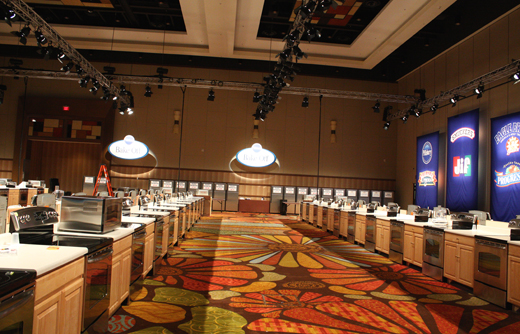
The ballroom with 100 kitchens set up for the Bake-Off. (Photo by Carolyn Jung)

A day of quiet before all the action started. (Photo by Carolyn Jung)

We 12 food professionals took our mission seriously, too. A few of us were veteran Bake-Off judges, having done it once or twice before. But others were first-timers, nervous and excited about what the judging process would be like. Should we do stomach exercises to gird ourselves for so many dishes? Should we wear XL elastic pants that day? Just how many hours would we be stuffing our faces? Would we have to arm wrestle one another if we couldn’t agree on a winner in the end?

Read more

Souvenir From Hawaii — Macadamia Nuts

Macadamia nuts direct from Hawaii star in these indulgent cookies.

When visiting Hawaii, don’t forget to pack your swimsuit, flip-flops, sunscreen — and Costco card.

Seriously.

The cavernous membership warehouse store has some of the best — and best priced — Hawaiian souvenirs you can find. I’m talkin’ surf T-shirts, bags of taro chips, lilikoi cookies, Kona blend coffee, and of course, macadamia nuts. My husband had to buy another tote bag for the plane for all the goodies he brought back home on our trip to the islands last year.

Me? I was content with a big bag of macadamias for a steal.

After all, it’s always good to have a ready supply for when the baking mood hits.

And it did big-time with this recipe for “Macadamia and White Chocolate Chunk Cookies” from Alice Medrich’s “Chewy Gooey Crispy Crunchy: Melt-In-Your-Mouth Cookies” (Artisan), of which I received a review copy. Only, I changed it up, substituting dark chocolate for white — TCHO Dark Chocolate Disks 68 Percent ($7.98 for 8 ounces) to be exact, of which I also received a sample. With macadamias one of the richest tasting nuts around, I prefer them with the slight bitter-earthiness of dark chocolate rather than the often cloyingly saccharine white chocolate.

The cookie dough needs to be refrigerated for at least two hours or overnight, so plan accordingly.

Read more

Hawaii Part 5: Kona — Where Coffee is King

Red "cherries'' on a Kona coffee tree are the ripe fruit, from which the coffee seeds or beans come from.

KONA, HAWAII — When you think of the Kona district on the Big Island, it’s hard not to think of coffee immediately.

The first coffee was planted in Kona around 1828 by missionary Samuel Ruggles, where it thrived because of the mineral-rich volcanic soil.

It is now Kona’s most famous crop and probably its most expensive. You’ll find top-grade Kona coffee selling for upwards of $38 a pound. Don’t be fooled by the so-called “Kona Blends.” Yes, they’re cheaper — but for a reason. The blends are required to contain only 10 percent Kona coffee. The rest can be made up of much cheaper coffee from elsewhere around the world.

Kona coffee may get even more expensive in the future, as farmers have had to do battle with a pesky, virulent beetle that has been attacking the berries for the past couple of years. Moreover, just like farming elsewhere, it remains a hard profession that younger generations are turning their backs on.

Tom Greenwell is a fourth-generation grower. His great-grandfather, British adventurer, Henry Nicholas Greenwell, was one of the first exporters of Kona coffee in the late 1800s. Today, Tom Greenwell carries on the family tradition, overseeing Greenwell Farms, where the planting and picking are still done by hand on 35 lush acres.

Tom Greenwelll, fourth-generation Kona coffee grower.

Recently, I had a chance to tour the farm with Tom Greenwell during my trip to Hawaii, courtesy of the Hawaii Visitors and Convention Bureau.

Before you even stick your head into the roasting building, the sweet aroma of roasty-toasty beans hits you. It’s like coffee syrup aromatherapy.

Greenwell Farms grows about 280,000 pounds of coffee annually. Small white flowers begin to bloom on the coffee trees in by February, followed by green berries in April. From August through February, the red fruit, known as a “cherry” (because it looks similar to one) has ripened and is ready for picking.

The pulper extracts the beans from the fruit.

The fruit is separated from the seed or bean with a machine known as a pulper. The beans are fermented overnight, then rinsed before being spread out on a rooftop to dry for at least 30 days. After that, the beans go into the roaster for about 15 minutes.

Read more

« Older Entries Recent Entries »