Gorge-a-thon at the Chocolate Salon

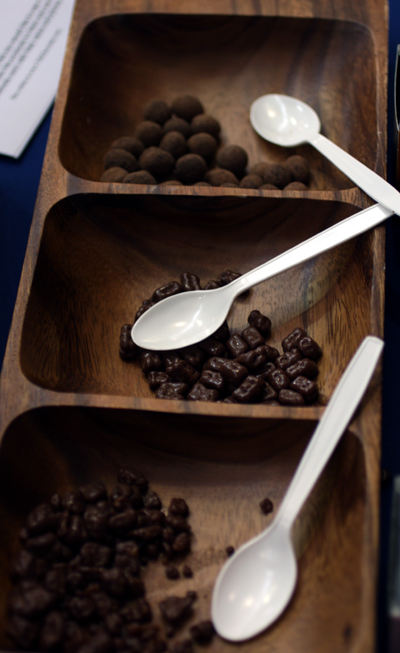
Kshocolat's chocolate-covered nuts and honeycomb bits.

Chocolate in vodka.

Chocolate in cake.

Chocolate in custard tarts.

Chocolate in fanciful bonbons.

Chocolate, chocolate, everywhere.

That was the scene at last Saturday’s San Francisco International Chocolate Salon at Herbst Pavillion, where 30,000-square-feet of space was devoted to all things chocolate. Yours truly was lucky enough to be a judge for the chocolate competition. I think chocolate is still coursing through my veins from all that nibbling.

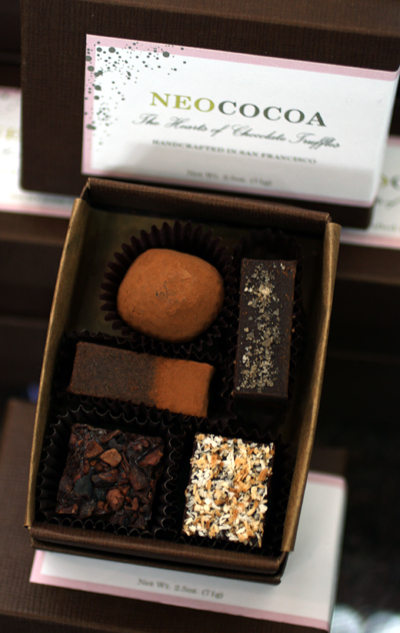
San Francisco's Neococoa truffles made with organic, fair trade, and local ingredients.

Hundreds of chocoholics made the rounds to taste samples at more than 50 booths. Here were some of my favorites:

* Van Gogh Dutch Chocolate Vodka: Think the taste of chocolate milk, but in the form of clear vodka. This is one smooth operator, even when tasted straight. It goes down easy, with no serious burn. A truly elegant and polished spirit. A 750ml bottle is about $30.

* William Dean Chocolates: Bold colors (green, fuchsia, azure, bright orange) and unique shapes make these truffles extremely eye-catching. The Largo, Fla. chocolates are all made by hand. The PB&J is a masterpiece: milk chocolate and peanut butter with the crunch of peanut brittle, and a sweet, complex jelly made from three different fruits. A nine-piece box of assorted chocolates is $18.

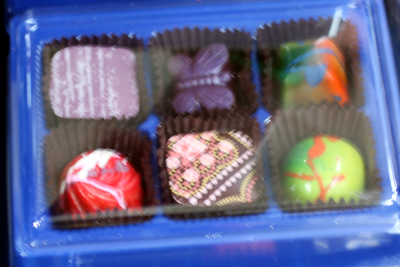
Fun colors from William Dean Chocolates of Florida.

* Marti Chocolatt: Filipino-American Tonet Tibay studied the art of chocolate making at Ecole Lenotre in Paris. These exquisite creations explode on your tongue with the assertive flavors of pandan, ginger, rose-raspberry, and even goat cheese. The durian is creamy, bold and complex. Made in Los Angeles, these are chocolates that grab your senses. A box of six bonbons is $13.50.

Read more


Passover Celebration and Wine Events

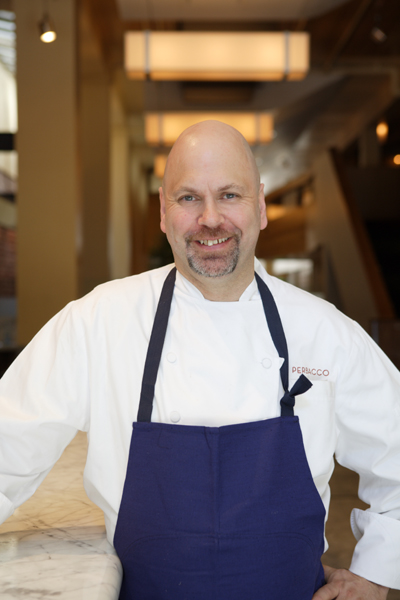
Executive Chef Staffan Terje of Perbacco. (Photo courtesy of Frankie Frankeny)

Last year’s Passover celebration at Perbacco Ristorante proved so popular, the San Francisco restaurant is doing it again this year on April 10.

Chef and cookbook author Joyce Goldstein will join Perbacco Executive Chef Staffan Terje to create an Italian Jewish Passover dinner that includes antipasti, desserts, and side dishes served family-style, along with your choice of primi and secondi. Entree choices include seabass with a sauce of artichokes, and lamb shoulder braised with olives.

The four-course dinner is $49 per person. For reservations, call (415) 955-0663.

Tonight, from 5:30 p.m. to 7 p.m., enjoy a free wine-tasting lesson at Bistro Luneta in San Mateo that will be taught by Master Sommelier Reggie Narito, one of only three Filipino-Americans to hold that prestigious title.

This will be the first in a series of wine tasting sessions this year at the modern-Filipino restaurant. To reserve a spot, call (650) 344-0041.

Tasting Pinot at last year's Pinot Paradise. (Photo courtesy of the Santa Cruz Mountains Winery Association)

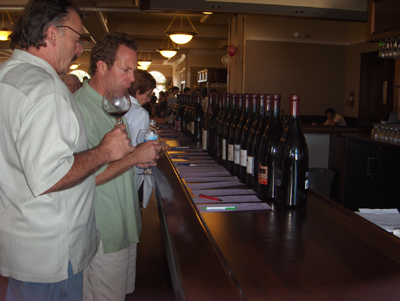
If Pinot is your thing, head to the fifth annual Pinot Paradise on March 28-29 to discover the flavors and terroirs of six recently defined sub-regions in the Santa Cruz Mountains.

Read more


Mighty Fine Monday Meatballs

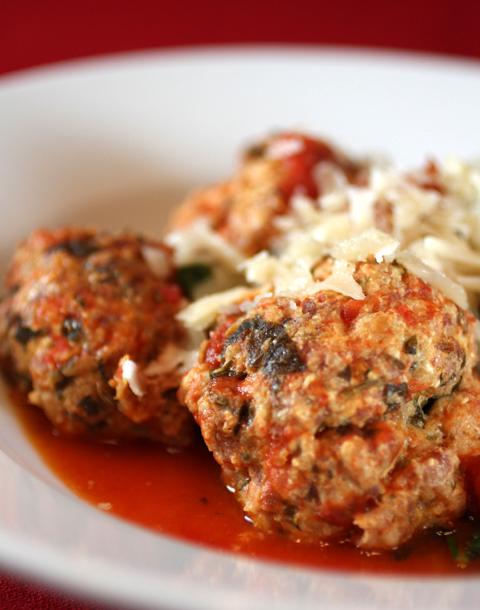
Meatballs so good you might want to make them every day of the week.

Shhhhhhh.

I made “Monday Meatballs” on a Sunday.

Hopefully, the Meatball Police don’t cite me for that infraction.

But honestly, these are so succulent, so ethereal, and with just the right kick of spiciness, that you’ll want to make them any day of the week.

The recipe is, of course, from “A16 Food + Wine” (Ten Speed Press) by Nate Appleman and Shelley Lindgren. I say, of course, because the Monday-night special of meatballs is now legendary at this popular San Francisco restaurant specializing in the flavors of Campania. A16 has featured the meatballs for years. It once tried to curtail the Monday tradition, only to be bombarded with pleas from unhappy diners to bring it back. So, the restaurant did.

Although I’ve dined at A16, I’ve never managed to be there on a Monday night for the meatballs. But making them at home is a cinch, and so worth the time and effort to do so.

In the book, Chef Appleman explains that classic Italian-American meatballs tend to be denser in texture because of the preponderance of meat. But in the old country, meatballs were a way to stretch the larder. So, they were traditionally made with more bread in the mix than is used nowadays. Doing this gives them a fluffier texture that makes biting into them such an unforgettable pleasure.

Read more

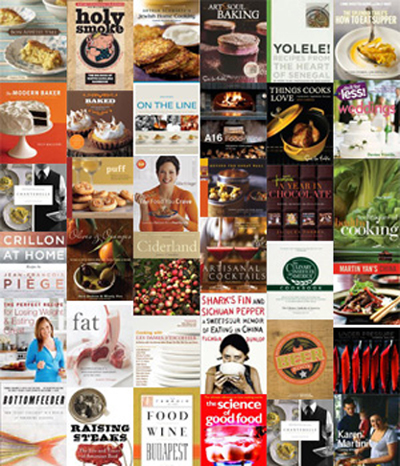
What’s Your Favorite Cookbook of 2008?

cookbooks

The International Association of Culinary Professionals will unveil its picks on April 4, handing out top honors in various categories for the best cookbooks of the past year.

You can weigh in with your opinions, too, at ProjectFoodie.com, where yours truly is an advisor.

Through April 2, that online recipe site will let you cast your own vote for top cookbook of the year.

Read more

Take Five with Howard Bulka, A Chef Possessed By Pizza

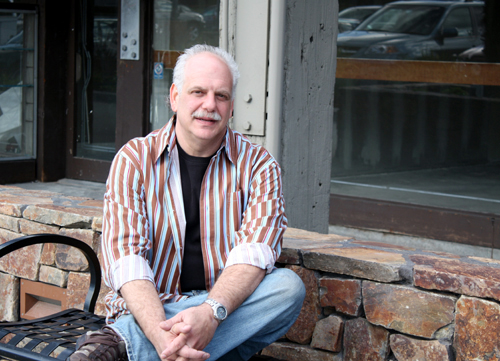
 Chef Howard Bulka sits outside the Palo Alto site that will be transformed into his artisan pizzeria.

After six years of meticulously crafting sophisticated dishes at Marche in Menlo Park, Chef Howard Bulka turned his back on that last year.

He walked away — for the lure of pizza.

Bulka, 50, is still a partner in Marche. But his passion, energy, and creativity aren’t focused on high-end dining anymore. After years of working at white-table-cloth restaurants, Bulka has refocused his sights on down-home eating. It’s all about pies, Pecorino, peppers, and pancetta now.

Howie’s Artisan Pizzeria, presently under construction, is expected to open in the Palo Alto Town & Country Village this summer. For those keeping track, it’ll be in good company next to Sur La Table and two doors down from Kara’s Cupcakes.

Bulka, who lives in Redwood City with his wife and their 7-year-old son, proudly showed off the site to me, with its beamed ceiling, and tiered, 50-seat dining room. He pointed to where the gas oven will be installed to cook the pizzas that will be topped with his own housemade sausage and mozzarella, as well as Fra Mani artisan salumi, and Florida Gulf shrimp. And don’t forget the Straus soft-serve ice cream that will be swirled inside home-made waffle cones.

We talked about why this former executive chef of Silks in the Mandarin Oriental Hotel in San Francisco, who had cooking stints at La Toque in the Napa Valley, Square One in San Francisco, and Chez Panisse in Berkeley, got so seduced by flour and water.

Q: This is too funny, but you and I share something in common. We both received economics degrees from San Francisco State University. Of course, I never ended up using mine, opting to use my journalism degree instead.

A: Here’s something even funnier. I started as a journalism major in college. I wrote for the high school newspaper. But in college, I lasted all of three days doing it. I really can’t write. It’s a horrible chore.

In high school, you might get two weeks to write a story. In college, they sit you down at a typewriter and tell you that you have 15 minutes to write something. It was never going to happen.

I went from that to something really practical. (laughs) That was another huge mistake. Economics is not practical.

Q: So in this day and age, with our generation experiencing the likes of an economy we’ve never witnessed first-hand before, you don’t ever regret you didn’t become an economist?

A: Sometimes I regret I wasn’t a venture capitalist. (laughs)

In my senior year in college, I just knew I wanted to be a chef.

Q: You’re not antsy about opening a restaurant in this sickly economy?

A: I’m not scared. Because of the location, and the type of restaurant I’m doing, I think the economy will actually work in my favor. If people are indeed trading down, I think I’d be a good trade-down option.

Q: So we have David Chang in New York going from working at Cafe Boulud to doing modern Korean street food at his mini Momofuku empire. We have Dennis Leary in San Francisco leaving the elegant Rubicon to open his own little diner, Canteen, and an even teenier sandwich shop, the Sentinel. Now, you. Why are so many fine-dining chefs turning to super-casual instead?

A: Part of it is the economy. Clearly, you’d be foolish to open a fine-dining restaurant now or next year, as these things tend to run in 10-year cycles.

It’s also changing tastes. Someone once said to me that the more sophisticated one becomes, the simpler your tastes become. The older I get, the more enamored I am of finding that great bowl of noodles or that great pizza, not some great foam.

Read more

« Older Entries Recent Entries »