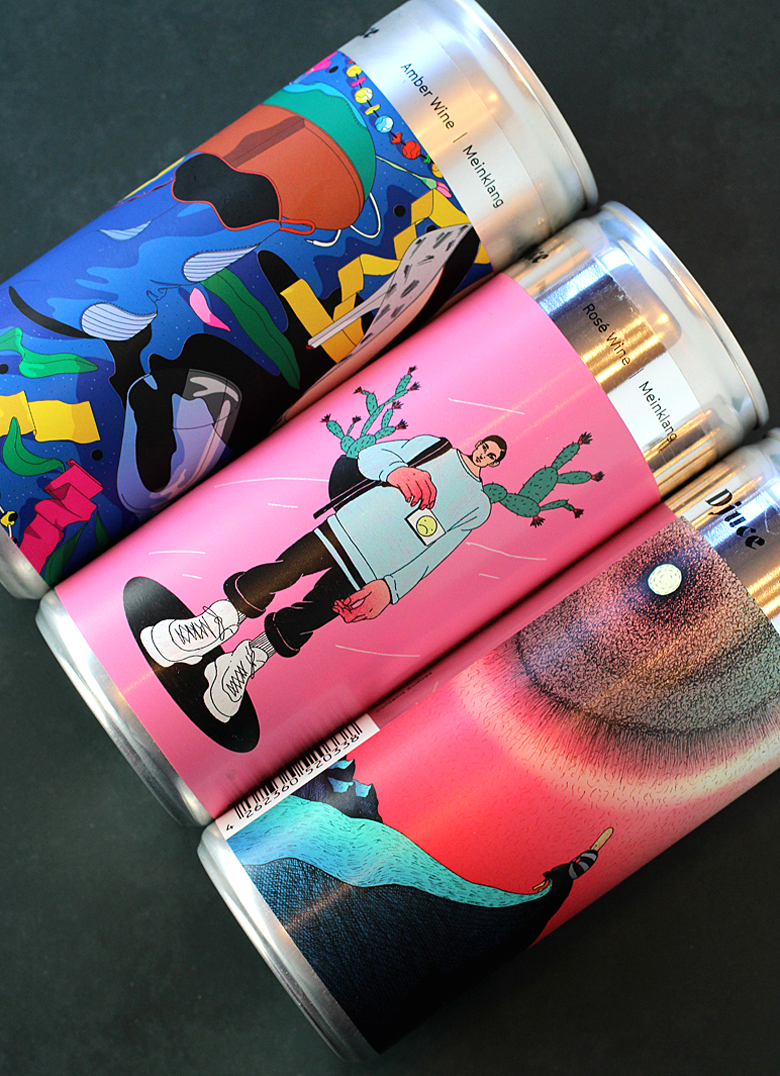
The Swedish brand packages European-made wine in cans that are decorated by artists from around the world.
Djuce
Wine in cans is sure having a moment. And these from Djuce are as dramatic as they get.
Founded in Stockholm, Sweden, this sustainable-wine company just expanded into the United States in Los Angeles and San Diego, and soon to arrive in San Francisco. The cans are decorated with striking, contemporary artwork from artists around the world, and filled with wine from European producers.
Cans were chosen not only because they are lighter and easier to transport, but according to the company, also because they are 28 percent more efficient to recycle and their use cuts CO2 emissions by 79 percent compared to glass.
Currently, Djuce offers 11 wines from seven regions in Europe, all sustainably farmed, certified organic, vegan, and low in sulfites.
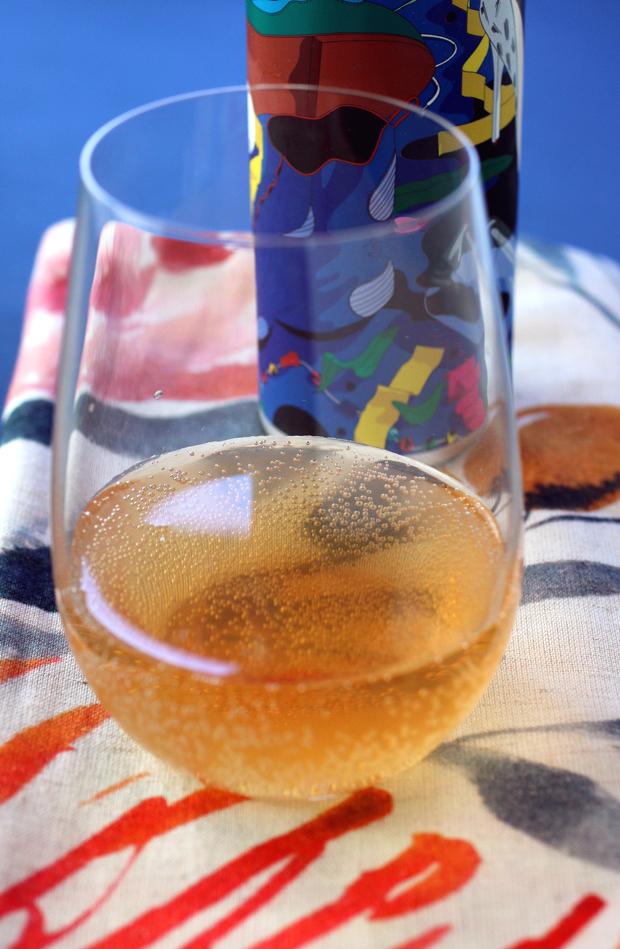
The 2021 Meinklang Kontext, a natural orange wine.
I had a chance to sample three of them. Each can is 250ml or roughly 1 cup, which makes for a generous portion for one person or a modest pour for two people to share.
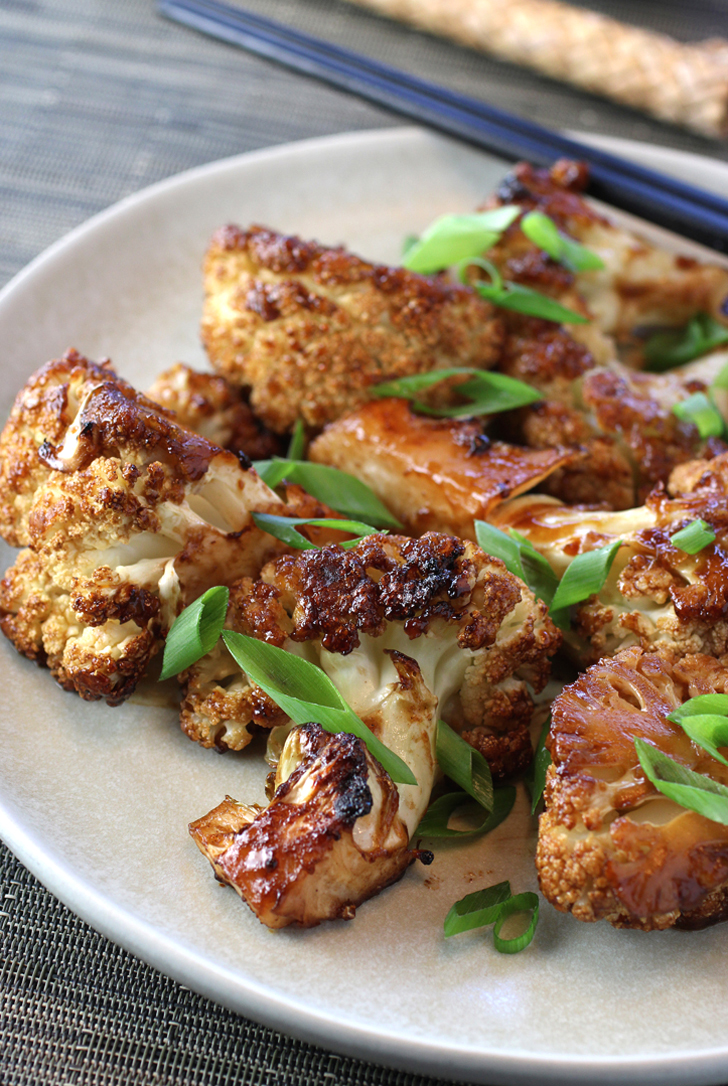
The sweet, smoky, familiar taste of Chinese char siu — but done with cauliflower instead.
Admittedly, I’d grown a little weary of cauliflower.
Not that I don’t love this brassica’s crunch and subtle nutty sweetness. But after so many recipes for ricing, pizza crust-making, and roasting whole and every which way, I kinda had my fill.
Then, along comes the spectacular and unbelievably easy “Char Siu Roasted Cauliflower” to make me appreciate it all over again.
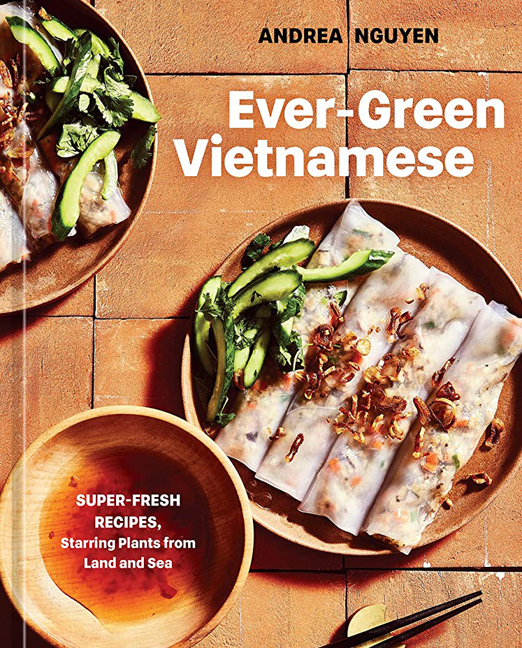
This clever vegetarian riff on the classic Chinese barbecue pork comes from my friend and colleague, Santa Cruz’s Andrea Nguyen, of course. It’s one of 125 recipes in her wonderful new “Ever-Green Vietnamese” (Ten Speed Press), of which I received a review copy.
As she writes in the book’s forward, she — or rather her body — “hit a wall” as she was turning 50 in 2019. No surprise, the older we get, the more we begin to experience real changes in our bodies. In our 20s, we are lucky to get away with devouring most anything without a second thought. But in our 40s, 50s, and beyond, the digestive system starts to rebel more and the calories make themselves way too much at home.
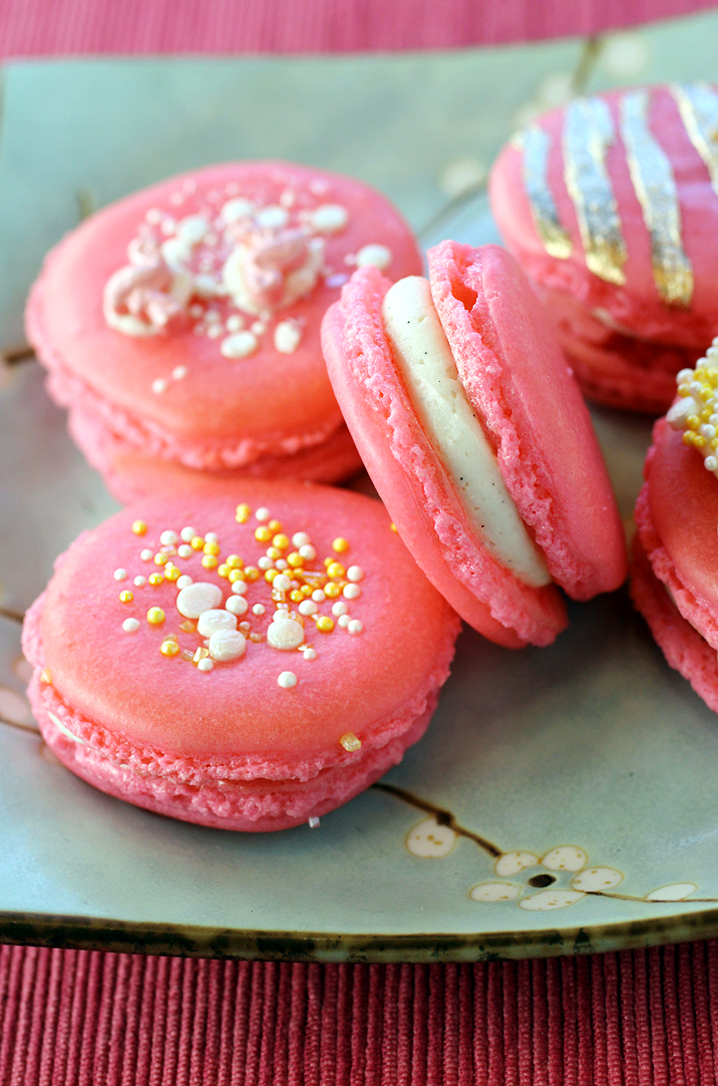
Ta-da — the finished macarons I made with the Food La La kit.
Imagine learning to bake fanciful French macarons in the comfort of your own kitchen with guidance from an expert who happens to bear more than a passing resemblance to none other than Anna Kendrick.
You can — with the French Macaron Kit by Food La La. The San Francisco culinary business was founded by Lindsay Kinder, whose disarming charm, self-deprecation, and pony-tailed, petite presence will indeed remind you of that Hollywood star.
After toiling for five years in a corporate job selling insurance, she chucked it all to go live in France. There, she spent months studying cooking and baking, and of course, eating a lot of macarons.
It inspired her to launch her first product, the macaron kit. At $97, it’s as festive as a party in a box, with shiny black and rose-gold colored bags that hold nearly everything you need to make about two dozen macarons. You just have to add your own butter, eggs and splash of milk or cream.
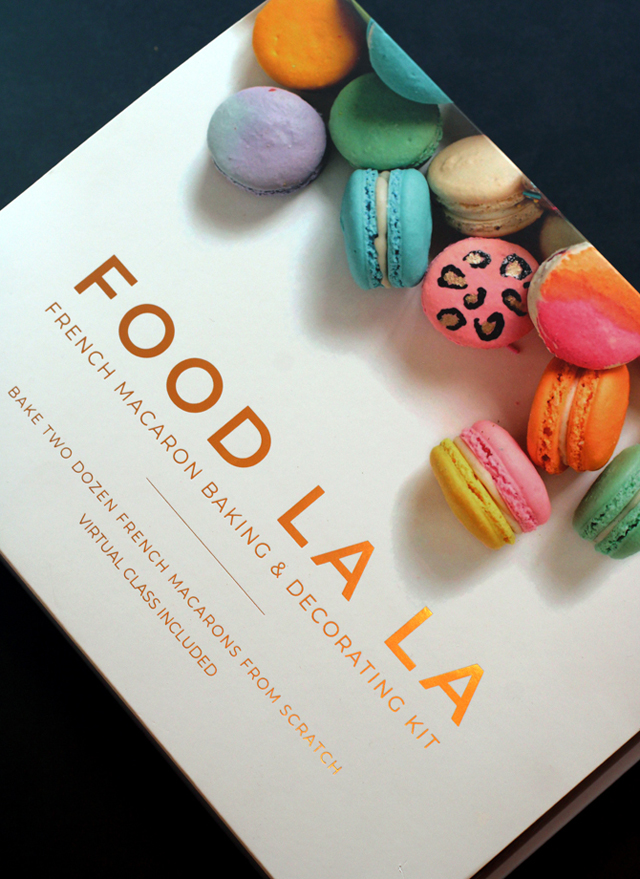
The kit comes in great packaging.
The kit is complete with pre-measured dry mixes to make the macaron and buttercream filling, along with piping bags, gel food coloring, dazzling sprinkles, edible metallic paint plus a paint brush, a handy macaron template to guide your piping onto the baking sheet, and even a couple of snazzy gift boxes if you can part with your macarons after you’ve decorated them.
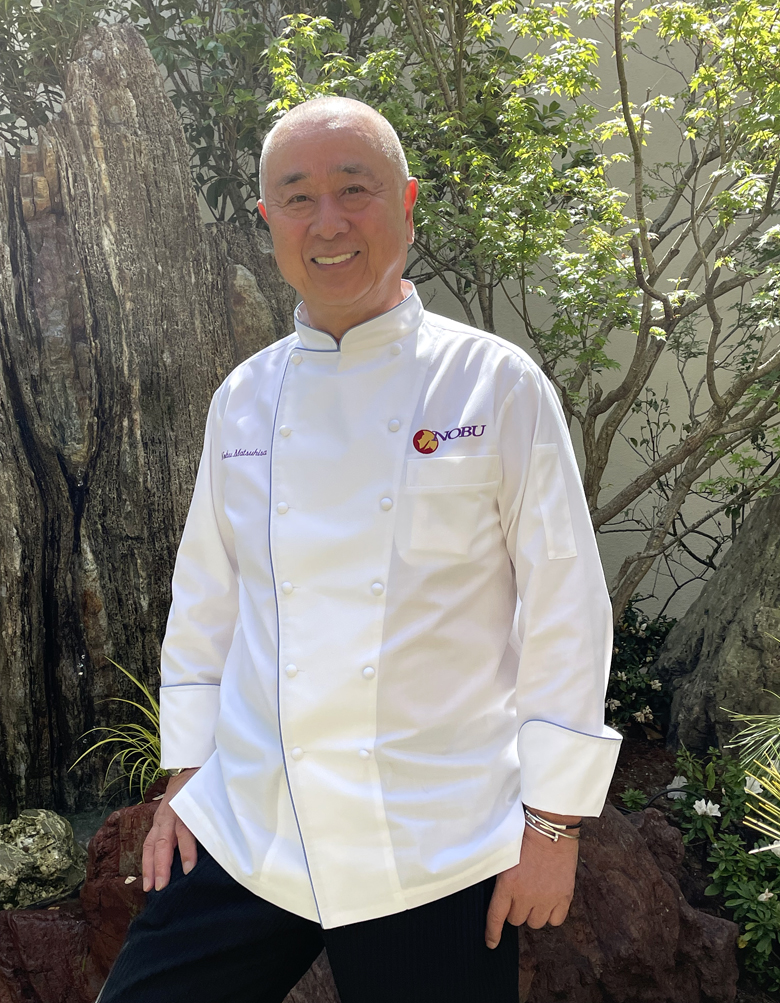
Chef Nobu Matsuhisa in the new garden dining space at Nobu Palo Alto.
Much like Madonna, Adele and Beyonce, this storied chef is so recognized the globe over that you know him readily by simply his first name.
The one and only Nobu Matsuhisa came to town this week to christen the new Japanese-inspired outdoor garden dining space at his Nobu Palo Alto restaurant and hotel, completely transforming what was formerly a florist shop into a zen oasis.
If you have an appetite for fine Japanese cuisine, you owe a debt of gratitude to him. If you appreciate impeccable sushi and sashimi, especially done with groundbreaking global influences such as jalapenos, olive oil, garlic, and lemon, you have him to thank for introducing this new style. Matsuhisa helped turn what was once considered exotic into a mainstay of which we now can’t get enough.
His accomplishments are nothing short of breathtaking, opening 21 restaurants in the United States and Canada alone, not to mention 16 in Europe; five in Mexico and the Caribbean; six in the Middle East and Africa; and eight in Asia and Australia. In all, 56 restaurants across the globe. Moreover, his hotel in downtown Palo Alto is one of 34 operating or in process of opening worldwide.
The Palo Alto restaurant is one of 56 Nobu locations worldwide.
It’s been quite the journey for Matsuhisa, one that began with the most challenging of circumstances in Japan, when he lost his father at age 8 in a motorcycle accident, only later to get expelled from high school for acting out. Looking to turn his life around at 18, he moved to Tokyo to apprentice in a sushi restaurant. What followed next were a series of soaring highs and crushing blows — moving to Lima to open his first restaurant, only to have that business partnership dissolve badly, then relocating to Alaska to open a Japanese restaurant, only to see it destroyed in an accidental fire less than two months later.
Eventually, armed with a green card, he immigrated to Southern California with his wife and two young daughters for a fresh start. In 1987 he opened Matsuhisa in Beverly Hills. There, a regular nudged him repeatedly to open an outpost in New York until he agreed to do so, debuting restaurant Nobu in Manhattan in 1994. That regular was none other than actor Robert DeNiro, who would go on to partner with Matsuhisa in all his future projects and be instrumental in steering him to opening hotels, too.
Yesterday, I had a chance to spend a few minutes with Matsuhisa in the tranquil garden with its decorative bronze gate, seasonal blooms, and boulders that were hand-picked and flown in from Japan.
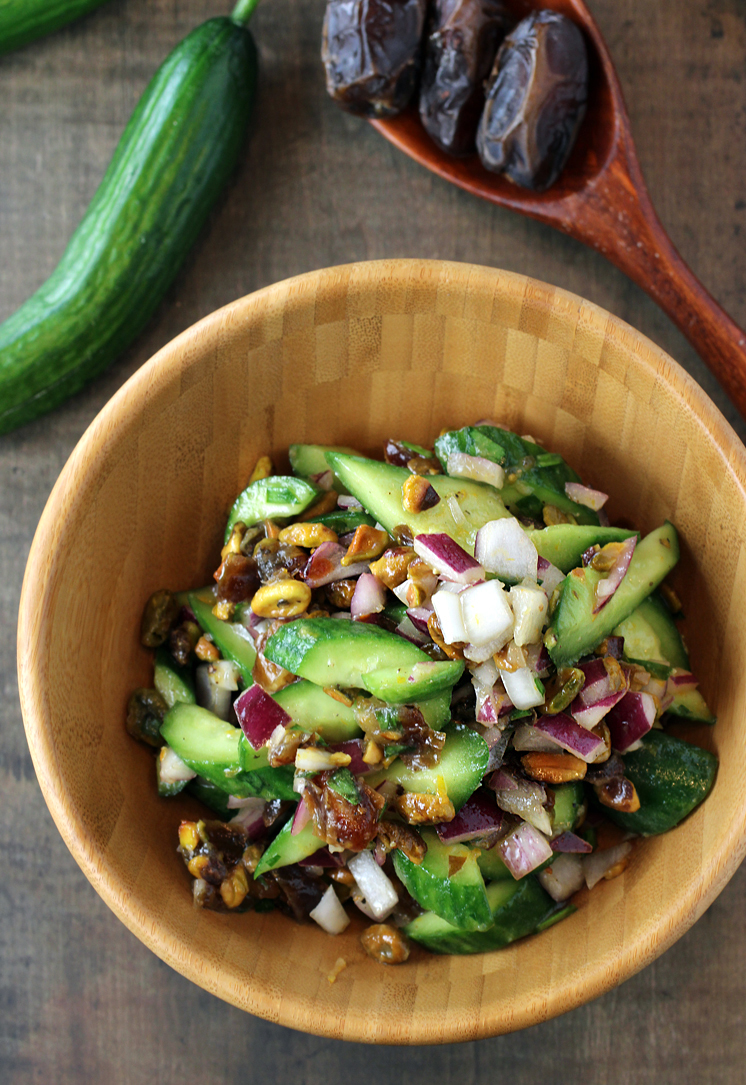
As the days warm, I excitedly ready my cucumber seedlings to plant.
Positioning them gently in pots of soil in my yard, I can’t help but already hunger for their snappy crunch and refreshing juiciness to use in salads of all kinds.
Including “Cucumber, Dates, Pistachios,” that’s as simple and straightforward as its name implies.
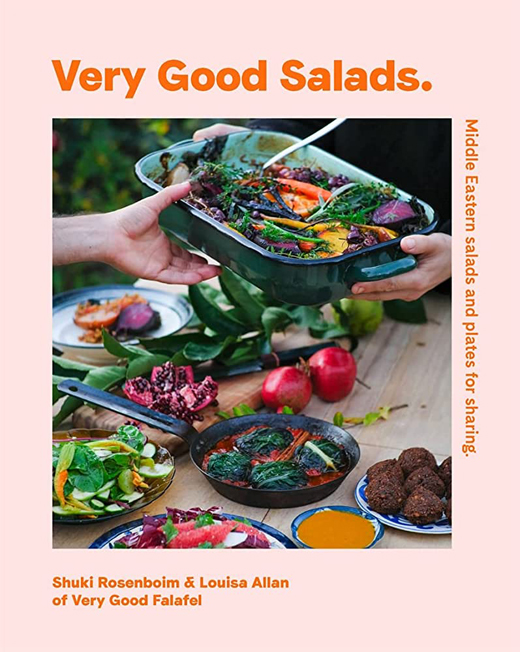
This light, bright salad is from “Very Good Salads” (Smith Street Books, 2022), of which I received a review copy.
It’s by Shuki Rosenboim and Louisa Allan, who own the proudly named Very Good Falafel in Melbourne, Australia, a tiny 20-seat cafe where falafel is a staple but the salads change regularly with the whim of the seasons.
The cookbook showcases 52 of those vibrant salads and vegetable dishes, from “Broad Bean and Macadamia-Stuffed Artichokes” in spring and “Frozen Grapes, Herbs, Zucchini Flowers” in summer to “Roasted Quince, Pearl Barley, Walnut, Pistachio, Saffron” in autumn and “Beetroot Dip, Pistachio Hazelnut Dukkah” in winter.