Monthly Archives: July 2009

Pineapple Persuasion
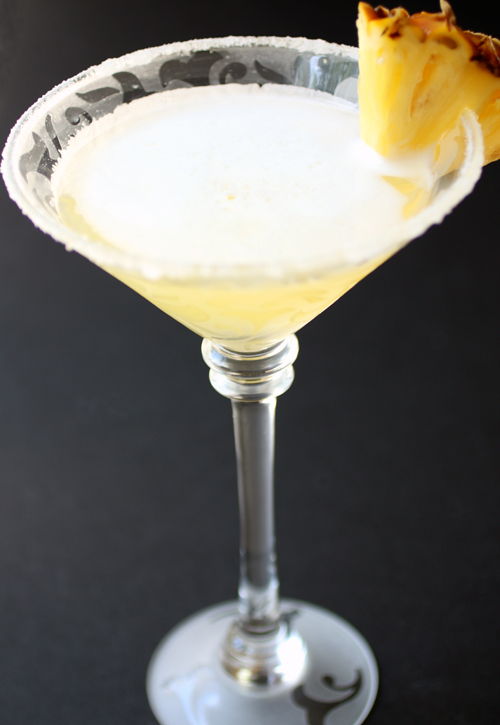
Bottoms up.

I anointed this smooth, tropical cocktail with that moniker because after one of these babies, you can get people to do just about anything for you.

Smile giddily no matter what foolish nonsense you say? Check.

Forget their worries completely? You betcha.

Invite you on a cruise around the world aboard a luxury yacht complete with private chef and spa butler? OK, maybe not. But you never know if you don’t try, right?

Admittedly, my hubby and I are mostly wine drinkers at home. But when a sample of Van Gogh Pineapple Vodka arrived in the mail, we decided it was high-time for cocktail hour in our humble abode.
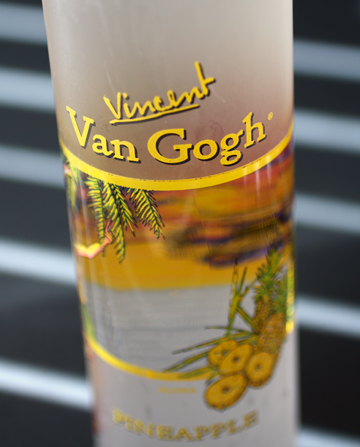
We invited some foodie friends over to take a sip or two or three or….

Pineapple vodka immediately brought to mind pineapple juice and fresh pineapple. Thus was born the “Pineapple Persuasion,” a fruity, twangy, just-sweet-enough blend of pineapple juice, pineapple vodka, lime juice, and sugar. Because I had kaffir lime leaves handy, I threw them into the pitcher to infuse. Fresh mint leaves would be another nice option.
Read more

Born to Cook

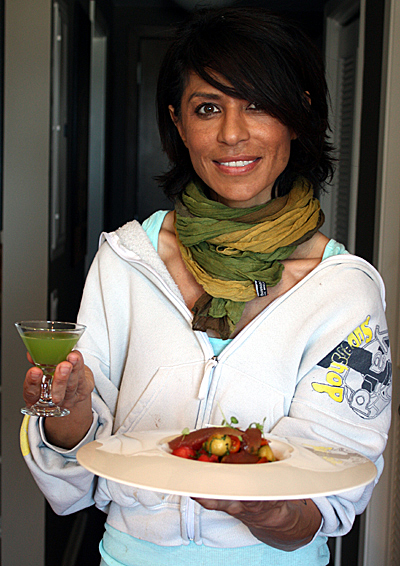
Dominique Crenn, chef of Luce restaurant, serves up melon specialties in her home.

Dominique Crenn, chef de cuisine of San Francisco’s Luce restaurant, was practically born to be a chef.

After all, as the adopted daughter of a well-known French politician and his wife, Crenn grew up with an adventurous palate thanks to her mother’s fine cooking highlighted by fresh, seasonal ingredients from farmers markets in France.

With her father’s best friend a famous restaurant critic in France, Crenn also found herself often accompanying the two powerful men on excursions to Michelin-starred restaurants when she was all of 8 years old.

“When I was 8, I told my mother I wanted to be a chef,” Crenn says.

“Or maybe a policeman or a photographer,” she adds with a laugh.

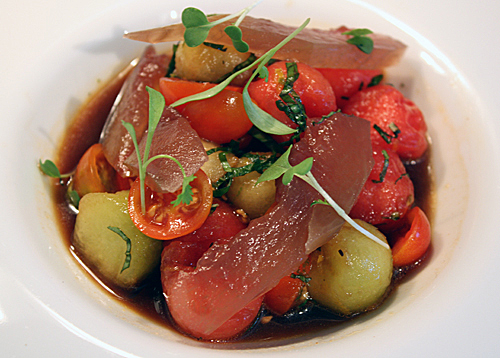
It may look like tuna sashimi, but those are actually slivers of pickled watermelon rind atop that tomato-melon salad.

Cooking did win out, but not before she had to battle French culinary school directors who discouraged her from becoming a chef because she was a woman.

Read more

Peachy Keen

My favorite way to bake with fresh peaches.

As spring turns to summer, I count the days until peaches arrive at the farmers markets.

I peer into bins, looking anxiously for my favorite stone fruit of them all.

Be they white or yellow, peaches make me think of sunny, carefree days more than any other fruit. I love biting into them out of hand, juice squirting every which way and then some. I also love baking with them, which only intensifies their sweetness.

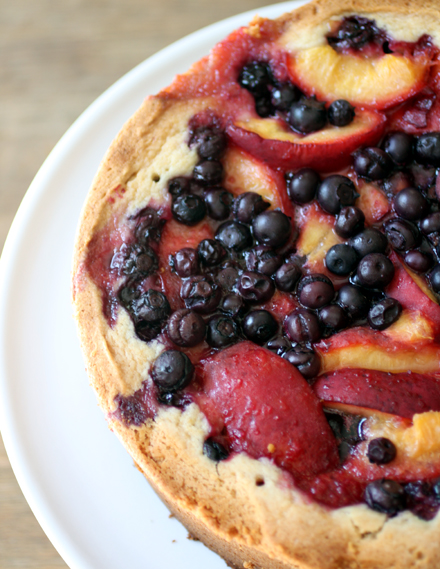
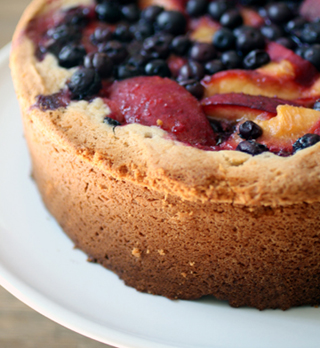
Over the past few years, my favorite way to showcase peaches is in this recipe adapted from one that originally appeared in Gourmet in August 2005. Luscious peaches get a supporting cast member in juicy, fresh blueberries in this cake that’s almost pie-like in the abundance of fruit it holds.

I wrote about this “Peach Blueberry Cake” a few years back at the San Jose Mercury News. I mentioned how the first time I made it, there didn’t seem to be nearly enough dough to cover a 9-inch springform pan. I labored to make it fit, stretching the dough so thin you could practically see through it. When my story published, a few other readers wrote in saying they had experienced the same perplexing problem.

My answer? I double the pastry portion of the recipe. And I add more fruit to compensate for doing that. The result is a cake that’s as tall as a holiday cheesecake, packed liberally with blueberries and peaches. The cake bakes slowly for a long time so that the fruit doesn’t completely break down, but stays fairly intact. The pastry is alternately cake-like, cookie-like and slightly custardy where the fruit hits it.

Read more

Embracing High Heat, Part II (The Sweet)

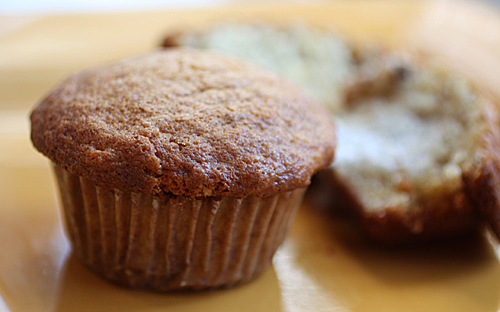
Not your ordinary banana muffin.

Yesterday, you read on Food Gal about how high heat does wondrous things to plain ol’ shrimp.

Today, you can learn that it also does amazing things to baked goods.

Just take these “Roasted Banana Muffins” from the “PlumpJack Cookbook” (Rodale) by Napa food and wine writer, Jeff Morgan.

Actually, you’d have to pry them from my hands because they are just way too good. So much so, you’d have to be a very generous soul to part with any of them.

What makes them so extraordinary?

High heat that roasts the bananas, whole, in their skins, before you peel them, mash them, and stir them into the batter.

Ten minutes at 400 degrees will turn the skins black. After awhile, juices will begin to seep out. That’s when you know the bananas are ready to be removed from the oven.

High heat caramelizes the natural sugars in the bananas, concentrating the fruit flavor.

This is a very simple muffin recipe that doesn’t have a whole lot of frills to it. Because it’s so plain-Jane, you’ll be struck by how banana-y these muffins taste. There’s a deep, pronounced flavor here, despite the few ingredients.

Read more

Embracing High Heat, Part I (The Savory)

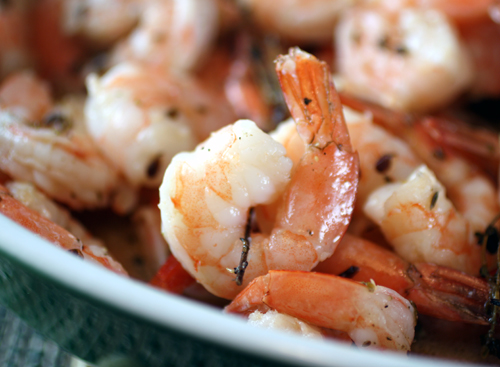
The juiciest shrimp ever.

I dunno about you, but in my early days of cooking, I was petrified of high heat.

Back then when I was a teen, the words, “Heat the pan on high,” would make me quake in fear.

I thought I’d end up burning myself, not to mention whatever I was cooking, along with the poor pan, too.

But the more you cook, the more you realize the beauty of high-heat cooking. There’s nothing like it for creating caramelization, and thus, greater flavor, texture, and color.

Who doesn’t love the blistered crust of pizza baked in a scorching wood-oven? Or the yummy crust on a seared steak? Or the crispy skin on a salmon fillet? Or the smoky, intense flavor vegetables get from being tossed around in a fiery wok?

When I took a recent class at Draeger’s in San Mateo, veteran cookbook authors Bruce Weinstein and Mark Scarbrough reminded me of the joy of high-heat cooking, when they demonstrated their recipe for “Roasted Shrimp.” It’s from their newest cookbook, “Cooking Know-How” (Wiley).

Normally, I just saute shrimp in a pan. But their oven-method could not be easier. It’s my new favorite way to cook shrimp.

Like all the recipes in this book, the shrimp one gives you a basic technique, then variations so you can alter the flavorings.

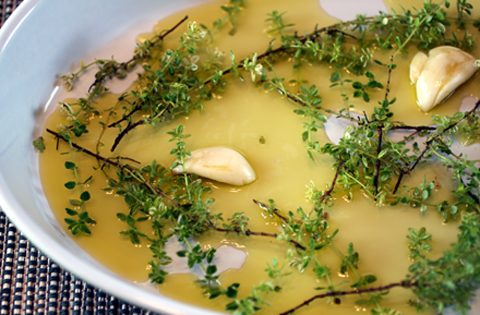
Preparing the baking pan.

The method remains the same: You put a baking dish in a cold oven with oil and herbs. Turn the oven on to 450 degrees. As it warms, the herbs get infused gently into the oil. When the oven gets up to temperature in 15 to 20 minutes, add shrimp (or scallops) to the pan. Cook for about 10 minutes for large shrimp (about 5 minutes for scallops), stirring a couple of times during the cooking process.

Pull out the pan, then stir in salt, pepper, and a dash of acid (vinegar, citrus juice, or wine).

This is by far the juiciest shrimp you’ll ever eat, with a pleasing crunch, too. It’s the high heat that does all that. Moreover, the fragrance of the herbs roasting in the oven is utterly intoxicating.

Read more

Recent Entries »