
Portugal Dining, Part III: Michelin Two-Starred Casa de Cha da Boa Nova
Leça da Palmeira, Porto District, PORTUGAL — Never have I ever…
…sat for a 21-course meal at lunch before.
…inside what has been deemed a National Monument in Portugal.
…designed by future Pritzker Architecture Prize-winning architect Álvaro Siza when he was only 25.
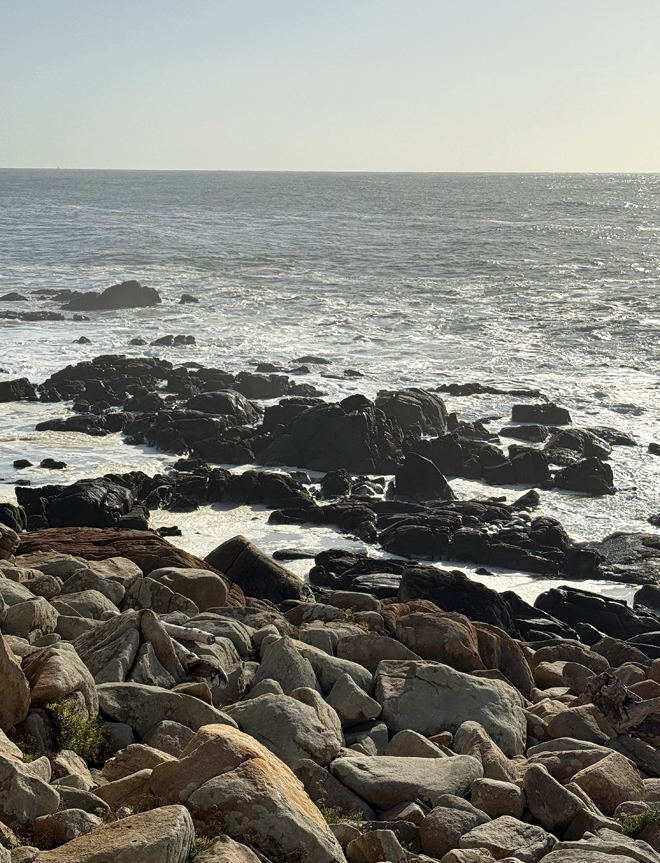
…located atop a rocky cliff with the deafening roar of of the Atlantic below in a truly breathtaking location.
Michelin two-starred Casa de Cha da Boa Nova offers elegance and grandeur — and so much more.
This architectural marvel is less than half an hour from downtown Porto, but feels a world away.
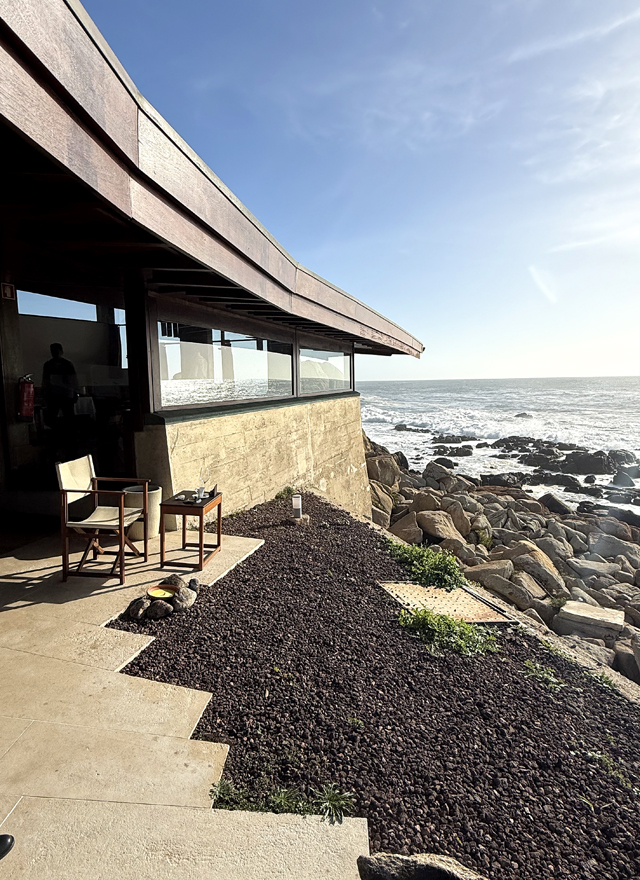
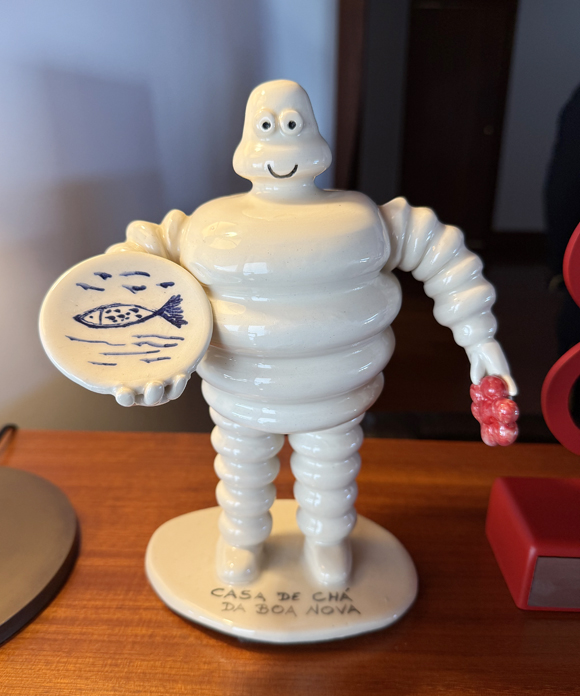
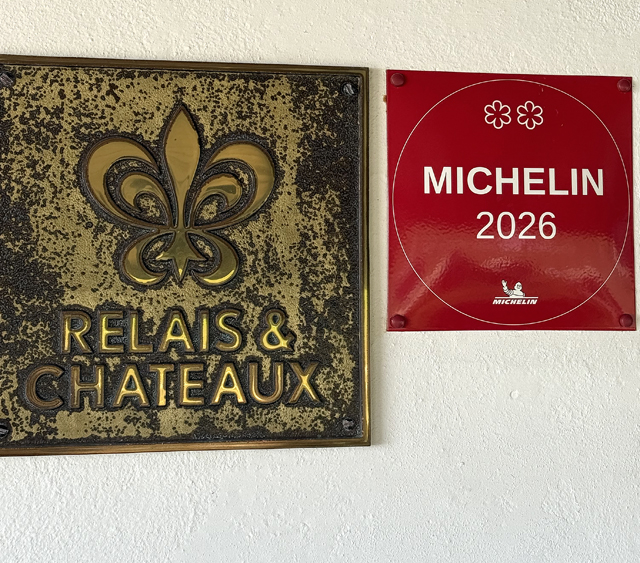
The property, actually city-owned, was originally built in 1963 as a tea room. Over the years, it fell into disrepair. In 2014, it was renovated by the same architect and reopened as a restaurant. In 2023, it changed hands again, opening as this fine-dining restaurant by one of Portugal’s most respected chefs, Rui Paula. Long admired for his contemporary interpretation of Portuguese cuisine, he also owns DOC restaurant in the Douro Valley.
Casa de Cha da Boa Nova serves both lunch and dinner. I chose lunch because a daytime visit allows you to really take in the natural splendor of the setting, all jagged granite rocks and crashing waves. In fact, on days that it isn’t quite so windy as when I visited, the floor-to-ceiling window in the dining room can retract at the touch of a button (see video), erasing the division between inside and outside, and immersing you in awe of the thunderous waves just yards from your table.
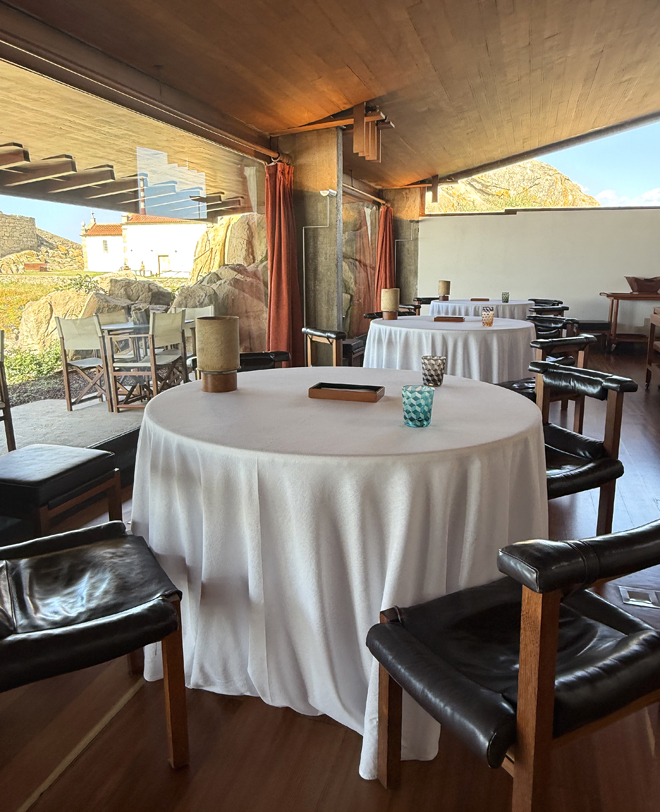
At lunch or dinner, you can choose among six courses (205 euros), 12 courses (245 euros), or 21 courses (295 euros). Wine pairings range from 140 to 180 to 200 euros. The non-alcoholic pairing (120 euros) is what I chose. At many fine-dining restaurants in Portugal, you’ll find the non-alcoholic pairing only about 20 euros less than the standard wine pairing — a sign that the restaurant is putting effort into creating their own unique mocktails instead of just opening up a bottle of a premade zero-proof beverage.
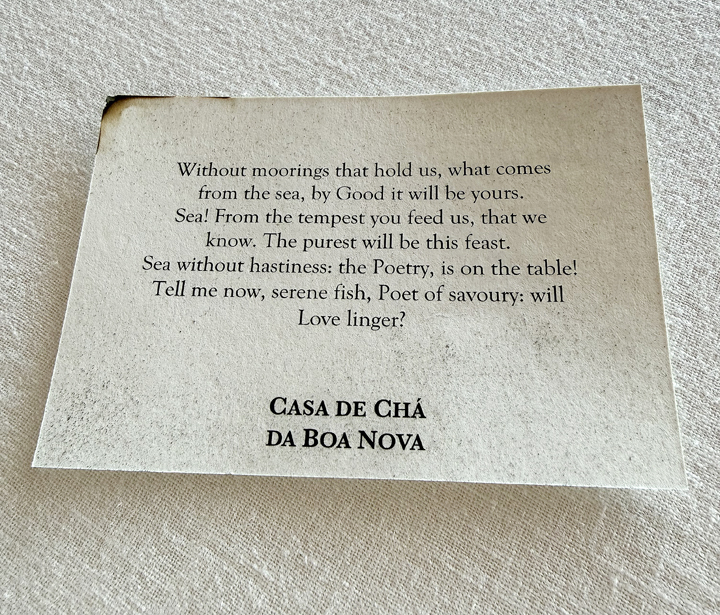
The restaurant employs a lot of table-side service. So, if you’re using your phone to snap a photo or video, you have to constantly be at the ready if you want to capture the moment. I only realized that too late at the start when a shallow box on the table was all of sudden set afire — too quickly for me to catch it on video. When the flames died down, what was left behind was a poem printed on a card. Its words alluded to the feast ahead that takes inspiration from the sea, creating poetry within its dishes.
Indeed, you have to be a fan of seafood here because that is the primary protein spotlighted in all the dishes.
Although there are in fact 21 courses, some of them are merely one- or two-bite canapes. Still, it all adds up, and you will definitely leave satiated.
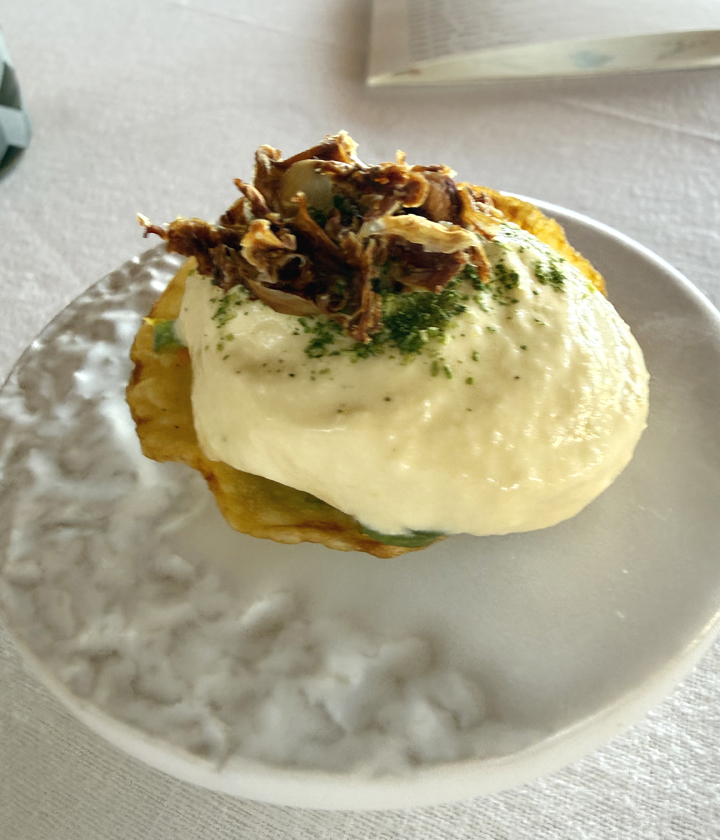
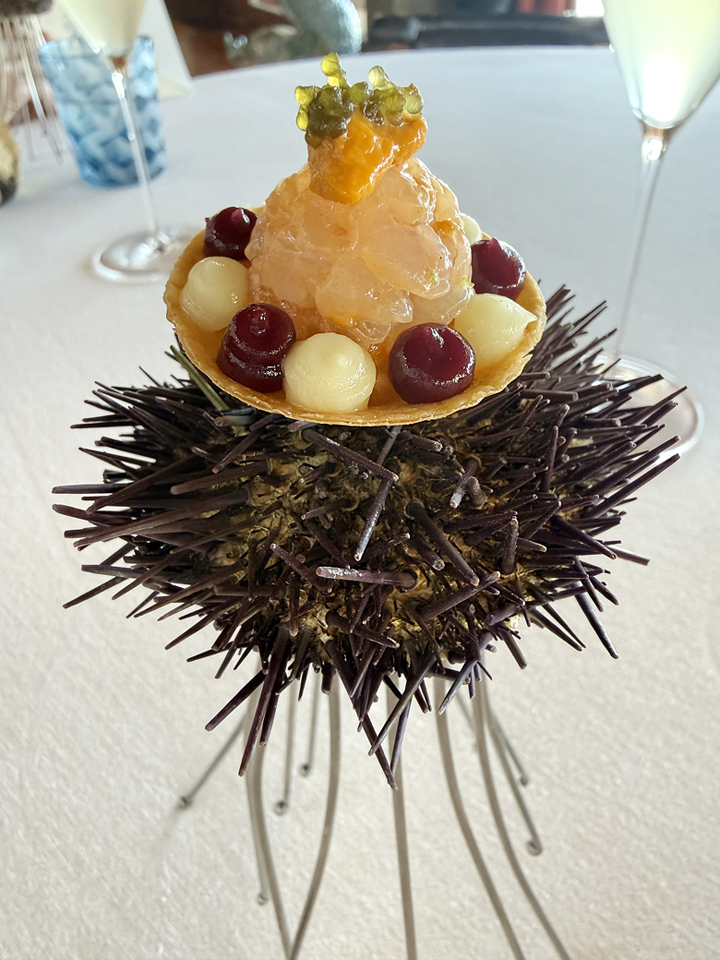
The opening salvo is a tiny tartlet, usually featuring cockle, but made with vegetables instead for me (owing to my allergies) along with creamy pineapple foam. That’s followed by a teeny corn tuile taco with a crackling, slightly sweet shell filled with seafood mousse and avocado. Then, a prawn tart with uni and seaweed caviar pearls — all perched atop a dramatic sea urchin sculptural stand.
A table is wheeled to your table with two wooden sail boats on top. Before you know it, the server pulls out two hidden drawers, sending the little boats moving to the edges of the table. Inside the drawer are eight different spices. My husband and I are asked to choose two spices in total that will be used to accent our next dish. You know I can never resist ginger, so I choose that one immediately, along with cardamom, which is always a good partner for it.
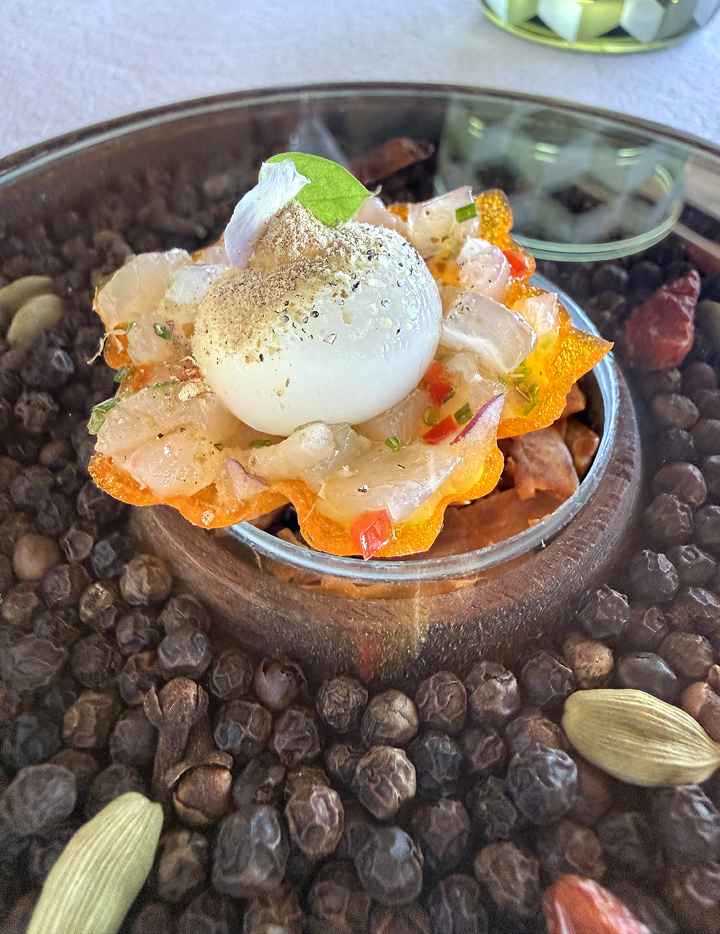
A minute later, sweet potato tartlets arrive, topped with a slivers of raw sea bass and Peruvian leche de tigre. It’s creamy and delicate tasting, and darned if it doesn’t have the warmth of ginger and cardamom, too.
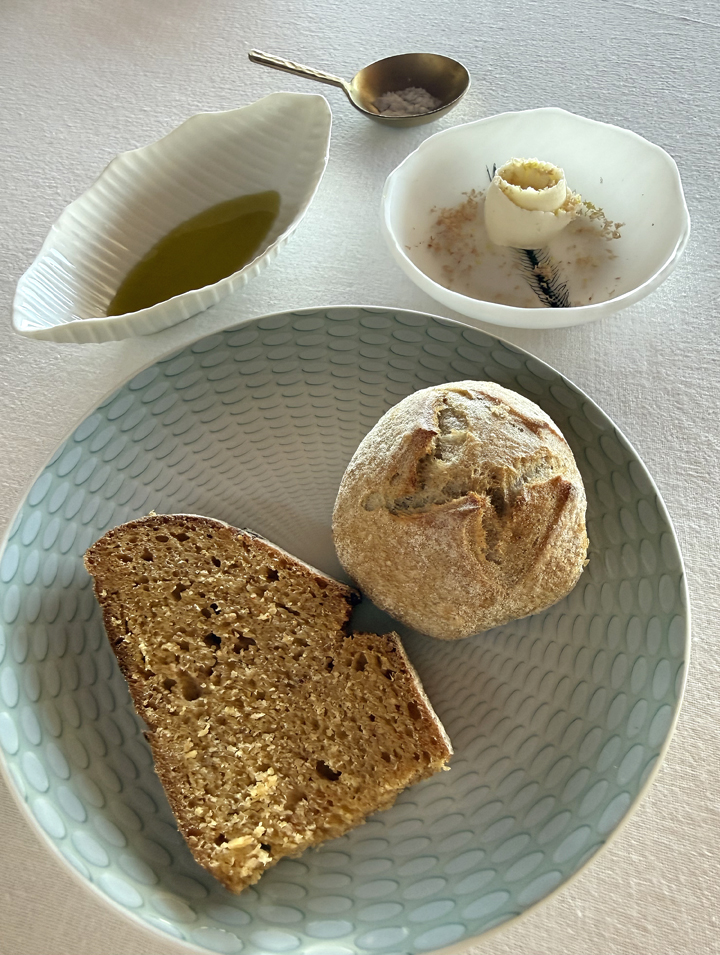
Bread follows, both a traditional soft corn one, and a small sourdough boule, all served with Portuguese extra-virgin olive oil, smoked salt, and delicious butter with lemon zest and a touch of dried tuna for an unexpected umami jolt.
In the next dish, lobster’s natural sweetness gets heightened with coconut, saffron and ginger in a mild curry sauce.
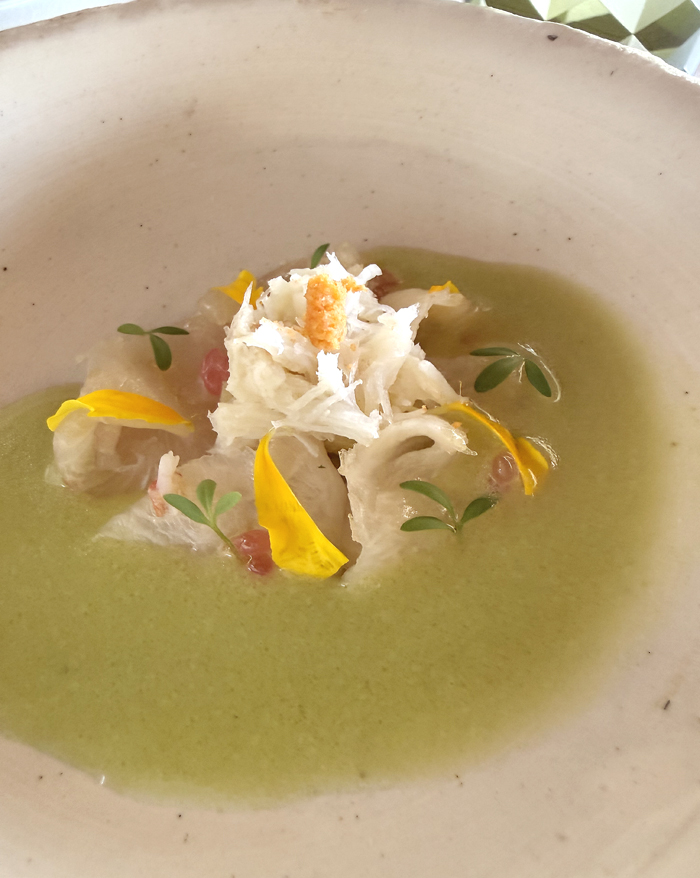
That’s followed by a standout dish of silky raw amberjack and fluffy, sweet crab meat in a cold jalapeno broth. Zingy, grassy, and gently spiced, it really wakes up the palate.
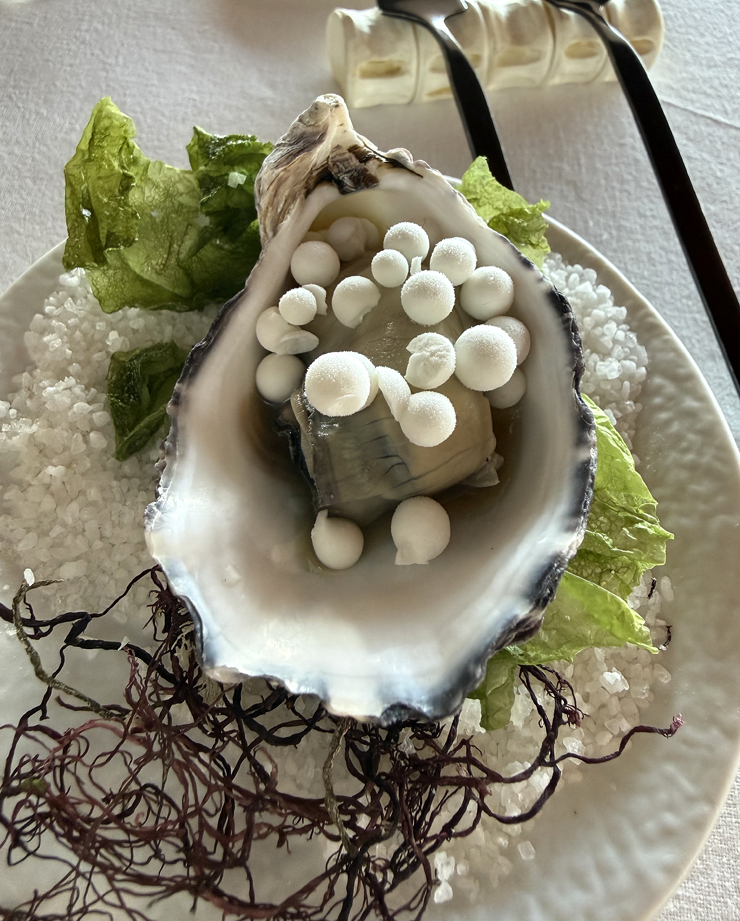
The oyster “moment” arrives to make you sit up and take notice with a plump oyster in its shell with citrusy ponzu sauce plus Champagne liquid nitrogen balls all over the top.
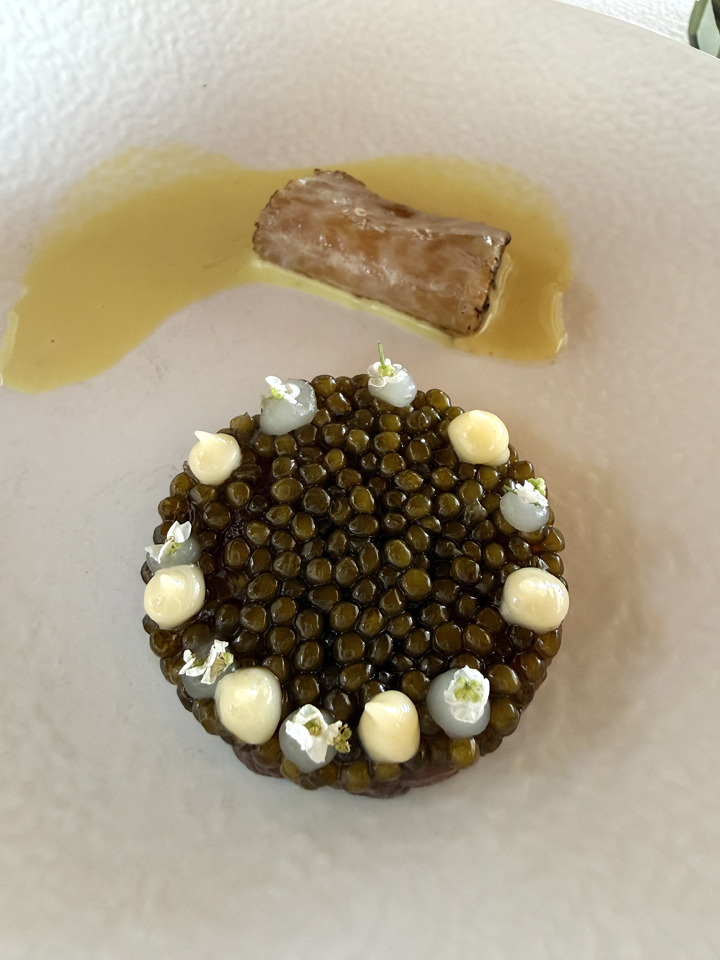
The oyster is served with tuna tartare that’s hidden under a crown of caviar. Off to the side is tuna belly, so fatty and rich it coats your entire mouth. It’s been cooked like brisket, giving it a luscious smokiness that lingers on the palate and mind.
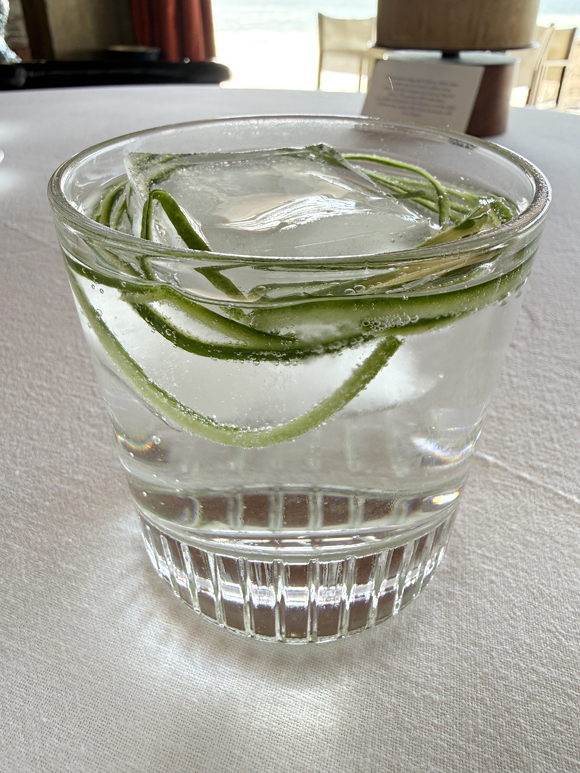
I love a gin and tonic, so how could I resist the green & tonic that’s served at this point on the non-alcoholic pairing? It’s green tea and tonic with a garland of cucumber in the glass. It’s every bit as bracing as it sounds, too.
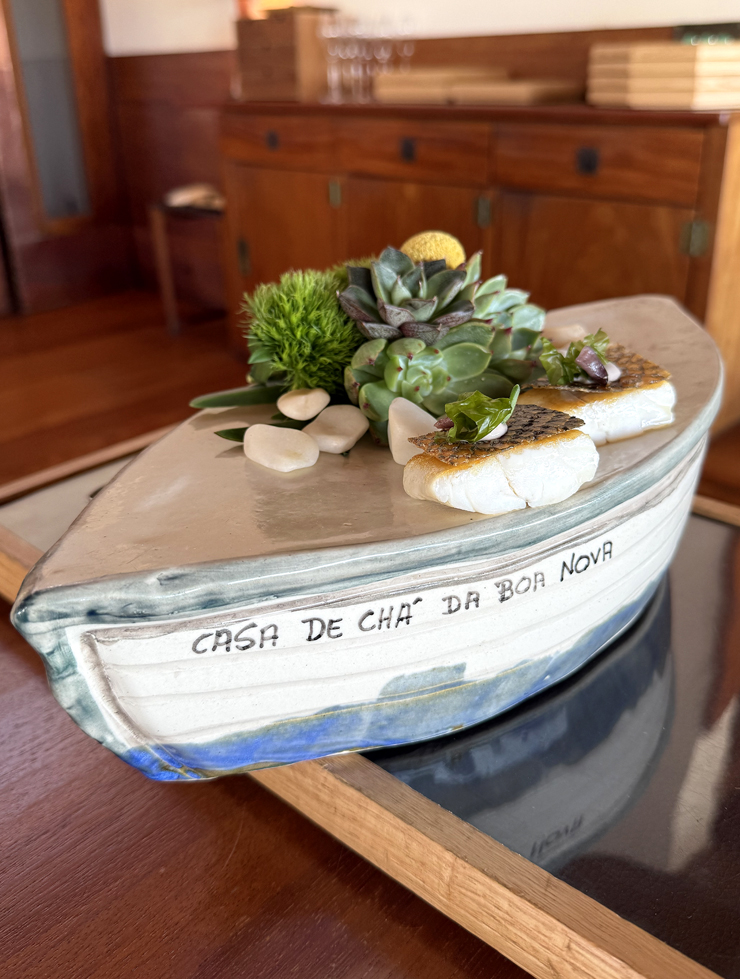
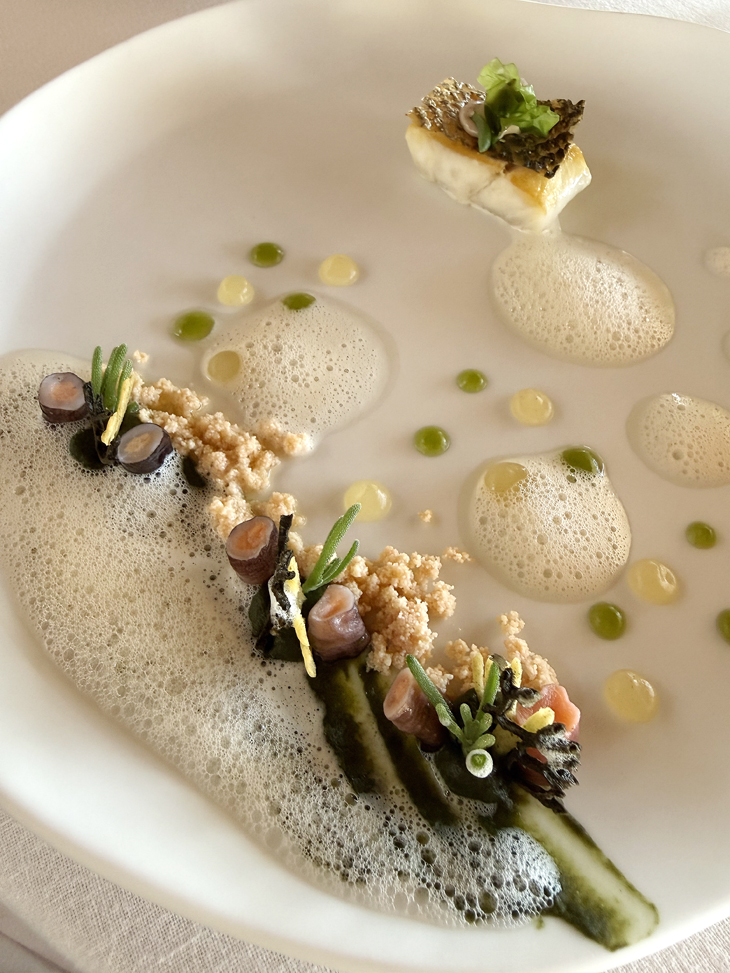
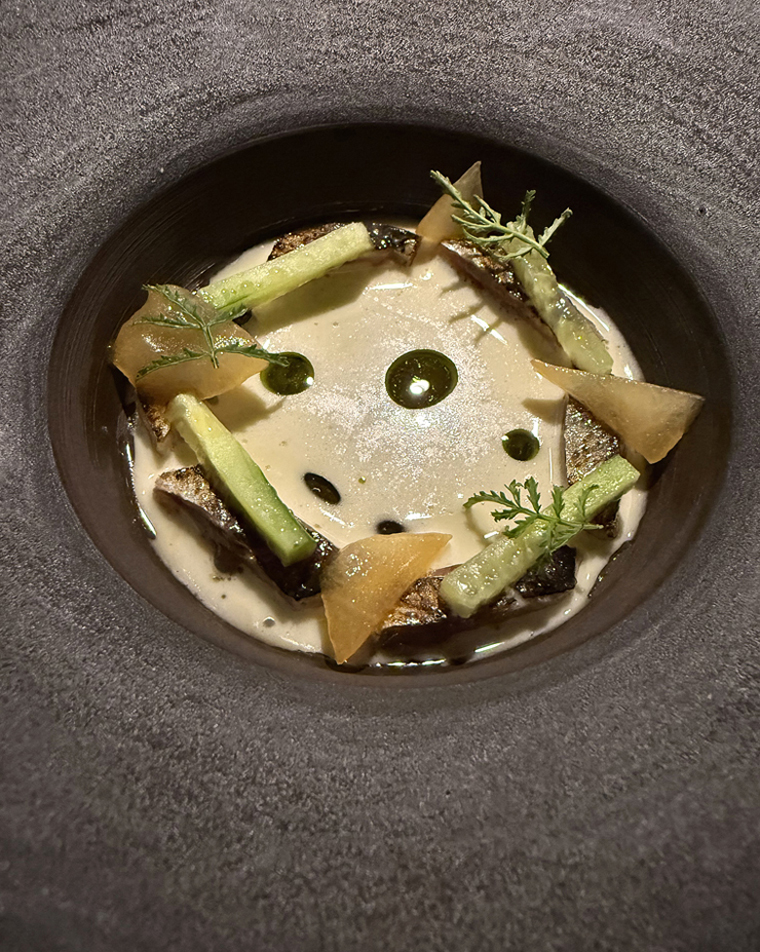
Sea bass arrives on its own little boat before it’s transferred to a serving plate with delicious dashi foam. It’s a dish that’s been on the menu for 15 years in various iterations, and I can see why. It’s hard to resist silky, flaky fish with skin this crisp. It’s a light dish yet with such depth, thanks to the umami of the dashi.
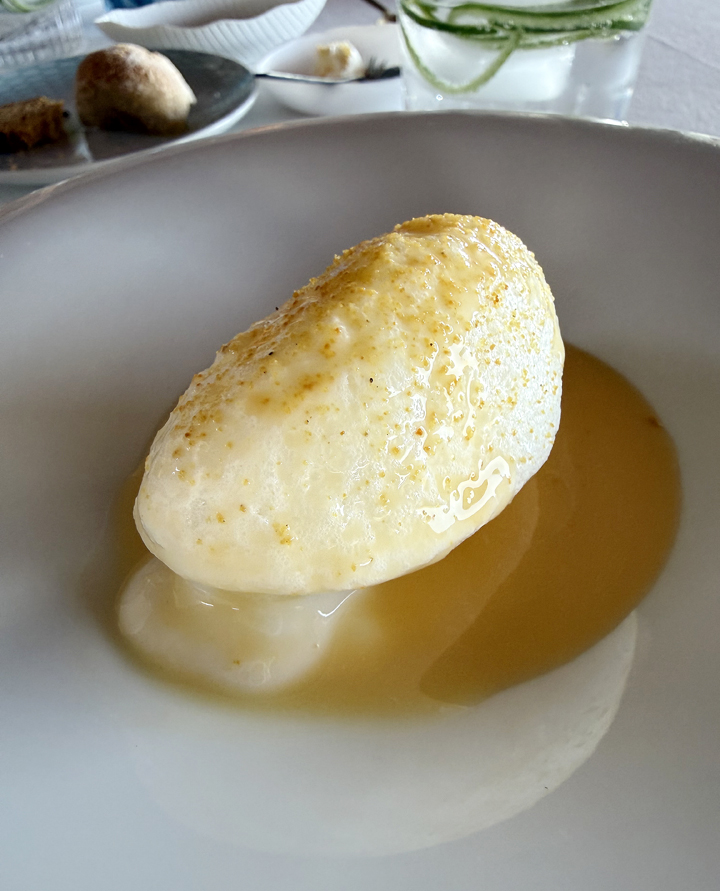
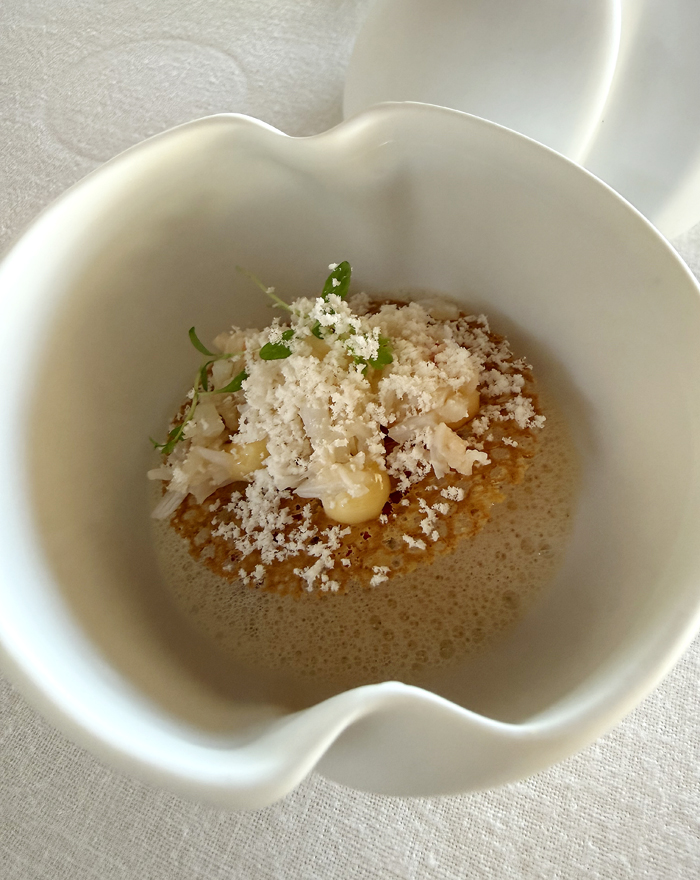
The next dish is inspired by the Portuguese dessert known as “snow egg” (also known as French floating island). Only here, the egg white cloud is remade into a savory course with cinnamon-scented prawn in an almond milk gazpacho and an intense sauce made from the head of the prawns, along with hidden crunchy almonds at the very bottom of the bowl.
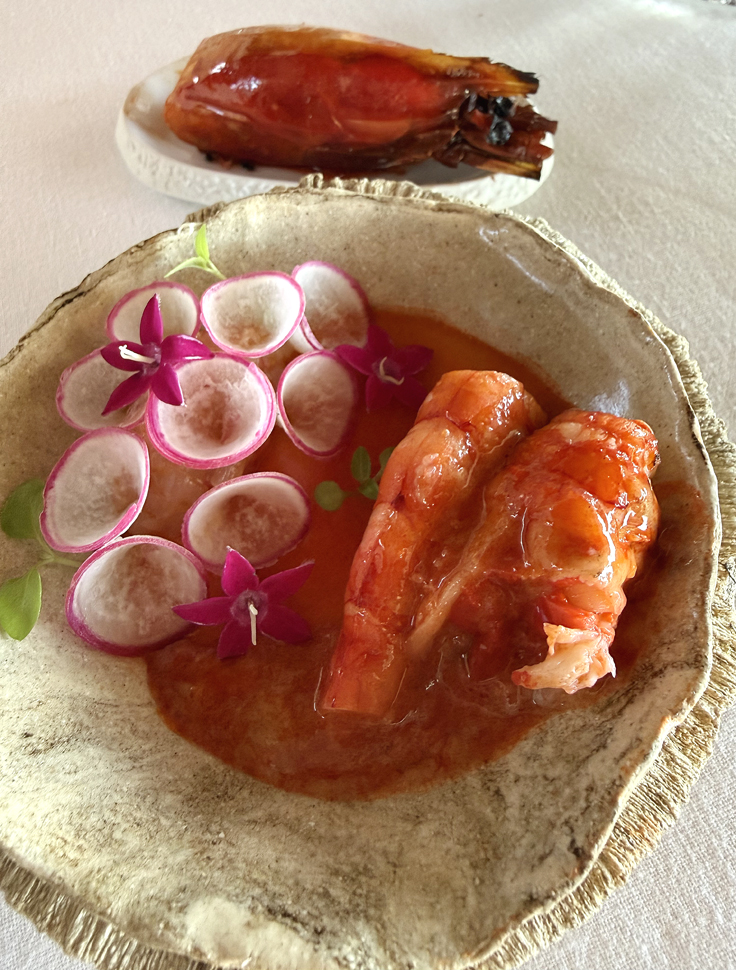
Scarlet shrimp get a deservedly showy presentation, deshelled tableside (see video) with their prized flesh arranged on serving plates of chawanmushi garnished with radishes. Place on separate plates are the heads, meant o be picked up with your fingers at the end, tilted toward your mouth, and squeezed to enjoy every drop of its prized juices. As the server admonished, “It would be a crime not do do so.” And boy, is she correct. The shrimp, itself, is sweet and meaty, almost like lobster. I loved how the residual shrimp juices flavored the jiggly soft Japanese egg custard. And the head? Profound in taste.
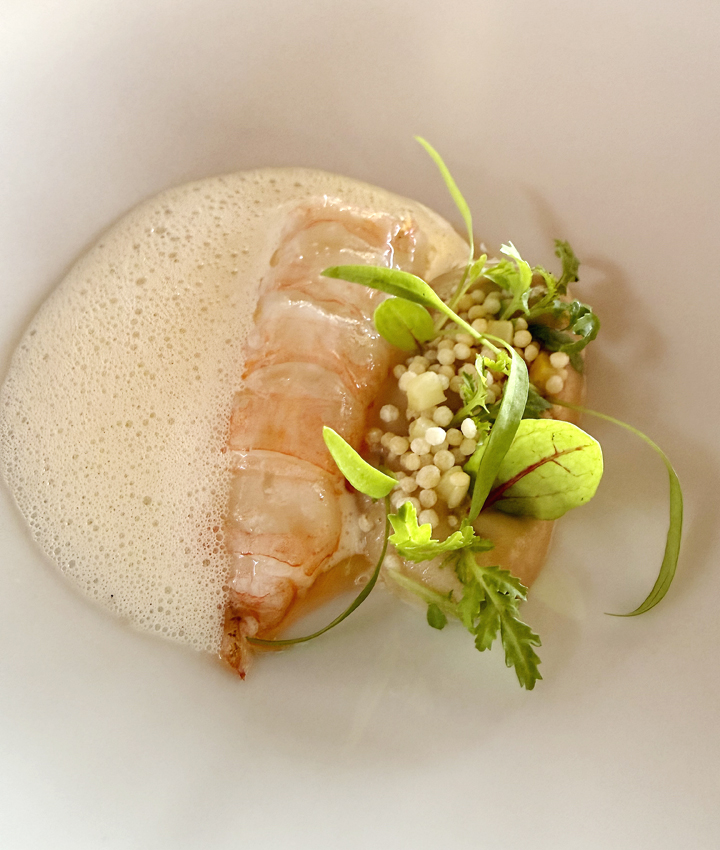
That was followed by warm crawfish, cooked confit, so that it was incredibly supple. Its accompanying sunchoke puree added a nice earthy, nuttiness.
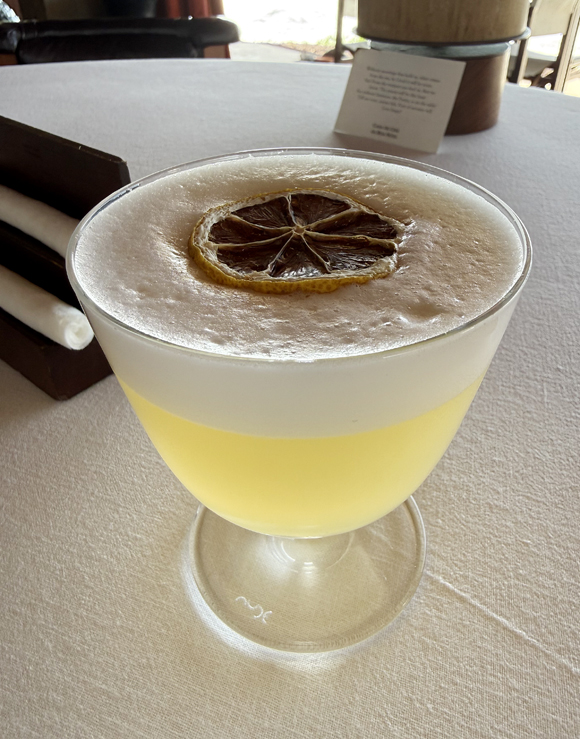
To go with, there was a Lemongrass Fizz, wonderfully floral and citrusy with a foamy head. Its lemony and herbally notes paired wonderfully with the makrut lime on the sea bream with broccoli puree.
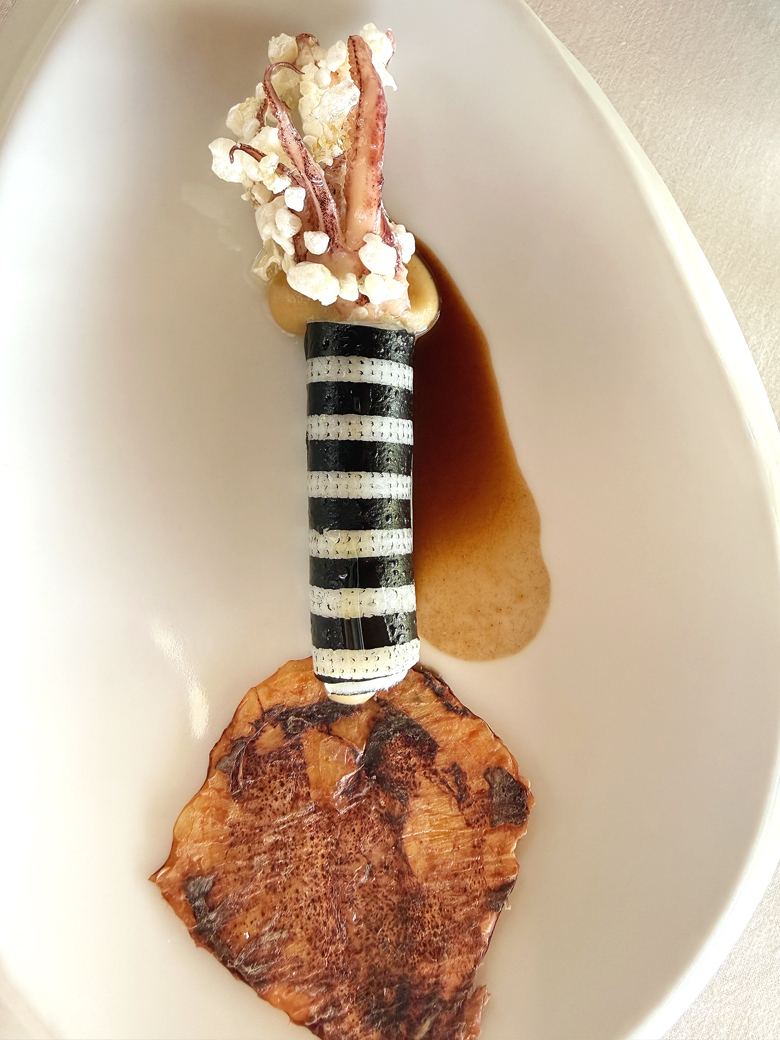
When the squid dish arrives, you get why it’s the most difficult dish the kitchen makes, according to our server. A sheet of striped pasta is formed using squid ink, then the squid is stuffed inside of it. The tail of the squid is fried to a hard crisp like a cracker, and the head gets dressed with crispy tempura bits. It tastes like the sea, possesses every texture imaginable, and looks like a piece of art.
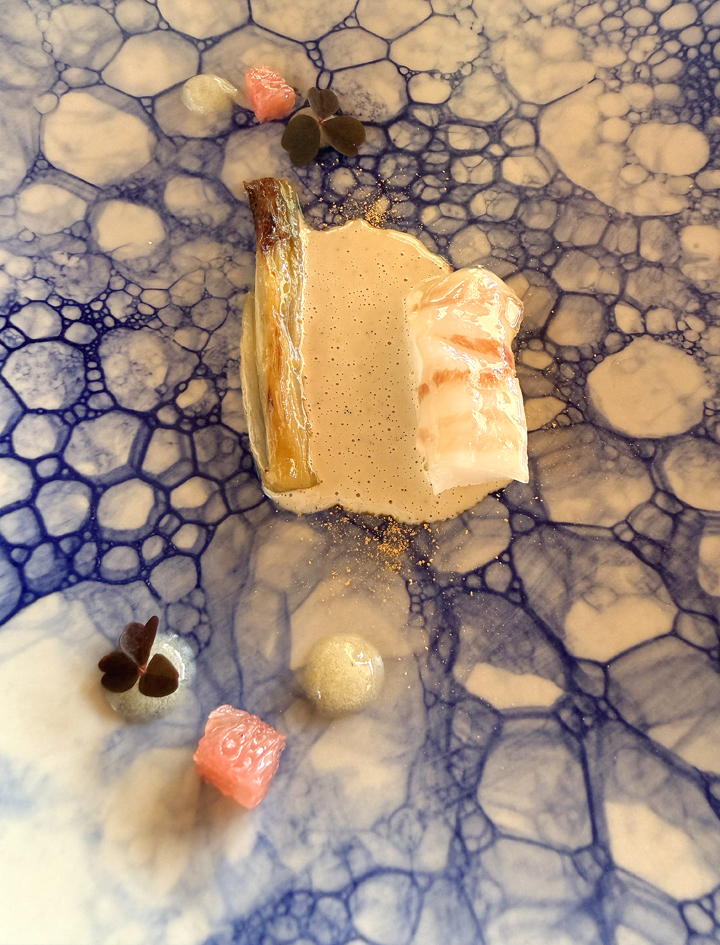
John Dory is next with endive and pancetta, and a haunting bergamot-vanilla sauce. A tiny dice of fresh grapefruit lends the merest bitter finish.
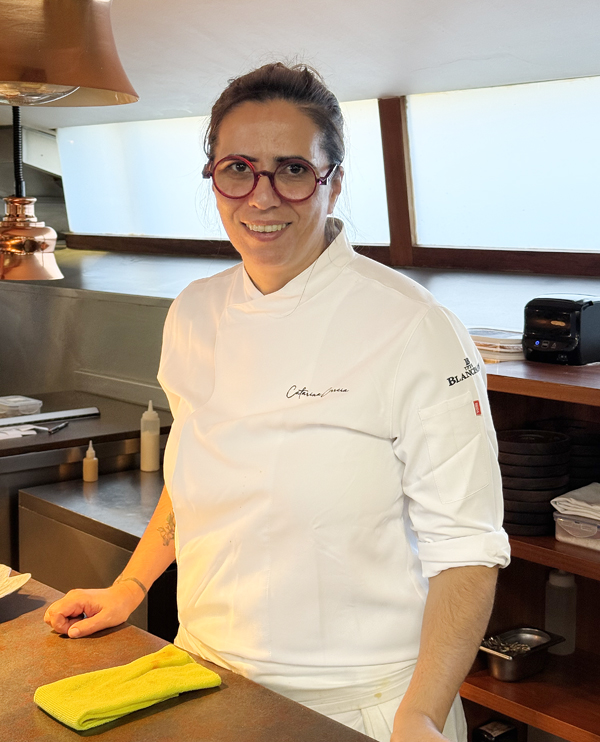
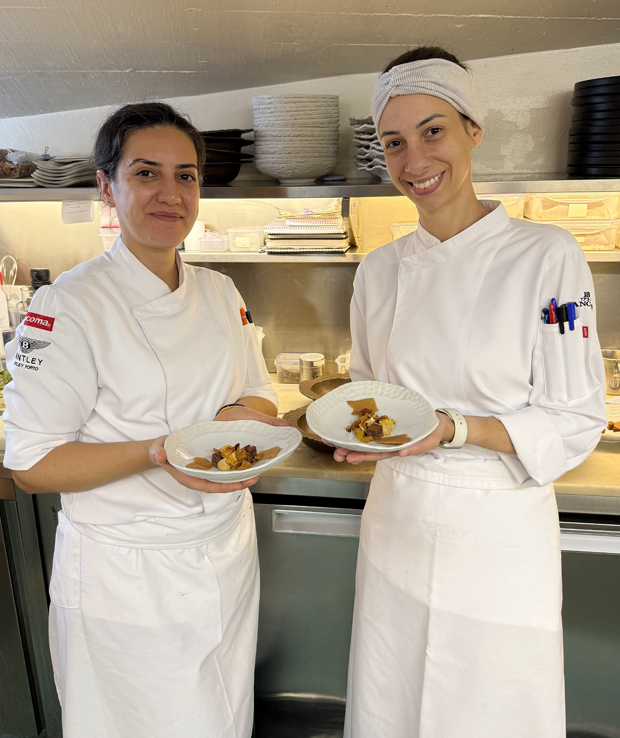
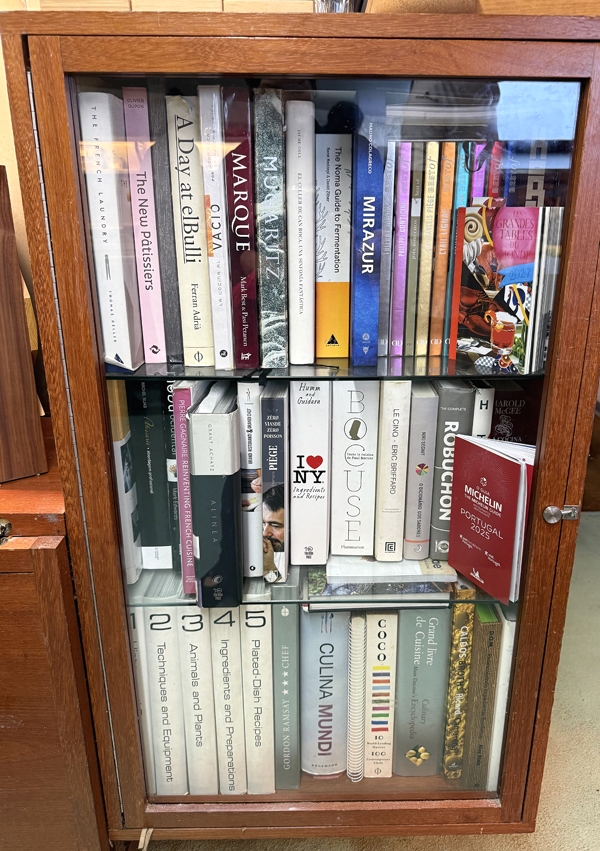
As the last savory course, that taste of vanilla provides a bridge to the intermezzo that you’re invited into the kitchen to enjoy. It’s a long kitchen, humming with cooks under the watchful eye of Chef Catarina Correia, that extends farther than you’d expect.
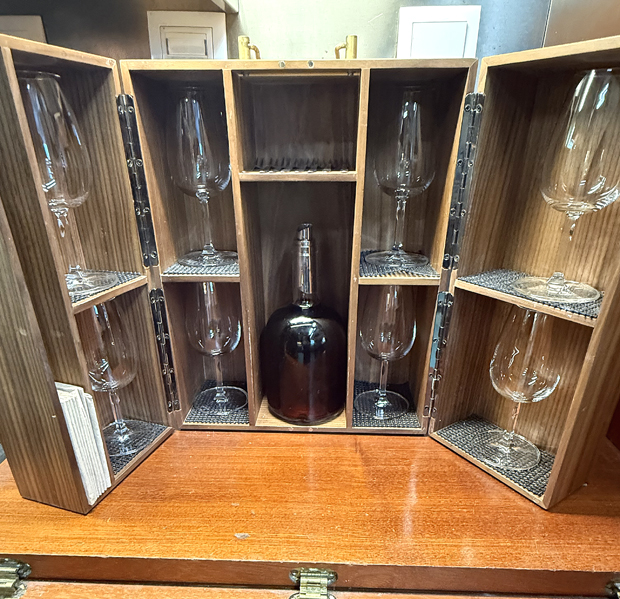
Small glasses of port are offered from a bottle bequeathed by a friend of the restaurant. A small round of Portuguese cheese topped with figs and almonds is sliced and presented to you to enjoy. The texture is creamy soft like cheesecake. It’s a little tangy, with the fruit adding just the right sweetness.
Back at your table, the “Late Harvest” dessert arrives. It’s a composition of chewy dried apricots, honeycomb, walnuts, and wine ice cream that all together tastes very much like a late-harvest dessert wine.
That’s followed by goat cheese ice cream with carob, almonds, yuzu and orange, a fitting dessert that lives up to the sunny, beachy disposition of its name, “From Algarve with Love.”
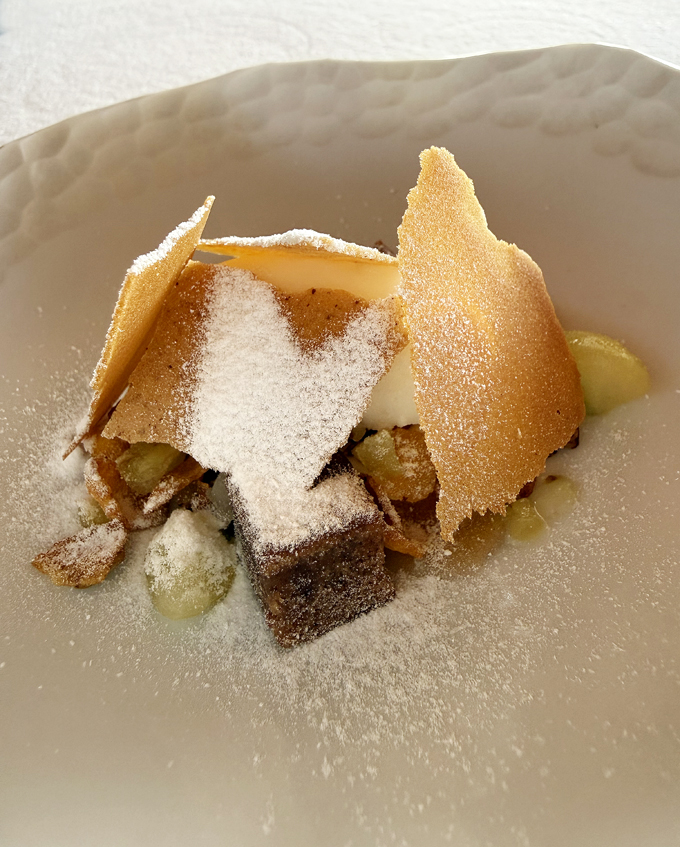
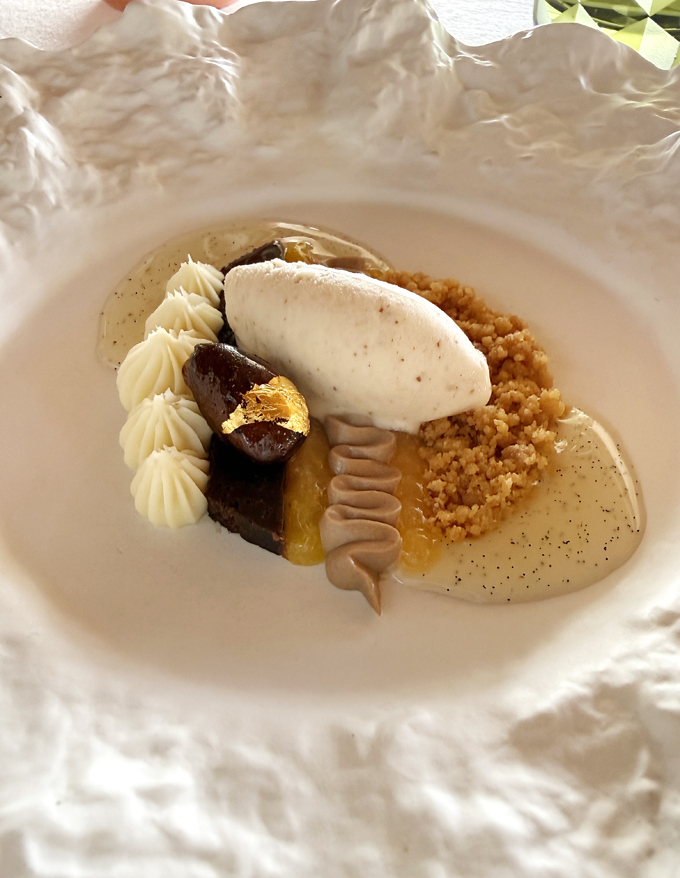
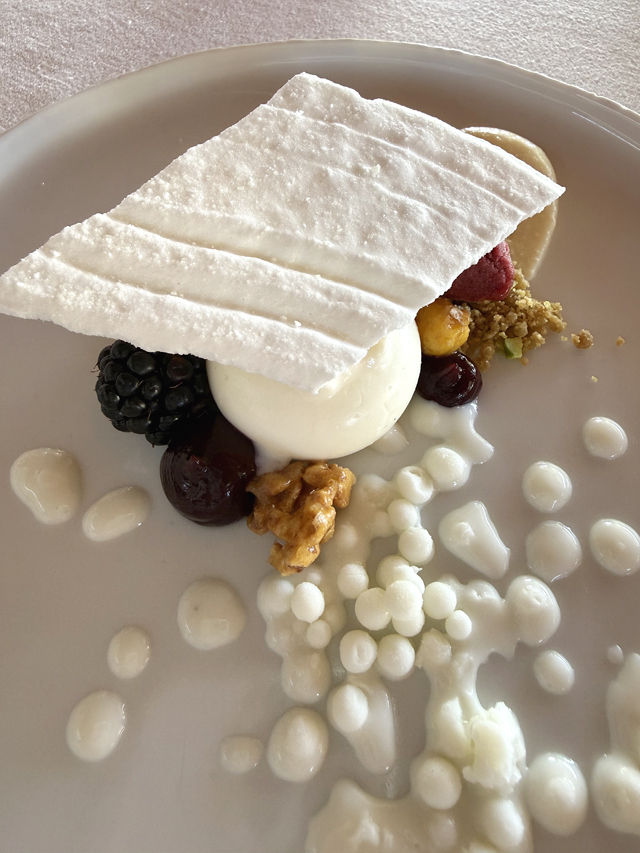
The final dessert is “Milky Way,” a celestial looking plate of yogurt cake, blackberry ice cream, and salted caramel draped with thin white meringue tile.
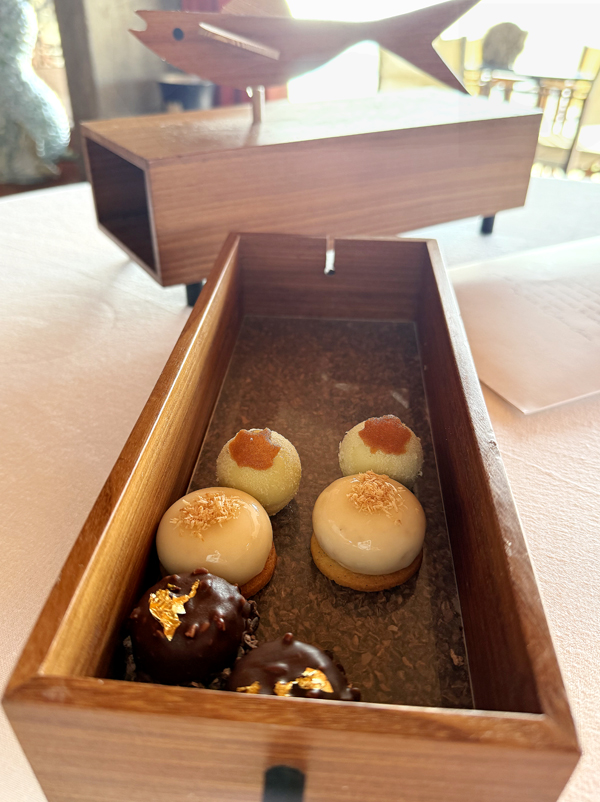
A wooden box appears with a bird on top, holding mignardises of chocolate-hazelnut “Ferrero Rocher,” coconut-pineapple “Pina Colada” petit fours, and white chocolates flavored with seaweed for a nice note of salinity that cuts through the sweetness.
At the end, you’re presented with a menu, along with an illustrated card of the restaurant that’s printed with the names of its staff members, plus a bag of Japanese green tea in a nod to the property’s history.
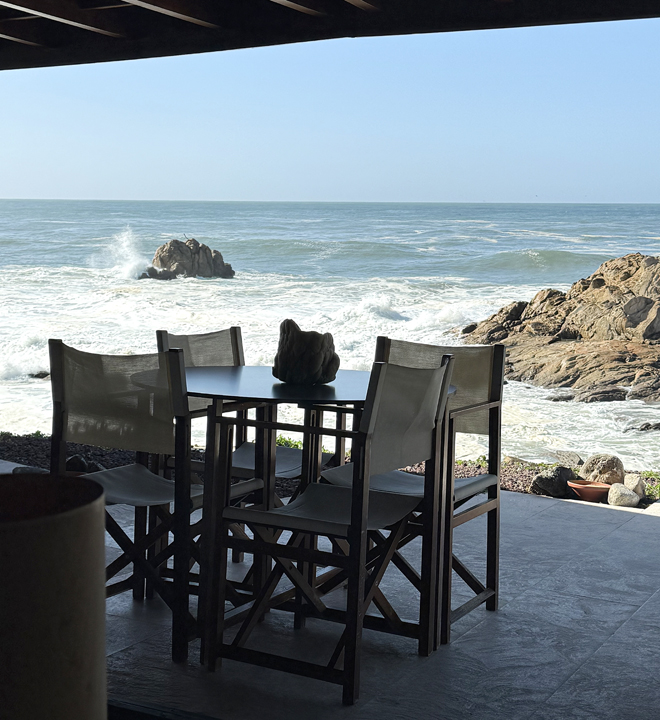
With that, you can then enjoy tea or espresso outside at a table overlooking the Atlantic. It’s an excuse to linger just a little longer at a place that is hard to leave.
More: Portugal Dining, Part I: Michelin-Starred Euskalduna Studio in Porto
And: Portugal Dining, Part II: Michelin-Recommended DOC in the Douro Valley