Author Archives: foodgal

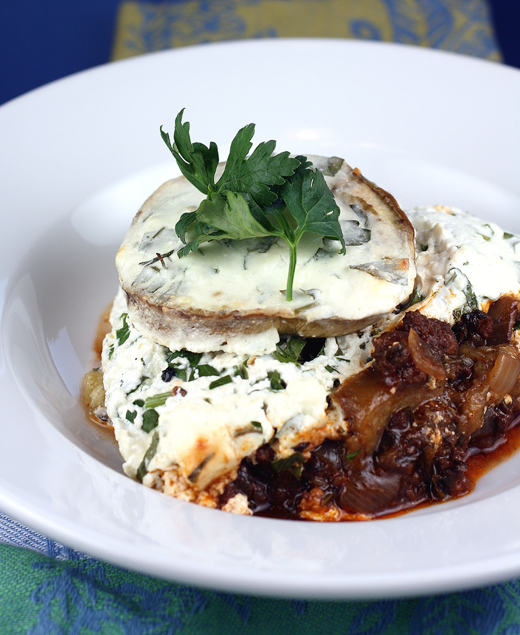
Sara Moulton’s Speedy Moussaka

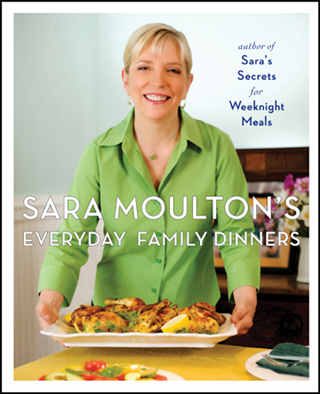
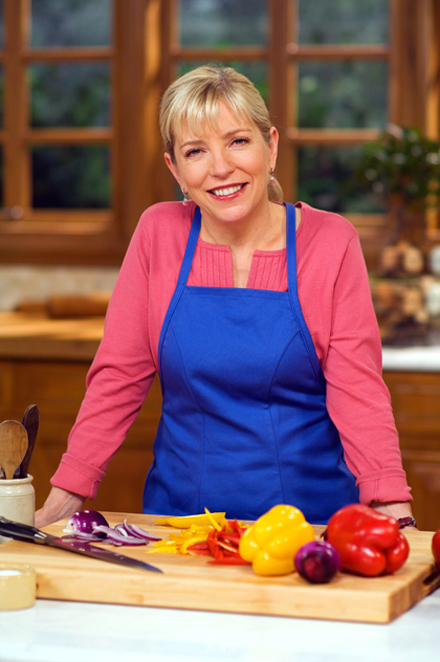
Sara Moulton, the executive chef of the now-defunct Gourmet magazine, reinterprets the look of dinner in her newest cookbook, “Sara Moulton’s Everyday Dinners” (Simon & Schuster).

Why settle for boring ol’ chicken with a veg and starch on the side, when you can whip up the likes of “Fried Eggs with Crispy Kimchi Rice,” “Spring Soup with Bread Dumplings,” and “Reuben Pizza” for dinner instead?

Her recipe for “Speedy Moussaka” especially caught my eye. I love a good rendition of this traditional Greek casserole. But I often feel in need of a serious snooze afterward, what with the greasy, fried eggplant slices and the heavy bechamel sauce covering everything.

Moulton’s version calls for a mix of ricotta, feta and yogurt in place of the enriched French milk-butter sauce. The eggplant slices also are baked, rather than fried. The result is a moussaka that’s not only faster to make, but lighter tasting, too.

Read more

Take Five with Sara Moulton, On Life After the Demise of Gourmet Magazine

These days, Sara Moulton is almost a rarity among TV cooking show stars.

She’s a cook’s cook, a graduate of the prestigious Culinary Institute of America in Hyde Park, NY, who worked on the line at restaurants in Boston, New York and France for seven years, before becoming an instructor at Peter Kump’s New York Cooking School in New York, and finally executive chef of Gourmet magazine, where she worked until it unceremoniously ceased publication on October 2009.

Moulton, who lives in New York with her husband and two children, has been anything but idle since then. Her third cookbook was just published this month, “Sara Moulton’s Everyday Family Dinners” (Simon & Schuster). The book reinterprets what constitutes dinner and provides inventive, healthful fare to wake up that end-of-the-day meal.

You can meet Moulton at three upcoming Northern California events. She’ll do a cooking demo and sign copies of her new book at 11:30 a.m. May 18 at Sign of the Bear in Sonoma. For more information, call (707) 996-3722.

She’ll also do two cooking classes and book signings at Draeger’s markets: 5 p.m. May 18 at Draeger’s at Blackhawk in Danville; and 5 p.m. May 19 at Draeger’s in San Mateo. Tickets to either event are $80 per person.

I had a chance recently to chat with Moulton by phone about her new book, the changing culinary landscape, the shock of being unemployed, and the demise of the magazine we all loved.

Q: How did you find out that Gourmet was going to fold?

A: The magazine was way down in advertising pages, but so were many magazines at Conde Nast. We’d already been told we had to cut back 25 percent of expenses. We were already walking around, thinking, ‘Who’s next?’

We thought we were special — a jewel in the crown. We won all sorts of awards. We’d been going through a rough period, through many publishers, and we were way down in sales staff. We knew it was coming, but didn’t know it was coming.

I’m not mad. I know Conde Nast had to make choices. I found out on a Monday morning, when I was out doing a photo shoot for my cookbook. We were at the farmers market with the photographer and had just gotten started. My cell phone rang at 9:30 a.m. It was my chef de cuisine, calling, and she was crying. I thought somebody had died. She said that they were shutting down the magazine, that there had been a meeting with the staff.

My immediate boss then called to tell me we had to have everything out by Tuesday at 5 p.m. It was quite a scramble.

Q: Where you able to pack up all the things that had been meaningful to you all those years?

A: My husband came to the office and helped me. We packed 35 boxes of books and shipped them home. I gave a bunch to Columbia University, and we built a new bookshelf in my son’s room.

I also took an old copper bowl, with Conde Nast’s permission. It’s from France, from the same cookware store that Julia Child used to buy her cookware from.

It’s a very heavy bowl. At my last restaurant job, I was the chef tourneau (substitute cook), who could work any station necessary. One thing I had to do at times was pastry, which was not my forte at all. We had an apricot souffle on the menu, made with dried California apricots, sugar, lemon juice and egg whites. We used to make the recipe by hand, whipping the egg whites by hand. We’d make seven souffles at a time.

On Saturday night that was my job. I’d have to make four or five batches. This bowl is a dead ringer for that bowl. The apricot souffle finally ran in Gourmet, and I also would teach people at classes how to do it by hand. The first time you whip egg whites or make bread, you should really do it by hand because you get a feel for it more. I didn’t want to leave that bowl behind. I didn’t want someone who didn’t care about it to just grab it and throw it out. It hangs in my kitchen now. I’m looking it as we speak.

Q: Your job at Gourmet was probably every foodie’s fantasy.

A: As the executive chef of the dining room, I cooked meals for the advertisers. We’d wine and dine them. Then, we’d hit them up for advertising. It used to work really well. (laughs). I was making the best food of my life in that dining room. It was a great job.

Q: Do you have a huge stack of Gourmet magazines at home?

Read more

A Temptress Named Miette

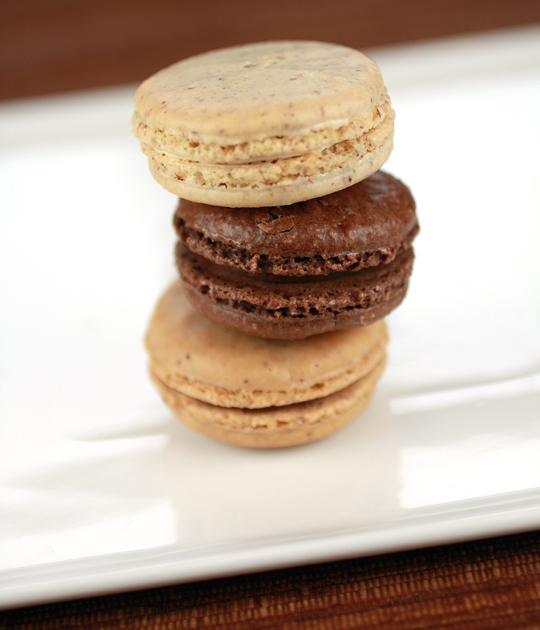
I can’t resist a wonderful French macaron.

Nor a fabulous cupcake, salted caramels, gingersnap cookies or imported European chocolates.

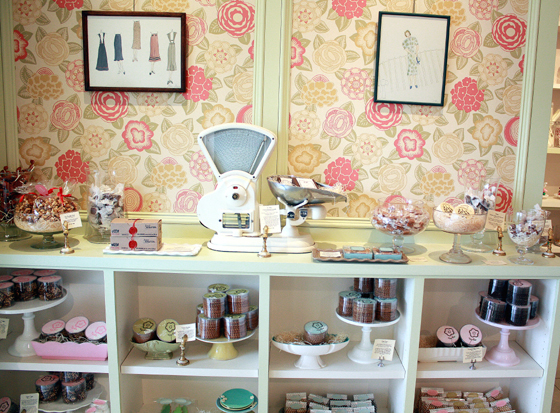
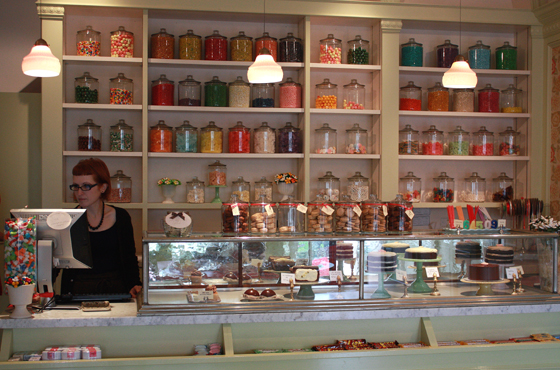
That’s why I have no will-power whenever I step inside one of San Francisco’s most delightful candy shops, Miette, a short drive from the Holiday Inn Civic Center.

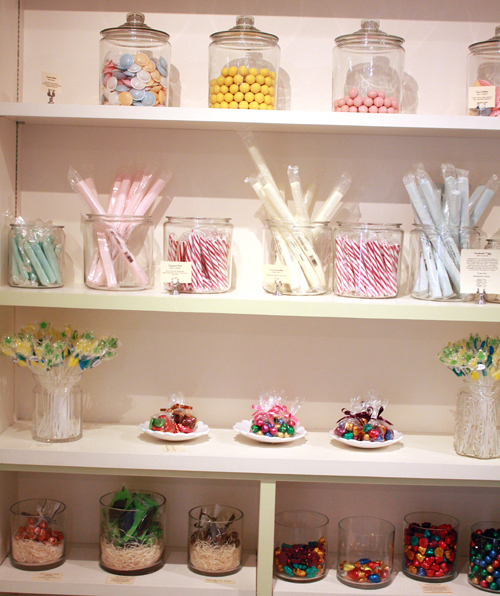
The three-year-old candy shop, sister to the Miette bake shop in San Francisco’s bustling Ferry Building, is filled with all of that, plus everything else a sweet tooth could want.

Done up in girly pastel colors, the shop, whose name means “little crumb” in French, features a small assortment of signature baked goods at the counter, including chocolate vanilla cupcakes ($3.25), chocolate cakes with Italian meringue ($24), and chocolate sables topped with sea salt ($5 for a small bag).

Read more

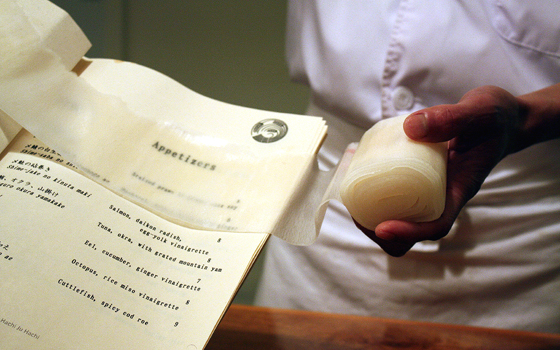
Harmony and Simplicity Meet at Hachi Ju Hachi in Saratoga

At Hachi Ju Hachi, the Japanese restaurant in downtown Saratoga, you won’t find the standard menu of teriyaki, Philly rolls, and Bento Box “A”’s like that of so many other establishments. Nor will you find bells, whistles, over-the-top flourishes or modern sensibilities that jar and shock.

Instead, you will find dishes with a real purity of flavor and lovely simplicity.

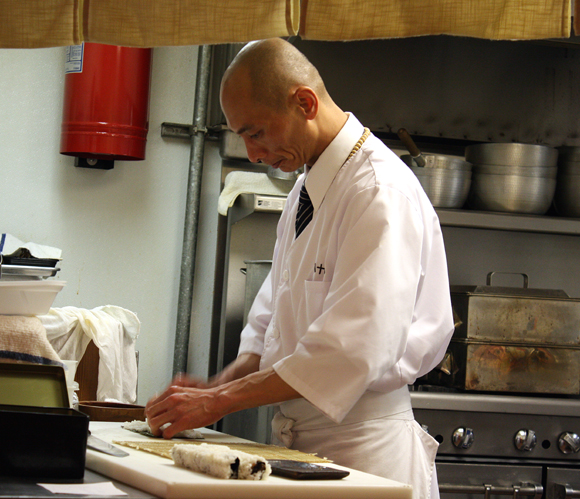
Chef-Owner Jin Suzuki may be only 45 years old, but he is decidedly old-school when it comes to cooking.

At 19, he started his training as a chef at a restaurant just outside of Tokyo. For six months, all he did was clean the windows and floors. He wasn’t even allowed to step foot inside the kitchen to wash dishes. It would be another three years before he was allowed to wash the rice. All of this had a profound effect on him.

“The more I saw, the more I got curious,” he says. “I learned that in-between confidence and arrogance is humility. So many chefs can be good technically. But so few chefs can attain spirituality in their cooking.”

One need only glimpse Suzuki, with his crisp chef’s coat, perfectly knotted tie, geta sandals, and serene composure to know this is a chef who has indeed attained that.

The name of the restaurant, Hachi Ju Hachi, which opened in November, comes from the word for  “rice” in Japanese. Taken apart, the kanji characters represent the number,”88.” Whether it was fate or not that led Suzuki to this exact location to open his restaurant is anyone’s guess. All he knows is that a few months after he opened, he happened to notice that the sidewalk tree right in front of his restaurant bears an identification medallion with “88” engraved on it. Coincidence? Or not?

Suzuki likes to believe it was destiny that led him to Saratoga, where he practices his version of washoku: traditional Japanese food based on the principles of harmony, balance, simplicity and restraint.


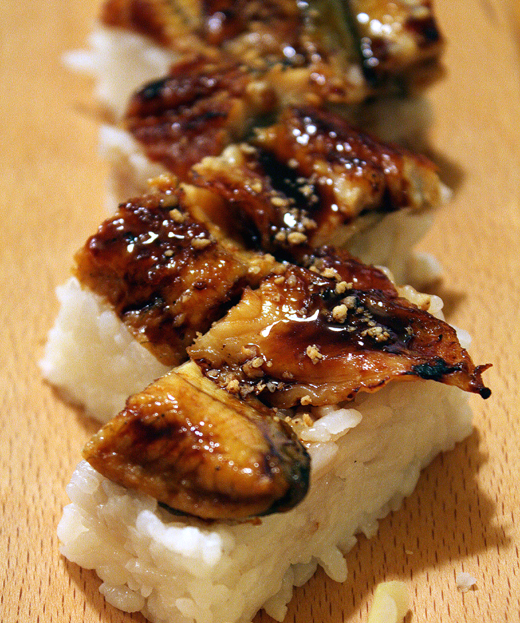
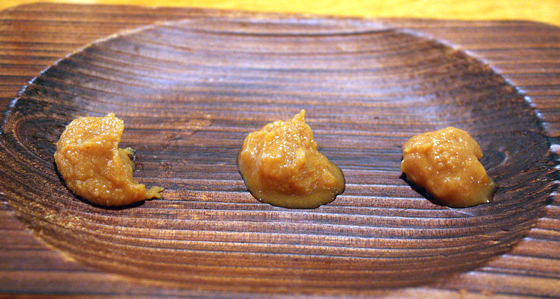
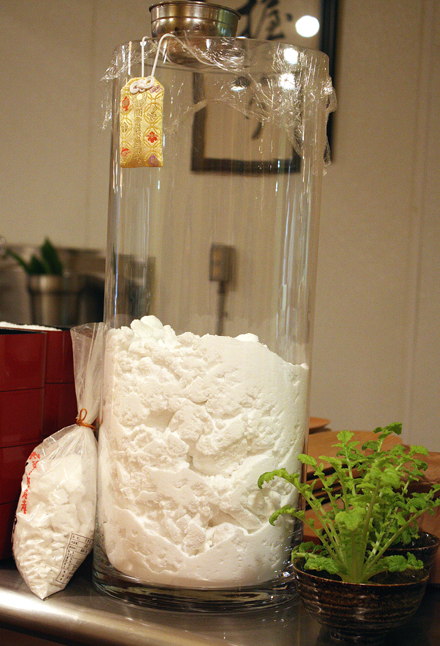
He practices techniques that form the basis of the art of kaiseki (Japanese haute cuisine), some of which are not even done in Japan anymore because they are so time-consuming to do, he says.  This is a man who makes his own salt by boiling iodized salt and sea salt in water for six hours until the liquid evaporates and all that is left is a softer, milder alchemy with an almost faint sweetness. He preserves shiitake mushrooms by braising them in sake, soy and kombu until they are soft, sticky and almost candy-like. Suzuki also makes his own miso with shrimp heads that he’s fermented for six months, as well as homemade tofu using white sesame, black sesame, edamame and corn.

“When I learned how to make tofu properly, it moved my soul,” he says. “I kid you not.


Although the restaurant has a few tables, most of the seats — and the best ones — are at the shiny, blond bar that has a view of the kitchen. A kids’ playroom, complete with all manner of toys, is at the back of the restaurant for diners’ children, as well as Suzuki’s 4-year-old daughter, who sometimes helps deliver menus to patrons.

Read more

Them Bones, Them Bones

When I was a little girl, I remember many a dinner that featured a platter of little nuggets of Chinese pork spareribs.

No matter if they were coated in salty, pungent black bean sauce or sweet hoisin sauce, my Dad would root around with a serving spoon until he found the exact piece he was looking for.

As a kid, I would watch him digging around, and would wonder why he took so long to do this.

Only as an adult did I realize what he was actually doing.

He wasn’t looking for the meatiest sparerib, but the scrawniest — the one with barely any tender flesh on it. My late-Dad, who was born to first-generation, working-class Chinese immigrants, was used to scrimping, sacrificing, and making do with less. After all, when he was saving money to buy our family’s first and only house in San Francisco, he voluntarily took on the extra duties of cleaning and sweeping the stairs and hallways of the apartment building we lived in then in exchange for a cut in rent from the landlord.

That frugality carried over into his eating, too. When the Lazy-Susan stopped in front of him at a Chinese restaurant, he’d do that thing with the spoon for quite a few seconds, until he found the piece of chicken or duck or pork that was mostly all bone. He left the meatier pieces behind for my Mom, my two brothers, and I.

He’d use his fingers to gnaw on those bony pieces, savoring every last little bit of meat and succulent sauce. When the bone finally was discarded on his plate, it was clean as can be.

My Dad never wasted anything, that’s for sure. But he also knew a good thing when he tasted it. Those bony pieces of meat had some of the best flavor around. Good cooks know that cooking meat on the bone not only helps it cook faster but keeps it juicier, too. Bones also amp up the flavor of meat. That’s why they make such great stocks, why dogs love to chew on them, and why we all love to pick the tender bits off of hefty prime rib bones on holidays.

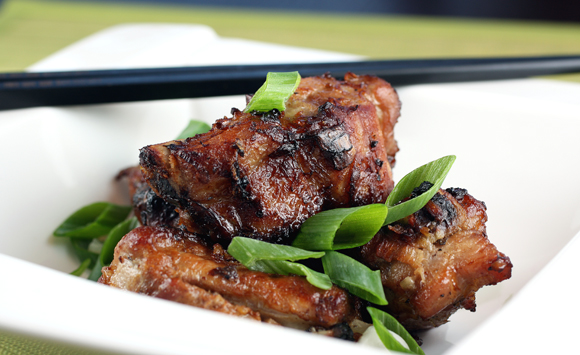
When I saw Tuty’s recipe for “Roasted Spareribs a la Scent of Spice” on her Scent of Spice blog, I couldn’t help but think of my Dad.

Read more

« Older Entries Recent Entries »