Category Archives: Fruit

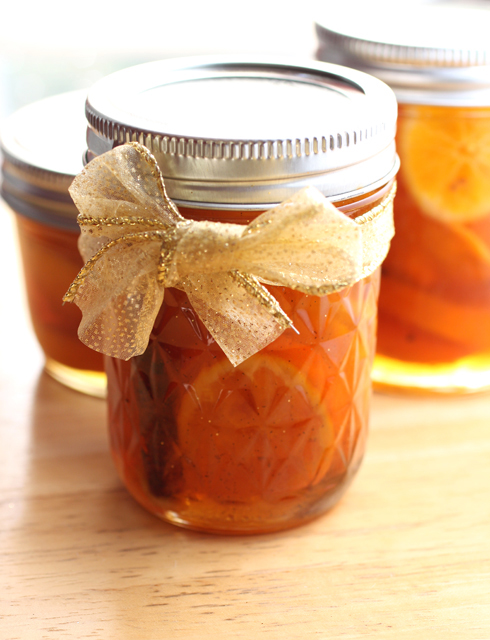
A Gift of Sweet, Syrupy Clementines

A sweet, delicious DIY gift.

I don’t know about you, but a gift at this time of year of something precious and sweet, all tied up with a bow in a glass jar is as wonderful as something in a familiar little blue box.

OK, almost as wonderful.

“Honey-Preserved Clementines” could not be easier, either, especially for a can-o-phobe like myself, who admittedly gets a little nervous around water-bath equipment.

But since these jars get stored in the refrigerator, you can skip that sort of, kind of scary step.

This recipe, published in the Dec. 2009/Jan. 2010 issue of Fine Cooking magazine, comes from my friends and prolific cookbook authors, Bruce Weinstein and Mark Scarbrough.

Read more

Hawaii Part 5: Kona — Where Coffee is King

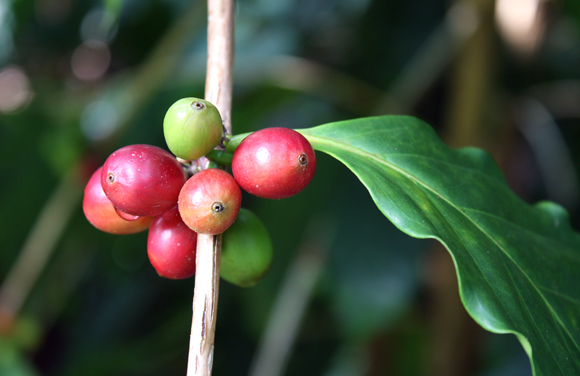
Red "cherries'' on a Kona coffee tree are the ripe fruit, from which the coffee seeds or beans come from.

KONA, HAWAII — When you think of the Kona district on the Big Island, it’s hard not to think of coffee immediately.

The first coffee was planted in Kona around 1828 by missionary Samuel Ruggles, where it thrived because of the mineral-rich volcanic soil.

It is now Kona’s most famous crop and probably its most expensive. You’ll find top-grade Kona coffee selling for upwards of $38 a pound. Don’t be fooled by the so-called “Kona Blends.” Yes, they’re cheaper — but for a reason. The blends are required to contain only 10 percent Kona coffee. The rest can be made up of much cheaper coffee from elsewhere around the world.

Kona coffee may get even more expensive in the future, as farmers have had to do battle with a pesky, virulent beetle that has been attacking the berries for the past couple of years. Moreover, just like farming elsewhere, it remains a hard profession that younger generations are turning their backs on.

Tom Greenwell is a fourth-generation grower. His great-grandfather, British adventurer, Henry Nicholas Greenwell, was one of the first exporters of Kona coffee in the late 1800s. Today, Tom Greenwell carries on the family tradition, overseeing Greenwell Farms, where the planting and picking are still done by hand on 35 lush acres.
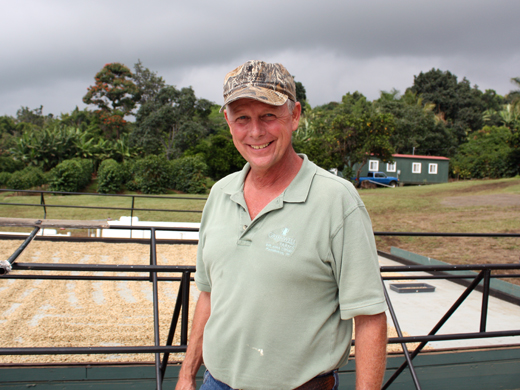
Tom Greenwelll, fourth-generation Kona coffee grower.

Recently, I had a chance to tour the farm with Tom Greenwell during my trip to Hawaii, courtesy of the Hawaii Visitors and Convention Bureau.

Before you even stick your head into the roasting building, the sweet aroma of roasty-toasty beans hits you. It’s like coffee syrup aromatherapy.

Greenwell Farms grows about 280,000 pounds of coffee annually. Small white flowers begin to bloom on the coffee trees in by February, followed by green berries in April. From August through February, the red fruit, known as a “cherry” (because it looks similar to one) has ripened and is ready for picking.
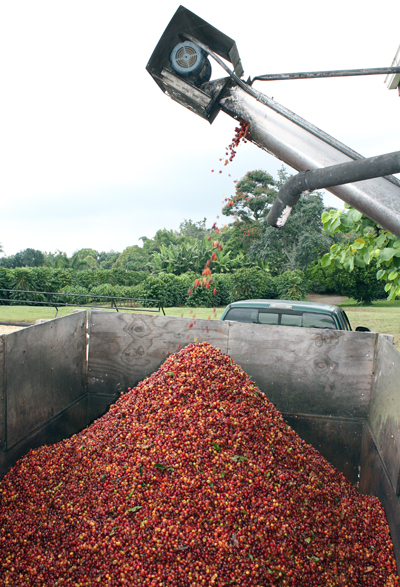
The pulper extracts the beans from the fruit.

The fruit is separated from the seed or bean with a machine known as a pulper. The beans are fermented overnight, then rinsed before being spread out on a rooftop to dry for at least 30 days. After that, the beans go into the roaster for about 15 minutes.

Read more

Hawaii Part 3: A Tale of Two Very Different Farmers

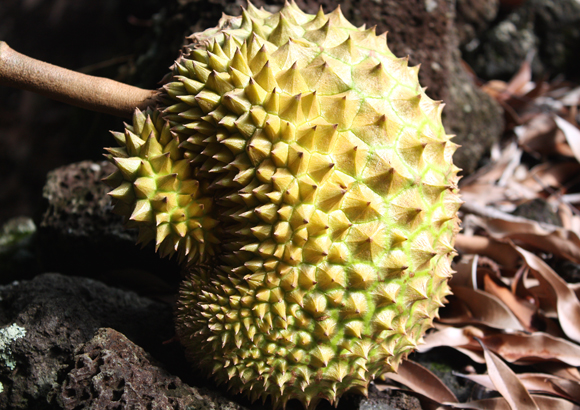
Can you guess what this is? It's banned on airlines because of its smell.

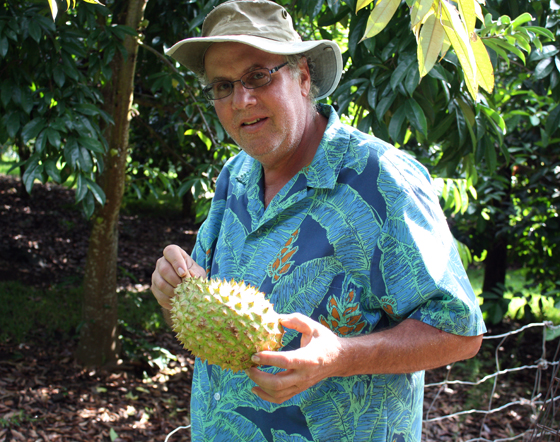
HONOLULU, OAHU and KONA, HAWAII — Ken Love has had a multitude of careers in one lifetime: Associated Press photographer, Chicago Sun-Times restaurant reviewer and Tokyo culinary student.

But it is as a farmer on the Big Island that he is perhaps most happiest.

I can’t help but get that feeling as Love, a big bear of a man with a desert dry sense of humor, showed me around a five-acre plot of wild Eden on a friend’s property that he looks after. I had a chance to meet Love, president of the Hawaii Tropical Fruit Growers Corp., on my recent trip to Hawaii, courtesy of Hawaii Visitors and Convention Bureau.

A specialist in tropical fruit horticulture, he’s also quite the activist, rallying for the Big Island to feature home-grown fruit and veggies in school lunches rather than the rock-hard peaches and tasteless imported apples that often end up on cafeteria trays instead.

He’s also about to become a film star. Love recently filmed a documentary with actor Bill Pullman, who happens to be a fruit activist, himself. (Who knew?) The film, “The Fruit Hunters,” is based on the book of the same name by Adam Leith Gollner. It looks at the diversity of fruit in the world, as well as folks who become almost fanatically passionate about fruit. The movie is expected to be released by the end of next year.

Tropical fruit farmer Ken Love knows everything there is to know about fruit in Hawaii.

On this quiet afternoon, as we thread our way through this lush five-acre spot, Love stops every few steps to point with pride to a tree or bush, and to pick something amazing for me to taste. It’s a veritable fruit smorgasbord before my eyes.

Read more

FigCello is Fig-A-Licious

A new brandy made from black Mission figs. It's heaven in a glass.

Fig fans are sure to go wild for FigCello di Sonoma.

I know I sure did.

FigCello is one smooth liqueur made from black Mission figs blended with a hint of citrus, various botanicals, and distilled Wine Country grapes.

It’s the newest product from Sonoma’s HelloCello, a small artisanal distilled spirits maker. You may know its debut product, Limoncello di Sonoma.

The fig brandy, with 30 percent alcohol by volume, came about when Sondra Bernstein, owner of the Girl & the Fig in Sonoma was on the hunt for a fig liqueur for her restaurant. She approached Fred and Amy Groth of HelloCello, who were eager to take on the challenge.

Read more

Melissa Clark’s One Dish Wonder

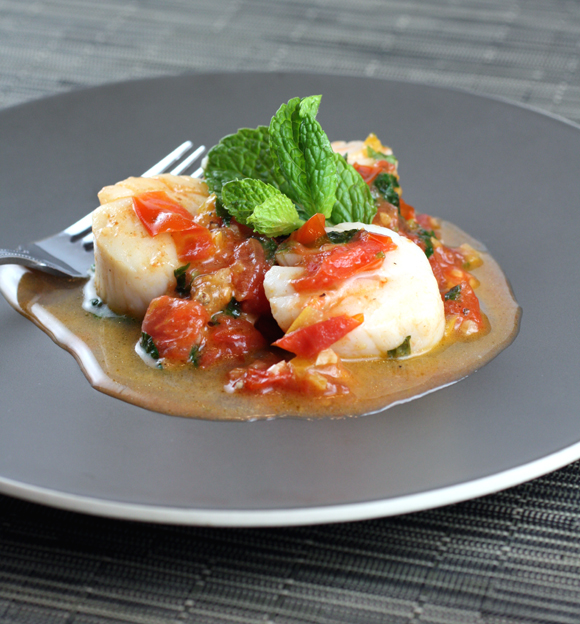
With only five ingredients, this dish delivers big-time in flavor.

On time-pressed weeknights, I like nothing better than a one-pot dinner that cooks up in mere minutes and leaves you soulfully satisfied far, far longer.

Melissa Clark’s “Sauteed Scallops with Tomatoes and Preserved Lemon” is such a dish.

It’s from her new cookbook, “Cook This Now” (Hyperion), of which I recently received a review copy. Its 120 recipes are arranged by season and month to take advantage of your local farmers market offerings. I’ve already got half the pages bookmarked, as these are wonderfully straightforward recipes that not only entice with their flavors but with their ease of preparation.

This particular recipe by the famed New York Times food writer has only five ingredients (not including salt and pepper), but tastes like so much more.

Read more

« Older Entries Recent Entries »