Category Archives: Great Finds

Sensational Sammies

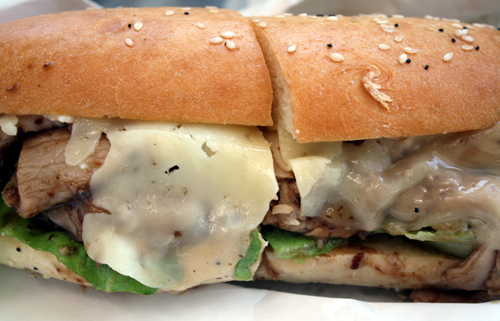
A masterful, melty goodness of a sandwich.

Last week, I finally got around to eating at a revered place in San Francisco I’ve been dying to try.

It’s owned and operated by a most esteemed chef. It garnered a glowing, three-star review in San Francisco Magazine. Oh, and it’s tinier than many people’s walk-in closets.

It is, of course, The Sentinel, the doll-sized, corner sandwich shop South of Market opened a year ago by Dennis Leary, a most talented chef who makes no bones for marching to his own beat.

Long before it became uber hip for high-end chefs to chuck it all to careen around town in blinged -out, gourmet taco trucks, Leary left behind the highly regarded Rubicon restaurant, where he was its highly regarded executive chef, to open a glorified diner named Canteen.

Ah, but the 20-seat Canteen is no dive. It’s a cozy, lively joint decorated with shelves of classic books, a nod to Leary’s Phi Beta Kappa degree in English literature from Wheaton College. With room for only two or three other helpers behind the counter while he cooks, Leary miraculously turns out prix-fixe and a la carte dinners that are nothing short of magical. His Parker House rolls are reason alone to go. As is the warm vanilla souffle that never leaves the menu.

Before heading to Canteen to cook each night, he mans The Sentinel at breakfast and lunch each weekday. I’m sure I’m not the only one wondering if the guy ever sleeps.

I did try snapping a few photos of Leary, who was behind the counter at The Sentinel the afternoon I visited. But the red-headed chef is a whirlwind as he assembles sandwich orders lickety-split, making for some god awful blurry images I didn’t want to inflict on you.
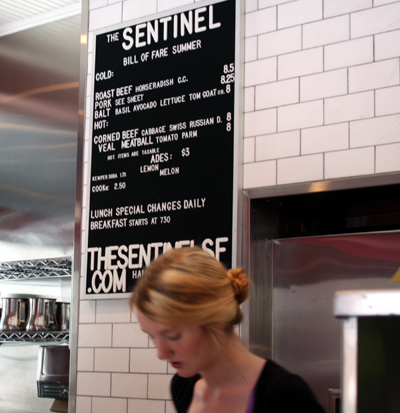
Inside the toy-sized sandwich shop.

The small menu at The Sentinel changes daily. Usually, there are a couple of cold sandwiches, a couple of hot ones, a soup, and one “Daily Special” that comes complete with a side and dessert.

There are two doorways leading into this bustling, take-out cafe that has no seats and really no room at all to linger.
Read more

Preview II: Ad Hoc Pineapple Upside-Down Cake Recipe

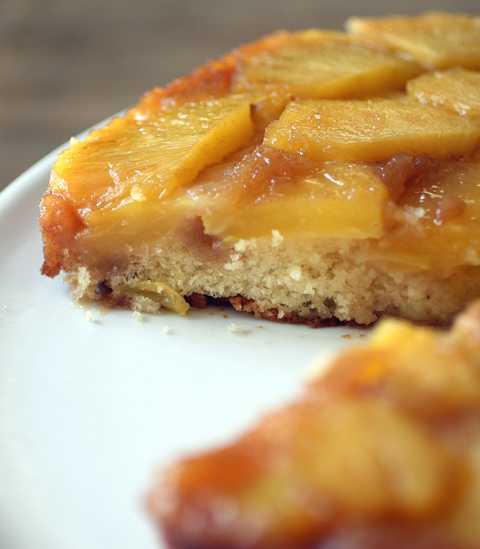
My first attempt at pineapple upside-down cake.

I’ll let you in on a secret: I’ve never made this iconic Americana dessert before.

Sure, I’ve made my share of pineapple compote for glistening slabs of baked ham. I’ve chopped mounds of pineapple for salsa for grilled fish tacos. And of course, I’ve enjoyed plenty of fresh pineapple au naturele.

But pineapple upside-down cake kind of frightened me, I must admit. Maybe it’s because so many recipes call for baking it in a cast-iron skillet that you then have to flip over to invert onto a serving plate. Yeah, flipping over a scorching hot skillet containing molten caramelized syrup (and we all know how cast-iron retains its heat) just seemed like a recipe for not just cake, but third-degree burns to boot.

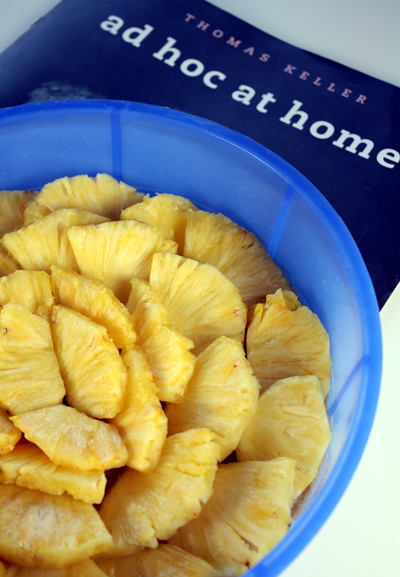
Then along came the promotional brochure in the mail for the upcoming “Ad Hoc At Home” cookbook (Artisan) by Thomas Keller with his rendition of this homespun cake.

The book won’t be out until November. But after trying the fantastic recipe for Ad Hoc’s “Chocolate Chip Cookies” last week, I decided to put my fears aside to attempt Ad Hoc’s “Pineapple Upside-Down Cake.”

A silicone cake pan makes it a breeze.

No cast-iron skillet needed here.

Instead, Keller uses a 9-inch silicone cake pan.

He doesn’t melt and caramelize the sugar and butter in the pan beforehand, either, like many other upside-down cake recipes. Instead, he creates a “schmear” of softened butter, light brown sugar, honey, dark rum, and vanilla that gets spread all over the bottom of the pan.

Then, a light sprinkle of salt goes over the top. Next, quartered rings of fresh pineapple are overlapped in the pan before the cake batter is added.

After baking, the cake rests in the pan for a short while. Then, you invert it onto your serving platter — with no fuss, no bother, and no dialing 911.

Read more

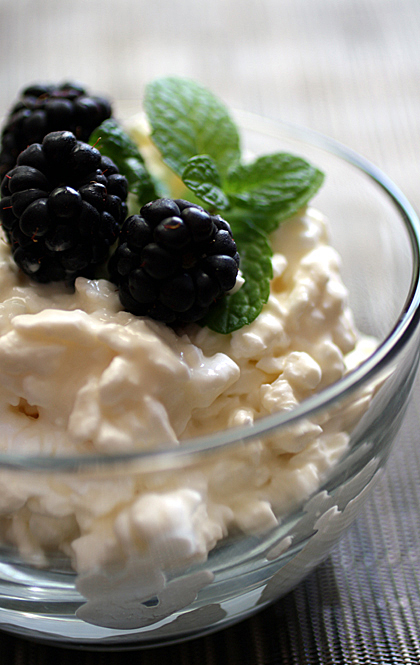
An Ode to Cowgirl Creamery Cottage Cheese

Cottage cheese that will change your mind about cottage cheese.

My early recollections of cottage cheese are not the best of ones.

Like so many of you way back when, I ate it — but not happily.

It was, of course, diet food, associated with canned cling peach halves or bare burger patties alongside a forlorn leaf of iceberg lettuce. We ate the white, creamy curds because they were supposed to be good for us, because we were counting calories, because we wanted to feel virtuous.

We certainly didn’t spoon them into our mouths because we wanted to.

But I do now.

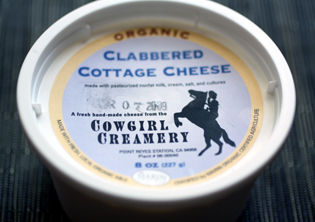
That’s because I’ve discovered a cottage cheese that actually makes me revel in eating cottage cheese. It’s the clabbered cottage cheese crafted by Cowgirl Creamery of Point Reyes Station.

It starts with organic non-fat milk from Marin County’s Straus Family Creamery. Clabbered cream (similar in taste to creme fraiche) is then added. The result is a creamy, rich cottage cheese. Unlike the standard mass-produced ones that have a sort of sour milk-taste to them, Cowgirl Creamery’s has a pure, fresh milky flavor.

Read more

My Kind of Bread

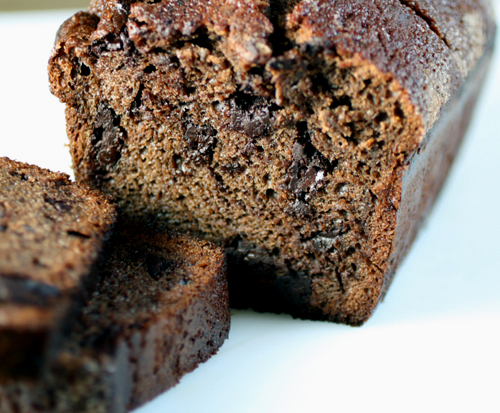
Bread -- made with oodles of chocolate.

Yeah, yeah, yah. I know I’m supposed to eat more whole wheat, whole grain, whole lotta fiber-fabulous bread.

But can you blame me for choosing this “Double Chocolate-Honey Bread” instead?

After all, it’s got all the best characteristics of your favorite artisan loaf — but with cocoa powder suffused throughout, and big chunks of gooey deep, dark chocolate hidden inside.

The recipe is from the new “Kneadlessly Simple” (Wiley) by veteran cookbook author Nancy Baggett.

It’s a bread book all about making loaves using the slow-rise, no-knead method that’s all the rage now.

To be honest, I haven’t been all that tempted by this new trend. So ya don’t have to get your hands dirty by kneading dough. Instead you have to figure out what exact time to stick the dough in the refrigerator, when to take it out for the first rise, then when to put it in a pan for the second rise, and lastly, when precisely it’s ready to go into the oven.  Advanced calculus was easier than this.

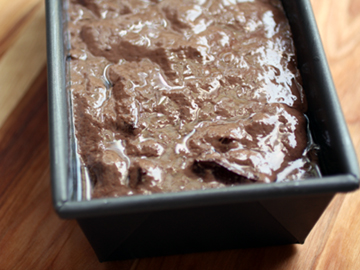
Dough, just after the first rise.

When it comes to chocolate baked goods, though, I’ll go to great lengths. So for this chocolate bread, I was willing to give it a go. And the results were so extraordinary, I’d gladly put myself through these timing gymnastics again.

This is definitely not a cake, even if from the outside it might resemble a tea loaf of sorts. There’s no delicate, tender crumb here. This is honest-to-goodness bread with a sugary, crisp hard crust and a dense, yet soft interior that’s shot through and through with chocolate. If you like the French tradition of nibbling on a baguette topped with a piece of good dark chocolate, you’ll find this bread a pure slice of heaven.

Read more

Nature’s Most Magnificent Cocktail Nibbles

You'll end up eating these by the bowl-full. That's how good they are.

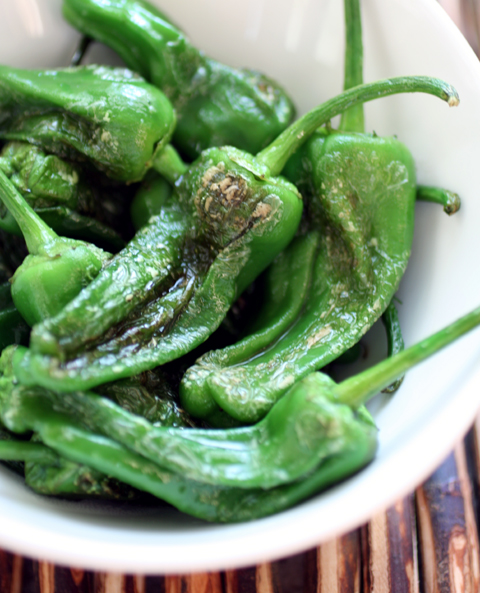
That bowl of blistered, tender peppers above?

Yup, those skinny, dark green beauties are nature’s best cocktail snacks.

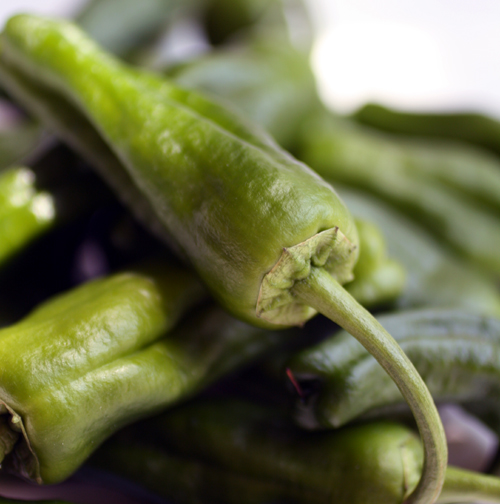
These pimientos de Padron are grown by East Palo Alto’s Happy Quail Farms.

I was first turned on to them eight years ago when I wrote a story about them for the San Jose Mercury News Food section. Farmer David Winsberg, whom I fondly call Dr. Pepper for obvious reasons, grows a cornucopia of exotic peppers on his network of backyards and other rented properties in East Palo Alto.

He’s probably most famous for his Padron peppers, though. They are one of the oldest non-hybrid peppers around and were supposedly brought back from the New World to Spain by Christopher Columbus. Named for the town of Padron in northwest Spain, the peppers are a treasured delicacy found in tapas bars around the region during the summer, when they are harvested.

They have a mild grassy, sweet flavor. Cooked, they’re downright juicy in your mouth.

Pimientos de Padron -- before cooking.

Winsberg started growing them in 1998 after a friend of friend brought him back some seeds from Spain. Now, you’ll find Happy Quail Farms’ Padron peppers on Bay Area restaurant menus, as well as for sale at the San Francisco Ferry Building farmers’ market on Saturdays, the Palo Alto downtown farmers’ market on Saturdays, the Menlo Park downtown farmers’ market on Sundays. Deeper into summer, when production is at full steam, you’ll find Happy Quail Farms at additional farmers’ markets. Check the farms’ Web site for more information.

Read more

« Older Entries Recent Entries »