Helpful Pistachio Recall Information
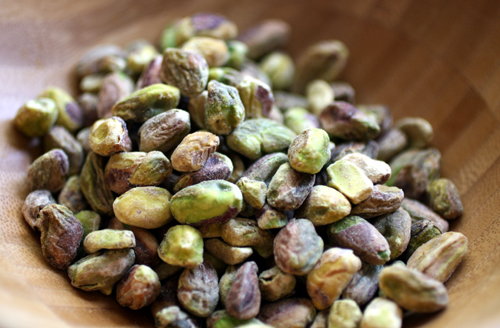
If you’re like me with pistachios in your freezer or cupboard, you’re anxious about whether you should use them or toss them, given the recent recall over salmonella contamination.
Two Web sites can help.

If you’re like me with pistachios in your freezer or cupboard, you’re anxious about whether you should use them or toss them, given the recent recall over salmonella contamination.
Two Web sites can help.
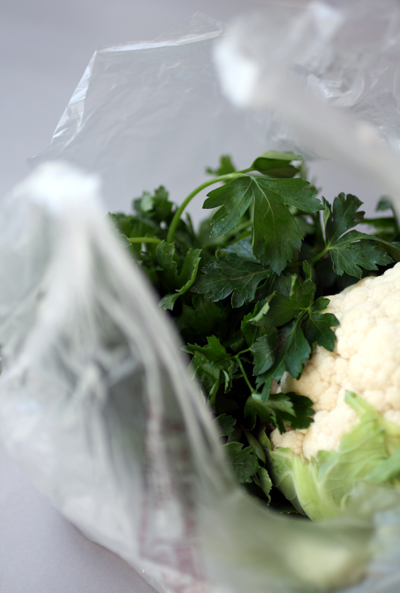
Starting April 25, you’ll have to remember to tote your own reusable bags to Berkeley’s three farmers’ markets. Starting then, the markets will be eliminating the use of plastic bags and packaging from the markets, becoming the first in the nation to do so.
The markets have adopted a “Zero Waste”campaign to remove, reduce, recycle plastic, and compost all materials generated there. The campaign will launch appropriately enough on April 25, when Berkeley also will host an Earth Day Celebration in conjunction with the Saturday market, which will include an eco-carnival, raffles, and demos of solar power.
“Berkeley, a city known for its progressive politics, is once again taking the lead by phasing out plastic bags and packaging at its farmers’ markets,” said Ben Feldman, Program Manager of the BerkeleyFarmers’ Markets, in a statement. “As a community, we come to the markets to support the stewards of the land and to nourish ourselves from the bounty of the earth. Zero Waste is beyond recycling; our goal is to close the loop by reducing our reliance on unsustainable and finite resources.”
Americans use 100 billion plastic bags annually (more than 330 per person per year), according to Worldwatch Institute, an environmental watchdog group. The plastic bags can take anywhere from 400 to 1,000 years to break down in landfills. An estimated 12 million barrels of oil are needed to make all the bags used every year.
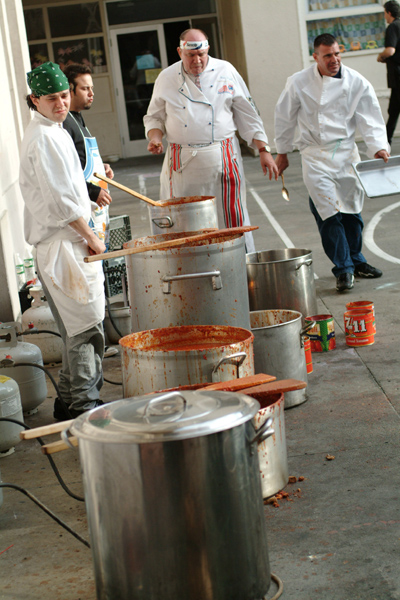
Mingle with the renowned film director and winemaker, Francis Ford Coppola, on April 19 when he co-hosts an evening to benefit North Beach Citizens, an organization he founded to help the homeless in the neighborhood.
For the past eight years, Coppola has hosted guests in the basement of Sts. Peter and Paul Church in North Beach for a huge family-style dinner, served at long tables, and accompanied by wines by — of course — Francis Ford Coppola Presents.
This year, Rose Pistola restaurant will do the honors — cooking the festive dinner.
You asked for it; you got it.
Bowing to overwhelming demand from diners, Chef David Kinch of Manresa in Los Gatos has decided to re-create his stunning dishes that earned him a tremendous victory recently on the Food Network’s “Iron Chef America.”
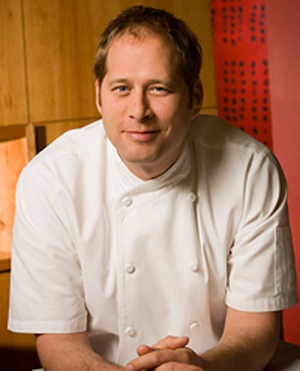
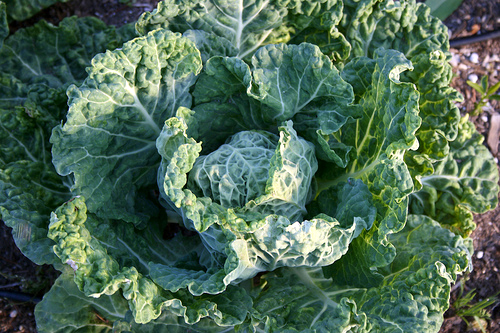
In his first time in Kitchen Stadium, Kinch trounced Iron Chef Bobby Flay by a whopping 10 points in “Battle Cabbage.”
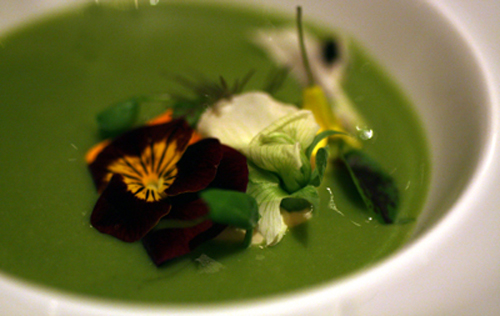
On three consecutive Sundays — May 10, May 17, and May 24 — Kinch will feature his winning dishes in a prix fixe “Iron Chef” menu at Manresa for $135 per person, exclusive of wine, tax, and gratuity. The dinner will include his five “Battle Cabbage” dishes, along with a special dessert. And in case you were wondering, nope, that sweet finale to the meal will be sans cabbage.
4 filling days.
250 wineries pouring exclusive vintages.
60 of the world’s greatest chefs cooking an array of spectacular dishes.
That all adds up to the second annual Pebble Beach Food & Wine extravaganza, April 16-19.
Although ticket sales are admittedly slower this year due to the lackluster economy, event co-founders Robert Weakley and David Bernahl still say they hope to draw at least 3,000 foodies, (the same number as last year) to a bevy of cooking demos, reserve wine tastings, luxurious lunches, and one-of-a-kind gala dinners. As a further incentive, prices remain the same as last year, with cooking demo prices starting at $100; a one-day pass to the grand tasting tent (where 200 wineries and 25 chefs will be doling out their best) going for $165, and a seat at the grand finale dinner costing $1,250.
Last Sunday, the two hosted a dinner at Manresa in Los Gatos to trumpet the event to local bloggers and food writers, including yours truly. Weakley was the former organizer of the grand Masters of Food & Wine at the Highlands Inn in Carmel, which was forced to curtail that event at that location when the hotel was converted to a time-share property. Weakley then stepped out on his own to launch the Pebble Beach event last year.
Among the chefs participating this year are Thomas Keller of the French Laundry in Yountville, Michael Cimarusti of Providence in Los Angeles, Eric Ripert of Le Bernardin in New York, Chris Cosentino of Incanto in San Francisco, Nancy Silverton of Osteria Mozza in Los Angeles, and Masaharu Morimoto of “Iron Chef America.”
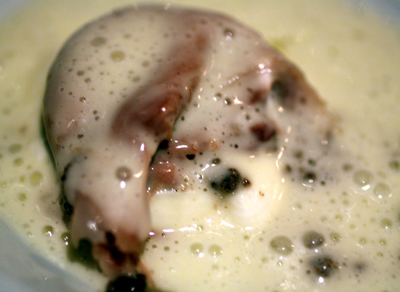
Speaking of “Iron Chef America,” recent victor David Kinch, chef of Manresa, gave a sneak taste of one of his dishes — suckling kid goat with curds and whey — which he will be serving at the luxe Cristal dinner at the Pebble Beach affair. Never before has any meat tasted this meltingly tender.
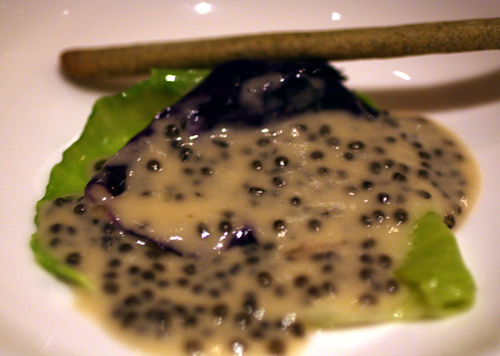
Fresh off his Battle Cabbage victory on “Iron Chef America,” Kinch couldn’t help but present a cabbage dish to us that night, either: “Cabbage and caviar,” in which a leaf of one of the humblest vegetables was enveloped in a creamy sauce starring one of the world’s priciest ingredients. Talk about a playful “rich man, poor man” dish.