Examining a bottle of St. George Spirits eau de vie gives little hint of all it took to make it.
A clear, colorless liquid, eau de vie is French for “water of life.” It is a brandy distilled from fermented fruit juice. In the case of this Alameda artisan, small-batch spirits maker, each slender 350ml bottle took all of 15 to 20 pounds of fresh, ripe, often organic, fruit to make.
Producing eau de vie is a slow, labor-intensive process. For St. George Spirits founder Jorg Rupf, it’s also an absolute labor of love. And that’s no truer than at this time of year, when summer fruit is at its best and the gleaming copper stills at St. George are in full swing to distill pears, cherries, and raspberries down to potent yet smooth, thrillingly fragrant digestives.
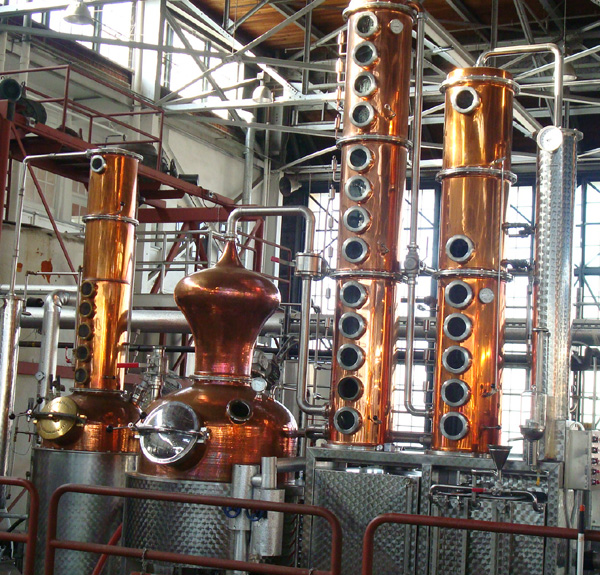
St. George Spirits is housed in an old airplane hangar on the grounds of the decommissioned Alameda Naval Air Station; hence the moniker of another of its famous spirits made there, Hangar One vodkas.
Aqua Perfecta (eau de vie) was its first product, when Rupf founded the company in 1982. A native of Germany, Rupf was that country’s youngest constitutional law judge at age 28. While on a research sabbatical in Berkeley in the late 1970s, he fell in love with the Bay Area, and its burgeoning farm-to-table philosophy in food and wine.
Those beliefs resonated with Rupf, who was born in Alsace, home to the world’s best-regarded eaux de vie, which were initially made by farmers who were seeking another outlet for their bumper crops of fruit. Indeed, Rupf often helped his grandfather distill the family’s eau de vie.
Transplanted to the Bay Area, Rupf couldn’t believe nobody back then was making hand-crafted eau de vie in this country.
“I figured there were so many Europeans living here that it would be a good market,” he said. “Plus, I was so excited about the quality of fruit here.”
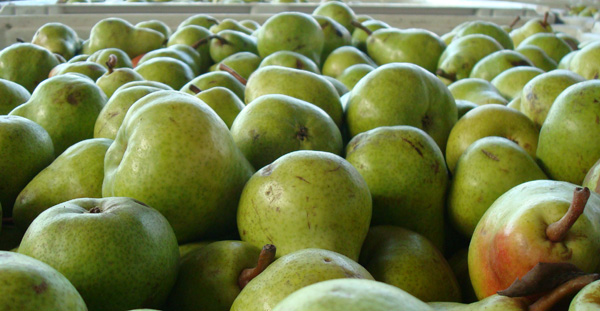
When it comes to eau de vie, fruit matters. Big time. Rupf sources the best fruit from California, the Pacific Northwest, and Canada. Black cherries don’t have enough intrinsic aromas for him, so he uses pie cherries instead. Bartlett pears sit in huge bins off to one side, waiting for just the precise moment when they turn yellow and perfectly ripe to crush. The flesh of the fruit is used to make eau de vie, as well as the skin, which contains a wealth of aromatics. Rupf explained.
Read more