Monthly Archives: August 2009

A Feather In Its Cap for the Plumed Horse
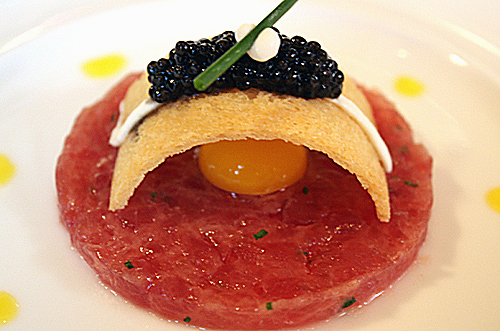
Caviar, ahi, quail egg, and a crispy arch of brioche.

The first time my husband and I dined at the Plumed Horse, shortly after its new owners unveiled its multi-million-dollar rennovation in 2007, our reactions were immediate: We were astonished to experience this level of high-dining in the sleepy village of Saratoga.

Don’t get me wrong. This town has long had a few quite lovely restaurants that stood out from the pack for their ambitious cuisine and service. They have true elegance, in an understated, quiet manner.

Contrast that to the supremely glamorous surroundings of the Plumed Horse, which could be beamed up and set down in Manhattan or San Francisco or Los Angeles, and fit in quite comfortably. The once rustic restaurant, originally opened in 1952, received the makeover of all makeovers two years ago. It also got a most skilled chef in Peter Armellino, a former chef de cuisine of Aqua in San Francisco.

The wine cellar is a stunner with floor-to-ceiling glass walls and shelves that hold 1,800 bottles. Even the floor is made of glass. Step onto it, and you’ll feel as if you’re floating in mid-air. Peer down to find two more stories of wine below.

From the soaring ceilings in the main dining room hang blown-glass, fiber-optic chandeliers that periodically change color from lime green to fuchsia. Three grand carts roll through the dining room, one holding champagnes, another cheeses, and the last, an assortment of aperitifs.

Like so many restaurants in this difficult year, the Plumed Horse saw a drop in business. But when we were invited in for dinner at the end of July, the dining room was buzzing on a Friday night. Our server happily reported that business had tripled in the past couple of weeks for some unexplained reason. He surmised that maybe people were just tired of scrimping and saving, and finally decided it was high-time to treat themselves a little.

The Plumed Horse is a fine choice to do that, too. Armellino’s food is the epitome of seasonal sophistication. The 41-year-old chef even grows his own herbs and citrus on the property, tucked away in flower boxes and a lower-level yard. There’s lemon grass, purple basil, Thai basil, tarragon, dill, thyme, and bay, as well as Meyer lemon, avocado, Mandarin orange, kaffir lime, and yuzu trees.

He gets tomatoes from a friend who dry farms them with little water so their flavors concentrate and become extremely intense. Figs come from a server’s tree. Another server grows a special type of Mandarin that looks like a kumquat, but with thinner skin. Armellino turns them into marmalade that he serves with foie gras.

“I’ve been a city boy for 20 years,” Armellino says. “To have the opportunity to grow things like this here, I just felt like it was my job to take advantage of it. How can you compare picking thyme out of the ground that’s been warmed in the sun to thyme grown in a hot house? There is no comparison.”
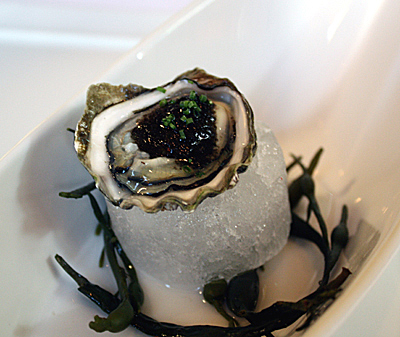
Kumamoto oyster with pressed caviar.

For dinner, order either a la carte or the chef’s tasting menu ($125 per person, with wine pairing an additional $70).

We opted for the latter, which began with an amuse of a Kumamoto oyster on the half shell with a blanket of pressed caviar.
Read more

The Mother of All Burgers

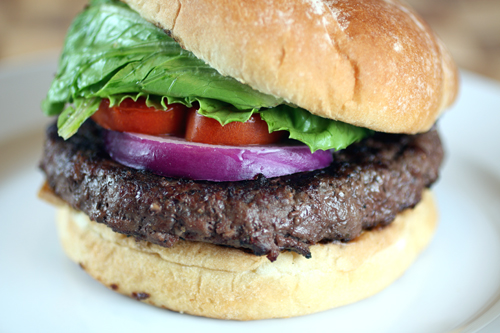
A burger so flavorful, you won't know what hit you.

Sure, there are fancier burgers. There are even more expensive burgers.

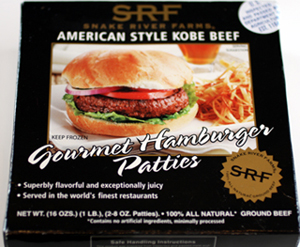
But Snake River Farms American Style Kobe Beef burger patties are pretty hard to beat.

And this is coming from a Food Gal who is not typically much of a Burger Gal, either.

The huge, 1/2-pound patties are made of American-style Kobe — Japanese Wagyu cows that have been crossed with American Black Angus ones. If you’ve ever experienced the over-the-top, fatty heaven known as Kobe beef, then you have an inkling of what these burgers are like.

If fat indeed equates flavor, these burgers are exploding with both. Take a deep breath and let me fill you in. Each of these patties alone has 750 calories — 610 of those from fat. Yowza! Indeed, each patty has more than 104 percent of a person’s daily recommended allotment of fat, and 126 percent of your daily value of saturated fat. Lordy, that’s a true case of too much information, if there ever was one.

It would be an understatement to say that you probably can’t eat these burgers too often — and still live to tell about it. But boy, what a treat at least once.

Read more

Kick Off Your Heels At Martins West Pub

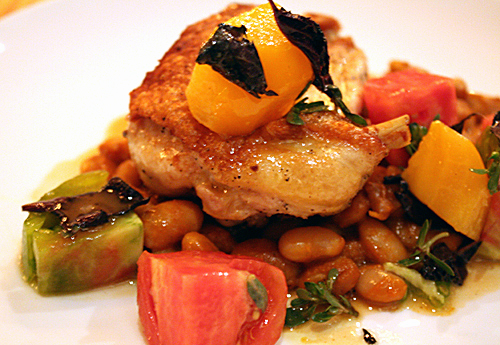
Moist and crispy chicken breast atop British baked beans.

Cowboy boots would be right at home at the new Martins West Pub in Redwood City.

Sure, it’s a gastropub with a British sensibility to the food, but there’s a down-home, kick-off -your-heels look and feel to it, as if you’re stepping foot inside a modern version of an old Western saloon. And that makes sense when you know the history of the Alhambra building that houses it.

The 1896 historic building started out as a theater and — yup — saloon. Over the decades, one of its most famous patrons was none other than Wyatt Earp, who’d visit regularly to watch his wife, Josie sing from the rafters.

You can almost picture Earp in this rustic space that’s been born anew. The dining tables are unadorned wood. Exposed brick walls and iron chandeliers give a timeworn vibe. Water is brought to the tables in milk bottles, and the napkins are soft, cotton dishtowels.

The dining-room is moody dim. So much so that when you’re seated, the hostess will hand you a key-chain flashlight with your menu, so you can actually read it. You get to keep the key-chain, too, which has the restaurant’s logo on it. Consider it a modern-day version of the matchbook of yore.

Executive Chef Michael Dotson, formerly executive chef of PlumpJack Cafe in Squaw Valley, executive chef at Evvia Estiatorio in Palo Alto, and executive chef at Sens restaurant in San Francisco, has crafted a menu of small plates and mains, as well as pub snacks such as Scottish eggs, and a seasonal pastie.

If you’re a California cuisine-type who is all about crisp, fresh veggies, this might not be the place for you, as you’ll only find that criteria met in the Little Gem salad ($9). Otherwise, as is the traditional British way, you’ll find your veggies pickled, pureed in a mash, or fried, which is not necessarily a detriment if you’re in the right mood.

There’s a list of specialty cocktails as befits this historic saloon. I sipped a thoroughly enjoyable and refreshing Pimm’s Cup ($9), garnished with bright green shavings of cucumber skin.

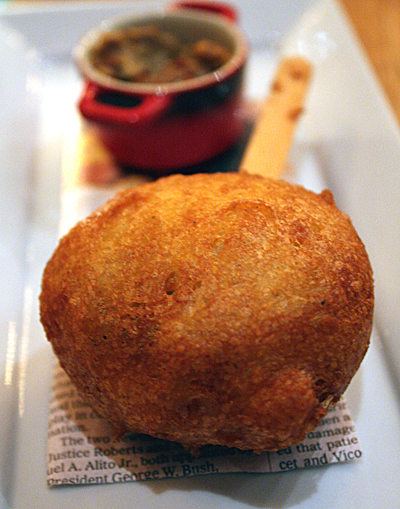
The corndog version of haggis.

My husband and I, who were invited to come for dinner, couldn’t pass up ordering the “haggis on a stick” ($4). Neither of us has had tasted haggis before. Let’s face it — you don’t often find the traditional Scottish and British sausage-like concoction — a mix of sheep organs cooked inside the animal’s stomach — on too many menus around here. And at Martins West Pub, it’s reinterpreted as a newfangled version of a corndog on a stick.

Read more

A Fuzzy Predicament

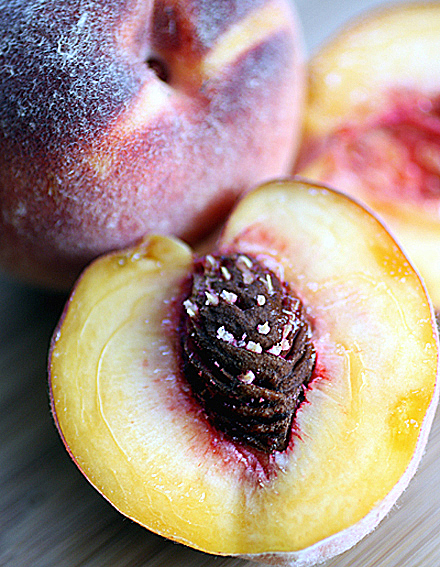
Pam's peaches.

When it comes to just-picked peaches, my friend Pam shares a predicament with a few of my other gal pals.

Pam is the creator of ProjectFoodie, an online site that allows you to create a personal recipe box from a wealth of offerings from magazines, newspapers, and cookbooks (Full disclosure: I’m one of her advisors.)

She likes peaches. She just isn’t keen on their fuzzy exterior. Something about their subtle furry covering gives her the heebie jeebies. Even washing the peaches, which usually flattens and masks most of their down, just won’t do it for her.

Which is a real shame when you realize she has a most prolific peach tree in her yard, one that gifts her with about 45 pounds of plump, juicy, yellow peaches each summer.

So Pam usually ends up baking cakes with them, turning them into chutney, and giving quite a few to friends such as yours truly.

I’m no fiend about fuzz, so I happily eat her peaches out of hand, savoring their incredible flavor that’s much more intense than so many others I’ve bought at the farmers’ markets this year. Peaches are my favorite summer fruit, and I can never get enough of them.

I would have gladly noshed on all her peaches like that. But when she heard that I found an interesting recipe for a peach cake in “Rustic Fruit Desserts” (Ten Speed Press), she perked up.

What’s that? Another fuzz-free treat? She was all ears.

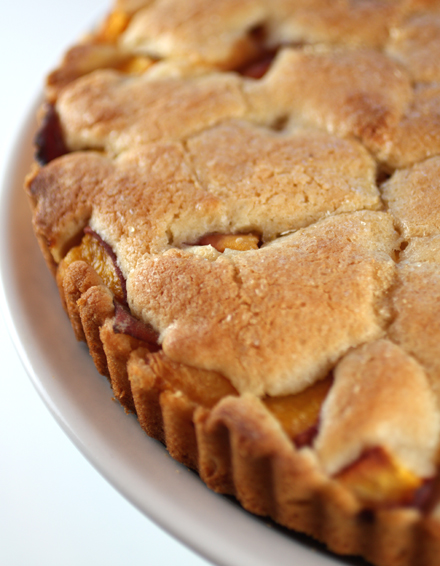
Peach ''tea cake.''

The recipe, by Portland, Ore. culinary professionals, Cory Schreiber and Julie Richardson, is actually called, “Stone Fruit Tea Cake,” because you can use any type of stone fruit you like.

Although I usually picture tea cakes as loaf-shaped, this one is baked in a tart pan or cake pan. It ends up looking very much like a tart, though its texture is all tender cake-like.

Read more

Coffee That Aims to Brew World Change

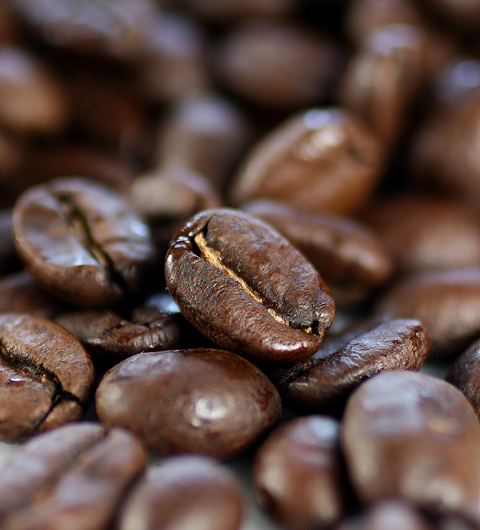
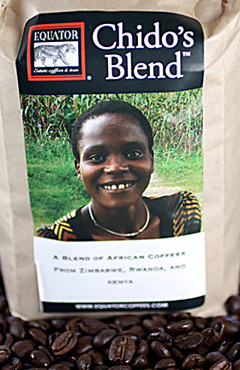
Coffee that could help better the lives of women in Zimbabwe.

Who knew a cup of Joe could hold the promise of bettering the lives of women in one of the most impoverished countries in the world?

But that’s what San Rafael-based Equator Coffees’ new “Chido’s Blend” aims to do.

The coffee, a blend of three African beans, is named for Chido Govero, a 23-year-old woman from Zimbabwe, who was relegated to an orphanage after her mother died of AIDS. At age 12, this bright, young girl was discovered by a scientist with the ZERI Foundation, an organization dedicated to using science to come up with sustainable solutions to world problems. The scientist helped mentor Govero, teaching her how to analyze tissue cultures of local, wild mushrooms.

Govero and her colleagues at the university discovered that these incredibly nutritious mushrooms might hold the key to helping stricken communities better feed themselves. Zimbabwe, a landlocked African nation the size of Montana, has been plundered by a controversial land redistribution campaign that has crippled domestic food production. A quarter of the population suffers from AIDS. The country also has more orphans per capita than any nation in the world. Girls, especially, face significant dangers in this climate of scarcity.

Who knew a bag of coffee could hold such promise?

Now, Govero is teaching girls to find native mushrooms in their local areas, and to cultivate them for food and income. In this way, she hopes to give them jobs and a brighter future.

The mushrooms are cultivated using mulch composed of discarded organic materials, including husks from coffee beans. The mushrooms also provide more than food for humans. Their spores transform mulch into fiber-rich feed, which can be fed to goats and other livestock. In turn, the animal manure is composted for raising additional crops. Additionally, the mulch prevents emissions of methane, a powerful greenhouse gas, by utilizing the agriculture waste from coffee production. The end result is a remarkable ecosystem.

You may be familiar with Equator Coffees because they are served at the French Laundry, Bouchon Bistro, and Bouchon Bakery. What you might not know is that it’s also a woman-owned company known for its commitment to social responsibility.

Read more

« Older Entries Recent Entries »