
Chicago Dining, Part III: Michelin-Starred Next
Chicago, IL — Any time a restaurant embarks upon a transformation, it’s a daunting process. Even more so when it undertakes one three times a year. For a staggering 15 years straight.
Such is the case with Michelin-starred Next, opened in the historic Fulton Market by storied chef Grant Achatz, founder of legendary Alinea.
By the time one year ends, Achatz and Next’s executive chef, Alan Mileykovsky, have put their heads together with input from other staff members to come up with the themes for the following year, each of which will be presented for about three months.
Previous themes have ranged from “Chinese Modern,” “Ancient Rome,” and “Paris 1906” to “Julia Child” and “Space.”
Each time, not only does the food change to keep with the theme, but so, too, does the plateware, decor, and soundtrack. In just a day or two, the look of the dining room is transformed. And in less than a week, the restaurant fully transitions from one theme to the next and is ready for service. Quite the feat.
Next was probably the first restaurant to use dynamic pricing. Yes, just like your Uber ride, it’ll cost you more for the same destination or same 10- to 12-course menu if you book at the most popular times, say, a Saturday night. When I booked on a Sunday night, it came out to $275 per person, not including a 20 percent service charge.
The current theme is “Wall Street 1987,” which immediately conjured up visions of excess and decadence. As the restaurant billed it: “The bull is running, the Dow is up 44 percent, and a new class is emerging—young, ambitious, and hungry for everything money can buy.”
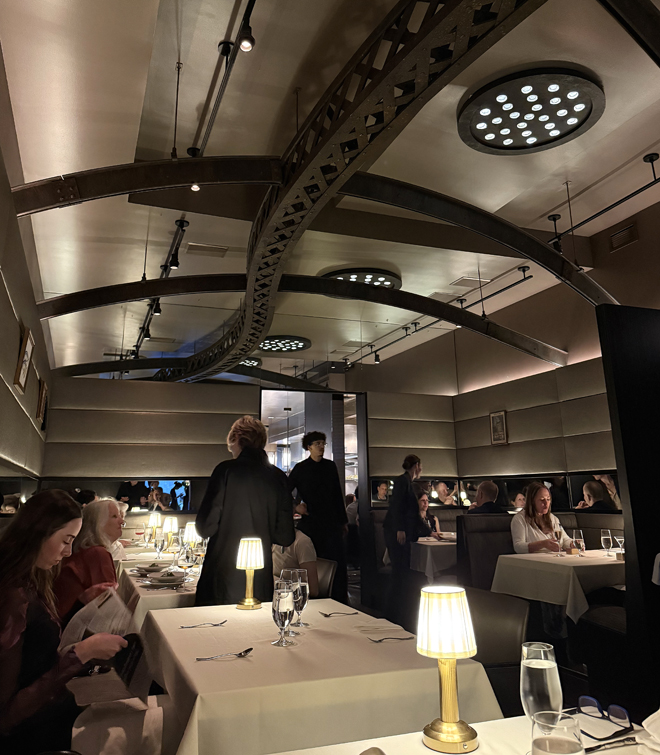
Stepping inside on a Sunday evening, you did feel like you were venturing back into those moneyed times. The room was dimly lit, with a few male diners even donning suits or sports jackets with ties.
It’s a long, narrow dining room with steel girder-like beams across the ceiling, making it feel as if you’re dining in a posh railroad train car.
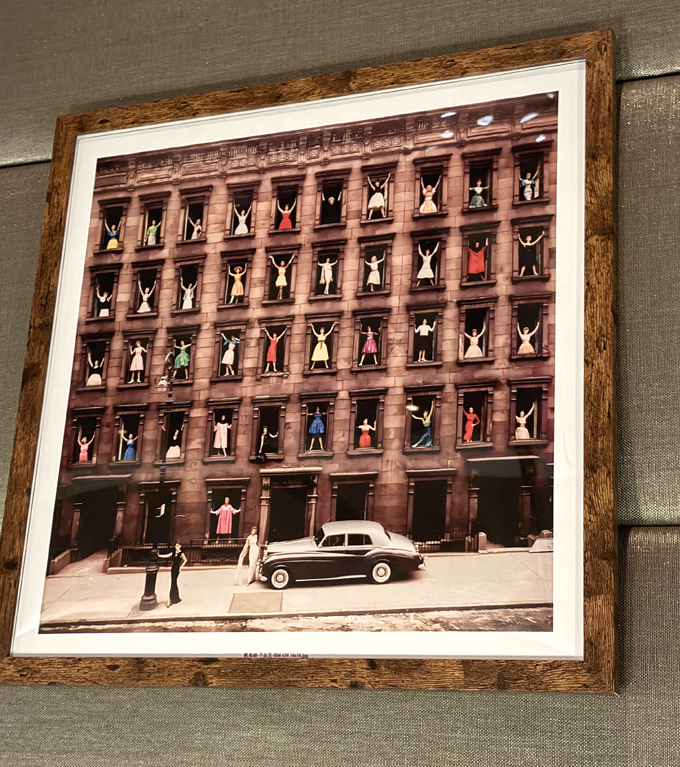
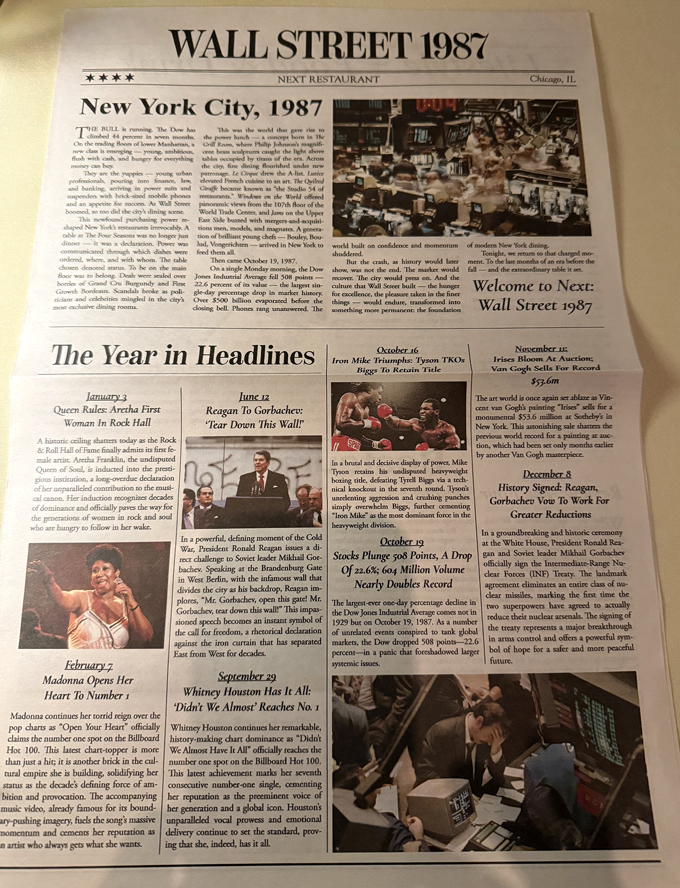
Special edition.In keeping with the theme, the walls were decorated with reproduction artwork by Keith Haring and Jean-Michel Basquiat, and the famed fashion photo, “Girls in the Window.”
The tables were set with white tablecloths, elegant individual lamps, and a fun “Wall Street 1987” newspaper with headlines for that year (“Reagan to Gorbachev: Tear Down This Wall”), as well as truncated reviews of some of New York’s most storied restaurants of the time. Simple Minds, Death Leopard, the Pointer Sisters, and Hall & Oates played on the speakers.
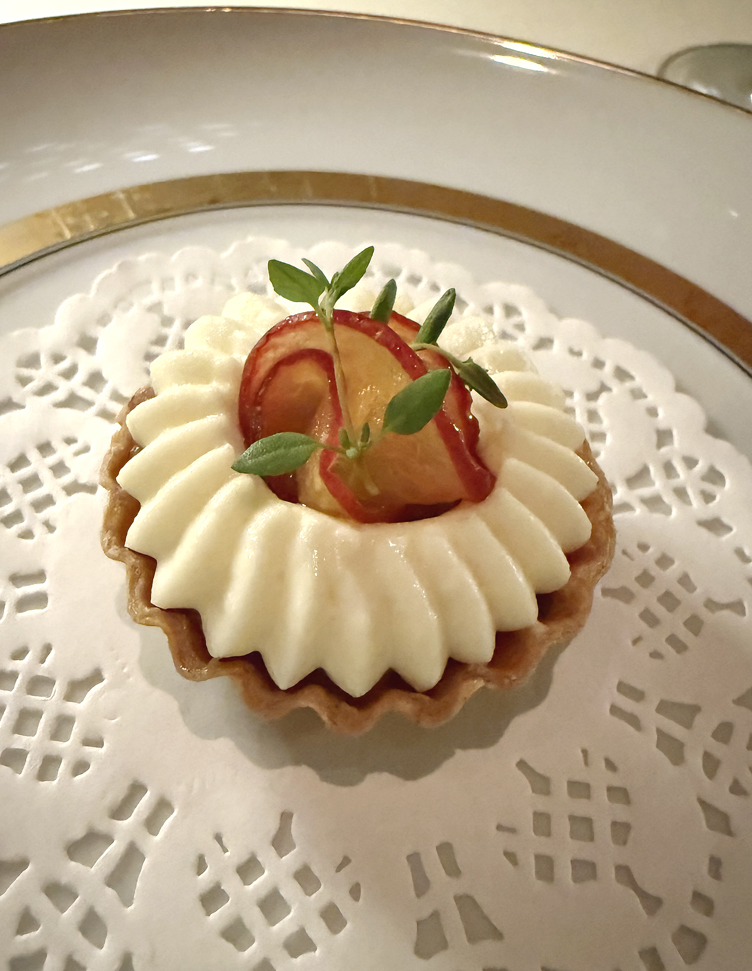
The first appetizer, “Opening Bell,” symbolizing the start of trading on the stock market. A beautiful crisp tart with shallot marmalade, Robiola, bacon, and pickled nectarines, it rang out with smoky, savory, tangy, meaty, and fruity notes all at once.
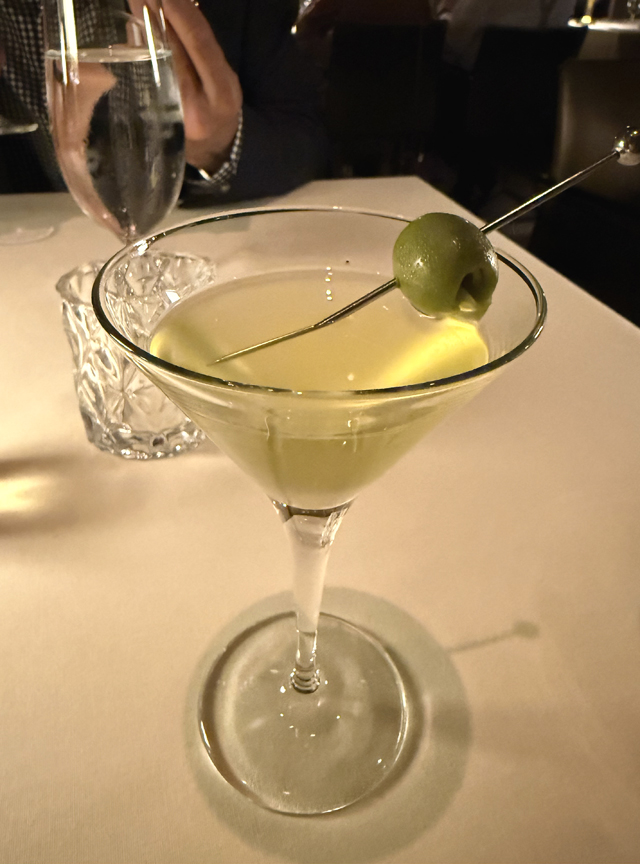
Echoing the “3-martini lunch” of yesteryear, an actual gin-vermouth martini is shaken tableside for you. A bowl of olives and a carafe of brine is left on the table for you to add as you like. However, you’re advised that you should only place an odd number of olives in your glass, as an even number is considered bad luck. Who knew?
Because I went with the non-alcoholic pairing this time around, my “martini” was actually a blend of aloe vera juice, white grape juice, dill and mint. I liked the fact that I could add more brine to it to bump up the savoriness. Because truth be told, I found many of the subsequent non-alcoholic pairings here sweeter than I would have preferred.
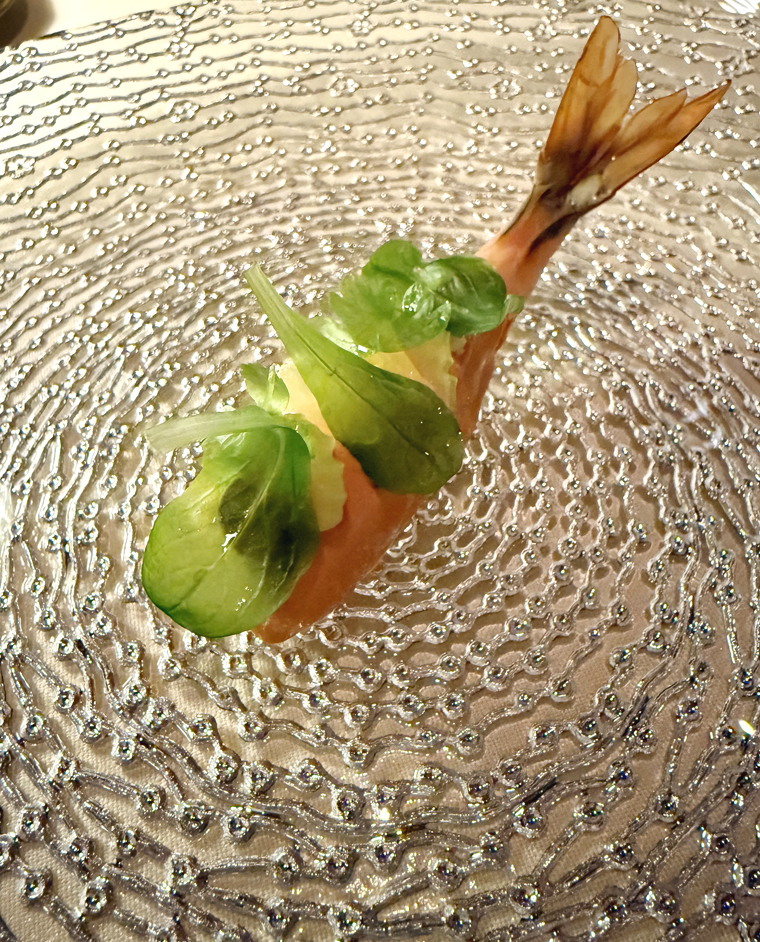
Because a power lunch just isn’t a power lunch without a shrimp cocktail, the next appetizer was a riff on the classic one at the Grill Room at the Four Seasons. Only, this was merely one large shrimp on the plate, atop a cocktail sauce emulsion, with horseradish, pickled celery, and mache. But what a shrimp it was. Chilled, plump, and crisp, it tasted exactly like a perfect goblet of shrimp cocktail with that spicy, fruity, tangy French dressing-like sauce — all in one mere crustacean.
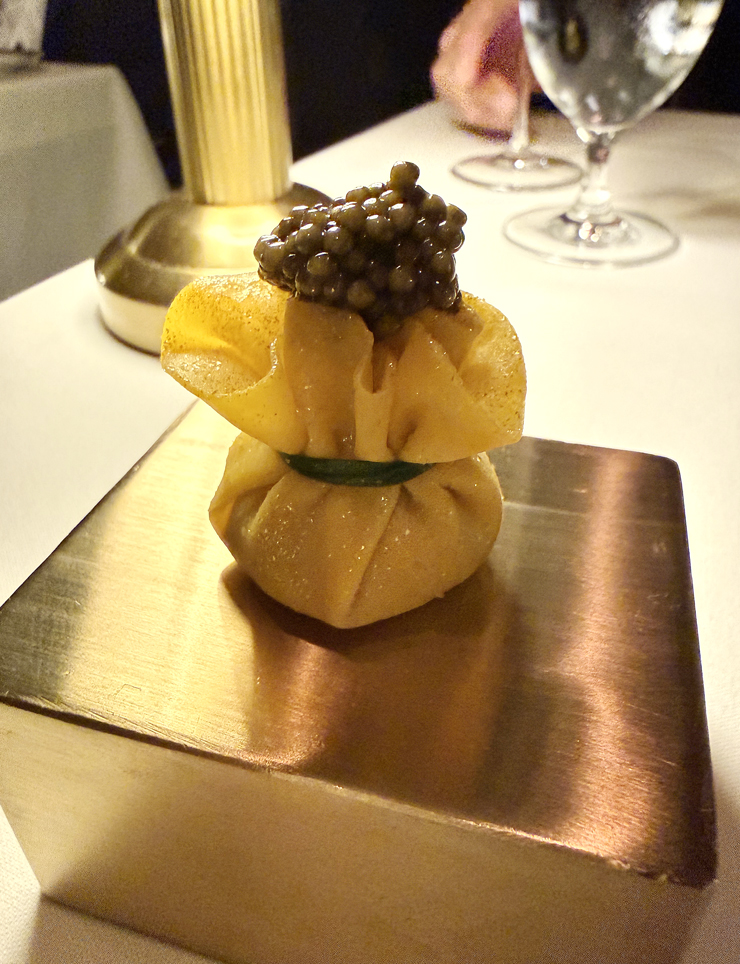
That was followed by a beggar’s purse perched on a gold podium. Inspired by one served by the Quilted Giraffe, it looked like an edible bag of money, only one filled with luxurious jamon Iberico, hazelnuts, and Thomas Keller’s Regiis Ova ossetra caviar.
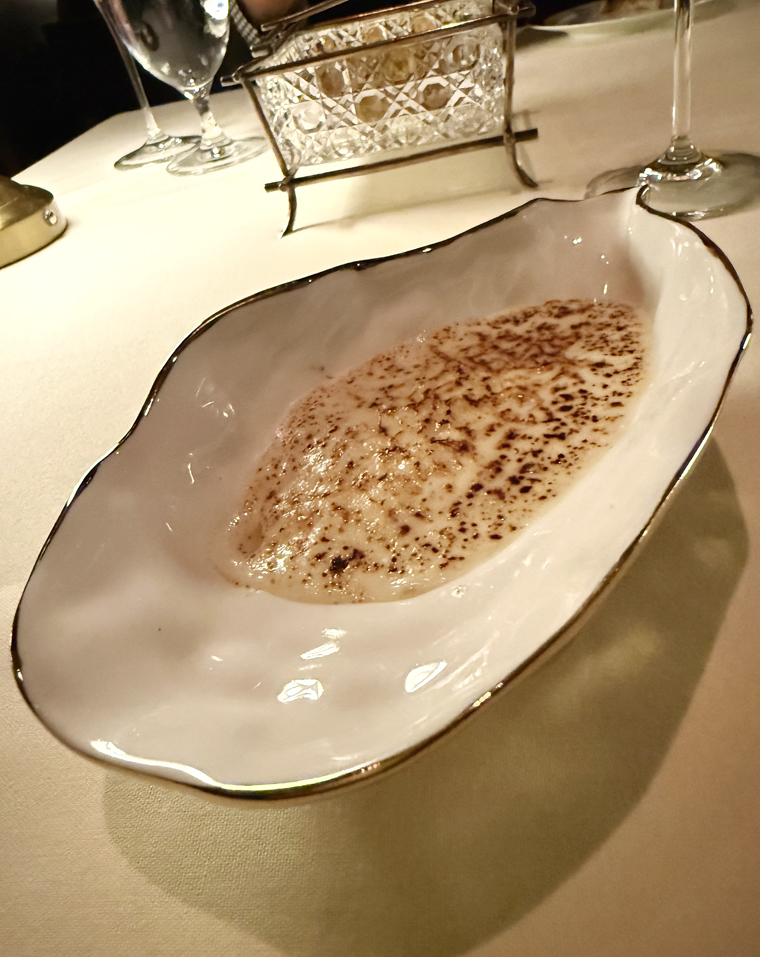
The plateware here is dazzling. The ceramic dish for the oysters Rockefeller actually mimics an oyster shell. My husband much enjoyed the plump oyster and razor clam, covered in an oyster-razor clam foam. Owing to my clam allergy, my dish featured artichoke, fennel, and Swiss chard instead with gouda foam. Because of the char on the vegetables, the dish possessed a lot of umami. So much so, that it uncannily tasted of the sea somehow even without the bivalves.
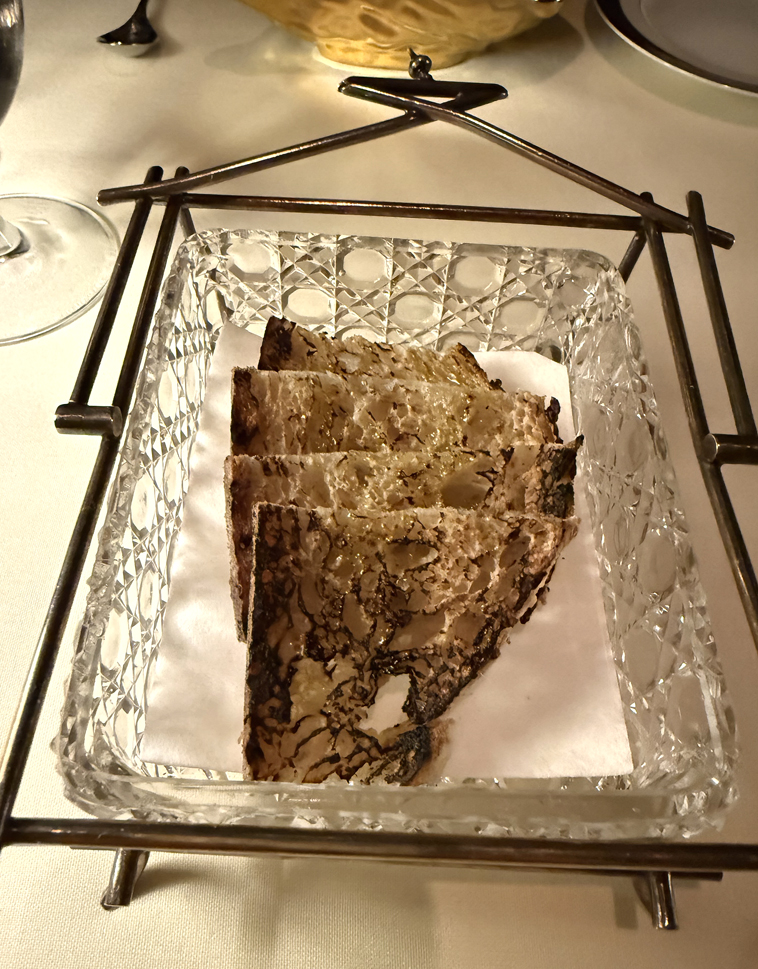
Toasted slices of honey-oat bread from Chicago’s Publican Quality Bread are served alongside so you can dip it into the aerated sauce.
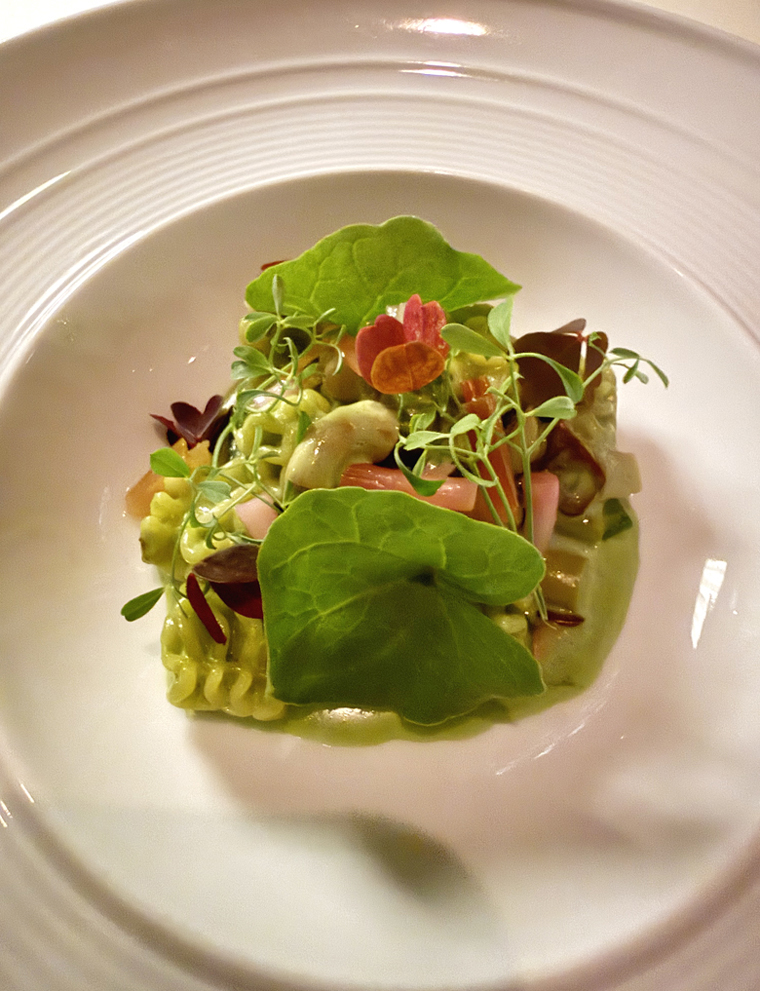
Le Cirque is roundly credited with popularizing pasta primavera. I was never fortunate to have had the original. However, I can’t imagine that it would top this one. Spot-on al dente radiatore rather than spaghetti is tossed with asparagus, morels and pea tendrils.The pasta’s many ruffled edges fully capture the deliciousness of the creamy, garlicky, and grassy tasting sauce made with ramp butter.
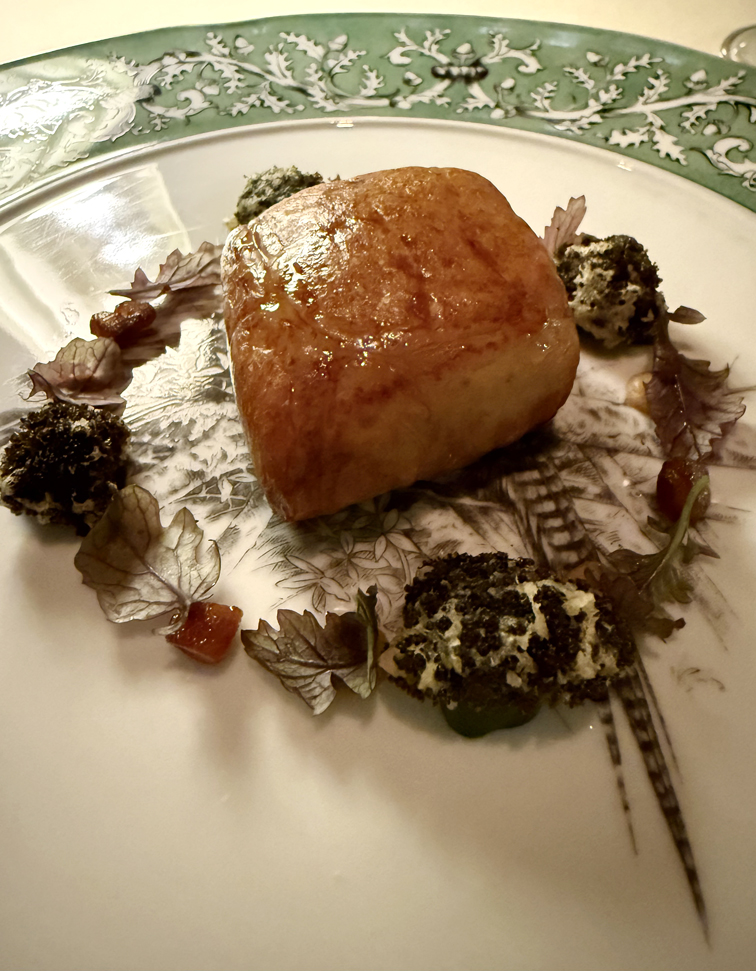
To exemplify that “greed is good” a la Gordon Gecko, there’s chicken Kiev. Cut into a corner, and the golden butter sauce will come gushing out (video). It’s beyond juicy. Charred lemon puree, and the gentle bitterness of mustard greens and broccoli help balance its richness.
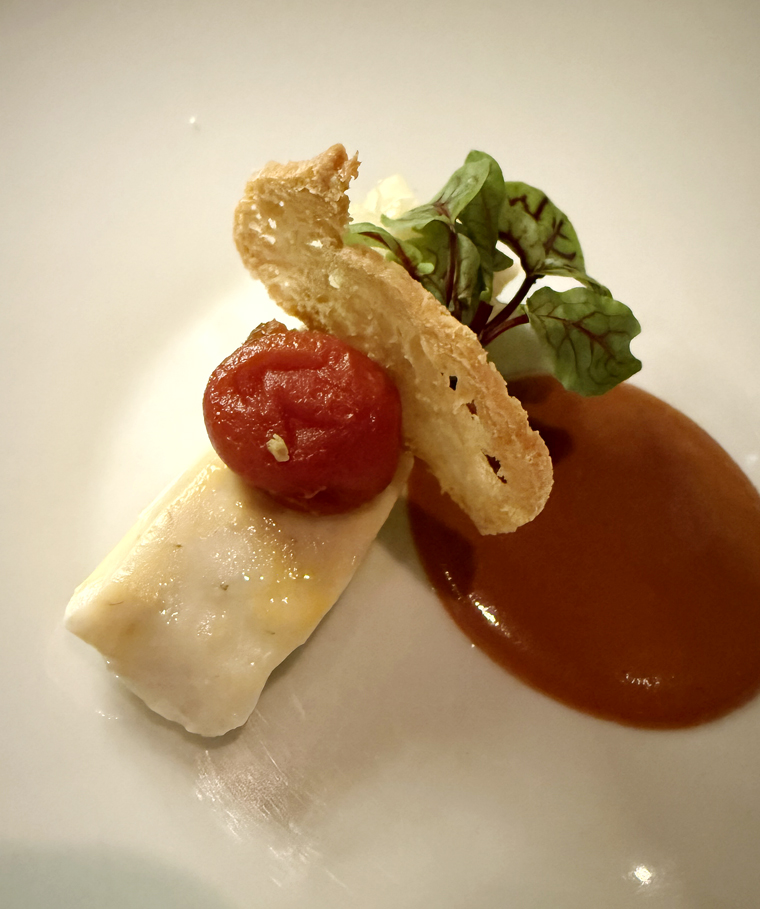
“Fish where the fish are” is the advice investors and business leaders give to indicate you should pour your resources into where there is high demand.Well, I would invest in this so-titled turbot dish any time, any way. It’s a play on paella with the mild, buttery fish finished with gremolata and a savory, smoky Worcestershire sauce. There’s a single cherry tomato — and it will floor you. I’m not even sure what they did to it besides peeling it, but that one teeny tomato somehow tastes exactly like an entire heaping plate of pasta pomodoro. Yes, all that flavor, all that punchiness to completely fill your mouth — from one cherry tomato.
It’s a characteristic that marks the cooking here. The flavors overall are so vivid, so deep, and so intense.
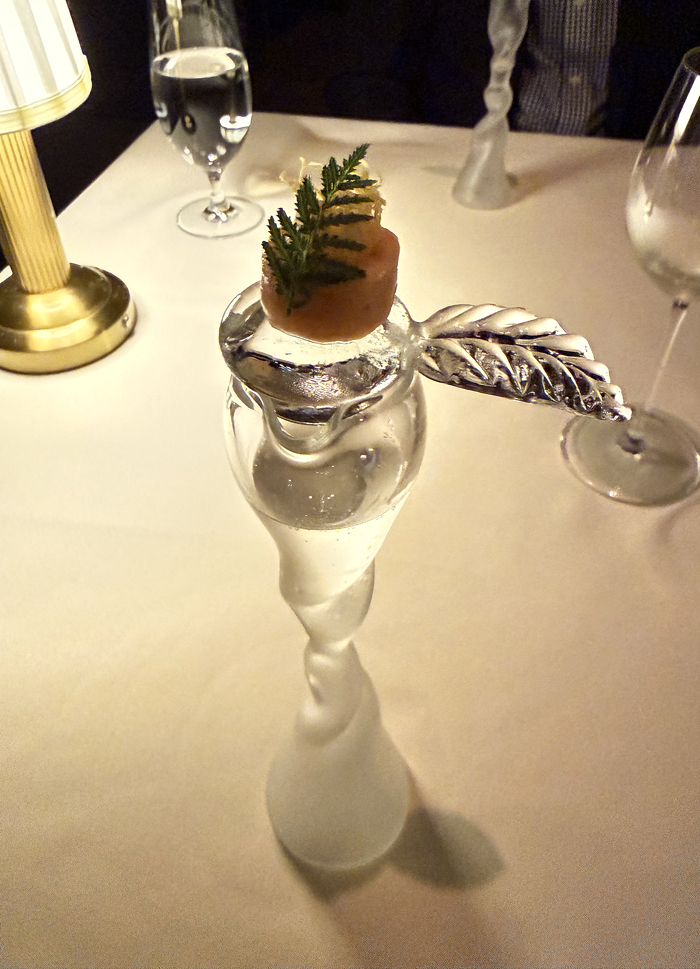
Admittedly my hand shook a bit as I partook of the intermezzo, served in a striking, tall and precarious sculptural crystal. Pick up the top part by its feathered handle to enjoy a white peach and bergamot sorbet. Then carefully pick up the cylindrical pedestal to drink up a slightly fizzy peach and basil soda. If that doesn’t make you feel like a high-roller, nothing will.
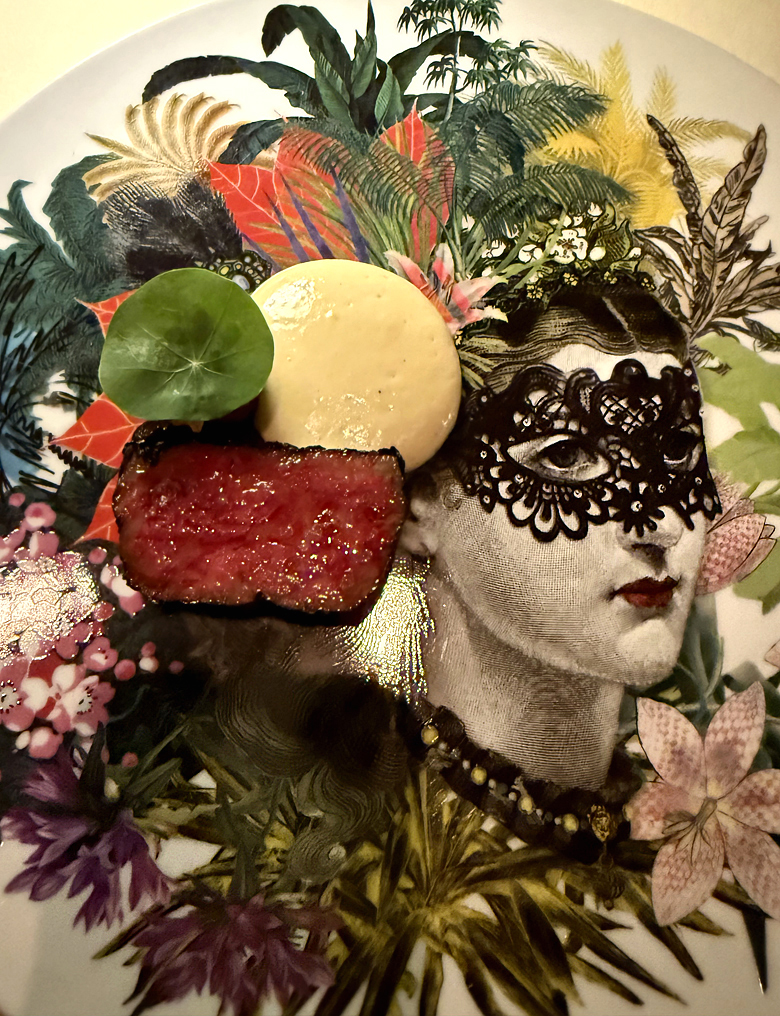
Of course, a trip to Wall Street wouldn’t be complete without a stop at a steakhouse. The thick, rosy slice of Australian Wagyu rib eye is presented in a fantastical way, what with its whimsical plate depicting a women’s face cloaked in black lace amid colorful flora. It’s served with caramelized plantain and gorgonzola bernaise, which because it’s aerated is still wickedly creamy but doesn’t eat quite as heavy as you might fear.
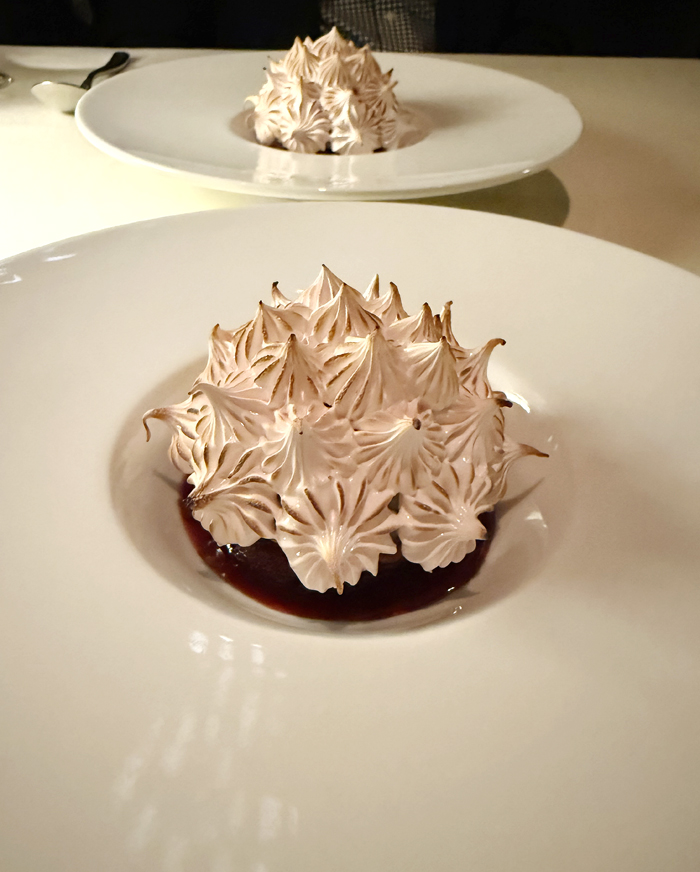
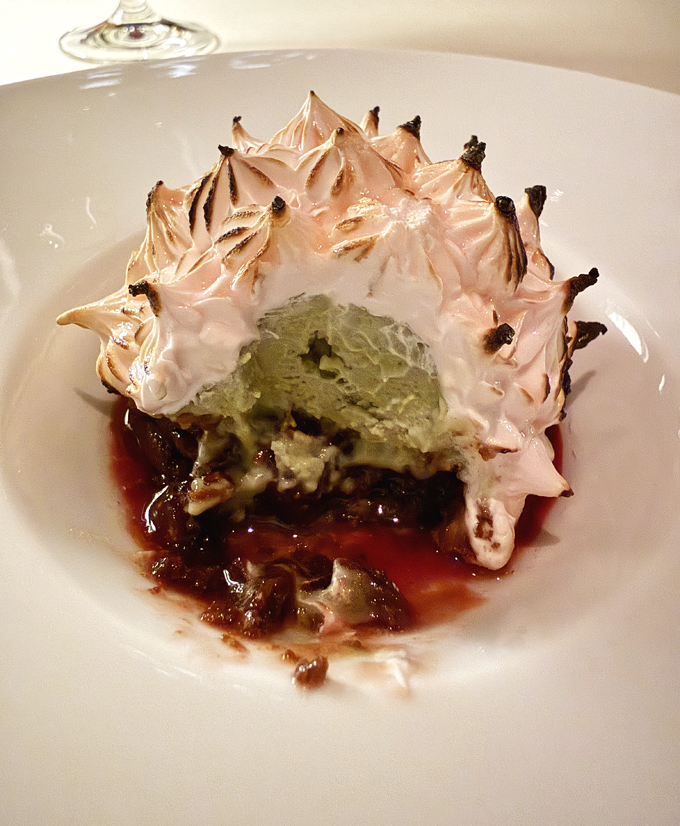
Dessert brings out all the stops — baked Alaska, flambeed tableside (video). Its torched strawberry meringue peaks give way to rich chocolate pave, and deeply nutty pistachio gelato.
It’s a showy, appropo finish to a most transportive experience.
More: Chicago Dining, Part I: Bazaar Meat by Jose Andres
Next is such a unique dining experience. Did you get to try the seasonal menu?