Category Archives: Travel Adventures

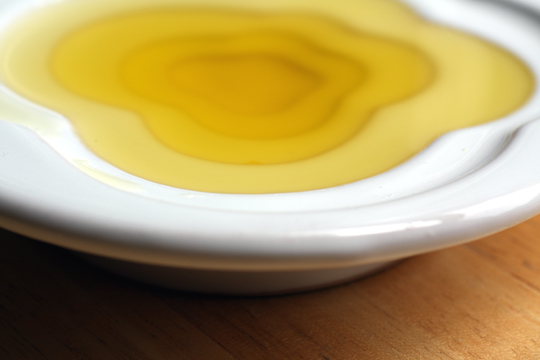
Olive Oil-Sherry Pound Cake and A Chance to Win Aussie Olive Oil Samples

Like wines, olive oils have a myriad of flavors and aromas.

The more robust tasting the olive oil — with an intense bitterness and astringency on the nose and palate — the more antioxidants it has. It also will keep longer — even five years — than milder tasting olive oils, which should be consumed within a few months of pressing.

Use pungent extra virgin olive oils when you want them to be the focal point, such as in salads or as a finishing touch to dishes or just to dunk chunks of crusty bread in. Use mild olive oils in cooking when you don’t want its flavor to dominate.

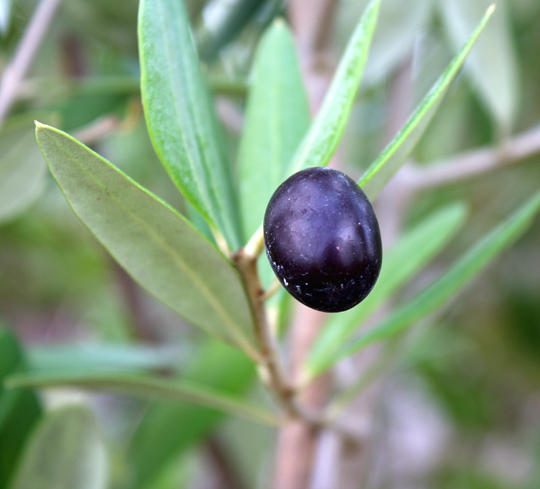
Those were among the olive oil lessons I learned on my recent trip to Australia with a small group of food journalists. We were guests of Boundary Bend Ltd., which makes Australia’s premier extra virgin olive oils under its Cobram Estate label.

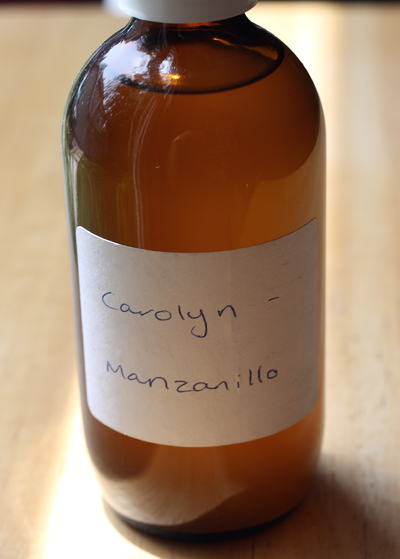
One of the highlights of the trip was getting to taste a variety of just-pressed oils. After choosing our favorite varietal, we were each given a precious little bottle to take home.

While most of my colleagues opted for the more potent tasting oils, I chose the Manzanillo, a more delicate, fruity, and almost creamy tasting oil with the intriguing scent of strawberry jam.

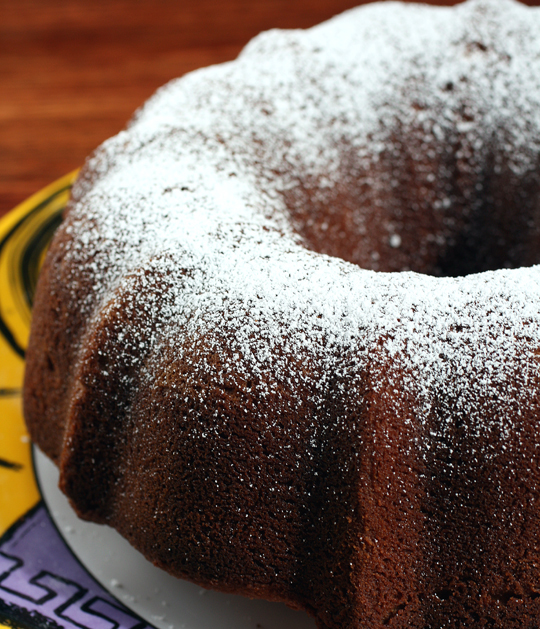
My hosts said it was ideal for baking. And they were correct, as it tasted lovely in the “Olive Oil and Sherry Pound Cake” that I made when I returned home.

Read more

Down Under in the Land of Olives

VICTORIA, AUSTRALIA — Kangaroos, koalas, award-winning wines, and the breathtaking Sydney Opera House. That’s usually what comes to mind when we think of Australia.

Extra virgin olive oil?

Not so much.

Yet an olive oil revolution is taking place Down Under. In much the same way that Australia turned the wine world upside-down with its outstanding, New World Shiraz wines, it is now doing the same with New World extra virgin olive oils.

Boundary Bend Ltd., Australia’s leading vertically integrated olive company, which controls every production process from growing its own olives to pressing the oil to bottling, has been a pioneer in this new industry Down Under. It is now the largest olive oil producer in Australia, and the top-selling brand there.
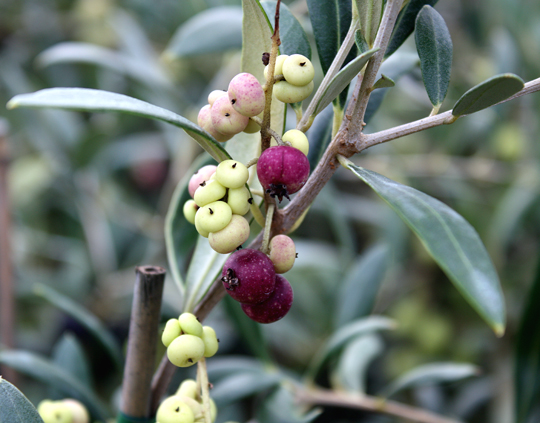
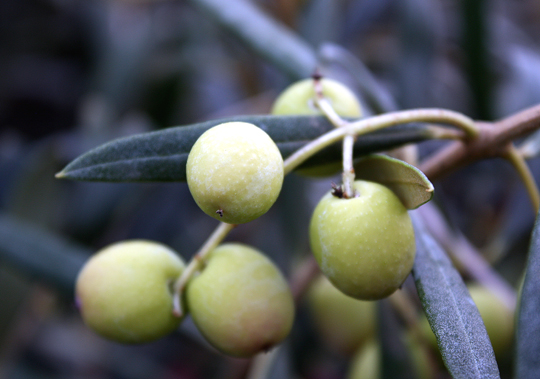
This spring, I had a chance to see first-hand how it all came to be, when Boundary Bend flew me and a couple of other journalists to north Victoria state in southern Australia to tour its facilities and expansive groves planted with an astounding 2.5 million olive trees.

It is those trees, bearing 14 different olive varieties, which form the foundation for Boundary Bend’s award-winning Cobram Estate extra virgin olive oils. The brand, launched in 2001, is now exported worldwide. The olive oils can be found on supermarket shelves in Canada, the United Kingdom, Ireland, Germany, Hong Kong, Singapore, South Korea, and yes, the United States, where they are sold at Nob Hill, Raley’s, Bel-Air, Lucky, Andronico’s, Winn-Dixie, Fairway Markets and SaveMart (starting at the end of July) for about $6.99 per 375ml bottle.

Boundary Bend hopes to distinguish its Cobram Estate extra virgin olive oils in two ways. First, it touts its freshness. After its olives are harvested, they are pressed in less than six hours. The resulting oil makes it to market only two to 12 months later.
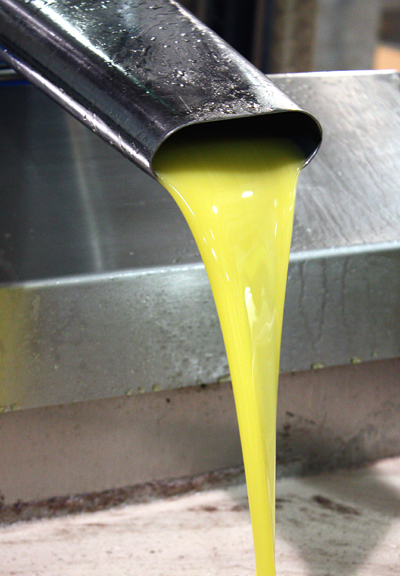
Second, it stresses the strict testing its oils go through. At a time when fraud is reportedly rife in the olive oil industry — as documented in a superb 2007 New Yorker piece detailing how a significant percentage of Italian so-called “extra virgin” olive oil is actually adulterated with cheaper oils such as canola –- Boundary Bend is working with Australian government officials to strengthen standards for extra virgin olive oil made both domestically and imported into its country.

Read more

Orlando: Backstage Eats at Epcot and A Restaurant Called the Ravenous Pig

When I wasn’t eating my way through 27 sweet treats as a judge at the recent Pillsbury Bake-Off in Orlando, I was — well — eating still some more.

You see, the Pillsbury folks wanted to make sure none of the 12 Bake-Off judges were ever in danger of having the slightest hunger pang. Perish the thought.  So we were fed. Then, fed again. And on it went, calorie after lovely calorie.

Here are the highlights:

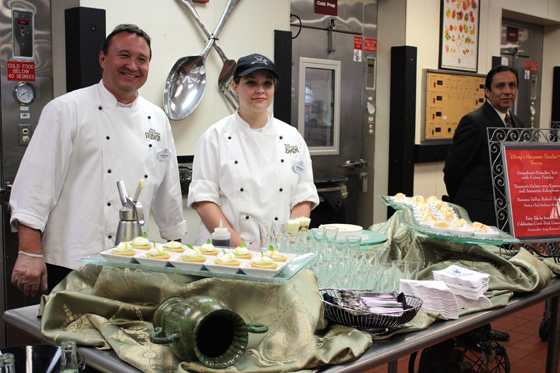
We were treated to a welcoming party at Epcot, where six of the theme park’s restaurants had set up cooking stations inside a large kitchen area. Epcot Executive Chef Jens Dahlmann was on hand to greet the judges and members of the media.

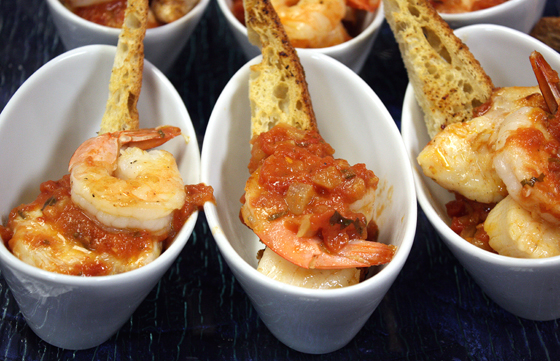
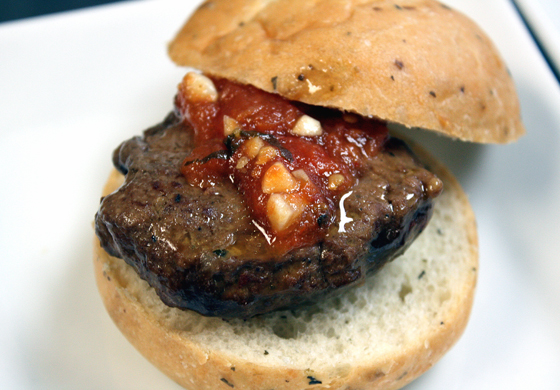
We mingled as we enjoyed sips of wine and tastes of cute little lamb sliders with tomato marmalade, shrimp in green curry sauce with fragrant basmati rice, duck two ways — smoked breast and leg confit with tomato and egg fettuccine, porcini-dusted beef tenderloin, and a fab fisherman’s stew by “Iron Chef America” Cat Cora’s Kouzzina restaurant.

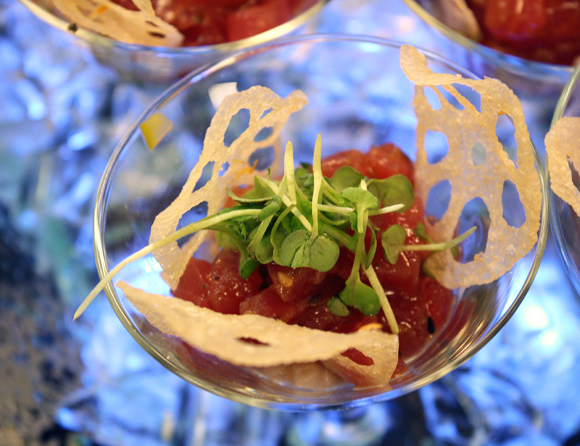
My favorite nosh, though, had to be the martini glasses of spicy sashimi-grade tuna tartare with cucumber, daikon and pepper salad, and avocado-wasabi sauce and crisp lotus root chips. That dish, from the Hollywood Brown Derby at Epcot,  was so good that I even went back for seconds. Shhh, don’t tell anyone.

Read more

What Goes Into Judging the Pillsbury Bake-Off

For two long days, I had to keep mum about one of the biggest secrets around — the name of the person to whom my fellow 11 judges and I had chosen to award a whopping $1 million.

After all, we had been sequestered in an unmarked room in the Hilton Bonnet Creek Resort in Orlando, Fla. , sworn to secrecy as we deliberated our decision for an entire day.

We had to be escorted to the bathroom if we needed to leave that guarded conference room. We had to sign confidentiality agreements. We were not to talk or compare notes with each other at the start, until the field had been greatly narrowed. There was even a paper shredder in the room to destroy any evidence that wasn’t supposed to see the light of day.

This is what you must do when you are a judge for the nation’s premier home-cooking contest, the 44th Pillsbury Bake-Off.

This was my second time as a judge for the iconic contest, in which tens of thousands of home-cooks vie to compete for the grand prize of $1 million by creating an original dish that incorporates at least two Pillsbury or General Mills products. Only 100 finalists are chosen to actually participate in the Bake-Off, where they are flown to Orlando to do battle in an expansive ballroom set up with 100 mini kitchens.

Talk about pressure all around.

But I was up to the task, as were my fellow judges, who were made up of food writers and supermarket industry folks from around the country. About half of us had been Bake-Off judges before.

All of us had judged many food contests in our career. But it’s rare — if ever — that we have the opportunity to change someone’s life with a prize this substantial. As a result, we took our duties very seriously. We avoided reading anything to do with the Bake-Off for more than a year, as we had been instructed to do. We felt the great responsibility placed upon our palates to make the best decision possible, to choose the most deserving recipe that would uphold this contest’s storied history.

We were divided into four teams comprised of three judges each. Each team would be responsible for selecting the winner of one of four categories: “Breakfast & Brunches,” “Entertaining Appetizers,” “Dinner Made Easy,” and “Sweet Treats.” Each of those category winners would receive $5,000. After that was determined, we would all come together as judges to decide the grand prize winner from amongst those four category winners.

The last time around in 2002, I was asked to judge the desserts category. This time? Yup, you guessed it — I got the “Sweet Treats” category again. I guess the Pillsbury honchos have read my blog and figured out I have a major sweet tooth, huh?

Adding to the buzz this year was the fact that unlike other Bake-Offs, the grand prize winner was not going to be announced the next morning after we had made our decision. Instead, the four category winners would have to wait with bated breath until Wednesday — a whole two days later — when they would appear live on the “Oprah Winfrey Show” in Chicago, and America’s biggest media mogul, herself, would announce the grand prize winner on national television.

How’s that for lip-smacking culinary drama?

At 8 a.m. Monday, after the 100 contestants were safely secluded away at their kitchens in the ballroom so that we could not see them or have any contact with them, we judges were escorted through a nearby dark hallway to another conference room, where we would spend the next nine and a half hours of our lives with no other contact with the outside world. We weren’t allowed to bring our cameras. We weren’t allowed to tweet. We weren’t allowed to make any outgoing calls whatsoever.

The Pillsbury folks went the distance to make us feel comfortable. After so many years, they have it down pat. At the center of the room were comfy, suede-like couches and easy chairs arranged in a circle and built to hold exactly 12 people. The New York Times, and an assortment of magazines were on the coffee table, in case we needed a break between bites. Platters of pastries, as well as coffee and teas were available in case we needed to warm up our palates before our duties beckoned. And there were piles of cucumber slices, carrot sticks and celery sticks in case we needed to cleanse our palates.

At each corner of the room, each of  four teams was stationed around a u-shaped set of tables  set up to hold the dishes that we were to taste as they came in from the Bake-Off ballroom. Each table also held the recipes for the dishes. But no names or hometowns of the contestants were attached, so that the folks who cooked the dishes would remain a mystery to us.

The contestants had from 8 a.m. to noon to complete their dishes at least twice. One version would go to the judges, the other would be set aside for photographs.

You have no idea which dishes will come in first for judging. It depends on the logistics of the dish, as well as the swiftness of the cook.

At 9 a.m., nothing had arrived yet for any of us to judge. Each time the doors swung opened, we’d all crane our necks to see if a dish was arriving. But each time, it was only a General Mills honcho entering or leaving the room.

Read more

A Peek at Palmetto Bluff’s Lowcountry Celebration in South Carolina with Tyler Florence

Tyler Florence holding court on stage at the food festival.

Six hundred food fanatics turned out last weekend in Bluffton, S.C. for the third annual “Palmetto Bluff Lowcountry Celebration.”

Yours truly was among them, having been invited to partake in the feasting of all things Southern.

After all, who could pass up a chance to watch Food Network star Tyler Florence and a bevy of the South’s top chefs prepare oyster stew, shrimp and grits, fried green tomatoes, fried catfish, fried chicken, fried shrimp, tater tots fried in duck fat, pulled pork sandwiches, and a mountain of crawfish.

Um, did I mention a lot of the food was fried? Hey, it’s the South. Don’t even bat an eye.

The grand Inn at Palmetto Bluff.

This was the third year of the festival, which is held at the posh Inn at Palmetto Bluff, a residential and recreational community on 20,000 acres, about a third of that set aside in perpetuity to remain undeveloped. Once home to 21 grand plantations, the area, about 20 miles northeast of Savannah, Ga., now boasts an inn with 50 upscale cottages, as well as rental homes and permanent homes.

You might already know that Florence is from South Carolina. What you might not know is that he owns a home at Palmetto Bluff, got married here, and that his brother, Warren, is the tennis pro here.

The food festival tent, set among the ruins of a mansion on the property that burned down years ago.

Praline angel food cakes to sample.

Chef Tom Condron of the Liberty in Charlotte, NC prepares seared salmon with warm potato salad.

Sizzling salmon.

The festival included a day of cooking demos and tastings by chefs such as Donald Barickman and Donald Drake of Magnolias in Charleston; Chris and Idie Hastings of the Hot and Hot Fish Club in Birmingham, Ala.; Frank Lee of Maverick Southern Kitchens in Charleston; and Robert Stehling of Hominy Grill in Charleston.

Manning the fire pit full of oysters, mussels, shrimp and crawfish.

The highlight for me was the finale — a bonafide oyster roast in a very secluded, woodsy spot on the property, where an elaborate fire pit was constructed.

Read more

« Older Entries Recent Entries »