Category Archives: Travel Adventures

Good Eats in Australia

VICTORIA, AUSTRALIA — Traveling opens your eyes, as well as your taste buds.

My recent week-long trip to Australia, sponsored by Boundary Bend Ltd., was no exception.

Both in Melbourne and throughout the outlying countryside of the state of Victoria, there were so many wonderful new ingredients and dishes to revel in. Here are some of the highlights:

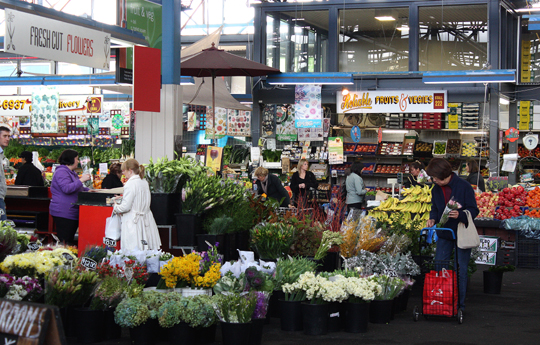
Prahran Market:

I could have stayed for hours meandering through the stalls at the famous Prahran Market, Australia’s oldest continuously running central marketplace. The covered marketplace, teeming with produce, seafood, fresh pasta, flower, soap and olive oil vendors, originated in 1864 at a smaller locale in Melbourne, and moved to its present location in 1881.

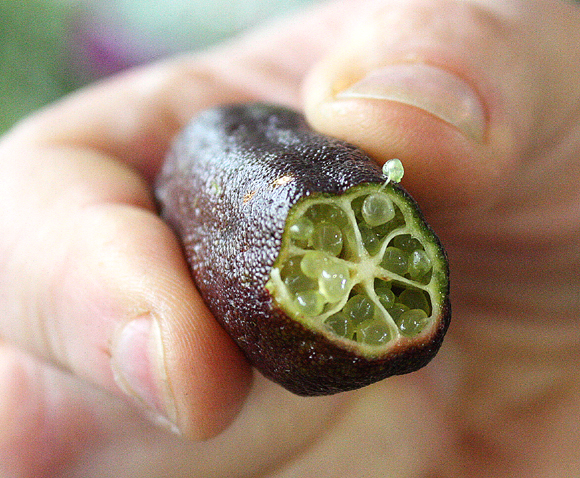
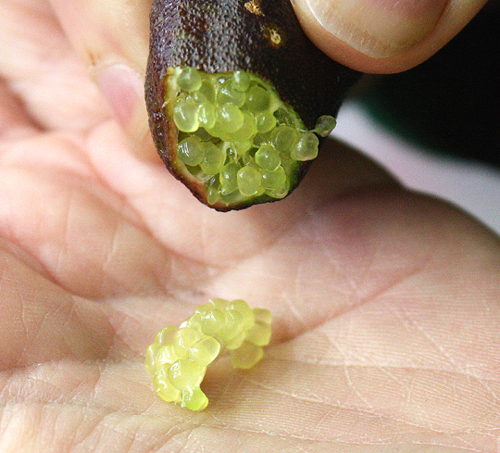
If there weren’t those pesky agriculture and customs laws (for good reason, of course), I would have brought back to the Bay Area armloads of the mesmerizing finger limes (above and below photos). The fragrance alone is intoxicating — beautiful enough to be a perfume that you’d want to dab on all the time. It smells of kaffir lime, with a bright floral, refreshing and very complex nose.

What’s really fascinating, though, is that this lime doesn’t have much juice at all. Instead, give one a squeeze and out will come these little globules that look for all the world like caviar. Damian Pike, a wild mushroom specialist, whose stand was selling these, explained that the fruit can be used in marmalade and all manner of dishes. One taste of the chewy globules that burst with tangy delight and I was dreaming of them atop sashimi.

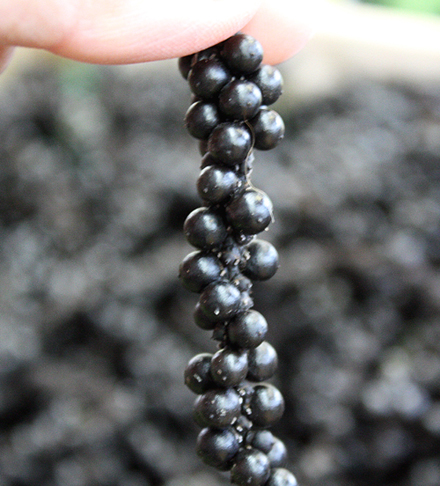
Pike’s stand also sold fresh pepper berries, which I had never seen before, having only been used to the dried variety that fills my pepper grinder at home.

Read more

Mystery Sweets and Winners of the Olive Oil Contest

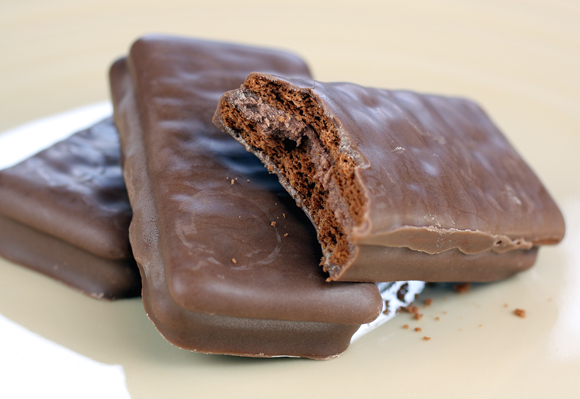
Do you know what that chocolate cookie is above?

How about that crunchy little one below?

Though both have quite storied pasts, they are both new to my taste buds, having been introduced to them on my recent trip to Australia, sponsored by Boundary Bend, Ltd.

The chocolate biscuit (cookie to you, Americans), composed of two layers of crispy chocolate malted cookies spread with light chocolate cream and then covered in yet more chocolate, is supposedly the very favorite of Australians. Any Aussies in the house? Is that true? Is this cookie akin to the Oreo of Australia?

Arnott’s bakery, established just north of Sydney in 1865, started making the cookies in 1964. They were apparently named after the winning horse in the 1958 Kentucky Derby, according to Wikipedia, after the owner of Arnott bakery attended that particular race.

Read more

A Visit to Two Australian Wineries

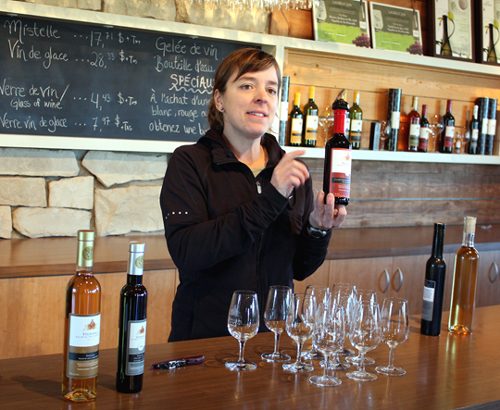
YARRA VALLEY, AUSTRALIA — Just about an hour’s drive from Melbourne, this picturesque region is the country’s leading cool climate wine region.

On my recent trip to Australia, sponsored by Boundary Bend Ltd., I had a chance to visit two outstanding wineries in this valley, the oldest wine region in the state of Victoria in the southern part of the continent.

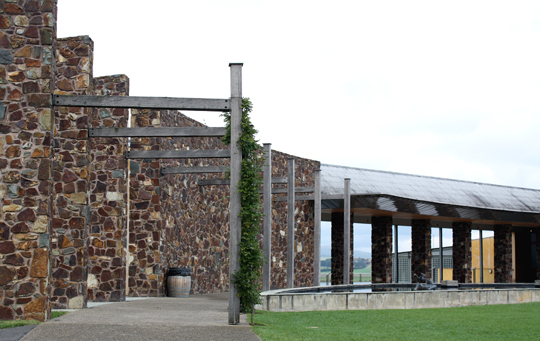
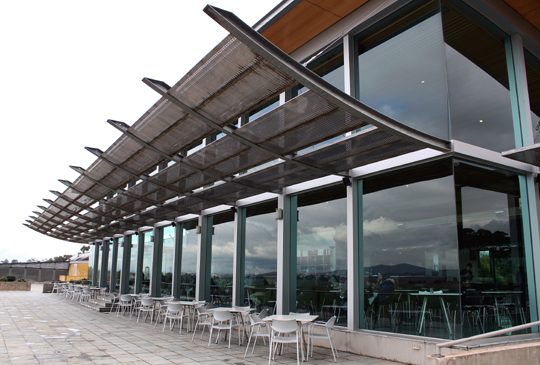
With its stunning, contemporary main building with sweeping lines that echo the ridge line it overlooks, Yering Station hardly looks like the the oldest winery in the Yarra Valley. But the first grapes were planted here in 1838.

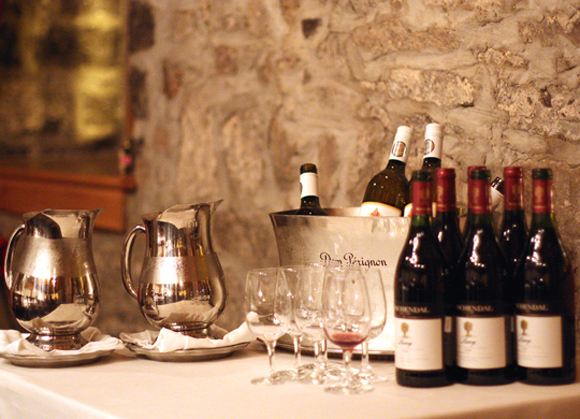
The family-owned winery is known for its Chardonnay, Pinot Noir, Shiraz and sparkling wines. In fact, Yerring Station’s Assistant Winemaker Marc Lunt says that many wine critics consider Australia second only to Burgundy, France for its quality of Chardonnay. The 2009 we tried was wonderfully creamy and tasted vaguely of peaches. It also had a lovely mineral note, giving it nice balance.

Yering Station also makes an interesting blend of Shiraz and Viognier, apparently a quite common marriage in the Yarra Valley because Merlot does not grow well here. The Viognier takes its place instead, softening the power of the Shiraz grape.

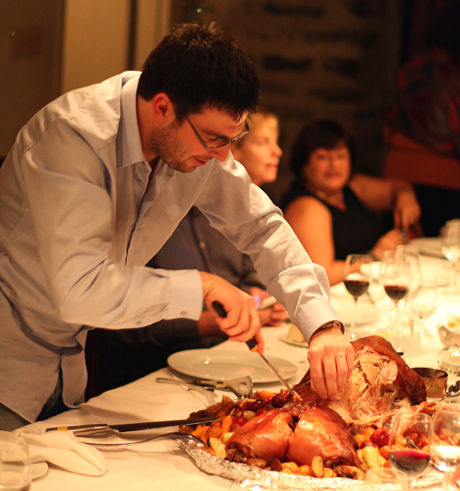
A small group of food journalists and I had the pleasure of dining at the winery’s fabulous restaurant with Lunt. The large dining room has a back wall of floor-to-ceiling windows that overlook the rolling hills. Even on an overcast day in the fall in the Southern Hemisphere, it was breathtaking.

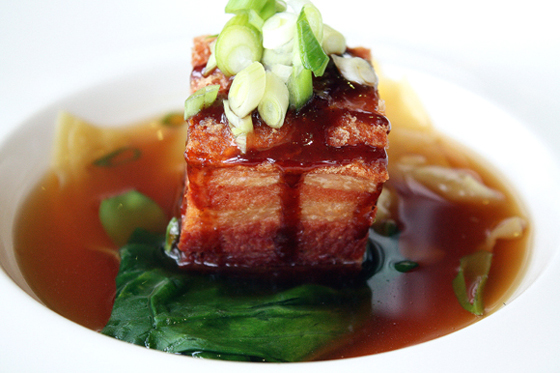
We shared an assortment of appetizers at lunch. You know a restaurant is good when it can turn out such outstanding dishes when the head chef isn’t even in the house that day.

The prices may seem high by American standards (about $21 each for the appetizers), but you have to take into consideration that the gratuity system is much different Down Under. In Australia, it’s not customary to tip 18 percent or what-have-you as it is in the United States.  Instead, even if you leave a token tip, it’s viewed as more than enough. So the prices reflect that.

Read more

Olive Oil-Sherry Pound Cake and A Chance to Win Aussie Olive Oil Samples

Like wines, olive oils have a myriad of flavors and aromas.

The more robust tasting the olive oil — with an intense bitterness and astringency on the nose and palate — the more antioxidants it has. It also will keep longer — even five years — than milder tasting olive oils, which should be consumed within a few months of pressing.

Use pungent extra virgin olive oils when you want them to be the focal point, such as in salads or as a finishing touch to dishes or just to dunk chunks of crusty bread in. Use mild olive oils in cooking when you don’t want its flavor to dominate.

Those were among the olive oil lessons I learned on my recent trip to Australia with a small group of food journalists. We were guests of Boundary Bend Ltd., which makes Australia’s premier extra virgin olive oils under its Cobram Estate label.

One of the highlights of the trip was getting to taste a variety of just-pressed oils. After choosing our favorite varietal, we were each given a precious little bottle to take home.

While most of my colleagues opted for the more potent tasting oils, I chose the Manzanillo, a more delicate, fruity, and almost creamy tasting oil with the intriguing scent of strawberry jam.

My hosts said it was ideal for baking. And they were correct, as it tasted lovely in the “Olive Oil and Sherry Pound Cake” that I made when I returned home.

Read more

Down Under in the Land of Olives

VICTORIA, AUSTRALIA — Kangaroos, koalas, award-winning wines, and the breathtaking Sydney Opera House. That’s usually what comes to mind when we think of Australia.

Extra virgin olive oil?

Not so much.

Yet an olive oil revolution is taking place Down Under. In much the same way that Australia turned the wine world upside-down with its outstanding, New World Shiraz wines, it is now doing the same with New World extra virgin olive oils.

Boundary Bend Ltd., Australia’s leading vertically integrated olive company, which controls every production process from growing its own olives to pressing the oil to bottling, has been a pioneer in this new industry Down Under. It is now the largest olive oil producer in Australia, and the top-selling brand there.

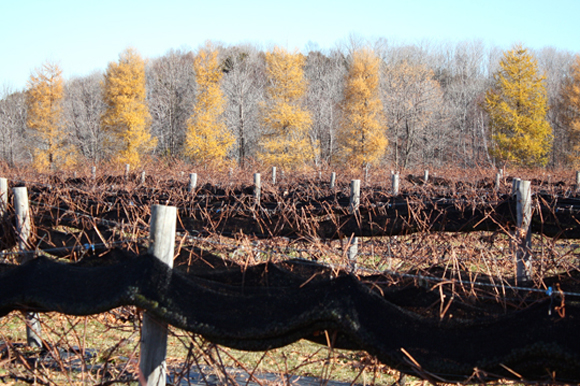
This spring, I had a chance to see first-hand how it all came to be, when Boundary Bend flew me and a couple of other journalists to north Victoria state in southern Australia to tour its facilities and expansive groves planted with an astounding 2.5 million olive trees.

It is those trees, bearing 14 different olive varieties, which form the foundation for Boundary Bend’s award-winning Cobram Estate extra virgin olive oils. The brand, launched in 2001, is now exported worldwide. The olive oils can be found on supermarket shelves in Canada, the United Kingdom, Ireland, Germany, Hong Kong, Singapore, South Korea, and yes, the United States, where they are sold at Nob Hill, Raley’s, Bel-Air, Lucky, Andronico’s, Winn-Dixie, Fairway Markets and SaveMart (starting at the end of July) for about $6.99 per 375ml bottle.

Boundary Bend hopes to distinguish its Cobram Estate extra virgin olive oils in two ways. First, it touts its freshness. After its olives are harvested, they are pressed in less than six hours. The resulting oil makes it to market only two to 12 months later.

Second, it stresses the strict testing its oils go through. At a time when fraud is reportedly rife in the olive oil industry — as documented in a superb 2007 New Yorker piece detailing how a significant percentage of Italian so-called “extra virgin” olive oil is actually adulterated with cheaper oils such as canola –- Boundary Bend is working with Australian government officials to strengthen standards for extra virgin olive oil made both domestically and imported into its country.

Read more

« Older Entries Recent Entries »