Category Archives: Travel Adventures

Auberge du Soleil Celebrates Three Decades

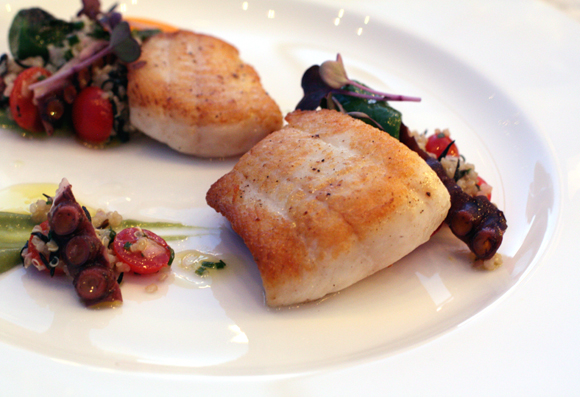
Roasted petrale sole served at a special dinner to commemorate the 30th anniversary of Auberge du Soleil's restaurant.

Thirty years ago, when most of the Napa Valley was still mostly farms and Michelin-worthy restaurants were practically non-existent, two men had the foresight to build a French-style, fine-dining restaurant on a magnificent hillside in Rutherford.

Robert Harmon, who had developed condo resorts in Hawaii and Lake Tahoe, teamed with legendary French restaurateur Claude Rouas, who owned L’Etoile in San Francisco, to create the restaurant at Auberge du Soleil. Four years later, the intimate 50-room inn was constructed. Now, the company, Auberge Resorts, operates a total of eight luxurious properties throughout the United States and Mexico.

The restaurant now boasts a Michelin star and quite the stellar list of chefs who have worked there, including the-late Masataka Kobayashi (founder of Masa’s in San Francisco), Albert Tordjman (owner of the quirky Flying Saucer in San Francisco), Richard Reddington (now owner-chef of Redd in Yountville), and Joseph Humphries (most recently, the head chef of Cavallo Point in Sausalito).

Chef Robert Curry, formerly executive chef of the restaurant at the Culinary Institute of America at Greystone in St. Helena, has headed the kitchen for six years now.

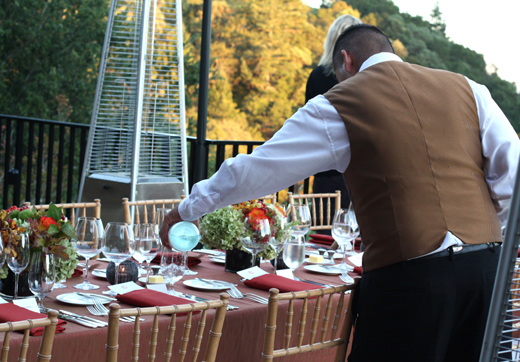
A private dinner on the new deck.

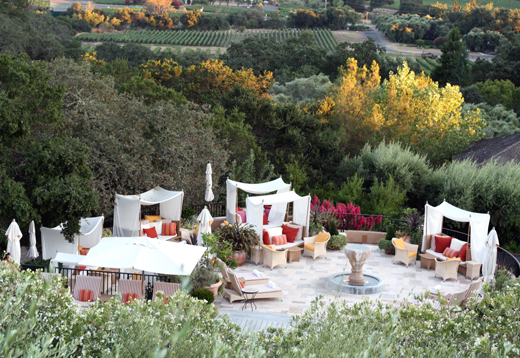
A view of the pool area from the new deck overhead.

Last week, he created a special dinner to celebrate the restaurant’s monumental anniversary. The four-course meal, which featured dishes influenced by each of the past three decades, was a private affair, enjoyed by Robert Harmon, his son Mark (CEO of Auberge Resorts), and a small group of local food writers, including yours truly.

Read more

A Wine-Tasting Staycation in West Sonoma County

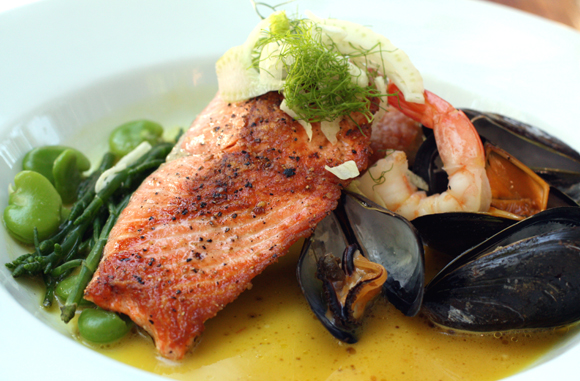
The signature salmon dish at Corks restaurant at Russian River Vineyards.

If the bumper-to-bumper traffic on Highway 29 and the shoulder-to-shoulder squeeze in tasting rooms have left you anything but relaxed in the Napa Valley, there’s an antidote to that.

It’s Wine Country in West Sonoma County in the beautiful Russian River Valley.

Picture the Napa Valley before big-time tourism development took hold. Or even Lake Tahoe back in the day with its natural, picturesque scenery dotted with cabins rather than sprawling, gazillion-dollar resorts. That’s what this region of Sonoma County is like, from what I saw on my first visit there recently. It’s a little like stepping back into time, when wine-tasting still had a small-town feel to it all.

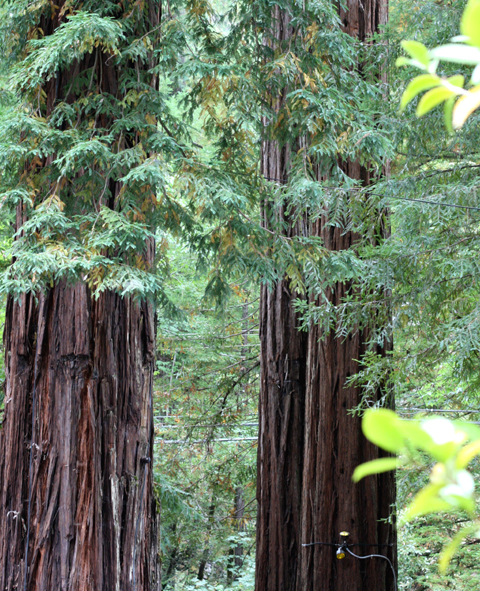
Soaring redwoods will leave you humbled.

I was invited to be a guest of Russian River Vineyards in Forestville, to come taste wines and stay for dinner at the restaurant, Corks. It’s the only restaurant at a winery in the Russian River Valley. So, it’s easy to see why it’s become a popular locale for weddings.

The drive there is breathtaking, as the Gravenstein Highway (116), winds through soaring redwood groves, whose lush canopies provide plenty of shade so that this part of Sonoma County remains fairly comfortable even on days when the rest of the region is sweltering.

Read more

A Visit to the 26th Annual Chefs’ Holidays in Yosemite

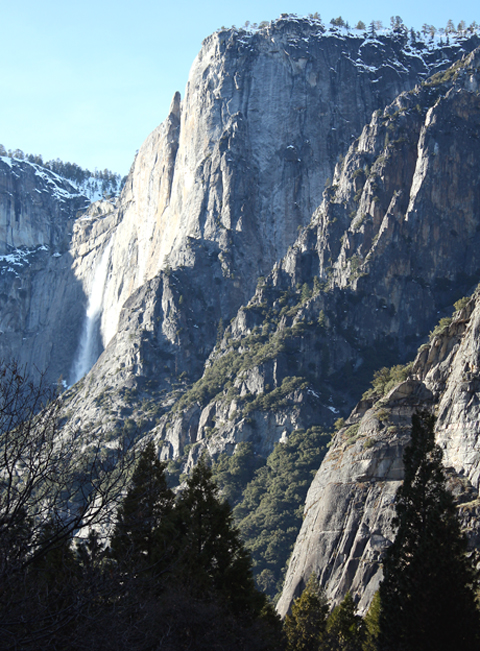
Yosemite in winter.

YOSEMITE NATIONAL PARK, CA — Imagine hiking, snowshoeing and skiing, then dining on creative fare from celeb chefs — all in a breathtakingly spectacular setting.

That’s what Yosemite National Park is all about in the winter, when its “Chefs’ Holidays” takes place at the historic Ahwahnee Hotel, now through Feb. 4. Marking its 26th year, the event features 29 prominent chefs from around the country.

Three chefs are featured per session, which includes a “Meet the Chefs” reception, three cooking demonstrations, a five-course gala dinner with wines in the grand Ahwahnee dining room, and a tour of the hotel’s massive kitchen.

And what a hotel it is. Opened in 1927 with a concrete and steel frame designed to withstand fire, it cost $1.25 million to build or the equivalent of $19 million in today’s dollars. During a year of construction, costs grew and the project had to be scaled back. The building went from a planned 10 stories to seven. Although the kitchen had already been built, the dining room was reduced to a third of its original size to about 300 seats, as opposed to the original 1,000. As a result, the kitchen is actually 200 square feet larger than the main dining room.

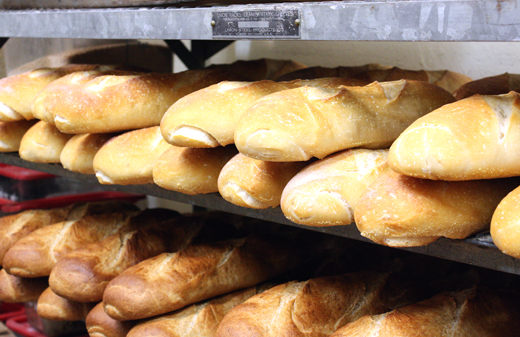
All bread is made in-house. The starter for the sourdough dates back to the 1890s.

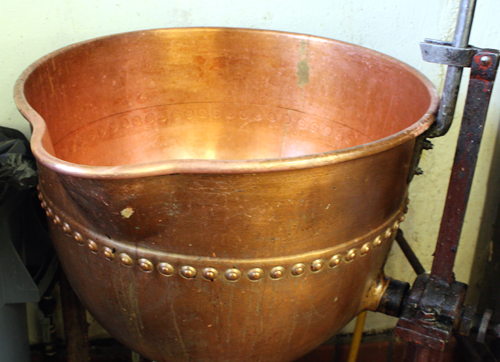
A large copper mixing bowl, original to the hotel kitchen.

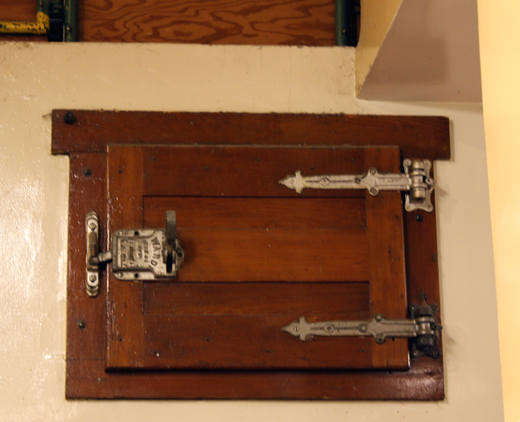
An original ice box, used before modern-day refrigeration. In the summer, huge blocks of ice had to be sent via railroad from San Francisco.

Yours truly was lucky enough to be invited as a guest to the second of the eight sessions planned. This one, held during the second week of January, featured chefs Michael Tusk of Quince in San Francisco; Jesse Cool of Flea St. Cafe in Menlo Park; and Colin Ambrose of Estia’s Little Kitchen in Sag Harbor, NY.

Read more

Noshing Around Quebec City

A private dinner with the chef at Panache restaurant in Quebec City.

QUEBEC CITY, CANADA –It’s easy to build up an appetite, strolling around this historic city in the chill of winter. And one of the best and most fortifying meals I had on my trip to this capital city was at the artsy Panache restaurant.

The restaurant is located inside the luxe Auberge Saint-Antoine hotel, just steps from the edge of the St. Lawrence River in the old port district. Indeed, in the 1800s, the impressive stone building served as a maritime trading center for glassware and tableware merchants. During the construction of the hotel, plates, vases and other pottery were unearthed, which are now carefully displayed throughout the hotel. Even the hotel room numbers have little antique chunks of porcelain highlighted next to them.

My fellow food writers and I — all guests on this trip courtesy of Quebec City Tourism — had the pleasure not only of dining at the restaurant one night, but eating in a private room with the chef, Francois Blais, during what would be his last week at the restaurant. Blais, who opened the restaurant eight years ago, felt it was time for a change. But don’t be surprised if he opens his own, more casual restaurant in Quebec in the near future.

Chef Francois Blais doing the honors.

Blais has been a pioneer in Quebec City when it comes to sourcing local ingredients within 100 miles from small family producers and championing sustainable seafood. The dinner was testament to that dedication.

Read more

Exploring Ile d’Orleans in Quebec

Golden, sweet, fermented apple cider wine from the island of Orleans.

QUEBEC, CANADA — Yes, it’s chilly to the bone in winter, but if you’re not adverse to bundling up in a heavy coat, gloves, scarf and a hat, there’s much that will enchant during this time of year in the only walled city north of Mexico City.

The first time I vacationed here, it was during the more balmy spring-time. I also was limited in my sight-seeing to just within and just outside the imposing stone walls of this historic city. This time around, I got to explore further, thanks to Quebec City Tourism, which invited me, along with other food writers from around the country, to visit as guests late last year.

What a treat it was, especially to see Ile d’Orleans for the first time, the bread-basket of Quebec. The rural island, 20 miles by 5 miles, is 10 miles northeast of Quebec City and connected to the mainland by a bridge. There is but one traffic light on the island, which is made up of six parishes. In the winter, the population is about 6,000. In the summer, it doubles with visitors, as well as locals who have vacation homes here.

In the summer, folks from the city drive over to pick fresh, ripe strawberries. In the fall, it’s a profusion of apples. In winter, it’s all about maple syrup.

Products from this island are so valued that an Ile d’Orleans certification mark was created to ensure that they were produced here and not elsewhere. It’s the first certification mark to exist in Canada.

The view from Vignoble Sainte-Petronille winery.

Our trip started at Vignoble Sainte-Petronille winery, where we had a chance to sample a variety of icewines or vins du glace. Made from frozen grapes, the wines have an almost syrupy body. They’re sweet to be sure, but not at all cloying.

A tasting of icewines.

On a tour of the vineyard, we could still see loose grapes, bundled in netting that hung from the vines, awaiting Mother Nature’s chill before being gently pressed.

Grapes awaiting the further chill of winter before being pressed for icewine.

Our next stop was Cass ‘Isle d’Orleans, the largest grower of organic black currants in North America.

Read more

« Older Entries Recent Entries »