Pampered Japanese Dried Persimmons

Dried persimmons -- Japanese style.

The Japanese sure give their food a lot of TLC.

Cows get massaged so their flesh transforms into buttery, extraordinarily rich Kobe beef. And even persimmons get the shiatsu treatment.

Maybe I should have been born a Japanese food product because I’d be one happy camper if I got back-rubs on a regular basis. But forgive me, I digress…

I’d never tried the famous hoshigaki before. So when I spied these dried persimmons at Nijiya Market in San Jose last week, I had to buy a package to try.

The traditional method, brought here by Japanese immigrant farmers who settled in Placer County, require that firm persimmons be peeled by hand, and hung by string for several weeks. During that interval — yes indeedie– the persimmons get regular massages.

The rub-downs apparently help break up the flesh and give the dried persimmons a more uniform shape. They also help smooth the exterior to retard mold. After three to six weeks of this, a white powdery bloom appears naturally on the fruit, and they’re ready to be enjoyed.

Hoshigaki (also spelled hoshi gaki) are not easy to find. Because they are so labor intensive to make, there’s little commercial production. In fact, Slow Food has added hoshigaki to its Ark of Taste, a classification given to artisan foods in danger of disappearing. The global food organization is working to revive this fruit tradition.
Read more


A Tale of Two Almond Cookies

Welcome the start of Lunar New Year today with Chinese almond cookies. Two different kinds, to be exact.

After all, you can never have too much of a good thing — especially when it comes to cookies.

Oh sure, you could take the easy route and buy a tub of almond cookies at the store. But please, make your own. They’re so much better and fresher. Try either of these recipes, and you’ll be glad that you did.

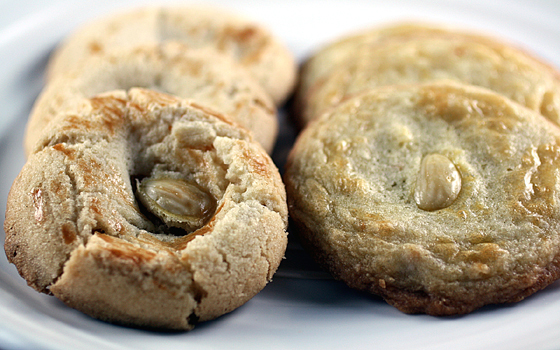
In one corner (right one in photo), we have the recipe for “Chinese Almond Cookies” from “Classic Stars Desserts” (Chronicle Books) by Bay Area Pastry Chef Emily Luchetti. (If you missed my fun Q&A with her, just click here.)

In the other corner (left one in photo), we have another recipe for ”Almond Cookies” from one of my all-time favorite Chinese cookbooks, “Every Grain of Rice (Clarkson Potter) by Ellen Blonder and Annabel Low.

I know what you’re thinking: “But Food Gal, which cookie recipe is better?” (You are thinking that, right?)

The answer is that they’re both wonderful, but it just depends on what you like.

The recipe by Blonder and Low will probably appeal to the almond cookie purist, the one who wants the exact same look and texture as the ones found in the stores or that arrive on the tray with the check at Chinese restaurants. These cookies have pretty crackles on top, and bake up sandy and crumbly from the addition of shortening.

Luchetti’s version is more for the modern almond cookie aficionado. Her almond cookies are crispy on the edges, and sort of cakey in the center. They are made with butter, and get a jolt of fresh almond flavor from sliced almonds incorporated right into the dough.

So which contender will it be?

Go ahead, make both. What better way to say, Gung Hay Fat Choy!

Almond Cookies (From “Every Grain of Rice”)

Read more


Absinthe in Soup; Say What? (Part 2)

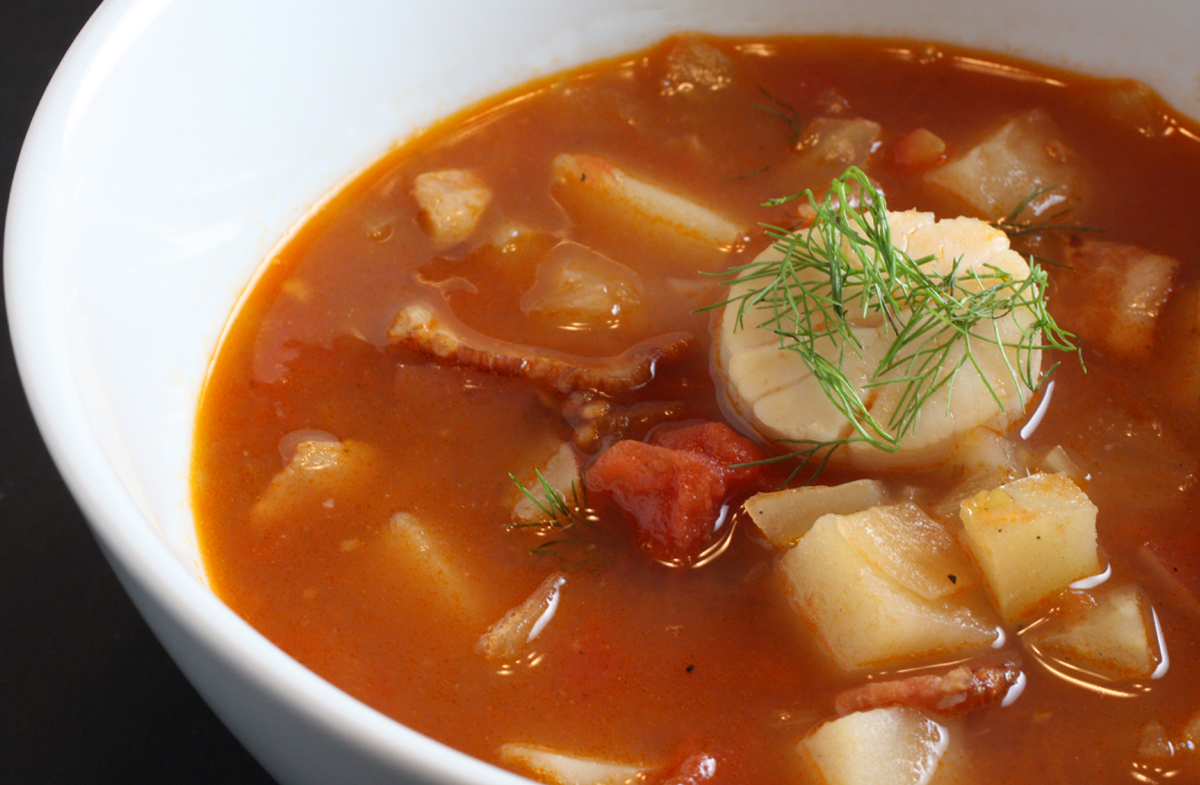
Manhattan scallop chowder with fennel -- with a dash of absinthe.

That was my first thought, too.

But here I had a big bottle of Absinthe Verte and no Pernod in the house when I spied a recent New York Times recipe for Manhattan Bay Scallop Chowder with Fennel.

The easy soup looked wonderful, but called for three tablespoons of Pernod. With its similar anise-flavor, I wondered if I could substitute my absinthe instead. ‘Course, absinthe is way more potent than Pernod, but that’s beside the point, right?

Well, when the nice folks at San Francisco’s Jug Shop got wind of my intentions after I broadcast my culinary plan on various social networking sites, they grew concerned. They told me to proceed with caution before passing “Go.” After all, Pernod is 40 percent alcohol; Absinthe Verte is a whopping 60 percent (120 proof).

So I stirred up my soup pot of crispy bacon, fennel seeds, fennel bulb, garlic, potatoes, plum tomatoes, and clam juice. The recipe called for 1 pound of bay scallops. I used what I had on hand — a 1-pound bag of larger Trader Joe’s wild Japanese scallops (20/30 count; just be sure to remove the tough small muscle on each scallop before using) — which worked beautifully.

Then it came to the moment of truth. I started conservatively, stirring in only 1 tablespoon of absinthe at first, then tasting. Mmm, totally fine, I thought. So I added another tablespoon, and tasted. Again, it didn’t seem too strong at all. So I added the final tablespoon.

The soup had tasted as if it was missing something before I added the spirit. But once that was incorporated, the absinthe really brought all the flavors together, and heightened the fennel taste.

This light, bright chowder was briny, anise-like, and sublty sweet from the tender scallops. The Green Fairy had done good.

Manhattan Bay Scallop Chowder with Fennel

Read more

Absinthe Makes the Heart Go Thump, Thump, THUMP (Part 1)

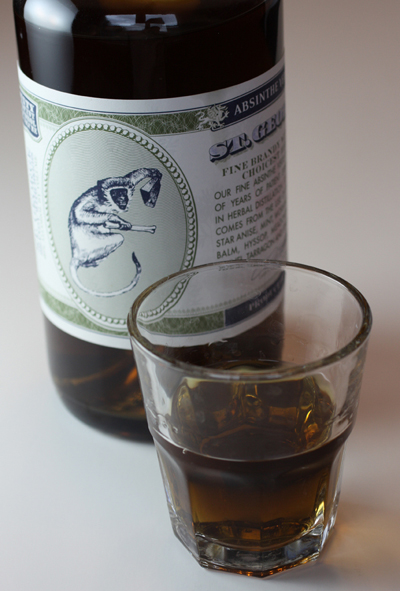
Absinthe Verte

You’ve all heard the commotion about the once illicit spirit, absinthe, not only being legal again, but even being made domestically in the good ol’ Bay Area.

Absinthe had been illegal since 1912 because of supposed health concerns. It was thought that the chemical thujone, which is found in the herb wormwood (used in the making of absinthe), affected the brain. But that view has largely been debunked.

With so many afternoons at the keyboard already leaving me feeling brain dead at times, I thought I’d give it a shot. Admittedly, as someone who is far from fond of black licorice, I was both wary yet curious to try the spirit that the U.S. Alcohol and Tobacco Tax and Trade Bureau made legal again in 2007.

Turns out my first experience with the Green Fairy was all wrong.

Last year, Yankee Pier at Santana Row in San Jose started featuring Absinthe Verte made by Alameda’s own artisan distillery, St. George Spirits. A small sherry-size glass came to the table. The moment it was set down in front of us, I could smell the powerful herbal, anise aroma. The Absinthe Verte was served straight up. After seeing old movies where water is slowly dripped over a sugar cube into the green tea-colored spirit to temper the bitterness of the wormwood, I wondered if I shouldn’t be drinking this somehow diluted. The server assured me this was the correct way.

So I took a small sip, as did my hubby.

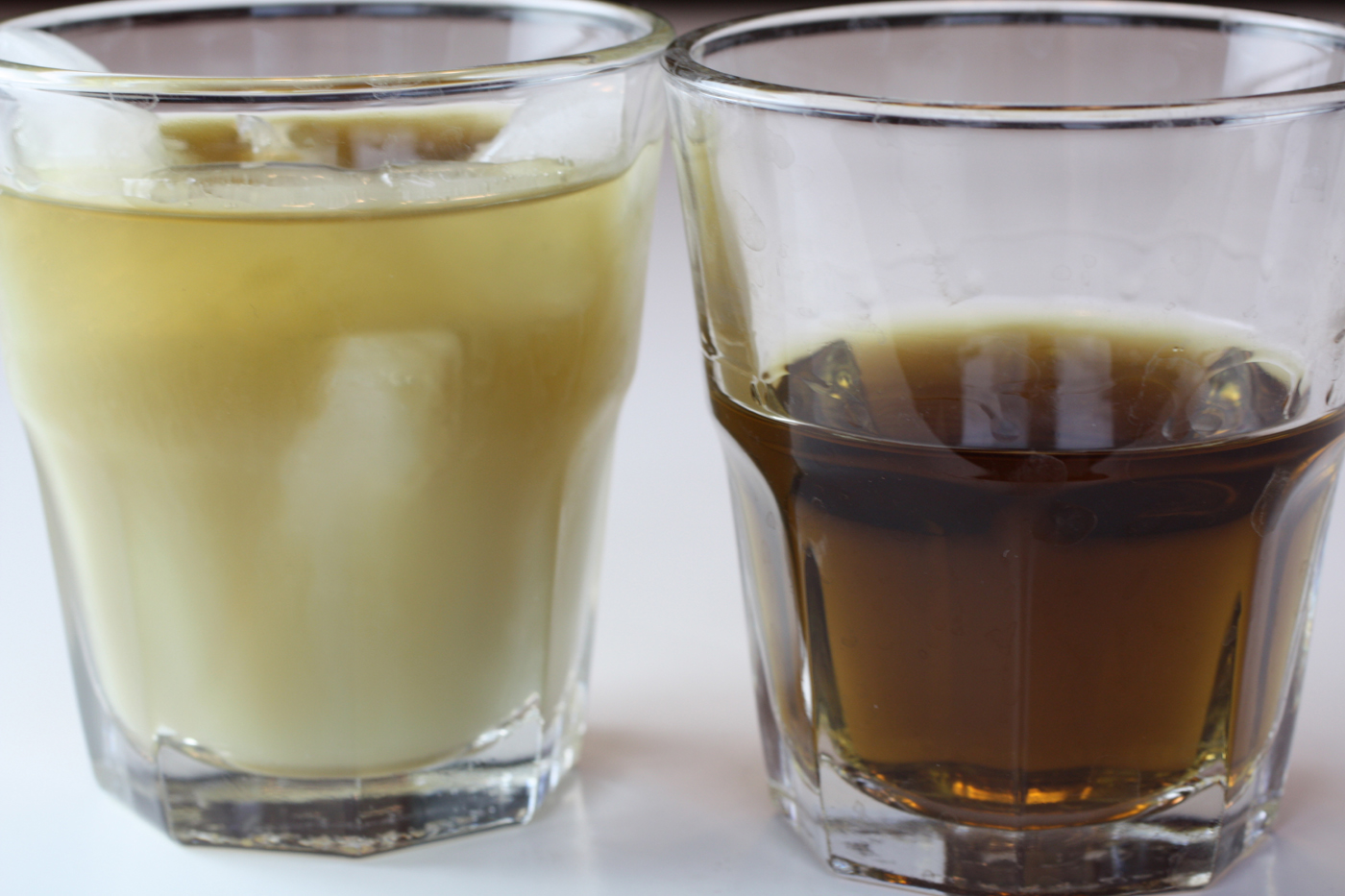
The Green Fairy: Diluted with ice (left), and straight (right).

WHOA, BABY!

Read more

It’s a Pancake; It’s a Donut; It’s an Ebelskiver

Wake up to these warm, filled, Danish pancake-donuts.

Santa brought me a new toy.

OK, really it was my cousin and her husband who did. But you get my drift.

I fairly squealed when I opened the big box to see my very own ebelskiver maker. Uh, what’s that you ask? It’s like a specialty frying pan with seven big dimples in it. You pour batter into each crater to create spherical, filled Danish pancakes known as ebelskivers.

For years, I’d seen the pans featured in the Williams-Sonoma catalogue. I wondered if they were easy to use. And I was curious whether the round donut-hole-shaped pancakes really tasted all that much better than your standard flat ones.

Once you get the hang of making them, they are pretty quick to make. It helps to have your batter, and your fillings at the ready near the stove, because you need to work fast.

And yes, since you need to beat the egg whites separately, and then fold them into the batter, be prepared to dirty more than one bowl.

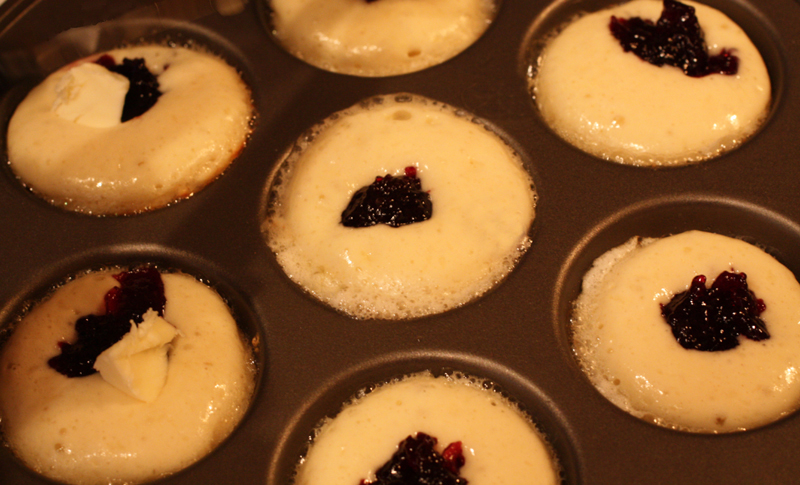
Adding cherry jam.

Heat the pan over medium heat, with 1/4 teaspoon butter in each well of the pan. Pour in a tablespoon of batter, add a small amount of your favorite filling, then top with a little more batter to seal the filling in. After the bottoms brown (about 3 minutes), use two wooden skewers to flip over each pancake ball to cook the other side.

Serve with maple syrup, a sprinkle of powdered sugar. or a little whipped cream. Eat with a fork, or use your fingers. Enjoy as breakfast, brunch, or dessert.

Unlike flat pancakes, the ebelskivers get a crisper exterior that gives way to a soft interior that holds a surprise inside.

Read more

« Older Entries Recent Entries »