An Evening at La Mar with Freeman Winery

At La Mar Cebicheria in San Francisco, even dessert comes with a little pisco.

The quenching, tart Pisco Sour may be the usual drink of choice at La Mar Cebicheria in San Francisco, but about once a month, the restaurant also hosts winemaker dinners.  And you know these events are guaranteed to be stellar when they’re presided over by the restaurant’s consulting wine director, Emmanuel Kemiji, a certified Master Sommelier who not only makes his own wine, but has worked with some of the best chefs in the Bay Area.

In fact, Kemiji was responsible for introducing me to one of my new favorite Pinot Noir producers — Freeman Vineyards and Winery of Sebastopol.

Freeman wines.

It’s no secret that I have a soft spot for Oregon Pinot Noirs, with their more earthy profiles, rather than the jammy fruit-forwardness of so many California-style Pinots. Freeman Winery — owned by Ken and Akiko Freeman — make Pinots in that elegant style with notes of dark cherry, loamy mushroom and gravel. They are pure silky pleasure to drink.

Recently, I was invited to be a guest of the restaurant at a special dinner spotlighting Freeman wines. When the San Francisco fog gives way to warmer evenings, the wine dinners are held in the spacious back patio with its spectacular view of the Bay. But on a chilly night like this one, it took place at a long chef’s table beside the bustling kitchen.

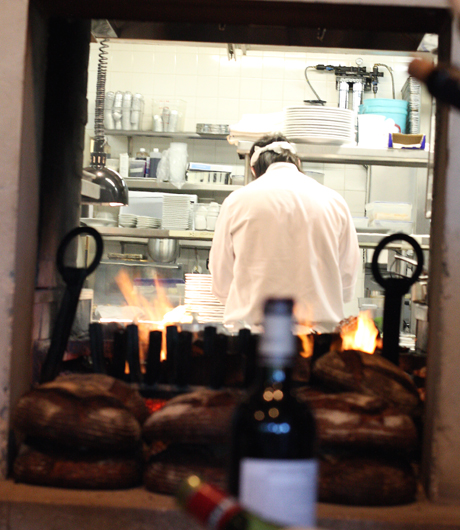
The chef's table at La Mar is next to, but separated from, the exhibition kitchen.

La Mar is famous for its cebiches — raw seafood that’s “cooked” with citrus. But Pinots and Chardonnays typically clash with such acidic fish preparations, so there was no cebiche on our tasting menu that night. Instead, there was an amuse that paid homage — a shot glass filled with spicy, tangy, prickly cebiche-like marinade transformed into almost aperitif.

Read more


Take Five with Chef Gaston Acurio of La Mar in San Francisco, Who Dropped Out of Law School to Cook

Chef-Owner Gaston Acurio of La Mar. (Photo courtesy of the chef)

Chef Gaston Acurio is probably more recognized in other parts of the world than he is in the United States. But no doubt that will change in the coming years as the 43-year-old chef expands his already impressive culinary empire further in this country with his bold take on contemporary Peruvian cuisine.

Acurio, who has 32 restaurants in 14 cities around the globe from Lima to Sao Paulo to Santiago, staked his first foothold in the United States two and a half years ago when he opened the lively La Mar Cebicheria on San Francisco’s Embarcadero with its striking turquoise sea-blue decor. In August, he will open his second La Mar in the United States — this one in New York’s Madison Square Park in the former Tabla restaurant site.

Last week, when Acurio was in town to work on new dishes at La Mar San Francisco, I had a chance to sit down and talk with him about his new partnership with the Monterey Bay Aquarium, his future plans in San Francisco, and how his politician father came to terms with the fact that his only son was not going to follow in his footsteps.

Q: Is it more challenging to open restaurants in the United States than elsewhere?

A: No, our experience with San Francisco was great. The people in San Francisco love to eat and they recognize good food. In a lot of cities, you might go out to eat before you do something else. Here, you go out to eat just to go out to eat.

People here are also very open to trying new things. It’s not like trying to start a restaurant in Italy or Paris. Nobu closed his restaurant in Paris after only one year. Parisians just don’t want to spend $150 on ethnic food because they are proud of their own food. The same is true in Italy. Those are challenging places to open restaurants.

Q: Will you open more restaurants in the United States after the New York one is up and running?

A: Of course. We are looking right now in Los Angeles, Chicago and Miami.

The presence of Peruvian food in the United States is just getting started. We have a big responsibility to do it well or else we will close the door to those who come after us.

Q: Are most Americans confused about what Peruvian food is?

A: Most are. Peruvian food has five big influences: Japanese, Chinese, Spanish, African and Inca/South American. Cebiches are our flagship like sushi for the Japanese. Our stews are European-like. Our sauces are like African ones. And herbs and chilies are very important in our cuisine.

La Mar cebiche clasico made with halibut, habanero, and Peruvian corn and yam. (Photo courtesy of La Mar)

Q: With your partnership with the Monterey Bay Aquarium, you will have ‘Seafood Watch Guides’ available for the public at your restaurants and you will serve only sustainable seafood at all of your restaurants? How challenging will that be?

Read more


New Premium Organic and Humane-Certified Pastries & Food Gal Giveaway

Mushroom-thyme savory scone from Pastry Smart.

For the past five years, Pastry Chef Mark Ainsworth has been crafting organic pastries, breads and cookies for a number of San Francisco Bay Area hotels and restaurants, including the Carneros Inn in Napa and the Lodge at Pebble Beach.

Now, you can enjoy his Pastry Smart products in your own home by picking them up at Mollie Stone’s, Real Food stores, Piazza’s and Shokolaat restaurant in Palo Alto, where he is the CFO.

Ainsworth was previously executive pastry chef at the Lodge at Pebble Beach and the Ritz-Carlton in San Francisco. His Pastry Smart company is thought to be the first pastry producer in the United States to be American Humane Certified. The company also works exclusively with organic dairy Clover-Stornetta Farms.

Recently, I had a chance to sample a variety of the baked goods, which are made in a commercial kitchen in San Mateo.

Just reheat these in the oven for a few minutes and you're good to go.

The retail line includes par-baked rolls that only need five minutes in a warm oven to enjoy at home. The challah slider rolls baked up crisp on the outside, tender on the inside, and buttery tasting, but not overly rich. They’d be great for dinner rolls for company or to stuff slices of ham into for Easter brunch. The multi-grain rolls had a nice nutty taste and a crunchy texture from the sesame and sunflower seeds that cover their exteriors. A package of six is about $6.99 each.

Lemon cookies that you'll never guess are vegan.

The cookies are fist-sized and perfectly round — like lunch-bag staples from childhood. My favorite — surprisingly — was the vegan lemon shortbread. Made with vegan shortening, the cookies are very crumbly with a delightful topping of crunchy, crystallized sugar. Take a bite and they just melt in your mouth.  I’m not even vegan, and I couldn’t stop eating these. A box of six cookies is $6.95.

Pastry Smart also makes three types of savory scones, which would be perfect for lunch or dinner with a salad and soup. The curry scone is full pungent cumin seeds, curry powder and paprika.  Like the curry one, the mushroom thyme scone has a fluffy, light crumb, but with a more herbal, earthy profile.

Each square-sized scone is perforated into fourths to divide it easily into four bite-size pieces. But most folks, I’m sure, will see it and think they’re meant to eat the entire square. Just realize, though, that the calorie count on the back of the package is 130 calories for a fourth of that scone in your hand, and not the entire thing.

Cheddar corn cake with the kick of jalapeno.

Same is true with the corn cakes — tender, cakey, corn bread squares that are about half an inch in height. The calorie count for these is 170 per quarter cake, though, few people are going to stop at just a quarter of one, especially when they come in flavors such as blueberry, and cheddar jalapeno.

Contest: One lucky Food Gal reader will win a sampler of Pastry Smart goodies, which includes rolls, cookies, corn cakes and scones. Entries, limited to those in the continental United States, will be accepted through midnight PST April 9. Winner will be announced April 11.

How to win?

Read more

Three-Hour Polenta

Heritage corn polenta, now available for sale at Oliveto Restaurant.

You might think I’m playing an April Fool’s joke on you when I tell you I spent three hours cooking polenta on the stovetop.

But I kid you not.

That was part of the careful cooking instructions I was given when Oliveto Restaurant in Oakland gave me  a sample bag of Floriani Red Flint Corn Polenta to try at home. The medium-course grind polenta is made from heritage red field corn that was originally developed in Northern Italy. It is whole-grain milled, meaning that the entire grain — including all the germ, bran and endosperm — is milled without separating any of those components out.

Because of that and because it’s a harder corn, it takes three  hours to cook.

I was ready to start lifting more weights at the gym for this polenta workout that awaited me. My husband half-jested that he was going to hire a legal day-laborer to help me.

Read more

Oliveto Keeps On Going Strong

Crudo of local halibut with shaved purple artichokes.

Twenty-five years is a very long time in restaurant years.

But that’s just how long Oliveto in Oakland has managed to not only survive, but to flourish.

A parade of talented chefs have manned the kitchen over the years, including Paul Bertolli (who went on to found his fabulous Fra’Mani salumi company in Berkeley), and most recently, Paul Canales, who was at Oliveto for the past five years.

In December 2010, Jonah Rhodehamel took over as head chef, after previous stints as sous chef at three San Francisco establishments:  La Folie, Zinnia, and Americano.

He’s already started putting his stamp on the rustic, Italian fare here. He started a new dry-aging program to age rib-eyes for three weeks to concentrate their beefy flavor.

Recently, I had a chance to try his menu as a guest of the restaurant.

Enter the doors, and to your right will be the cozy, more casual cafe. If you go up the stairs, you’ll find the warm, inviting restaurant with its bank of windows that overlook lively College Avenue.

My husband and I started with a crudo of local halibut ($13), clean and bright tasting, with the slight bitterness of puntarella chicory and shaved purple artichokes.

The prettiest salad ever.

Rhodehamel also sent out a roasted root vegetable salad ($11.50) that was as gorgeous as a still-life painting. This seemingly simple dish was spectacular, with the carrots, beets and turnips roasted in salt to concentrate their flavor and sugars, and render them tender-crisp. Even an avowed vegetable hater would have a hard time not eating every last bite.

Oliveto has long been known for its house-made pastas, now made with local flours, so we just had to indulge.

Read more

« Older Entries Recent Entries »